Hotel corridors age from the waist down: luggage wheels, shoe toes, housekeeping trolleys and vacuum bumpers all live in the same metre of wall, and every scuff lands where the eye goes next. Flexible stone handles the traffic better than paint and better than most tile — but it is not self-healing, and the corridor that stays premium is the one whose scuffs are removed correctly and early. This guide covers scuff removal as a maintenance discipline: what a scuff actually is on a printed mineral face, the removal ladder from softest to strongest, the products that are safe and the ones that are not, and the point at which a scuff stops being a cleaning job and becomes a panel swap.
What a scuff actually is — and why that decides the method
A scuff on flexible stone is material from the other object left on the surface — rubber, leather, paint, plastic — not damage to the stone itself. That distinction decides everything: a deposit sits on top of the printed face and comes off with the right solvent and a soft cloth, while true damage — an abrasion through the print into the body — is not a cleaning problem at all. The first step of every scuff job is therefore the fingernail test: if the mark catches and peels, it is a deposit and the ladder below applies; if it sits flush in the surface and reflects differently, it is damage, and the repair path from our repair guide takes over.
The second distinction is depth of staining. Rubber scuffs lift with mechanical action and a mild solvent. Dye transfer — the blue of a denim jacket, the pigment of a wet cardboard box — has soaked into the face’s microscopic texture and needs a different approach than a deposit. Confusing the two is how walls get scratched: someone attacks a dye stain with an abrasive pad, and the deposit comes off along with the print’s sheen.
The removal ladder — softest first, always
Scuff removal escalates through a fixed ladder, and each rung is tried before the next. Rung one: a dry microfibre cloth and pressure — a surprising share of fresh rubber scuffs lift with friction alone. Rung two: warm water with a drop of neutral-pH detergent on a damp microfibre cloth, worked in small circles, then dried. Rung three: isopropyl alcohol on a cloth — the workhorse solvent for rubber and plastic deposits — tested on a spare panel or hidden spot first, per the care rules in our maintenance guide. Rung four: a dedicated commercial decal-and-adhesive remover, again patch-tested, applied to the cloth and never poured on the wall. Rung five: a melamine sponge, used wet, gently, and only on the deposit — the one abrasive-adjacent tool that is acceptable, and only at the last rung because it is also the one that can dull the sheen if leaned on.
What never touches the face at any rung: acetone and aggressive solvent blends, abrasive creams, scouring pads, wire brushes, and steam at close range. Each of them removes the scuff along with the surface — the cure that looks worse than the disease, and the reason the ladder exists.
Where scuffs concentrate, and what the plan does about it
Scuffs map to traffic with boring reliability: the corner metres at every door swing, the wall behind housekeeping trolley routes, the waist-height band beside lifts and bin stores, the two metres around service doors where carts pivot. A corridor maintenance plan — the rhythm our lobby plan guide runs for lobbies — maps these zones once, and the weekly clean spends its effort where the scuffs actually live instead of wiping the whole wall equally.
Prevention closes the loop at the worst zones: corner guards and bumper rails at trolley pivot points, fitted to structure and styled to the corridor, take the hits the finish should not — the protection logic from our top-edge guide applied at scuff height. Where design forbids visible hardware, the plan accepts that those metres will be on the removal ladder’s schedule more often, and the batch-matched spares from the original order cover the day a scuff turns out to be damage.
What the housekeeping instruction actually says
The instruction that survives staff turnover is one page, laminated, and specific. The ladder, in order, with the products named. The two never-list items, in bold. The fingernail test, with the rule that any mark that fails it goes to engineering, not to stronger chemicals. And the escalation path: what housekeeping removes, what they photograph and report, and what engineering decides — because the difference between cleaning and repair is a judgement call, and untrained judgement is how abrasives end up on stone. Our training guide makes the same point for crews: a written standard beats a verbal one everywhere staff rotate.
When does a scuff become a panel swap?
Three triggers end the cleaning path. An abrasion that has cut the face — visible as a dull track that catches light differently at any angle. A dye stain that survives rung four without lightening. And a scuff zone where repeated cleanings have locally changed the sheen, so the metre now reads as a patch even when clean. Each trigger hands the decision to the panel swap: a same-batch section replaced in a half-day, invisible at handover — the batch logic from our consistency guide is what makes the swap possible at all. The swap is not a failure of maintenance; it is the maintenance plan working — the wall’s design included the answer to permanent damage, and using it is cheaper than any experiment with abrasives.
How does scuff behaviour differ on textured faces?
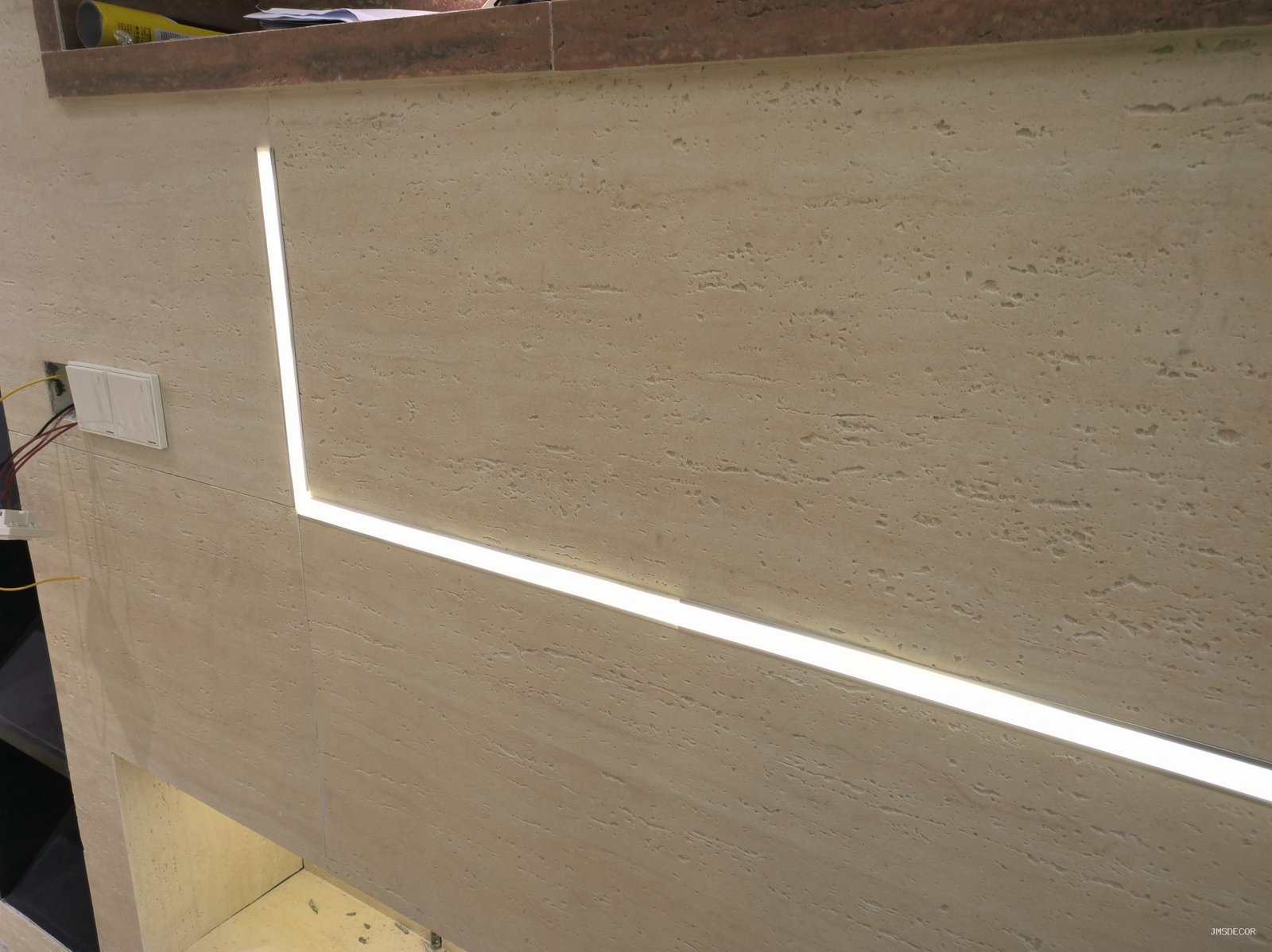
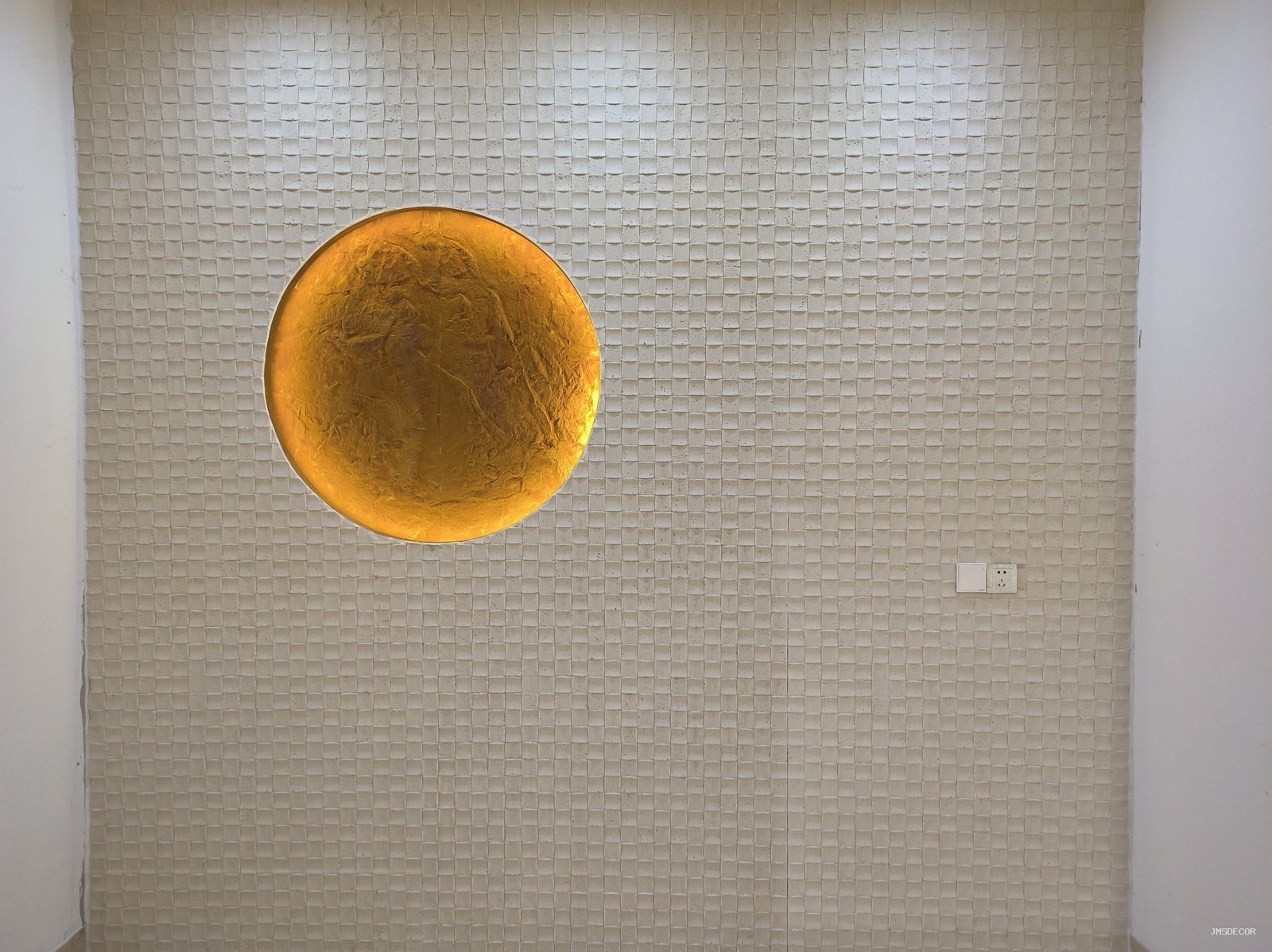
The ladder is the same; the surface changes the physics. On a fine travertine face, deposits sit on a near-flat plane and the cloth reaches all of them. On deep-textured faces — brick-look, coarse stratification — the deposit sits on the peaks and hides in the valleys, and a flat cloth pass removes half the mark while dragging the rest into the texture. The technique adjusts: a soft brush at rung two works the valleys, the solvent at rung three goes on the cloth and into the texture with the brush, and the judgment at rung five is stricter, because a melamine sponge on deep relief knocks the peaks off. Textured corridors also hide their own ageing — the scuff you cannot see is still there, and the quarterly photo walk from our maintenance plan guide is what finds it under raking light.
Pattern choice for high-scuff corridors follows from this: the fine-to-mid textures clean fastest and show least, which is why the pattern selection logic from our selection guide weights maintenance as well as looks — the corridor that cleans in rung two forever is the corridor that stays premium.
What the removal record looks like in a real hotel
The discipline that keeps a corridor premium is visible in its paperwork, and the scuff record is the smallest, most revealing page in it. Every removal beyond rung two gets a line: location, date, rung used, product, result. Two things emerge from that page over a season. The scuff map — which metres generate which marks from which traffic — that turns the prevention budget from a guess into a schedule. And the pattern — zones where rung three is becoming rung four — that flags either a traffic change (a trolley route moved, a door swing altered) or a face that is starting to age locally. The engineering file from our lobby plan guide holds the page, and the quarterly review reads it like a trend chart.
The record also protects the housekeeping team. A wall whose scuff history is logged cannot be written up later as neglect, and a team whose ladder is followed cannot be blamed for a face that finally needed the panel swap the plan always said it would. Discipline is cheap; ambiguity is not.
FAQ
Will alcohol damage the printed face?
Isopropyl alcohol on a cloth, patch-tested first, is the standard rung-three solvent for deposits on this class of mineral face. What damages the face is undiluted aggressive chemistry left to dwell, or abrasion — the ladder exists to keep both off the wall.
Can I use a magic eraser on every scuff?
Only at rung five, wet, gently, and on the deposit. Used dry or with force, a melamine sponge is a fine abrasive and it will dull the sheen — the one tool on the ladder that can create the damage it is meant to remove.
How fast should a scuff be removed?
As soon as it is found. Fresh deposits lift at rung one or two; deposits that sit for weeks bond harder and stain deeper, so the weekly corridor clean’s scuff pass is what keeps the whole wall on the easy rungs.
What if the scuff is on a textured pattern?
The same ladder, with cloths worked into the relief — and the expectation that deep-textured faces hold deposits more stubbornly. The patch test matters more, and rung five is rarer, because texture hides what smooth faces show.
Remove scuffs by the ladder, map the zones, and let the panel swap be the plan’s answer to real damage. The care-supported range is on the flexible stone veneer page, and safe cleaning-chemical handling in hospitality is published by OSHA.