تتقدم شيخوخة ممرات الفنادق من النصف السفلي: عجلات الأمتعة، وأصابع الأحذية، وعربات خدمة الغرف، ومصدات المكنسات الكهربائية تشترك جميعها في نفس المتر من الجدار، وكل خدش يقع حيث ينصب البصر أولاً. يتحمل الحجر المرن هذا التدفق بشكل أفضل من الطلاء وأفضل من معظم البلاط — لكنه لا يُصلح ذاته، والممر الذي يبقى بمظهره الفاخر هو الذي تُزال خدوشه بصحة وفي الوقت المناسب. يغطي هذا الدليل إزالة الخدوش كونه تأديباً للصيانة: ما هي الخدوش فعلياً على الوجه المعدني المطبوع، وسلم الإزالة من الأخف إلى الأقوى، والمنتجات الآمنة وتلك غير الآمنة، واللحظة التي تتحول فيها الخدوش من مهمة تنظيف إلى تبديل للوحة.
ما هي الخدوش فعلياً — ولماذا يحدد ذلك الطريقة
الخدش على الحجر المرن هو مادة من الجسم الآخر تترسب على السطح — مطاط، جلد، طلاء، بلاستيك — وليست ضرراً في الحجر نفسه. هذا التمييز يحدد كل شيء: الترسيب يثبت فوق الوجه المطبوع وينزح بالمذيب المناسب والقماش الناعم، بينما الضرر الحقيقي — خدش يخترق الطباعة وصولاً إلى الداخل — ليس مشكلة تنظيف على الإطلاق. لذلك فإن الخطوة الأولى في أي عمل خدوش هي اختبار الظفر: إذا تمسك العلامة وارتفع حافته، فهو ترسيب وينطبق عليه السلم أدناه؛ وإذا جلس مستوياً في السطح ويعكس الضوء بشكل مختلف، فهو ضرر، ومسار الإصلاح من repair guide يتولى الأمر.
التمييز الثاني هو عمق التصبغ. خدوش المطاط تنزح بفعل ميكانيكي ومذيب لطيف. انتقال الصباغ — أزرق جاكيت الجينز، أو صبغة صندوق كرتون رطب — قد تسربت إلى الملمس المجهري للسطح وتحتاج إلى نهج يختلف عن الترسيب. الخلط بينهما هو ما يجعل الجدران تتمزق: شخص يهاجم بقعة الصباغ بوسادة كاشطة، وتأتي البقعة مبتعدة إلى جانب لمعان الطباعة.
سلم الإزالة — الأخف أولاً، دائماً
تصعد عملية إزالة الخدوش عبر سلم ثابت، وتجرب كل حلقة قبل التي تليها. الحلقة الأولى: قماش ميكروفايبر جاف والضغط — حصة مذهلة من خدوش المطاط الطازجة تنزاح بالاحتكاك وحده. الحلقة الثانية: ماء دافئ مع قطرة منظف متعادل الأس هيدروجيني على قماش ميكروفايبر رطب، يُعجن بحركات دائرية صغيرة، ثم يُجفف. الحلقة الثالثة: كحول أيزوبروبيل على قماش — المذيب الرئيسي لودائع المطاط والبلاستيك — يُختبر على لوحة احتياطية أو بقعة مخفية أولاً، وفقاً لقواعد العناية في maintenance guide. الحلقة الرابعة: a dedicated commercial decal-and-adhesive remover, again patch-tested, applied to the cloth and never poured on the wall. Rung five: a melamine sponge, used wet, gently, and only on the deposit — the one abrasive-adjacent tool that is acceptable, and only at the last rung because it is also the one that can dull the sheen if leaned on.
What never touches the face at any rung: acetone and aggressive solvent blends, abrasive creams, scouring pads, wire brushes, and steam at close range. Each of them removes the scuff along with the surface — the cure that looks worse than the disease, and the reason the ladder exists.
Where scuffs concentrate, and what the plan does about it
Scuffs map to traffic with boring reliability: the corner metres at every door swing, the wall behind housekeeping trolley routes, the waist-height band beside lifts and bin stores, the two metres around service doors where carts pivot. A corridor maintenance plan — the rhythm our lobby plan guide runs for lobbies — maps these zones once, and the weekly clean spends its effort where the scuffs actually live instead of wiping the whole wall equally.
Prevention closes the loop at the worst zones: corner guards and bumper rails at trolley pivot points, fitted to structure and styled to the corridor, take the hits the finish should not — the protection logic from our top-edge guide applied at scuff height. Where design forbids visible hardware, the plan accepts that those metres will be on the removal ladder’s schedule more often, and the batch-matched spares from the original order cover the day a scuff turns out to be damage.
What the housekeeping instruction actually says
The instruction that survives staff turnover is one page, laminated, and specific. The ladder, in order, with the products named. The two never-list items, in bold. The fingernail test, with the rule that any mark that fails it goes to engineering, not to stronger chemicals. And the escalation path: what housekeeping removes, what they photograph and report, and what engineering decides — because the difference between cleaning and repair is a judgement call, and untrained judgement is how abrasives end up on stone. Our training guide makes the same point for crews: a written standard beats a verbal one everywhere staff rotate.
When does a scuff become a panel swap?
Three triggers end the cleaning path. An abrasion that has cut the face — visible as a dull track that catches light differently at any angle. A dye stain that survives rung four without lightening. And a scuff zone where repeated cleanings have locally changed the sheen, so the metre now reads as a patch even when clean. Each trigger hands the decision to the panel swap: a same-batch section replaced in a half-day, invisible at handover — the batch logic from our دليل الاتساق is what makes the swap possible at all. The swap is not a failure of maintenance; it is the maintenance plan working — the wall’s design included the answer to permanent damage, and using it is cheaper than any experiment with abrasives.
How does scuff behaviour differ on textured faces?
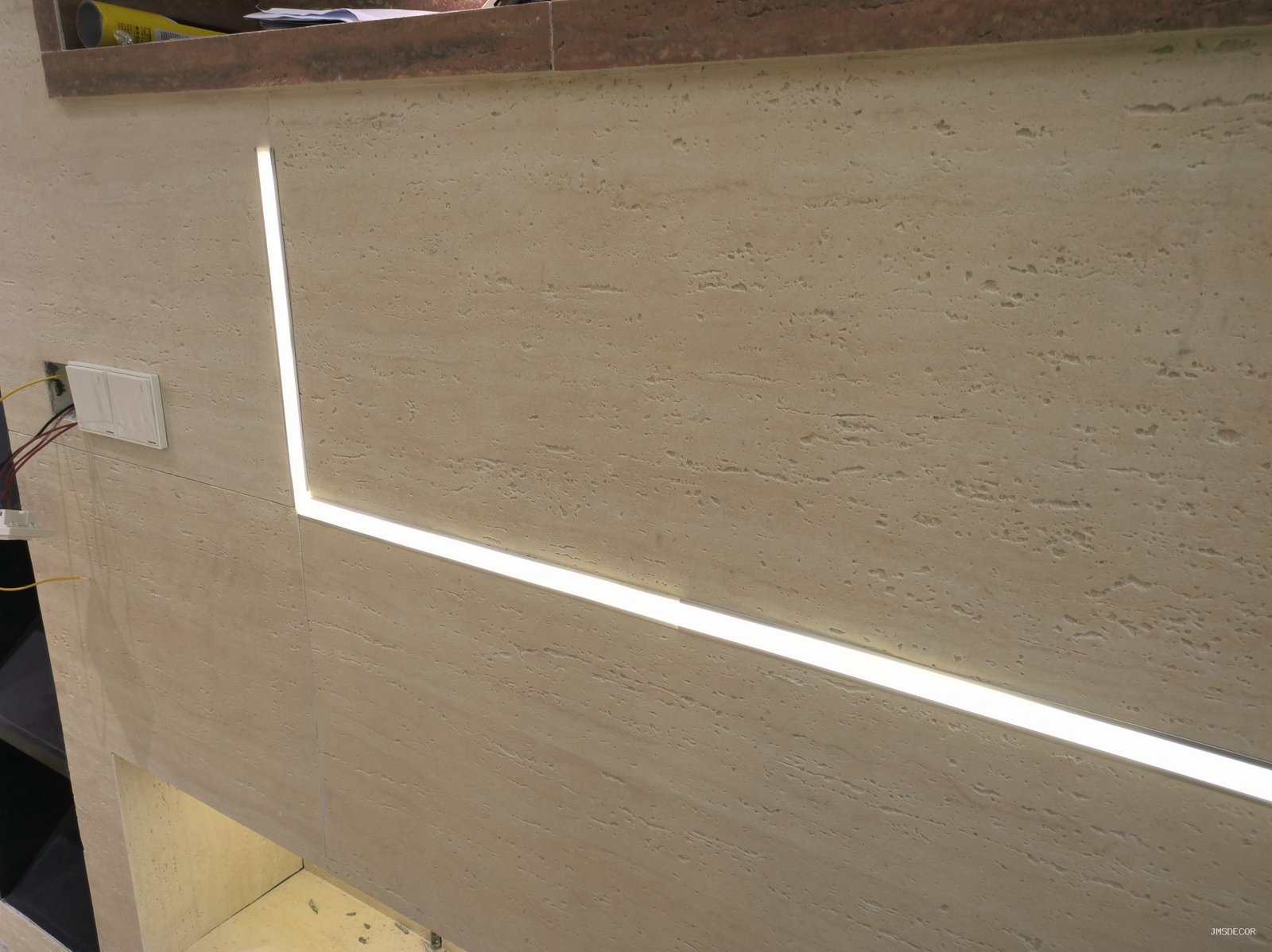
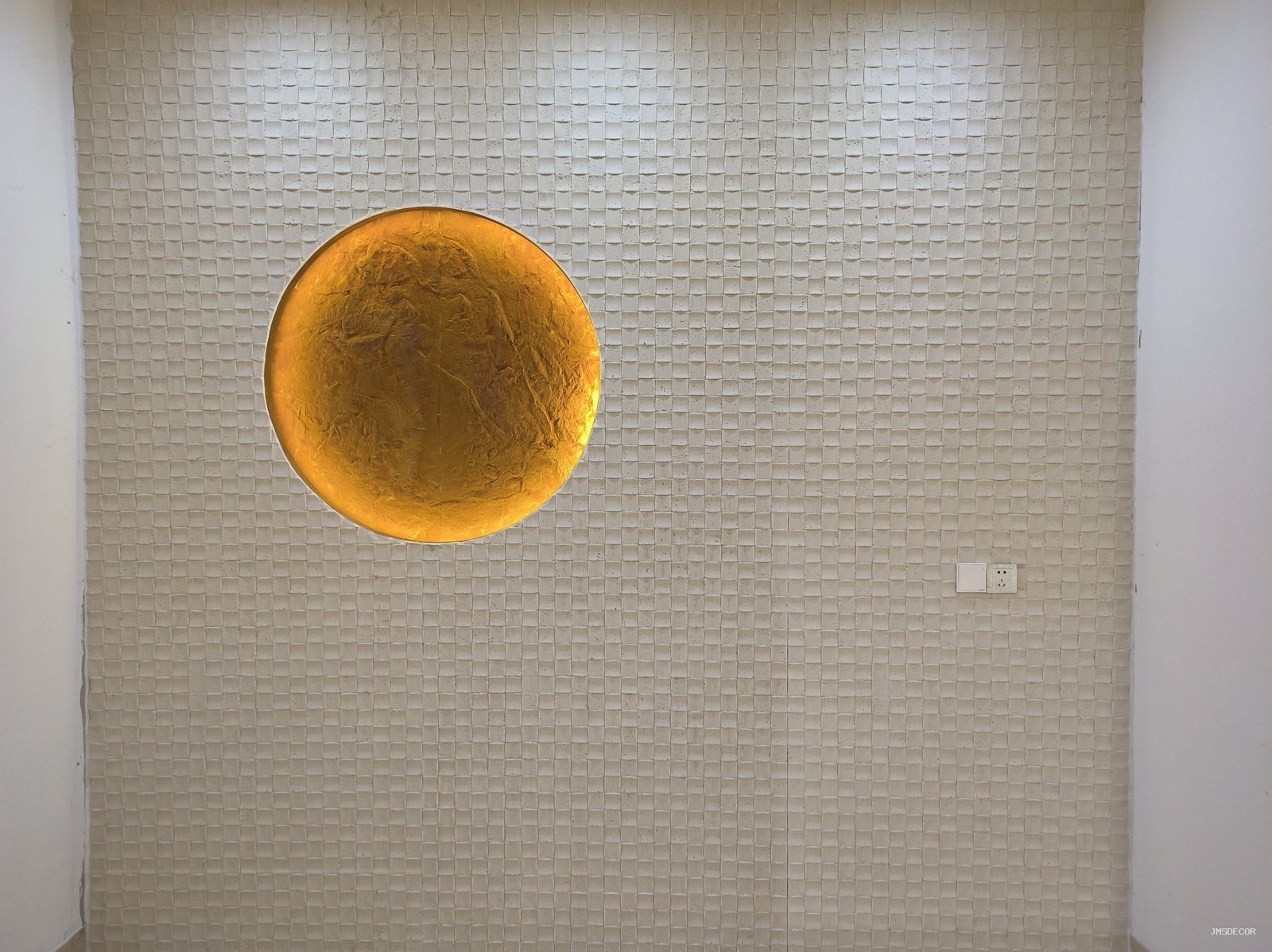
The ladder is the same; the surface changes the physics. On a fine travertine face, deposits sit on a near-flat plane and the cloth reaches all of them. On deep-textured faces — brick-look, coarse stratification — the deposit sits on the peaks and hides in the valleys, and a flat cloth pass removes half the mark while dragging the rest into the texture. The technique adjusts: a soft brush at rung two works the valleys, the solvent at rung three goes on the cloth and into the texture with the brush, and the judgment at rung five is stricter, because a melamine sponge on deep relief knocks the peaks off. Textured corridors also hide their own ageing — the scuff you cannot see is still there, and the quarterly photo walk from our maintenance plan guide is what finds it under raking light.
Pattern choice for high-scuff corridors follows from this: the fine-to-mid textures clean fastest and show least, which is why the pattern selection logic from our selection guide weights maintenance as well as looks — the corridor that cleans in rung two forever is the corridor that stays premium.
What the removal record looks like in a real hotel
The discipline that keeps a corridor premium is visible in its paperwork, and the scuff record is the smallest, most revealing page in it. Every removal beyond rung two gets a line: location, date, rung used, product, result. Two things emerge from that page over a season. The scuff map — which metres generate which marks from which traffic — that turns the prevention budget from a guess into a schedule. And the pattern — zones where rung three is becoming rung four — that flags either a traffic change (a trolley route moved, a door swing altered) or a face that is starting to age locally. The engineering file from our lobby plan guide holds the page, and the quarterly review reads it like a trend chart.
The record also protects the housekeeping team. A wall whose scuff history is logged cannot be written up later as neglect, and a team whose ladder is followed cannot be blamed for a face that finally needed the panel swap the plan always said it would. Discipline is cheap; ambiguity is not.
الأسئلة الشائعة
Will alcohol damage the printed face?
Isopropyl alcohol on a cloth, patch-tested first, is the standard rung-three solvent for deposits on this class of mineral face. What damages the face is undiluted aggressive chemistry left to dwell, or abrasion — the ladder exists to keep both off the wall.
Can I use a magic eraser on every scuff?
Only at rung five, wet, gently, and on the deposit. Used dry or with force, a melamine sponge is a fine abrasive and it will dull the sheen — the one tool on the ladder that can create the damage it is meant to remove.
How fast should a scuff be removed?
As soon as it is found. Fresh deposits lift at rung one or two; deposits that sit for weeks bond harder and stain deeper, so the weekly corridor clean’s scuff pass is what keeps the whole wall on the easy rungs.
What if the scuff is on a textured pattern?
نفس السلّم، مع قطع قماش مُدمَجة في النّصالة — والتوقعّات القائلة بأنَّ السطوح عالية النّصالة تمسّك بالرواسب بشدّة أكبر. تفيد الاختبارات البقعية هنا أكثر، ويقلّ وجود الدرج الخامس، لأنّ النّصالة تُخبئ ما تكشفه السطوح الملساء.
أزِل الخدوش القريبة من السلّم، وضَع خريطةً للمناطق، واجعل تبديل اللوح الجبسيّ إجابة الخطة للضرر الحقيقي. تتوفَّر المجموعة المدعومة بالعناية في قشرة حجرية مرنة الصفحة، وقد نشرت هيئات السلامة التعامل الآمن مع موادّ التنظيف الكيميائيّة في قطاع الضّيافة OSHA.