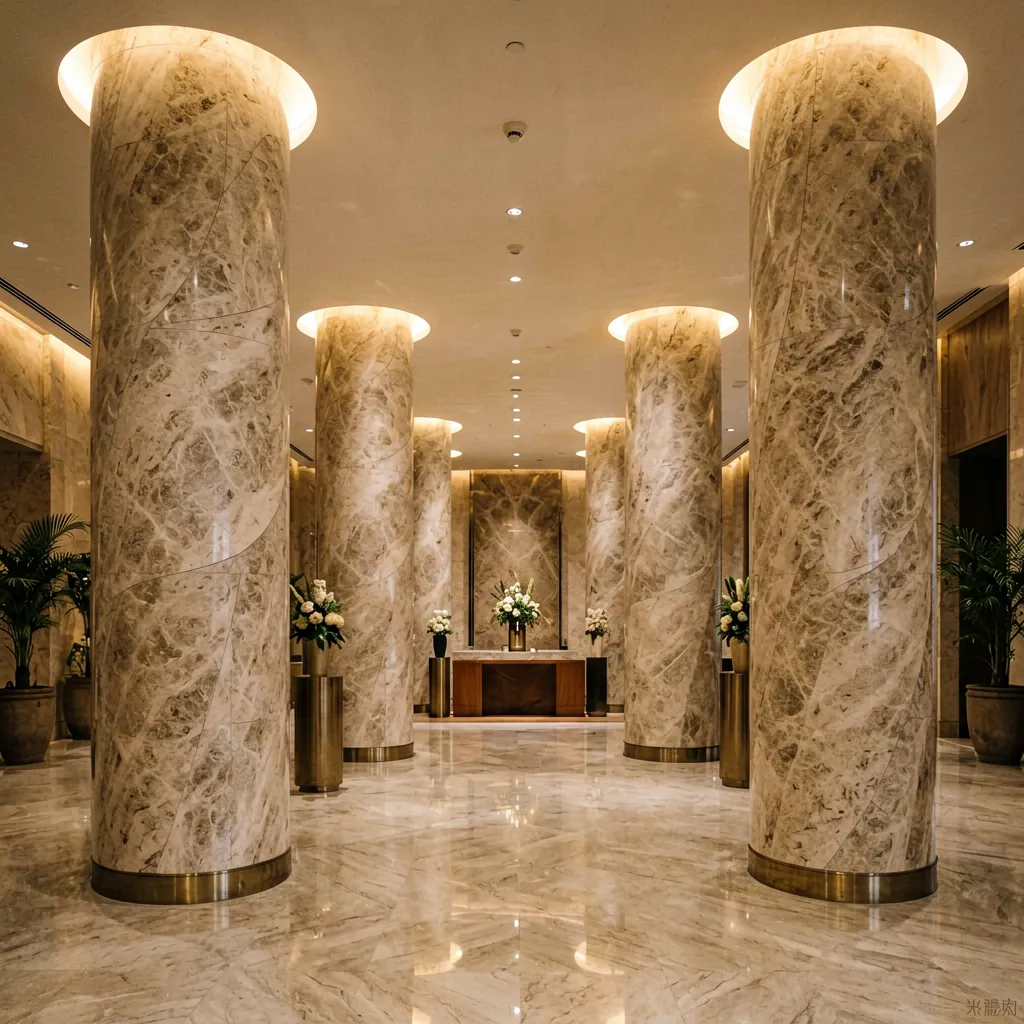
A hotel renovation usually means lost room nights, and lost room nights are lost revenue. The first question a hotel owner asks is how much of the building has to close while the work is done. Thin, light flexible stone panels offer one answer: they fix over the existing wall and let the work move room by room.
A closed floor takes rooms off sale, and it can push a guest to a hotel down the street. A phased programme keeps the doors open while the finish is replaced. The panel a team picks decides how far that phasing can go.
A hotel renovation without closure is a scheduling problem first and a materials problem second. The right panel settles both at once.
Planning a Hotel Renovation That Stays Open

The plan starts with the finish, because the finish decides the schedule. A wet trade such as plaster or microcement needs drying time, and drying time pushes a room out of use for days. A panel set with adhesive goes up without mortar or plaster, so a room can reopen the next morning.
The second input is weight. A stone wall adds load to the frame and the floor, and an old building may not carry much more. A light panel keeps the load low and removes the need for structural work before the finish goes on.
The third input is access. Guests walk the same corridors the crew has to work in, so the programme has to keep a clear route open. Work that creates dust or heavy waste slows that route and pushes guests around the building.
These three inputs point the same way. A thin, light, adhesive-fixed panel lets a hotel refresh a floor without taking the whole hotel out of service.
The Cost of Closing a Floor

A closed room is a room that cannot be sold, and the loss runs for every night of the closure. That loss is easy to count once the dates are set against the room rate.
A full closure is the clearest case. Every room leaves the market at once, and the hotel runs on no revenue for the full length of the works. Few owners choose that route unless the building has to come down to the frame.
A floor-by-floor route is softer. One floor closes, the rest stays on sale, and the closure moves up the building. The loss is smaller, so the finish has to allow a clean stop and start at each floor.
| Route | What it closes |
|---|---|
| Full closure | Every room, for the length of the works |
| Floor by floor | One floor at a time, the rest stays on sale |
| Room by room | A single room at a time, guests move around the work |
The room-by-room route is the softest of the three. A crew takes one room, finishes it and hands it back, then moves to the next. Guests stay in the building throughout, and revenue keeps coming in.
That route only works with a panel that installs fast and clean. A finish that needs a wet mix, a long cure or heavy demolition breaks the rhythm and forces a floor to close.
How Flexible Stone Keeps Rooms Open

A hotel renovation that stays open depends on three qualities working together: low weight, low thickness and a simple adhesive fixing. Flexible stone carries all three, and each one feeds the schedule in its own way.
The panels weigh 1.5 to 6 kg per square metre, about one fifth of natural stone. A single fitter can move a full day of panels by hand and set them without lifting gear, which keeps the crew small and the corridor clear.
The depth runs from 2mm to 8mm. A thin sheet sits close to the old wall and adds almost nothing to the room. That keeps door sets, sockets and skirtings where they are instead of forcing a rebuild around a thick new layer.
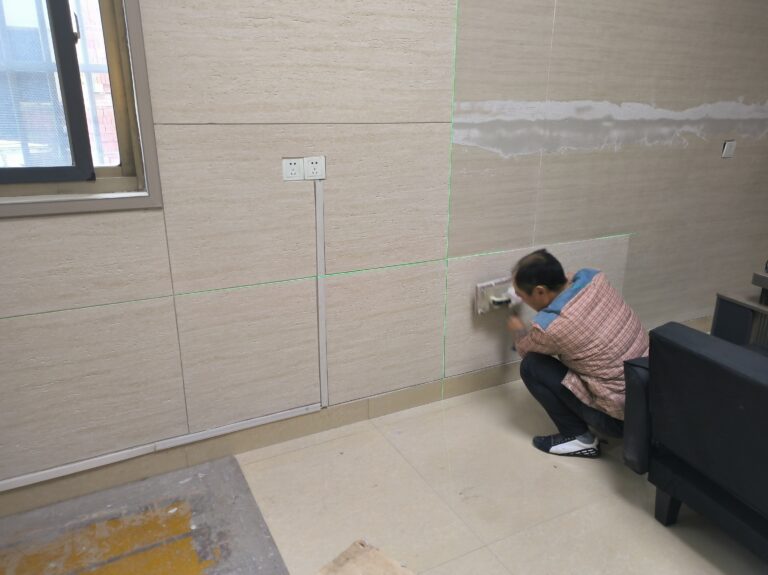
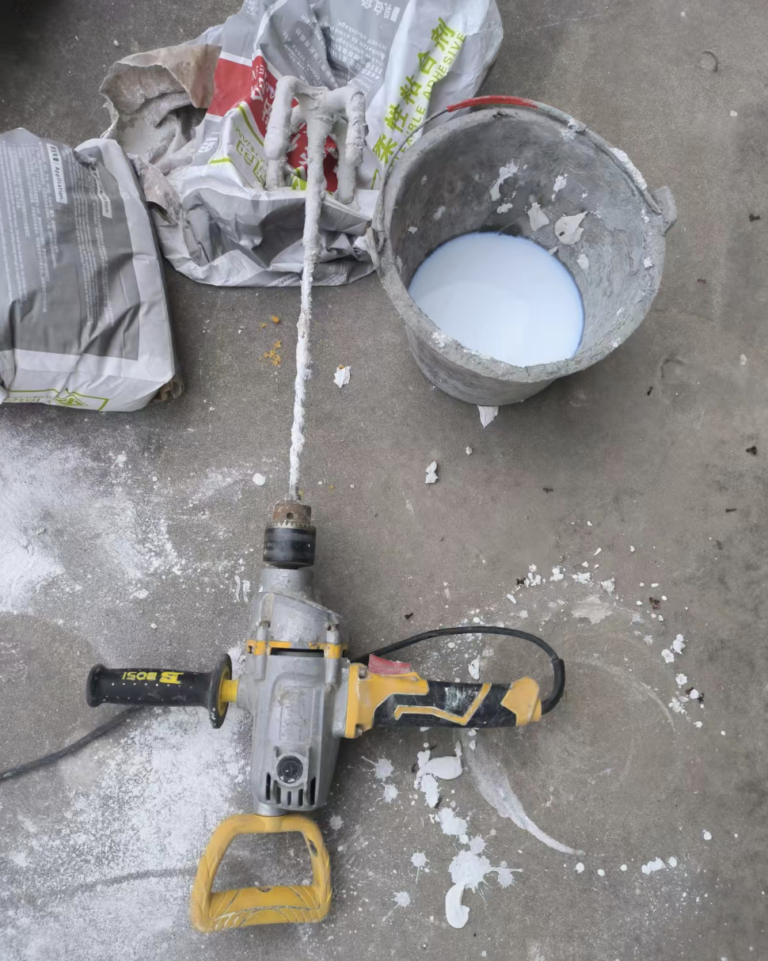
The fixing uses a thin adhesive rather than a wet trade. There is no mortar, no plaster and no water to mix, and a crew can finish a wall at night and hand the room back the next morning.
The panels are cut with a knife or a small saw on site. Offcuts are light and small, so the waste leaves the room in a bag rather than a skip. That keeps the guest route clean and the fire exit clear.
Across a whole hotel the same panel serves every space, from a guest room to a lobby. A team that works on hospitality jobs can set out the finish area by area. The wider set of flexible Steinlösungen shows how a finish is matched to each one.

A Panel That Fixes Over the Old Wall

The biggest source of downtime in a refurbishment is demolition. Stripping a tiled wall is loud, dusty and slow, and it takes the room out of use for the strip and the rebuild. A panel that fixes over the old surface removes that step.
Flexible stone is thin enough to go straight over a sound existing wall. The old finish stays in place, and the new panel sits on top of it. The room keeps its size, and the wall keeps its line.
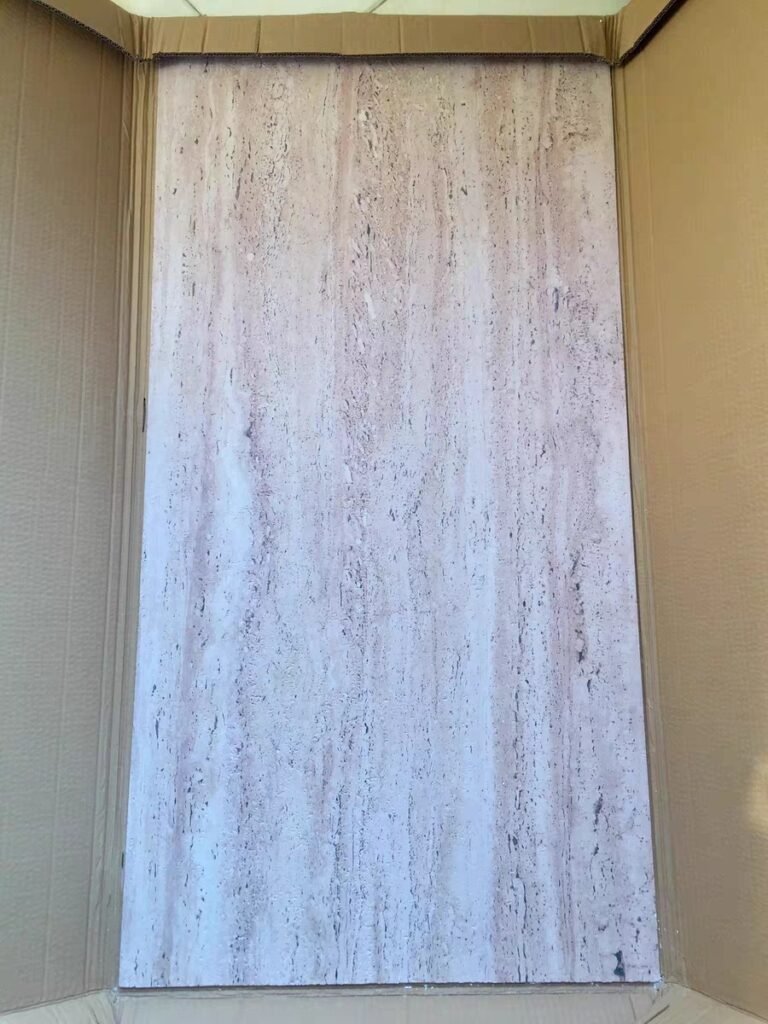
The panel is built from natural stone powder, an inorganic gel and a fibreglass mesh. The base is mineral rather than a coated surface, so the sheet holds its shape once it is fixed.
Where a corridor curves or a column stands in the wall, the panel bends to follow the line. The general minimum bend radius is about 200mm, set out in our guide to the flexible stone minimum bend radius. A curve can be clad in one sheet instead of cut into small pieces.
Support materials travel with the panels. Adhesive, sealant and installation accessories come from the same factory, so the fixing suits the sheet and the crew is not chasing parts.
Phasing a Refurbishment Room by Room
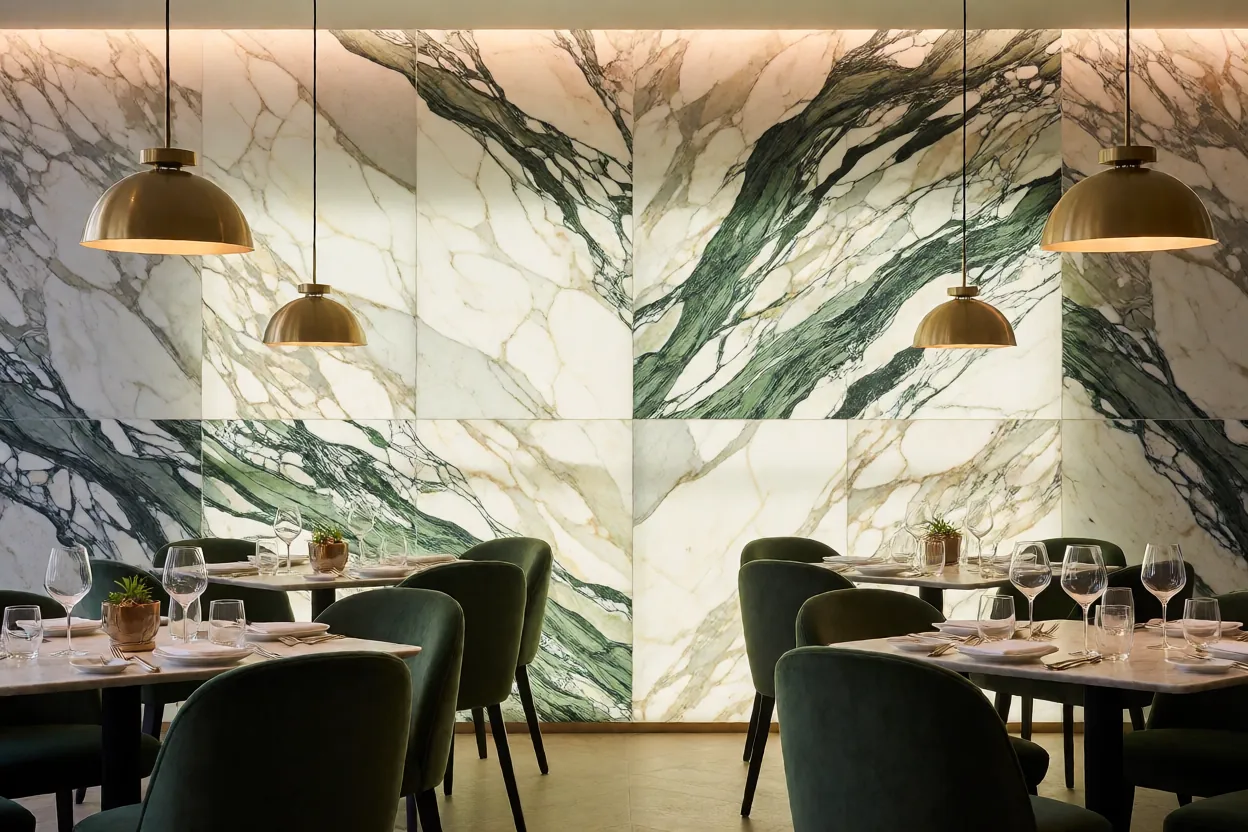
A phased programme splits the building into stages and finishes one stage before the next begins. The hotel stays open, and the cash from the open rooms funds the next stage.
A phased order suits a phased programme. The standard minimum order is 300 square metres, explained in our guide to flexible Stein-MOQ, and it can be adjusted for a smaller job. A first stage can cover one floor without a warehouse of stock.
Die Terminplanung ist einfach: Ein Standardfinish wird innerhalb von 2 bis 3 Tagen abprobiert, eine eigene Farbe benötigt ca. 7 Tage. Der erste Großauftrag dauert 15 bis 20 Werktage, ein Wiederholungsauftrag 10 bis 15 Werktage.
Auch die Lieferung läuft im gleichen Takt. Die Seefracht dauert 15 bis 35 Tage nach Nordamerika und 25 bis 45 Tage nach Europa, die Luftfracht 5 bis 7 Tage. So kann die erste Bauphase per Flugzeug ankommen, während die späteren Phasen per Schiff folgen – das hält den Eröffnungstermin nah.
| Punkt | Abbildung |
|---|---|
| Paneelgewicht | 1,5 bis 6 kg pro Quadratmeter |
| Paneeldicke | 2 mm bis 8 mm, dünn genug zur Installation über bestehenden Wänden |
| Standard-Mindestbestellmenge | 300 Quadratmeter, bei kleineren Projekten anpassbar |
| Musterbearbeitungszeit | 2 bis 3 Tage für ein Standardfinish |
| Feuerklassen | ASTM E84 Klasse A und EN 13501-1 Klasse A2 |
| Ausschussrate | Unter 1 Prozent |
Eine Wiederbestellung ist der unausgesprochene Teil des Plans. Die Farbformel und die Formen werden fünf Jahre lang kostenlos gehalten, sodass eine spätere Phase ohne Neuvorbereitung zur ersten passt. Ein Hotel kann ein Jahr später mit den oberen Etagen fertig werden, und der Stein passt immer noch.
Feuerwiderstandsklasse und GastSicherheit in Fluren
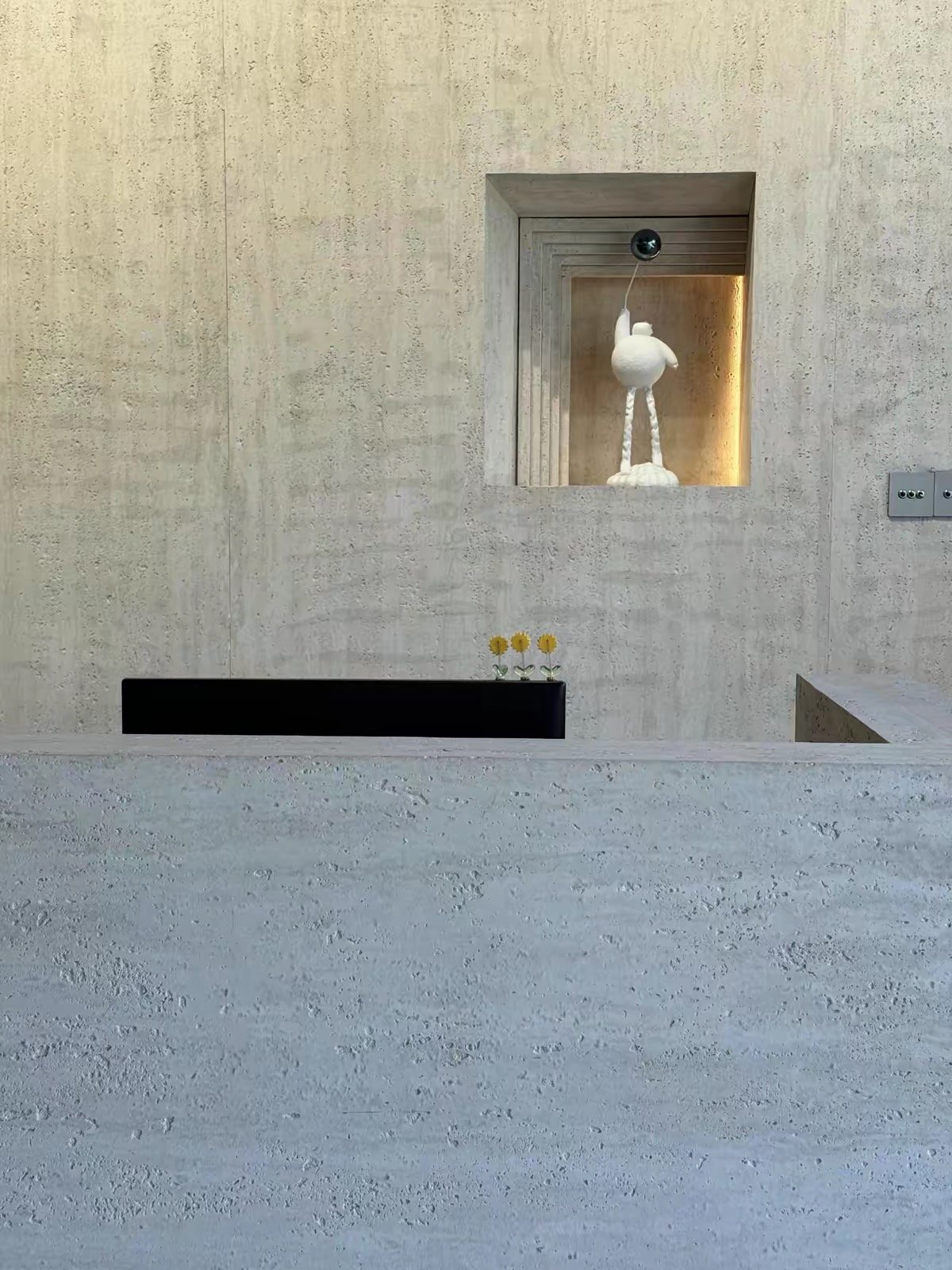
Ein Flur ist ein Fluchtweg, daher trägt seine Wand sowohl eine Feuerwiderstandsklasse als auch eine Oberfläche. Ein Hotelbesitzer muss nachweisen, dass die Oberfläche kein Feuer nährt, und die Klasse ist Teil der Einreichung.
JMS Decor Flexible Stone ist nach ASTM E84 Klasse A mit einer Flammenausbreitungszahl von 25 oder darunter getestet und nach EN 13501-1 Klasse A2 für europäische Projekte. Die nordamerikanische Seite ist in unserem Leitfaden zu ASTM E84 Class A für Wandpaneelen.
Die Fabrik führt ein Qualitätsmanagementsystem, um ISO 9001 und ISO 14000, und es hat BSCI und CE parallel dazu. Die Produktion hält eine Fehlerquote unter 1 Prozent, was wichtig ist, wenn ein Bereich in Etappen wiedereröffnet wird.
Jeder Auftrag wird mit den Dokumenten geliefert, die eine Projektdokumentation benötigt. Ein Prüfzertifikat deckt das Material und die Branddaten ab, eine Zertifikatskopie deckt die Klasse ab, und eine erste Artikelprüfung bestätigt das erste Panel aus der Linie. Ein Installationsleitfaden und Video werden ebenfalls mit den Paneele versendet.
Die Palette wird von einem Hersteller für flexible Stein-Wandpaneele in einer 8.000 Quadratmeter großen Anlage mit fünf Produktionslinien hergestellt. Die Fabrik wurde 2015 gegründet, und das Team arbeitet seit mehr als 15 Jahren mit Wandpaneelen. Das breitere Sortiment befindet sich unter flexible Steinanwendungen.
Häufig gestellte Fragen zur Hotelrenovierung
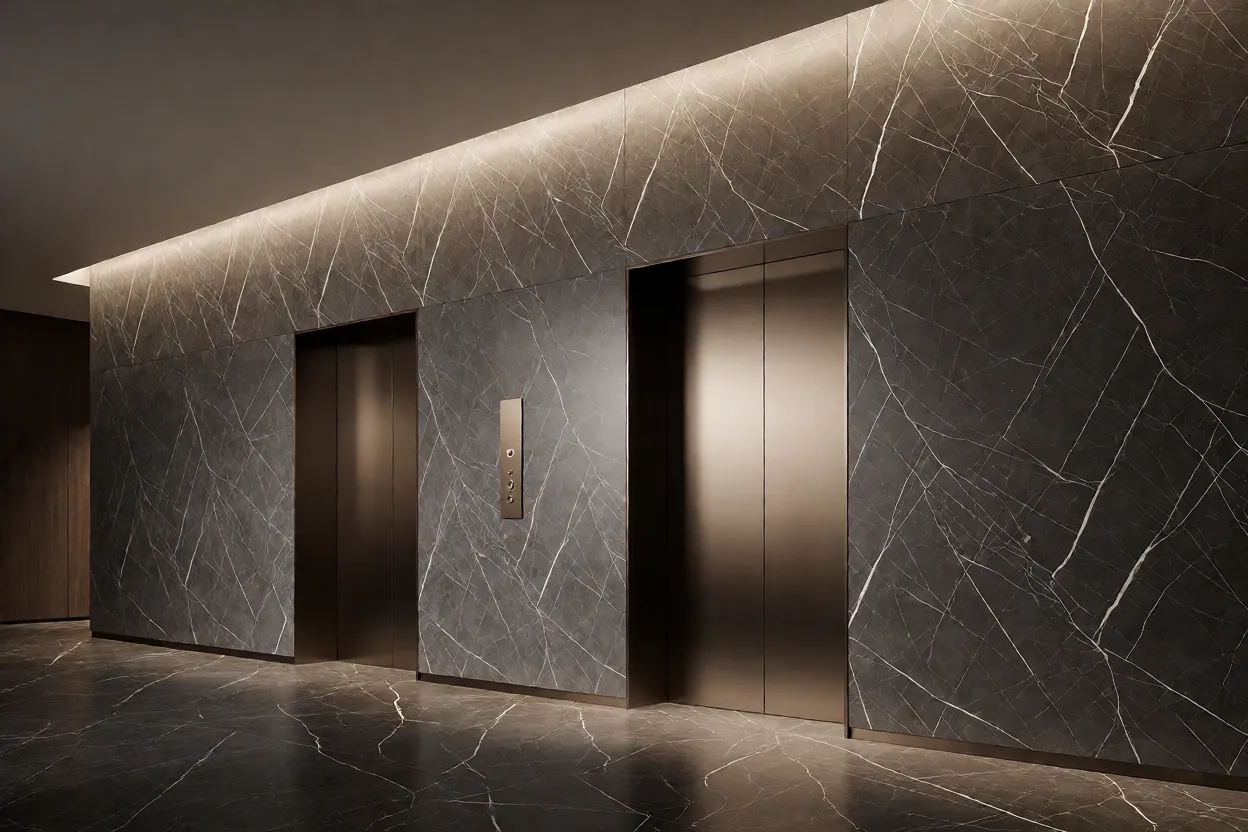
Die folgenden Fragen tauchen am häufigsten auf, wenn ein Hospitality-Team eine Erneuerung plant, und jede Antwort leitet sich aus dem Paneel und dem Programm ab.
Kann eine Hotelrenovierung ohne Schließung des Hotels durchgeführt werden?
Er kann Zimmer für Zimmer erfolgen. Flexible Steinpaneele werden mit einem speziellen Kleber direkt über die alte Wand angebracht, sodass ein Team ein Zimmer fertigstellen, es zurückgeben und weiterziehen kann. Das Hotel bleibt geöffnet und die bezogenen Zimmer Generieren weiterhin Einnahmen während der Arbeiten.
Wie viel Gewicht fügt das Paneel einer Wand hinzu?
Die Paneele wiegen 1,5 bis 6 kg pro Quadratmeter, das ist etwa ein Fünftel von Naturstein. Bei einer Renovierung reduziert dieser geringe Wert die Belastung des Rahmens und des Bodens, sodass die Wand dahinter selten zusätzliche Unterstützungen benötigt.
Muss der alte Fliesen- oder Putz entfernt werden?
Nicht immer. Eine intakte bestehende Wand kann das Paneel direkt tragen, was den Abbruch und den damit verbundenen Staub einspart. Die Wand muss sauber, trocken und fest sein; eine kurze Begehung vor Ort entscheidet, ob zunächst eine kleine Vorbereitung notwendig ist.
Kann die Bestellung auf die einzelnen Abschnitte aufgeteilt werden?
Ja. Die übliche Mindestbestellmenge beträgt 300 Quadratmeter und kann für einen kleineren Abschnitt angepasst werden. Die Farbformel und die Formen werden fünf Jahre lang reserviert gehalten, sodass eine spätere Bestellung die erste Etage ohne erneuten Setup genau trifft.
Welche Feuerklasse haben die Korridorpflaster?
Die Serie ist nach ASTM E84 Klasse A mit einem Flammenausbreitungsindex von 25 oder weniger sowie nach EN 13501-1 Klasse A2 für Europa geprüft. Zertifikat und Prüfbericht werden mit der Bestellung versendet und stehen für die Projektdatei bereit.