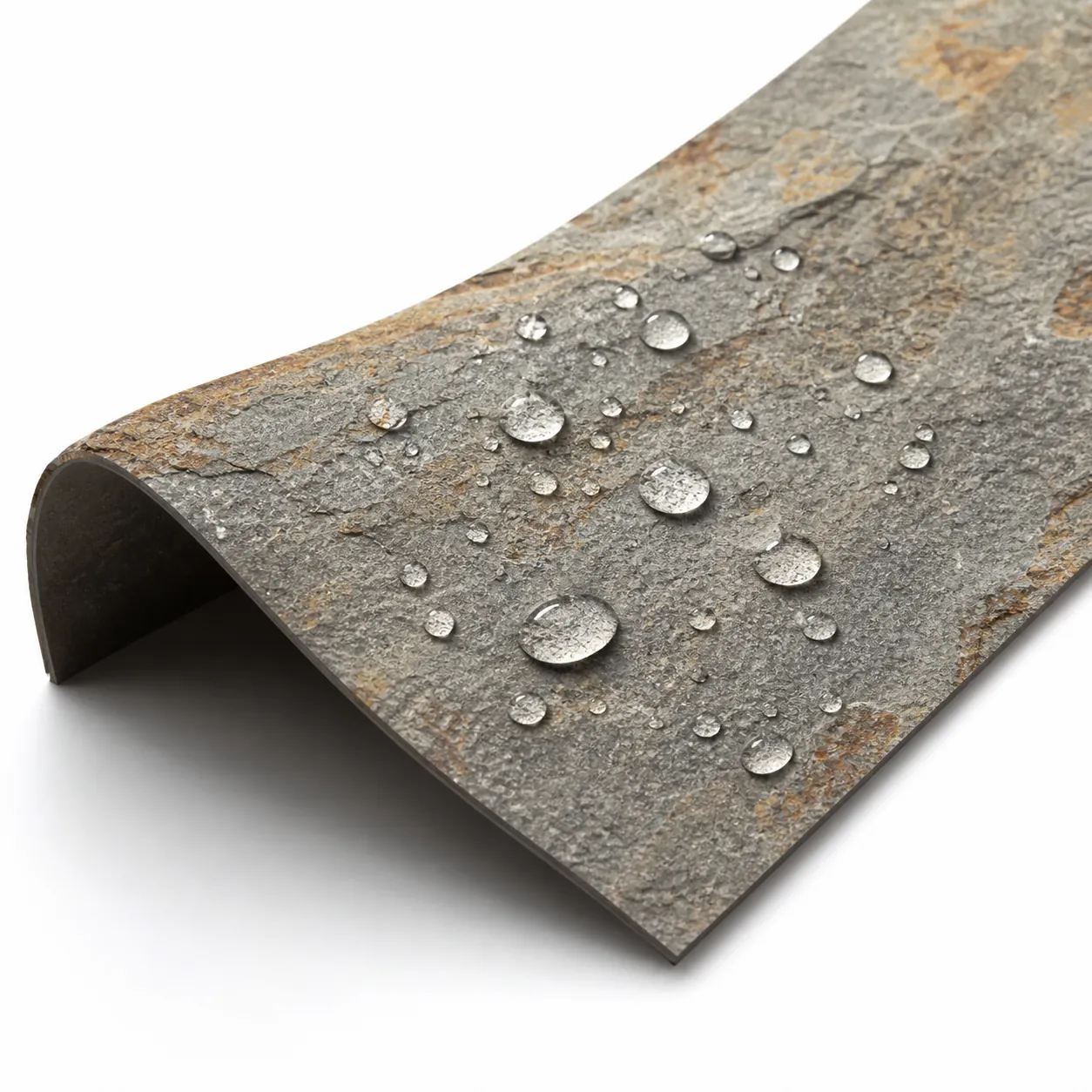
A curved wall, a wrapped column or a rounded arch asks one question of a stone panel before anything else. How tightly can it bend? The flexible stone minimum bend radius answers that, and it decides whether a design stays a single wrapped surface or breaks into joints and trims. This guide sets out the working radius for the JMS Decor range and the two factors that move it.
The figure is a working number, not a laboratory limit. It says what the sheet will do on a normal site, with standard adhesive, over a sound substrate. Read it before the format and the pattern are locked, because both can change the answer.
Bend radius is set by thickness and pattern, so the same range bends tighter on a thin travertine sheet than on a thick patterned one.
What Minimum Bend Radius Actually Means

Bend radius is the radius of the smallest curve a sheet can follow without creasing, cracking or lifting at the edge. It is measured on the inside of the curve, from the centre point of the arc to the face of the panel. A 200 mm radius describes a curve about 400 mm across at the diameter.
That difference matters on drawings. Architectural schedules often quote a diameter, while a supplier quotes a radius. Halve the figure and a curve looks possible. Keep it whole and the same curve fails. Confirm which one a plan uses before any order is placed.
The working figure is read on the panel face, over a sound substrate and with the standard adhesive system. It describes what a site can build, not what a press can force once. A sheet pushed past the flexible stone minimum bend radius by hand will creep back and lift at the joint within days.
Across the JMS Decor flexible stone minimum bend radius, the general working figure is about 200 mm. That covers the standard sheets most walls, columns and arches are built from.
Why Thickness Sets the Curve Limit
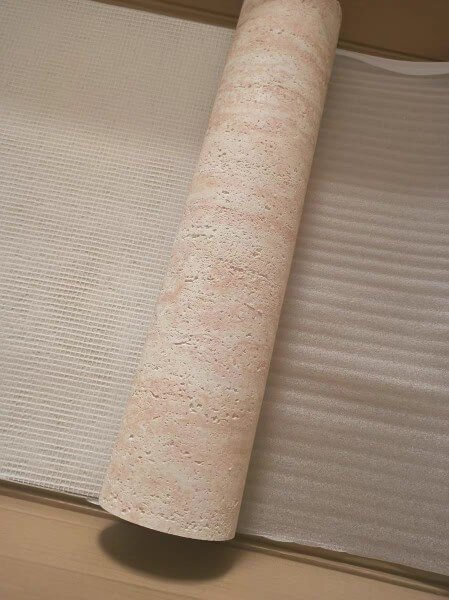
Flexible stone is a mineral skin. Natural stone powder is bonded with an inorganic gel and held together by a fibreglass mesh layer. The thinner that build up, the less material there is to resist the bend, and the tighter the sheet can turn.
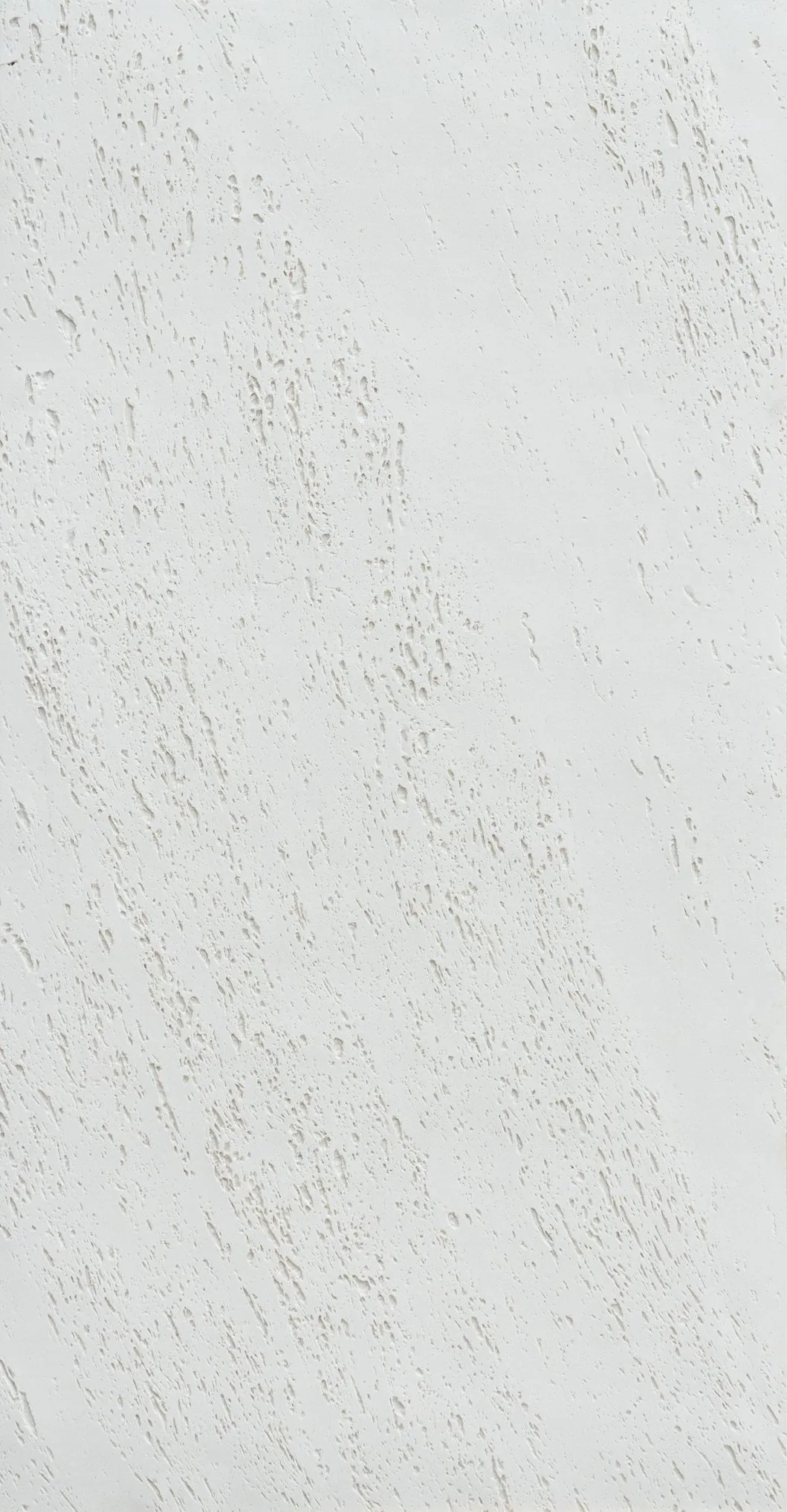
The range runs from 2 mm to 8 mm. A thin travertine sheet at 2.5 to 3 mm bends to a tighter radius than the 200 mm general figure, which suits small columns and tight returns. A sheet at the top of the range is stiffer and holds the wider working radius. The standard sheets a specifier buys from our flexible Steinplatten range sit across that band.
Thickness sets the flexible stone minimum bend radius more than any other single factor. A specifier who knows the sheet gauge already knows most of the answer, before the pattern is chosen or the substrate is fixed.
The table below sets out the three bands a specifier will meet most often.
| Sheet | Dicke | Working minimum bend radius |
|---|---|---|
| Thin travertine sheet | About 2.5 to 3 mm | Tighter than 200 mm |
| Standard flexible stone sheet | Up to 8 mm | About 200 mm |
| Thick complex pattern | At the top of the range | About 300 mm |
Thickness is chosen with the curve in mind. Where the arc is generous, a heavier sheet gives a deeper surface. Where the arc is tight, the thinner sheet carries it cleanly. Knowing both before the order avoids a redesign on site.
A specifier can hold two sheets of the same pattern at different gauges and feel the difference in stiffness. That is the simplest check before a drawing is committed. A sample set that carries both the standard and the thin travertine sheet saves a revision later.
Bend Radius by Pattern and Grain
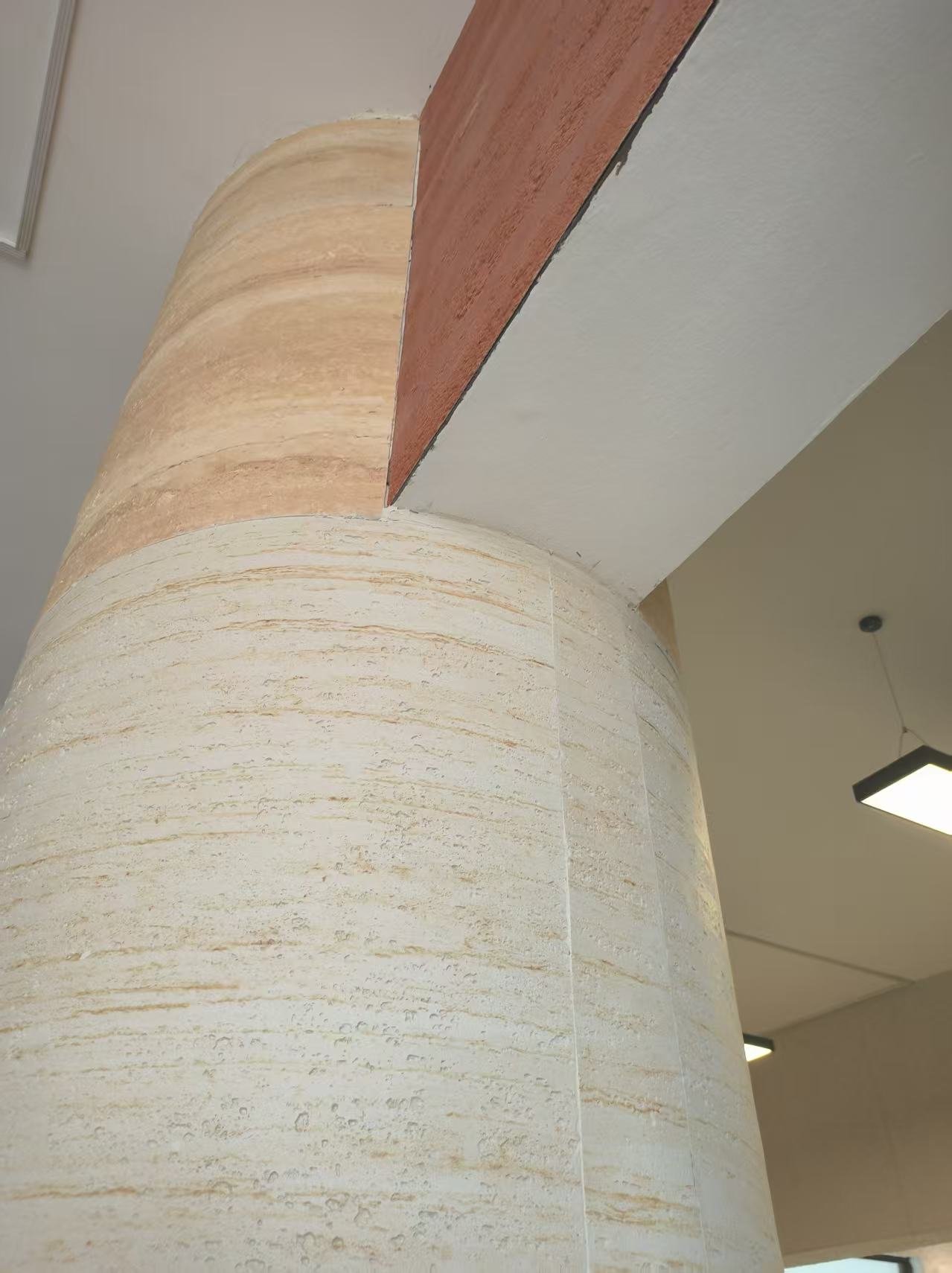
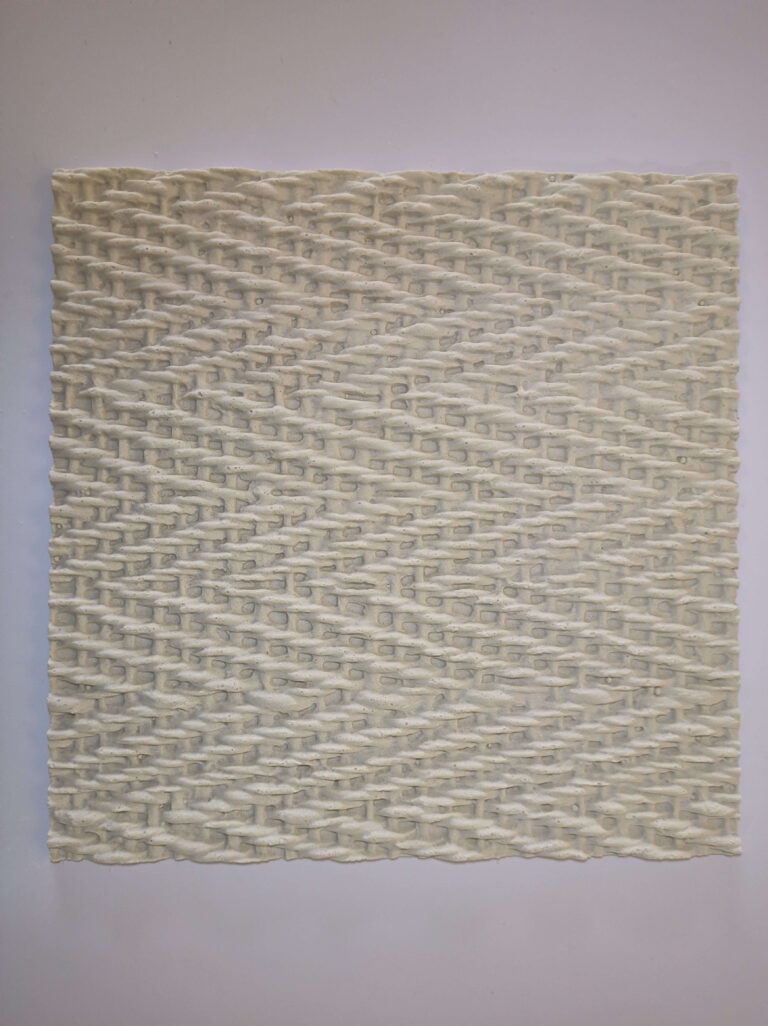
Pattern changes the answer as much as thickness does. A flat concrete or slate print flexes evenly. A deep relief pattern such as Starmoon Stone carries more material and a shaped face, so its minimum bend radius is about 300 mm.
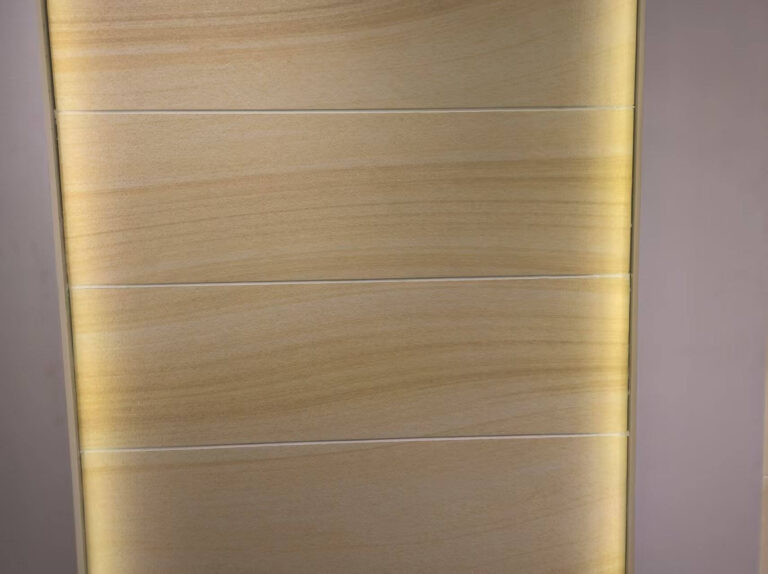
Grain direction adds a second variable. A wood or linear print has a running direction along the sheet. The panel turns most cleanly when the curve runs across that grain. Rotate the same sheet and the working radius tightens, which is where a flat sample can mislead a specifier.
Pattern is the second half of the flexible stone minimum bend radius. A flat print and a deep relief draw on the same gel and mesh. The relief builds more material into the face, though, and shortens the arc the sheet will take. Grain direction then decides how that arc is oriented.
This is why a curve cannot be approved from a small flat sample alone. Pattern, direction and target radius are checked together. A project that needs a matched curve can be produced to a pattern that suits it, since the range is developed pattern by pattern up to 8 mm. The wider choice sits in our guide to using flexible stone veneer on curved walls.
Reading the Bend Radius on a Plan
A radius on a drawing is read against two points. The first is the panel face, since the stone side sits on the outside of the curve. The second is the smallest arc on the run, which often sits at a corner return rather than the main sweep. Miss the small arc and the sheet is chosen for the wrong curve.
Where a curve is tighter than the working radius, the design is not blocked. It is handled in one of two ways. A computer-cut template holds the panel to a segmented arc, so a tight curve is built from a run of small flats. A formed trim closes the outside edge and hides the joint behind it.
Both methods are planned before production, not on site. Mark the tight arcs on the drawing and send them with the enquiry, so the sheet and the cut pattern are set together.
| Curve condition | Methode |
|---|---|
| Curve at or above the working radius | A single wrapped sheet |
| Curve tighter than the working radius | A segmented arc on a computer-cut template |
| Outside edge that has to close tight | A formed trim over the joint |
Three points on a drawing settle the answer, the smallest radius, the direction of any grain and the substrate under the sheet. Those three set the flexible stone minimum bend radius for the job.
Curved Walls, Columns and Arches
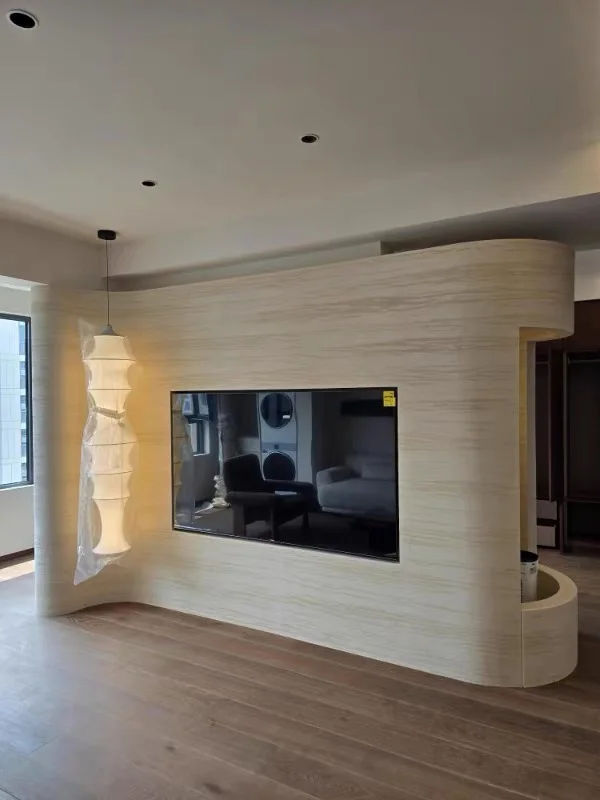
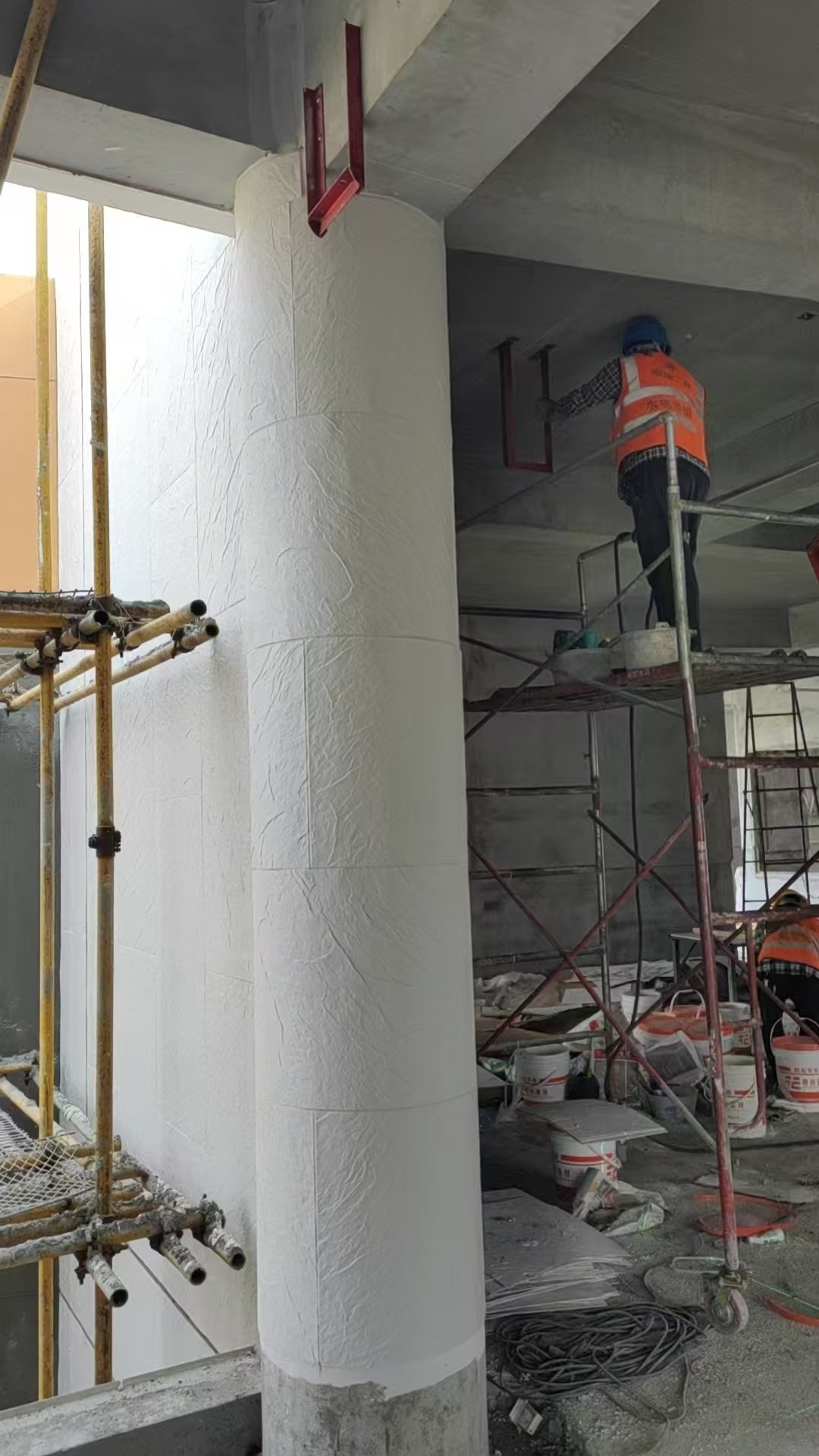
Curves arrive in three common shapes, and each leans on the same working radius. A cylindrical column is the simplest, since the sheet wraps a single radius and the seam falls on one line. A curved wall is a wider version of the same arc. An arch adds a rising radius and a tighter turn at the crown.
On a wrapped column, the flexible stone minimum bend radius is tested on a single sweep. That makes it the easiest place to confirm the figure on site, with a bending sample held to the exact diameter of the column before the full order is released.
A wrapped column in a retail or hotel space is often where the radius decides the sheet. At about 200 mm, the standard flexible Steinverblendung follows a typical structural column. A tight decorative column that turns inside that figure is better met with a thin travertine sheet.
Planning the seam matters as much as the radius. On a wrapped column, a single seam set behind the service side keeps the face unbroken. The arcs are closed in the guide to cladding curved walls and columns, and the wider picture sits under flexible stone specifications.
An arch is the least forgiving of the three. The radius tightens as the curve rises, so the crown is where the sheet meets its smallest arc. Set the format from the crown, not the springing line, and the rest of the arch follows within the working radius.
Substrates and Joints on Curves
A radius holds only as well as the substrate under it. A curved surface is checked for flatness along the arc, not just across it. A hollow or a high spot forces the sheet to bridge, and the bridge lifts at the edge the following day. A quick template drawn across the curve finds both before the panel goes up.
Adhesive stays with the standard system, so the dedicated adhesive and the matching sealer come from the same supplier as the sheet. A curved run takes the same dry-fix method as a flat one, worked from the centre of the arc outward to push air ahead of the panel.
A joint on a curve is set on the flat the template creates, not on the peak of the arc. Placing the seam at a low point lets the two edges meet without a step, and it keeps the line off the path the eye follows around the column.
Production runs under ISO 9001 quality management, and each order ships with a certificate of analysis that records the batch. That single record ties the sheet on site back to the run it came from, built by the Hersteller für flexible Stein-Wandpaneele hinter diesen Werten.
Frequently Asked Questions on Bend Radius

What is the minimum bend radius of flexible stone?
About 200 mm across the JMS Decor range for standard sheets. Thin travertine sheets bend tighter, and thick patterns such as Starmoon Stone need about 300 mm.
Does thickness change the bend radius?
Yes. The range runs from 2 mm to 8 mm, and the thinner the sheet, the tighter it bends. A thin travertine sheet at 2.5 to 3 mm follows a smaller radius than a sheet at the top of the range.
Can flexible stone wrap a round column?
Yes. A standard sheet wraps a column whose curve stays at or above the working radius of about 200 mm. Tighter decorative columns take a thin travertine sheet or a computer-cut template.
What happens when a curve is tighter than the radius?
The curve is built as a segmented arc from a computer-cut template, or closed with a formed trim. Both are set out at the design stage, so the sheet and the cut pattern match the drawing.
Is bend radius the same as diameter?
No. Radius measures from the centre of the arc to the panel face, and diameter is twice that figure. Confirm which one a drawing uses, because the two change whether a curve is possible.