Flexible stone thickness is the first number a specifier checks, because it sets the weight of a wall, the size of a curve and the finish a sheet can hold. The JMS Decor range runs from 2mm to 8mm. The right sheet for a job is the thinnest one that still meets the drawing.
Thickness is not a single figure with one answer. It moves with the stone pattern, the reinforcement inside the panel and the work the sheet has to do. A buyer who reads it that way picks a panel that installs cleanly and stays flat.
Flexible stone thickness is a design decision, not a detail. It sets the weight, the curve and the fixing on every wall.
What Flexible Stone Thickness Means
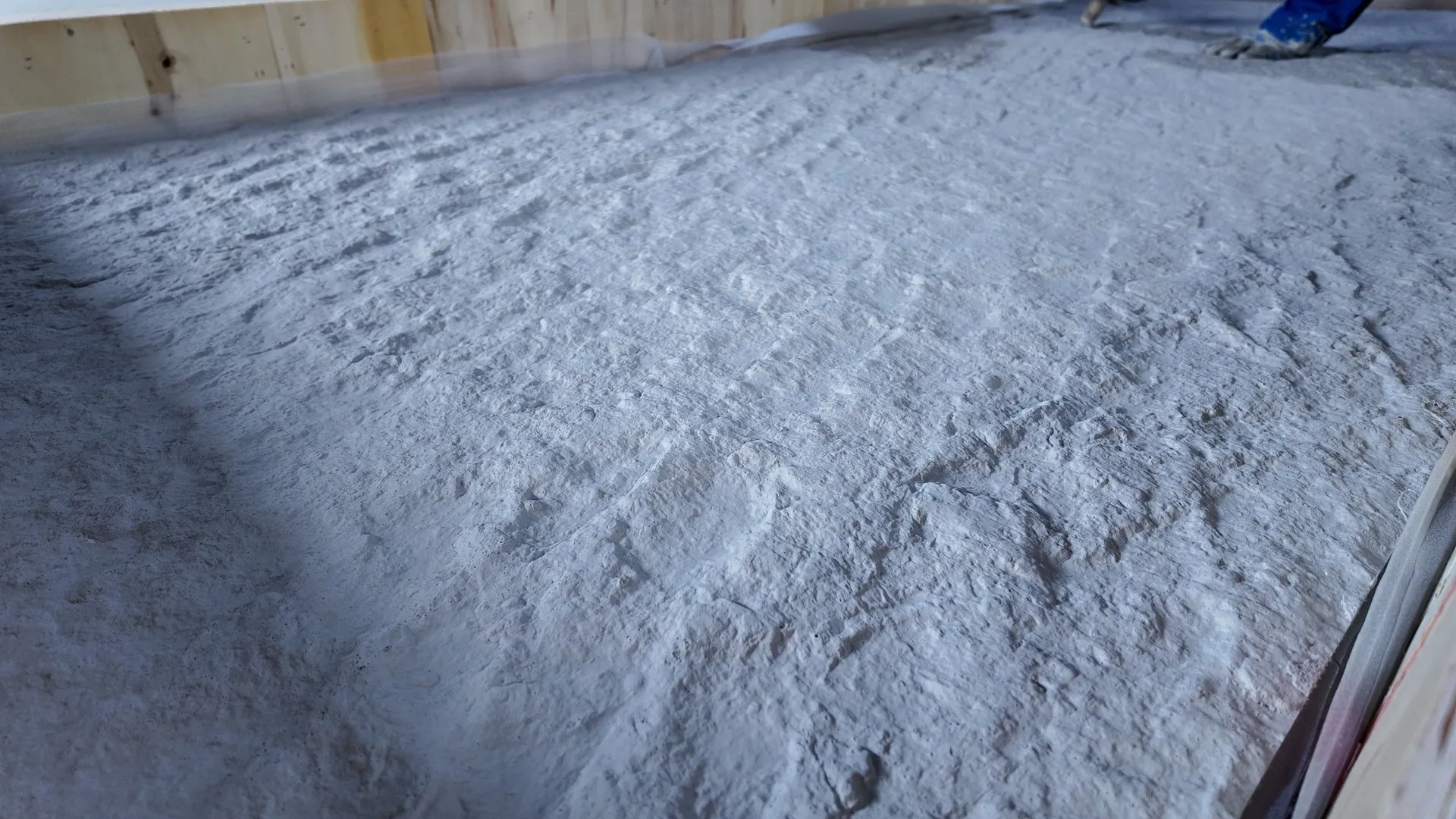
Thickness describes the depth of the finished sheet. It is measured from the back face to the stone surface. Because the panel is built from a stone surface bonded to a fibreglass mesh, the depth is set at the factory instead of cut on site.
That control matters on a project. A panel of the same pattern can be made thinner or thicker. The number on the datasheet tells the installer what the sheet will do once it is on the wall.
The JMS Decor flexible stone thickness range runs from 2mm at the thin end to 8mm at the top. The figure is tied to the pattern. A fine finish can be built thin, while a deep, relief-heavy pattern needs more material behind it.
Each panel is made from natural stone powder, an inorganic gel and a fibreglass mesh. The build is mineral rather than a coated surface, so the depth is part of the sheet from the start.
Depth is written in millimetres, and every order line names it beside the pattern and the panel size. A buyer can hold a sample against the specification and check the figure without cutting a sheet. The number is one of the first lines on the datasheet for that reason.
A thin sheet and a thick one can wear the same pattern. The difference is how much material sits behind the surface, which changes the weight of the panel and the way it bends. Two panels that look alike on a wall can behave quite differently in the hand.
The 2 to 8mm Range in Practice
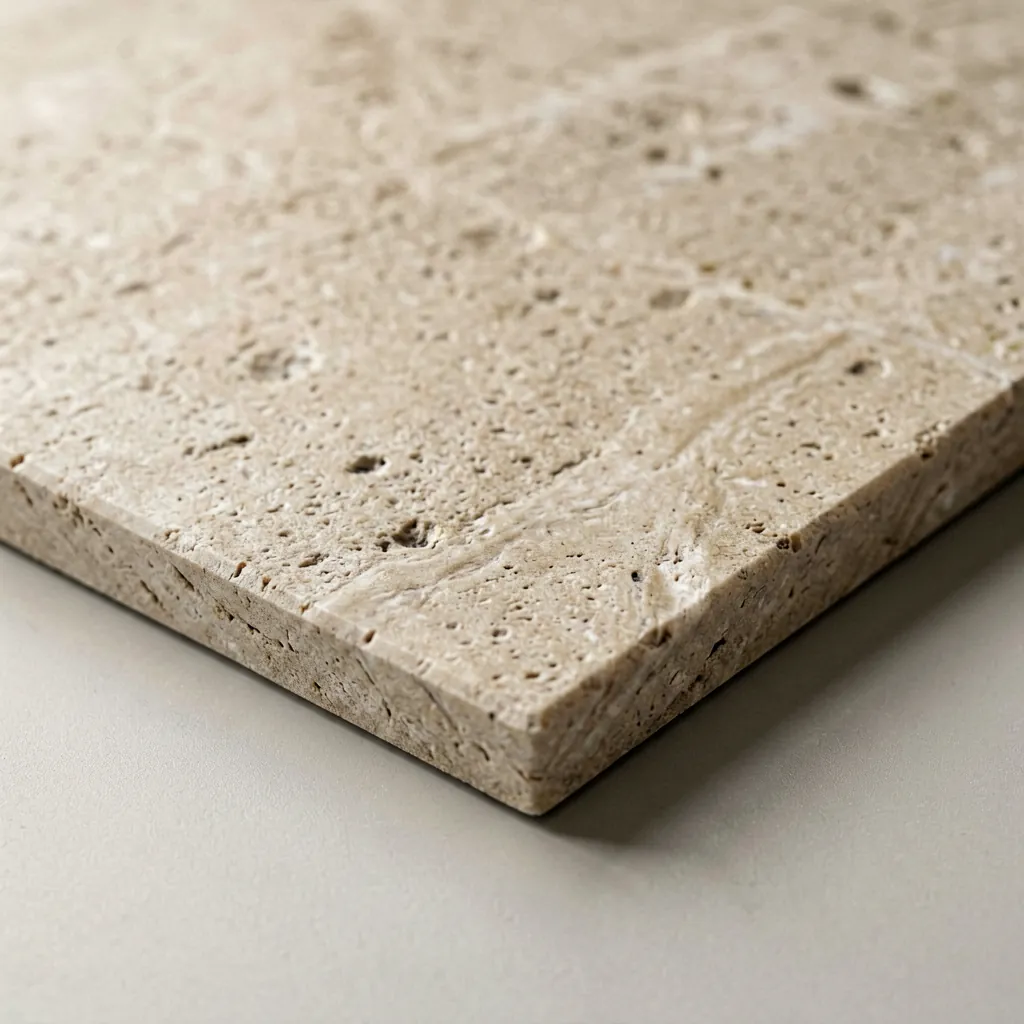
The thinnest sheets are the ones that bend and travel best. A 2mm sheet is the translucent grade, thin enough to pass light and light enough for one fitter to carry.
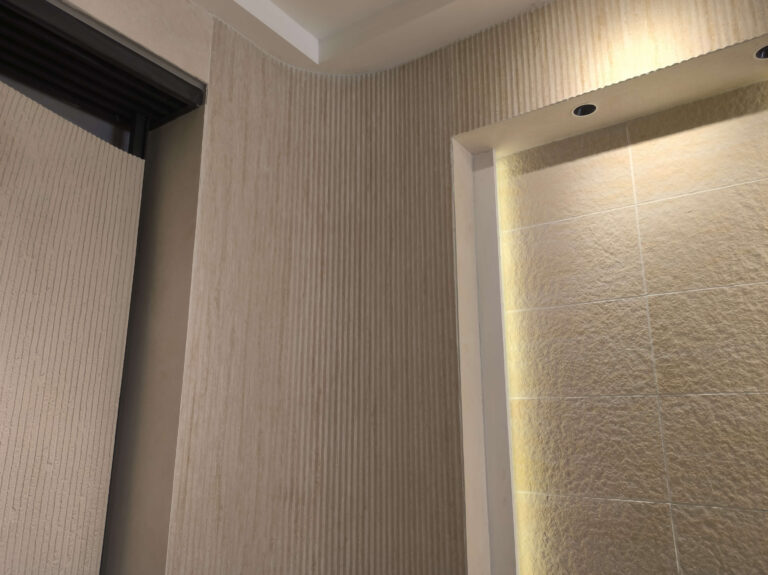
Most patterns sit in the middle of the range. A travertine finish is built around 2.5mm to 3mm, which keeps the surface detail while holding a small bend.
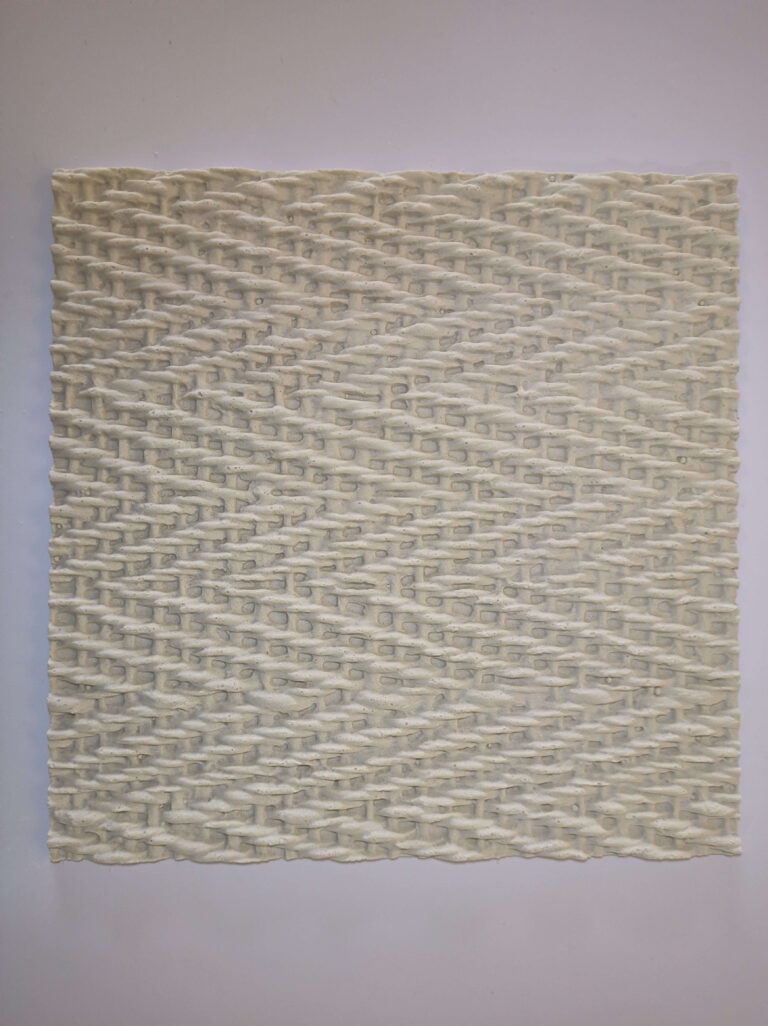
The thickest sheets reach 8mm and carry the deepest texture. They still weigh a fraction of natural stone, and they still fix with the same adhesive method.
Standard panel size is 1200 by 600mm. The range can be made up to 1200 by 2900mm for tall walls. Thickness and size work together, because a larger sheet has to stay flat across a longer span.
The middle of the range covers most wall work, from a corridor to a reception wall. A sheet between 3 and 5mm keeps the pattern sharp and still travels flat in a crate. The buyer picks the band that suits the finish and the curve, then confirms it on a sample.
| Thickness band | Where it fits |
|---|---|
| 2mm | Translucent panels and backlit feature walls |
| 2.5 to 3mm | Travertine and fine finishes that bend tightly |
| 3 to 5mm | Most standard wall and cladding patterns |
| 6 to 8mm | Deep relief finishes on sound substrates |
How Thickness Changes Weight and Load
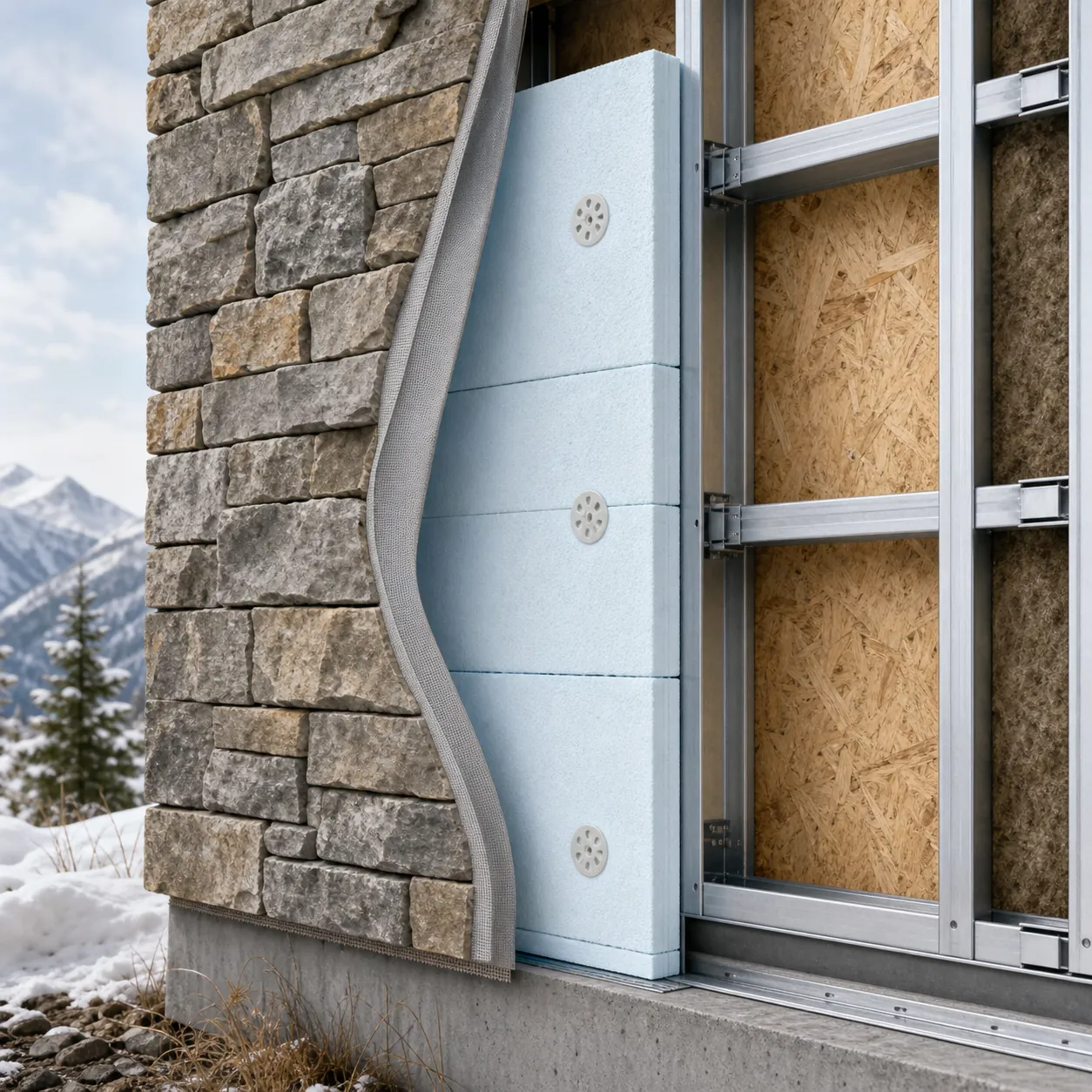
Weight follows thickness. Across the range the panels run from 1.5 to 6 kg per square metre, which is about one fifth of the same area in natural stone.
That figure is why a thin sheet matters on a refurbishment. A lighter panel puts less load on the wall behind it, and on the frame and floor that carry that wall.
Weight also shapes the shipping maths. A lighter pallet carries more square metres for the same freight, which trims the cost of a delivery across an ocean. On an old building the figure can decide whether the wall needs extra framing before the panels go up.
| Panel | Weight per square metre |
|---|---|
| Flexible stone over the full range | 1.5 to 6 kg |
| Natural stone of the same area | About five times heavier |
A designer can trade weight against texture. Where the substrate is strong, a thicker, deeper pattern is an option. Where the substrate is light or the building is old, a thinner sheet keeps the load down.
The same logic runs through the wider range of flexible Steinplatten, where weight and finish are quoted together on every line.
On a tall wall the load adds up across many panels. A thin sheet keeps that total low, which matters on a lightweight frame or a wall that was never built to carry stone. The saving shows up in the structure as well as in the finish.
Thickness and the Minimum Bend Radius

Bend and thickness are linked. A thinner sheet bends to a tighter curve, and a thicker one needs a wider radius before the surface starts to strain.
The general minimum bend radius is about 200mm. A complex, thick pattern such as Starmoon Stone needs a wider radius of about 300mm, because the deep relief does not compress.
Thin finishes go the other way. A travertine sheet at 2.5 to 3mm can take a smaller radius, which opens up narrow columns and tight arches.
A curve is measured across the outside of the panel, and the radius has to suit the pattern as well as the depth. A deep relief finish resists a tight bend more than a smooth one does. The sheet should be tested against the curve before the order is placed.
The full picture of curves sits in our guide to the flexible stone minimum bend radius.
Thinner Panels for Translucent and Curved Work
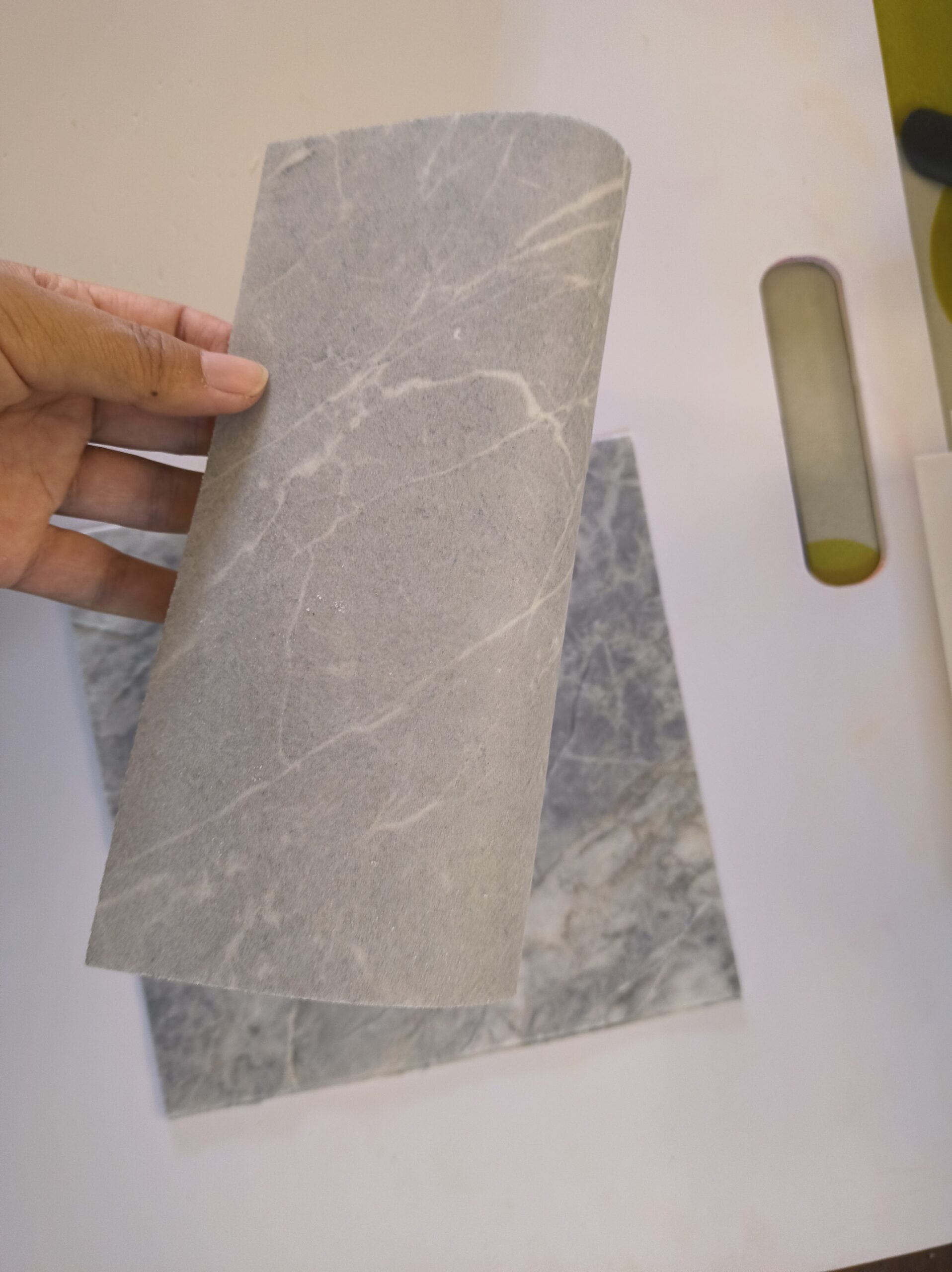
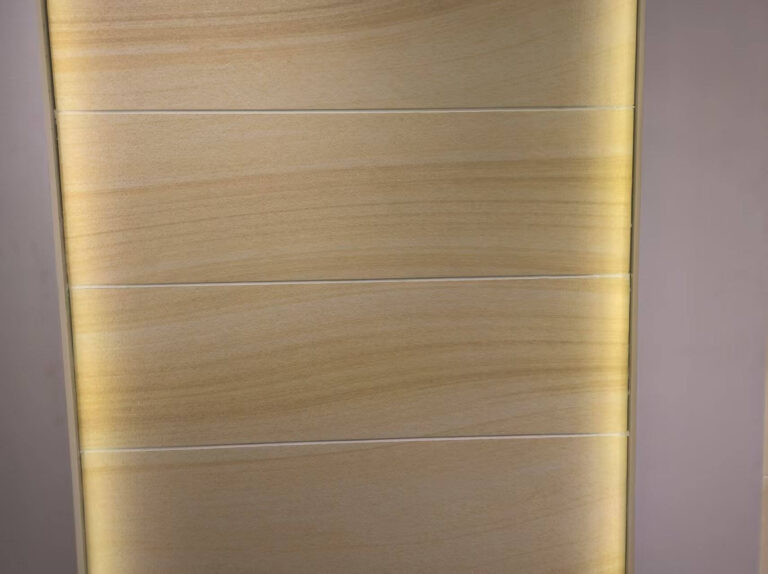
The thinnest end of the range is where light comes in. A 2mm translucent panel lets a backlight pass through the stone and turns a wall into a feature.
That grade is used on bar fronts, reception desks and feature walls where the glow is part of the design. The same thinness makes it simple to wrap a curve.
Light and curve often meet in a hotel lobby or a bar. A thin panel wraps the column and still lets a backlight glow through the stone. One sheet then does the work of a feature wall and a lighting element at the same time.
Where a designer wants a deeper pattern on a curved wall, the two needs are balanced at the sampling stage. A slightly thicker sheet can take a wider radius, and a slightly thinner one can take a tighter curve. The sample shows which trade-off fits the drawing.
Thin sheets also cut and handle easily. A fitter can shape them around a column without the breakage that comes with a rigid slab, which is the difference set out in flexible stone versus sintered stone.
Matching Thickness to the Substrate
The sheet has to match the wall behind it. A smooth, sound substrate takes a thin panel fixed with a dedicated adhesive, while a rougher surface may suit a thicker sheet that levels small variation.
Because the panels are light, they can fix over an existing finish in a refurbishment. That removes the demolition and the dust that a tile strip-out brings.
The panels are fixed with a dedicated adhesive, so there is no mortar, no plaster and no heavy noise or dust. A crew can fit a run of panels at night and hand the room back the next morning. That is what allows a refurbishment to move from one room to the next without closing a floor.
The panels are cut with a simple knife or a small saw, which keeps the tools light on site. Offcuts are small and light, so the waste on a job stays low. A fitter can carry a whole day of panels by hand.
Support materials come from the same factory. Adhesive, sealant and installation accessories are supplied with the panels, so the fixing matches the sheet. The standard minimum order is 300 square metres, explained in our guide to flexible Stein-MOQ, and it can be adjusted for a smaller job.
Fire class holds across the range. JMS Decor flexible stone is tested to ASTM E84 Class A, with a flame spread index of 25 or below, and to EN 13501-1 Class A2 for European projects. The factory runs a quality system to ISO 9001 und ISO 14000, and production keeps a defect rate below 1 percent.
Die Hersteller für flexible Stein-Wandpaneele behind these figures supplies the full range, and the articles around it sit under product and specification guides.
Frequently Asked Questions on Thickness

Depth questions come up early on a quotation, because they touch weight, curve and cost. The answers below cover the ones buyers raise most often, and each points back to the range behind the sheet.
What flexible stone thickness range is available?
The range runs from 2mm to 8mm. The thin end includes a 2mm translucent panel, while the thick end carries the deepest stone patterns. Standard panels are made at 1200 by 600mm and can reach 1200 by 2900mm for tall walls.
Does thickness change the weight of a sheet?
Yes. Weight runs from 1.5 to 6 kg per square metre across the range, which is about one fifth of natural stone. A thinner sheet puts less load on the wall, the frame and the floor that carry it.
Which thickness bends the tightest?
A thinner sheet bends to a tighter radius. The general minimum bend radius is about 200mm, and a thin travertine finish at 2.5 to 3mm can go smaller. A thick, relief-heavy pattern needs a wider radius, around 300mm.
What is the 2mm translucent panel used for?
The 2mm grade lets a backlight pass through the stone. It is used on bar fronts, reception desks, hotel feature walls and displays where the glow is part of the design and the sheet has to wrap a curve.
Can I confirm thickness before ordering?
Yes. Standard patterns are sampled in 2 to 3 days, and a private colour takes about 7 days. Ask for the finish and the curve you have in mind, and the thickness and weight can be confirmed against a physical sample first.