
3. Los hospitales y clínicas son los espacios más exigentes para un revestimiento de paredes: productos químicos agresivos de limpieza, rutinas de desinfección diarias, auditorías de control de infecciones y un cliente cuya primera pregunta nunca es sobre estética. El revestimiento de piedra flexible puede desenvolverse bien en estos entornos: la superficie mineral es no porosa en términos de servicio, se logran detalles con juntas imperceptibles, y la ventaja en peso resulta clave en muros de renovación que no pueden soportar losetas; sin embargo, se especifica con argumentos y precauciones distintas a las de un hotel. Esta guía cubre las preguntas reales que hacen los profesionales que especifican en el sector salud, las respuestas honestas que el material puede ofrecer, y los ajustes necesarios en el detallado constructivo.
4. Qué exige realmente la higiene a un revestimiento de pared
5. La limpieza clínica no es lo mismo que la limpieza general. Las superficies se limpian con desinfectantes: compuestos cuaternarios de amonio, agentes basados en cloro, soluciones alcohólicas, a diario e incluso varias veces al día. Las juntas se inspeccionan por riesgo de acumulación de carga biológica. Las zonas húmedas deben soportar salpicaduras y humedad permanente. Los impactos ocurren a la altura de los carros de equipamiento, y la protección de paredes es una disciplina propia. Un revestimiento propuesto para este entorno se evalúa con base en cuatro preguntas: ¿se puede limpiar enérgicamente y con frecuencia? ¿resiste químicamente? ¿son limpiables sus juntas? ¿y cómo falla ante un impacto?
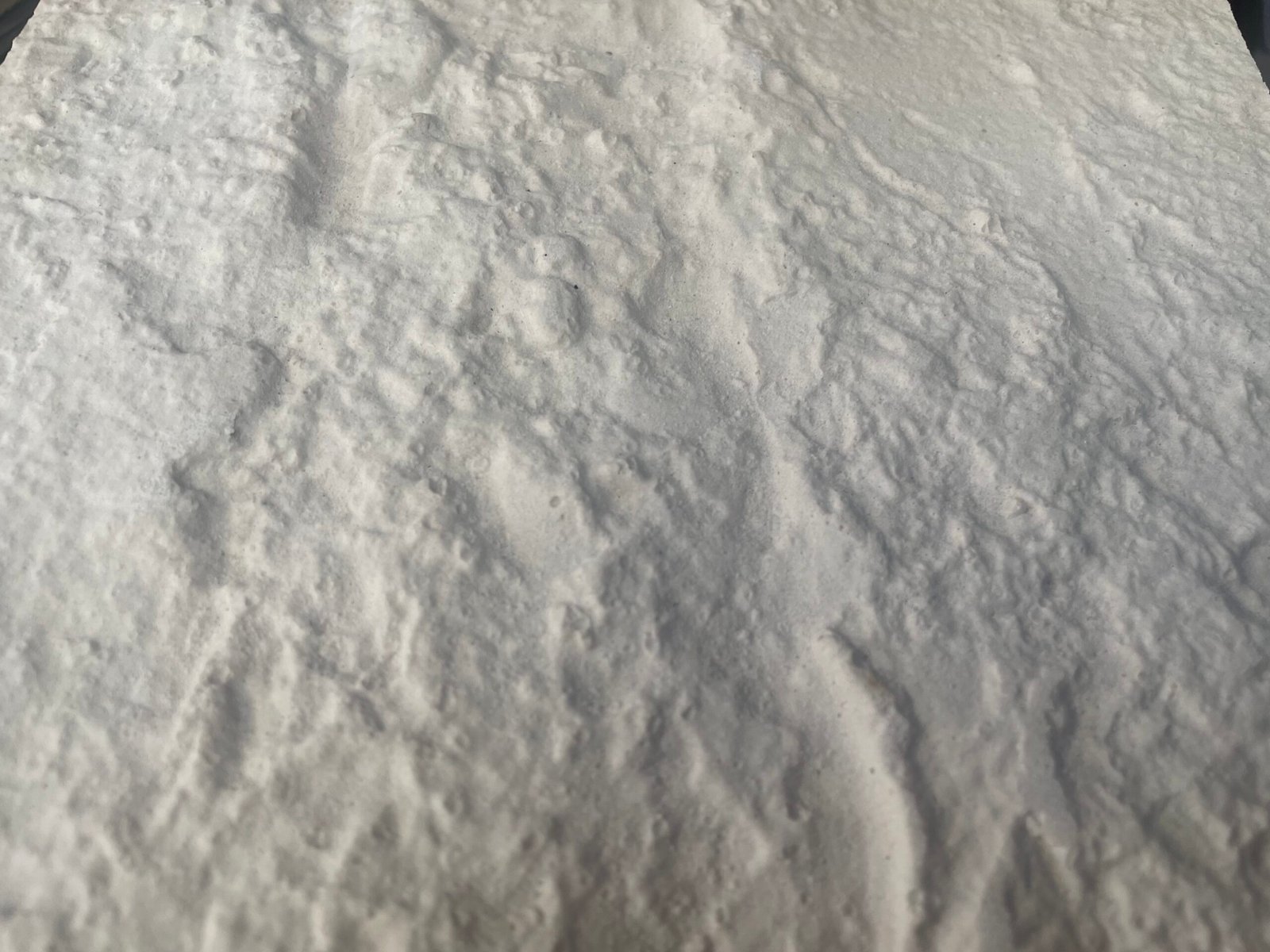
6. La piedra flexible responde a las tres primeras con fortalezas reales. La superficie mineral impresa es lo suficientemente lisa para limpiarse, y el sistema de adhesivo produce un plano uniforme con juntas que pueden sellarse a nivel. La cuarta pregunta —impacto— es donde la especificación honesta marca la diferencia, porque un composite delgado no es un sólido, y las esquinas de un pasillo muy transitado necesitan una estrategia de protección que ya usan los proyectos clínicos.
7. Qué se puede afirmar —y qué no
8. Las afirmaciones honestas son estas: la cara es una superficie mineral que tolera rutinas de desinfección; no contiene nutrientes para el crecimiento orgánico, y no depende de un recubrimiento que, al desgastarse, exponga un cuerpo poroso. Está disponible con clasificación de fuego según ASTM E84 Clase A y EN 13501-1 Clase A2, reconocidas por los marcos normativos del sector salud. Se instala sobre paredes existentes —el argumento clave en renovaciones hospitalarias, donde cerrar una planta para derribar azulejos se mide en días-paciente—. Y pesa 1,5–6 kg/m², por lo que los muros de pasillos y habitaciones lo aceptan sin refuerzo.
9. Las afirmaciones que no pueden hacerse: que el panel sea una superficie antimicrobiana, que reemplace una membrana impermeabilizante, que esté certificado para zonas quirúrgicas o contacto con alimentos, o que esté aprobado para toda química de desinfectante. Esas respuestas dependen de ensayos y certificaciones, y la especificación las aborda mediante la solicitud de documentación, no mediante adjetivos comerciales. Lo que el fabricante puede suministrar —declaración de conformidad (COA), informes de fuego, guía de mantenimiento— debe incluirse en el paquete de entrega técnica, el mismo que nuestro submittal guide assembles for any commercial buyer.
How should the joints be detailed for clinical cleaning?
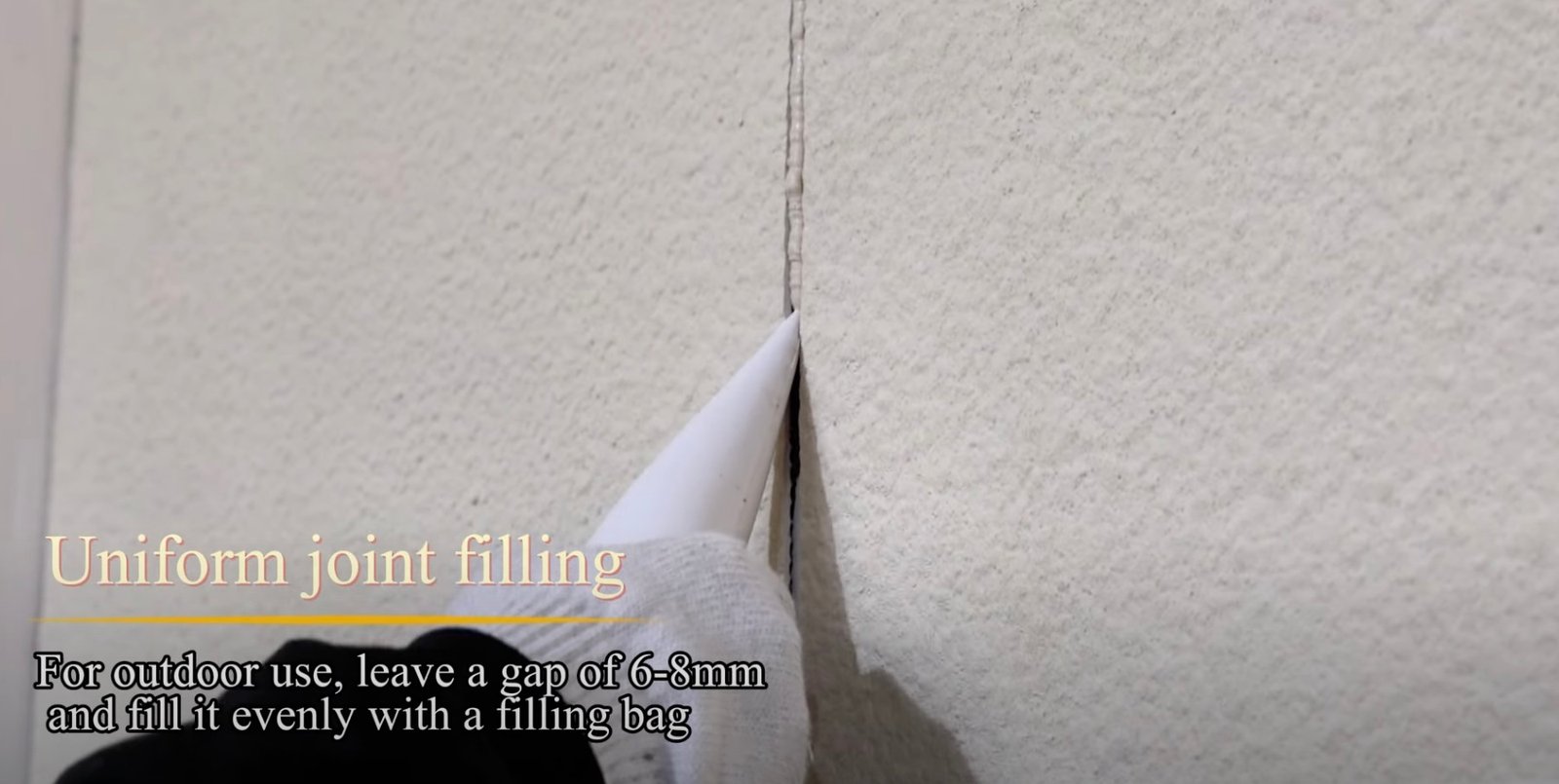
Joints are where a finish earns or loses its clinical approval. The rules that matter: joints tooled flush rather than recessed, so no ledge collects residue; a flexible sealant compatible with the cleaning chemistries at any joint that meets water; and field joints aligned with the panel grid so the wall reads as planes, not patchwork. Recessed grout-style joints, the kind a tiled wall accepts, are exactly what a wipe-down regimen punishes — and this is one of the genuine advantages over tile, not a cosmetic preference.
At corners and terminations, the detailing follows the same hygiene logic: coved or trimmed rather than exposed thin edges, with the edge treatment chosen so nothing collects at the transition. Inside wet rooms the layer sequence is the tanked system from our wet-room guide, with every penetration — the accessories, the boxed outlets, the pipe entries — sealed as a waterproofing detail first and a hygiene detail second.
How does chemical cleaning interact with the face?
The printed mineral surface is robust to routine cleaning, but the specification should still close the loop with the manufacturer’s care guidance rather than assuming unlimited chemistry. Three practical protections keep the wall healthy for years. First, seal and maintain as the system documents — a maintained surface sheds residue instead of absorbing it, per the logic in our care and maintenance guide. Second, wipe high-contact zones on the schedule the infection-control team sets, using the chemistries they approve, with any new agent patch-tested on a spare panel first. Third, keep the impact zones — corners of corridors, doors, trolley routes — under the wall-protection products clinical projects already specify, so the finish is never asked to be a bumper.
Where does flexible stone fit in a healthcare project?
Its sweet spot is the clinical-adjacent interior that needs dignity and cleanliness without institutional sterility: consultation and waiting rooms, ward corridors, patient room feature walls, clinics and diagnostic centres, spa-like maternity and paediatric rooms where calm surfaces measurably matter. The stone-tone warmth reads human in rooms where white laminate reads hostile, and the refurbishment path — bonded over sound existing walls, with sockets first-fixed and boxes set to finished depth per our socket finishing guide — is the path hospital estates teams prefer, because it does not close rooms for weeks.
Where it does not belong: surgical or sterile zones with their own certified wall systems, food-preparation surfaces, and any assembly whose certification a decorative bonded finish cannot carry. Saying so in the specification is what earns the manufacturer the rest of the building.
How does the refurbishment path work in an occupied facility?
Most hospital projects are not new builds; they are ward refits where the wing must return to service on a date. This is where the material’s physics become the client’s programme advantage. The wall arrives as sheets, not as pallets of block: a corridor that would have been demolished, re-boarded and tiled over weeks can be cleaned, inspected, primed as the system requires and re-clad in days, with the light logistics that a 1.5–6 kg/m² panel allows — no hoists, no structural review for a feature wall, no dust cycle that an infection-control officer would have to chase.
The sequence disciplines are the fit-out ones our trade sequencing guide applies, compressed: services first-fixed and tested before cladding, substrate accepted and photographed as a handoff condition, the wall protected the day it is finished because the ward opens to real traffic immediately. Noise and dust — the two things hospital estates teams actually measure on a refit — are minimal by the nature of the method: no percussion fixing, no wet cutting on the wall, and the cutting that does happen happens off the corridor.
What does specification look like for a healthcare tender?
Tender language for this material should be concrete on four points: the fire classification to be evidenced (the certificates travel with the submittal), the cleaning-chemistries the surface must tolerate with the manufacturer’s written confirmation, the joint standard — flush-tooled, sealed where wetted — as a measurable workmanship item, and the spare-panel allowance from the same batch that will live with the estate’s maintenance team. Vague “hygienic finish” language does the opposite of what tenderers intend: it invites every bidder to claim anything. The same evidence-first drafting discipline our contract guide applies to supply clauses belongs verbatim in healthcare specifications, because clinical clients read documents and remember exactly what was promised.
Which patterns and tones serve healthcare interiors?
Pattern selection in clinical settings follows the same viewing-distance and maintenance logic as any interior, with two healthcare-specific adjustments. First, tone does part of the operational work: mid-tone surfaces show less between cleans than stark white, which is why many estates teams prefer warm neutrals in corridors — the calm of our pattern selection framework with a maintenance rationale attached. Second, relief depth should stay shallow in wipe-down zones: deep stratification is harder to clean flush, while fine travertine and smooth cement-look faces carry the tone and keep the surface inspectable at a glance.
The dignity argument should not be undersold. Patient-room and consultation interiors specified in stone tones read as considered spaces rather than institutional ones, and that difference is visible in patient feedback as well as in photography. The material makes it affordable at scale precisely because the weight and installation path are light — the same refurbishment economics that brought it into the corridor bring it into the rooms, without the demolition the old alternatives demanded.
PREGUNTAS FRECUENTES
Is flexible stone antimicrobial?
No antimicrobial claim should be made or accepted. It is a cleanable mineral surface; hygiene performance comes from the cleaning regimen, the flush joints and the maintenance, not from the material killing organisms.
Can it go inside a shower room in a care setting?
As part of a tanked assembly, with the membrane, falls and sealed penetrations done per the wet-room sequence before the stone is bonded. The finish is not the waterproofing; it closes over a system that already is.
¿Cómo se comporta ante el impacto de una butaca de ruedas?
A la altura de los vanos y de los carros, cualquier revestimiento fino necesita protección contra impactos, algo que ya se utiliza en proyectos clínicos. La ventaja del chapa es que las secciones dañadas pueden reemplazarse con repuestos de lotes coincidentes, en lugar de repararse con parches visibles.
¿Qué documentación debe solicitar el equipo de instalaciones de un hospital?
El mismo paquete que acompaña a un expediente técnico comercial: clasificación de fuego, certificado de análisis (COA), guía de mantenimiento y trazabilidad de lotes; además, la confirmación del fabricante sobre la compatibilidad de la química de limpieza con los agentes que utiliza el hospital. Solicite documentación, no adjetivos.
Especificarlo junto con el régimen de limpieza y las zonas de impacto en los planos, y la documentación en el expediente técnico. El formato y los datos de clase de fuego para anclar la especificación están en la revestimiento de piedra flexible página, y las prácticas de limpieza de superficies en interiores sanitarios están publicadas por organismos como la Sociedad Americana de Ingeniería para la Asistencia Sanitaria.