
Hospitals and clinics are the hardest rooms a wall finish can be asked into: aggressive cleaning chemicals, wipe-down regimens that run daily, infection-control reviews, and a client whose first question is never about looks. Flexible stone veneer can hold its own in these interiors — the mineral face is non-porous in service terms, seamless-jointed details are achievable, and the weight advantage matters on refurbishment walls that cannot take slab — but it is specified with different arguments and different cautions than a hotel wall. This guide covers what healthcare specifiers actually ask, which answers the material can honestly give, and where the detailing has to change.
What hygiene actually demands from a wall finish
Clinical cleaning is not the same as housekeeping. Surfaces are wiped with disinfectants — quaternary ammonium compounds, chlorine-based agents, alcohol solutions — often daily, sometimes several times a day. Joints are inspected as hiding places for bioburden. Wet zones are expected to tolerate splash and standing humidity. Impact happens at trolley height, and wall protection is a discipline of its own. A finish proposed into this environment is judged on four questions: can it be cleaned hard and often; does it hold up chemically; are its joints cleanable; and how does it fail when something hits it.
Flexible stone answers the first three with real strengths. The printed mineral face is smooth enough to wipe, and the adhesive-bed system produces a flush surface with joints that can be tooled flush and sealed. The fourth question — impact — is where honest specification matters, because a thin composite is not a solid body, and the corners of a busy corridor need the protection strategy clinical projects already use.
What can be claimed — and what cannot
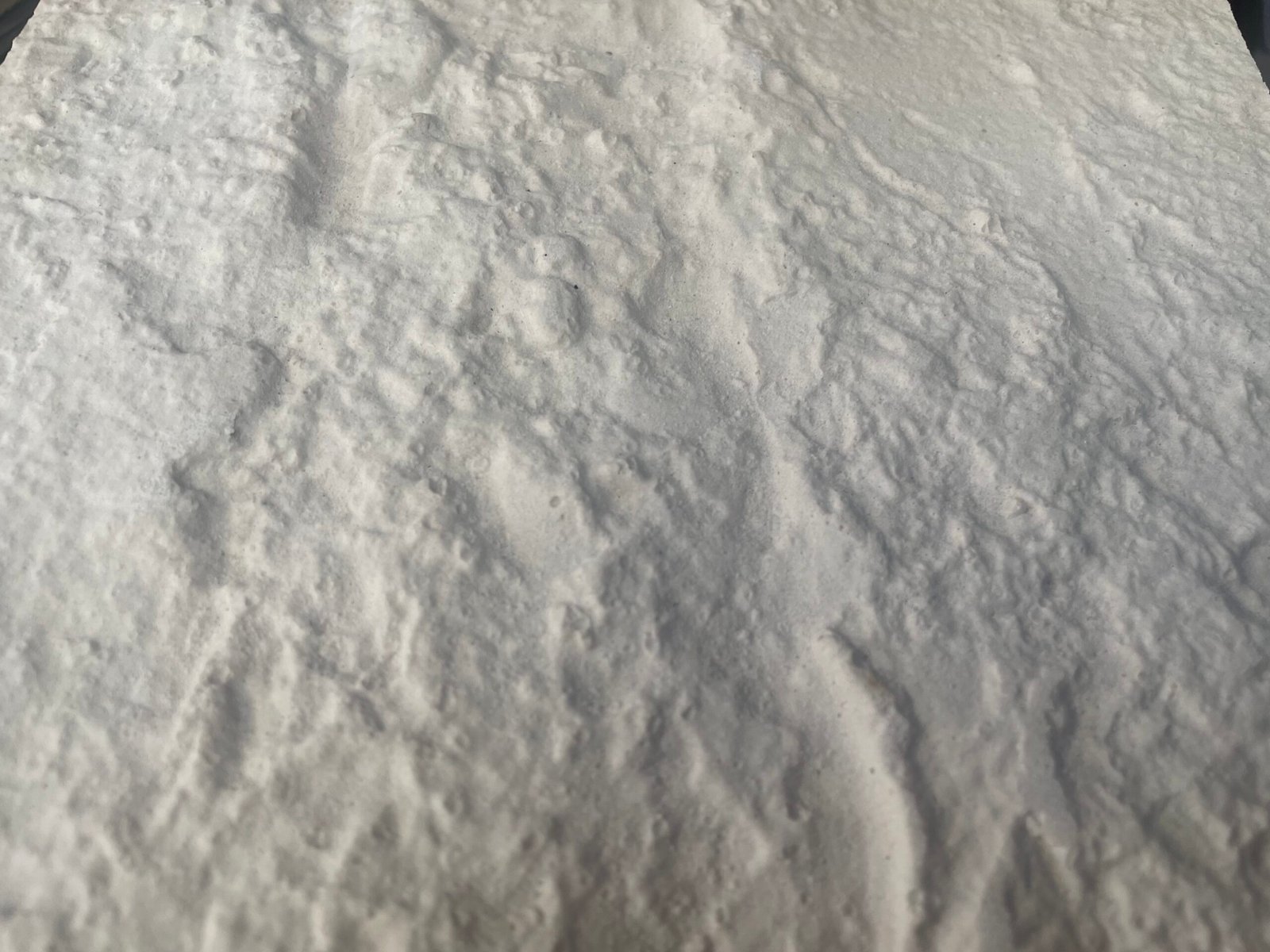
The honest claims are these. The face is a mineral surface that tolerates wipe-down regimens; it contains no organic growth nutrient, and it does not rely on a coating that wears to expose a porous body. It is available with fire classification to ASTM E84 Class A and EN 13501-1 Class A2, which healthcare specification frameworks recognise. It installs over existing walls — the refurbishment argument that matters in hospitals, where closing a ward to demolish tile is measured in patient-days. And it weighs 1.5–6 kg/m², so corridor and room walls take it without reinforcement.
The claims that cannot be made: that the panel is an antimicrobial surface, that it replaces a waterproof membrane, that it is rated for surgical zones or food-contact, or that it is approved for every disinfectant chemistry. Those are matters of testing and certification, and the specification answers them by requesting documentation, not by sales adjectives. What the manufacturer can supply — COA, fire reports, care guidance — belongs in the submittal, the same package our субмиттал assembles for any commercial buyer.
How should the joints be detailed for clinical cleaning?
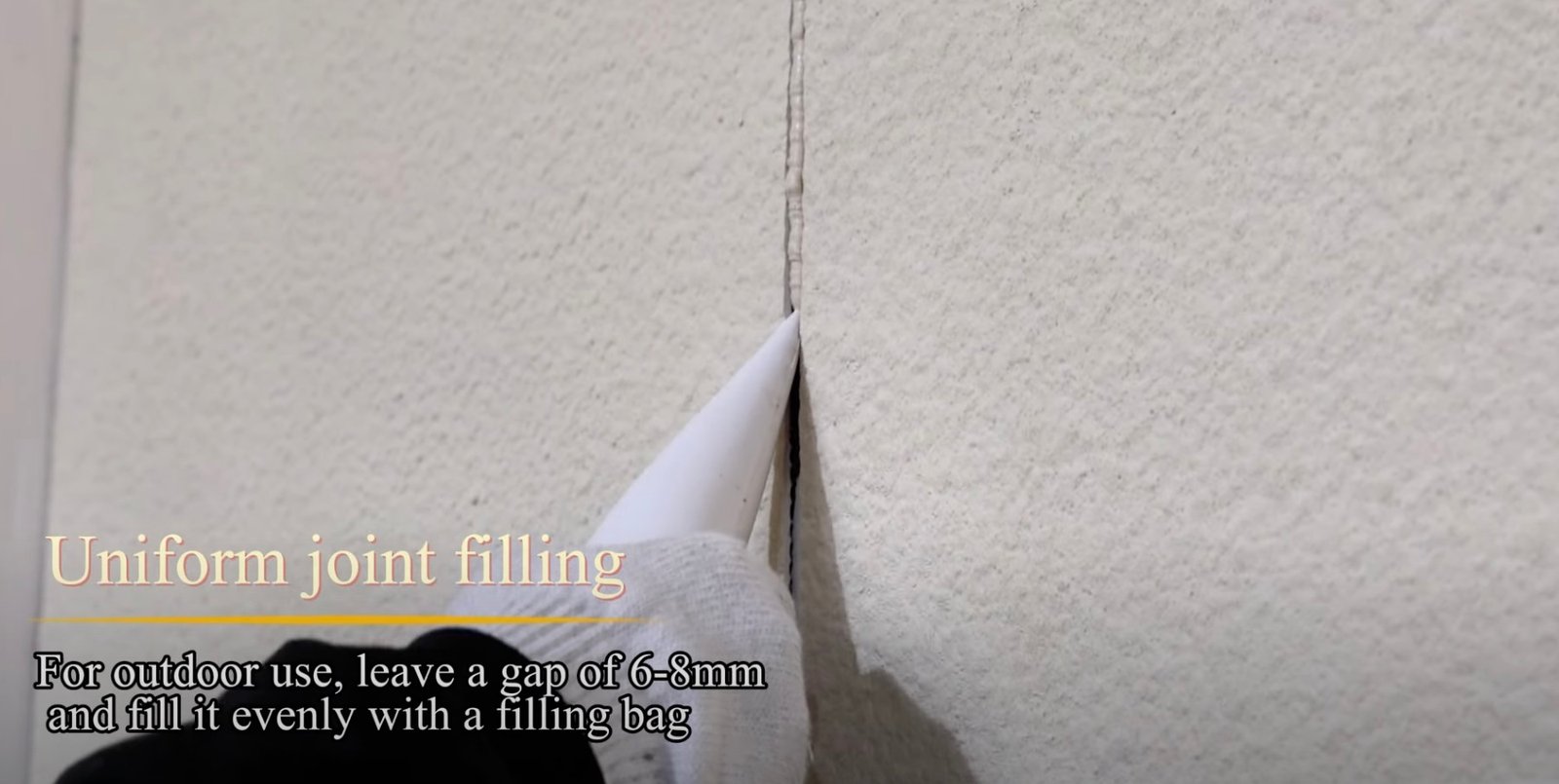
Joints are where a finish earns or loses its clinical approval. The rules that matter: joints tooled flush rather than recessed, so no ledge collects residue; a flexible sealant compatible with the cleaning chemistries at any joint that meets water; and field joints aligned with the panel grid so the wall reads as planes, not patchwork. Recessed grout-style joints, the kind a tiled wall accepts, are exactly what a wipe-down regimen punishes — and this is one of the genuine advantages over tile, not a cosmetic preference.
At corners and terminations, the detailing follows the same hygiene logic: coved or trimmed rather than exposed thin edges, with the edge treatment chosen so nothing collects at the transition. Inside wet rooms the layer sequence is the tanked system from our wet-room guide, with every penetration — the accessories, the boxed outlets, the pipe entries — sealed as a waterproofing detail first and a hygiene detail second.
How does chemical cleaning interact with the face?
The printed mineral surface is robust to routine cleaning, but the specification should still close the loop with the manufacturer’s care guidance rather than assuming unlimited chemistry. Three practical protections keep the wall healthy for years. First, seal and maintain as the system documents — a maintained surface sheds residue instead of absorbing it, per the logic in our care and maintenance guide. Second, wipe high-contact zones on the schedule the infection-control team sets, using the chemistries they approve, with any new agent patch-tested on a spare panel first. Third, keep the impact zones — corners of corridors, doors, trolley routes — under the wall-protection products clinical projects already specify, so the finish is never asked to be a bumper.
Where does flexible stone fit in a healthcare project?
Its sweet spot is the clinical-adjacent interior that needs dignity and cleanliness without institutional sterility: consultation and waiting rooms, ward corridors, patient room feature walls, clinics and diagnostic centres, spa-like maternity and paediatric rooms where calm surfaces measurably matter. The stone-tone warmth reads human in rooms where white laminate reads hostile, and the refurbishment path — bonded over sound existing walls, with sockets first-fixed and boxes set to finished depth per our socket finishing guide — is the path hospital estates teams prefer, because it does not close rooms for weeks.
Where it does not belong: surgical or sterile zones with their own certified wall systems, food-preparation surfaces, and any assembly whose certification a decorative bonded finish cannot carry. Saying so in the specification is what earns the manufacturer the rest of the building.
How does the refurbishment path work in an occupied facility?
Most hospital projects are not new builds; they are ward refits where the wing must return to service on a date. This is where the material’s physics become the client’s programme advantage. The wall arrives as sheets, not as pallets of block: a corridor that would have been demolished, re-boarded and tiled over weeks can be cleaned, inspected, primed as the system requires and re-clad in days, with the light logistics that a 1.5–6 kg/m² panel allows — no hoists, no structural review for a feature wall, no dust cycle that an infection-control officer would have to chase.
The sequence disciplines are the fit-out ones our trade sequencing guide applies, compressed: services first-fixed and tested before cladding, substrate accepted and photographed as a handoff condition, the wall protected the day it is finished because the ward opens to real traffic immediately. Noise and dust — the two things hospital estates teams actually measure on a refit — are minimal by the nature of the method: no percussion fixing, no wet cutting on the wall, and the cutting that does happen happens off the corridor.
What does specification look like for a healthcare tender?
Tender language for this material should be concrete on four points: the fire classification to be evidenced (the certificates travel with the submittal), the cleaning-chemistries the surface must tolerate with the manufacturer’s written confirmation, the joint standard — flush-tooled, sealed where wetted — as a measurable workmanship item, and the spare-panel allowance from the same batch that will live with the estate’s maintenance team. Vague “hygienic finish” language does the opposite of what tenderers intend: it invites every bidder to claim anything. The same evidence-first drafting discipline our contract guide Поставочные обязательства должны дословно входить в медицинские спецификации, потому что клинические заказчики внимательно читают документы и дословно запоминают всё, что было обещано.
Какие узоры и тона подходят для интерьеров медицинских учреждений?
Выбор узоров в клинических помещениях подчиняется тем же принципам визуального восприятия и технического обслуживания, что и в любом другом интерьере, но с двумя отраслевыми особенностями. Во-первых, тон выполняет часть функциональной задачи: поверхности среднего тона показывают меньше загрязнений между уборками, чем ярко-белые, поэтому многие эксплуатационные команды предпочитают тёплые нейтральные оттенки в коридорах — так достигается спокойная атмосфера нашей системы выбора узоров с обоснованным подходом к обслуживанию. Во-вторых, высота рельефа в зонах влажной протирки должна оставаться небольшой: глубокая слоистая текстура сложнее вымывается в уровень, тогда как мелкая травертиновая и гладкая «под цемент» поверхность передают нужную тональность и сохраняют контролируемую чистоту взгляда.
Аргумент достоинства не следует преуменьшать. Интерьеры палат и кабинетов консультаций, оформленные в каменных тонах, воспринимаются как продуманные пространства, а не как типовые учреждения, и эта разница заметна как в отзывах пациентов, так и на профессиональных фотографиях. Материал становится доступным в масштабе именно благодаря малому весу и лёгкому способу монтажа — та же экономика реставрации, которая вывела его в коридоры, позволяет использовать его в комнатах без демонтажа, требовавшегося прежними альтернативами.
Часто задаваемые вопросы
Обладает ли гибкий камень антибактериальными свойствами?
Никаких заявлений об антибактериальных свойствах делать или принимать нельзя. Это моющаяся минеральная поверхность; гигиенические характеристики обеспечивают режим очистки, герметичность стыков и техническое обслуживание, а не способность материала уничтожать микроорганизмы.
Можно ли применять его в душевых комнатах медицинских учреждений?
В составе гидроизолированного узла: мембрана, уклоны и герметизация проходов выполняются по технологии мокрой комнаты до приклеивания камня. Финишное покрытие не является гидроизоляцией само по себе; оно накрывает систему, которая уже обеспечивает водонепроницаемость.
Как материал ведёт себя при ударе каталки для колясок?
На высотах угла и перемещения тележек любая тонкая отделка требует ударопрочной защиты, которую уже применяют в клинических проектах. Преимуществоveneера в том, что повреждённые участки можно заменять из партийных запасов, а не ремонтировать заметной заплатой.
Какие документы должна запрашивать команда по эксплуатации больницы?
Тот же комплект, который включает коммерческая спецификация: класс пожарной безопасности, сертификат соответствия (COA), рекомендации по уходу, прослеживаемость по партиям, — плюс подтверждение от производителя совместимости чистящей химии с агентами, используемыми в больнице. Запрашивайте документы, а не эпитеты.
Указывайте его в комплекте с регламентом очистки и зонами ударного воздействия на чертеже, а также документацией в спецификации. Формат и данные о классе пожарной безопасности для привязки спецификации находятся на flexible stone veneer странице, а практика обеспечения легкоочищаемости поверхностей в медицинских интерьерах опубликована такими организациями, как Американское общество инженеров медицинского назначения.