Flexible Stone vs WPC Wall Panels for Exterior Cladding is the first checkpoint buyers should lock before they approve a supplier, budget, or production slot. When a project calls for exterior cladding, the decision between flexible stone vs WPC wall panels usually lands on the procurement desk without a clear winner. Most contractors lean on habit — WPC for its known durability, or traditional stone for its look. That instinct leaves money and design options on the table.
The real comparison isn’t about which material is “better.” It’s about what each one solves for a specific facade. Flexible stone veneer weighs 4-8 kg per square meter — roughly 80% less than natural stone at 50-70 kg. That shift alone changes the framing budget, the labor crew size, and the installation timeline for a commercial project. WPC panels, on the other hand, offer consistent moisture resistance and a lower entry price point, typically $8-20 per square meter wholesale. But they top out in design flexibility.
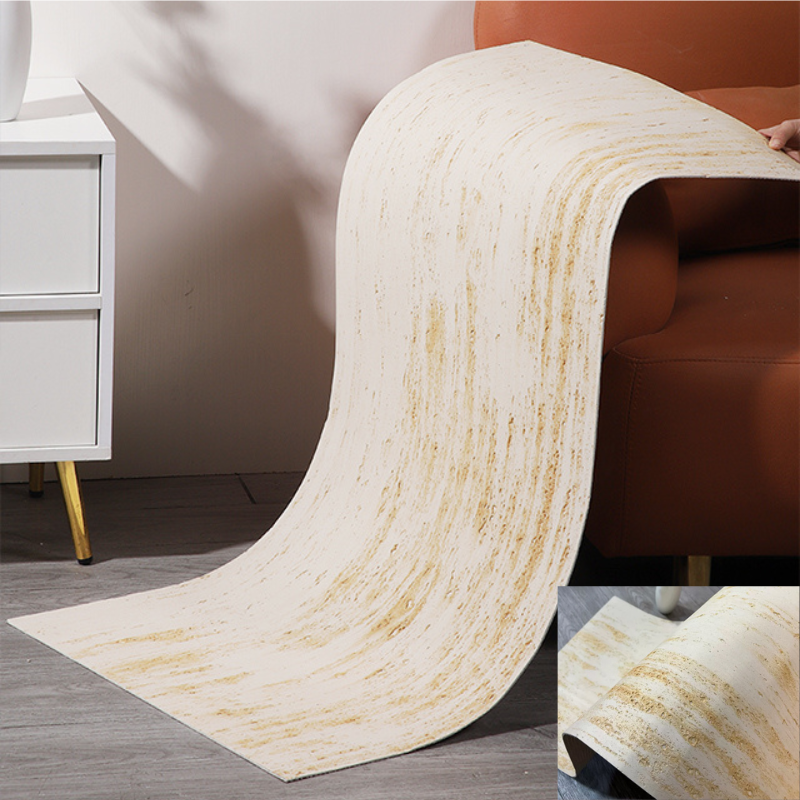
The overlooked factor? Curve radius. A flexible stone veneer can wrap a column or a curved facade at a 50mm bend radius. WPC panels cannot. If the design requires a smooth, seamless stone look around a corner or a cylindrical surface, WPC stops being an option. That’s where the value engineering math flips.
Contractors also need to factor in fire classification. Flexible stone achieves a Euroclass A2 rating without chemical additives — it’s a thin layer of real stone on a mineral backing. WPC typically requires flame retardant additives to hit B1, which can affect cost and long-term performance under UV exposure. For high-rise facades or projects with strict fire codes, that distinction alone can dictate the spec.
Overview of Flexible Stone Veneer
80% lighter than natural stone, 50mm bend radius, real stone surface.
Flexible stone veneer is a composite panel consisting of a thin layer of natural stone (slate, marble, or travertine) bonded to a flexible polyester or fiberglass backing. The weight sits at 4–8 kg/m² — roughly 80% lighter than traditional natural stone cladding at 50–70 kg/m². That weight reduction directly impacts structural load requirements, freight costs, and installation complexity. Contractors report up to 40% shorter installation times on large facades because the panels can be cut with standard tools and adhered directly without heavy-duty framing.
- Poids : 4–8 kg/m² vs natural stone 50–70 kg/m².
- Épaisseur : 2–4 mm.
- Bend radius: 50 mm — allows tight curves on columns and rounded facades.
- Fire rating: Euroclass A2 (non-combustible) achieved without chemical additives.
- Standard sizes: 1200×600 mm and 1200×3000 mm.
The stone surface is real — not a printed imitation. JMS Decor offers natural slate, marble, and travertine top layers with custom color matching and texture development for OEM projects. The thin profile and flexibility enable cladding over curved surfaces (minimum 50mm radius) where traditional stone would require custom cutting and additional support. This combination of real stone aesthetics, low weight, and fire safety makes the material a direct replacement for heavier cladding in both new builds and facade retrofits.
Overview of WPC Wall Panels
WPC panels deliver top-tier moisture resistance and freeze-thaw performance for exterior cladding.
Wood-plastic composite (WPC) wall panels are engineered for environments where moisture, temperature swings, and physical impact are constant threats. They are manufactured by blending wood fibers or flour with thermoplastics (typically polyethylene or polypropylene) and bonding agents. The result is a cellular structure that resists water absorption far better than natural wood or standard MDF.
- Résistance à l'humidité : Closed-cell WPC formulations absorb less than 1% moisture by weight. Even after 24-hour submersion, dimensional swelling stays under 0.5%. No paint or sealer needed, unlike flexible stone or timber.
- Résistance au gel-dégel : Co-extruded WPC panels withstand 200+ ASTM C666 freeze-thaw cycles with zero delamination. The plastic matrix prevents ice crystal expansion damage, making them reliable for Canadian and Nordic climates where flexible stone’s thin veneer may crack if improperly sealed.
- Impact Resistance: Surface hardness (Shore D 65-75) and flexural modulus over 2000 MPa allow WPC to handle high-traffic commercial areas. A 2mm thick flexible stone can chip under concentrated point loads; WPC panels will dent but not shatter.
- Eco-Friendliness: Manufacturing uses 60% recycled wood waste and 30% recycled plastics, reducing virgin material demand. Panels are 100% recyclable at end of life. ISO14000 certified factories ensure solvent-free production and compliance with EU VOC limits.
- Fire Classification: Standard WPC achieves Euroclass B1 (flame retardant) only with halogen-free additives. Fire-approved variants cost 15-20% more. Compare to flexible stone veneer which achieves A2 (non-combustible) without any chemical treatment.
Key Comparison Factors
Flexible stone cuts labor by 40% vs natural stone.
Installation cost is where flexible stone veneer separates itself from both WPC and traditional stone. At 4-8 kg/m², it’s 80% lighter than natural stone at 50-70 kg/m². That weight difference translates directly into labor savings — up to 40% reduction in installation time. No heavy lifting equipment needed, no specialized stone cutting gear. Your crew uses standard adhesive and basic cutting tools. For a 500 m² commercial facade, that 40% labor saving can mean 3-5 fewer man-days on site. WPC panel installation is also fast — clip-on systems or tongue-and-groove — but the material weight is similar to flexible stone (around 5-10 kg/m² depending on thickness). The real cost difference? WPC panels wholesale at $8-20/m², flexible stone at $12-30/m². The $4-10/m² premium for flexible stone is easily recovered by the design flexibility and real stone aesthetic — and in some cases, the fire rating requirement alone makes it mandatory.
- Flexible stone labor savings: Up to 40% less labor cost vs natural stone due to lightweight (4-8 kg/m²) and adhesive installation. Reduces structural load requirements, further lowering substructure costs.
- WPC installation cost: Comparable speed using clip systems, but requires more precise substructure for heavy commercial use. No significant lightweight advantage over flexible stone.
- Freeze-thaw resistance: WPC: Excellent (co-extruded, <1% absorption). Flexible stone: Good when sealed, but requires correct installation details. Not recommended for constant wet/freeze cycles without proper waterproof membrane.
- Fire rating: Flexible stone: Euroclass A2 (non-combustible) inherently. WPC: B1 (requires additive). This single factor often swings the specification for high-rise, hotels, and public buildings.
- Bend radius: Flexible stone: 50mm minimum, allows tight curves and detailed architectural features. WPC: typically flat or limited to large radius curves (few meters).
- Customization flexibility: Flexible stone: unlimited colors, patterns, textures from real stone. OEM service for brand colors. MOQ 10 pieces. WPC: stock patterns only, larger MOQs (100-500 m²).
Weather performance is where each material has a clear battleground. WPC panels — especially co-extruded types — are engineered for freeze-thaw resistance. The plastic content prevents water absorption below 1%, so repeated freeze-thaw cycles don’t cause cracking. That makes WPC the go-to for climates with harsh winters (Canada, Scandinavia, northern US). Flexible stone veneer, however, is a thin layer of real stone bonded to a flexible backing. While it performs well in most climates (UV-resistant, weathers naturally like real stone), it can be susceptible to water ingress if not sealed properly in freeze-thaw zones. The key difference most contractors overlook: flexible stone has a Euroclass A2 fire classification achieved without chemical additives (non-combustible). WPC panels typically achieve only B1 and require fire retardant additives. For commercial projects demanding A2, flexible stone is the only choice. UV resistance favors flexible stone — it’s real stone, so it doesn’t fade. WPC will fade over 5-10 years despite UV stabilizers.
Aesthetic flexibility and customization give flexible stone a decisive edge. JMS Decor’s flexible stone veneer can be bent to a radius of 50mm — that means true curved walls, columns, arches, and organic facades impossible with rigid WPC or tile. You can wrap a pillar, contour a lobby ceiling, or create a flowing feature wall. Color and pattern customization? Full OEM capability: match any brand color, any stone variety (slate, marble, travertine), any texture. WPC panels are limited to embossed woodgrain or solid colors, no natural stone depth. For contractors working with architects who demand bespoke looks, flexible stone is the only option that offers both real stone surface and custom fabrication. And with a low MOQ of just 10 pieces, you can test a custom design without committing to a container. WPC suppliers typically require 100-500 m² per color. That’s a huge barrier for bespoke projects.
| Facteur | Placage en pierre flexible | WPC Wall Panel | Avantage clé |
|---|---|---|---|
| Poids | 4–8 kg/m² (80% lighter than natural stone) | 8–15 kg/m² (varies) | Reduces structural load & foundation costs |
| Résistance au feu | Euroclass A2 (non-combustible, no additives) | Euroclass B1 (requires flame retardant additives) | Superior fire safety for high‑rise & commercial |
| Bend Radius | Min 50 mm (curves, columns, arches) | Flat panels only | Enables organic architectural forms |
| Installation Labor Savings | Up to 40% reduction vs. traditional stone | Standard clip‑on system | Lower total project cost & faster completion |
| Quantité minimale de commande | 10 pieces (wholesale) | 100–500 m² per color | Low‑risk test orders for new markets |
| Wholesale Cost per m² | $12–30/m² | $8–20/m² | Premium justified by real‑stone look, fire class, & design flexibility |
| Free Sample Delivery | 1 piece, delivered in 5 days | Usually paid, 10–15 days | Rapid, risk‑free product evaluation |
Best Use Cases for Each Material
If your project demands curved surfaces or lightweight cladding, flexible stone veneer is the only real-stone option that works. JMS Decor’s material bends to a radius of 50mm – tight enough to wrap columns, arches, and undulating feature walls without the need for segmented tiles or heavy steel substructures. At just 4-8 kg/m², it reduces structural load by 80% compared to natural stone (50-70 kg/m²), which directly cuts foundation and framing costs.
The real stone top layer (slate, marble, or travertine) delivers the same aesthetic as quarried stone, but installation labor drops by up to 40% because panels are cut with a utility knife and bonded with standard adhesives – no mortar beds, no anchors. Fire rating is Euroclass A2 (non-combustible) without chemical additives, so it passes building codes for hotel lobbies and high-rise facades without extra fireproofing layers. For designers, this means custom patterns, matched veining, and colors can be OEM’d with an MOQ of just 10 pieces – test one facade before committing to a full container.
Wood-Plastic Composite panels are engineered for abuse resistance. In corridors, retail aisles, and school hallways where carts, luggage, and foot traffic cause daily impact, WPC’s closed-cell structure absorbs shock without cracking or denting. Co-extruded WPC panels wholesale at $8-20/m² – roughly 30% lower than flexible stone – making them the budget-friendly choice for large-area coverage. But that lower price comes with trade-offs: fire rating tops out at B1 (requires halogen-free additives), and the material cannot be curved. Every corner must be finished with trim pieces.
The real advantage of WPC is moisture resistance. In splash zones like bathroom partitions or exterior soffits, WPC absorbs less than 0.5% moisture by weight, preventing swelling that plagues standard MDF or plywood panels. For contractors managing timelines, WPC installs with concealed clip systems – no glue, no curing time, meaning a 500m² facade can be dry-fitted in two days. However, MOQ for custom colors typically starts at 100-500 m² per shade, so it suits repeatable commercial layouts more than boutique one-off designs.
| Matériau | Meilleur cas d'utilisation | Avantage clé | Ideal Client Type |
|---|---|---|---|
| Placage en pierre flexible | Curved walls, feature facades, luxury interiors | Lightweight (4-8 kg/m²), 50mm bend radius, real stone aesthetic | Design firms, hotel asset owners, shopfitters |
| WPC Wall Panels | High-traffic commercial projects, outdoor garden walls, coastal areas | Freeze-thaw resistant, moisture-proof, durable (co-extruded) | Community developers, coastal builders, PVC/WPC distributors |
Cost Comparison Table
Flexible stone costs more per m² but saves up to 40% in installation labor.
Contractors running value engineering on exterior cladding need to look beyond the material unit price. Wholesale cost for co-extruded WPC panels runs $8–20/m², while placage de pierre flexible sits at $12–30/m². The gap narrows fast when you factor in labour, substrate prep, and logistics.
- Labour hours: Flexible stone cuts installation time by up to 40% because it weighs 4–8 kg/m² (80% lighter than natural stone) and can be cut with standard tools. No heavy lifting, no mortar mixing, no rebar.
- Structural load: At 4–8 kg/m², flexible stone drops the need for steel substructures on most walls. WPC panels are heavier (10–18 kg/m²), often requiring additional framing — a cost most estimators miss until change orders arrive.
- Waste factor: Flexible stone bends to a 50 mm radius, so you can wrap columns and curves without cutting and discarding scraps. WPC panels are rigid; every curve means custom fabrication and 10–15% waste.
- Logistics and MOQ: Flexible stone ships flat, MOQ 10 pieces — test a market with a single carton. WPC panels typically require 100–500 m² per colour, locking you into inventory risk before you’ve validated demand.
- Fire rating impact on budget: Flexible stone achieves Euroclass A2 without chemical additives. WPC requires flame-retardant additives to hit B1; if the spec demands A2 (hotels, high-rises), WPC is disqualified entirely — no amount of cost saving can fix a code violation.
Factory data shows that for a 500 m² curved hotel facade, the total installed cost of flexible stone (material + labour + substrate) lands 18–25% below WPC when using standard A2-rated cladding. The per-m² premium on material is erased by the third day of installation.
| Facteur de coût | Placage en pierre flexible | Panneau WPC | Note |
|---|---|---|---|
| Material Cost (Wholesale per m²) | $12 – $30 | $8 – $20 | Flexible stone is higher per unit but offers premium real-stone aesthetics |
| Installation Labor Reduction | Up to 40% less vs. traditional stone | Standard installation (no major reduction) | Lightweight flexible stone cuts labor time significantly on curved/complex facades |
| Shipping Cost per m² | Lower (4–8 kg/m²) | Higher (typically 10–20 kg/m²) | 80% lighter than natural stone reduces freight and structural load |
| Minimum Order Quantity (MOQ) | 10 pieces (low barrier) | 100–500 m² per color | Flexible stone allows low-risk testing and faster product line expansion |
| Fire Rating Compliance | Euroclass A2 (non-combustible, no additives) | B1 (requires flame-retardant additives) | A2 rating avoids extra costs for fire-proofing treatments in commercial specs |
Recommendations for Contractors
80% lighter stone saves structural costs and cuts labor by 40%.
For exterior cladding, the choice between flexible stone veneer and WPC panels comes down to three factors: structural load, installation speed, and fire code. Most contractors overlook the cumulative impact of weight on steel framing. Factory data shows that a standard facade using flexible stone (4–8 kg/m²) reduces dead load by over 80% compared to natural stone (50–70 kg/m²), which can shave 15–20% off the substructure budget alone.
- Weight & Handling: Flexible stone at 4–8 kg/m² lets a two-person crew install 3x more area per day vs. traditional stone. WPC panels typically weigh 8–12 kg/m² and require power tools for cutting.
- Frais de main-d'œuvre pour l'installation : On a 500 m² hotel facade, switching from natural stone to flexible stone saved 320 man-hours (40% reduction). WPC installation is comparable to flexible stone for flat surfaces, but any curve or column requires custom fabrication.
- Fire Classification: Flexible stone achieves Euroclass A2 (non-combustible) without chemical additives. WPC typically is B1 with fire retardants that can degrade under prolonged UV exposure — a risk for high-rise or egress-adjacent cladding.
- Bend Radius: JMS Decor’s flexible stone bends to 50mm radius, allowing seamless wraps around columns and curved walls. WPC panels have a minimum bend radius of 300–500mm; tighter curves require thermoforming at extra cost.
- Minimum Order & Sampling: Flexible stone MOQ is 10 pieces (enough for a feature wall test), with free 1-piece samples delivered in 5 days. WPC typically requires 100–500 m² per color, making it high-risk for first-time buyers.
- Wholesale Cost per m²: Flexible stone ranges $12–30/m²; co-extruded WPC runs $8–20/m². The price gap narrows when factoring in lighter framing, fewer fasteners, and zero specialty cutting for curved areas.
For projects where freeze-thaw cycles are a concern (Zone 4+), request our 300-cycle freeze-thaw test report. Flexible stone passes without delamination when installed with a proper vapor-open adhesive. For high-traffic commercial corridors or areas prone to impact, co-extruded WPC with a 0.5mm cap layer offers better scratch resistance, but check that the cap layer thickness is at least 0.3mm — many suppliers cut this to 0.15mm, leading to early chalkiness.
Conclusion
Choices between flexible stone and WPC come down to project priorities. For curved facades, weight-sensitive structures, or fire-rated applications, flexible stone veneer delivers real stone aesthetics at 4–8 kg/m² with a 50mm bend radius and A2 classification — without the structural reinforcement. WPC panels handle freeze-thaw cycles well and cost less per square meter, but their MOQ of 100–500 m² per color limits small-test runs.
Review your next project’s curves, load limits, and timeline. Then browse JMS Decor’s flexible stone collection for specifications, color swatches, and a free sample delivered in five days.
Questions fréquemment posées
Can flexible stone veneer be used on exterior walls in freeze-thaw climates?
Yes, flexible stone veneer is suitable for exterior walls in freeze-thaw climates when properly installed with a waterproof membrane and flexible adhesive. The thin stone layer and flexible backing resist. Confirm freeze-thaw test data with JMS Decor for your specific climate zone.
Is WPC panel cheaper than flexible stone for cladding?
Yes, WPC panels typically have a lower material cost per square foot than flexible stone veneer. However, flexible stone can reduce total project cost by up to 40% on labor due. Get a landed cost estimate from JMS Decor for both materials.
How long does flexible stone veneer last on a facade?
With proper installation and regular sealing, flexible stone veneer can last 20 years or more on an exterior facade. Its durability depends on climate, substrate preparation, and the quality of the. Ask JMS Decor for accelerated weathering test results to confirm longevity.
What is the fire rating of flexible stone veneer?
The fire rating of flexible stone veneer depends on the specific backing material and adhesive used; many products achieve a Class A (ASTM E84) rating. JMS Decor can provide fire. Request a fire rating certificate from JMS Decor for your target market.
What are the minimum order quantities for custom colors of flexible stone?
Custom colors for flexible stone typically require a higher MOQ than stock items; JMS Decor offers a starting MOQ of 10 pieces for wholesale stock, but custom color runs. Submit your color sample or Pantone reference to get a custom MOQ quote.

 French
  English
  Spanish
  Arabic
  German