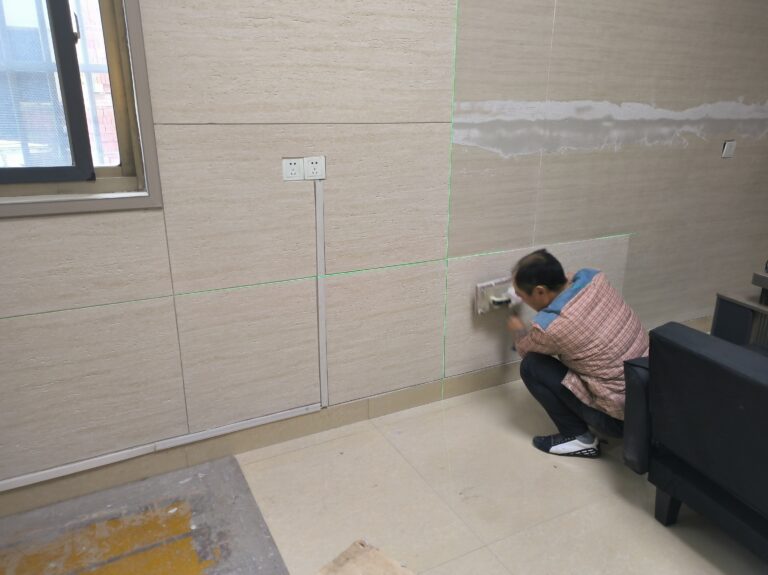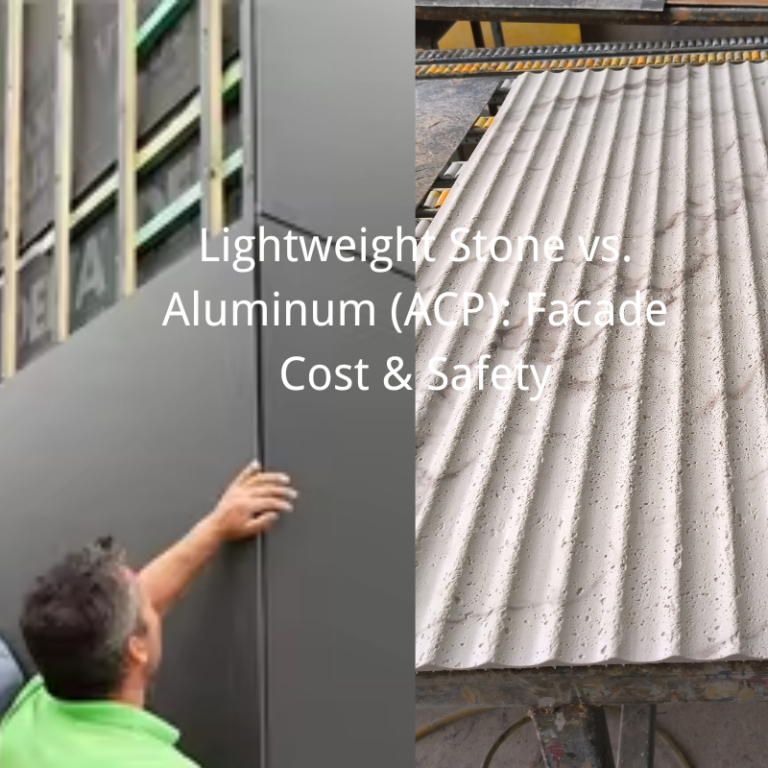
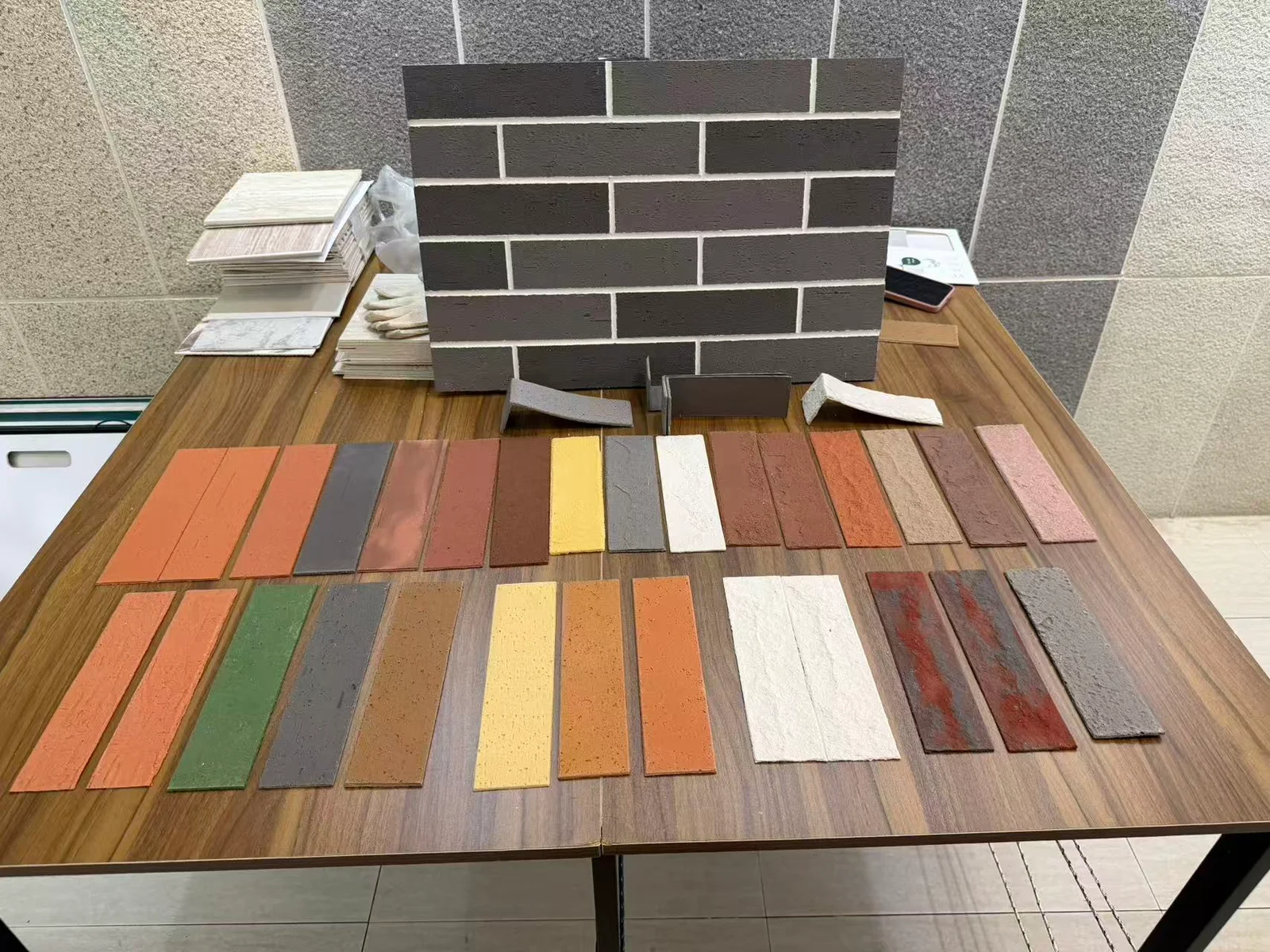
Flexible stone and microcement chase the same look, a smooth mineral surface with no visible joints between sheets. They are built and installed nothing alike. Flexible stone arrives as a finished panel, a natural stone surface bonded to a fibreglass mesh backing, 2 to 8 mm thick and 1.5 to 6 kg per square meter. Microcement is a coating mixed on site and trowelled over the wall in thin layers.
The flexible stone vs microcement question is really a question about movement. Every wall shifts a little with temperature, moisture and settling. Bonded straight to that surface, a trowel-applied coating copies every small change. When the movement is larger than the coating can stretch, the stress releases as a hairline crack. That behaviour flips with a mesh backing: the sheet carries the load behind the face, so minor movement is absorbed rather than released.
For a distributor, the flexible stone vs microcement question reaches the same buyer. Shops that already sell microcement, render or decorative plaster hold the trade customers and the wall-finish shelf space. Adding a panel that removes the crack callbacks is a way to sell into those same accounts with less risk. This comparison sets out where each finish wins, and where a coating still makes sense.
Mesh that absorbs minor wall movement is worth more to a dealer than a finish that hides its cracks.
What Each Finish Actually Is
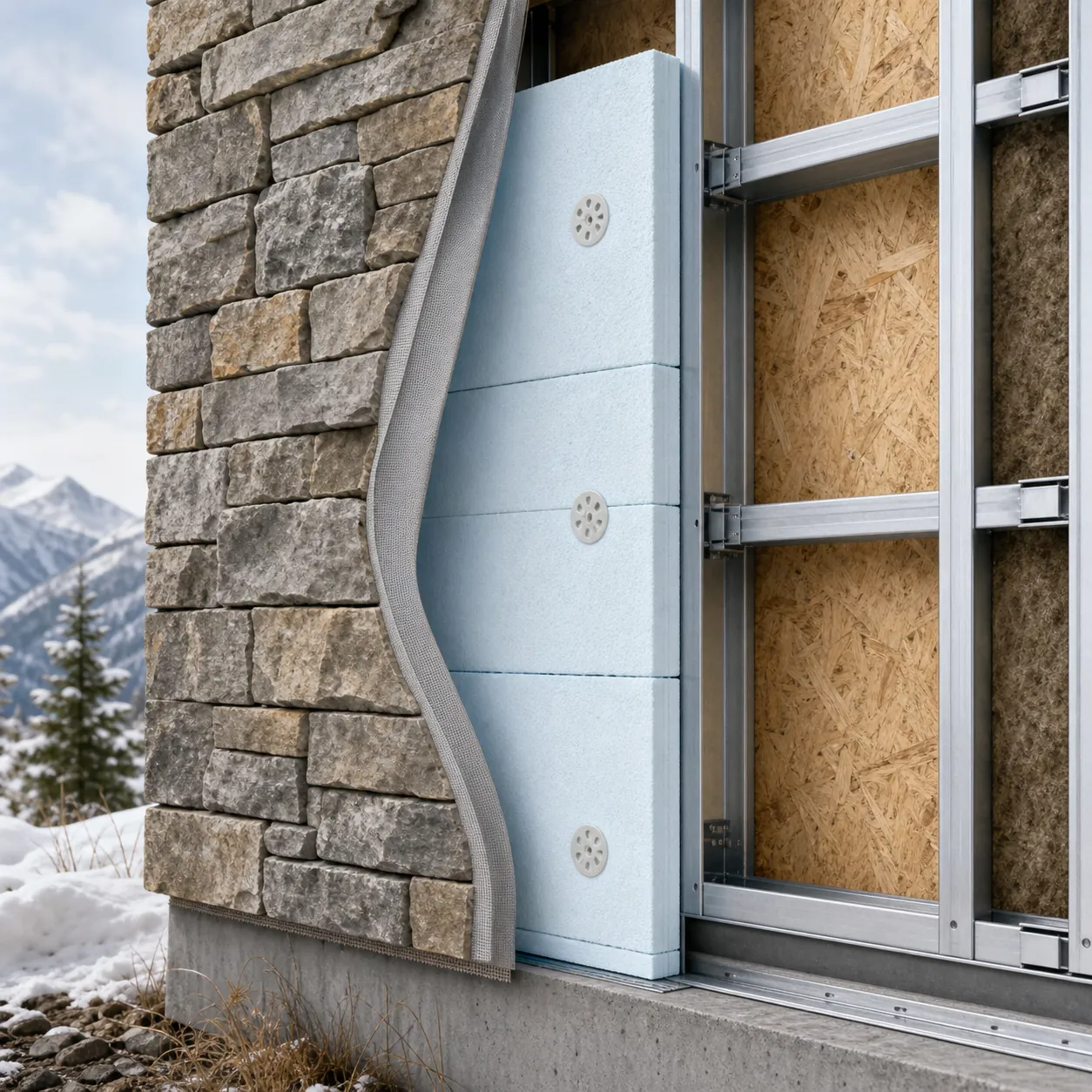
How each finish is built decides everything that follows. Flexible stone separates surface from structure. The stone powder, colour and pattern sit on the face, and a fibreglass mesh carries the load behind. That split is what lets one line produce a 2 mm translucent sheet and an 8 mm decorative face. JMS Decor has made this material since 2015, running five lines inside an 8,000 m² factory in Dingshu Town, Yixing, Jiangsu. The flexible stone manufacturer overview covers the wider production base.
A panel made and finished in a factory
By the time a flexible stone sheet leaves the factory, it is already a finished product. The face is printed and cured, the mesh is bonded, and the sheet is cut to size and packed flat. Nothing about the result depends on who installs it. Two sheets from the same batch match, because the printer and the mould did the work. That control is why a defect rate under 1 percent is a production number rather than a hope.
A coating mixed and trowelled on site
Microcement is closer to a plaster than a panel. It is mixed on site, applied in thin coats, sanded between them and sealed at the end. Final appearance depends on the trowel hand of the person holding it, so two walls in one room can differ. It also needs time. Coats must dry, and the room cannot be used until curing and sealing finish. The method suits a business that already runs wet trades.
Where Cracks Actually Come From

Most flexible stone vs microcement searches begin with a crack. Coatings have almost no ability to stretch, so they copy the movement of the wall beneath them. Corners, joins between different substrates and the edge of a doorway are where that movement concentrates, and those are where the first hairline appears. Repair means grinding back and re-coating the area, which rarely blends into the surrounding finish.
Under the same wall movement, a panel behaves differently. The fibreglass layer lets the sheet flex a little, so small movement in the substrate does not reach the stone face. Where a panel does meet a joint, that joint is a deliberate line rather than a random crack, and a single damaged sheet can be lifted and swapped. To a dealer, that difference turns a callback into a five-minute replacement.
| Point | Flexible stone panel | Microcement coating |
|---|---|---|
| Cracking behaviour | Mesh spreads the load, so minor movement stays under the surface | Follows the wall and cracks at movement |
| Repair | Swap the single affected sheet | Grind back and re-coat the area |
| Site time | Dry fix, no drying or curing before use | Several coats plus drying and sealing |
| Substrate tolerance | Goes over a sound existing wall | Needs a prepared, stable substrate |
Time and Labour on Site

On a working site the two finishes run to different clocks. Crews lay microcement in coats, waiting for each to dry, then sand and seal. The room stays out of use for the whole cycle, and the schedule leans on drying conditions. Panel work skips that queue. The surface is already finished, so the work is measure, cut and bond. Two workers can clad a room overnight and hand it back the next morning.
That speed matters most in occupied buildings. Hotel floors, trading shops and lobbies cannot give up days of drying time. Where a project has to stay open, a panel finish takes the cure window off the critical path. It also removes the dust and water that a wet coating brings, which is often the larger problem on a live site.
Substrate, Overlays and Wall Profile

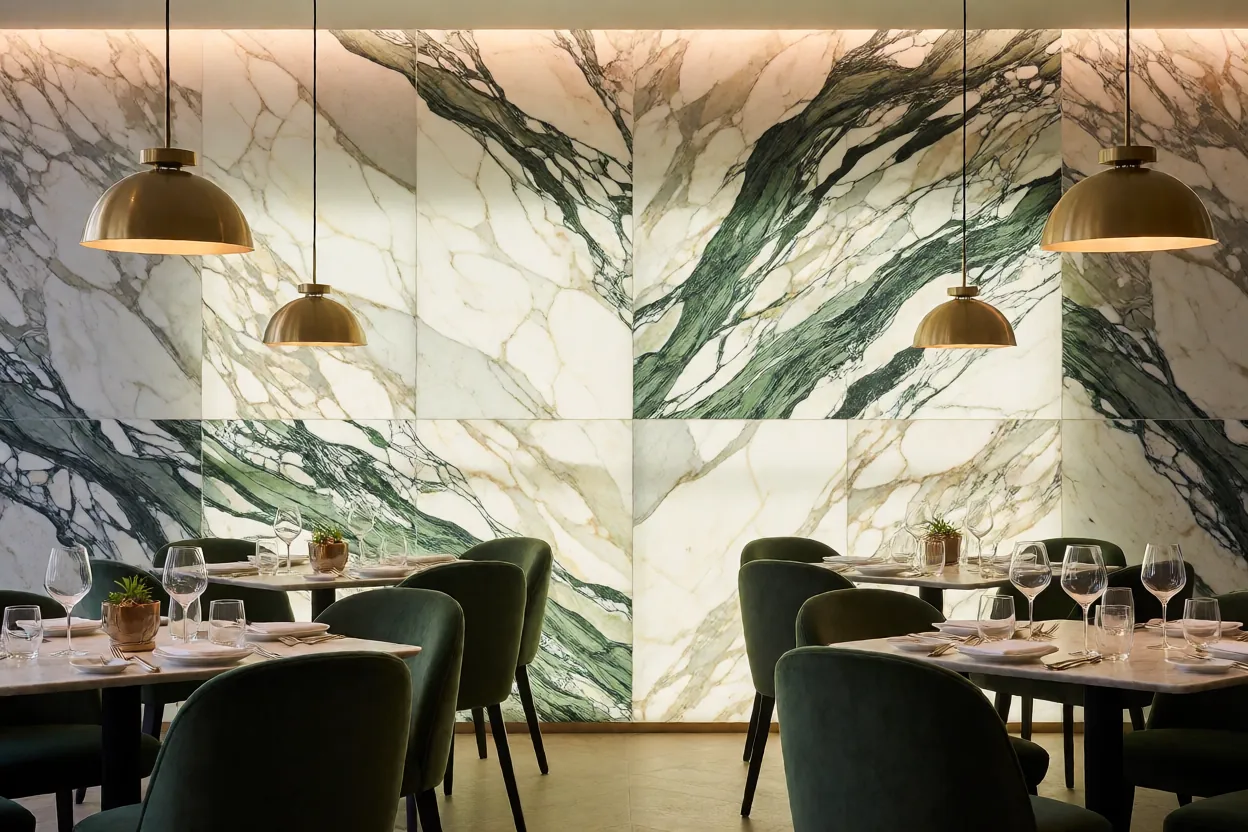
Both finishes need a sound wall, but they ask for different things. The substrate under a coating has to be stable and well prepared, because any movement in the base travels straight to the surface. Mesh-backed sheets are more forgiving. They can go over a sound existing wall, which is what makes them useful in renovations where stripping the old finish is the costly part. At 2 to 8 mm thick it barely changes the line of the wall.
That thin profile also helps a fitted interior. Added depth is minimal, so skirting, reveals and door frames stay where they are. Where a wall already carries a failing finish, a panel can cover it instead of removing it, provided the base is fixed and flat. For the range of surfaces this suits, the comparison with stone-look panels goes into more detail.
Curves, Corners and Joint Details

Designers meet the real split between these finishes on a curve. Microcement handles a curve in principle, because a coating is applied by hand to any shape. The catch is consistency. Holding an even coat around a tight radius takes skill, and the same radius is where a coat is most likely to crack. A flexible stone sheet bends to about a 200 mm radius, and closer to 300 mm on a thick pattern such as Starmoon Stone. Thin patterns bend tighter.
Corners follow the same logic. Panels fold into a corner or wrap a column, so the stone face stays continuous. At the corner, a coating leaves the two planes as separate fields, each with its own drying history and its own chance of a crack. For the details, our guide on cladding curved walls and columns sets out the trim and fold options.
Fire, Wet Areas and Compliance

Compliance rarely separates these two finishes, because both can be specified to a fire standard. The difference is how easily the paperwork arrives. The baseline set to request is ISO 9001 for quality management, ISO 14000 for environmental management, BSCI for social compliance and CE for the European market. Ask for those at the quoting stage, since a dealer has to pass them on to its own customers.
Of all the claims, fire performance is the one an inspector is most likely to test. In the United States the reference is ASTM E84, where Class A means a flame spread index of 25 or lower. In Europe it is EN 13501-1 Class A2. Flexible stone meets both, each backed by a certificate and a full test report. In wet areas the panel face is water resistant, and sealed joints keep the wall sound. Trowelled coating can hold the same rooms, but it leans on careful sealing at every joint to stay watertight.
Cost, Freight and Commercial Fit
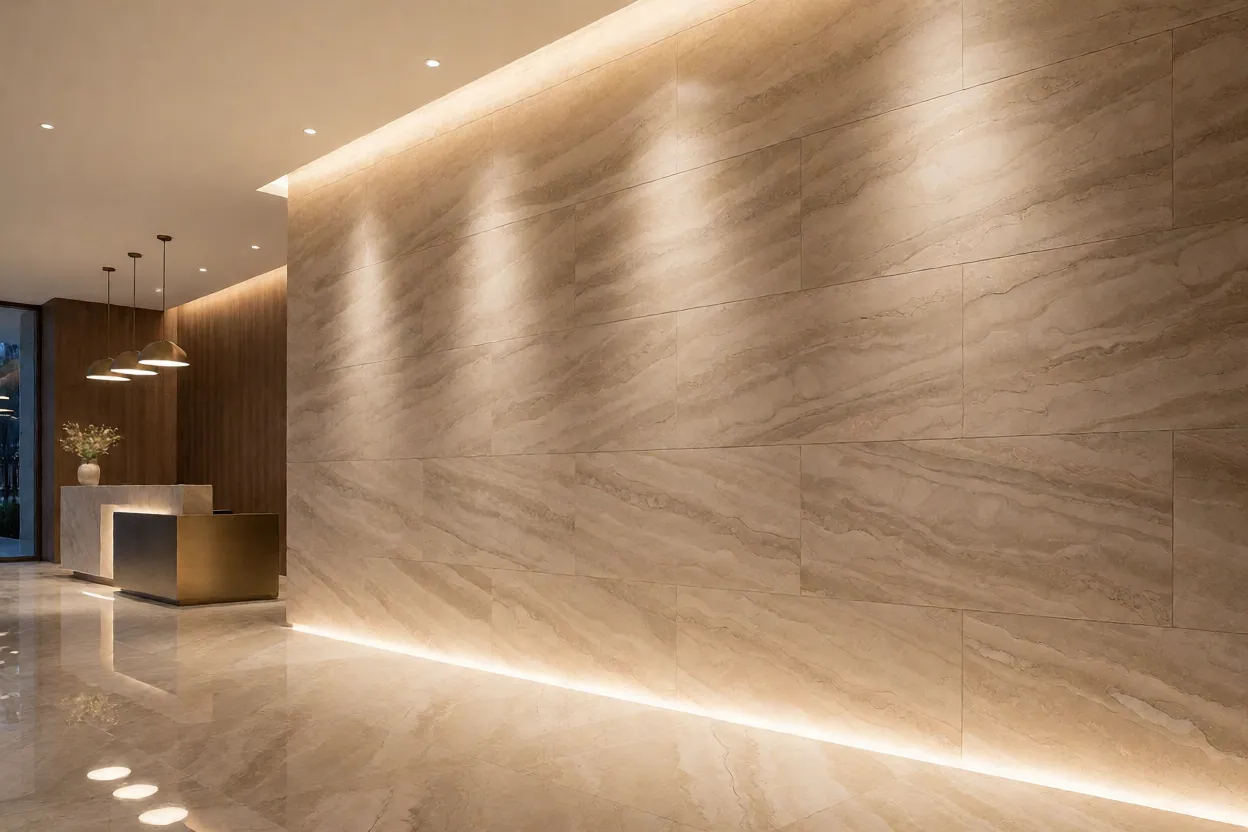
For a coating, the cost sits in labour and time; for a panel, it sits in the product and the freight. Pricing a microcement job is mostly site hours: mixing, coating, sanding and sealing, spread over days of work. Moving to a panel shifts most of that effort back to the factory. The trade-off is shipping. The panel has to travel, so weight and volume matter. At 1.5 to 6 kg per square meter, a container tends to fill on space rather than on the weight limit.
The useful move for a dealer is to run the four cost lines side by side. Add freight per square meter, a breakage allowance, site hours and cut waste to the unit price of each finish. Our breakdown of flexible stone vs real stone cost shows how those lines behave against a stone baseline, and the same method works against a coating. The commercial terms behind a first order are simple to confirm.
| Item | Standard term |
|---|---|
| Sheet size | 1200 × 600 mm standard, up to 1200 × 2900 mm |
| Thickness | 2 to 8 mm, pattern dependent, with a 2 mm translucent option |
| MOQ | 300 m², negotiable lower for a justified trial |
| Sample time | 2 to 3 days standard, about 7 days for a custom colour |
| First bulk production | 15 to 20 working days, 10 to 15 on a repeat order |
| Payment and trade term | T/T 40 percent deposit, 60 percent against documents, FOB Shanghai |
| Mould retention | Mould and colour formula stored free for five years |
Frequently Asked Questions About Flexible Stone vs Microcement
Does microcement crack, and can flexible stone crack too?
Yes, but they fail in different ways. Microcement cracks at corners and joins as the wall moves, and the repair is a re-coat that rarely blends. Mesh-backed flexible stone takes the same movement without opening, and a damaged sheet is swapped rather than patched. Production here runs under 1 percent defect.
Can flexible stone replace microcement on a curved wall?
Yes. It bends to a radius of about 200 mm, and closer to 300 mm on a thick pattern such as Starmoon Stone. Thin patterns bend tighter still. A coating can also follow a curve, but holding an even coat around a tight radius takes skill and is where a crack is most likely.
Which finish is faster to install?
Flexible stone. The face is already finished, so the work is measure, cut and bond, with no curing before the room is used. Microcement is applied in thin coats, then sanded and sealed, and the room stays out of use through the whole drying cycle.
Is flexible stone suitable for wet areas like bathrooms?
The panel face is water resistant and the joints are sealed, which suits bathroom and kitchen walls. Coating can be specified for the same rooms, though the risk sits with the sealing rather than the surface. One missed spot shows up as damp rather than a clean edge.
What is the minimum order for flexible stone panels?
Standard MOQ is 300 m², which keeps packing and freight efficient for both sides, and it stays negotiable for a justified trial. This factory has produced a 150 m² order shipped by air to an Australian ice-cream shop fit-out. Samples of standard patterns ship in 2 to 3 days.
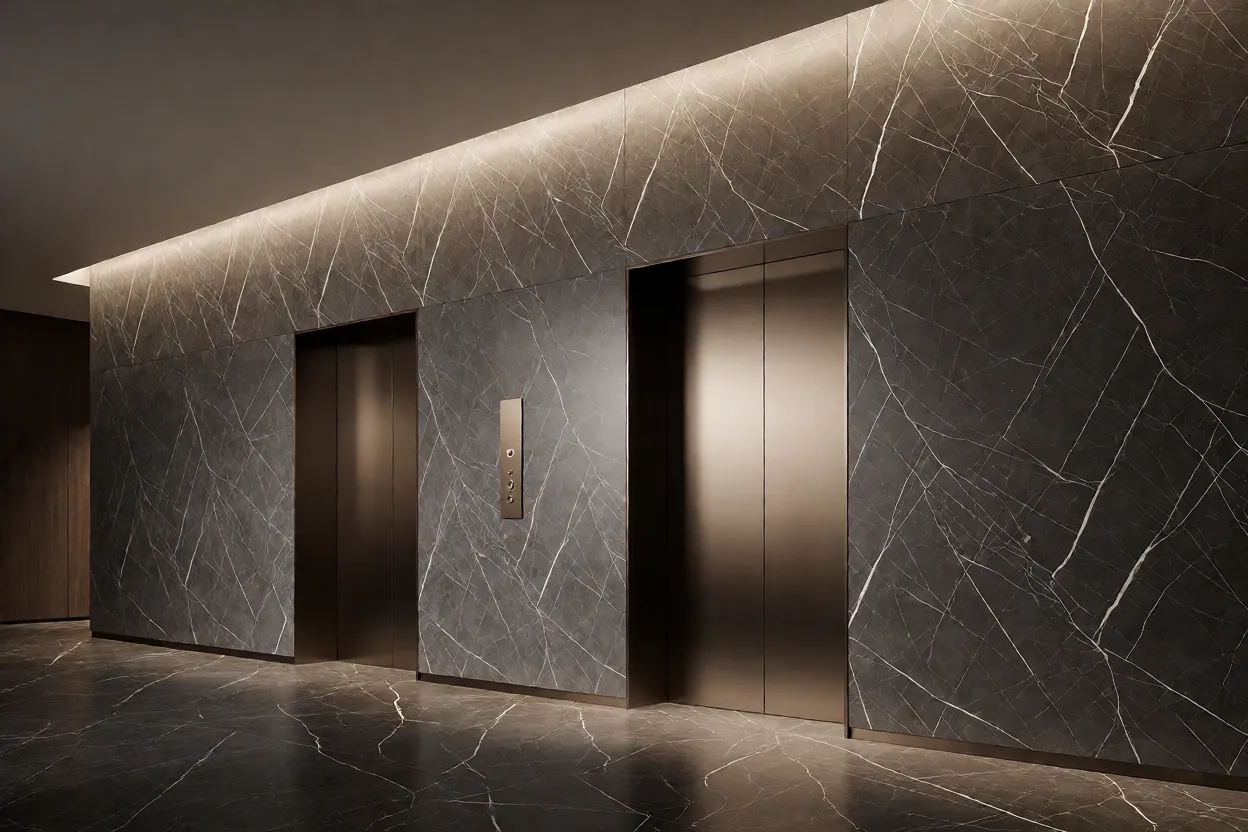
Which finish wins comes down to the wall and the schedule. If a project is new, flat and running to a wet-trade timeline, a trowelled coating is a fair choice. If the wall has to stay in use, if it turns a corner, or if the last job ended in crack callbacks, a mesh-backed panel removes the failure point. To see where it fits in a resale range, start with our flexible stone panels range and browse the material comparisons section before you commit to a line.