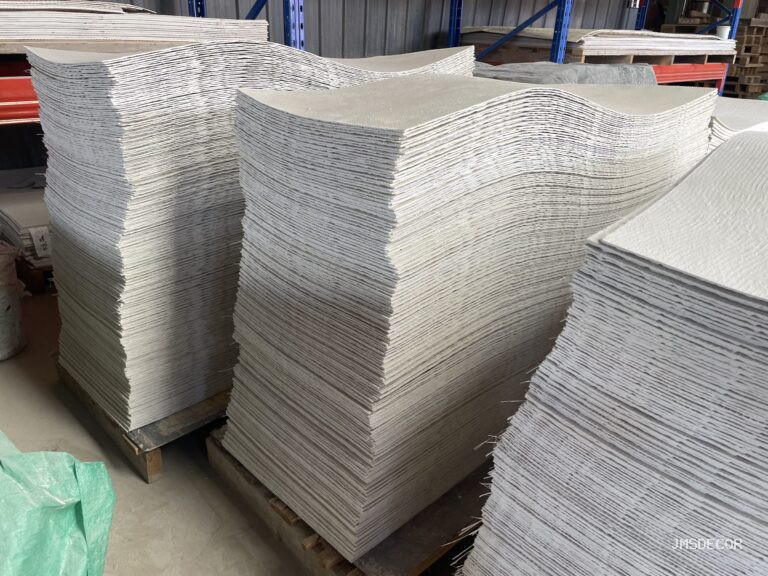
The first tool list a flexible stone installer writes usually comes from a tile shop, and it is half wrong. The material bends instead of breaking, cuts with snips as often as saws, verifies its bond by lifting a panel, and never gets beaten flat — so the kit that serves it is smaller, cheaper and stranger than a tiler’s. What it does need is deliberate: the tools that protect the fragile face, the tools that make coverage verifiable, and the safety gear that keeps a thin mineral sheet from biting the hands that carry it. This guide is the starter kit for a small installation business taking its first flexible stone jobs — what to buy, what to skip, and what each tool is actually for on site.
Why a tile kit is the wrong starting point
Tile tooling assumes three things flexible stone does not: a wet saw for every cut, a heavy body that beats down onto the bed, and grout joints that need floats and sponges. The sheet cuts clean with fine snips or a carbide-grit blade on a jigsaw, presses flat by hand, and its joints are sealed rather than grouted. Buying the tile kit first means a van full of redundant steel and a crew still reaching for the wrong tool on day one. The correct kit is built around four jobs: cutting, bonding and verifying, detailing and finishing, and handling and protection — and each job’s list is short.
The second reason is cost discipline for a new business. The starter kit below can be assembled for a fraction of a tile outfit’s tool spend, which matters when the first jobs are small: the business that tools up proportionally prices its early quotes honestly and wins the references that fund the full kit later.
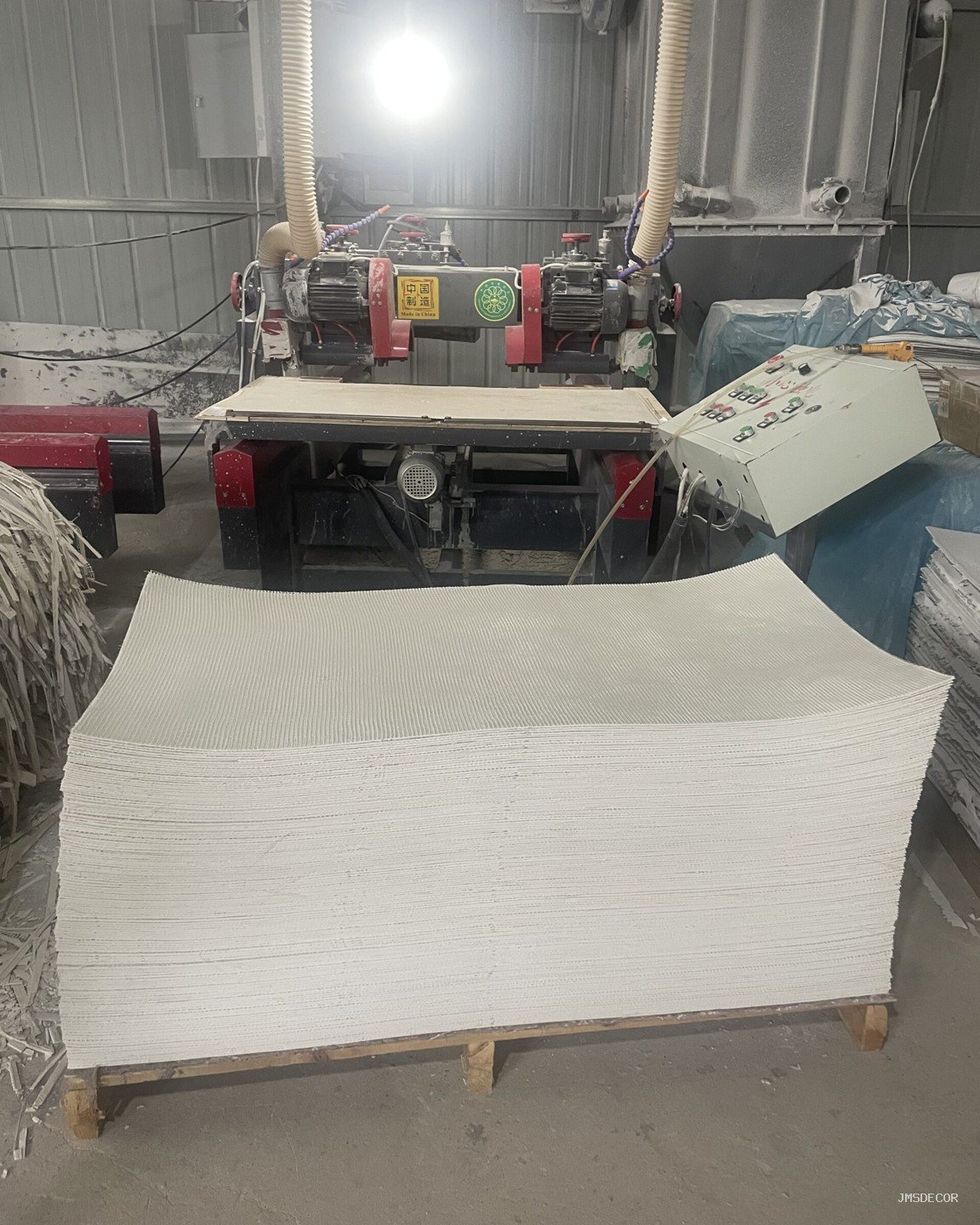
The cutting kit
- Fine snips and a sharp utility knife — the daily tools: straight cuts, curved trims around boxes, and the scored-and-snap line on smaller pieces.
- A jigsaw with carbide-grit blades — for openings and long cuts; fine-tooth metal blades chew the face, so grit blades are the specification, per the cutting rules in our penetration guide.
- A flat cutting board — the sacrificial surface every sheet is cut on; the face is supported, the mesh side takes any breakout.
- Templates from card or thin board — for every opening, never freehand; the template kit costs nothing and saves more panels than any tool on this list.
- A straightedge and fine marker — scribed lines the snips follow; pencil on the face wipes off, so mark from the back where possible.
The bonding and verification kit
The adhesive tools are the system’s, not the installer’s invention: the approved adhesive, the specified notch trowel, and the mixing paddle that keeps the bed consistent. What the kit adds around them is the verification set that makes the crew’s work provable — the lift-and-read discipline from our coverage guide needs tools of its own: suction cups or clean gloved hands to lift the first sheet cleanly, a phone mount or second phone for the transfer photographs, and a marked board for the daily first-sheet test. Add a spirit level and a laser line for the datum work our set-out guide requires, and the pressing tools: clean rollers or laminated boards for pressing sheets from centre out without point-loading the face.
One tool the kit must include and tile kits never had: the substrate straightedge. A two-metre straightedge that checks flatness before the first sheet — the acceptance step from our backing board guide — is the tool that keeps the business out of its first dispute.
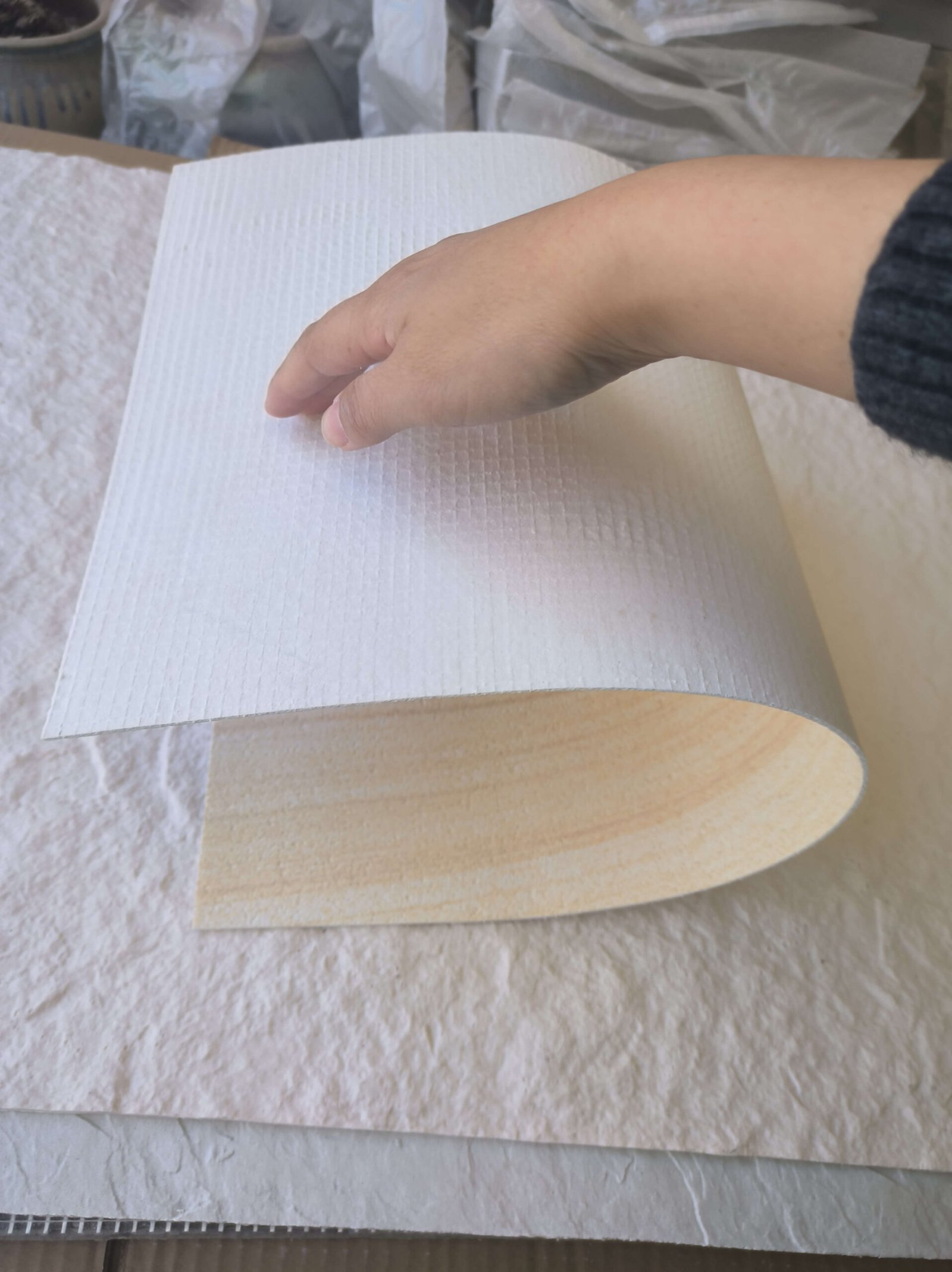
The detailing and finishing kit
- Sealant gun, backer rod and masking tape — the joint programme from our sealant guide is daily work, and the finish quality lives in the masking.
- Trim fixings and a small driver set — the profiles from our edge trim guide fixed to substrate, never to the sheet.
- Dress-up abrasives — fine pads for dressing cut edges once, lightly; the face is never sanded.
- Template and offcut store — labelled offcuts from every job become the next job’s samples and the repair stock; the offcut habit costs a box and wins callbacks.
The handling and protection kit
The sheet is light, which invites careless handling, and the kit answers that with three items. Clean gloves for every carry — hands mark the printed face and the marks show under raking light. Flat carry boards for transport and site staging, per the handling rules in our protection guide. And corner protection for the finished wall: the same edge guards the sheet travelled with, reused on the completed field until the final clean. Add drop cloths and low-tack tape tested on a spare panel, and the protection layer is complete.
Personal safety rounds out the kit: cut-resistant gloves for cutting (the mesh bites), eye protection for jigsaw work, and knee pads for the coverage checks at floor level. None of it is exotic; all of it is the difference between a professional crew and a careful amateur.
What NOT to buy first
- A wet saw. The sheet cuts dry; the saw, the slurry and the space it needs are a tile habit, not a requirement.
- Heavy beat-down tools and rubber mallets. The sheet is pressed, not beaten — a mallet in a new crew’s hands is a dent generator.
- Grout floats and sponge kits. The joints are sealed, not grouted; the sealant gun replaces the whole float drawer.
- Expensive laser levels beyond one line. One datum line is the job; the second can wait until the business has the volume to justify it.
How the kit changes between interior and exterior work
The starter kit is written for interior walls; exterior jobs add three lines and promote two. Added: a moisture-rated sealant stock per the wet-zone families in our sealant guide, stainless fixings for any trim that sees weather, and a hose or low-pressure spray for the drainage checks the facade details call for. Promoted: the straightedge becomes the daily ritual rather than the pre-job check, because exterior substrates drift more; and the protection layer grows, because the wall being clad is also the wall the weather is testing. The cutting and bonding kits stay identical — the sheet does not know it is outside, but the assembly around it does.
Business-wise, the exterior capability is the expansion decision. The interior kit and the interior-trained crew can be running profitable wall jobs for months before the exterior kit investment makes sense — and when it does, it is the fascades and cladding lines from our substrate guide that the crew trains against first, because the assembly is the harder exam than the finish.
What belongs in the van, and what stays in the workshop?
The split is simple: tools that touch the wall travel; tools that prepare stock stay. The van carries the daily kit — snips, knife, jigsaw and blades, templates from the current job, straightedge, laser, sealant set, protection layer, and the verification phone mount. The workshop keeps the cutting board, the offcut store, the template stock, and the batching area for mixing. Crews that carry everything learn the wrong lesson twice: first that the van is chaos, then that the site floor becomes the workshop. The fifteen minutes of evening kit-prep that keeps the van list short is the same discipline the lift-test schedule teaches — small routines that compound.
How the kit supports the evidence discipline
A small business’s reputation is built on exactly the evidence the kit already enables, so the last additions are documentation tools, not site tools. The phone mount that photographs transfer checks also photographs every substrate handoff; the marked board for the daily lift test doubles as the photo background that makes the series consistent; and a simple printed job sheet — one page per project, with the datum, the panel grid and the acceptance checks ticked — turns every installation into the record our submittal guide formalises for larger projects. Crews that hand over a photographed, checked wall win the next job without pitching for it.
The same evidence protects pricing. A quoted job that later argues about scope is settled by the job sheet’s recorded substrate condition and the photographed opening count — the small business that keeps records prices confidently because it can prove what it delivered. Nothing in this paragraph costs more than a printer and a clipboard, and nothing in it fails to pay.
FAQ
What does a starter kit actually cost relative to a tile kit?
A fraction of it — the cutting and verification tools are hand tools, and the expensive tile items (wet saw, mixing station, grout line) simply drop out. The honest answer depends on the market, but the shape holds: the flexible stone kit buys capability per currency unit that a tile kit cannot match.
Can the crew start with the supplier’s own video and this list?
Yes for the tools; no for the hands. The mock-up discipline from our training guide is what turns tools into technique — the kit and the first supervised wall should arrive together.
Which single tool pays for itself first?
The straightedge. Every substrate fault it catches before cladding is a callback that never happens, and it is the cheapest item on the list.
Should the kit include a hole saw set?
For round openings around pipes, yes — a hole saw started from the face on the cutting board, per the penetration guide. For square box openings, the template-and-jigsaw route stays cleaner.
Tool the four jobs, skip the tile habits, and the business starts lean and finishes clean. The material the kit serves — formats, thickness bands, handling data — is on the flexible stone veneer page, and hand-tool safety practice for finish trades is published by OSHA.