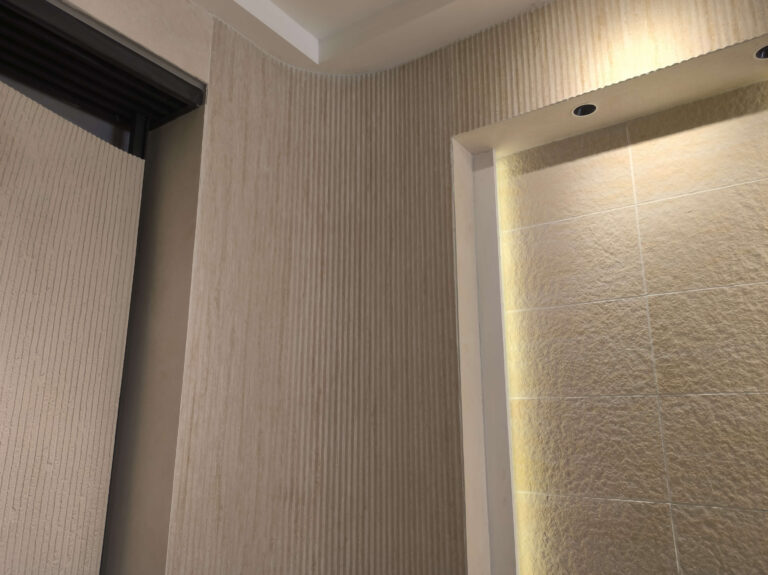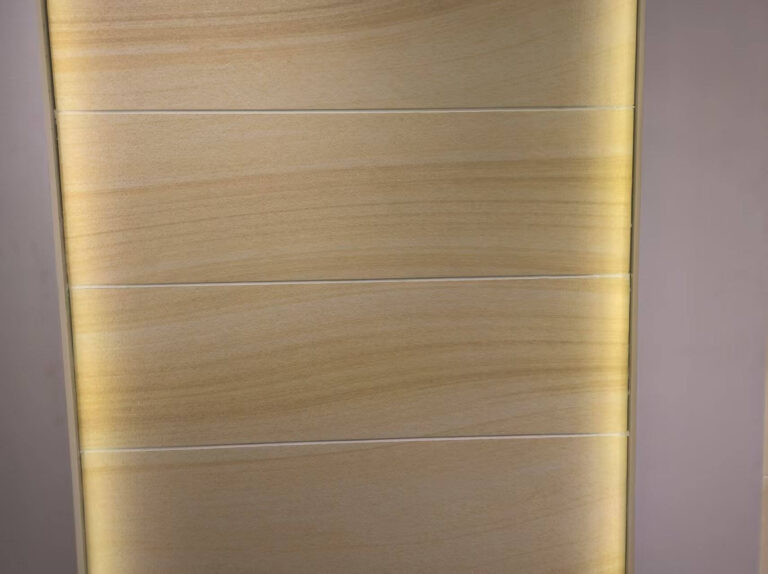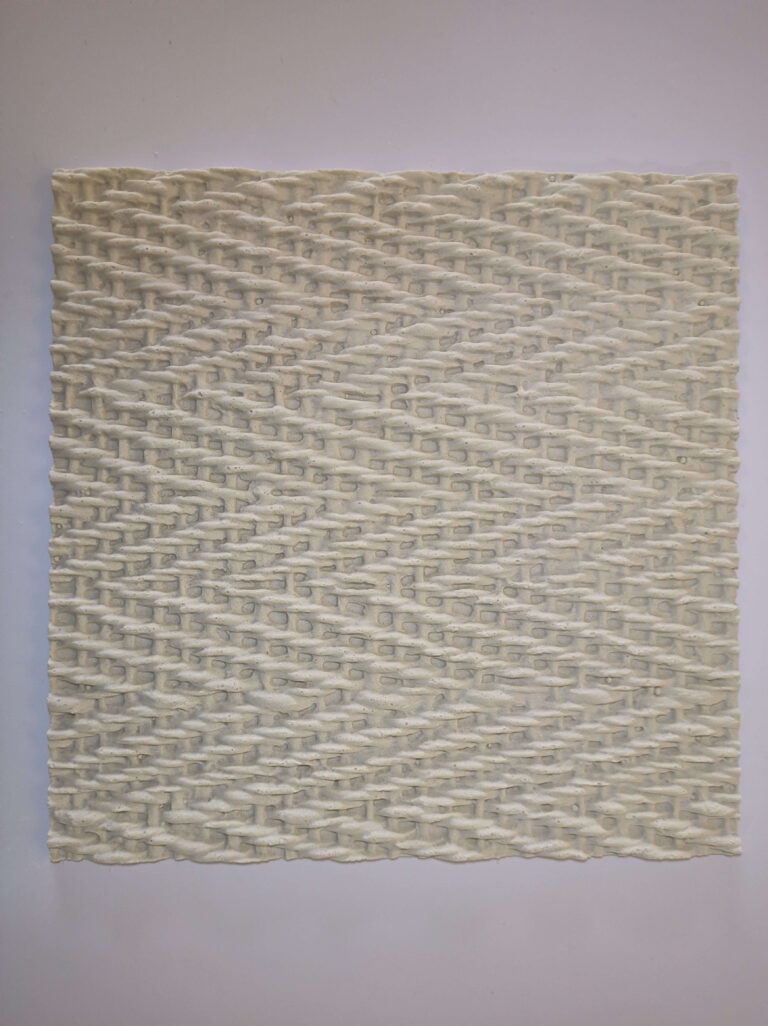
El grosor de la piedra flexible es el primer dato que revisa un especificador, porque determina el peso de la pared, el tamaño de la curva y el acabado que puede soportar una lámina. La gama de JMS Decor abarca desde 2 mm hasta 8 mm. La lámina adecuada para cada obra es la más fina que cumpla con los planos.
El grosor no es una cifra única con una sola respuesta. Varía según el patrón de piedra, el refuerzo interno del panel y la función que debe cumplir la lámina. Un comprador que lo analiza de esta forma selecciona un panel que se instala sin problemas y permanece plano.
El grosor de la piedra flexible es una decisión de diseño, no un detalle. Define el peso, la curva y el sistema de fijación en cada pared.
Qué significa el grosor de la piedra flexible
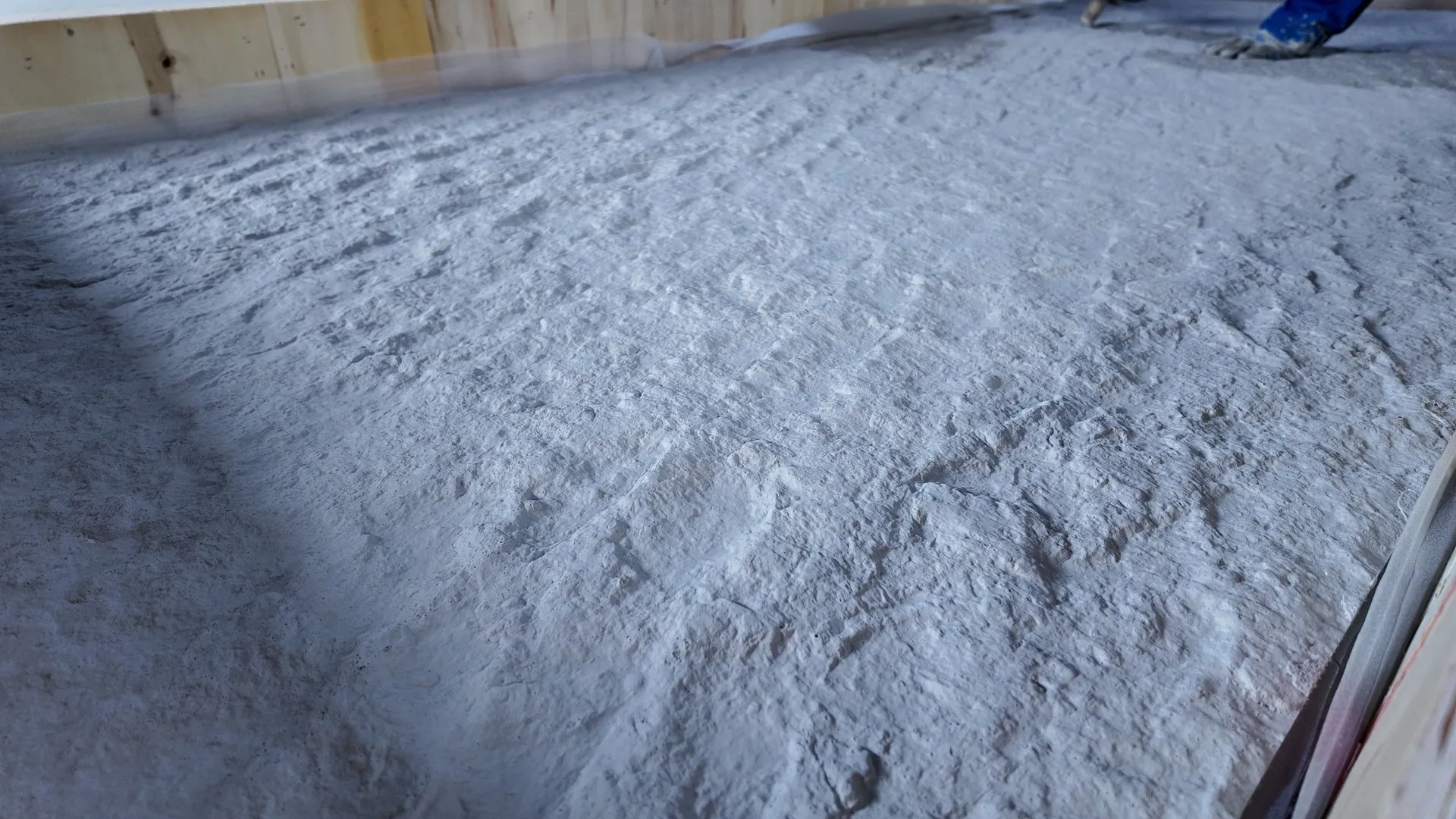
El grosor describe la profundidad de la lámina terminada. Se mide desde la cara trasera hasta la superficie de piedra. Dado que el panel está fabricado con una superficie de piedra adherida a una malla de fibra de vidrio, la profundidad se establece en fábrica en lugar de cortarse en obra.
Ese control es crucial en un proyecto. Un panel del mismo patrón puede fabricarse más fino o más grueso. La cifra que aparece en la ficha técnica indica al instalador cómo se comportará la lámina una vez montada en la pared.
La gama de grosores de piedra flexible de JMS Decor va desde los 2 mm, en el extremo más fino, hasta los 8 mm, en el más grueso. La cifra está vinculada al patrón: un acabado fino puede fabricarse con menos espesor, mientras que un patrón profundo con mucho relieve requiere más material detrás.
Cada panel está fabricado con polvo de piedra natural, un gel inorgánico y una malla de fibra de vidrio. Su estructura es mineral, no una superficie recubierta, por lo que la profundidad forma parte de la lámina desde su fabricación.
El espesor se expresa en milímetros, y cada línea de pedido lo indica junto al patrón y al tamaño del panel. Un comprador puede cotejar una muestra con la especificación y comprobar la cifra sin necesidad de cortar una lámina. Por esta razón, el espesor aparece entre las primeras líneas de la ficha técnica.
Una lámina fina y una gruesa pueden tener el mismo acabado. La diferencia reside en la cantidad de material situado bajo la superficie, lo que cambia el peso del panel y su capacidad de flexión. Dos paneles que se ven similares en una pared pueden comportarse de manera muy distinta al sostenerlos en la mano.
La gama de 2 a 8 mm en la práctica
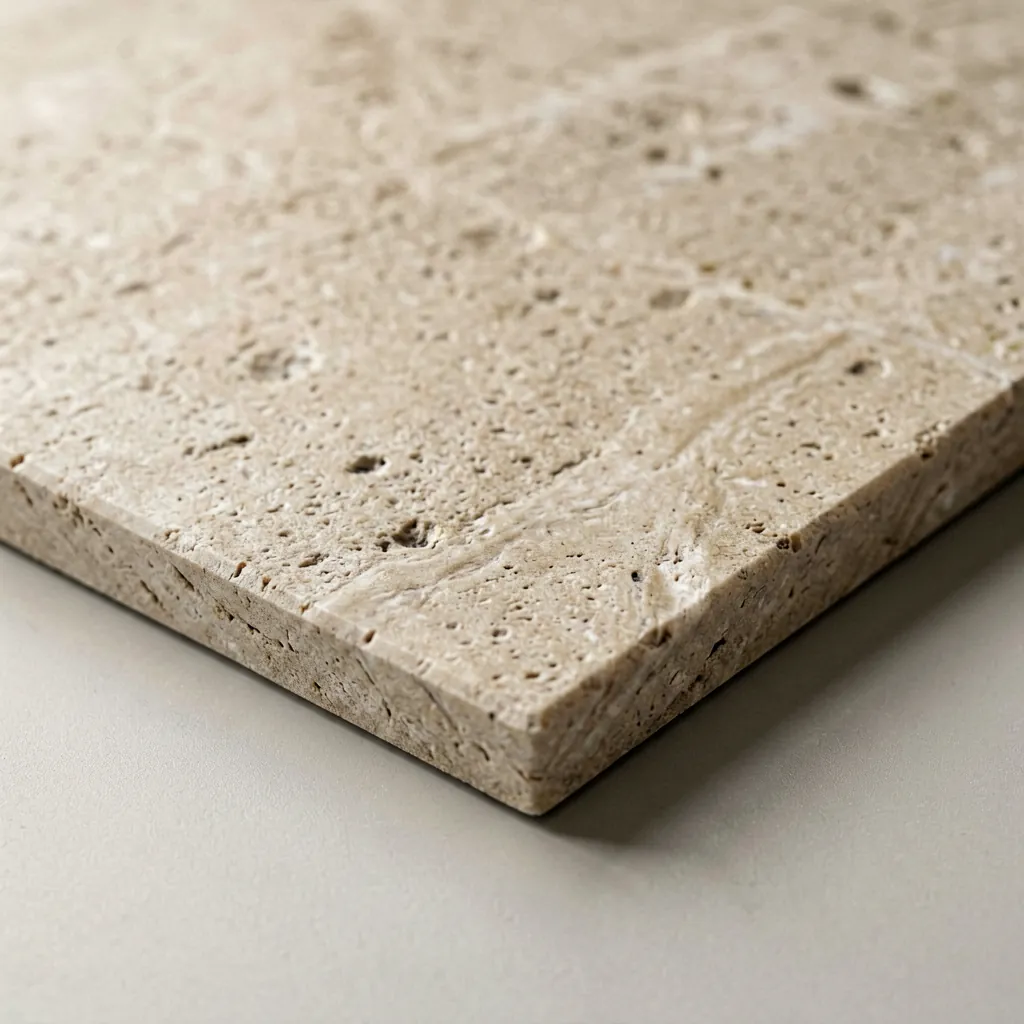
Las láminas más finas son las que mejor se doblan y facilitan el transporte. Una lámina de 2 mm es la variedad translúcida, lo suficientemente delgada para permitir el paso de luz y lo bastante ligera para que un solo instalador pueda transportarla.
La mayoría de los diseños se sitúan en el rango intermedio. Un acabado tipo travertino se fabrica entre 2,5 mm y 3 mm, lo que preserva el detalle de la superficie sin comprometer su flexibilidad.
Las hojas más gruesas alcanzan los 8 mm y ofrecen la textura más profunda. Aun así, pesan una fracción mínima comparado con la piedra natural y se instalan con el mismo sistema adhesivo.
El tamaño estándar del panel es de 1200 × 600 mm. La gama puede fabricarse hasta 1200 × 2900 mm para muros altos. El grosor y las dimensiones trabajan en conjunto: una hoja más grande debe mantenerse plana a lo largo de mayores vanos.
El rango intermedio cubre la mayor parte de los trabajos de pared, desde pasillos hasta paredes de recepción. Una hoja de entre 3 y 5 mm mantiene el trazo del patrón nítido y sigue transportándose plana dentro de la caja. El comprador selecciona la banda que mejor se adapta al acabado y la curvatura deseada, y lo confirma mediante una muestra.
| Banda de grosor | Aplicación recomendada |
|---|---|
| 2 mm | Paneles traslúcidos y paredes de acento con retroiluminación |
| De 2,5 a 3 mm | Travertino y acabados finos que requieren curvas pronunciadas |
| De 3 a 5 mm | Patrones estándar más habituales para revestimiento de paredes |
| De 6 a 8 mm | Acabados en alto relieve sobre sustratos sólidos |
Cómo el grosor afecta el peso y la carga
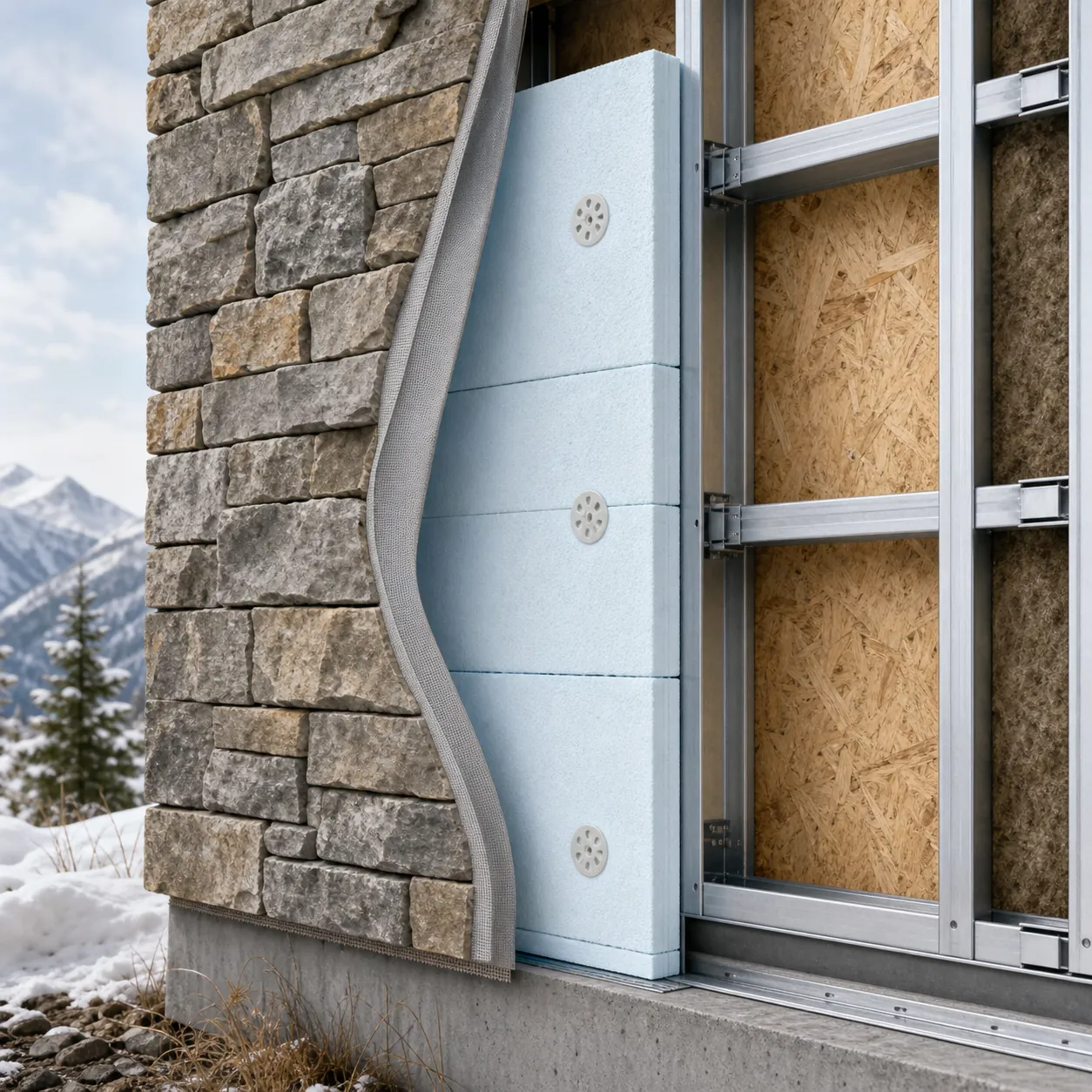
El peso sigue al grosor. A lo largo de toda la gama, los paneles oscilan entre 1,5 y 6 kg por metro cuadrado, lo que equivale a aproximadamente una quinta parte del peso de la misma superficie en piedra natural.
Esta cifra es la razón por la que un panel fino resulta clave en una renovación. Al ser más ligero, ejerce menos presión sobre la pared que lo recibe, así como sobre el estructro y el suelo que la soportan.
El peso también determina la logística del envío. Un palé más ligero permite cargar más metros cuadrados con el mismo flete, lo que reduce el coste del transporte internacional. En edificios antiguos, esta cifra puede ser decisiva para saber si la pared necesita un refuerzo estructural antes de instalar los paneles.
| Panel | Peso por metro cuadrado |
|---|---|
| Flexible stone en toda la gama | 1,5 a 6 kg |
| Piedra natural de la misma superficie | Aproximadamente cinco veces más pesado |
Un diseñador puede compensar el peso con la textura. Si el sustrato es resistente, se puede optar por un panel más grueso y con relieve profundo; si el sustrato es ligero o el edificio es antiguo, un panel más fino mantiene la carga bajo control.
La misma lógica se aplica a toda la gama de paneles flexibles de piedra, donde peso y acabado se especifican conjuntamente en cada línea.
En un muro alto, la carga se acumula en muchos paneles. Una hoja delgada mantiene ese peso total bajo, algo clave para una estructura ligera o un muro que nunca se construyó con la capacidad de soportar piedra. El ahorro se refleja tanto en la estructura como en el acabado final.
Espesor y radio mínimo de doblado

Bend and thickness are linked. A thinner sheet bends to a tighter curve, and a thicker one needs a wider radius before the surface starts to strain.
The general minimum bend radius is about 200mm. A complex, thick pattern such as Starmoon Stone needs a wider radius of about 300mm, because the deep relief does not compress.
Thin finishes go the other way. A travertine sheet at 2.5 to 3mm can take a smaller radius, which opens up narrow columns and tight arches.
A curve is measured across the outside of the panel, and the radius has to suit the pattern as well as the depth. A deep relief finish resists a tight bend more than a smooth one does. The sheet should be tested against the curve before the order is placed.
The full picture of curves sits in our guide to the flexible stone minimum bend radius.
Thinner Panels for Translucent and Curved Work
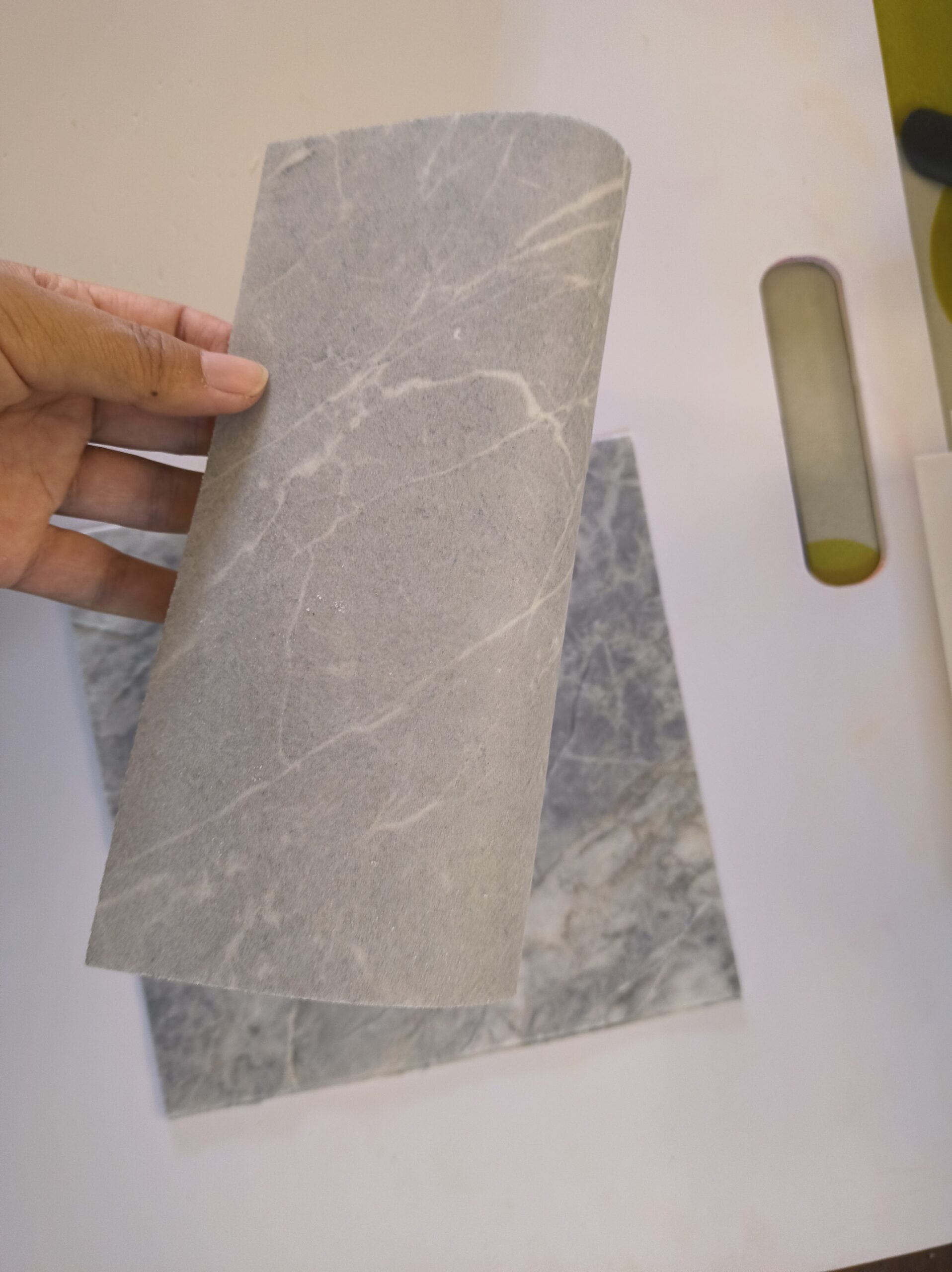
The thinnest end of the range is where light comes in. A 2mm translucent panel lets a backlight pass through the stone and turns a wall into a feature.
That grade is used on bar fronts, reception desks and feature walls where the glow is part of the design. The same thinness makes it simple to wrap a curve.
Light and curve often meet in a hotel lobby or a bar. A thin panel wraps the column and still lets a backlight glow through the stone. One sheet then does the work of a feature wall and a lighting element at the same time.
Where a designer wants a deeper pattern on a curved wall, the two needs are balanced at the sampling stage. A slightly thicker sheet can take a wider radius, and a slightly thinner one can take a tighter curve. The sample shows which trade-off fits the drawing.
Thin sheets also cut and handle easily. A fitter can shape them around a column without the breakage that comes with a rigid slab, which is the difference set out in flexible stone versus sintered stone.
Matching Thickness to the Substrate
The sheet has to match the wall behind it. A smooth, sound substrate takes a thin panel fixed with a dedicated adhesive, while a rougher surface may suit a thicker sheet that levels small variation.
Because the panels are light, they can fix over an existing finish in a refurbishment. That removes the demolition and the dust that a tile strip-out brings.
The panels are fixed with a dedicated adhesive, so there is no mortar, no plaster and no heavy noise or dust. A crew can fit a run of panels at night and hand the room back the next morning. That is what allows a refurbishment to move from one room to the next without closing a floor.
The panels are cut with a simple knife or a small saw, which keeps the tools light on site. Offcuts are small and light, so the waste on a job stays low. A fitter can carry a whole day of panels by hand.
Support materials come from the same factory. Adhesive, sealant and installation accessories are supplied with the panels, so the fixing matches the sheet. The standard minimum order is 300 square metres, explained in our guide to MOQ de piedra flexible, and it can be adjusted for a smaller job.
Fire class holds across the range. JMS Decor flexible stone is tested to ASTM E84 Class A, with a flame spread index of 25 or below, and to EN 13501-1 Class A2 for European projects. The factory runs a quality system to ISO 9001 y ISO 14000, and production keeps a defect rate below 1 percent.
En fabricante de paneles de pared de piedra flexible behind these figures supplies the full range, and the articles around it sit under product and specification guides.
Frequently Asked Questions on Thickness

Depth questions come up early on a quotation, because they touch weight, curve and cost. The answers below cover the ones buyers raise most often, and each points back to the range behind the sheet.
What flexible stone thickness range is available?
The range runs from 2mm to 8mm. The thin end includes a 2mm translucent panel, while the thick end carries the deepest stone patterns. Standard panels are made at 1200 by 600mm and can reach 1200 by 2900mm for tall walls.
Does thickness change the weight of a sheet?
Yes. Weight runs from 1.5 to 6 kg per square metre across the range, which is about one fifth of natural stone. A thinner sheet puts less load on the wall, the frame and the floor that carry it.
Which thickness bends the tightest?
A thinner sheet bends to a tighter radius. The general minimum bend radius is about 200mm, and a thin travertine finish at 2.5 to 3mm can go smaller. A thick, relief-heavy pattern needs a wider radius, around 300mm.
What is the 2mm translucent panel used for?
The 2mm grade lets a backlight pass through the stone. It is used on bar fronts, reception desks, hotel feature walls and displays where the glow is part of the design and the sheet has to wrap a curve.
Can I confirm thickness before ordering?
Yes. Standard patterns are sampled in 2 to 3 days, and a private colour takes about 7 days. Ask for the finish and the curve you have in mind, and the thickness and weight can be confirmed against a physical sample first.