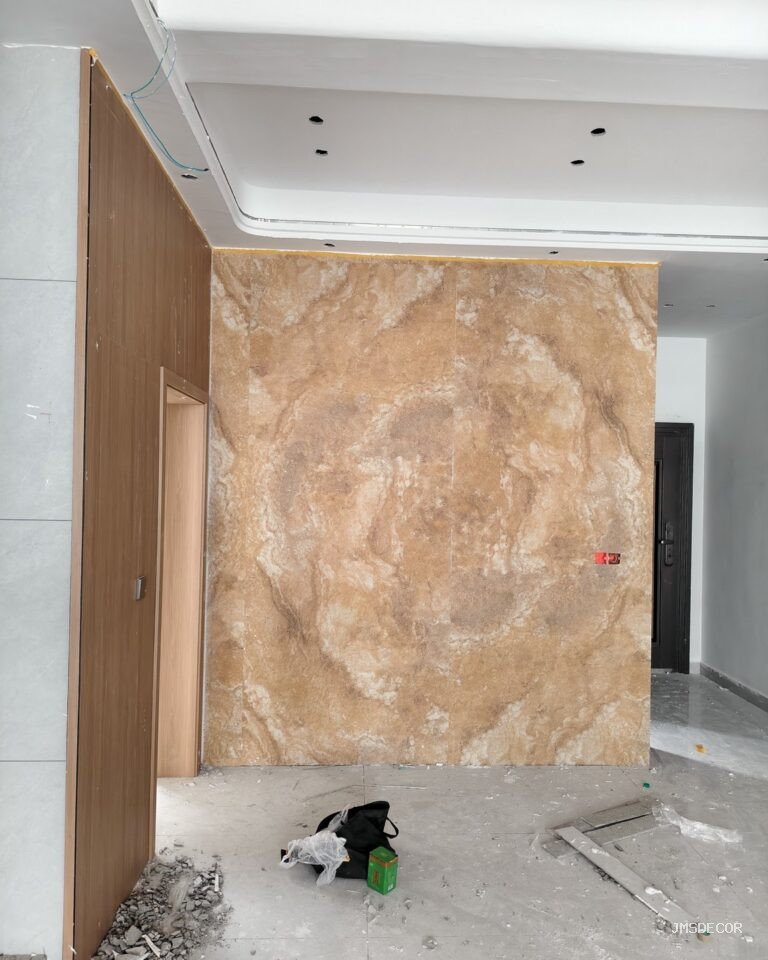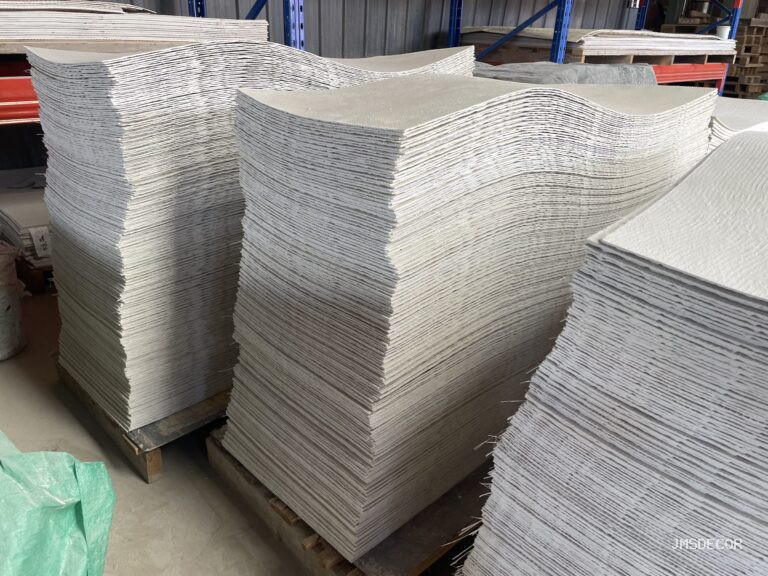
The first factory audit visit to a flexible stone manufacturer is the most expensive plane ticket a buyer never planned properly. Buyers arrive with good intentions and a camera, walk the floor behind a salesperson, leave with lunch and a brochure — and miss exactly the checks that separate a real producer from an assembler: the print line that proves the 3D inkjet capability, the mold store that backs the custom-colour promise, the mesh lamination step that decides whether sheets delaminate in year two, and the QC bench where the declared defect rate is either real or a slogan. This guide plans the visit as an audit: what to see in sequence, what to ask at each station, what to photograph as evidence, and how to leave with facts instead of hospitality.
Why the visit order matters as much as the visit
A guided tour follows the route the host chose; an audit follows the production flow, because that is where claims can be verified in sequence. The flow for this material is known: raw stone powder in, mixing, sheet casting or lamination, mesh reinforcement, curing, the 3D inkjet print of the pattern, QC, packing. Walking that order means every claim made at the sales office can be checked against the station that performs it — the “hundreds of molds” claim against the mold store, the “700+ m² per day print capacity” claim against the print line’s throughput, the “<1% defect rate" claim against the QC bench's tally sheets. A tour that skips a station is itself information: ask why.
Permission comes before arrival. State the intent plainly in the visit request — a production-flow walkthrough with photographs — and a genuine manufacturer agrees without hesitation. The hesitation is data, and so is the escort’s behaviour at the QC bench: an audit-worthy host walks you to the records; a nervous one walks you past them.
Station one: raw materials and mixing
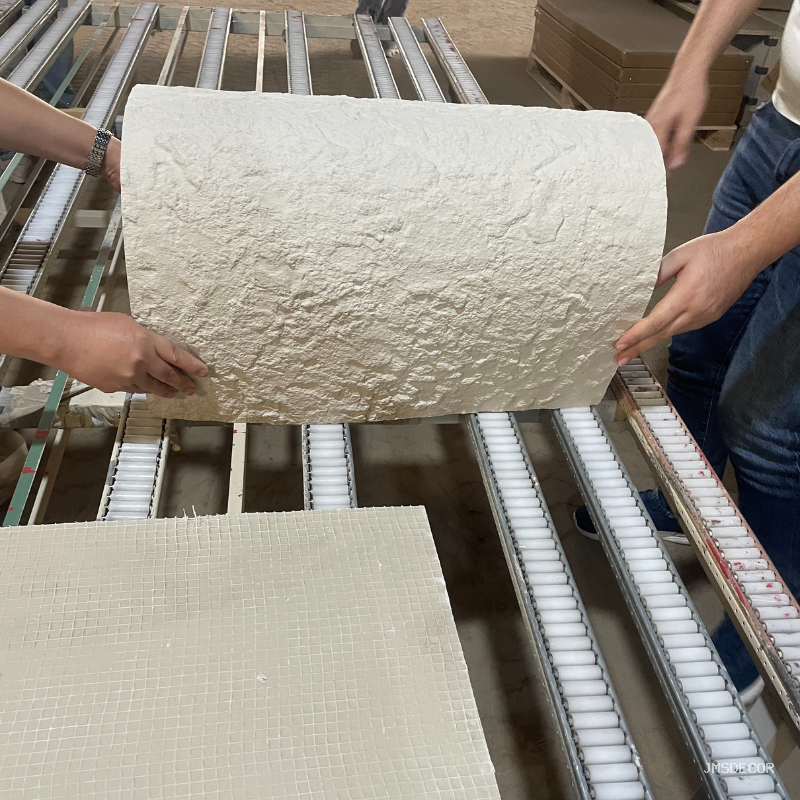
The wall starts as stone powder and binder, and the mixing station reveals whether production is controlled or improvised. Look for: powdered raw material stored covered and labelled, batch records at the mixer, and weighing that is measured rather than scooped. Ask: how is each batch recorded, and can a delivered pallet be traced back to its mixing record? The answer either connects to the batch traceability our container documents guide describes — or it does not, which is the audit’s first finding.
What to photograph: the mixer area with its batch sheets visible, and the raw material store. What to ask for: a blank or redacted batch record — one sheet, not the archive. A producer proud of its traceability shows one; a producer without records says the records are busy.
Station two: casting, mesh and curing
This is the step that decides the sheet’s core quality, and it is where an untrained eye can still learn a lot. Watch the mesh go down: is it laid consistently, wetted fully by the binder, free of bubbles and wrinkles? Look at the curing area: sheets resting flat, spaced, for the time the process requires — or stacked early because the schedule is tight? Ask: what in-process checks exist between casting and printing, and who signs them? The delamination failures that surface in year two are born here, and the audit question is simply whether anyone is watching.
What to photograph: the mesh lay-down, the curing racks, and any in-process gauge or checklist. What to weigh: whether the pace of the line matches the curing time the process claims — a line that cures in half the stated time is telling you which parameter is negotiable.
Station three: the 3D inkjet print line
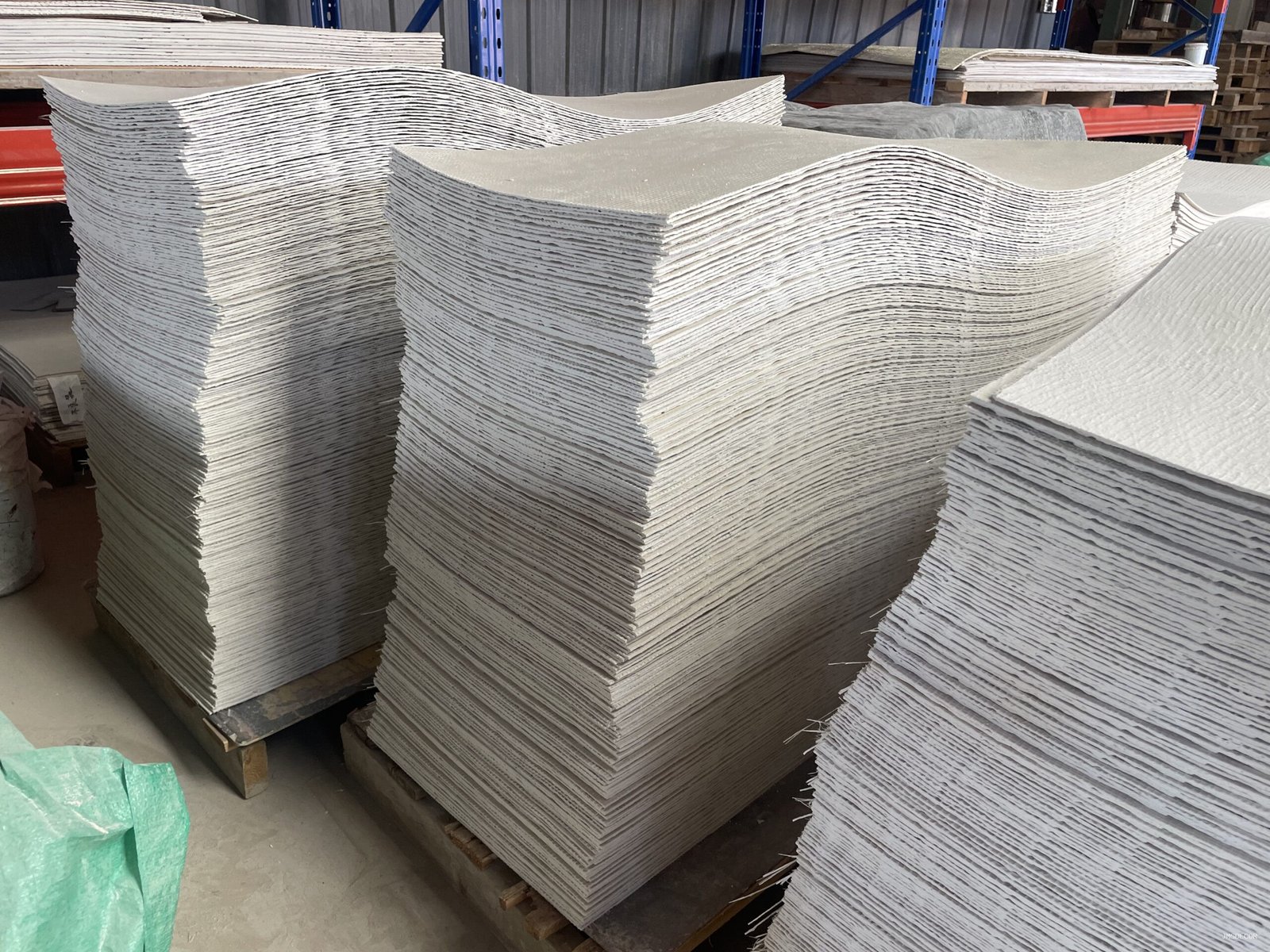
The pattern is printed, not quarried, and the print line is the claim most worth verifying. Count the machines; watch one run; ask what happens at a colour change and how calibration is recorded. The capacity claim — a single machine printing 700+ m² per day, per our pattern capability notes — is arithmetic you can check: one machine’s daily output times the machine count against the lead times the sales office quotes. Ask about the color-management process: how is the approved sample’s tone locked to every production run? The answer either describes measured control or a confident operator, and the difference is what shows up in the wall two batches later.
What to photograph: the print line running, the machine count, and a colour-calibration record if offered. What to request: a printed panel from the run you watched — the audit’s souveni, and later, your retained sample.
Station four: QC and the defect tally
The declared defect rate — under one percent — is a claim with a location: the QC bench. Look for: a defined inspection point where sheets are actually examined, a tally or system recording what was found, and a rejection area with real sheets in it. Ask: what defects are checked — thickness, weight, face quality, mesh integrity — and against what standard? The honest answers describe measured bands per pattern, the declared thickness and weight ranges; the vague answers describe a bench where nothing is written down. Our inspection failure guide lists what buyers catch late; a good factory catches the same list here, early.
What to photograph: the QC bench, the tally, the rejection area. What to ask for: a recent pre-shipment measurement sheet — the same document our inspection guide treats as the buyer’s leverage before loading.
Station five: the mold store and the warehouse
Two quick stations that verify two long-term promises. The mold store backs the claim of hundreds of molds and the five-year retention promise for custom colours and patterns: racks, labels, and moulds you can find by code. The warehouse backs the claims about packing: panels stored flat, off the ground, protected, and packed in the crate system our packaging guide describes — not stacked on edge because the schedule is tight. Both stations take ten minutes and both separate manufacturers from assemblers, because an assembler has neither racks nor crates.
How to leave with facts instead of hospitality
- The sample from the watched run, labelled with its batch — the anchor for every later comparison, per our batch consistency guide.
- One batch record and one QC sheet, redacted as needed — the traceability proof.
- The photo series, organised by station — the visit’s memory that survives staff turnover.
- The written answers to the questions the escort took away — chased by email within the week, while the visit is fresh.
And one behavioural rule: a first audit visit is a fact-finding mission, not a negotiation. Prices discussed on the factory floor are anchored to hospitality; prices discussed after the findings are anchored to evidence.
Buyer’s Checklist
Planning your factory visit? Start from the material itself
What the escort’s answers tell you — reading between stations
The audit reads people as carefully as machines, and three answer patterns carry information. The specific answer — a number, a name, a document — signals a process that exists; note it and verify the document exists too. The process answer — “we have a system”, “the QC team handles that” — signals either modesty or vagueness; ask the next narrower question and watch whether it narrows with it. The hospitality pivot — the answer that ends in an invitation to lunch — is the one to note in the report verbatim, because it is the question the host preferred not to answer. None of these are accusations; they are readings, and the report that records them honestly is what makes the second visit shorter.
The same reading applies to consistency between stations. The sales office said hundreds of moulds; the mould store had racks of them. The brochure said the print line runs at capacity; the gauge on the line said something narrower. Findings are comparisons, not accusations — and the supplier that walks you through a discrepancy openly is showing you the QC culture you came to find.
How the visit findings feed the order decision
The audit earns its keep at the decision meeting, where the findings convert into commercial terms. A strong print-line finding supports the pattern promise; a weak traceability finding converts into the contract clause that demands batch records with every shipment — the drafting logic from our contract guide. A good QC bench supports the declared defect rate; a packing area stacked on edge converts into a pre-shipment inspection right and a packaging clause. Every weakness found on the floor has a contractual answer, which is why the visit report is written for the negotiation, not for the archive.
The strongest outcome is the trial order that tests the findings: a small order run through the full evidence chain — pre-shipment inspection, container documents, arrival checks — with the audit findings as the questions the shipment answers. A factory that passed the audit passes the trial; a factory that passed the tour but fails the trial has been found out for the cost of one small order, and the buyer’s leverage walks into the next negotiation with photographs.
FAQ
Do I need an auditor to run this visit?
For a first visit, no — a buyer with this sequence and a camera learns more than a checklist auditor who has never seen the material. Third-party inspection earns its fee at pre-shipment, per our inspection guide, where the product itself is the evidence.
What if the factory refuses photographs?
Ask what is confidential and photograph the rest — pattern IP is a reasonable refusal; a QC bench is not. A flat refusal to document the production flow is a finding, and the visit report should say so.
How long should the visit take?
Half a day covers the five stations properly, with time to re-ask one question at each. Tours that finish in ninety minutes saw the showroom, not the factory.
Can I audit before I have an order?
Yes, and serious manufacturers expect it — the visit is how a professional buyer chooses whom to trial-order from. The trial order then runs the evidence chain, from pre-shipment inspection to the first container’s documents.
Walk the flow, ask at the stations, photograph the evidence, and the audit trip pays for itself before the first container ships. The capability claims to verify against are listed on the flexible Steinverblendung page, and hand-tool and workplace safety practice for plant visits is published by OSHA.