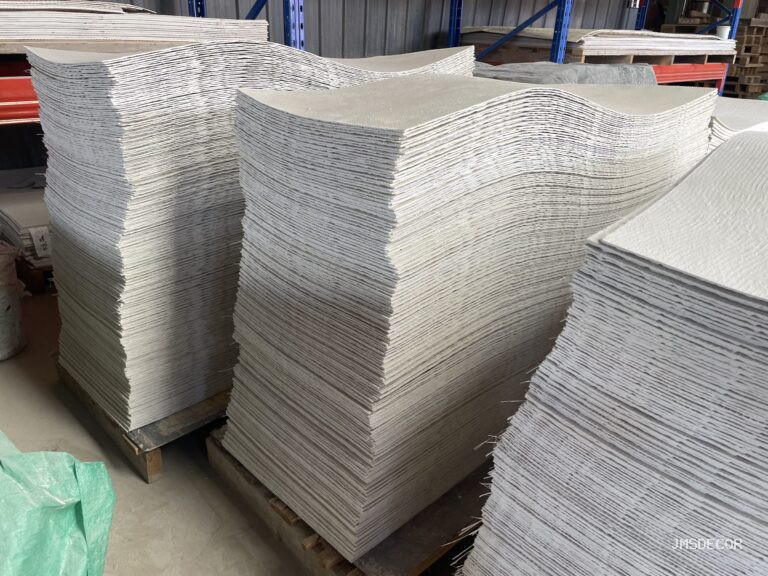
“Can I see it first?” is the most reasonable request in international buying, and the one that trips up the most deals — because the buyer is often an ocean away, the factory tour is a sales environment, and the sample in an envelope proves one square foot of one batch. The professional answer is not “trust us” and it is not a forced site visit; it is a structured way to verify the material at increasing levels of commitment: samples that prove the face, a video walkthrough that proves the production, references that prove the installed result, and a visit that proves everything at once when the order size justifies the airfare. This guide is that structure — how a remote buyer verifies flexible stone before ordering, stage by stage, and what each stage actually proves.
Why “seeing it first” needs a structure, not a slogan
The buyer who asks to see the material is asking three different questions at once: does the surface look and feel like what the catalogue promises; does the factory produce what it claims; and does the material perform once installed? A single sample answers none of them fully — it proves the face, not the process, and not the wall. The structure below maps each question to its cheapest sufficient evidence, so the buyer spends effort where the risk actually is: sample first, process video second, reference project third, and the in-person audit last — at the point where the order size pays for the trip.
The structure also protects the buyer from the reverse mistake: verifying nothing because a visit feels impractical. Every stage below can be run from a laptop, and the buyer who runs them reaches the ordering decision with more evidence than many buyers who flew once, toured once, and signed once.
Stage one: the sample package, ordered properly
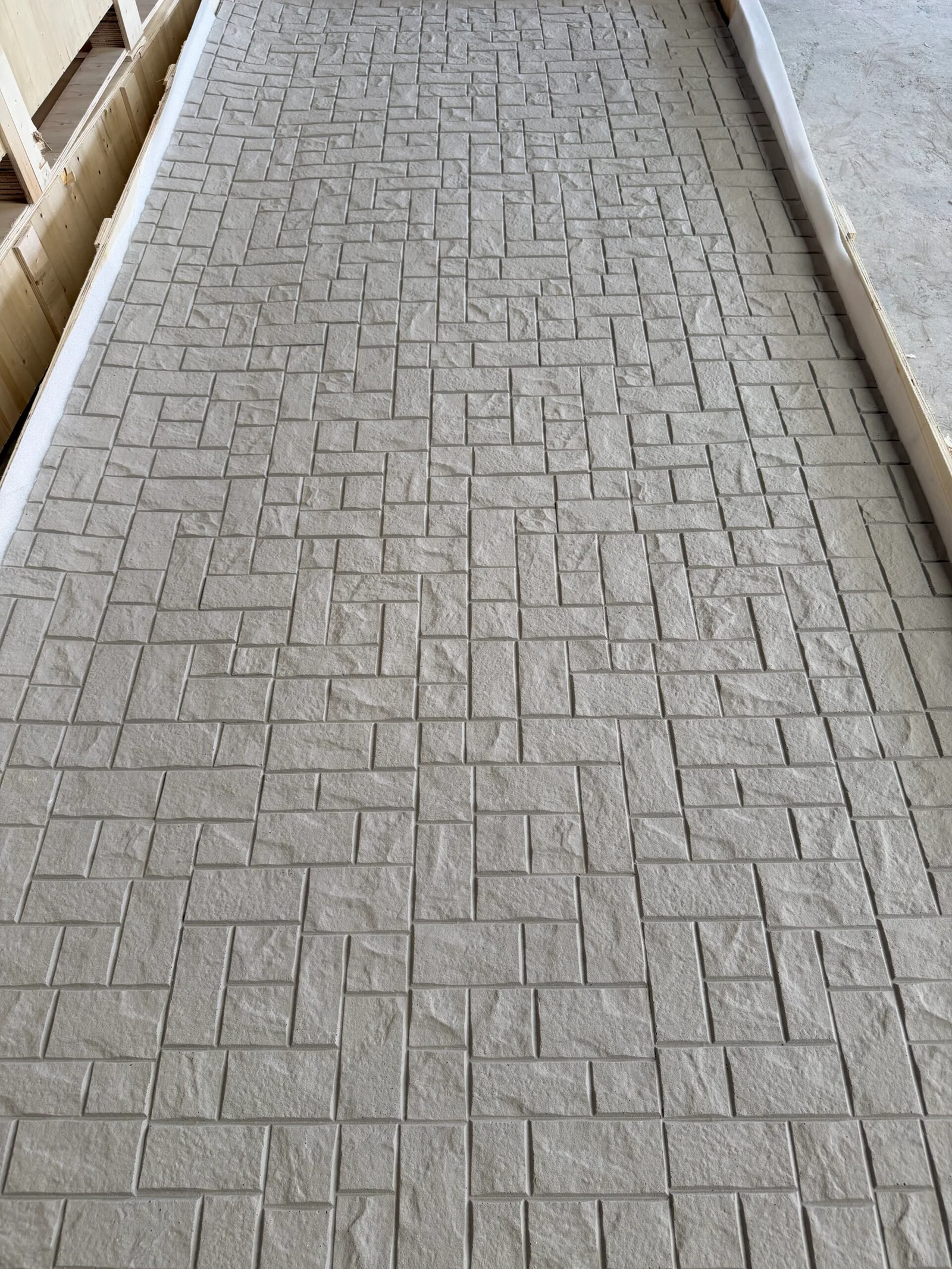
Samples are the foundation, and they are ordered with intent rather than requested casually. The useful sample package names its contents: the shortlisted patterns cut from current production, labelled with batch and date; a thickness range if more than one band is in play — the 2–8 mm spread across patterns is real, per our pattern selection guide; and for any pattern being judged in a specific room, a panel large enough to read at that room’s viewing distance. The samples then go through the comparison discipline: the real light, the real lamp colour temperature, the torch test on relief — the method our windowless-room guide runs in full for the hardest judging case.
What the sample proves, and what it does not: it proves the face — colour, relief, flexibility in the hand — from one batch on one day. It does not prove batch consistency, process capability or the installed result. Those need the next stages, which is exactly why the sample stage should not be allowed to carry a whole order decision alone.
Stage two: the video walkthrough, requested like an audit
A live video tour can prove the production claims from a desk, if it is requested as an audit rather than accepted as a montage. The request: a live call that walks the production flow in order — mixing, mesh, curing, the print line, QC, packing — the same sequence our on-site audit guide lays out, with the camera at each station long enough to see it working. The specific proof points transfer to video: the machine count on the print line against the capacity claim, the QC bench with its tally, the mould racks behind the custom-colour promise. What video cannot prove — thickness at gauge, mesh wet-out at the lamination step — becomes a question with a document answer: a recent measurement sheet, per the records in our inspection guide.
The live-versus-recorded distinction matters: a recorded video is marketing; a live call that follows your sequence, answers your questions and shows what you ask to see is an audit at a distance. Ask for live, and ask to drive.
Stage three: the installed reference, verified properly
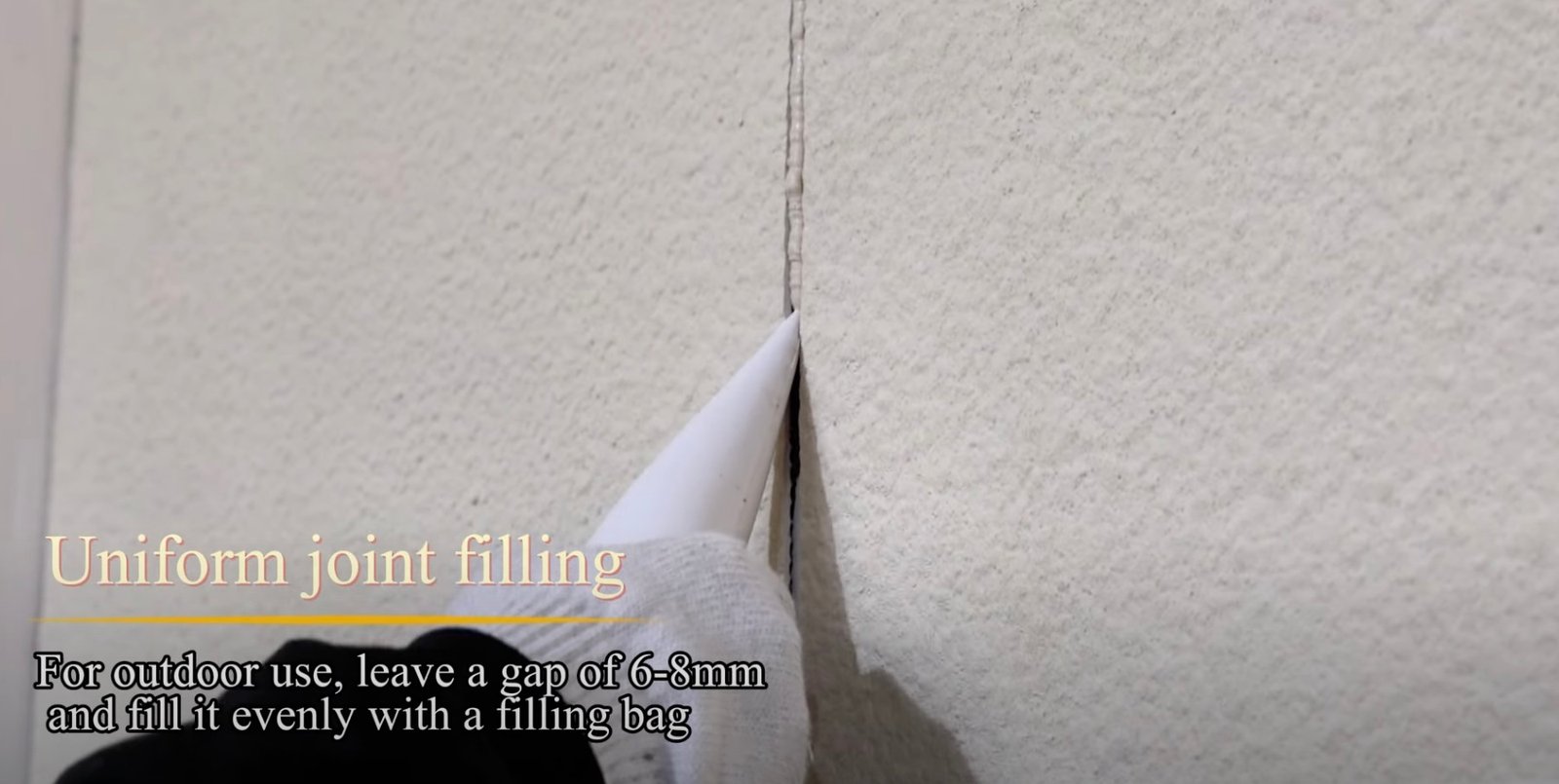
The installed project is the proof the first two stages cannot give: how the face reads at wall distance, how it has aged, and how the details — corners, joints, terminations — were executed. The professional request is specific: a reference project of similar scale and exposure, ideally within travelling distance or with a contactable owner, and photographs that include close-ups of joints and edges, not only hero shots. Where the reference is local to the buyer, visit it; where it is not, a video call with the installed client — or the installing contractor, whose view of the material’s behaviour is the honest one — carries much of the same weight.
What the reference proves and what it does not: it proves the material can deliver the result and reveals the ageing behaviour over real time. It does not prove the next batch will match — that is what the retained sample and batch logic from our consistency guide protect at order time. Reference and sample are different instruments; the buyer who uses both buys once.
Stage four: the visit, when the order justifies it
The in-person audit is the capstone, and it is scheduled when the maths says so: a first major order, a custom development, or a distribution agreement — commitments where a day of travel is rounding error against the exposure. The visit runs the on-site audit sequence from our factory-audit guide, now with the advantage that the buyer arrives knowing exactly which claims the video raised and which documents to chase. Where the visit also includes a showroom or installed-site component — as many factory towns can arrange — the buyer sees production and result in one trip, which is the full verification in one itinerary.
For buyers who combine the trip with a trade fair visit, the sequencing note: the fair is where conversations start; the factory is where they are verified. A buyer who flies for a fair and adds the factory days leaves with both the relationship and the evidence — and the evidence is what the contract drafting afterwards quotes, per our contract guide.
What each stage actually proves — the summary table
- Sample: the face from one batch — colour, relief, flexibility. Does not prove process or consistency.
- Live video walkthrough: the production claims at each station, at a distance. Does not prove gauge-level parameters.
- Installed reference: the result and its ageing, from a real project. Does not prove the next batch.
- On-site audit: everything, in sequence, in person — the capstone for commitments that justify the trip.
Run them in order and the ordering decision arrives with its evidence already attached — the same discipline our submittal guide formalises for the project that follows.
What the remote buyer should keep from every stage
Staged verification produces a file, and the file is what turns verification into negotiation leverage and later into the order’s evidence chain. From the sample stage: the labelled panels, the request emails, the supplier’s responses and lead times. From the video stage: the call notes by station, the documents promised and delivered, the questions that stayed vague. From the reference stage: the project contact and what they confirmed. From the audit — when it happens: the photo series and the findings. The file reads exactly like the submittal discipline our submittal guide formalises for projects, because it is the same discipline applied to the buying decision — and the buyer who holds it negotiates from documents while everyone else negotiates from memory.
The file also shortens the path for the next project: the second order with a verified supplier starts at stage one with a new pattern, skipping the stages the relationship has already proven. Verification is an asset that compounds — the structure above is run once seriously, and every later order reuses its conclusions.
FAQ
Can I order a container without ever visiting?
Yes — buyers do, running stages one to three plus a third-party pre-shipment inspection, which puts a professional’s eyes on the exact goods before loading, per our inspection guide. The visit becomes optional when the inspection replaces its eyes.
How many samples is a serious request?
Enough to judge the shortlist: two to four patterns, one to two panels each, plus thickness-band pieces if the project spans formats. A drawer of everything is a collection, not a decision.
Who pays for samples and freight?
Practices vary by supplier and order intent; what matters is agreeing it before the courier is booked. Serious suppliers invest in serious buyers, and the sample conversation is itself a signal of how the order will be handled.
What if the video tour keeps being rescheduled?
That is information too. A manufacturer that sells internationally runs video calls as routine; repeated reluctance to show the production line live is a finding, and the buyer’s shortlist should treat it as one.
Verify in stages, spend evidence where the risk is, and let the order size decide the airfare. The product page to start stage one from — with formats, patterns and sample requests — is flexible Steinverblendung, and workplace-visit safety practice for buyers is published by OSHA.