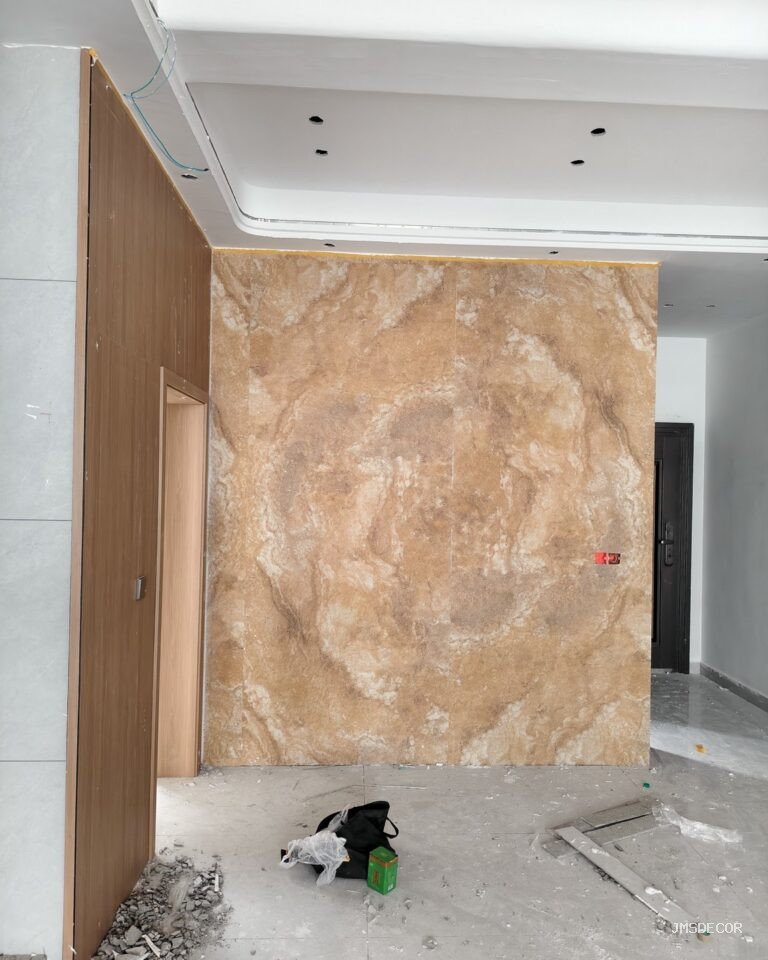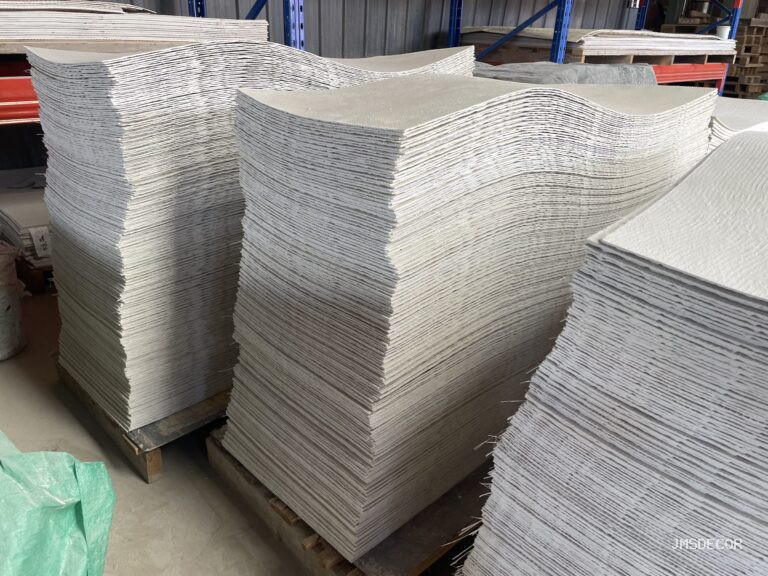
柔軟石材メーカーへの最初の工場視察は、購入者が適切に計画しなかった史上最高値の航空券となります。購入者は善意とカメラを持って到着し、営業担当者の背後で工場内を歩き、昼食とパンフレットを持って帰りますが、本物の生産者と組立業者を見分けるための具体的な確認事項を逃してしまいます。具体的には、3Dインクジェット能力を示す印刷ライン、カスタムカラーの約束を支える金型保管庫、2年目にシートのはがれ(デラミネーション)を決定づけるメッシュ積層工程、そして声明される不良率がかばんの言葉なのか実態なのかを判別するQC検査台です。このガイドでは、視察を監査として計画します。どの順で見るといいか、各ステーションで何を尋ねるか、証拠として何を写真に収めるか、そして歓待ではなく事実を持って帰る方法を説明します。
なぜ視察の順序が視察そのものと同様に重要なのか
ガイド付きツアーは主催者が選んだルートをたどりますが、監査は主張を順を追って検証できる、すなわち生産フローに従って行われます。この素材のフローはよく知られています。粉状石材原料が入り、混合し、シート成型または積層し、メッシュ補強し、硬化させ、パターンの3Dインクジェット印刷を行い、QCを経て梱包されます。この順序で歩くということは、販売オフィスでなされたあらゆる主張を、それを実行するステーションに対して検証できるということです。「数百の金型がある」という主張を金型保管庫で、「日産700平方メートル以上の印刷能力」という主張を印刷ラインのスループットで、「“1%未満の不良率」という主張をQC台の集計票で検証できます。ステーションをスキップするツアー自体も一つの情報です。なぜスキップするのかと尋ねてください。
到着前に許可を得てください。訪問依頼において、写真を伴う生産フローの walkthrough(見学ツアー)であることを明確に伝えてください。本物のメーカーであれば躊躇なく承諾します。その躊躇はデータであり、QC台での付き添い係の振る舞いもまたデータです。監査に適した host は記録のある場所に連れて行きますが、緊張している host はそれらの前で避けるように案内します。
ステーション1:原材料と混合工程
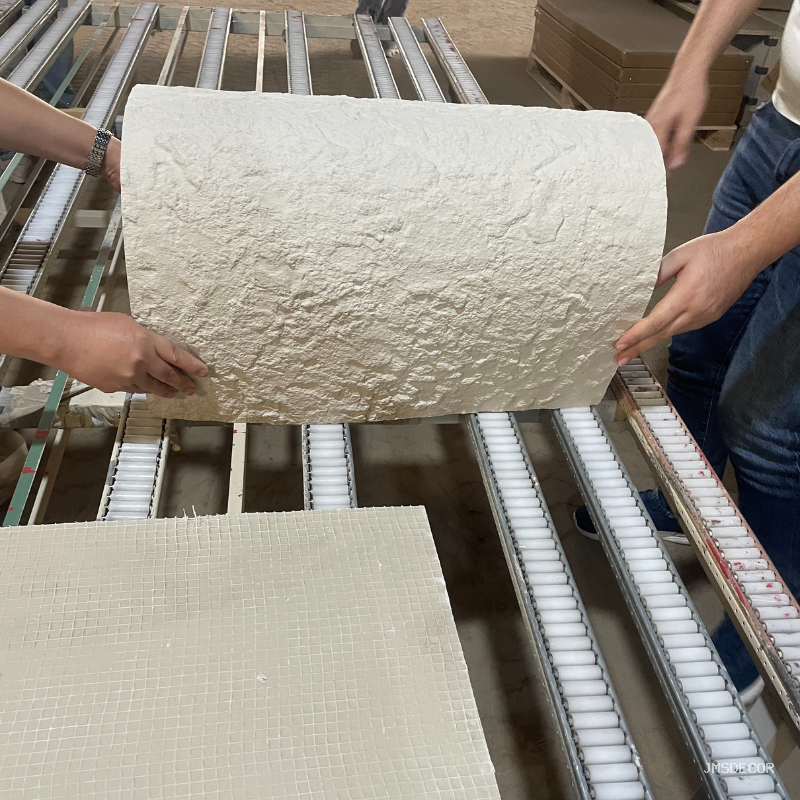
壁材は石材粉末と結合剤から始まり、混合ステーションは生産が管理下にあるのかそれとも適当にやっているのかを開示します。以下を確認してください。粉状の原材料がカバーで覆われラベル付けされて保管されているか、ミキサーの隣にロット記録があるか、そして秤量が行われているかどうか(すくいとるのではなく測定で)。以下の点を尋ねてください。各ロットはどのように記録されており、納入されたパレットを混合記録まで遡及できるか。答えが、私たちが container documents guide 説明しているロット管理可能Traceabilityに繋がっていれば理想的ですが、繋がっていなければそれは監査における最初の発見事項となります。
写真に収めるべきもの:ロットシートが見える状態のミキサーエリアと原材料倉庫。請求するべきもの:空白または加工されたロット記録の1枚(アーカイブ全体ではなく)。トレーサビリティに自信のあるメーカーは1枚見せますが、記録のないメーカーは「記録が大変な状態」と言い訳します。
ステーション2:成型、メッシュ、硬化工程
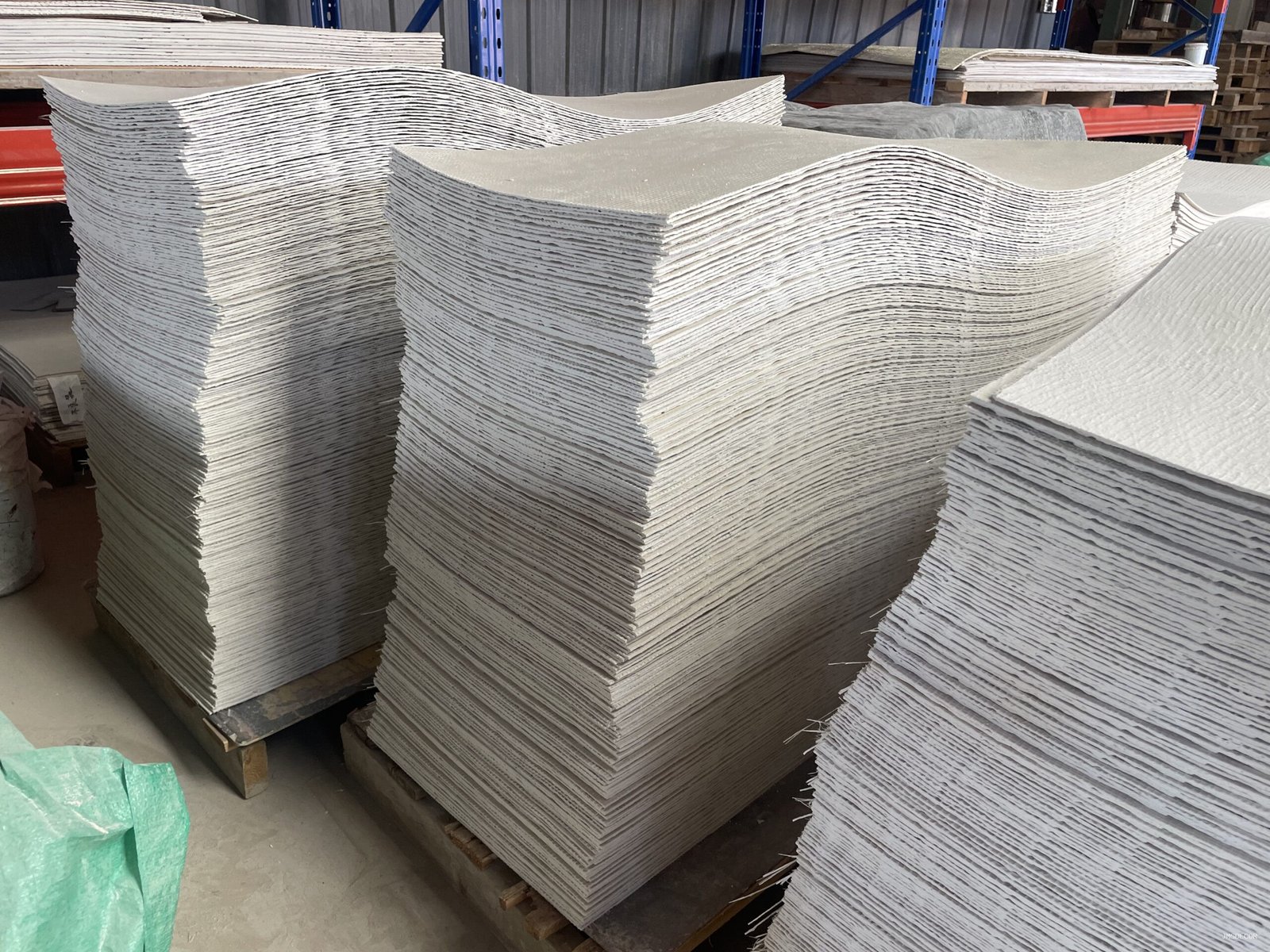
これがシートのコア品質を決定する工程であり、経験のない目にも多くのことがわかる場所です。メッシュが敷かれていく様子を見てください。一貫性があり、結合剤で十分に濡らされており、気泡やしわがないか。硬化エリアを見てみてください。シートが平らに置かれ、間隔をあけ、工程が必要とする時間だけ放置されているか。それともスケジュールがタイトなため早めに積み上げられているか。以下の点を尋ねてください。成型と印刷の間にどのような工程内チェックがあり、誰がサインしているか。2年目に見られるデラミネーションの失敗はここで生まれます。監査での問いは単に「だれかが見張っているか」です。
写真に収めるべきもの:メッシュ敷き込み部、硬化ラック、および工程内ゲージまたはチェックリスト。判断すべきもの:ラインのペースが工程が主張する硬化時間と一致しているかどうか。主張される時間の半分で硬化するラインは、どのパラメータが交渉可能であるかを物語っています。
ステーション3:3Dインクジェット印刷ライン
パターンは採石されるのではなく印刷され、印刷ラインが最も検証価値のある主張です。機械の台数を数え、1台が動作している様子を見守り、色交換時に何が行われるか、校正記録はどう残されているかを尋ねてください。容量に関する主張 — 私達の pattern capability notes — is arithmetic you can check: one machine’s daily output times the machine count against the lead times the sales office quotes. Ask about the color-management process: how is the approved sample’s tone locked to every production run? The answer either describes measured control or a confident operator, and the difference is what shows up in the wall two batches later.
What to photograph: the print line running, the machine count, and a colour-calibration record if offered. What to request: a printed panel from the run you watched — the audit’s souveni, and later, your retained sample.
Station four: QC and the defect tally
The declared defect rate — under one percent — is a claim with a location: the QC bench. Look for: a defined inspection point where sheets are actually examined, a tally or system recording what was found, and a rejection area with real sheets in it. Ask: what defects are checked — thickness, weight, face quality, mesh integrity — and against what standard? The honest answers describe measured bands per pattern, the declared thickness and weight ranges; the vague answers describe a bench where nothing is written down. Our inspection failure guide lists what buyers catch late; a good factory catches the same list here, early.
What to photograph: the QC bench, the tally, the rejection area. What to ask for: a recent pre-shipment measurement sheet — the same document our inspection guide treats as the buyer’s leverage before loading.
Station five: the mold store and the warehouse
Two quick stations that verify two long-term promises. The mold store backs the claim of hundreds of molds and the five-year retention promise for custom colours and patterns: racks, labels, and moulds you can find by code. The warehouse backs the claims about packing: panels stored flat, off the ground, protected, and packed in the crate system our packaging guide describes — not stacked on edge because the schedule is tight. Both stations take ten minutes and both separate manufacturers from assemblers, because an assembler has neither racks nor crates.
How to leave with facts instead of hospitality
- The sample from the watched run, labelled with its batch — the anchor for every later comparison, per our batch consistency guide.
- One batch record and one QC sheet, redacted as needed — the traceability proof.
- The photo series, organised by station — the visit’s memory that survives staff turnover.
- The written answers to the questions the escort took away — chased by email within the week, while the visit is fresh.
And one behavioural rule: a first audit visit is a fact-finding mission, not a negotiation. Prices discussed on the factory floor are anchored to hospitality; prices discussed after the findings are anchored to evidence.
Buyer’s Checklist
Planning your factory visit? Start from the material itself
What the escort’s answers tell you — reading between stations
The audit reads people as carefully as machines, and three answer patterns carry information. The specific answer — a number, a name, a document — signals a process that exists; note it and verify the document exists too. The process answer — “we have a system”, “the QC team handles that” — signals either modesty or vagueness; ask the next narrower question and watch whether it narrows with it. The hospitality pivot — the answer that ends in an invitation to lunch — is the one to note in the report verbatim, because it is the question the host preferred not to answer. None of these are accusations; they are readings, and the report that records them honestly is what makes the second visit shorter.
The same reading applies to consistency between stations. The sales office said hundreds of moulds; the mould store had racks of them. The brochure said the print line runs at capacity; the gauge on the line said something narrower. Findings are comparisons, not accusations — and the supplier that walks you through a discrepancy openly is showing you the QC culture you came to find.
How the visit findings feed the order decision
The audit earns its keep at the decision meeting, where the findings convert into commercial terms. A strong print-line finding supports the pattern promise; a weak traceability finding converts into the contract clause that demands batch records with every shipment — the drafting logic from our 契約ガイド. A good QC bench supports the declared defect rate; a packing area stacked on edge converts into a pre-shipment inspection right and a packaging clause. Every weakness found on the floor has a contractual answer, which is why the visit report is written for the negotiation, not for the archive.
The strongest outcome is the trial order that tests the findings: a small order run through the full evidence chain — pre-shipment inspection, container documents, arrival checks — with the audit findings as the questions the shipment answers. A factory that passed the audit passes the trial; a factory that passed the tour but fails the trial has been found out for the cost of one small order, and the buyer’s leverage walks into the next negotiation with photographs.
FAQ
Do I need an auditor to run this visit?
For a first visit, no — a buyer with this sequence and a camera learns more than a checklist auditor who has never seen the material. Third-party inspection earns its fee at pre-shipment, per our inspection guide, where the product itself is the evidence.
What if the factory refuses photographs?
Ask what is confidential and photograph the rest — pattern IP is a reasonable refusal; a QC bench is not. A flat refusal to document the production flow is a finding, and the visit report should say so.
How long should the visit take?
Half a day covers the five stations properly, with time to re-ask one question at each. Tours that finish in ninety minutes saw the showroom, not the factory.
Can I audit before I have an order?
Yes, and serious manufacturers expect it — the visit is how a professional buyer chooses whom to trial-order from. The trial order then runs the evidence chain, from pre-shipment inspection to the first container’s documents.
Walk the flow, ask at the stations, photograph the evidence, and the audit trip pays for itself before the first container ships. The capability claims to verify against are listed on the flexible stone veneer page, and hand-tool and workplace safety practice for plant visits is published by OSHA.