An exhibition booth has one job: look permanent for four days, then vanish. The finishes that win that job are the ones that photograph like architecture and pack like equipment — and flexible stone veneer is quietly becoming the standard answer. A stone-tone booth wall at 1.5–6 kg/m², bonded to a carrier panel that bolts to a reusable frame, delivers the mass and texture that printed fabric and composite graphics fake, without the crating, the forklift and the freight bill that real stone cladding brings to a show floor. This guide covers how exhibition and stand builders actually use the material: the booth-wall build-up, the graphics and lighting integration, the logistics that make or save the budget, and the reuse strategy across a show calendar.
What a stone booth wall is actually made of
The wall is a sandwich, and each layer earns its place. The frame is the modular aluminium system the stand is built on — the same kit, show after show. The substrate is a rigid carrier board fixed to that frame, flat and dimensionally stable, chosen and confirmed with the adhesive system the way our backing board guide prescribes for buildings. The finish is flexible stone bonded to the carrier with the approved adhesive — full coverage, lift-and-read on the first panel, the discipline our coverage guide teaches crews.
The result is a wall section that behaves like a piece of scenery: light enough for two people to carry, rigid enough to survive handling, and finished in a mineral stone face that reads as built architecture under show lighting. The same logic — a removable carrier panel clad in the finish — is the access-panel detail from our removable panel guide, scaled up from a hatch to a whole stand.
Why weight is the whole business case
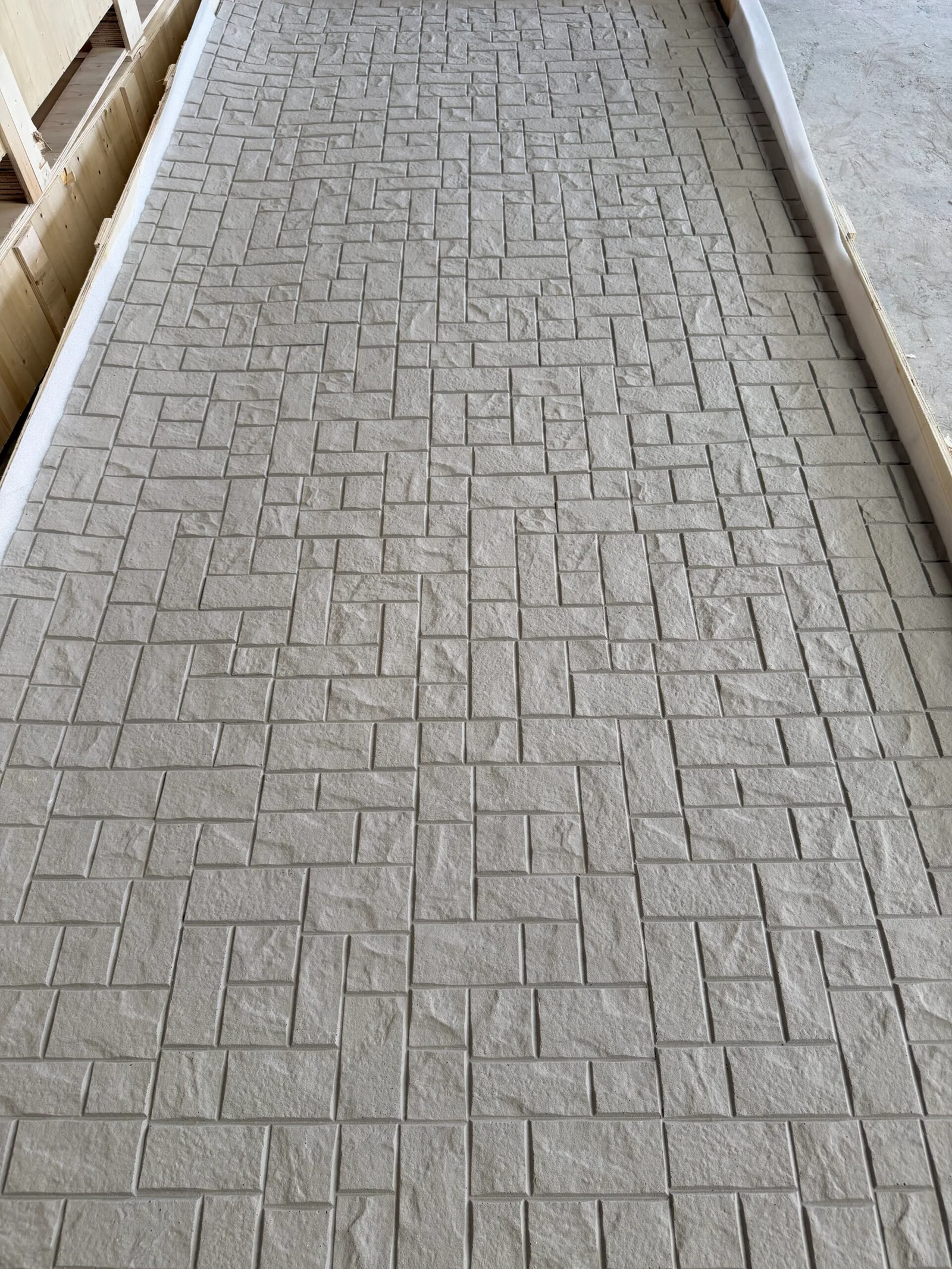
Show logistics are priced by the kilogram and the crate. A real-stone feature wall on a stand means heavy crating, machine handling, drayage charged on weight, and a floor-loading conversation with the venue. The same wall in flexible stone travels as flat panels in the van with the rest of the stand kit: at a fifth or less of slab weight, a full booth’s cladding is a two-person carry and a standard van load. For exhibitors who ship between cities — or between continents — the freight line alone justifies the specification, the same logistics argument our руководство по экономии на freight makes for permanent projects, compressed into a show calendar.
Weight also decides what the booth can be. A demountable frame system has payload limits, and a heavy cladding pushes the stand toward custom structure, permits and cost. The veneer keeps the whole build inside the lightweight-system world: faster build-up on the show floor, no special rigging, and tear-down that finishes before the venue’s overtime clock starts.
Как интегрируются графика, экраны и освещение?
Стеновая панель стенда — это машина по привлечению внимания, а камень выступает её фоном. Экраны крепятся к каркасу через несущую панель, а не только к финишному покрытию — это правило монтажа, о котором наше руководство по монтажу говорит чётко: оно действует везде. Графическое оформление и логотипы лучше всего планировать как самостоятельные панели между участками из камня или наносить печать непосредственно на камень, где композиция того требует — это маршрут кастомизации, который покрывает процесс OEM, с привязкой artwork к раскладке панелей, чтобы изображение попадало точно туда, где задумано дизайнером. Световые линии и светильники направленного света монтируются согласно правилам из нашего руководства по освещению: утопленные до клеения, доступные для обслуживания после него и направленные так, чтобы высвечивать рельеф камня — именно этот эффект отличает каменный стенд от фотографического на расстоянии двадцати шагов.
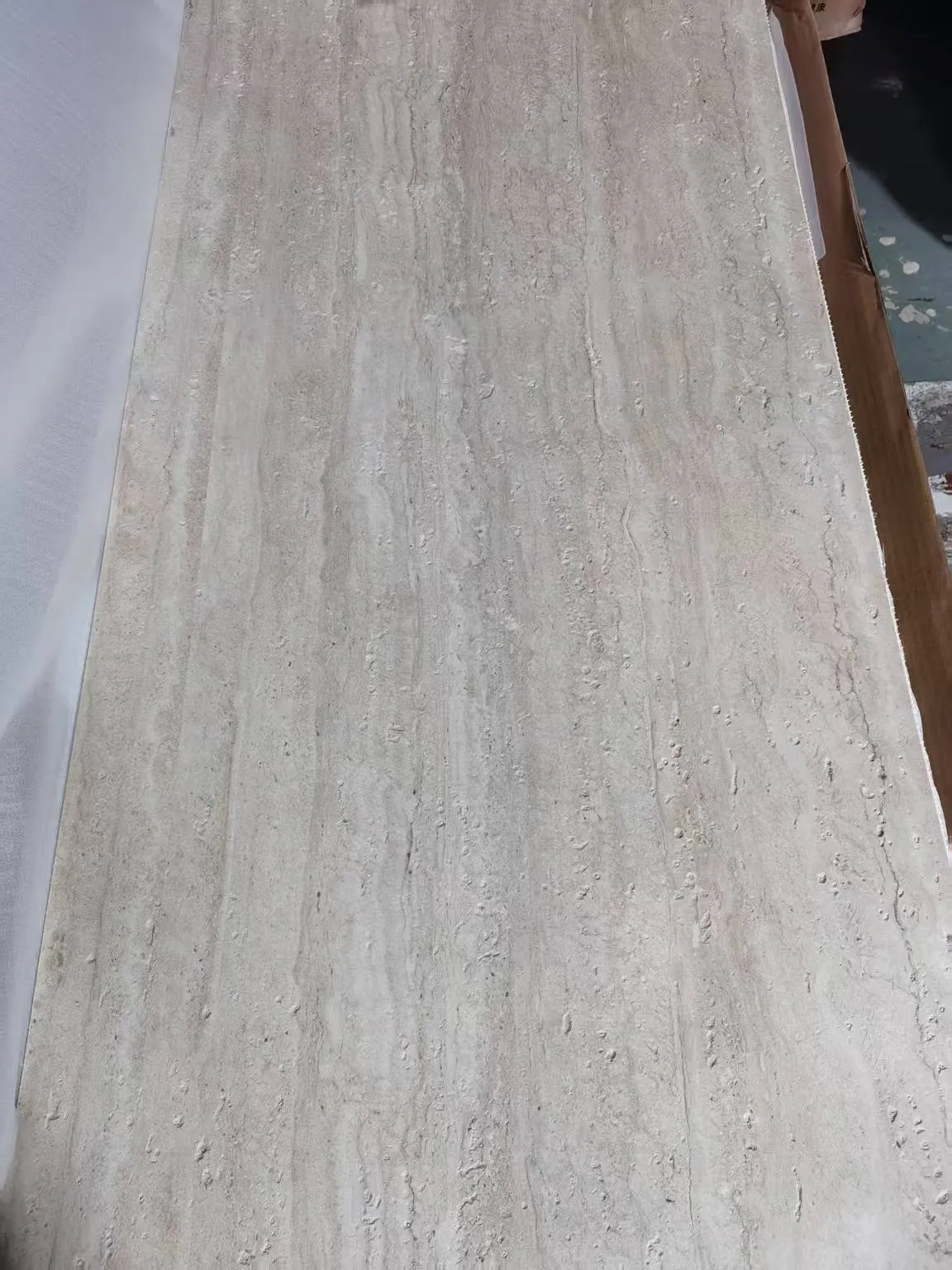
Аргумент о расстоянии обзора также играет в пользу стенда. На выставочных проходах стены оценивают с дистанции от трёх до десяти метров, а затем поощряют посетителя, который подойдёт ближе, за крупный план. Мелкие узоры травертина и сланца работают на обоих дистанциях — это дублирующаяся логика чтения нашей pattern selection guide продукции — и тактильный момент, когда посетитель прикасается к реальной минеральной текстуре, является взаимодействием, которое не купить у графических решений.
Какова стратегия повторного использования на разных шоу?
Стенд, который окупает сам себя, — это тот, который путешествует. Панели, предварительно приклеенные к несущим пластинам на разборном каркасе, разбираются, упаковываются в плоском виде и собираются заново от шоу к шоу — та же обратимая логика, которую наше руководство по арендуемым пространствам применяет к ретейл-интерьерам, здесь же она применяется к стенду, который “арендует” своё место всего на четыре дня за раз. Честная инженерная правда: несущие панели — это повторяемый модуль, и они спроектированы именно для этого — с защищёнными краями, обработкой согласно протоколу упаковки, хранением в плоском и сухом виде по правилам обращения из нашего protection guide.
руководства.
Что не следует обещать — так это то, что каждая панель переживёт любой цикл без повреждений. Углы получают удары, и стенд, который к этому подготовлен, держит в комплекте партию точно таких же запасных панелей — та же логика запасных панелей, которую используют все постоянные проекты, с учётом реальных масштабов погрузчиков и грузовых перевозок. Стенд, обслуживаемый таким образом, выглядит как новый в первый день на протяжении всего сезона, а его комплект стеновых панелей амортизируется на все показанные мероприятия, вместо того чтобы каждый раз пересобираться с нуля.
Как на самом деле проходит монтаж и демонтаж? transition guide so the stand photographs cleanly from every aisle. At tear-down, the reverse: accessories off, panels and carriers out, frame packed, wall kit into its crates — and the van, not a freight contractor, carries the booth to the next city.
The preparation is where the quality lives: panelisation drawn against the frame grid, artwork positioned, lighting planned, and the whole kit photographed built before the first show so that the second show’s crew rebuilds to a standard, not to a memory. That photographic record is the same handover evidence our submittal discipline keeps for buildings — on a show floor it is simply the build manual.
What are the recurring booth recipes?
Stand builders converge on a few reliable combinations. The stone-and-light hero wall: one long field in a quiet travertine, raked by grazing fixtures, carrying the brand mark in its own panel — the composition that photographs best from across the aisle. The tactile encounter: a meeting nook or product plinth wrapped in fine slate, where the close-range touch does the selling — the hero-versus-backdrop logic of pattern selection applied to stand zones. The stone plinth system: carrier-mounted column and counter wraps that turn standard stand hardware into what reads as built furniture. Each recipe uses the same carrier-and-finish sandwich; what changes is which zone of the booth gets the mineral authority.
The one combination to avoid is stone everywhere. A booth that wraps every surface reads heavier than its message, and the material works by contrast — mineral against light structure, texture against print. One hero wall done properly outperforms four done thinly, and it leaves freight weight in the budget for the things visitors actually take home.
How does a booth kit handle different venues and floor plans?
Show calendars rarely repeat a footprint: a ten-by-twenty stand this season becomes an island plot the next, and the kit that survives is the one that reconfigures. Carrier-mounted stone panels earn their keep here because the panel is the module — a hero wall in one venue becomes two flanking walls in another, and the plinth wraps recombine around whatever the floor plan demands. The discipline is at the drawing stage: keep panels to a small set of standard sizes, keep the artwork on panels that can stand alone if the wall they belong to does not exist this season, and keep the edge details symmetrical so a panel works on either side of an aisle-facing corner.
Venue rules differ too — rigging limits, finish approvals, build-hour windows — and the kit that documents itself travels faster: the fire classification in the submittal, the weights on the packing list, the photographs of the previous build in the crate with the panels. The stand supervisor who can hand the venue a complete file at check-in starts building while others are still answering emails, and on a show floor that head start is a competitive advantage measured in finished-metres-per-hour.
Часто задаваемые вопросы
Can a booth wall really look like stone rather than a print of stone?
Yes — the face is a moulded, printed mineral surface with physical relief, and under the grazing light that show booths do well, the texture reads at exactly the distance aisles judge from. Visitors who step in and touch it are touching mineral, which is the moment the booth is bought for.
Is the material fire-compliant on a show floor?
Exhibition venues are strict about finishes, and the product’s ASTM E84 Class A and EN 13501-1 Class A2 classification is the documentation venue managers accept — carried in the submittal with the adhesive system’s data. Confirm each venue’s specific rule at booking; the certificates travel with the kit.
What does a stone booth cost against printed graphics?
More to build, less to repeat. Printed fabric is cheap for one show and replaced every show; a carrier-mounted stone kit is an asset that rebuilds for a season. The break-even depends on the calendar — which is why the reuse strategy is decided before the first panel is ordered, not after the third reprint.
Can the panels be re-skinned for a new campaign?
The carrier is the constant; the finish can be renewed with new-pattern panels bonded to the same frames. Campaign changes that keep the architecture and change the surface are exactly the kind of re-skin the carrier system is built for.
Specify the booth like a small building — carrier, finish, fixings, evidence — and it will out-perform graphics at the show and out-live them across the calendar. Formats and weights to plan the kit from are on the flexible stone veneer page; exhibition-stand practice and venue rules are documented by bodies such as the Experiential Designers & Producers Association.