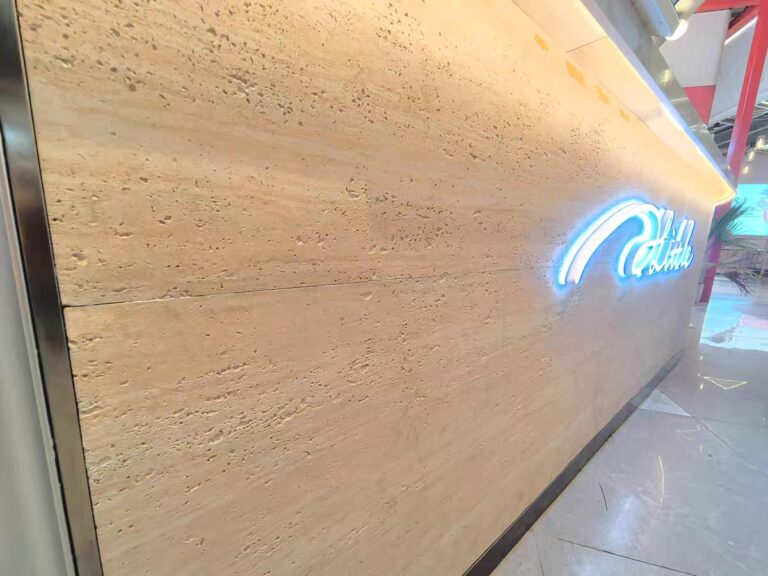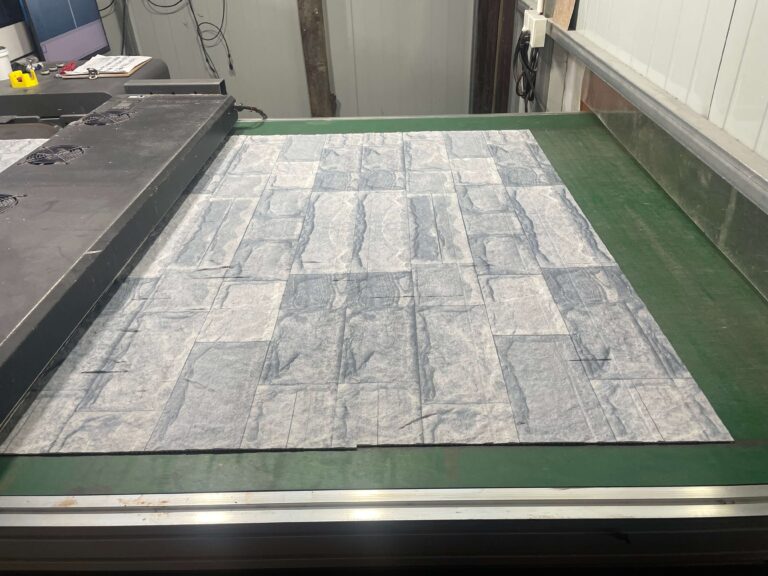
A crew that has laid tile for twenty years is not automatically ready for flexible stone, and the difference is not skill — it is habits. Everything that makes a thin bonded sheet succeed is the opposite of a tile reflex: coverage is proven by lifting a panel, not assumed from the trowel; the sheet follows the substrate instead of bridging it; edges are cut before bonding, not chased after; and the material’s flexibility is a tool to be used, not a wobble to be fought. This guide sets out how to take an experienced crew through their first flexible stone installation — what to train, in what order, and what the common first-timer mistakes cost.
What actually differs from tile work?
Three habits transfer badly, and each is worth naming out loud on day one. Buttering habits. Tile crews are used to ridges and spot-dabs that collapse under a heavy, rigid body; a 2–8 mm sheet needs full transfer onto its back, verified by lifting a panel and reading the adhesive — not assumed. Level-flattening habits. Tile is laid with a level and beat down; flexible stone follows whatever is behind it, so the substrate is flattened before the sheet arrives, and the sheet is pressed flat with support, not beaten into shape. Cutting habits. Tile is cut on a wet saw to a scored line; the stone face here is the fragile side, so cuts run toward the back with the face supported, edges are finished once, and openings are templated — never freehand.
None of this is difficult to learn; all of it is difficult to unlearn. A crew told “it’s just like tile” will produce a wall that looks fine on day one and telegraphs its habits by month six.
What is the fastest way to get a crew competent?
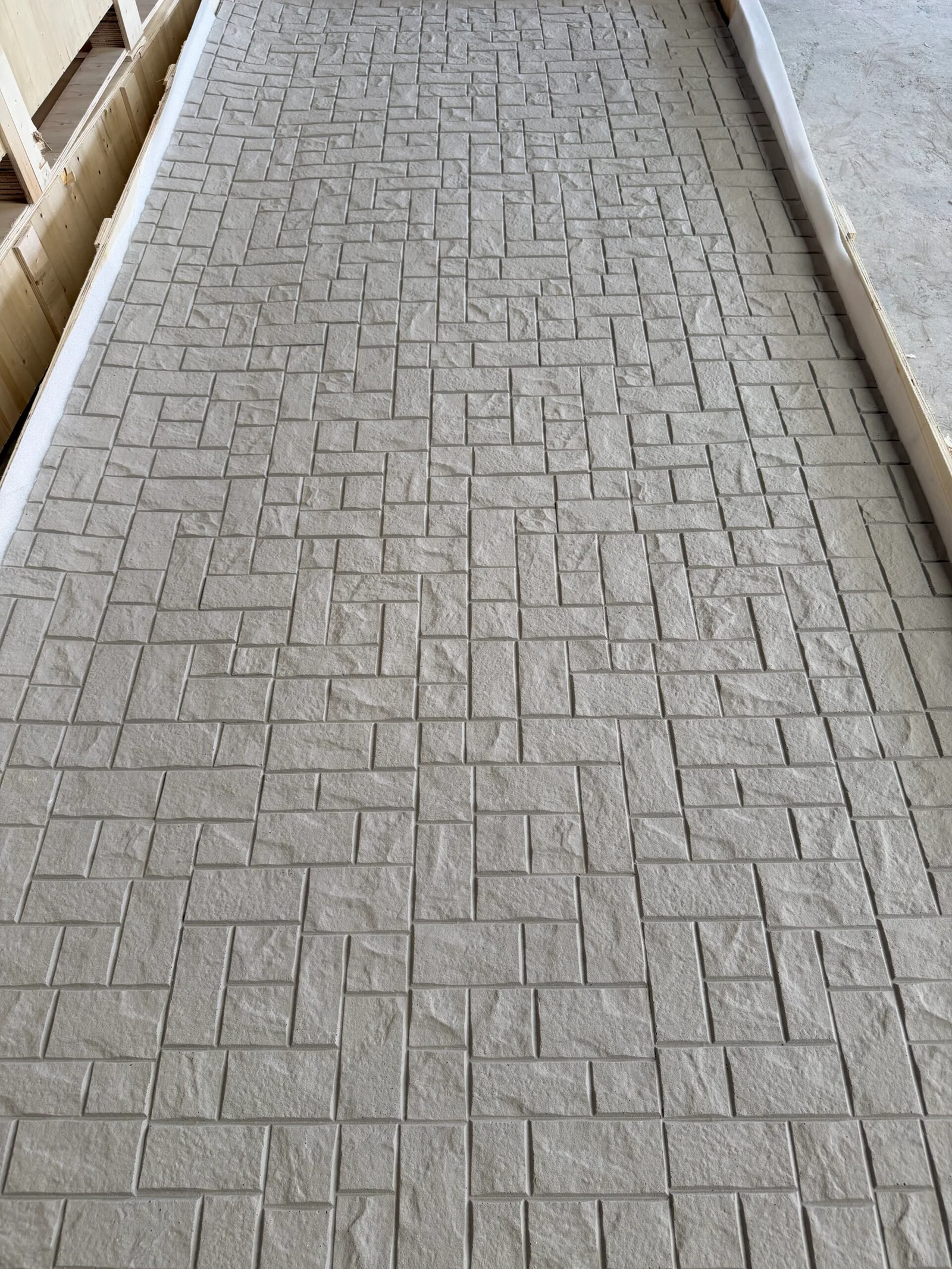
One supervised mock-up beats any amount of briefing. Build a small section of the actual wall — actual substrate, actual adhesive, actual pattern — with the crew doing every step under supervision, and check the result the way the wall will later be checked: lift test for transfer, edge quality at cuts, joint consistency, hollow test after set. The mock-up converts abstract instructions into muscle memory in half a day, and it produces the photographed standard that every later panel is judged against — the same evidence discipline our submittal guide formalises for approvals.
The order of skills within the mock-up matters. Start with a full sheet on a flat run — coverage and pressing are the core skills. Then one cut opening around a box — templating and edge finishing. Then one joint alignment across two sheets. Then one edge termination. By the time the crew has done those four, the wall’s whole vocabulary has been rehearsed, and the remaining field is repetition rather than discovery.
Which first-timer mistakes cost the most?
- Spot-bonding. Dabs and corner blobs read solid and install fast, then hollow out. The lift test on the first sheet catches it while one panel can be redone instead of a wall.
- Skipping the substrate check. Crews trust the wall behind them because tile forgave it; a thin sheet does not. A straightedge pass before the first sheet is cheaper than any repair.
- Cutting on the face side. One freehand cut with the face down can chip a panel that cannot be patched invisibly. Template, score, cut toward the mesh, support the sheet.
- Ignoring open time. A sheet positioned after the adhesive skinned has a weak bond no amount of pressing revives. Crews used to tile’s generous working window need the timing made explicit, area by area.
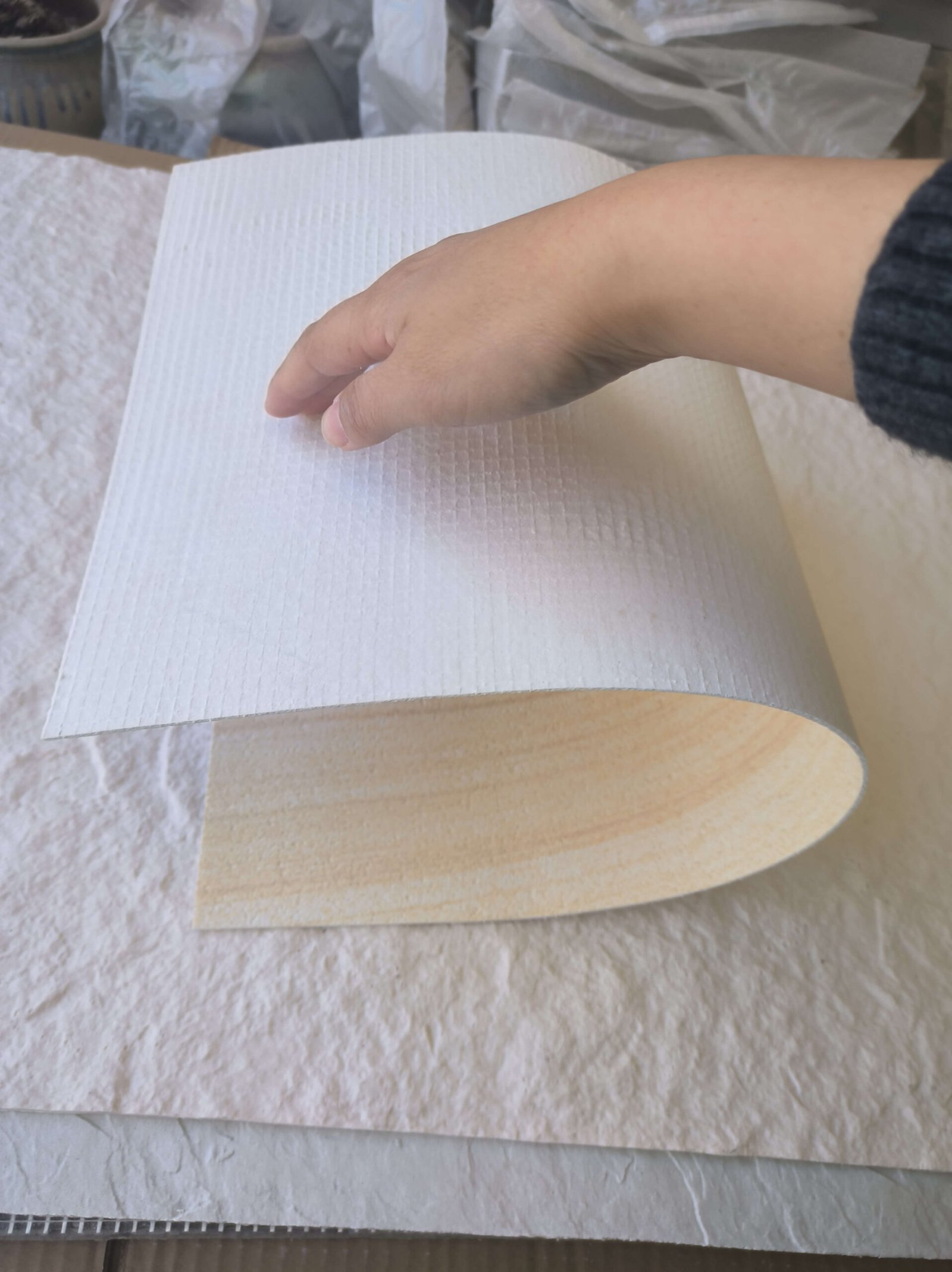
- Forcing a fold at a tight corner. The sheet bends to roughly a 200 mm radius on typical patterns; a corner forced tighter strains the face and shows a pale crease line. Corners are cut and jointed, per our corner installation guide.
- No protection plan. The finished wall is soft relative to tile and every following trade leans on it. Protection goes up with the wall, not after it.
Who supplies the training, and what does it contain?
The supplier’s installation manual and video are the syllabus; the first mock-up is the classroom. What the manual gives that a briefing cannot: the approved adhesive and coverage method, the temperature window, the notch, the sequence for openings and terminations. What the supplier can add on request: a supervised first installation, either remote or on site, which is worth asking for at quotation stage — some manufacturers include it, and asking costs nothing.
What the contractor must supply is time. Schedule the mock-up as a real activity with a real acceptance check, not a lunchtime demo; schedule the first field day with the supervisor present; and make the lift-test discipline part of the daily routine for the first elevation, until the crew’s transfer results are consistent. After one properly supervised elevation, the crew needs the same oversight as any finish trade — spot checks, not shadowing.
How do you keep quality after the training week?
Two routines carry the standard after supervision ends. The first-sheet lift test each morning on each wall: one panel set, lifted, read for transfer, photographed. It takes ten minutes and it catches adhesive drift, temperature changes and crew shortcuts before they propagate. The end-of-day hollow scan over the day’s output: tap, listen, mark. Both routines produce the evidence trail that makes defects assignable — the crew knows the wall is being read, which is most of the discipline.
The last piece is cultural, and it matters more with this material than with most: the crew must be allowed to redo a panel without cost friction. If redoing a hollow panel costs the installer money, hollows will be caulked and forgotten; if it costs a panel and a few minutes, hollows get fixed the day they appear. Write the redo rule into the contract — our guide to contract clauses for flexible stone covers where it sits — and the training pays off for the whole project instead of one week.
How does training differ for helpers versus lead installers?
A crew is not one audience. The lead installer needs the full method: coverage discipline, substrate standards, cut sequences, terminations, and the judgement calls — when the adhesive has skinned, when a sheet must come off, when the substrate fails its check. The helpers need a narrower but equally firm set: how to carry and support a sheet without kinking it, how to mix and hold adhesive to the open time, how to press and roll from the centre out, and why the face must never be the resting place for tools. Splitting the syllabus matters because a helper trained by imitation alone inherits the lead’s habits, good and bad, with no way to tell which is which.
The materials handler deserves a mention of their own. Flexible stone arrives crated flat and is light for its size, which invites casual handling — the damage that shows up as a chipped corner three weeks later was usually inflicted in the yard, not on the wall. Our guide to protecting panels during the works covers the storage and handling rules; training the person who moves the material is as cheap as training the person who sticks it.
What does a one-page training sheet look like?
The crew will not carry the manual in a pocket, so distil it. One page, laminate it, tape it inside the site office: the four habits that differ from tile (full transfer, press don’t beat, cut toward the back, substrate first), the daily routine (first-sheet lift test, end-of-day hollow scan), the three temperatures that matter (ambient, substrate, adhesive), and the one number to call when a sheet behaves unexpectedly — the supplier’s technical contact. That last line is not decoration; most trainee disasters are recoverable at the moment of hesitation and unrecoverable an hour later, and a phone number is the cheapest intervention that exists.
Review the sheet at the end of the first week with the crew: what did they change, what surprised them, what does the sheet get wrong on this specific job? The answers usually become the project-specific addendum — a second page that beats any generic training the next time this crew meets the material.
FAQ
How long does it take a tile crew to get competent with flexible stone?
With a supervised mock-up and a watched first elevation, most experienced crews are competent within days — the skills are few and concrete. Without supervision, the tile habits persist exactly as long as nobody lifts a panel to check.
Can we skip training if the crew watches the manufacturer’s video?
The video teaches the method; it does not retrain habits. The mock-up with an acceptance check is what converts watching into doing, and it also produces the photographed standard for the job.
What is the one habit that ruins the most walls?
Spot-bonding — dabs instead of full coverage. It is invisible at installation and expensive at handover, and the lift test on the first sheet is the whole defence.
Should the supplier’s technician be on site for the first day?
If it can be arranged, yes — the first elevation sets the crew’s habits for the project. Where site support is not possible, a scheduled video review of the first day’s lift-test photographs is a workable substitute.
Train on a mock-up, check by lifting panels, and let the evidence discipline carry the standard. The material’s formats and bend behaviour that the crew will train around are on the placage de pierre flexible page, and hand-safety and tool guidance for finish trades is published by OSHA.