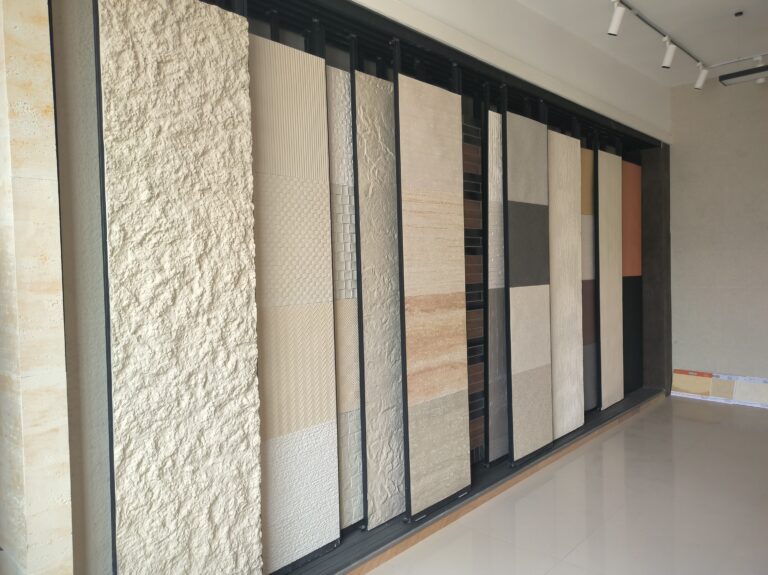
A submittal package for flexible stone veneer has one job: let the architect and the general contractor approve the product, the substrate, and the installation before material is ordered. Generic construction submittal templates miss the documents that decide approval on this product — a batch-specific COA, a fire report that matches the tested product, a first-article sample, and an installation manual that covers adhesive and joints. The result is a review cycle that stalls on questions the package should have answered. This guide gives an eight-part package, the transmittal table, and the points a reviewer will test. Use it whether you are the distributor submitting or the contractor reviewing.
What should the submittal cover sheet say?
The cover sheet is not a title page; it is the index a reviewer uses to decide whether the package is complete. Put the project name and location, the specification section cited in the project manual, the product and manufacturer, the application (interior or exterior), the areas and quantities covered, the submittal type, the revision number and date, and the contacts for the manufacturer, distributor, and installer.
Add a deviations line. List every exception, substitution, or item that needs architect or engineer direction: a different thickness band, a custom color, a substrate that is not in the standard detail, a joint detail that differs from the project drawing. A package that hides a deviation gets rejected later, usually after the material is ordered. The deviations line is the cheapest place to have that conversation.
Keep the language factual. The reviewer is checking whether the product meets the specification, not whether the brochure is persuasive. A cover sheet that says “premium quality” but omits the tested thickness gives the reviewer nothing to approve.
Which product data belongs in the package?
The product data sheet should describe the exact product, not the product family. For flexible stone veneer, the essentials are the composition (natural stone powder, an inorganic binder system, and a fiberglass mesh reinforcement layer), the thickness band for the pattern, the weight per square metre, the sheet formats, the pattern or color code, the minimum bend radius, the intended interior or exterior use, the substrate requirements, the adhesive system, and the limitations.
The declared numbers matter because they vary by pattern. Thickness runs from 2 mm to 8 mm depending on the design, and weight runs from 1.5 to 6 kg/m². Standard sheets are 1200 × 600 mm, with larger formats up to 1200 × 2900 mm. A generic “2–8 mm” statement is not enough for approval; the reviewer needs the band for the pattern being supplied. If the project bends panels around columns or arches, state the minimum radius: about 200 mm for standard patterns, around 300 mm for thick or complex patterns such as Starmoon, and smaller for thin styles such as travertine at roughly 2.5–3 mm.
Custom color is a separate submittal item. Pantone matching and custom pattern development are part of the OEM service, but the approved sample is the reference, not the Pantone number alone. Include the sample approval record and the production batch that will be shipped. The gamme de parements en pierre flexible lists the current pattern families and formats; the project data sheet should narrow that to the exact SKU.
Which test and certification documents should be included?
Include the reports, not only the certificates. For the US market, the key document is the ASTM E84 Class A report showing flame spread and smoke developed. Our declared result is Class A with a flame spread of 25 or less. For European projects, include the EN 13501-1 Class A2 report. Both should identify the product, the thickness tested, the test date, and the laboratory. A certificate that says “Class A” without the underlying report tells the reviewer very little.
Add the management-system and factory documents the project asks for: ISO 9001, ISO 14000, BSCI, and CE. For projects in other regions, regional compliance documents can be provided — UL and NFPA 285 for North America, EN Euro codes and LEED or BREEAM documentation for Europe, AS 1530.3 and NCC for Australia, and BCA, CIDB, or SNI for Asia-Pacific. Confirm the exact product and assembly before you list them; “can be provided” is not the same as “already certified for this project”.
Two distinctions cause most of the confusion in review. First, ASTM E84 is a product test, not an assembly approval. A Class A result on the veneer does not prove that a complete exterior wall assembly meets NFPA 285; that is a separate assembly test, and the project may require it. Second, an evaluation report from a code body is not a laboratory test report. If the specification requires an ICC-ES evaluation report, ask whether one exists for the exact product and scope; do not substitute a report for a different product because the names look similar.
The ASTM E84 standard itself is a useful reference for the reviewer: the ASTM E84 test method defines how the flame spread and smoke values are produced. Include the page or report number in the submittal so the reviewer can match the test to the product.
How do you prove the batch matches the approved sample?
The COA is the bridge between the approved sample and the shipped material, but only if it is batch-specific. A COA describes one production run; it does not bind future runs. The submittal should include the COA for the batch being supplied, with the batch or lot number visible, and the same number should appear on the packing list and on each pallet or crate.
Pair the COA with a first-article inspection (FAI) record. The FAI sample should come from the production batch, not from a showroom display, and it should record the measurements the project cares about: thickness at several points, weight per square metre, sheet dimensions, pattern code, and a photograph of the back showing the fiberglass mesh. Both parties should retain a signed sample. When the container arrives, the retained sample is the reference for color, relief, and thickness.
The batch record table below is a simple way to make the link explicit in the submittal:
| Batch field | What to record |
|---|---|
| Batch / lot number | The number printed on the COA, packing list, and pallet label |
| Production date | The date the batch was produced, not the ship date |
| Pattern and color code | The approved code, matching the FAI sample |
| Thickness and weight | Measured values against the declared band for the pattern |
| FAI reference | The signed sample identifier and storage location |
| Quantity shipped | Square metres and piece count by pallet |
This is the same logic used in the batch consistency check for a reorder, applied at the submittal stage. If the submittal cannot name the batch, the reviewer cannot verify the material later.
Which installation documents does the reviewer need?
The installation manual should be product-specific and should cover the substrate preparation, the adhesive and coverage, the notched trowel or application method, the joint and corner details, the movement-joint details, the temperature and working-time limits, and the cleaning and maintenance instructions. A generic stone-veneer guide that assumes a lath and scratch coat is not a substitute for a flexible-sheet manual.
Include the installation video if one is available. Video is useful for the installer briefing, but it does not replace the written manual; the reviewer needs a document that can be referenced in the specification and the O&M file. Include the storage and handling instructions too, because on-site storage decisions affect whether the installed panel matches the sample.
Les installation-mistakes guide is a useful cross-check for the reviewer: it lists the failures that show up after handover, including substrate preparation and joint details. If the project’s proposed detail contradicts the manual, flag it in the deviations line rather than resolving it on site.
What belongs in the sample and mock-up section?
Submit a physical sample from the production batch, not a catalog chip. The sample should show the face, the edge, and the back. If the project has multiple patterns or a custom color, submit one sample per pattern and identify each with the pattern code and batch number.
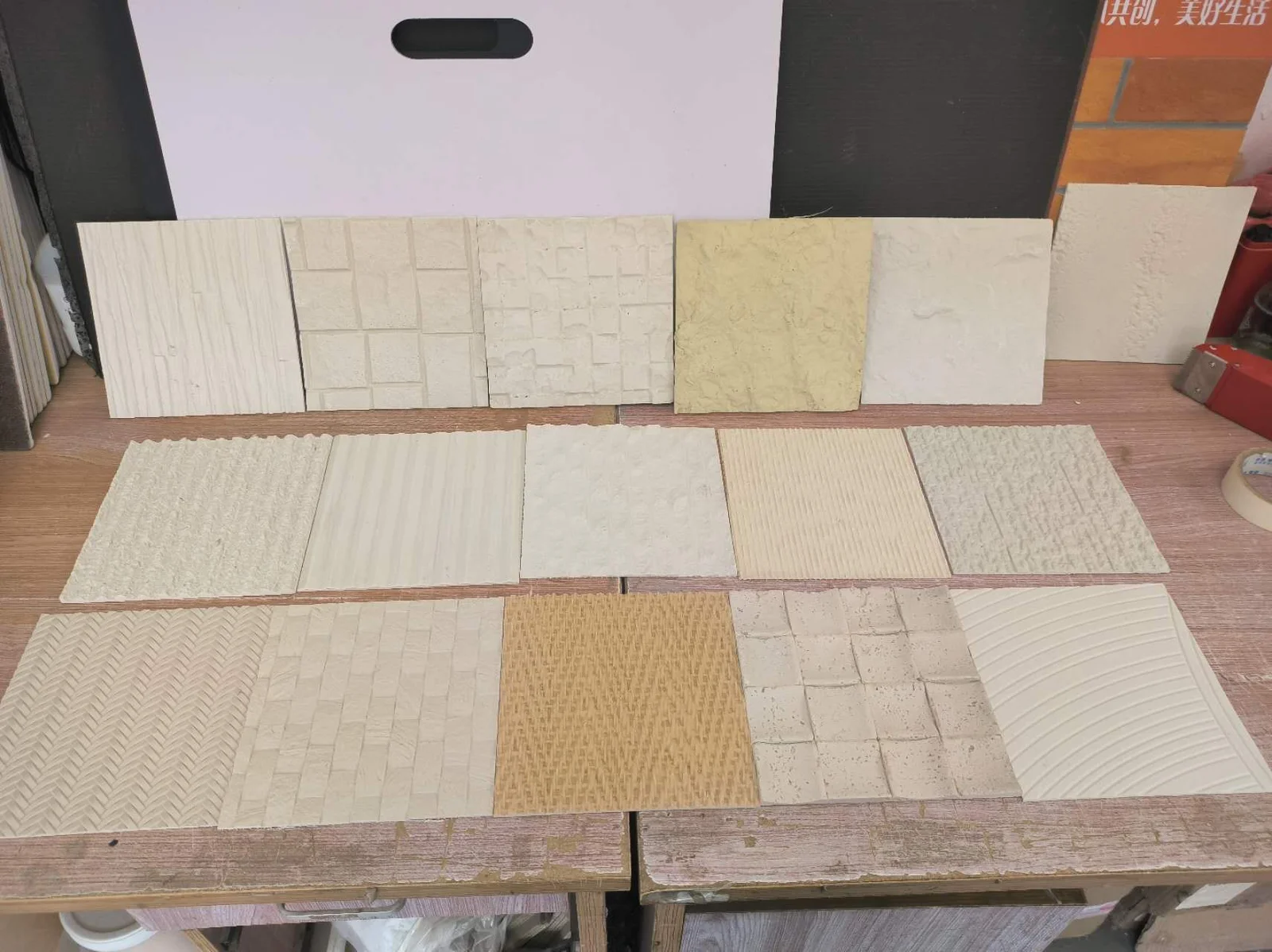
If the specification requires a mock-up, define what it proves: the substrate preparation, the adhesive, the joint width and sealant, the corner detail, and the movement joint. A mock-up that only shows the face is a color sample, not an installation approval. Photograph the mock-up at normal viewing distance and close up, and retain the photographs with the submittal. The mock-up should be built in the same conditions as the production work, not in a factory showroom.
For a custom color, the approved sample and the mock-up are the two references that survive the project. Keep both, and record where they are stored.
What should the transmittal table track?
A transmittal table turns a pile of PDFs into a reviewable package. The table should list every item, its status, and the reviewer’s action. A practical structure is:
| Élément | Document | Status | Notes |
|---|---|---|---|
| 1 | Cover sheet and transmittal | Submitted | Project, spec section, revision, deviations |
| 2 | Product data sheet | Submitted | Exact pattern, thickness band, weight, formats |
| 3 | Batch COA | Submitted | Batch number matches packing list |
| 4 | ASTM E84 / EN 13501-1 report | Submitted | Product and thickness identified |
| 5 | ISO / CE / BSCI certificates | Submitted | Scope and validity checked |
| 6 | FAI sample record | Submitted | Signed by both parties |
| 7 | Installation manual and video | Submitted | Substrate, adhesive, joints, movement joints |
| 8 | Mock-up record | Pending | Photos and approval signature |
| 9 | Packaging and storage instructions | Submitted | Pallet, corner protection, moisture |
| 10 | Deviation list | Submitted | Items requiring architect direction |
Status values should be simple: submitted, approved, resubmit, or not applicable. “Approved as noted” is a useful intermediate state because it records the conditions attached to the approval. The reviewer should be able to find any item in the table and go straight to the page.
FAQ
Is a product catalog enough for a submittal?
No. A catalog shows the range; a submittal has to identify the exact pattern, thickness band, weight, batch, and installation system. The reviewer is approving a product for a project, not a product family.
Do I need an ICC-ES evaluation report?
Only if the project specification or code official requires one. Ask whether an evaluation report exists for the exact product and scope; a report for a different product is not a substitute. If no report exists, the project may accept the test reports and the engineer’s approval instead.
Does an ASTM E84 Class A report cover the whole wall assembly?
No. ASTM E84 tests the product’s flame spread and smoke response. An exterior combustible wall assembly may need a separate NFPA 285 assembly test. The submittal should state which test covers which scope.
How long does submittal approval take?
It depends on the reviewer and the completeness of the package. A package that answers the product, test, batch, installation, and mock-up questions in one pass avoids the request-for-information cycle that adds most of the delay.
Can I submit after placing the order?
You can, but it is the expensive order. Changes to thickness, color, or packaging after production are harder to reverse than a clarification before the batch is scheduled. Submit before the order is released.