The debate over cultured stone vs thin natural stone is a critical structural decision that directly impacts foundation load calculations and project liability. Choosing a heavy concrete-cast product without accounting for its mass can trigger unforeseen engineering requirements, such as thickened footings or steel lintel upgrades. These last-minute changes not only inflate material budgets and labor costs but can also cause significant project delays if structural plans need to be redrawn and re-submitted for approval.
This guide provides a technical breakdown of the key differences that affect your project specifications and bottom line. We will compare the materials based on their weight penalty and the resulting structural support needed. We will also analyze how thickness affects usable interior floor space, how pallet density influences shipping logistics, and the practical impact of each material on installation speed and labor efficiency.

What is “Cultured Stone”? (Concrete Casting)
Cultured stone is a precast concrete product where manufacturers use wet cast or dry tamp methods to precisely replicate the texture and color of natural stone in a controlled, repeatable process.
Manufacturing Process: Wet Cast vs. Dry Tamp
Cultured stone production centers on two primary concrete casting methods: wet cast and dry tamp. These techniques give manufacturers precise control over the final product’s texture and density, allowing them to replicate different types of natural stone for architectural use.
- The wet cast method uses a fluid concrete mixture poured into molds, creating a smooth, dense surface that often mimics polished stone.
- The dry tamp method involves compacting a low-moisture concrete mix into molds, which results in a more porous and textured finish similar to limestone or slate.
Material Composition and Finish Replication
At its core, cultured stone is a precast concrete product specifically formulated to look like natural stone. Its composition is key to its versatility and ability to achieve consistent visual results across large projects.
- The product consists of a blend of lightweight aggregates, cement, and mineral oxide pigments for authentic coloration.
- Molds are often created from actual stones, which allows the product to accurately replicate the unique textures of materials like granite, limestone, or fieldstone.
- This controlled manufacturing process reduces the color and texture variations that are common with quarried natural stone.
The Role of Glass Fiber Reinforced Concrete (GFRC)
Glass Fiber Reinforced Concrete (GFRC) is a performance-enhancing technology that expands the application possibilities for cast stone products, particularly in modern architectural designs where weight and shape are critical factors.
- GFRC integrates glass fibers into the concrete mix, which improves tensile strength and makes the final product more durable.
- This reinforcement permits the creation of thinner and lighter panels compared to traditional precast concrete, without sacrificing strength.
- It is well-suited for complex shapes, large building facades, and any project where reducing the overall structural load is important.
Common Architectural Applications
Cultured stone is widely used in residential and commercial construction for non-structural decorative elements. It’s valued for its balance of cost-efficiency and aesthetic appeal, providing the look of stone without the associated structural penalties.
- Building facades and exterior cladding are primary uses, offering the appearance of heavy stone without the weight and extensive structural requirements.
- It is frequently used for architectural trim, including window surrounds, sills, and cornices.
- Interior applications often include fireplace surrounds and decorative accent walls.
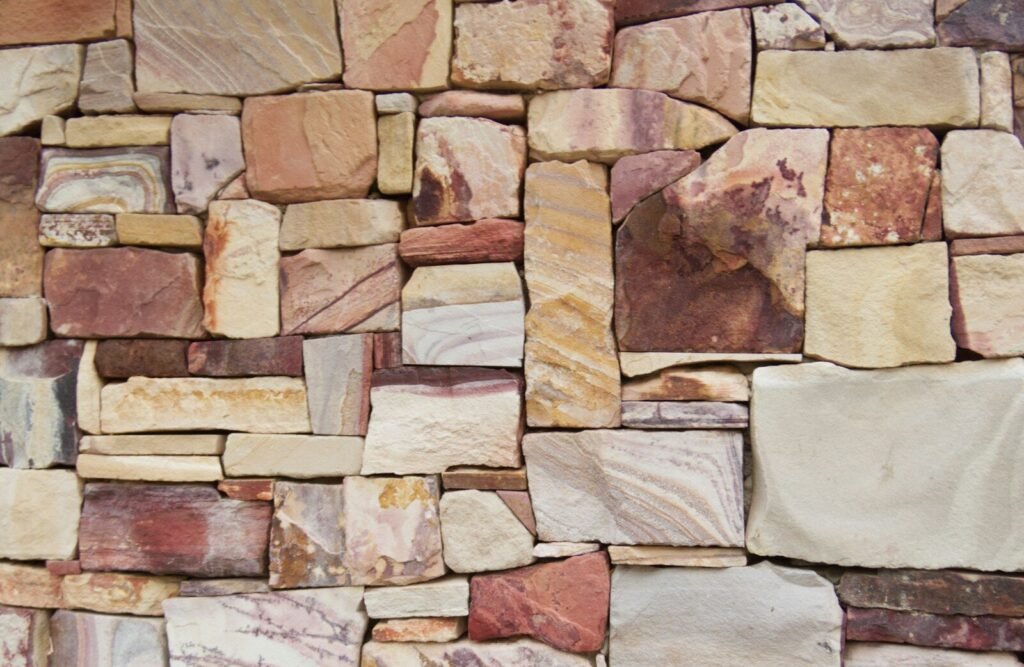
Weight Penalty: Foundation & Lintel Requirements
Les low weight of manufactured stone veneer—under 15 lbs/sq ft—eliminates the need for specialized foundations or reinforced framing, making it compatible with standard residential construction.
Low Weight Impact on Structure
Manufactured stone veneer is intentionally lightweight, weighing under 15 pounds per square foot once the full system (mortar, lath) is installed. This low mass minimizes the structural penalty on a building’s frame and foundation, removing a major engineering hurdle common with natural stone. The complete assembly adds about 100 pounds per linear foot, a load that standard construction methods can easily manage. Because the veneer itself is so light, foundation design shifts focus to the substrate and backing materials rather than supporting the stone itself.
| Structural Factor | Placage en pierre artificielle | Full-Bed Natural Stone |
|---|---|---|
| Poids (par pied carré) | 8 – 15 lbs | 35 – 60+ lbs |
| Typical Thickness | 1 – 2 inches | 3 – 5 inches |
| Foundation Required | Non | Yes (Concrete Footing) |
Support from Standard Residential Framing
Standard residential framing, like 2×6 walls and typical floor systems, can easily support the dead load from manufactured stone veneer without special reinforcement. This direct compatibility is a key reason for its adoption in both new construction and retrofits. Lintel specifications and other supports are dictated by the underlying wall structure, not the veneer’s minimal weight. This avoids the complex engineering and added material costs associated with heavier claddings, simplifying the entire installation process.
Seismic Code Considerations
In regions with seismic building codes, structural verification may be necessary if the total wall assembly weight—including sheathing, barriers, and the veneer system—exceeds local limits. While manufactured stone is light, the cumulative weight of the entire wall system is what engineers must evaluate. Jurisdictions prone to seismic activity require this diligence to ensure the structure can safely handle the combined mass during a seismic event. Proper engineering confirms compliance and is a non-negotiable part of the pre-construction process in these areas.
Source Premium, Customizable Soft Stone Panels
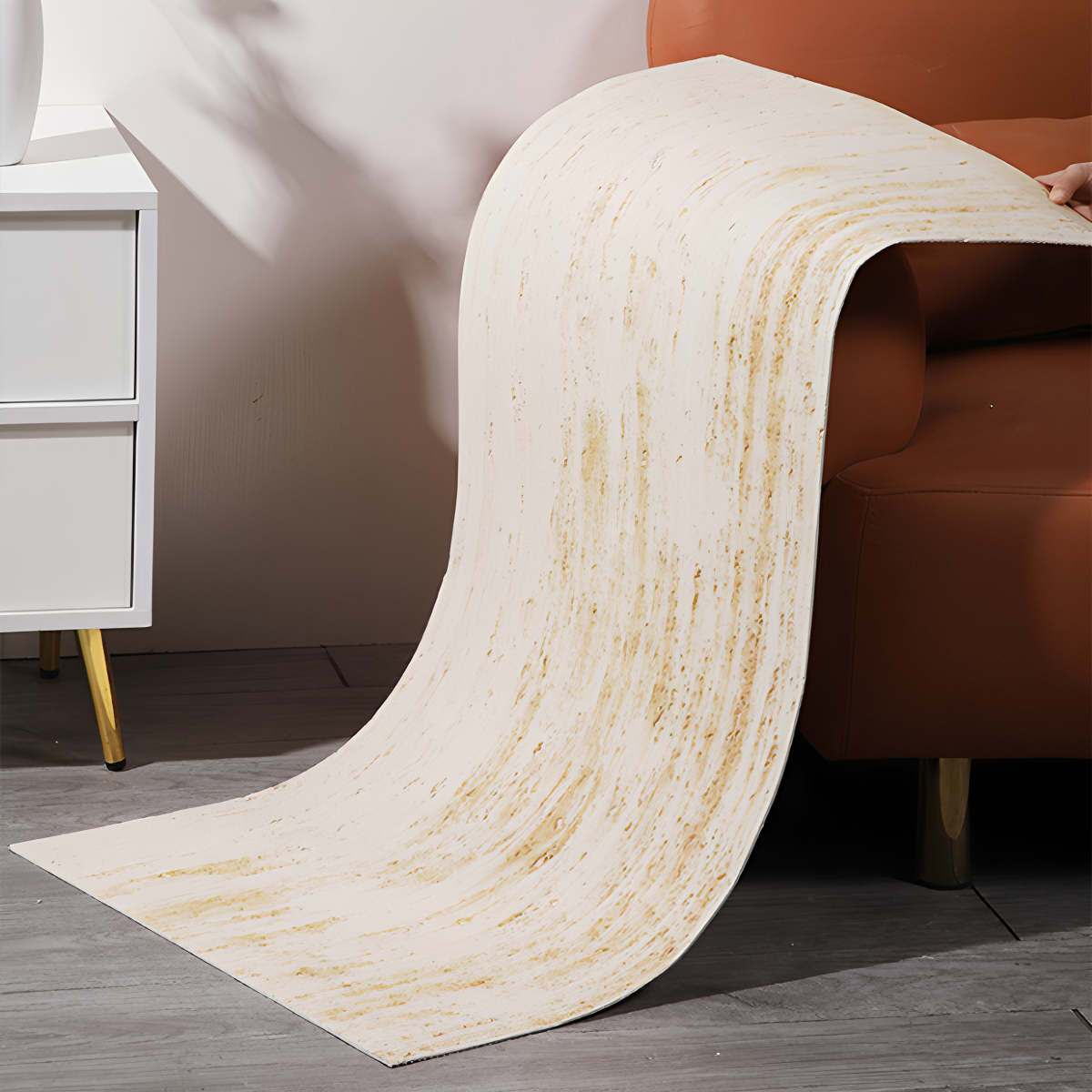
Thickness: Losing Floor Space (Internal)
In commercial and residential interiors, every inch of floor space has value, and a product’s thickness directly impacts the final usable area.
The physical depth of a stone veneer product is a critical planning factor, especially for interior applications. A thicker veneer consumes more of a building’s volume, reducing the net leasable or livable square footage. This trade-off between aesthetic depth and spatial efficiency shapes material selection for retrofits, retail spaces, and high-density residential projects where maximizing usable area is a primary business goal.
Cultured Stone’s Space-Saving Profile
Manufactured stone veneer offers a significant advantage in space preservation. With a typical thickness of just 1 to 2 inches, it minimizes the loss of interior floor space compared to full-bed natural stone. This reduced profile means less structural demand for bulky support systems, allowing designers and architects to reclaim valuable area for living or commercial use. This makes it a practical choice for retrofitting existing structures where modifying foundations isn’t feasible.
Natural Stone’s Larger Footprint
Full-thickness natural stone, with a depth of 3 to 5 inches, has a substantial spatial footprint. This isn’t just about the stone itself; it also demands deeper footings and more robust structural supports that encroach on a building’s interior volume. In a commercial setting like a retail store or restaurant, the cumulative loss of even a few inches along a feature wall can impact customer flow, seating capacity, or merchandise display area.
| Mesure de la performance | Cultured Stone (Concrete-Based) | JMS Flexible Stone (MCM) |
|---|---|---|
| Typical Thickness | 1 – 2 inches (25 – 50 mm) | 2.5 – 5.0 mm |
| Poids par m² | 39 – 73 kg | 3,5 - 6,0 kg |
| Interior Floor Space Impact | Minimal loss, but still measurable | Virtually zero loss |
Balancing Space and Application
The decision between materials often comes down to this spatial trade-off. For interior projects where every square foot translates to revenue or functionality—like shopfitting, hotel renovations, or residential accent walls—thinner products are superior. Cultured stone is a popular middle ground. Yet, for exterior applications where durability against the elements is the priority and space constraints are less severe, the bulk of natural stone may be an acceptable compromise.
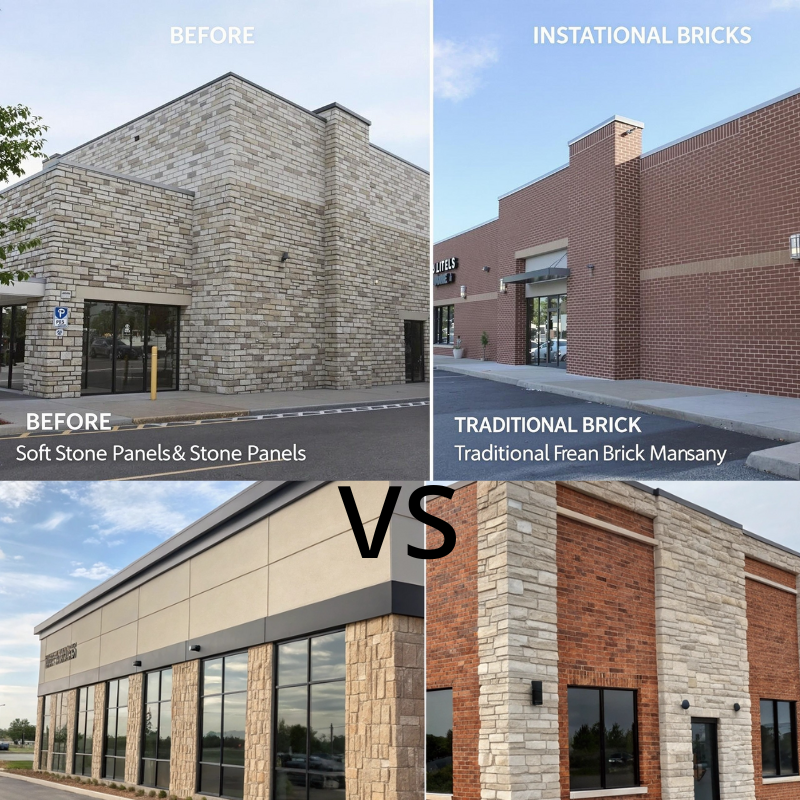
Shipping Costs: Pallet Density
Pallet density directly controls Less Than Truckload (LTL) shipping costs; low-density materials like cultured stone face significant freight surcharges, while high-density alternatives offer a clear cost advantage.
How Density Dictates Freight Costs
In Less Than Truckload (LTL) shipping, the space a pallet occupies is just as critical as its weight. Freight carriers use a classification system that penalizes low-density goods because they consume valuable truck space relative to their weight. Any shipment with a density below 15 pounds per cubic foot often triggers a higher freight class, leading to significantly increased costs. Maximizing pallet density is the most effective way to control inbound and outbound shipping expenses. Materials like our flexible stone panels, which weigh only 5-10 kg per square meter, achieve superior pallet density, directly lowering their freight classification and the final shipping bill.
| Shipping Metric | Cultured Stone (Concrete-Based) | JMS Flexible Stone Panels |
|---|---|---|
| Product Weight | Approx. 8-15 lbs/sq ft | Approx. 0.7-1.2 lbs/sq ft (3.5-6.0 kg/m²) |
| Typical Pallet Density | Often < 15 lbs/ft³, risking penalties | Typically > 15 lbs/ft³, securing better rates |
| Resulting Freight Class | Higher (e.g., Class 150+), subject to surcharges | Lower, avoids primary density penalties |
Avoiding Surcharges from Low-Density Freight
Carriers apply steep surcharges to shipments classified as low-density. These penalties are not minor fees; freight classified as ultra-low-density (Class 150 or higher) can face surcharges of up to 90% over the base rate. This problem is compounded by fuel surcharges, which regularly account for 20-35% of the total shipping cost and amplify the financial impact of a poor freight classification. By shipping a denser product, these extra fees are minimized or avoided entirely. Efficiently packed, high-density pallets like those used for flexible stone panels bypass the primary triggers for these costly penalties.
Optimizing Pallets for Better Rates
Strategically planning pallet configuration helps secure better economics. Using digital density calculators before booking freight ensures accurate classification and prevents unexpected penalties from carriers. For importers and distributors, consolidating orders to build denser, heavier pallets can shift shipments into more favorable freight classes. This discipline is especially important during peak seasons like Q4, when shipping capacity is tight and premiums can rise by 25% or more. Optimized, high-density pallets are essential for managing costs and maintaining a predictable logistics budget.
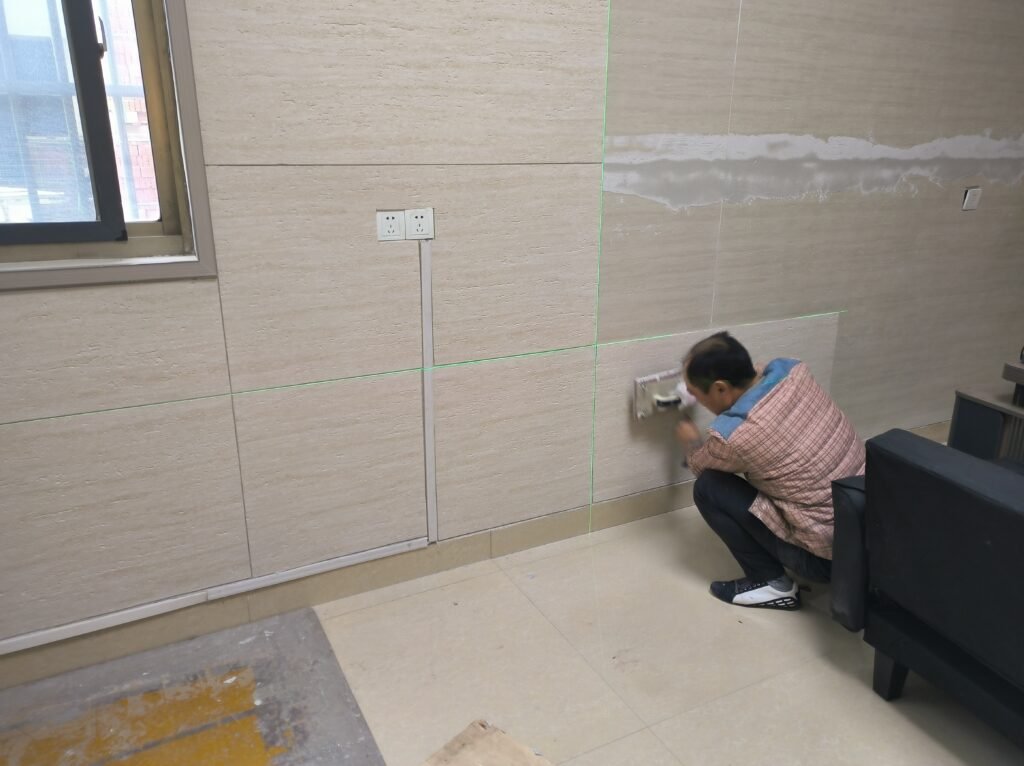
Installation Labor Speed
Installation speed for manufactured stone is a direct function of the base system technology and the crew’s specialization, not just the skill of an individual installer.
Impact of Base System Technology
The choice of installation base system is a primary driver of labor speed. In 2026, the data shows that modern cement board systems deliver a 14–20% faster installation timeline compared to traditional scratch-and-lath methods. This significant speed increase is a result of reduced curing requirements and the use of standardized material dimensions, which streamlines the entire process from layout to final placement.
Crew Specialization and Efficiency
The expertise of the installation crew directly affects project timelines. Different crew types excel with specific systems, and matching the crew to the product is critical for efficiency. Carpentry crews consistently achieve superior speed when installing panelized products, as the workflow aligns with their standard practices. Masonry crews remain highly competitive and efficient when installing traditional adhesive-mortar systems, where their deep experience with mortar consistency and jointing provides a distinct advantage.
Primary Project Variables
Beyond the system and crew, several other factors influence the velocity of any installation. These variables can create bottlenecks or opportunities for acceleration depending on how they are managed.
- The complexity of the chosen stone profile and pattern.
- The overall scale of the project, including total square footage and wall height.
- Regional labor availability and prevailing skill sets.
Conclusion
While manufactured stone provides a traditional look, its concrete-based composition brings practical trade-offs. The material’s weight often requires reinforced foundations and lintels, while its thickness can reduce interior square footage. These factors directly impact project budgets, logistics, and labor efficiency on site.
For projects where structural load, installation speed, and shipping costs are critical, exploring a lightweight veneer system can offer a clear advantage. Contact our team to request a sample kit and technical specifications for your next build.
Questions fréquemment posées
Cultured stone vs thin stone veneer?
Cultured stone is a manufactured concrete product cast from molds of real stone, making it a cost-effective and consistent option. In contrast, thin stone veneer is genuine natural stone that has been sawn to a reduced thickness (typically 1-1.5 inches). While cultured stone is lighter and more affordable, natural thin stone veneer offers authentic, one-of-a-kind patterns, superior durability, and color that will not fade over time.
Weight of manufactured stone?
Manufactured stone is engineered to be lightweight, typically weighing less than 15 pounds per square foot. This low weight is a key advantage, as it allows the veneer to be installed on a variety of structurally sound surfaces without requiring a foundational footing or brick ledge, which is necessary for traditional full-bed masonry.
Cost of cultured stone installed?
As of 2026, the total installed cost for cultured stone typically ranges from $25 to $45 per square foot. This price includes the stone materials, mortar, lath, and professional labor. Final costs can vary based on the project’s complexity, the specific stone profile selected, and regional labor rates.
Thinnest stone veneer?
The thinnest stone veneer products available are ultra-thin natural stone composite panels. These systems bond a very thin layer of real stone (such as slate, quartzite, or marble) to a lightweight backing like fiberglass, polymer, or an aluminum honeycomb core. This technology achieves a total panel thickness of just 3 to 8 millimeters.
Lightweight alternative to cultured stone?
A popular lightweight alternative is high-density polyurethane faux stone panels. These panels are significantly lighter than manufactured stone, often weighing only 1 to 2 pounds per square foot. They offer a realistic appearance, are highly durable, and their simple interlocking design allows for rapid installation without the need for mortar, making them an excellent choice for both interior and exterior applications.

 French
  English
  Spanish
  Arabic
  German