A wall cladding choice often comes down to one question. Do you want a rigid slab that imitates stone, or a thin sheet that bends around a corner? The flexible stone vs sintered stone decision sits at the centre of that question, and the answer shows up long before the first panel is fixed.
Both materials carry a stone look. They part company on weight, format, bending, breakage and the tools the job needs on site. Sintered stone is a fired, rigid slab pressed from mineral powder at high heat. Flexible stone is a thin composite built on a mineral surface, an inorganic binder and a fibreglass mesh. One behaves like glass under stress. The other behaves like heavy paper.
The lighter, thinner sheet is not the weaker choice. It is the one that survives the journey and the curve.
What Flexible Stone and Sintered Stone Actually Are
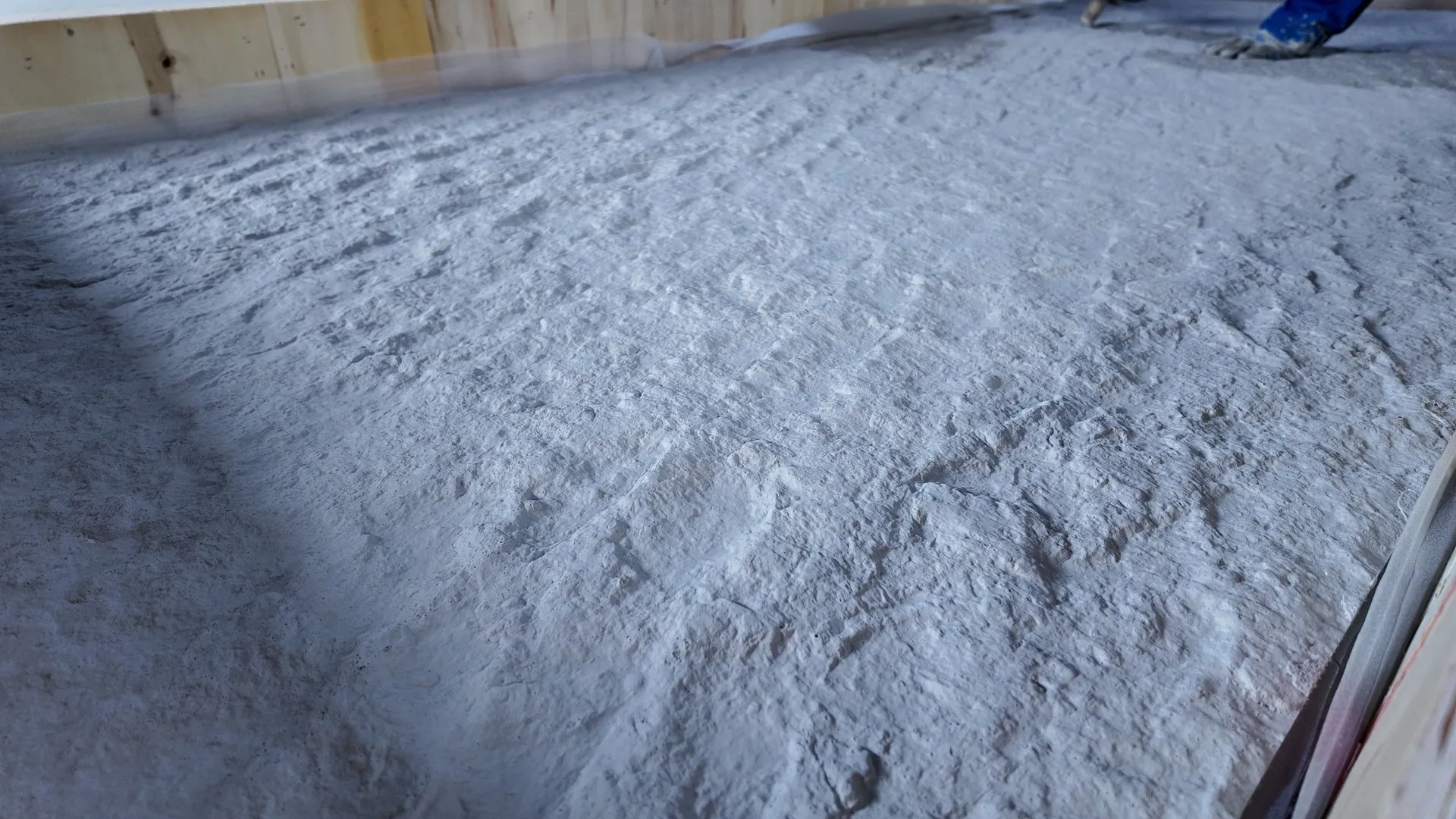
Sintered stone is a manufactured slab. Mineral powders are pressed and fired at high temperature until they fuse into a dense, non-porous sheet. The result is hard, heavy and rigid, and it is sold as large-format slabs.
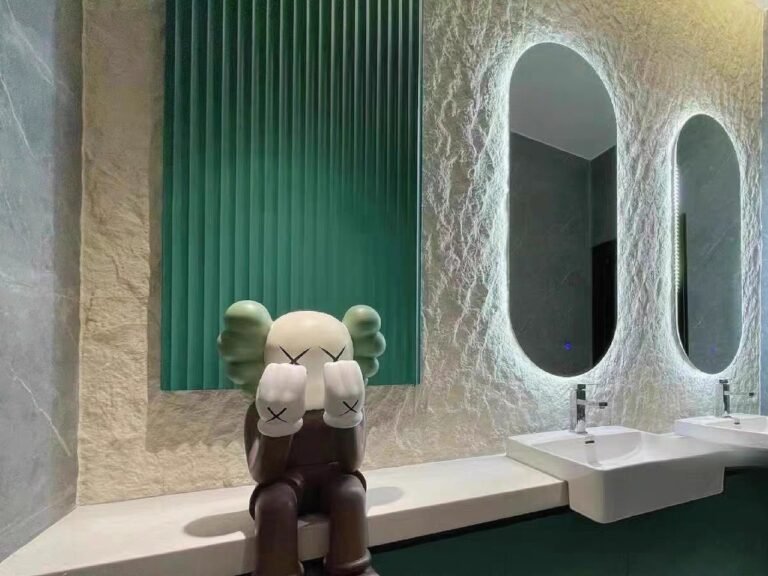
Flexible stone is a layered composite. A mineral surface is bonded to an inorganic gel, reinforced with fibreglass mesh, and rolled thin. JMS Decor flexible stone panels run 2 to 8 mm thick and weigh 1.5 to 6 kg per square meter, about one-fifth the weight of natural stone.
That thin build still holds a rating. The range is tested to ASTM E84 Class A in the United States and EN 13501-1 A2 in Europe, and the factory runs under ISO 9001 quality management. Bending follows the same logic. A standard panel curves to a minimum radius of roughly 200 mm, and thicker patterns such as Starmoon widen that to about 300 mm.
Flexible Stone vs Sintered Stone at a Glance
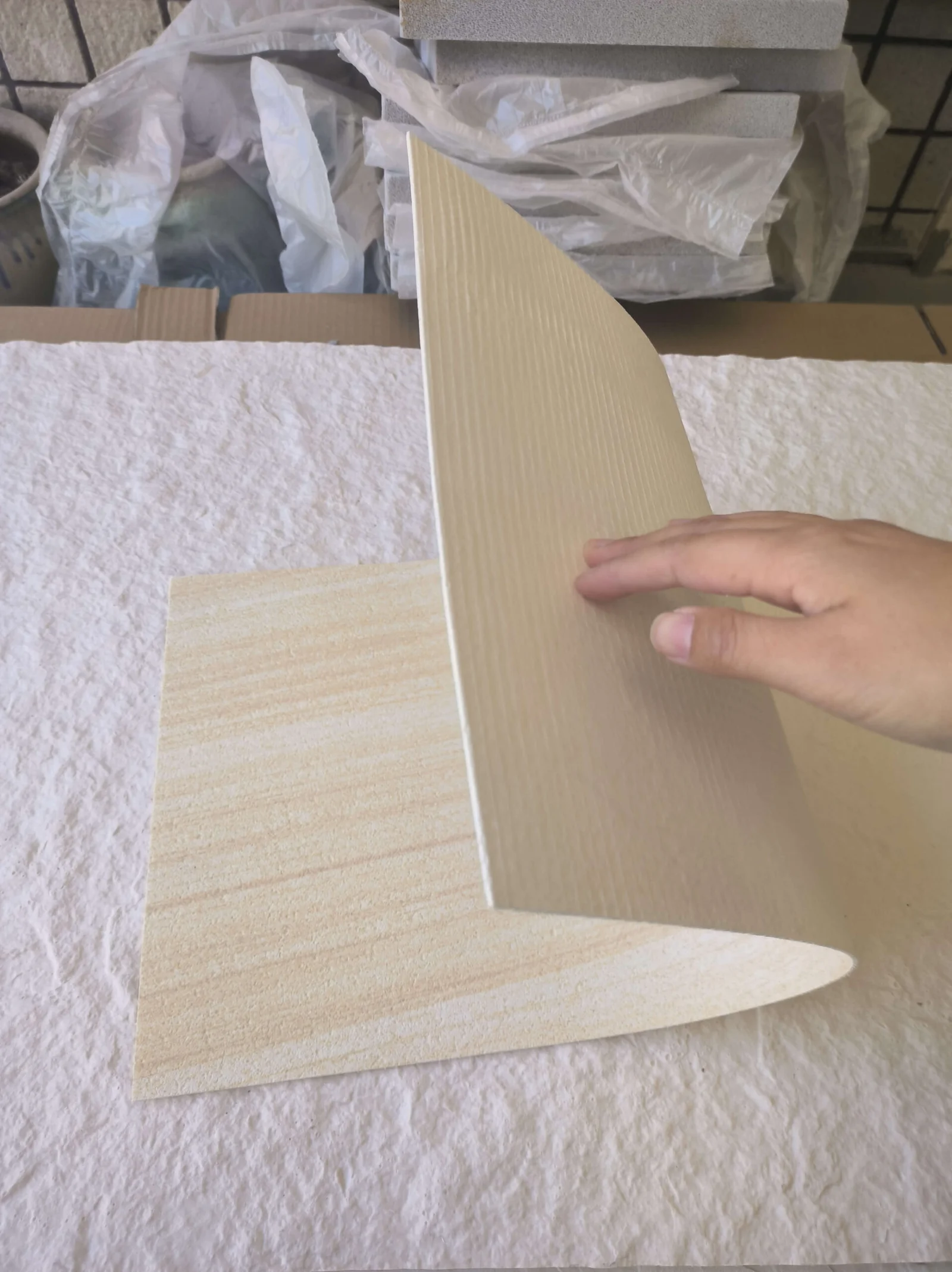
The two materials differ on every point a buyer cares about. The table below sets the main ones side by side.
| Point | Flexible stone | Sintered stone |
|---|---|---|
| Make-up | Mineral surface on gel with fibreglass mesh | Fired mineral powder pressed into a dense slab |
| Form | Thin sheet, cut with a knife | Large rigid slab, cut with power tools |
| Weight | 1.5 to 6 kg per square meter | Heavy slab needing mechanical lifting |
| Bending | Curves to roughly a 200 mm radius | Rigid, cannot follow a curve |
| Breakage | Flexes under impact instead of cracking | Chips and cracks at the edge |
| Repair | A damaged section is replaced in place | A chipped edge is hard to blend |
| Site tools | Knife, trowel and adhesive | Diamond blades, wet cutting and lifting gear |
On the flexible stone vs sintered stone question, the constraints all land on the rigid slab. Each one becomes a cost, a delay or a repair somewhere on site. A bathroom-specific version of the same decision is covered in flexible marble versus porcelain slabs.
Weight and Format Decide Who Can Install It
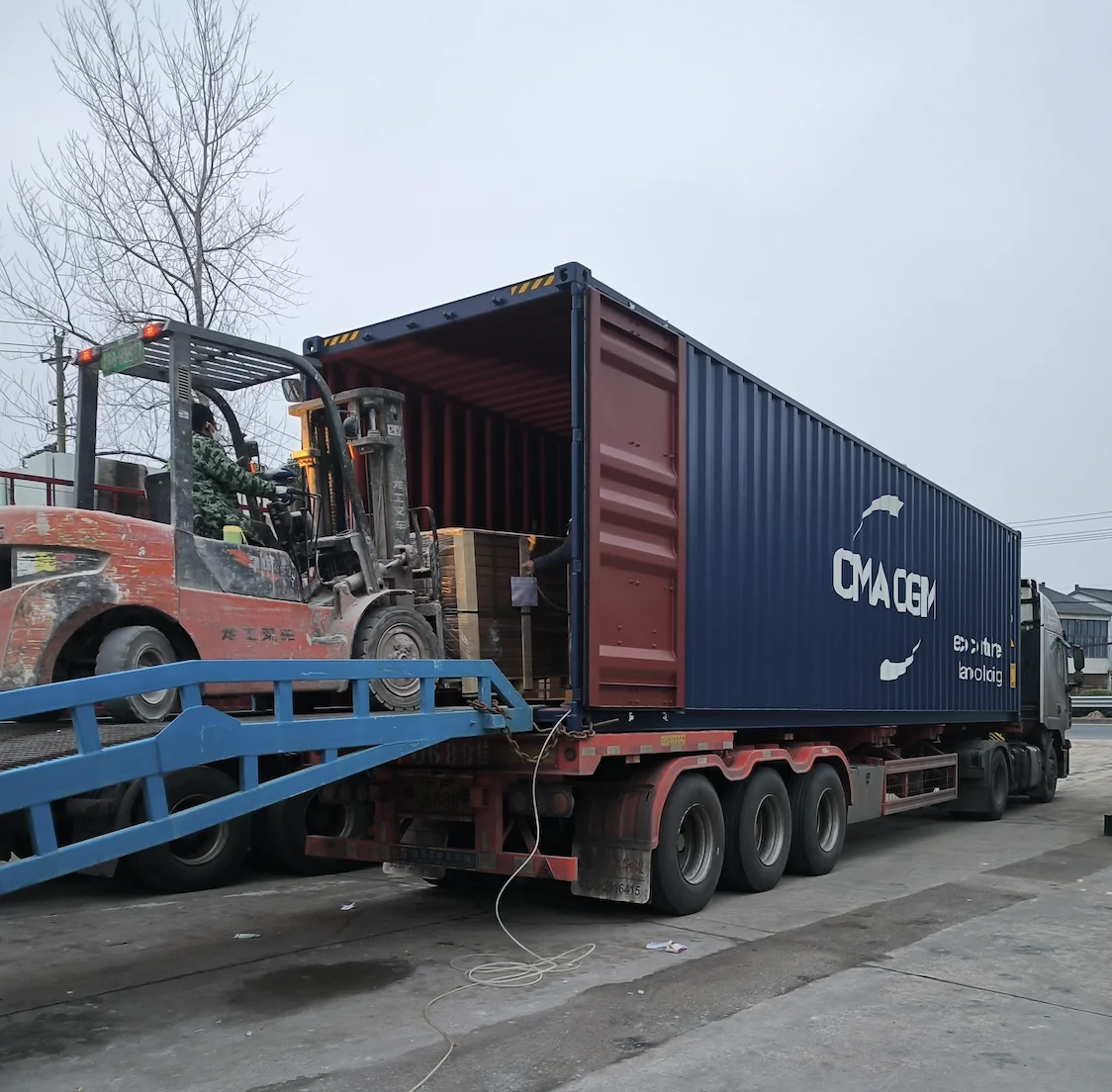
Weight is the first hidden cost. A flexible panel at up to 6 kg per square meter can be carried and fixed by one trained installer. A dense sintered slab of the same area needs two people and lifting gear before it is off the pallet.
On a container, weight turns into money. Lighter panels let you load more square meters per shipment and cut the freight cost per square meter. The same logic sits behind the figures in our guide to tile breakage and logistics costs.
On a retrofit, dead load decides the method. Adding a heavy slab to an older wall may call for structural reinforcement. A thin flexible sheet usually adds a load the wall already carries.
Bending and the Curves a Rigid Slab Cannot Take
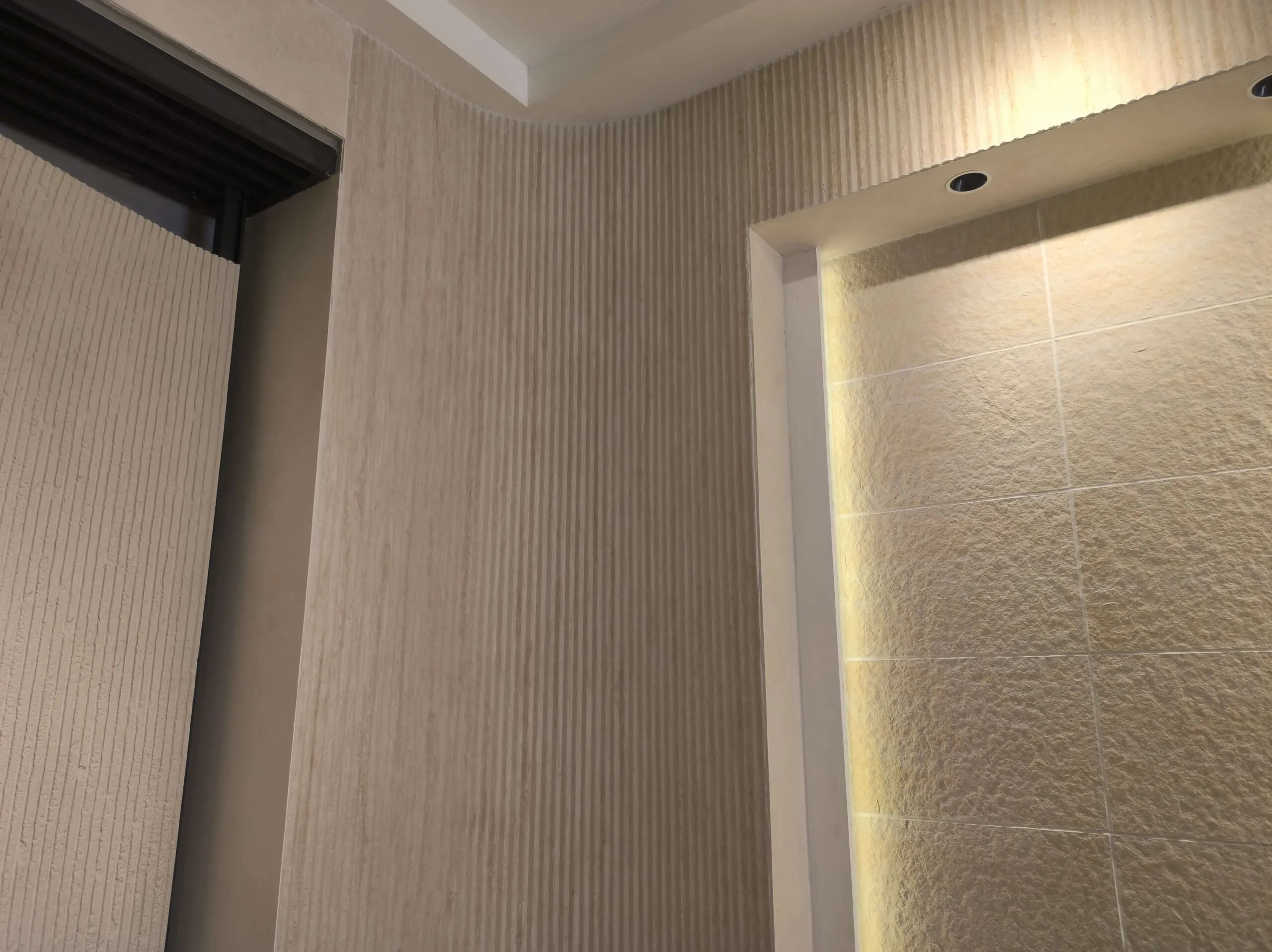
Sintered stone is flat. A curved column or an arched opening forces the installer to cut the slab into narrow strips and join them. That breaks the pattern and multiplies the visible joints along the whole curve.
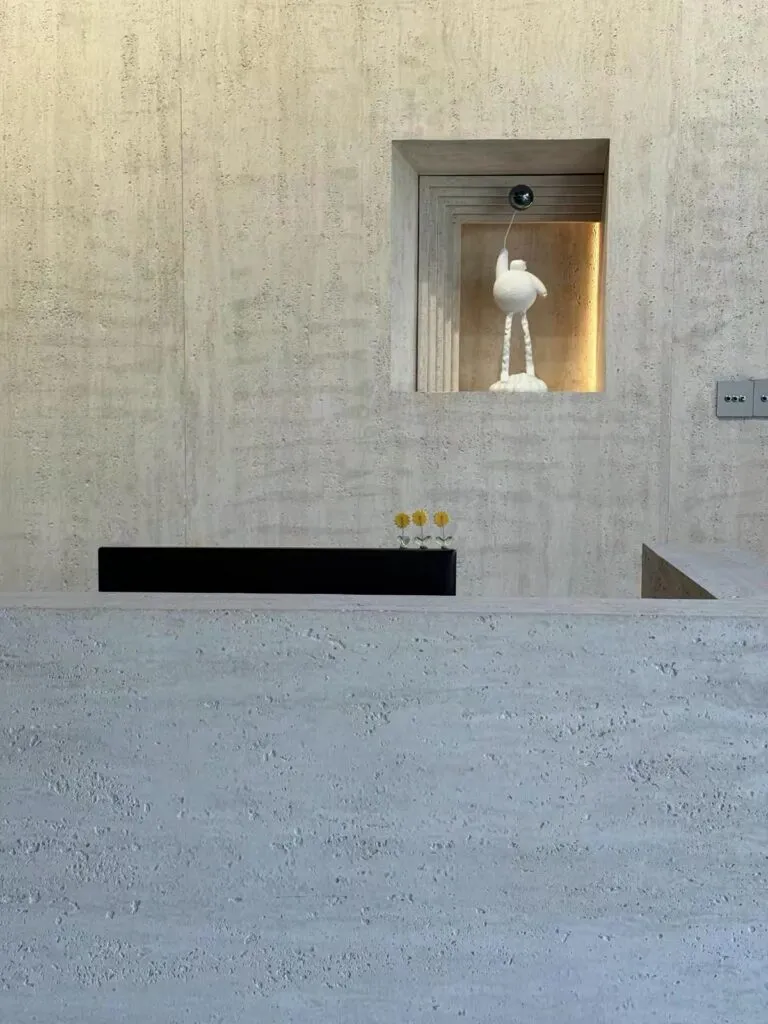
Flexible stone wraps a column in one continuous piece. It bends to a minimum radius of roughly 200 mm. A curved reception desk, an arched doorway or a round pillar then takes a stone face with no joints to align.
Thin patterns such as travertine bend tighter, while heavier patterns such as Starmoon stay around 300 mm. The surface sets the radius, so the pattern you choose decides how far the sheet can wrap.
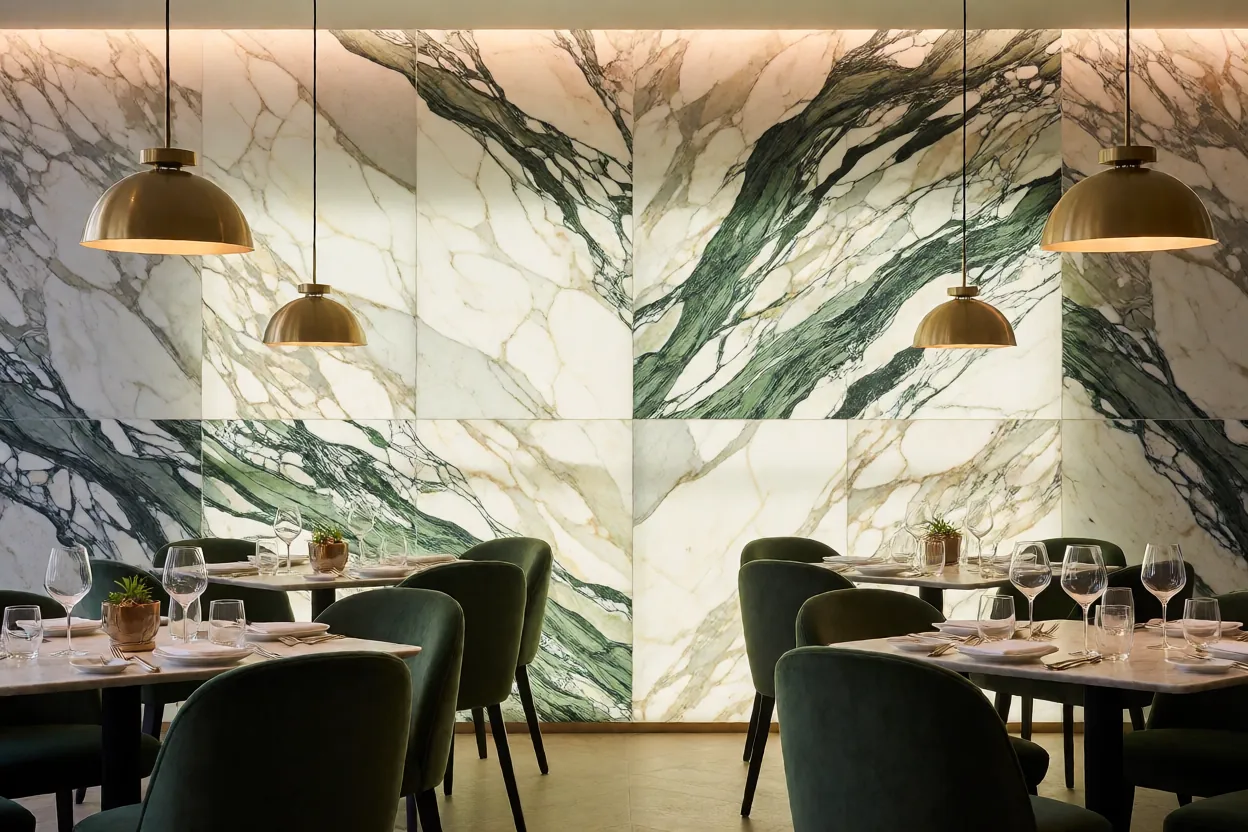
Breakage, Edge Chips and the Cost of Repair

A dense sintered slab is strong across the face and fragile at the edge. It can survive the factory and the ocean crossing, then chip when a corner is knocked on site or a fixing is overtightened.
A chipped sintered edge is hard to hide. The material is fired through its full thickness, so there is no surface layer to touch up. A repair usually means cutting the panel out of the wall.
Flexible stone bends where a slab resists. A knock that would crack a rigid panel tends to spring back on a thin sheet. JMS Decor ships under a defect rate below 1 percent, and the export packing is built around that journey.
Tools, Labour and the Working Day

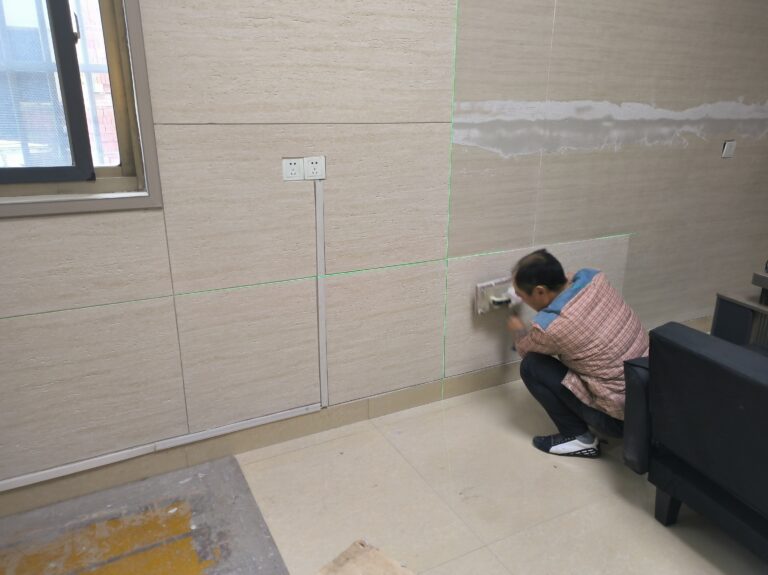
The tool list tells you what the job will cost in labour. A flexible sheet is cut with a knife, so there is no dust and no water feed. A sintered slab is cut with a diamond blade and finished at the exposed edge.
| Task | Flexible stone | Sintered stone |
|---|---|---|
| Cutting | Utility knife, no dust | Diamond blade with a water feed |
| Edge finish | The cut edge is a finished edge | Needs polishing or a trim profile |
| Fixing | Adhesive onto a prepared wall | Adhesive or clips with wider joints |
| Crew | One or two installers | Two or more with lifting support |
| Curves | Wrapped whole, no cut strips | Strips cut and joined with seams |
| Redecoration | Overlays the surface already there | Old wall often has to come off |
The difference shows up in the schedule. A crew that cuts with a knife and fixes in one pass closes a wall faster than a crew waiting on wet cuts. That gap is the subject of our guide on faster installation with flexible stone.
Where Each Material Wins
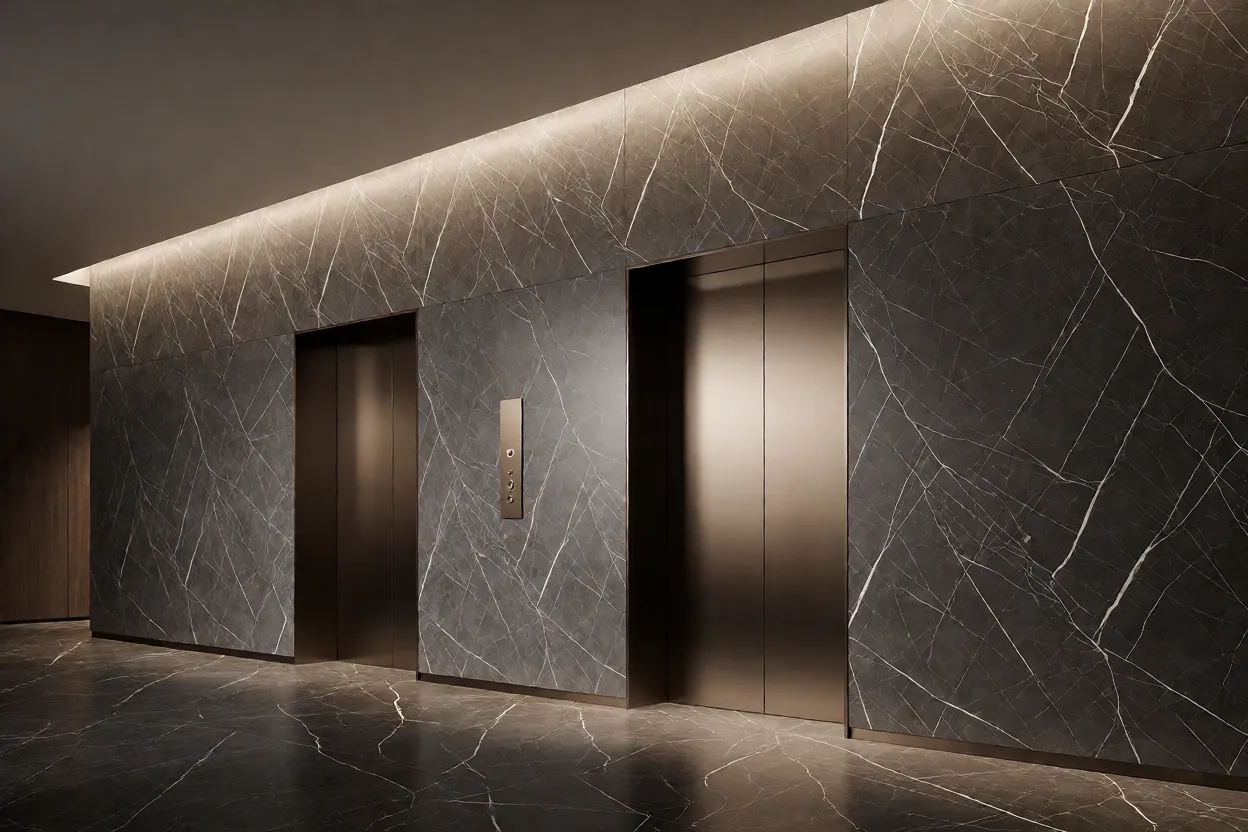
Neither material is right everywhere. Sintered stone suits a flat, hard-wearing surface such as a worktop, a floor or a lift wall scrubbed for years. Flexible stone suits a job where weight, curves or speed settles the decision.
A hotel corridor that cannot close, a facade that cannot take extra load, a shop that must open the next morning. Each points to a thin sheet that cuts, bends and fixes in one visit.
Choose sintered stone for a flat hard-wearing surface
Pick a rigid slab when the wall is flat, the surface takes constant wear and a heavy dead load is not a problem. Those are the jobs where a dense, non-porous face earns its weight.
Choose flexible stone when weight, curves or speed decide
If you import stone or tile today, flexible stone is the low-breakage alternative to a sintered slab. It arrives flat-packed, travels light and installs over the wall you already have. Browse the full range on our flexible stone panels page, and see the base behind the numbers on the flexible stone veneer manufacturer page. More head-to-head breakdowns sit under material comparisons.
Frequently Asked Questions on Flexible Stone vs Sintered Stone
Is flexible stone as durable as sintered stone?
They resist different forces. Sintered stone is harder on the flat face, while flexible stone flexes under impact instead of cracking. On a wall that curves, moves or ships across an ocean, the ability to bend is often the durability that matters most.
Can sintered stone be bent around a curved wall?
No. A sintered slab is rigid, so a curve means cutting it into strips and joining them, which breaks the pattern and adds joints. Flexible stone bends to a minimum radius of roughly 200 mm and wraps a column in one piece.
Which is cheaper to install, flexible stone or sintered stone?
Flexible stone usually costs less to install. It cuts with a knife, needs no water feed and can be fixed by one or two people, while a sintered slab needs diamond cutting, edge finishing and lifting support.
Does flexible stone look like real stone?
Yes. The face is a real mineral surface, so it carries the pitting, veining and texture of the stone it copies. The flexible core sits behind that surface and does not change how the finished wall reads.
Can flexible stone be used outdoors?
Yes. The range is rated ASTM E84 Class A for fire and EN 13501-1 A2, and it is used on facades where freeze-thaw and salt air stress a heavier surface. The light weight also helps on walls that cannot take a slab.