
A certificate of analysis and a third-party inspection are often treated as two versions of the same assurance. They are not. A COA is a batch document: it records what the factory measured on a sample from one production run. A third-party inspection is an independent check of what is actually in the container. For flexible stone, the gap between those two things is where most surprises live — the COA can be accurate and the shipment can still be wrong. This guide separates what each one proves, what an inspector should check on this product, and when the extra cost is justified.
What does a flexible stone COA actually certify?
Our COA is a quality analysis report for a specific batch. It records the material composition, the fire-test data, and the permeability figures for the panels sampled from that run. It is a real document with real measurements, and it is useful evidence when a project asks for batch traceability.
What it certifies is narrower than most buyers assume. It certifies the properties the factory chose to measure, on the sample the factory chose to draw, from the batch it identifies. It does not certify that every panel in the container came from that batch, that the packaging protected them, or that the colour matches the sample your client approved. Those are different questions, and a COA is not designed to answer them.
This is not a criticism of COAs. It is a definition. A COA is a batch record, and a batch record is only as good as the link between the document and the panels in front of you.
What can a COA not tell you?
Five things sit outside a standard COA, and each one matters at the container door.
- Whether the panels match the COA batch. The document can name batch A while the pallets carry batch B. Only the labels and the inspection can connect the two.
- Whether the quantity is correct. A COA does not count panels, pallets, or square metres.
- Whether the packaging survived. Crushed corners, wet packs, and missing labels are invisible on a COA.
- Whether the colour matches your approved sample. The COA may report a composition that is within specification while the printed face has drifted from the sample your client signed.
- Whether the panels are fit for your substrate and installation. A COA describes the product, not the compatibility of your wall, adhesive, or climate.
None of these gaps mean the COA is unreliable. They mean it answers a different question than the one buyers usually ask at shipment.

What should a third-party inspector check on flexible stone?
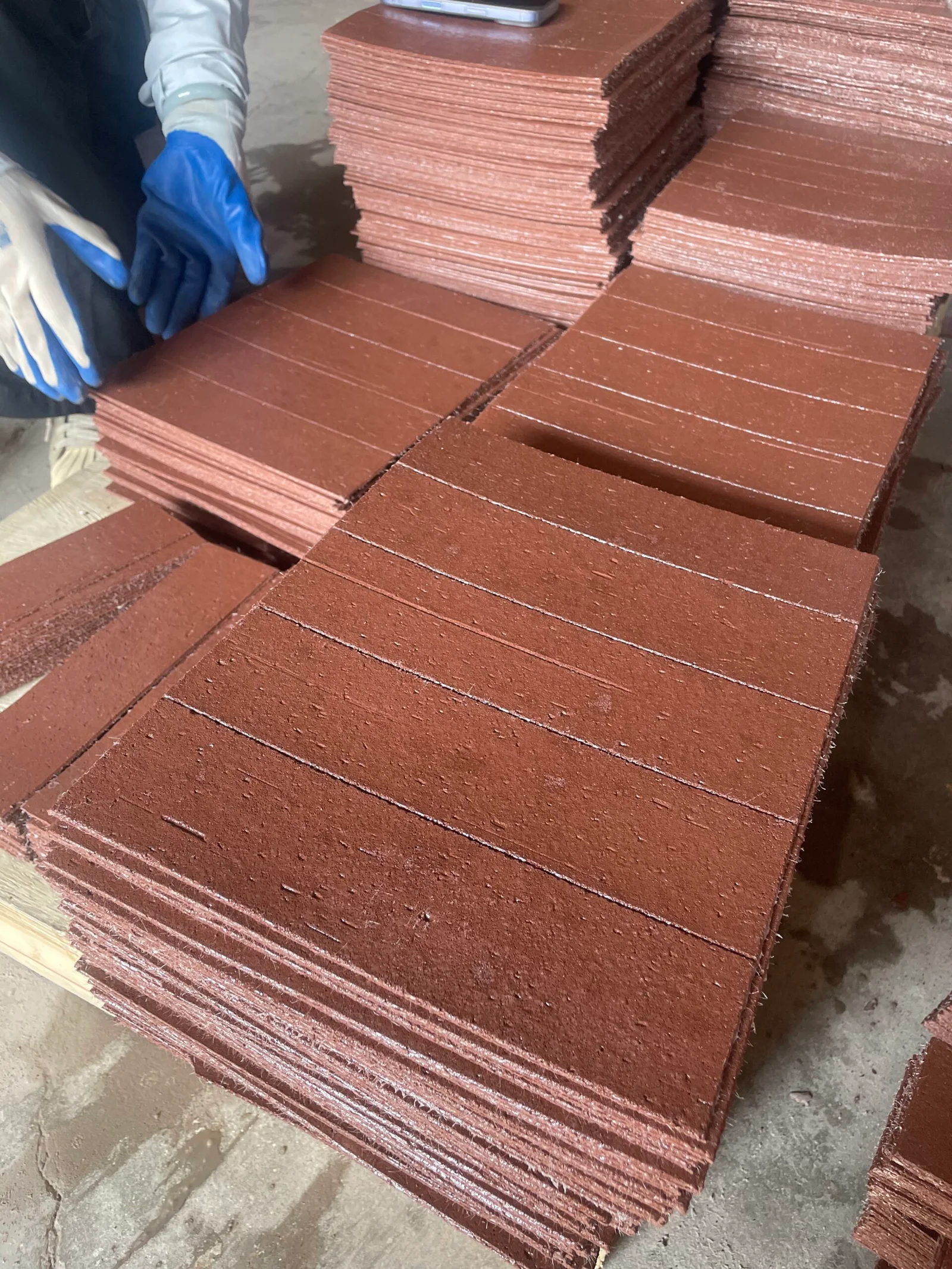
An inspector who treats flexible stone like tile or stone slab will miss the points that matter. The brief should name the product and the checks:
| Check | What to verify |
|---|---|
| Batch identity | Batch number on the COA, packing list, and pallet labels agree |
| Quantity | Panel count and square metres per pallet match the packing list |
| Thickness | Measured at several points per panel and compared with the declared band for the pattern |
| Weight | Sample weighed and converted to kg/m² against the declared range |
| Dimensions | Sheet size against the ordered format |
| Bend behaviour | A corner flexed over a cylinder, checked for cracks or delamination |
| Backing | Fiberglass mesh coverage and separation at the cut edge |
| Colour and pattern | Compared with the retained approved sample under daylight |
| Packaging | Corner protection, interleaving, strapping, moisture, labels |
These are the checks that connect the document to the delivery. They are also the checks a generic “container inspection” may skip if the inspector has not been briefed on the product.
When is a third-party inspection worth paying for?
Pay for independence when the cost of a bad batch is high relative to the inspection fee. That usually means one or more of the following:
- First order with a new supplier. You have no history and no retained sample from a previous run.
- Custom colour or custom pattern. The approved reference is a physical sample, and the risk of drift is highest on custom work.
- Project with a submittal and a visible feature wall. The material has to match an approved sample that the client, architect, or GC has already seen.
- Large or single-batch order. One container is one decision; a defect spread across the batch is expensive to remedy after installation.
- Supplier refuses access or documentation. A refusal is itself a signal, and it is cheaper to learn it before the balance is paid.
On a repeat order with a supplier you know, a retained sample, and a batch record, the inspection can be lighter: a document check, a spot check of thickness and weight, and photographs of the closed packs. The point is not to inspect everything every time; it is to match the check to the risk.
What should factory QC records show before you skip the third party?
In-house QC can be a legitimate substitute on a repeat order, but only if the records are real. Ask for the inspection record for the last two or three batches: the sample size, the measured thickness and weight values, the defect counts by category, the photographs, the inspector’s name, and the date. A record that changes with the batch is evidence; a record that is an identical template with no numbers is decoration.
Look for variation. A factory that measures honestly will show some spread — a batch slightly above the nominal thickness, a colour reading near the edge of the tolerance. A record where every value is perfect is either a summary rather than raw data, or not a measurement at all. Ask which it is.
ISO 9001 is useful context here, but it certifies a quality-management system, not the flexible stone in your container. The certificate tells you the factory has a process; the batch record tells you whether the process worked on this run.
When is a COA plus photographs enough?
A COA plus dated photographs can be sufficient when four conditions hold: the supplier is known, the product is a repeat of an approved batch, the COA is batch-specific and matches the labels, and the photographs show the pack, the corners, the interleaving, and the labels. In that case the residual risk is mostly handling damage, which the photographs and the delivery receipt can catch.
This is a judgment, not a rule. If the project is a hotel lobby, a custom colour, or a first order, the lighter path is a false economy. The flexible stone veneer range lists the formats and data sheets the inspector will work from. The submittal package guide shows what the project reviewer will expect, and the container documents guide covers the paperwork side.
How do I brief an inspector who has never seen flexible stone?
Give the inspector the product data sheet, the approved sample, the purchase order, and a one-page brief with the checks in the table above. Name the declared thickness and weight bands for the pattern, the minimum bend radius, and the packaging specification. Ask for measurements, not adjectives: thickness in millimetres, weight in kg/m², dimensions in millimetres, and photographs of the batch label in the same frame as the material.
Two instructions are worth stating explicitly. First, do not test the bend by folding a panel sharply; flex it over a radius and inspect the face and the backing. Second, do not accept a “representative” pallet chosen by the factory; draw the sample across pallets. The inspection is only independent if the sample is.
The fire documentation is a separate scope. A product report such as ASTM E84 Class A or EN 13501-1 A2 identifies the tested product and thickness; the ASTM E84 test method defines how the flame-spread and smoke values are produced. An inspector can verify that the report matches the product, but the report is not an assembly approval.
What should the inspection report contain?
A useful report is short enough to act on. It should include the purchase order and batch number, the inspector and date, the sample size and drawing method, the measured values against the declared bands, the defect counts by category, photographs with the batch label visible, a pass or fail conclusion, and the corrective action requested. File it with the COA and the approved sample, and use the same format on the next order so the numbers are comparable.
FAQ
Is a COA the same as a test report?
No. A COA is a batch record of what was measured on a production run. A test report is the product-and-standard document, such as an ASTM E84 or EN 13501-1 report, that shows how the product performed under a defined method.
Can a COA replace a third-party inspection?
It can reduce the need for one on a low-risk repeat order, but it cannot verify quantity, packaging, batch identity on the pallets, or colour against your sample. Those require an inspection or photographs plus a document check.
Who should pay for the inspection?
The buyer usually pays, because the inspection protects the buyer’s acceptance decision. Some suppliers share the cost on large orders; that is a commercial negotiation, not a quality principle.
What if the supplier refuses an inspection?
Treat the refusal as a risk signal. Ask why, offer a video inspection as an alternative, and consider whether the order should proceed without independent verification. A supplier with nothing to hide usually accepts a reasonable inspection.
Does an inspection guarantee the installation will succeed?
No. It verifies the delivered material against the specification and the approved sample. Installation success also depends on the substrate, adhesive, detailing, and workmanship, which are separate checks.