
South-facing glass turns a feature wall into a thermal instrument: the sun heats the stone face by tens of degrees between morning and afternoon, and an evening drops it back down. Every bonded finish lives inside those cycles, and flexible stone — a 2–8 mm mineral sheet over a fiberglass mesh, bonded to its substrate — answers them differently from both ceramic and natural slab. The material is not the risk; the junctions are. Where the sheet is free to move with its bed, seasons pass unnoticed; where it is pinned against something that will not move, the stress finds the weakest line and opens it. This guide explains how temperature actually behaves in a flexible stone wall, which details carry the movement, and how to design rooms with big glass so the wall ages calmly.
What thermal movement means for a thin bonded sheet
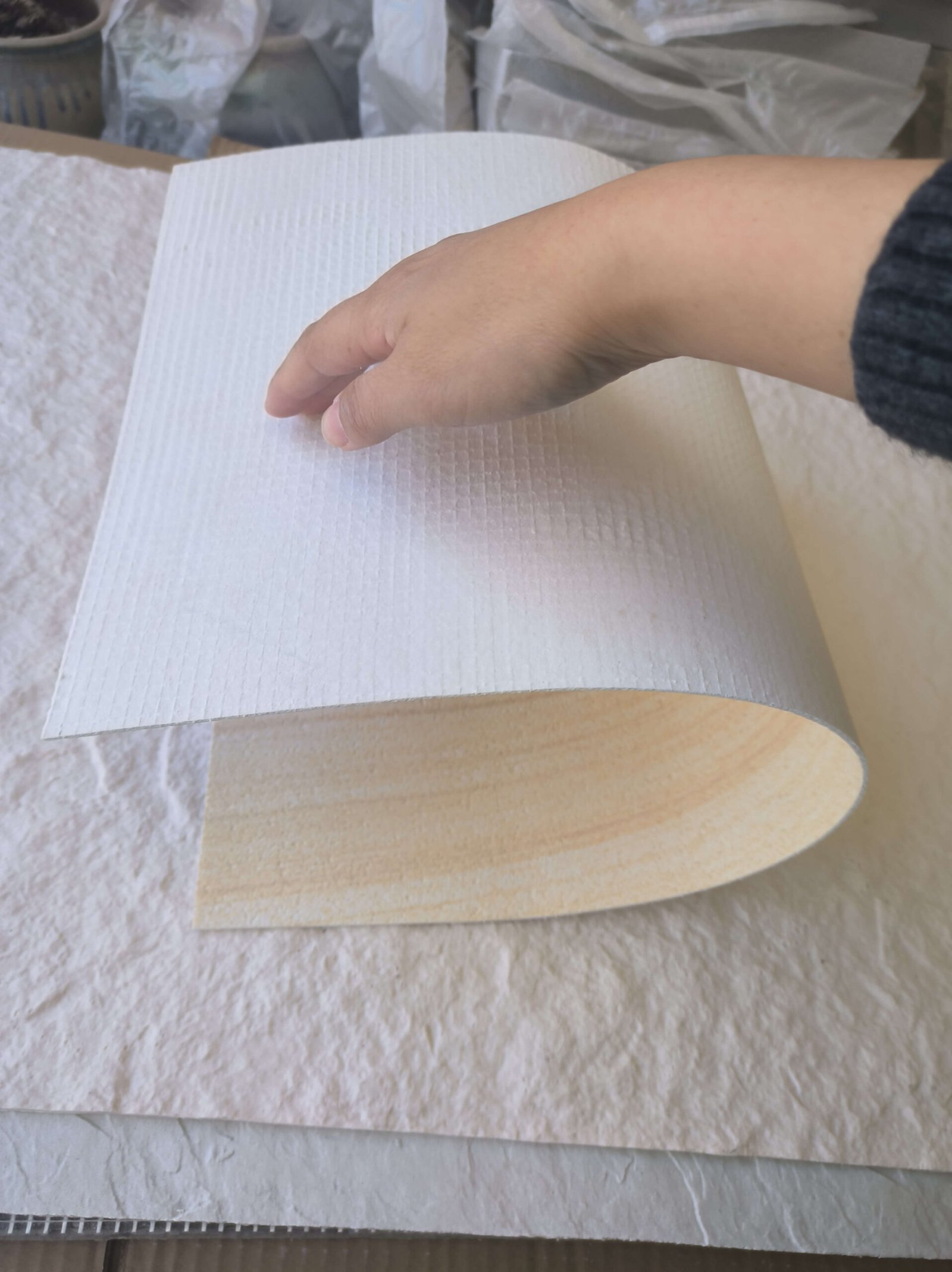
The sheet itself is the easy part. A thin mineral composite expands and contracts at a rate that, across a 1.2-metre panel and a realistic interior temperature swing, amounts to fractions of a millimetre — small enough that a correctly bonded bed absorbs it without complaint. The stress concentrates where movement is prevented: at a joint where two sheets are glued rigidly edge to edge, at a corner where the wall meets something that moves differently, at a penetration where a metal box or a pipe passes through and pins the sheet around it. This is why the failure signature of thermal stress is so consistent — a crack along a joint or a lifted edge beside a penetration — and why it follows the first hard season rather than the first month.
Colour plays a part too. A dark face in full sun reaches surface temperatures far above the room’s air temperature, and the swing between a sun-heated afternoon and a cool night is the harshest cycle a bonded finish sees. Our pattern selection guide covers tone as a design choice; in a sun-exposed room it is also a thermal one, and the darkest patterns deserve the movement detailing below even more than the pale ones.
What carries the movement: joints, not hope
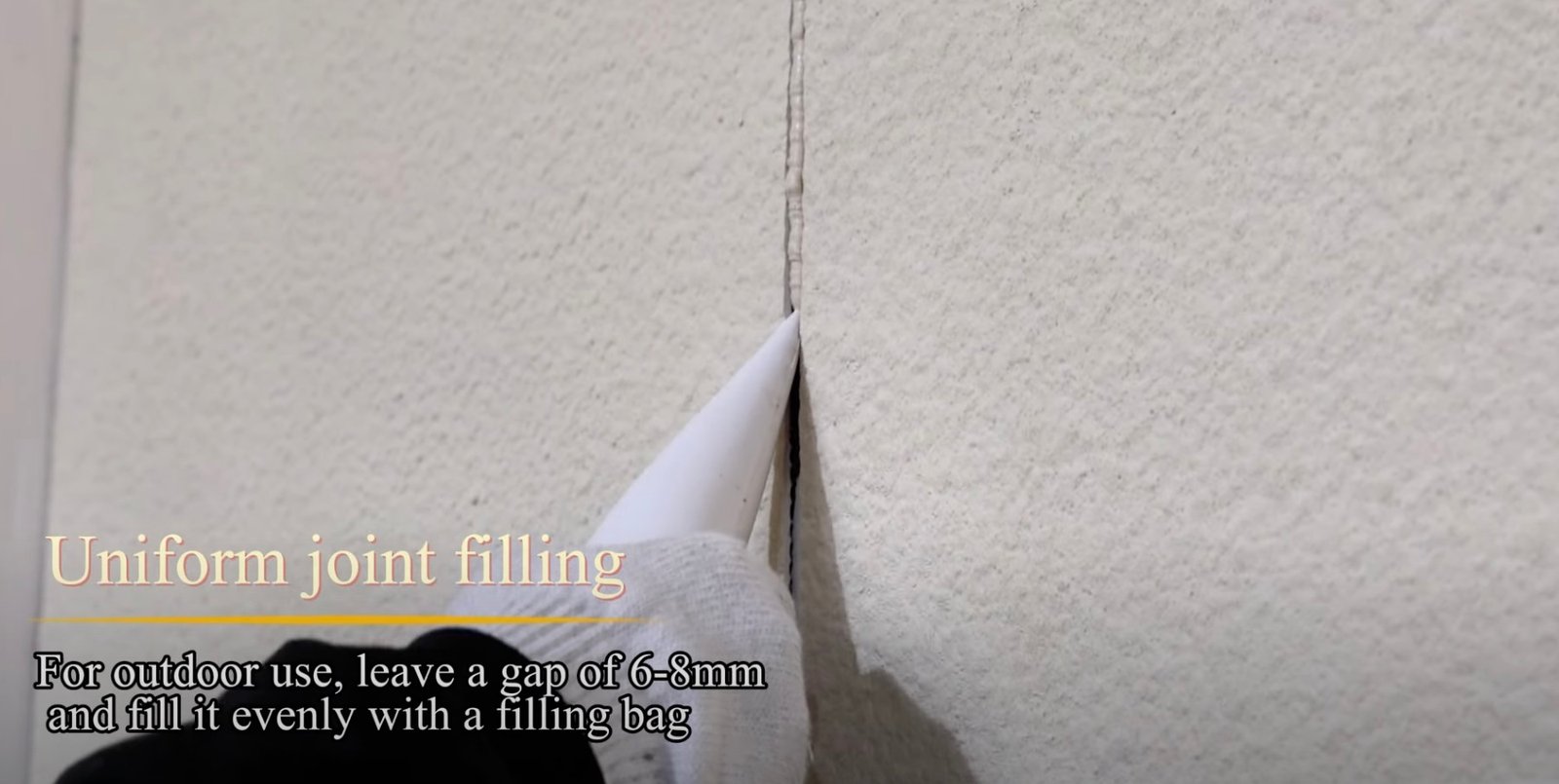
The wall’s movement strategy is the joint strategy, and the rules come from our movement joint guide — repeated here because sun-exposed rooms are where they stop being optional. Joints in the field are placed where the system requires them, filled with a flexible sealant rather than a rigid filler, and never bridged by adhesive smears. Perimeter joints — where the stone field meets a ceiling, a floor, a window reveal or an adjacent material — are designed as movement joints from the drawing stage, with the gap width sized for the assembly rather than left to the installer’s day.
The sun-exposed room raises the stakes on two of those rules. First, rigid fillers fail faster under thermal cycling than under any other load, so “just grout it” is the one instruction that guarantees a callback. Second, a joint that is interrupted — run, then crossed by a bonded patch, then continued — stops doing its job at the crossing. The wall that survives south light is the one whose joints run continuously from drawing to site.
How do big windows change the details?
Glass changes the room in three ways, and each one lands on the wall detail. Direct sun adds the daily heating cycle described above, with the harshest exposure on walls opposite or adjacent to large south and west glazing. The glass line itself is a movement interface — the frame expands and contracts at its own rate — so the junction where stone meets the window reveal must not pin the two together; the stop-line discipline from our glass junction guide carries the thermal argument as well as the drainage one. And the light that makes the room pleasant makes every wall irregularity visible: raking sun across a stone field shows telegraphed substrate faults that even light would forgive, which is why the substrate flatness standard from our backing board guide matters most exactly where the sun hits hardest.
Behind-the-wall effects complete the picture. A wall on an exterior building line carries the outside temperature through its substrate; an interior partition between a heated room and a stairwell or garage sees its own gradient. Neither stresses the sheet — both stress rigid bridges across the gradient, which is the same argument the movement strategy makes: let every layer move, and nothing cracks.
What does the adhesive system contribute?
The adhesive bed is the sheet’s thermal suspension, and its specification is doing more work than buyers assume. A product approved for the exposure class — interior, wet, exterior — has been tested to hold the sheet through the temperature range that class implies; an interior-grade adhesive on a sun-heated wall is a specification error that shows up as edge lift in its first summer. The open-time and temperature-window rules in the system’s manual are not paperwork: applying adhesive outside its stated range is how a bond that passes every other check fails the one season that matters.
Verification follows the same evidence logic as everywhere else on this site: the transfer check from our coverage guide on the first sheets, and a season-end walk of the sun-exposed elevations — edges, joints, penetrations — while any early movement is still a small repair rather than a re-clad.
Which rooms deserve the sun-exposed detailing?
- Rooms with large south or west glazing — the direct-cycle case, where tone choice and joint detailing both matter most.
- Conservatories, sunrooms and garden rooms — the widest swings in the building, where the assembly is designed around movement from the start.
- Walls behind glass walls and storefronts — the frame interface plus the direct sun, two stress sources in one line.
- Exterior-adjacent interiors — stairwells, entry halls and garages whose walls carry the outside gradient through the substrate.
- Dark-pattern feature walls in any of the above — the highest surface temperatures in the building, deserving the fullest movement detailing in the specification.
None of these disqualify flexible stone; they simply promote the movement strategy from good practice to mandatory. The material has handled these environments across its product classes — the failure cases are almost always a detail that pinned what should have moved.
How do seasons test the wall after handover?
The thermal story has a calendar, and the wall reads it out loud. The first summer is the shake-down: joints flex through their widest cycles, edges see their highest temperatures, and any detail that was going to misbehave introduces itself. The first winter then runs the reverse cycle — and a wall that passed summer and winter has met the full range the room can produce, which is why the season-end walk described above is scheduled for both, not just the sunny one.
Between inspections, the wall itself tells the story if anyone looks. A sealant joint that has begun to pull away on one side is reporting that the two faces it joins move at different rates — expected at a glass line, unexpected mid-field. A hairline at a corner is reporting a rigid bridge that has started to fight. Neither is a material complaint; both are detail complaints, and both are cheapest to correct while they are still lines rather than losses. This is the same assignability argument our liability guide makes: the wall keeps records in its joints for whoever learned to read them.
What does correct installation look like in a sunroom, step by step?
A conservatory or garden-room wall concentrates every thermal rule in one small project, so it is worth running the sequence end to end. The substrate is specified and accepted flat, with its joints treated and cured — the raking sun will expose anything the straightedge missed. The movement joints are drawn with the panel grid: perimeter gaps at floor, ceiling and every reveal, field joints at the locations the system requires, all sized for the assembly and all destined for flexible sealant. The adhesive is the exposure-class product the system approves, applied within its stated temperature window — which in a sunroom means working the shaded side first and letting the morning sun do the curing, not fighting an afternoon wall that is already hot to the touch.
The sheets go up with the coverage discipline — full bed, ridges collapsed, transfer verified by lift-and-read on the first panel — and the penetrations, which in a sunroom are usually plentiful, are templated and cut so nothing pins the sheet around a box or a pipe. The terminations at the glass line follow the stop-line rule, and the whole field is left with its joints open to the sealant stage, never bridged. Photographed at each step, the project hands over with the evidence chain our submittal guide keeps — and the first season-end walk then reads a wall that was built to move.
FAQ
Will the wall crack because of temperature changes?
The sheet will not crack from its own expansion — the movement across a panel is fractions of a millimetre. Cracks appear where movement is prevented: rigid-filled joints, bonded bridges to other materials, pinning around penetrations. Design the joints to move and the wall ages calmly.
Do dark patterns need different detailing?
They reach higher surface temperatures in direct sun, so the harshest cycles land on them. The same movement strategy applies to every wall; in sun-exposed rooms with dark faces, none of it is optional and the season-end inspection is worth scheduling from handover.
Is the adhesive different for sun-exposed rooms?
The exposure class is what matters — the adhesive approved for the wall’s environment has been tested across the temperature range that class implies. Using an interior-grade product on a sun-heated wall, or applying outside the stated temperature window, voids the logic the approval was built on.
What should I check after the first summer?
Walk the sun-exposed elevations and read the lines: joints continuous and sealed, edges tight, penetrations unpinning the sheet, no shine where stone rubs a frame. Anything found in the first season is a small repair; the same fault after three seasons is a re-clad.
Design the wall to move with the seasons and the sun becomes a lighting asset instead of a stress test. Format and thickness data for the assembly are on the flexible stone veneer page, and thermal-movement practice for adhered finishes is published by the ASTM International standards behind the product’s own test reports.