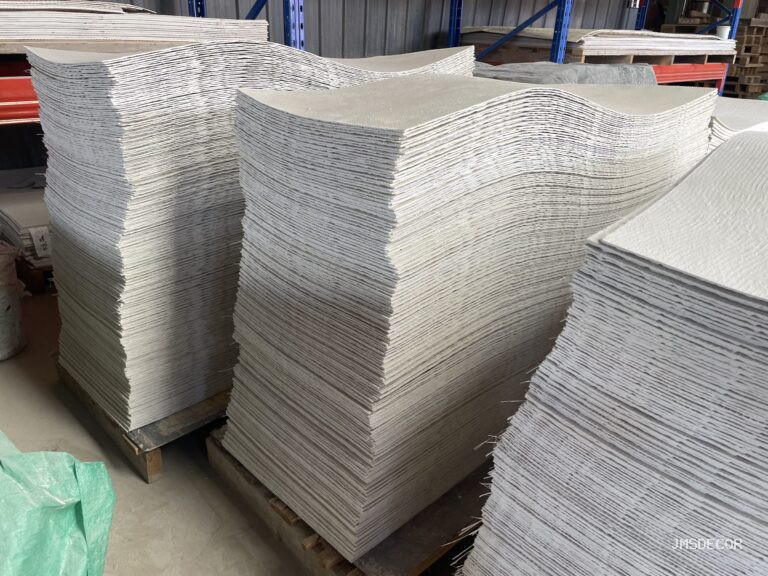
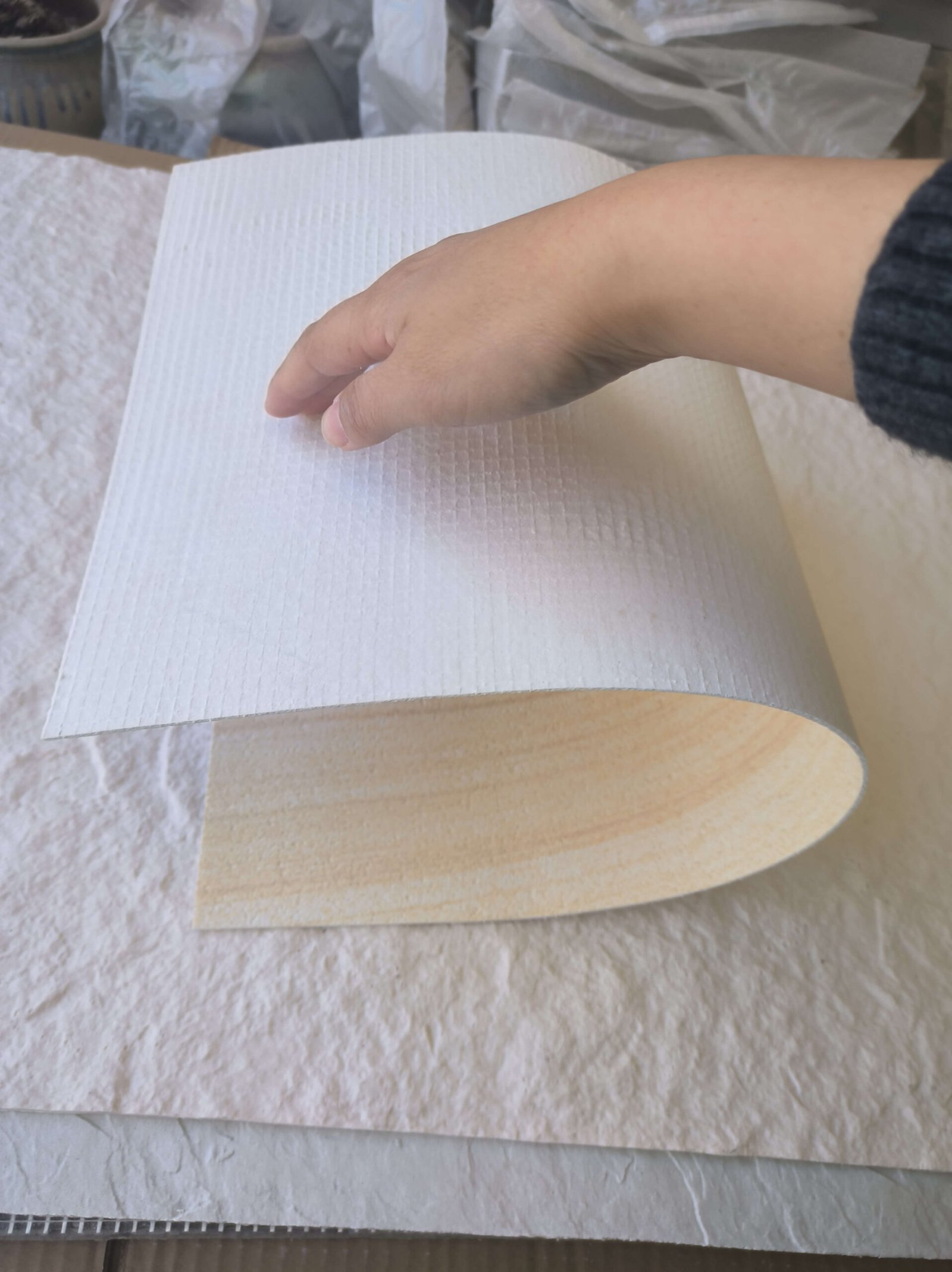
El cristal orientado al sur convierte una pared decorativa en un instrumento térmico: el sol calienta la cara de la piedra decenas de grados entre la mañana y la tarde, y por la tarde-noche la temperatura desciende. Cada acabado adherido vive dentro de esos ciclos, y la piedra flexible —una lámina mineral de 2 a 8 mm sobre malla de fibra de vidrio, adherida a su sustrato— responde de forma distinta tanto al cerámico como al slab natural. El material no es el riesgo; las juntas lo son. Donde la lámina se mueve libremente con su lecho, las estaciones pasan desapercibidas; donde está anclada contra algo que no se mueve, la tensión encuentra la línea más débil y la abre. Esta guía explica cómo se comporta realmente la temperatura en una pared de piedra flexible, qué detalles absorben el movimiento y cómo diseñar habitaciones con grandes cristales para que la pared envejezca con calma.
Qué significa el movimiento térmico para una lámina delgada adherida
La lámina en sí es la parte sencilla. Un compuesto mineral fino se expande y contrae a un ritmo que, en un panel de 1,2 metros y con una oscilación térmica interior realista, equivale a fracciones de milímetro: suficiente pequeño para que un lecho correctamente adherido lo absorba sin problemas. La tensión se concentra donde se impide el movimiento: en una junta donde dos láminas están pegadas rígidamente borde con borde, en una esquina donde la pared se encuentra con algo que se mueve de forma distinta, en una penetración por donde pasa una caja metálica o una tubería y ancla la lámina a su alrededor. Por eso la firma de rotura del estrés térmico es tan consistente —una grieta a lo largo de una junta o un borde levantado junto a una penetración— y por qué sigue la primera temporada difícil en lugar del primer mes.
El color también juega un papel. Una cara oscura bajo pleno sol alcanza temperaturas superficiales muy superiores a la temperatura del aire de la habitación, y la oscilación entre una tarde calentada por el sol y una noche fresca es el ciclo más duro que ve un acabado adherido. Nuestra pattern selection guide cubre el tono como una opción de diseño; en una habitación expuesta al sol también es una decisión térmica, y los patrones más oscuros merecen los detalles de movimiento descritos a continuación aún más que los claros.
Qué absorbe el movimiento: las juntas, no la esperanza
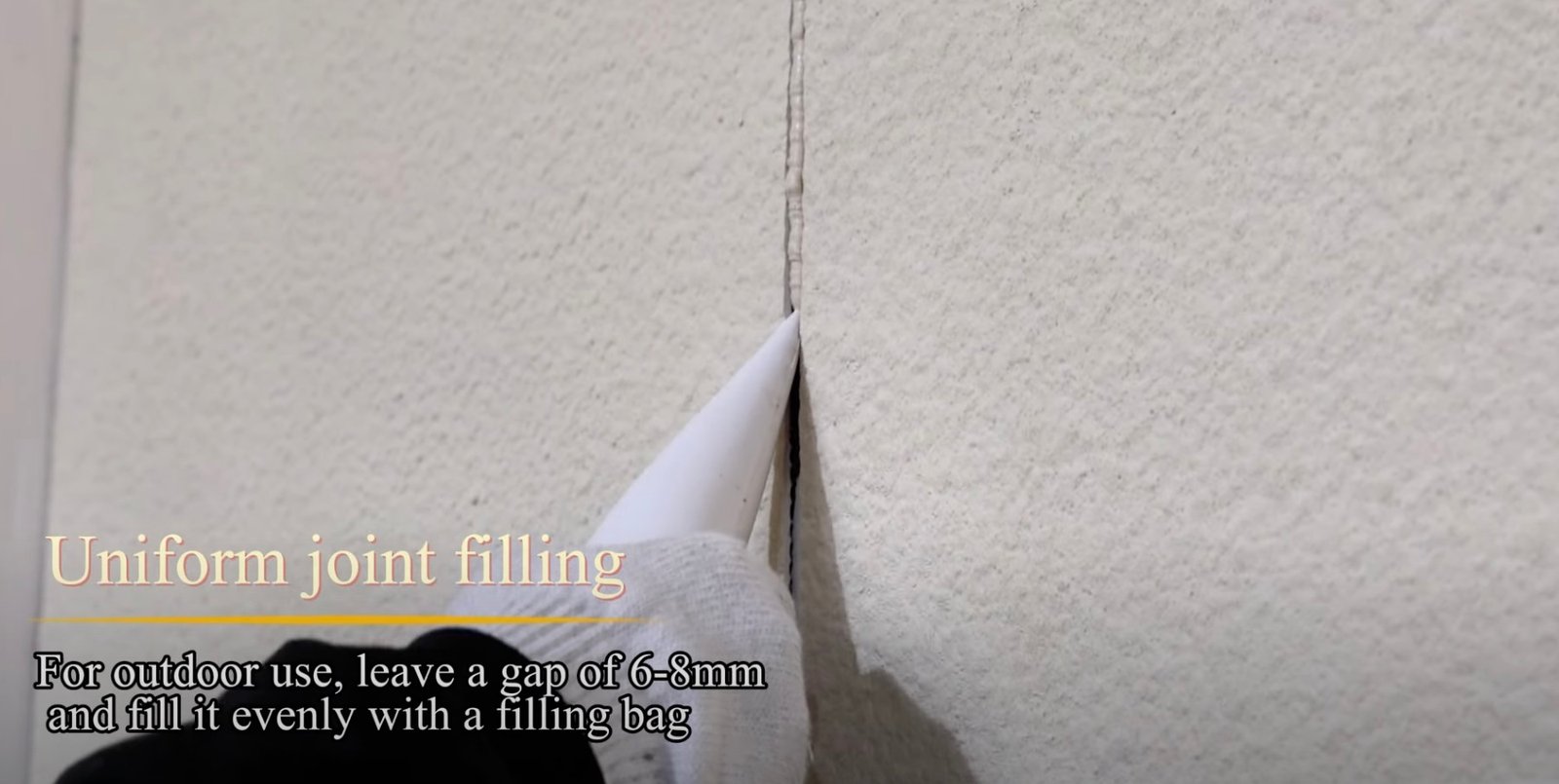
La estrategia de movimiento de la pared es la estrategia de juntas, y las normas provienen de nuestro movement joint guide —repetidas aquí porque las habitaciones expuestas al sol son donde dejan de ser opcionales. Las juntas en campo se sitúan donde el sistema las requiere, se rellenan con un sellador flexible en lugar de un relleno rígido y nunca se cruzan con masillas de adhesivo. Las juntas perimetrales —donde el campo de piedra se encuentra con un techo, un suelo, un trasdosado de ventana o un material adyacente— se diseñan como juntas de movimiento desde la fase de dibujo, con el ancho de hueco dimensionado para el conjunto y no dejado al criterio del instalador del día.
La habitación expuesta al sol eleva las apuestas en dos de esas normas. En primer lugar, los rellenos rígidos fallan más rápido bajo ciclos térmicos que bajo cualquier otra carga, por lo que “simplemente rejuntarlo” es la única instrucción que garantiza una llamada de garantía. En segundo lugar, una junta que se interrumpe —se continúa, luego es cruzada por un parche adherido y después se retoma— deja de hacer su función en el cruce. La pared que resiste la luz del sur es aquella cuyas juntas transcurren de forma continua desde el dibujo hasta el sitio.
How do big windows change the details?
Glass changes the room in three ways, and each one lands on the wall detail. Direct sun adds the daily heating cycle described above, with the harshest exposure on walls opposite or adjacent to large south and west glazing. The glass line itself is a movement interface — the frame expands and contracts at its own rate — so the junction where stone meets the window reveal must not pin the two together; the stop-line discipline from our glass junction guide carries the thermal argument as well as the drainage one. And the light that makes the room pleasant makes every wall irregularity visible: raking sun across a stone field shows telegraphed substrate faults that even light would forgive, which is why the substrate flatness standard from our backing board guide matters most exactly where the sun hits hardest.
Behind-the-wall effects complete the picture. A wall on an exterior building line carries the outside temperature through its substrate; an interior partition between a heated room and a stairwell or garage sees its own gradient. Neither stresses the sheet — both stress rigid bridges across the gradient, which is the same argument the movement strategy makes: let every layer move, and nothing cracks.
What does the adhesive system contribute?
The adhesive bed is the sheet’s thermal suspension, and its specification is doing more work than buyers assume. A product approved for the exposure class — interior, wet, exterior — has been tested to hold the sheet through the temperature range that class implies; an interior-grade adhesive on a sun-heated wall is a specification error that shows up as edge lift in its first summer. The open-time and temperature-window rules in the system’s manual are not paperwork: applying adhesive outside its stated range is how a bond that passes every other check fails the one season that matters.
Verification follows the same evidence logic as everywhere else on this site: the transfer check from our coverage guide on the first sheets, and a season-end walk of the sun-exposed elevations — edges, joints, penetrations — while any early movement is still a small repair rather than a re-clad.
Which rooms deserve the sun-exposed detailing?
- Rooms with large south or west glazing — the direct-cycle case, where tone choice and joint detailing both matter most.
- Conservatories, sunrooms and garden rooms — the widest swings in the building, where the assembly is designed around movement from the start.
- Walls behind glass walls and storefronts — the frame interface plus the direct sun, two stress sources in one line.
- Exterior-adjacent interiors — stairwells, entry halls and garages whose walls carry the outside gradient through the substrate.
- Dark-pattern feature walls in any of the above — the highest surface temperatures in the building, deserving the fullest movement detailing in the specification.
None of these disqualify flexible stone; they simply promote the movement strategy from good practice to mandatory. The material has handled these environments across its product classes — the failure cases are almost always a detail that pinned what should have moved.
How do seasons test the wall after handover?
The thermal story has a calendar, and the wall reads it out loud. The first summer is the shake-down: joints flex through their widest cycles, edges see their highest temperatures, and any detail that was going to misbehave introduces itself. The first winter then runs the reverse cycle — and a wall that passed summer and winter has met the full range the room can produce, which is why the season-end walk described above is scheduled for both, not just the sunny one.
Between inspections, the wall itself tells the story if anyone looks. A sealant joint that has begun to pull away on one side is reporting that the two faces it joins move at different rates — expected at a glass line, unexpected mid-field. A hairline at a corner is reporting a rigid bridge that has started to fight. Neither is a material complaint; both are detail complaints, and both are cheapest to correct while they are still lines rather than losses. This is the same assignability argument our liability guide makes: the wall keeps records in its joints for whoever learned to read them.
What does correct installation look like in a sunroom, step by step?
A conservatory or garden-room wall concentrates every thermal rule in one small project, so it is worth running the sequence end to end. The substrate is specified and accepted flat, with its joints treated and cured — the raking sun will expose anything the straightedge missed. The movement joints are drawn with the panel grid: perimeter gaps at floor, ceiling and every reveal, field joints at the locations the system requires, all sized for the assembly and all destined for flexible sealant. The adhesive is the exposure-class product the system approves, applied within its stated temperature window — which in a sunroom means working the shaded side first and letting the morning sun do the curing, not fighting an afternoon wall that is already hot to the touch.
The sheets go up with the coverage discipline — full bed, ridges collapsed, transfer verified by lift-and-read on the first panel — and the penetrations, which in a sunroom are usually plentiful, are templated and cut so nothing pins the sheet around a box or a pipe. The terminations at the glass line follow the stop-line rule, and the whole field is left with its joints open to the sealant stage, never bridged. Photographed at each step, the project hands over with the evidence chain our submittal guide keeps — and the first season-end walk then reads a wall that was built to move.
PREGUNTAS FRECUENTES
Will the wall crack because of temperature changes?
The sheet will not crack from its own expansion — the movement across a panel is fractions of a millimetre. Cracks appear where movement is prevented: rigid-filled joints, bonded bridges to other materials, pinning around penetrations. Design the joints to move and the wall ages calmly.
Do dark patterns need different detailing?
They reach higher surface temperatures in direct sun, so the harshest cycles land on them. The same movement strategy applies to every wall; in sun-exposed rooms with dark faces, none of it is optional and the season-end inspection is worth scheduling from handover.
Is the adhesive different for sun-exposed rooms?
The exposure class is what matters — the adhesive approved for the wall’s environment has been tested across the temperature range that class implies. Using an interior-grade product on a sun-heated wall, or applying outside the stated temperature window, voids the logic the approval was built on.
What should I check after the first summer?
Walk the sun-exposed elevations and read the lines: joints continuous and sealed, edges tight, penetrations unpinning the sheet, no shine where stone rubs a frame. Anything found in the first season is a small repair; the same fault after three seasons is a re-clad.
Design the wall to move with the seasons and the sun becomes a lighting asset instead of a stress test. Format and thickness data for the assembly are on the revestimiento de piedra flexible page, and thermal-movement practice for adhered finishes is published by the ASTM International normas que respaldan los propios informes de prueba del producto.