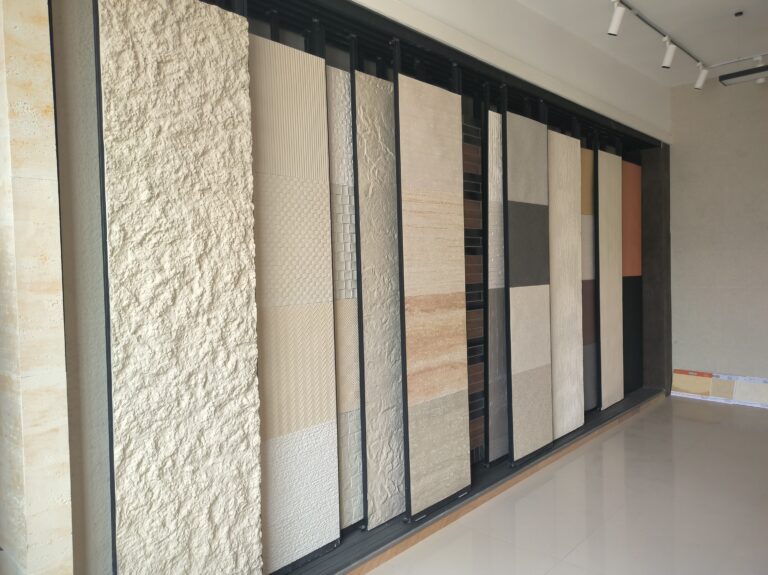
A certificate of analysis describes one production run, not every run that follows it. If your second order of flexible stone veneer ships after a raw-material change, a pigment adjustment, or a different line, the first-batch COA will not tell you. Batch consistency for decorative stone panels is verified with three things no general quality checklist covers: a retained physical first-article sample compared under controlled light, spot checks against the declared thickness and weight range for the specific pattern, and batch traceability that links every pallet back to the production record. The rest of this guide shows you how to run those checks yourself before the container loads, not after it lands.
Why does a COA from the first batch not lock in my second order?
A COA is a report card for one lot. It records what the factory measured on the material it sampled from that run — typically the composition summary, the fire-test data, and permeability figures for the panels that went into your first container. Nothing on the document binds future production to it.
The gap matters most on material that looks like stone and is manufactured like a composite. Flexible stone veneer is built from natural stone powder, an inorganic binder system, and a fiberglass mesh reinforcement layer. The color you approved is a pigment recipe applied through digital 3D printing, and the relief comes from a physical mold. Any of those three inputs — binder batch, pigment lot, mold condition — can move slightly between runs while every number on the COA still passes.
So treat the first COA as a baseline, not a fence. It tells you what “correct” looked like once. Your job on the reorder is to prove the new batch matches that baseline and each other batch you already installed.
What does batch consistency actually mean for flexible stone panels?
For this material, “consistent” is five separate checks, not one impression:
- Color and tone. The printed surface hue and the shading range within the pattern. This is the check that fails most often and the one no document can settle by itself.
- Relief and texture depth. The mold gives the panel its physical surface. A worn or re-made mold flattens the relief even when the color is identical.
- Thickness and weight. Each pattern lives in a declared band — flexible stone commonly ranges from roughly 2 to 8 mm and 1.5 to 6 kg per square meter depending on the design, with thin styles like travertine sitting at the light end. A batch that lands at the wrong end of its band is a flag, not a rounding error.
- Backing structure. The fiberglass mesh is what makes a panel flexible instead of brittle. Its position and coverage should match the approved sample.
- Curved-surface behavior. If your project bends panels around columns or arches, a recipe that shifted can crack at a radius the first batch absorbed without complaint.
A supplier can honestly send a compliant COA while drifting on all five. That is why the check is physical, and why it happens before the freight is booked.
How do I check color between production runs without a lab?
You do not need a spectrophotometer to catch the mistake that matters. You need a retained sample and disciplined viewing conditions.
When you approve the first-article sample (sometimes called an FAI sample) for your pattern, keep two sealed copies of the actual panels that shipped in the first container — not the catalog piece, the installed piece. Label them with the batch number and store one in daylight-neutral conditions. Before your reorder ships, the factory photographs and, if you ask, physically sends corner offcuts from the new batch laid side by side with your retained sample.
Three viewing rules make the comparison reliable:
- Compare under standard daylight-correlated light (around 6500K, the D65 illuminant the color science community uses as its reference; the Commission Internationale de l’Éclairage (CIE) maintains the illuminant and color-difference standards behind this method).
- View at the distance the finished wall will actually be seen — normally two meters for interior feature walls — and then again close-up, because a match that holds at distance can show a seam in raking light.
- Check several panels from the new batch against each other before comparing to the retained sample. Variation within a batch is a different problem from variation between batches, and the buyer response is different.
For quantified disputes, a color-difference value (ΔE) measured by the factory or an independent lab gives you a number to argue with. Ask for it when a visual comparison is borderline; the specification you approved in writing is the reference point.
Which physical properties should I spot-check on every reorder?
Ask the factory for a short pre-shipment measurement sheet on the new batch — a few panels, sampled at random, not the golden piece off the line. You want to see, per panel: overall thickness in millimeters, sheet dimensions against the ordered size (the standard format for this material is 1200 × 600 mm, with larger formats up to 1200 × 2900 mm), weight per square meter, and a photo of the back showing the fiberglass reinforcement.
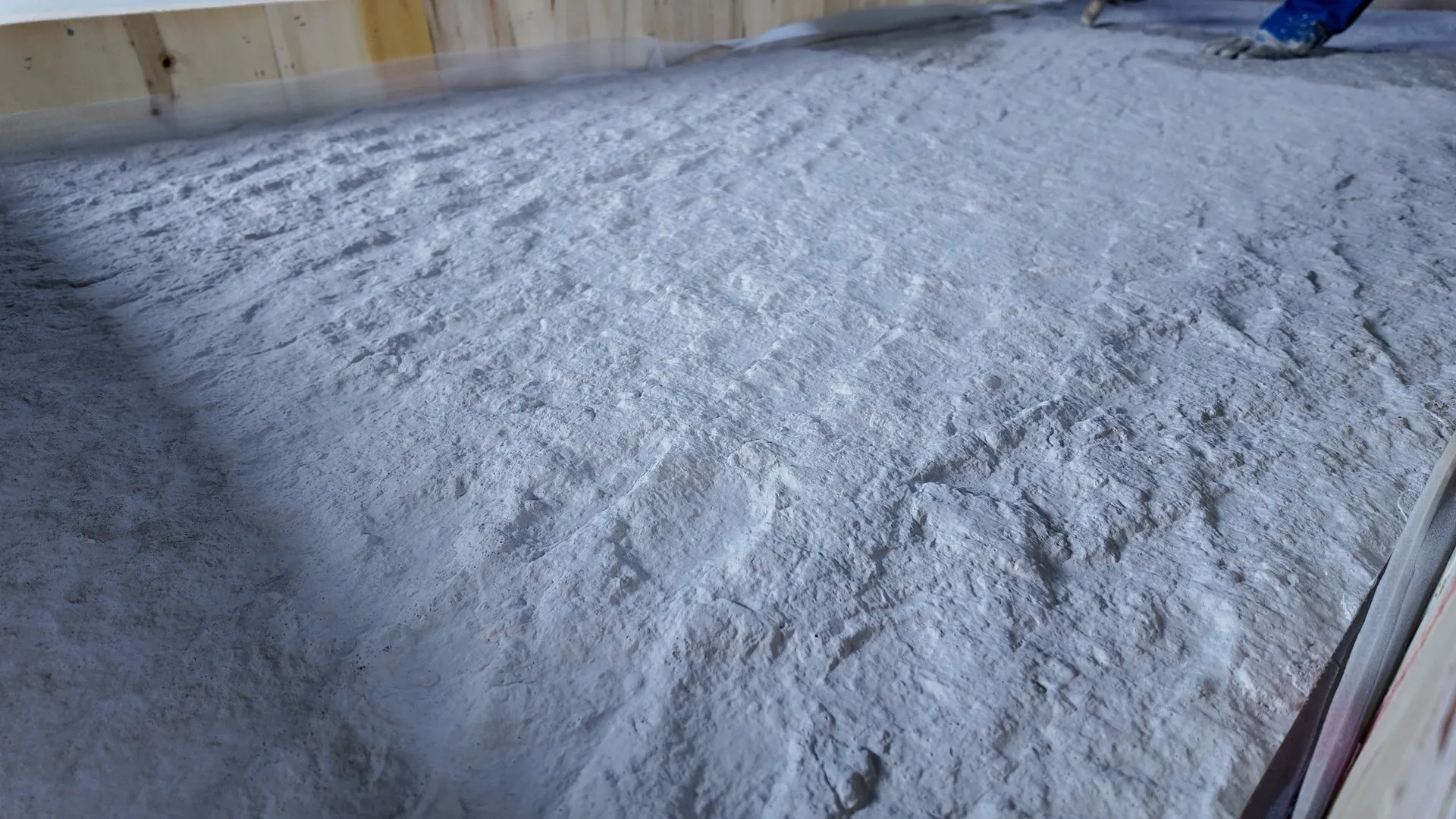
Then run your own five-minute checks against the retained sample: measure thickness at three points with a caliper, weigh one square meter against the declared band for that pattern, flex the corner gently over a cylinder to confirm the panel still bends without micro-cracks, and look at the mesh through the back edge. A panel whose weight has crept to the top of its band usually means a denser mix; a lighter one can mean a thinner binder layer. Either way, it has to be visible to you before it is visible on a finished façade.
These checks belong in your receiving routine too — keep the measurement sheet with the container paperwork so that, months later, you can tie an installed issue to a specific run.
What paperwork on the container gives me batch traceability?
Traceability is what turns “one bad pallet” into a manageable claim. Before shipping, confirm these links exist and say the same thing:
- Batch or lot number on the export packaging. Every crate or pallet should carry the production batch, matched to the COA that accompanies this specific shipment.
- Shipping marks and the packing list. Counts, dimensions, and gross weights should agree sheet-for-sheet; the product description on the marks should match the invoice and the bill of lading.
- The first-article reference. The COA and packing documents for a reorder should cite the same product code and pattern number you approved originally — a silent code change is how substitutions get through.
- Batch photos from before the load. Photographs of stacked, crated panels (faces visible, not just wrap) cost the factory nothing and give you evidence if corners or tones arrive wrong.
If a supplier cannot connect a pallet in the yard to a production record, you cannot connect a claim to a batch either. The same logic underpins a well-run sourcing program generally, which our guide to sourcing commercial-grade flexible stone covers from the checkpoint angle.
How do I write a reorder PO that prevents quiet substitutions?
A reorder purchase order should reference the approval trail instead of re-describing the product from memory. In plain English, lock five things:
- Pattern and color by the code on the approved first-article sample — the physical panel, not a photo in a catalog.
- Thickness and weight band declared for that pattern, with the requirement that the pre-shipment measurement sheet is attached to the shipping documents.
- Benchmark batch number: “must match the material retained under reference ___.”
- Explicit no-substitution clause: binder system, pigment recipe, mesh type, and backing may not change without your written approval.
- Inspection rights before loading, and what happens if panels miss the benchmark.
If you are developing a private color, also fix the formula custody in writing. Custom Pantone-matched colors are mixed and printed on equipment the factory controls; what protects you is an agreement that the recipe and the molds are kept for you and not sold to anyone else — a reputable manufacturer stores customer molds and color formulas long term precisely so reorders match (at JMS Decor, molds and color formulas are held free of charge for five years, and reorders on them carry no new tooling cost). See the customization and OEM page for how custom colors and patterns are commissioned.
What do I do when the second batch is visibly different?
Stop, and sort before you install.
- Document first. Photograph new batch and retained sample side by side under the same light, with the batch marks visible.
- Quantify. Measure thickness and weight on ten panels from the new run against the specification.
- Decide on scope. A tone difference that disappears at viewing distance can often be managed by blending panels from both batches across a larger wall; a difference that holds at distance will show as a patch and needs a claim.
- Use the contract path. This is where the PO language above pays: a mismatch against the benchmark batch is a documented non-conformity, not an opinion.
Do not install the suspect batch to “keep the schedule” and negotiate afterward. Once panels are on the wall, the color conversation becomes a demolition conversation.
FAQ
Does batch consistency matter if I order the same catalog pattern every year?
Yes — catalog patterns are the ones that shift most, because pigment lots and mold wear change silently between runs. A pattern you bought three years ago is not automatically the wall you get today unless the reorder is checked against a retained sample.
Can I just keep a brochure instead of a physical sample?
No. Printed and screen-rendered images lock a single idealized piece of a material that is inherently variable. Keep actual panels from the approved production batch, stored flat and sealed.
Is a ΔE value required on every order?
It is not standard on every shipment, but asking for one when a visual match is borderline gives you a number instead of a standoff. The specification and retained sample stay the reference either way.
What about small orders — do these checks still work at trial quantity?
Yes, and proportionally more so: a 300 square meter standard MOQ reorder can still cross more than one production run, and a trial order (our MOQ guide explains when smaller quantities work) concentrates risk in fewer batches, so measurement sheets and batch marks matter just as much.
My distributor says the panels are “within tolerance.” Within whose?
Ask which tolerance — the declared thickness and weight band for the pattern, or the deviation from your approved sample. A supplier can be inside its own band while being a visible match failure against your installed wall. The retained sample is the referee.
Ready to lock your benchmark before the next container? The flexible stone veneer product page lists current patterns and thickness bands, and sample requests start with a first-article approval under the same batch controls described above.