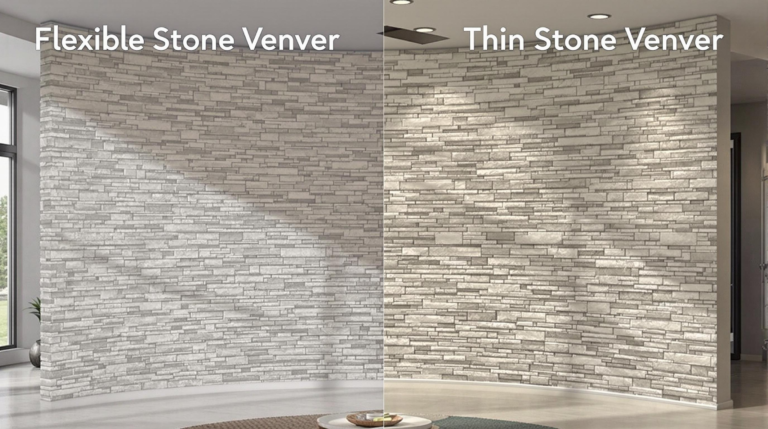
Retail leases end, pop-ups close, showroom concepts rotate — and every one of those walls has to come back to the condition the landlord specified. Most permanent finishes fail that test: tile is demolition, paint over stone-texture is a saga, and a wallpapered feature wall reads as cheap in the meantime. Flexible stone veneer occupies a specific middle position: it is bonded like a permanent finish, so it looks like one every trading day, but it is thin, light and removable in panels, which makes an end-of-lease wall a planned operation instead of a rebuild. This guide covers how to install it reversibly, what to agree with the landlord before the first panel, and how to take it down without costing the deposit.
What “reversible” honestly means for a bonded finish
Clarity first: flexible stone is not a peel-and-stick product, and a proposal that implies day-one removal is overselling. It is a thin mineral sheet permanently bonded to a substrate with the approved adhesive — the same method any permanent installation uses. What makes it lease-friendly is that the bonded assembly is thin, light and panel-sized, so removal happens panel by panel with hand tools, and the substrate strategy can be designed from the start for what happens after.
That reframes the whole job. The reversibility is not in the adhesive; it is in the architecture of the wall. If the stone is bonded to a lining layer — a board fixed to the landlord’s wall with the demolition method agreed in advance — then the removal at lease end takes the lining, not the wall. If it is bonded directly to the landlord’s plaster, removal is still possible but the plaster is the consumable, and the deposit conversation will be longer.
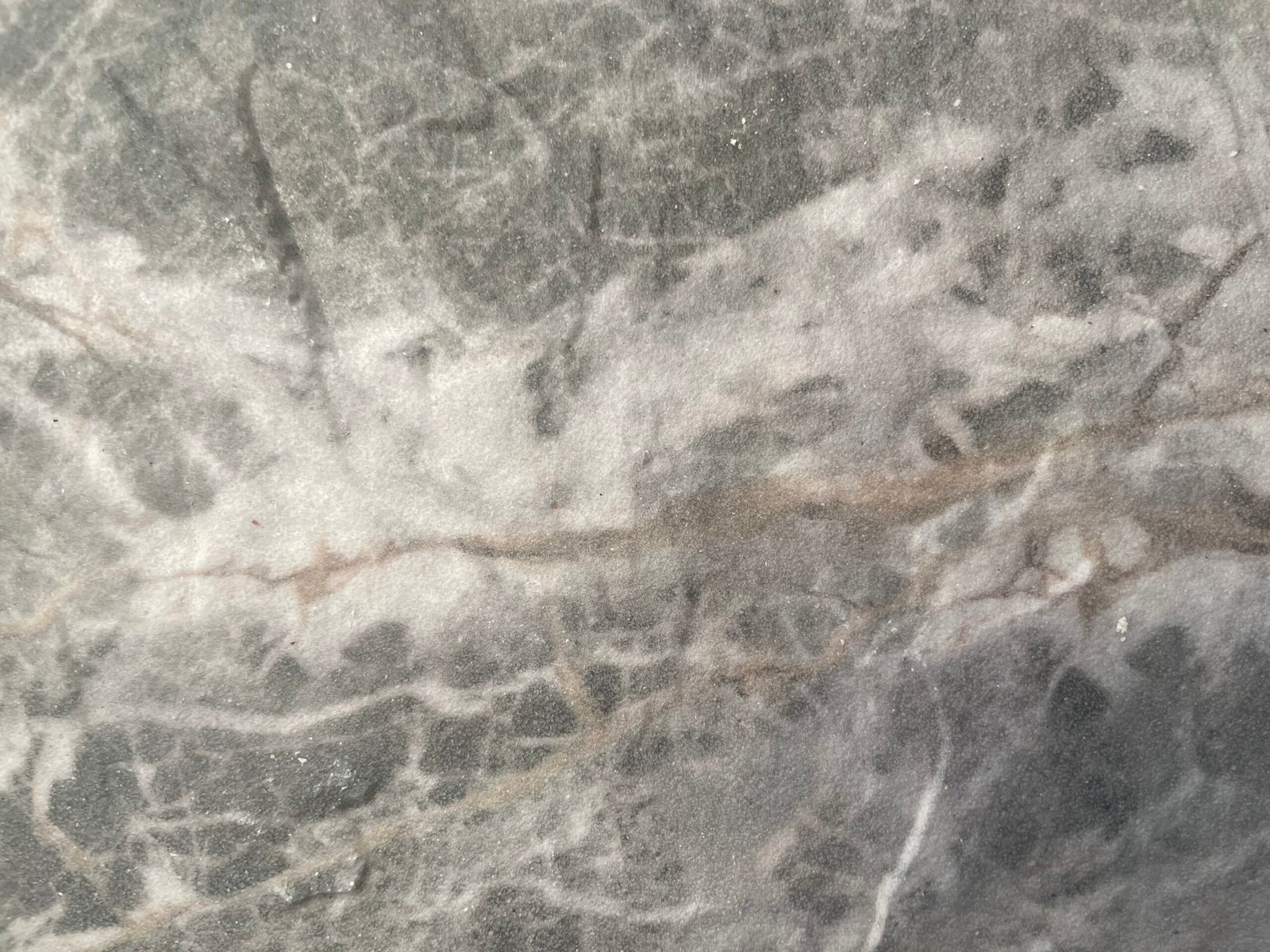
Which substrate strategy suits which lease situation?
- Independent lining wall. A slim stud or batten frame with board, set in front of the landlord’s wall, clad in stone. Removal at lease end: take down the panels, dismantle the frame, patch screw holes. The landlord’s wall never sees adhesive. Cost: depth and some material. Best for major feature walls in medium and long leases where the concept must look permanent.
- Direct bond with sacrificial plaster. The stone bonds straight to the wall; at lease end, panels are removed and the wall is skimmed and made good. Cheapest and shallowest. Best where the make-good clause permits replastering and the walls are sound.
- Panel system on a demountable frame. For genuine pop-ups and roadshow units: the stone is bonded to carrier panels that mount on a reusable frame, per the removable-panel logic in our access panel guide. The stone and frame travel to the next venue. Best for brands that repeat the same concept across sites.
The choice is a lease-terms decision as much as a construction one: what the make-good clause actually requires, how long the fit-out must last, and who owns the wall at the end.
What should be agreed with the landlord first?
Three agreements prevent the deposit dispute. First, the make-good definition in writing: what condition the wall must return to, and whether a lining-wall approach — which leaves the original wall untouched — satisfies it outright, which it usually does better than any bonded-then-replastered route. Second, the fixing rules: what may be fixed to the building’s structure, what penetrations are permitted and how they must be made good. Third, the documentation: photographs of the wall before works begin, dated, so the comparison at handover has a starting point — the same evidence habit our contract guide applies to every handoff.
Bringing the landlord a one-page method statement at negotiation stage changes the conversation from “you want to stick stone to my wall?” to “the original wall stays untouched behind an independent lining”. Estates teams approve what they can inspect, and a reversible system is inspectable by design.
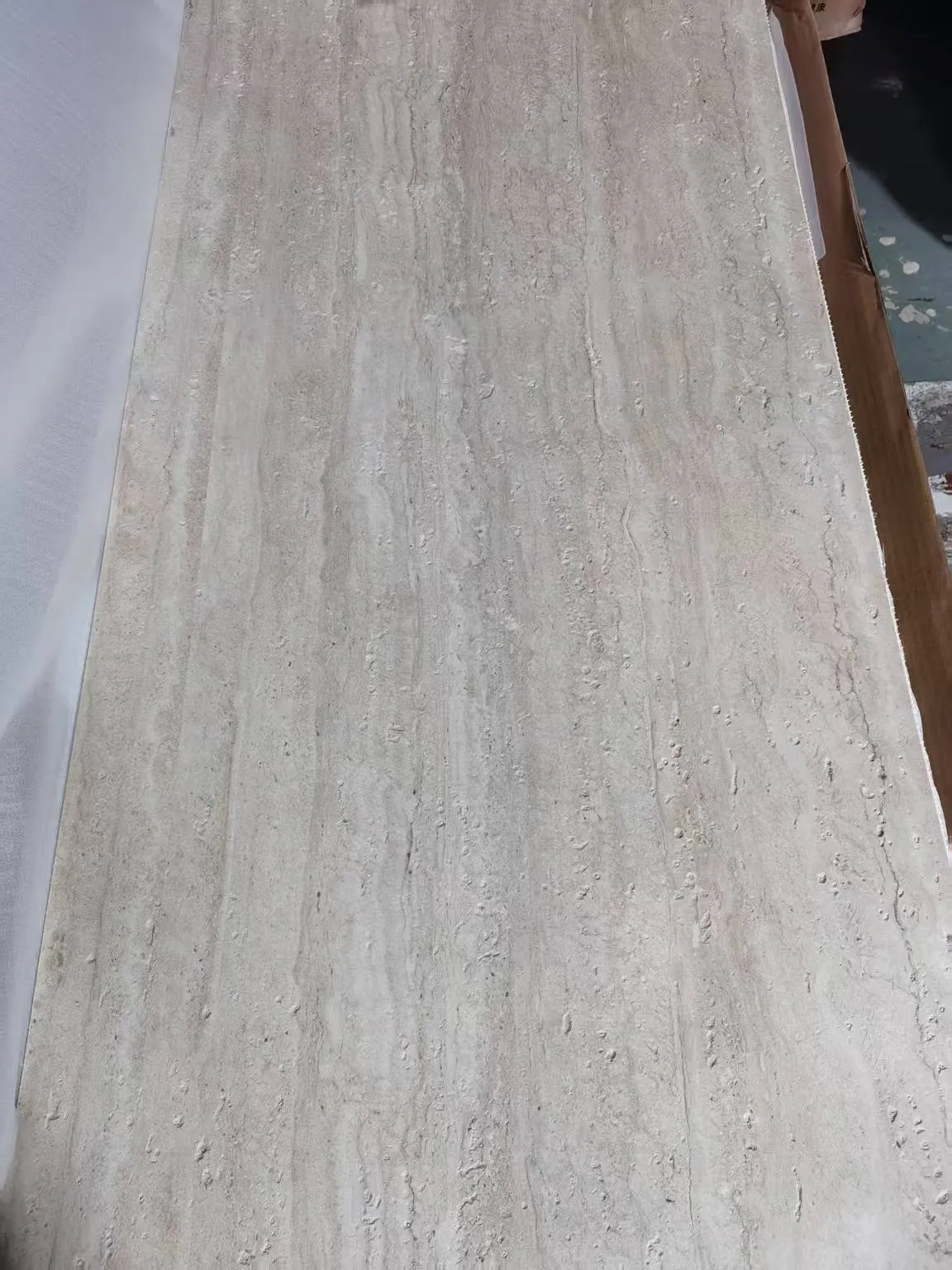
How is the installation planned for later removal?
Every step that makes removal easy is decided at installation. Set out the panel grid so the field breaks into manageable panels rather than one continuous sheet — joints every 1200 × 600 module are natural, and they are where removal begins. Keep the adhesive coverage to the system standard, no extra bedding that turns a panel into a monolith. Avoid bonding across the joints of the underlying lining boards, so a panel never bridges two boards. Fit sockets, switches and signage on plates that cover their openings, so the accessory removal does not destroy the cut edge — the plate logic from our Leitfaden zur Steckdosen-Fertigstellung does double duty here.
And label the wall. A drawing of the panel grid, kept with the maintenance file, tells whoever removes it in three years exactly where the joints are and how the field was built. The cost is a sheet of paper; the saving is an afternoon of exploratory demolition.
How is the wall actually removed at lease end?
The removal sequence rewards the planning above. Accessory plates come off first, exposing the panel openings. Starting at a joint — a corner panel, or one lifted at a marked joint — each panel is eased from the substrate with the hand tools the system documents, working the bond line rather than prying against the face. On a lining-wall installation, the panels and the frame come out together in sections; on a direct-bond installation, panels come off and the wall goes to its make-good contractor. The thin sheet’s own weight, a fifth or less of slab, is what makes the whole operation a hand-tools job rather than a scaffolding-and-chipping job.
What cannot be promised is that every panel survives removal as a reusable sheet — some will, some will crack at the bond line, and a pop-up programme that plans on reusing panels should bond them to carriers designed for the purpose, the panel-system route above. The honest framing for the client: the wall removes cleanly, the building is made good, and the concept’s look travels through photography and spare panels rather than through moving a wall.
What does this mean for pop-ups and short leases?
Short leases change the economics, not the physics. A six-month pop-up that needs a premium stone look has two honest routes: the direct bond, with make-good priced into the project, or the carrier-panel system if the brand expects to repeat the concept. What does not change is the visual standard — a pop-up wall is photographed, shared and judged exactly like a permanent one, which is precisely why the bonded finish earns its place over printed backdrops. The same design arguments our pattern selection guide covers apply at any lease length; only the substrate strategy and the make-good plan scale with time.
How does the fire and compliance question land in a leased shell?
Leased retail shells come with their own compliance frame — the landlord’s base-build fire strategy, the centre’s fit-out rules, the local authority’s sign-off on any material change. A thin mineral face tested to ASTM E84 Class A and EN 13501-1 Class A2 presents documentation the review can accept, but the wall assembly is what the fire officer assesses, and on a lining-wall strategy the fire detail of the cavity is the specifier’s job, not the supplier’s. The evidence package — classification certificates, the adhesive system’s data, the assembly detail — travels with the fit-out submission, per the documentation logic in our submittal guide.
Two leased-specific traps deserve naming. First, a demountable panel system changes the assembly between inspections — a design that was certified as installed must be re-certified if the carrier-and-frame logic changes the fire path, so the travelling version needs its own assessment. Second, centres and landlords often cap the percentage of a unit that may be “hard” finished; a stone field that reads as permanent while removing cleanly at handover is exactly the compromise those caps are fishing for, and the method statement is how you prove it.
What does a reversible project cost in practice?
Honest accounting has three lines. The lining-wall strategy adds frame and board depth against the direct bond; the carrier-panel system adds the carrier and hardware against both; and every strategy carries the make-good at the end, which the lining wall reduces to screw holes and the direct bond keeps as a replaster. What no strategy adds is a finish that looks temporary — which is the entire commercial point, because a leased space sells at the visual standard of a permanent one while exiting at the flexibility of a demountable one. The value-engineering conversation, where it exists, should attack the frame and the depth, never the bonding method: a weakened bond is not a reversible wall, it is a liability with a date on it.
FAQ
Can the wall be removed without damaging the landlord’s plaster?
Only with the lining-wall strategy, which keeps adhesive off the original wall entirely. Direct bonding removes cleanly at the panel but the plaster surface takes the make-good. Choose the strategy against the make-good clause, not against hope.
Is the installed wall as permanent-looking as real cladding?
Yes — it is the same bonded finish a permanent installation uses. Reversibility lives in the substrate architecture and the panel grid, not in a different, weaker installation that would compromise the look or the fire and bond performance.
Who pays for make-good at lease end?
Whatever the lease says, which is why the make-good definition is negotiated before works start. A lining wall typically removes the argument; a direct bond typically prices it into the fit-out budget up front.
Can the panels be reused in the next venue?
Some survive removal, but reuse should not be the plan unless the panels were bonded to carriers designed for it — the panel-system route. Planning a pop-up on reusing directly-bonded sheets is planning on luck.
Agree the make-good terms first, build the reversibility into the substrate, and let the wall trade its good looks for a clean exit. The material’s formats and handling data are on the flexible Steinverblendung page, and make-good and dilapidations practice for commercial leases is documented by bodies such as the Royal Institution of Chartered Surveyors.