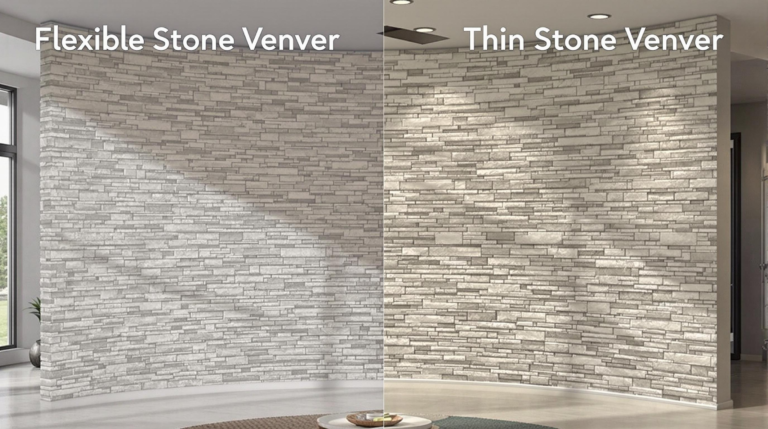
Retail leases end, pop-ups close, showroom concepts rotate — and every one of those walls has to come back to the condition the landlord specified. Most permanent finishes fail that test: tile is demolition, paint over stone-texture is a saga, and a wallpapered feature wall reads as cheap in the meantime. Flexible stone veneer occupies a specific middle position: it is bonded like a permanent finish, so it looks like one every trading day, but it is thin, light and removable in panels, which makes an end-of-lease wall a planned operation instead of a rebuild. This guide covers how to install it reversibly, what to agree with the landlord before the first panel, and how to take it down without costing the deposit.
What “reversible” honestly means for a bonded finish
Clarity first: flexible stone is not a peel-and-stick product, and a proposal that implies day-one removal is overselling. It is a thin mineral sheet permanently bonded to a substrate with the approved adhesive — the same method any permanent installation uses. What makes it lease-friendly is that the bonded assembly is thin, light and panel-sized, so removal happens panel by panel with hand tools, and the substrate strategy can be designed from the start for what happens after.
That reframes the whole job. The reversibility is not in the adhesive; it is in the architecture of the wall. If the stone is bonded to a lining layer — a board fixed to the landlord’s wall with the demolition method agreed in advance — then the removal at lease end takes the lining, not the wall. If it is bonded directly to the landlord’s plaster, removal is still possible but the plaster is the consumable, and the deposit conversation will be longer.
Which substrate strategy suits which lease situation?
- Independent lining wall. A slim stud or batten frame with board, set in front of the landlord’s wall, clad in stone. Removal at lease end: take down the panels, dismantle the frame, patch screw holes. The landlord’s wall never sees adhesive. Cost: depth and some material. Best for major feature walls in medium and long leases where the concept must look permanent.
- Direct bond with sacrificial plaster. The stone bonds straight to the wall; at lease end, panels are removed and the wall is skimmed and made good. Cheapest and shallowest. Best where the make-good clause permits replastering and the walls are sound.
- Panel system on a demountable frame. For genuine pop-ups and roadshow units: the stone is bonded to carrier panels that mount on a reusable frame, per the removable-panel logic in our access panel guide. The stone and frame travel to the next venue. Best for brands that repeat the same concept across sites.
The choice is a lease-terms decision as much as a construction one: what the make-good clause actually requires, how long the fit-out must last, and who owns the wall at the end.
What should be agreed with the landlord first?
Three agreements prevent the deposit dispute. First, the make-good definition in writing: what condition the wall must return to, and whether a lining-wall approach — which leaves the original wall untouched — satisfies it outright, which it usually does better than any bonded-then-replastered route. Second, the fixing rules: what may be fixed to the building’s structure, what penetrations are permitted and how they must be made good. Third, the documentation: photographs of the wall before works begin, dated, so the comparison at handover has a starting point — the same evidence habit our contract guide applies to every handoff.
Bringing the landlord a one-page method statement at negotiation stage changes the conversation from “you want to stick stone to my wall?” to “the original wall stays untouched behind an independent lining”. Estates teams approve what they can inspect, and a reversible system is inspectable by design.
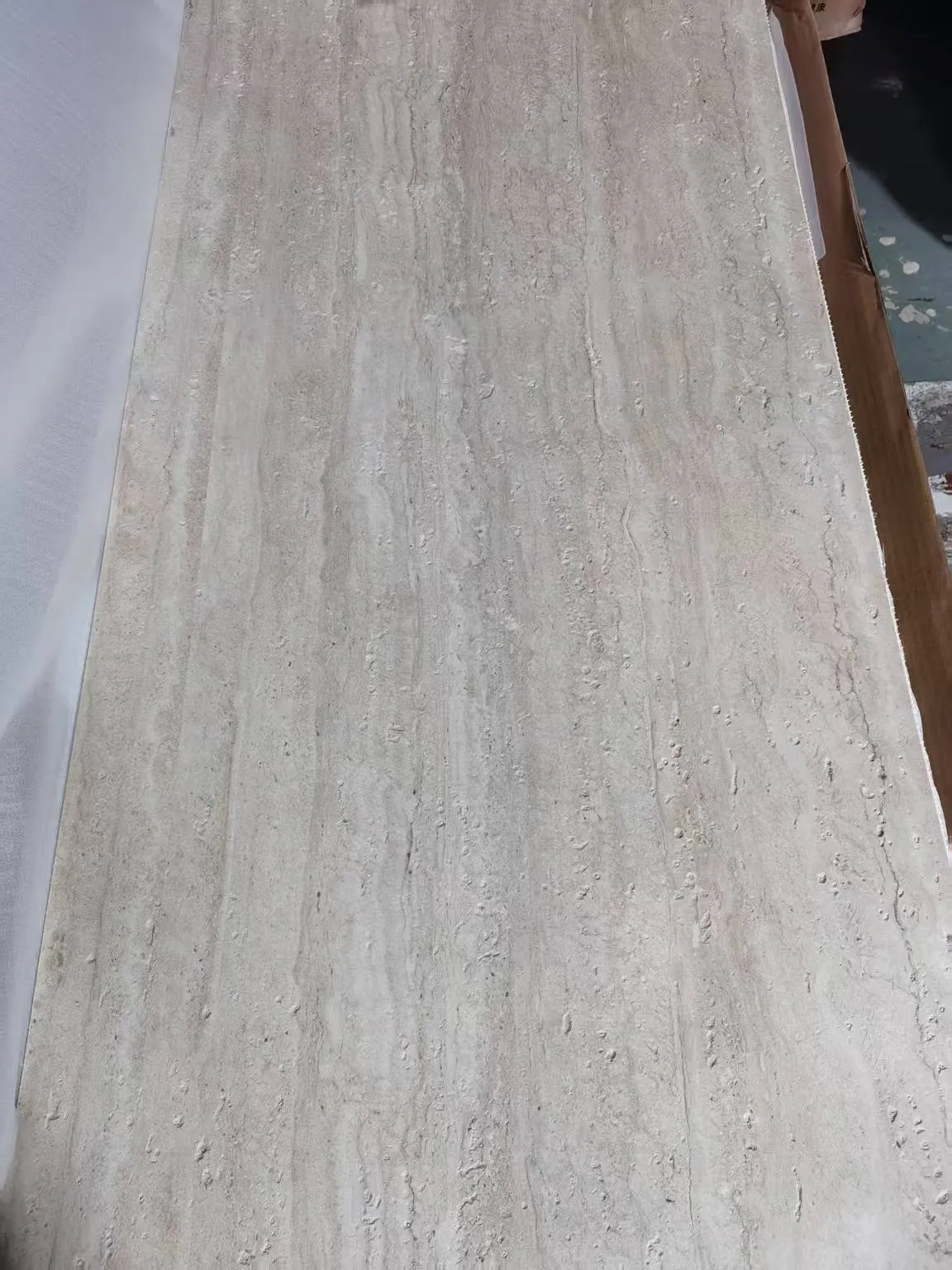
How is the installation planned for later removal?
Every step that makes removal easy is decided at installation. Set out the panel grid so the field breaks into manageable panels rather than one continuous sheet — joints every 1200 × 600 module are natural, and they are where removal begins. Keep the adhesive coverage to the system standard, no extra bedding that turns a panel into a monolith. Avoid bonding across the joints of the underlying lining boards, so a panel never bridges two boards. Fit sockets, switches and signage on plates that cover their openings, so the accessory removal does not destroy the cut edge — the plate logic from our socket finishing guide does double duty here.
And label the wall. A drawing of the panel grid, kept with the maintenance file, tells whoever removes it in three years exactly where the joints are and how the field was built. The cost is a sheet of paper; the saving is an afternoon of exploratory demolition.
How is the wall actually removed at lease end?
The removal sequence rewards the planning above. Accessory plates come off first, exposing the panel openings. Starting at a joint — a corner panel, or one lifted at a marked joint — each panel is eased from the substrate with the hand tools the system documents, working the bond line rather than prying against the face. On a lining-wall installation, the panels and the frame come out together in sections; on a direct-bond installation, panels come off and the wall goes to its make-good contractor. The thin sheet’s own weight, a fifth or less of slab, is what makes the whole operation a hand-tools job rather than a scaffolding-and-chipping job.
What cannot be promised is that every panel survives removal as a reusable sheet — some will, some will crack at the bond line, and a pop-up programme that plans on reusing panels should bond them to carriers designed for the purpose, the panel-system route above. The honest framing for the client: the wall removes cleanly, the building is made good, and the concept’s look travels through photography and spare panels rather than through moving a wall.
What does this mean for pop-ups and short leases?
Short leases change the economics, not the physics. A six-month pop-up that needs a premium stone look has two honest routes: the direct bond, with make-good priced into the project, or the carrier-panel system if the brand expects to repeat the concept. What does not change is the visual standard — a pop-up wall is photographed, shared and judged exactly like a permanent one, which is precisely why the bonded finish earns its place over printed backdrops. The same design arguments our pattern selection guide covers apply at any lease length; only the substrate strategy and the make-good plan scale with time.
How does the fire and compliance question land in a leased shell?
Leased retail shells come with their own compliance frame — the landlord’s base-build fire strategy, the centre’s fit-out rules, the local authority’s sign-off on any material change. A thin mineral face tested to ASTM E84 Class A and EN 13501-1 Class A2 presents documentation the review can accept, but the wall assembly is what the fire officer assesses, and on a lining-wall strategy the fire detail of the cavity is the specifier’s job, not the supplier’s. The evidence package — classification certificates, the adhesive system’s data, the assembly detail — travels with the fit-out submission, per the documentation logic in our 제출 문서 가이드.
리스 특유의 함정 두 가지를 지적하지 않을 수 없습니다. 첫째, 탈부착 패널 시스템은inspecton 간격 사이 조립 방식을 바꿉니다 — 설치 상태로 인증받은 설계는 운송체와 프레임 로직이 화재 경로를 바꿀 경우 재인증이 필요하므로, 이동용 버전은 별도의 평가를 받습니다. 둘째, 중개업자와 건주Often 임대단위의 “경질” 마감 비율을 상한선으로 정합니다. 영구적으로 보이면서도 인도 때 깔끔하게 제거되는 석재 필드는 바로 그 한도선이 노리는 타협점이며, method statement는 이를 입증하는 수단입니다.
되돌릴 수 있는 프로젝트의 실제 비용은 얼마인가?
정직한 원가 계산에는 세 가지 항목이 있습니다. 라이닝월 전략은 직접 본딩 대비 프레임과 보드 두께를 추가하고, 캐리어 패널 시스템은 양쪽에 캐리어와 하드웨어를 추가합니다. 또 모든 전략에는 Lease 종료 시 복구 비용이 따르는데, 라이닝월은 나사 구멍으로 줄이는 반면 직접 본딩은 다시 plastering을 유지합니다. 어떤 전략에도 일회용처럼 보이는 마감을 더하지 않습니다 — 그게 바로 모든 상업적 지점입니다. 임대 공간은 영구적인 곳의 시각적 기준으로 팔리지만 탈부착 가능한 곳의 유연성으로 빠져나가기 때문입니다. 가치공학 논의가 있다면 프레임과 두께를 공략해야지, 본딩 방법은Never targets해서는 안 됩니다. 약화된 본딩은 복원이 가능한 벽이 아니라 기한이 정해진 과실입니다.
자주 묻는 질문
벽을拆除해도 건주의 plaster에 손상 없이 제거할 수 있는가?
라이닝월 전략만 가능합니다. 이 방식은 접착제를 원래 벽면에 전혀 닿지 않게 합니다. 직접 본딩은 패널 부근에서 깔끔히 제거되지만 plaster 표면은 복구가 필요합니다. 방법选择不是靠希望的 but make-good 조항에 맞서 선택하세요.
설치된 벽은 실제로 외장재처럼 영구적으로 보이는가?
네 — 영구 설치에서 쓰는 것과 동일한 본딩 마감입니다. 복원 가능성은 look나 fire performance, bond performance를 compromising하지 않는 다른 weaken된 설치가 아닌, substrate architecture와 패널 격자에 있습니다.
Lease 종료 시 복구 비용은 누가 부담하는가?
리스 약관에 따라 달라집니다. 따라서 복구 정의는 시공 시작 전 협상해야 합니다. 라이닝월은通常是争议를 제거하고, 직접 본딩은通常是 fit-out 예산 upfront에 이를 포함시킵니다.
패널을 다음 venues에서도 reusage할 수 있는가?
Some survive removal, but reuse should not be the plan unless the panels were bonded to carriers designed for it — the panel-system route. Planning a pop-up on reusing directly-bonded sheets is planning on luck.
Agree the make-good terms first, build the reversibility into the substrate, and let the wall trade its good looks for a clean exit. The material’s formats and handling data are on the flexible stone veneer page, and make-good and dilapidations practice for commercial leases is documented by bodies such as the Royal Institution of Chartered Surveyors.