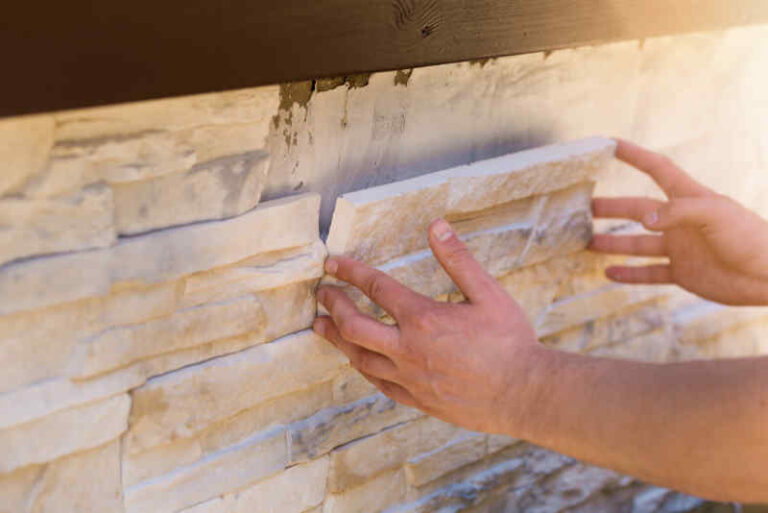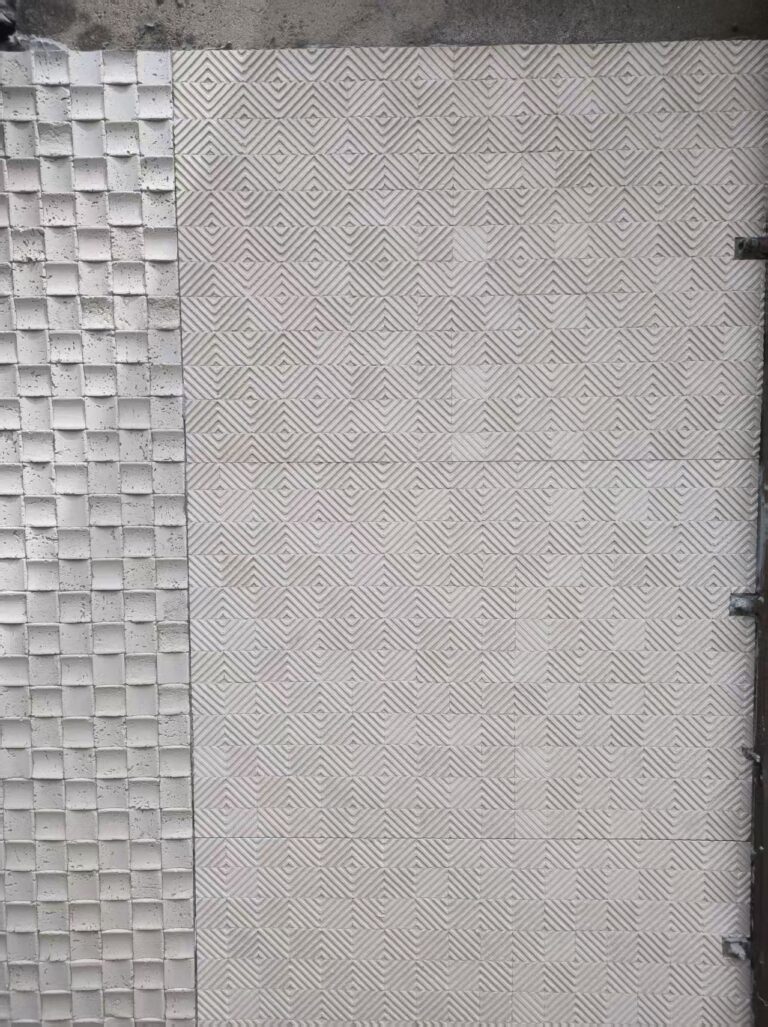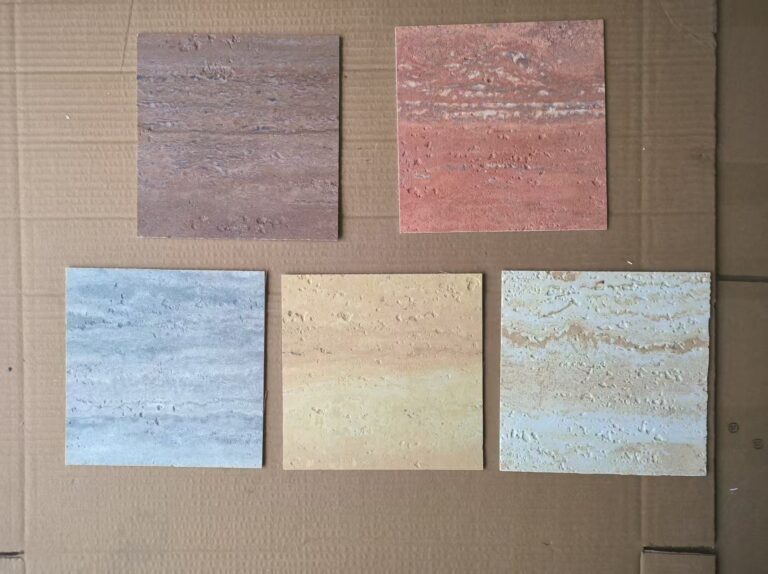
Die meisten Ratgeber zur Verpackung von Stein beschreiben 20–30 mm dicke Platten, die im A-Rahmen senkrecht stehen. Flexibler Steinverblendar ist dieses Produkt nicht. Es handelt sich um 2–8 mm dicke Paneele, die 1,5–6 kg/m² wiegen und im Format 1200×600 mm bis hin zu 1200×2900 mm geliefert werden. Die Beschädigungen, die eine Sendung ruinieren, sind daher andere: abgebrochene Ecken, abgeriebene Flächen und Risse durch Biegung bei nicht unterstützten Überständen, statt gebrochener Platten. Bevor Sie die Fracht buchen, spezifizieren Sie fünf Dinge — einen vollständig unterstützten Pack, Trennpapier zwischen den Bögen, starren Eck- und Kantenschutz, eine Feuchtigkeitsbarriere, die keine Kondensation einschließt, sowie datierte Fotos vor Schließung der Kiste. Legen Sie die Spezifikation dann der Bestellung bei. Dieser Leitfaden enthält die Checkliste und die formelle Formulierung.
Warum gelten die Verpackungsratschläge für Steinplatten nicht für flexiblen Steinverblendar?
Die Verpackung von Steinplatten basiert auf Masse und Steifigkeit. Ein Bündel aus 20–30 mm Steinplatten kann mehrere Tonnen wiegen, daher stellt die Branche es senkrecht in einen A-Rahmen oder Stahlgestell und verstrebt das Bündel, damit es nicht umkippt oder unter seinem eigenen Gewicht durchhängt. Das ist eine solide Lösung für eine schwere, spröde Platte.
Flexibler Steinverblendar birgt die gegenteiligen Risiken. Ein 1200×2900 mm Paneel hat eine große Fläche, ist aber nur 2–8 mm dick und wiegt lediglich 1,5–6 kg/m². Es benötigt kein Gestell, um ein Brechen unter seiner eigenen Masse zu verhindern. Es benötigt eine flache, lückenlose Auflage, damit es nicht über eine Öffnung durchhängt, und seine dünnen Kanten müssen vor Punktlasten geschützt werden. A-Rahmen verbrauchen zudem Container-volumen, das mit palettisierten Packungen effizienter genutzt werden kann.
Die Übertragung von Plattenmethoden auf dieses Material führt in der Regel zu einem von zwei Fehlern. Entweder die Packung ist überdimensioniert — schwere Holzgestelle, unnötige vertikale Rahmen, höhere Frachtkosten — oder sie ist an den Kanten unzureichend geschützt, weil die Mannschaft die Paneele als “leicht” einstufte und den Eckschutz übersprang. Der zweite Fehler ist der, der als Reklamation eintrifft. Der Gewichtsbonus verändert zudem die Frachtrechnung; unsere Anleitung zu warum Importeure auf flexiblem Stein umstellen behandelt die Container-basierte Kalkulation.
Der erste Schritt besteht darin, zu bestätigen, was Sie tatsächlich versenden. Dicke und Gewicht variieren je nach Muster: Paneele im Travertin-Look können am dünneren Ende etwa 2,5–3 mm betragen, während schwerere Muster bis zu 8 mm erreichen. Fordern Sie das deklarierte Band für Ihr spezifisches SKU an und notieren Sie es in der Bestellung. Der flexible Steinverblendar-Produktbereich listet die Formate und Mustertypen auf, doch die Verpackungsspezifikation sollte immer bestellweise bestätigt werden.
Was beschädigt eine flexible Verblendar-Sendung tatsächlich?
Sechs Fehlerarten verursachen den Großteil der Containerbeschädigungen bei diesem Produkt:
- Abgebrochene Ecken. Der Rand eines 2–8 mm-Blechs ist dünn. Ein fallender Palettenkasten, ein vorspringender Befestiger oder ein Gurt, der direkt auf die Ecke drückt, kann es auskeilen, bevor die Fläche sichtbare Schäden zeigt.
- Oberflächenabrieb. Bleche, die während der Seetransport-Bewegung aneinander reiben, verschleißen die bedruckte Fläche und drücken die Reliefstruktur flach. Der Schaden ist oft oben im Stapel unsichtbar und auf den unteren Blechen offensichtlich.
- Flexurrissbildung. Ein Blech, das eine nicht unterstützte Öffnung überspannt oder durch übermäßig festes Spanngurt komprimiert wird, kann entlang der Biegelinie reißen. Das Paneel mag intakt aussehen, bis es an einer ebenen Wand montiert wird und der Riss sich öffnet.
- Feuchtigkeit und Kondensation. Die Seetransportreise in die USA dauert 15–35 Tage, nach Europa 25–45 Tage. Eine wasserdichte Abdeckung, die Kondensation einschließt, kann die Bleche wochenlang nass halten — ein separates Problem gegenüber eindringendem Regenwasser.
- Druckbeschädigungen. Schwere Waren, die auf einem leichten Paket gestapelt werden, verformen die unteren Bleche. Flexibles Veneer ist leicht, daher liegt die Versuchung nahe, das Paket als Ablagefläche zu nutzen.
- Verlorene Rückverfolgbarkeit. Wenn die Chargennummer nur auf der Rechnung und nicht auf der Palette vermerkt ist, lässt sich ein defektes Blech nicht der Produktionscharge zuordnen, die es hergestellt hat.
Jede dieser Entscheidungen ist eine Verpackungs- und keine Montageentscheidung. Sobald der Container beladen ist, bleibt als einzige Kontrolle nur noch die fotografische Dokumentation. Für den umfassenden Kostenüberblick Kosten- & Logistik-Ratgeber decken Fracht, Zölle und gestellte Kosten ab.
Was sollte in der Verpackungsspezifikation stehen?
Fügen Sie die Spezifikation als kurzen Anhang an die Bestellung an. Vage Formulierungen wie “Export-Standardverpackung” oder “stabiler Holzkasten” sind keine Spezifikation, sondern nur eine Absichtserklärung. Die untenstehende Tabelle enthält Formulierungen, die Sie anpassen können.
| Spezifikationsposition | Was ist einzutragen |
|---|---|
| Verpackungsformat | Flache, vollständig abgestützte Pakete auf Export-Paletten aus Holz oder in Holzkästen. Keine Tafel darf über die Grundfläche hinausragen. Max. Packhöhe und Bruttogewicht angeben. |
| Trennlagen | Jede Tafel ist durch Schaumstoff, Filz oder sauberes Papier zu trennen. Kein Gesicht-zu-Gesicht-Kontakt und kein direkter Kontakt zwischen der bedruckten Oberfläche und einer bloßen Palette. |
| Kantenschutz | Starre Kantenschutzprofile an allen vier Ecken des Pakets, die über die Tafelkante hinausragen. Alleinige Folienumschließung ist kein Kantenschutz. |
| Kantschutzleisten | Kantschutzleisten unter jedem Band. Kein Band darf direkt auf der Steinoberfläche oder auf einer ungeschützten Kante aufliegen. |
| Feuchtigkeitskontrolle | Wasserdichte Außenabdeckung mit Belüftung zur Vermeidung von Kondensation; Tafeln vor dem Verpacken trocken und in Umgebungstemperatur. |
| Kennzeichnung | Chargen- oder Losnummer auf jeder Palette oder jedem Kasten, Versandbezeichnungen, die mit Rechnung und Packliste übereinstimmen, sowie Handhabungsaufschriften wie GEFÄHRLICH und TROCKEN HALTEN. |
| Fotodokumentation | Eine datierte Fotoserie mit dem geöffneten Paket, der Trennungslage, dem Kantenschutz, der geschlossenen Palette und der Containerbeladung. |
| Unterlagen | Packliste mit Stückzahlen, Abmessungen, Netto- und Bruttogewicht; CONA sowie Referenz zum Erstteil aus derselben Charge. |
Das Anhang muss auch ausweisen, wer für welchen Posten verantwortlich ist und was geschieht, wenn die Fotos nicht mit der Spezifikation übereinstimmen. Eine Packvorschrift ohne Konsequenz ist lediglich ein Vorschlag.
How should sheets be supported and separated inside the pack?
Support is the first principle. The sheet must sit on a continuous, flat surface for its full area. A pallet with a gap in the middle, or a crate whose base is narrower than the sheet, creates a span that the panel can flex into during handling. Overhang is worse: a sheet that extends past the pallet edge has an unsupported corner that will take the first impact.
Separation is the second. Each sheet needs an interlayer that prevents face-to-face contact — foam, felt, or clean paper. The interlayer also distributes pressure so that a strap or a neighbouring pack does not create a point load. Do not accept a pack where the sheets are simply stacked and shrink-wrapped; the wrap holds the bundle together but does nothing to stop the faces from rubbing.
Third, ask for the packed weight and the maximum stack height. These two numbers determine how the pack can be handled and whether it can be double-stacked in the container. Do not let the forwarder or the loading crew decide this on the day. If the supplier cannot state the packed weight and dimensions, the freight booking is based on a guess.
Finally, keep the base dry. A wooden pallet that has absorbed water before loading puts moisture directly against the bottom sheets for the length of the voyage. If the pack is crated, confirm that the crate itself is dry and that the sheets are not in contact with untreated timber.
What corner and edge protection actually works on 2–8 mm panels?
Corner protection has to be rigid and it has to extend past the edge it is protecting. A foam wrap or a layer of bubble film cushions a blow, but it does not stop a thin edge from being crushed against a crate wall. The protectors should wrap the corner in three dimensions and sit proud of the sheet, so the first contact is with the protector rather than the stone.

The bottom corners carry the most load. When a pack is set down, the weight of the whole bundle passes through the lower corners. Inspect those first in the photo record, and ask for a close-up rather than a wide shot of the closed crate.
Edge boards belong under every strap. A strap tightened directly against a 2–8 mm panel concentrates force on a narrow line and can crack the sheet even when the pack never moves. The board spreads the load and gives the strap a flat bearing surface. If the supplier uses metal banding, the edge board is not optional.
One practical test at the factory: ask the packer to lift one corner of the finished pack a few centimetres and photograph the corner at the point of contact. If the protector stays in place and the sheet does not flex visibly, the corner is supported. If the protector slips or the sheet bends, the pack is not ready to close.
How do you verify the packing before the container is closed?
Ask for a dated photo set at each stage, taken with the batch label visible. A useful sequence is:
- The empty pallet or crate, showing the base and any moisture barrier.
- The first sheets loaded, with corner protectors in place and the interlayer visible.
- A close-up of a corner and an edge, showing the protector extending past the sheet.
- The straps in place, with edge boards under every strap.
- The fully loaded pack, showing the top sheet protected and no overhang.
- The closed crate or wrapped pallet, with shipping marks and batch number readable.
- The container during loading, showing bracing and no unsupported gaps.
- A close-up of the batch label and the packing list header for the same pallet.
Review the photos before the container sails, not after it arrives. If a corner looks exposed or a strap sits directly on the stone, it is cheaper to repack at the factory than to file a claim at destination. Record any pre-existing damage on the bill of lading at pickup; a clean receipt makes later claims much harder.
What should the purchase order and claim terms say?
The packaging annex belongs in the purchase order, not in a separate email. It should state the pack format, the interleaving, the corner and edge protection, the moisture control, the marking, and the photo record. It should also state that the photo set is a shipping document, so the balance and the sailing date are tied to evidence rather than assurances.
Insurance is the buyer’s decision under FOB terms. Our standard term is FOB Shanghai; under FOB, risk passes when the goods are on board, so marine cargo insurance is arranged by the buyer. If your contract uses a different Incoterm, confirm in writing where risk transfers and who insures the cargo. Do not assume the supplier’s cover extends to your warehouse.
If your market regulates wood packaging, ask for the ISPM 15 mark on crates and pallets. The International Plant Protection Convention publishes the ISPM 15 standard; treated wood packaging carries a stamp that customs may inspect. This is a question to settle before the crates are built, not at the port.
For claims, photograph the damaged sheet in place, keep the packaging and the pallet label, and note the exception on the delivery receipt before signing. Then notify the carrier in writing within the period your contract or insurance requires. A claim that arrives without the batch number and the packing photos is hard to connect to a production run.
At JMS Decor, export orders ship on wooden pallets or in wooden crates with shipping marks, a traceable batch number, and protective film. That is the baseline; the annex above is how you make it specific to your project and your market.
FAQ
Should flexible stone veneer be shipped flat or upright?
Full support matters more than the angle. A flat pack on a continuous base is the simplest way to prevent sagging, but a well-designed upright pack with a fully supported face can also work. Ask for the pack drawing and confirm that no sheet spans an unsupported gap.
How many square metres fit on one pallet?
It depends on thickness, pattern, and pack design. Ask for the packed dimensions, piece count, and gross weight rather than a rule of thumb. Those three numbers are what the forwarder and the container planner actually need.
Does thickness change the packaging requirement?
Yes. Thinner sheets, such as travertine around 2.5–3 mm, are more sensitive to edge damage and point loads. Thicker sheets up to 8 mm add weight, which changes the pallet rating and the stack limit. Specify the band for the pattern you ordered.
Who pays if the container arrives with cracked corners?
It depends on the Incoterm, the insurance, and the evidence. Under FOB Shanghai, risk passes when the goods are on board, so the buyer’s marine cargo insurance is the usual route. Record the damage on the delivery receipt and keep the packaging for inspection.
Can I use my own packaging specification?
Yes. Attach it to the purchase order as an annex and ask the supplier to confirm each line in writing. A custom spec is more useful than a generic “export standard” clause because it gives both sides something specific to inspect.