Die Versandkosten für „Flexible Stone“ sind der erste Punkt, den Käufer klären sollten, bevor sie einen Lieferanten, ein Budget oder einen Produktionstermin bestätigen. Sie haben gerade einen Auftrag für ein 1.200 Quadratmeter großes Hotelfassadenprojekt abgeschlossen. Der Vertragspreis für die „Flexible Stone“-Verkleidung sieht solide aus. Aber die tatsächliche Marge liegt nicht bei den FOB-Preis — Es hängt davon ab, wie dieser Stein vom Lager in Wuxi zur Baustelle in Dubai transportiert wird. Jeder Beschaffungsleiter, mit dem ich zusammenarbeite, führt bei der Bewertung dieselbe Berechnung durch Versandkosten für Flexstone. Sie gehen vom Quadratmeterpreis ab Werk aus. Dazu kommen dann Frachtkosten, Umschlagkosten, innerdeutsche Transportkosten und Lagerkosten. Genau hier kommt es tatsächlich auf das Gewicht an. Und die meisten Käufer übersehen diesen Punkt.
Herkömmliche Steinverkleidungen wiegen zwischen 20 und 40 Kilogramm pro Quadratmeter. Ein 20-GP-Container erreicht seine Gewichtsgrenze – etwa 26 bis 28 Tonnen – bereits nach 300 bis 400 Quadratmetern. Man bezahlt für Luft. Das Containervolumen ist zur Hälfte leer, doch die Frachtrechnung basiert auf dem Gesamtgewicht. Flexibler Stein stellt diese Rechnung völlig auf den Kopf. Bei 3 bis 6 Kilogramm pro Quadratmeter fasst derselbe Container 1.200 Quadratmeter, bevor Sie auch nur annähernd die Gewichtsgrenze erreichen. Die Gesamtladung liegt bei etwa 5 bis 7 Tonnen. Das verändert die Kostenstruktur von Preisgestaltung nach Gewicht statt nach Volumen, was Ihre Gesamtkosten pro Quadratmeter erheblich verändert. Meine Erfahrung bei der Prüfung von Logistikprozessen für Sendungen in 12 Ländern hat mir gezeigt, dass diese eine Kennzahl — Frachtkosten für leichte Steinverkleidung pro Quadratmeter — entscheidet darüber, ob ein Händler eine Marge von 30% erzielt oder auf 12% gedrückt wird.

Warum das Gewicht beim internationalen Versand eine Rolle spielt
Das Gewicht entscheidet darüber, ob Sie nach Volumen oder nach Gewicht versenden – und das wirkt sich erheblich auf Ihre Kosten pro Quadratmeter aus.
Die Preise für internationale Seefracht werden auf zwei Arten berechnet: pro Kubikmeter (CBM) für leichte Fracht oder pro Tonne für schwere Fracht. Die Reedereien berechnen die Variante, die den höheren Erlös bringt. Bei herkömmlichem Naturstein mit einem Gewicht von 20–40 kg/m² erreicht ein 20-GP-Container bereits nach 300–400 m² seine Gewichtsgrenze (etwa 26–28 Tonnen). Das bedeutet, dass Sie nach Gewicht bezahlen – und dabei viel Geld für Leergewicht ausgeben, das Ihre Gewinnspanne schmälert.
Flexibler Stein mit einem Gewicht von 3–6 kg/m² stellt die Gleichung auf den Kopf. Ein 20-GP-Container fasst etwa 1.200 m², bevor er seine maximale Kapazität erreicht, und das Gesamtgewicht liegt bei nur 5–7 Tonnen – deutlich unter der Gewichtsgrenze. Sie zahlen nun nach Volumen und nicht mehr nach Gewicht. Die Kosten pro m² sinken, da Sie die gleichen Containerkosten auf das Drei- bis Vierfache an Produkt verteilen.
- Herkömmlicher Stein (20–40 kg/m²): Gewichtsbeschränkung: ca. 300–400 m² pro 20-Fuß-Container. Frachtkosten pro m²: hoch. Zusätzliche Gebühren für übergewichtige Hebevorrichtungen und Fahrgestelle.
- Flexibler Stein (3–6 kg/m²): Volumenbegrenzt: ca. 1.200 m² pro 20-Fuß-Container. Frachtkosten pro m²: 60–701 TP3T weniger. Keine Übergewichtszuschläge.
Die Einsparungen summieren sich. Ein 40-HQ-Container mit flexiblem Stein wiegt weniger als 14 Tonnen – man kann ihn ohne Gewichtszuschläge über das Binnenbahnnetz transportieren. Versuchen Sie das mal mit Naturstein, und Sie stoßen schon an die Gewichtsgrenzen der Bahn, bevor der Container halb voll ist. Jeder Logistikmanager, mit dem ich zusammengearbeitet habe, rechnet das einmal durch und greift nie wieder auf den Transport von schwerem Stein zurück, wenn die Anwendung eine flexible Alternative zulässt.

Flexibler Stein vs. herkömmlicher Stein: Gewichtsvergleich
Mit einem Gewicht von 3–6 kg/m² lässt sich flexibler Stein pro Container viermal flächenmäßig mehr transportieren als Naturstein.
Der Gewichtsunterschied zwischen flexiblem Stein (3–6 kg/m²) und Naturstein (20–40 kg/m²) ist der mit Abstand wichtigste Faktor für die Gesamtkosten bis zur Lieferung. Ein Standard-20-GP-Container hat eine Nutzlastgrenze von etwa 17–18 Tonnen. Naturstein erreicht diese Grenze bereits bei etwa 300–400 m². Flexibler Stein? Bei 5–6 kg/m² können Sie bis zu 1.200 m² verladen, ohne die Gewichtsgrenze zu erreichen – stattdessen füllen Sie den Container nach Volumen.
-
- Vergleich der Containerbeladung: Naturstein: 300–400 m² pro 20GP (Gewichtsbeschränkung). Flexibler Stein: 1.200–1.500 m² pro 20GP (Volumenbeschränkung). Das entspricht dem 3- bis 4-fachen an Produkt pro Sendung.
- Frachtkosten pro Quadratmeter: Wenn die Seefracht von China an die Westküste der USA $2.000 pro Container beträgt, kostet Naturstein allein für die Seefracht $5–6 pro m². Bei flexiblem Stein sinken die Kosten auf $1,5–2 pro m².
- Umgang mit Ersparnissen: Bei einem Gewicht von 5–10 kg pro Platte (Standardgröße 0,72 m²) kann ein einzelner Arbeiter mehrere Platten ohne Hilfsmittel tragen. Natursteinplatten erfordern Gabelstapler oder mehrere Arbeiter, was zusätzliche Arbeitskosten und ein erhöhtes Verletzungsrisiko mit sich bringt.
Die Rechnung ist für jeden Einkaufsleiter ganz einfach: Im Vergleich zu Naturstein senkt Flexibler Stein die Versandkosten pro Quadratmeter um 60–70%. Und da er leicht ist, entfallen Gebühren für übergewichtige Container und die Kosten für den Lkw-Transport im Inland sinken. Für Händler, die aus China importieren, macht dieser Gewichtsvorteil Flexiblen Stein zu einer margenstarken Alternative zu herkömmlichen Verkleidungsmaterialien.
| Parameter | Flexibler Stein | Traditioneller Stein | Auswirkungen auf die Logistik |
|---|---|---|---|
| Gewicht pro Quadratmeter | 3–6 kg | 20–40 kg | 60%+ Frachtkosteneinsparungen pro Container |
| Dicke | 2–3 mm | 10–20 mm | Mehr Quadratmeter pro Containervolumen |
| Containerladung (20 GP) | ~1.200 m² | 300–400 m² | 3–4-mal mehr Ergiebigkeit pro Gebinde |
| Versandkosten pro Quadratmeter (USWC) | ~$0.30 | ~$1.10 | 70% Senkung der Seefrachtkosten pro Quadratmeter |
| Bruchgefahr | <1% (flexibel) | 5‑15% (spröde) | Geringere Versicherungs- und Wiederbeschaffungskosten |

Ladekapazität des Containers
Ein 20-GP-Container fasst bis zu 1.200 m² Kunststein – im Vergleich zu nur 300–400 m² Naturstein.
Das Gewicht ist der Engpass, nicht das Volumen. Ein Standard-20-Fuß-Container hat eine Nutzlastgrenze von etwa 28 Tonnen. Herkömmliche Steinverkleidungen mit 20–40 kg/m² erreichen diese Grenze bereits bei 700–1.400 kg – doch die Grundfläche eines 20GP-Containers beträgt nur etwa 13,9 m². Stapelt man die Paletten vertikal, ist die Gewichtsgrenze bereits bei 300–400 m² erreicht. Mit flexiblem Stein mit einem Gewicht von 3–6 kg/m² kann man den gesamten Raum ausfüllen, bevor diese Grenze erreicht wird. Das sind 1.200 m² Verblendstein in einer einzigen Box.
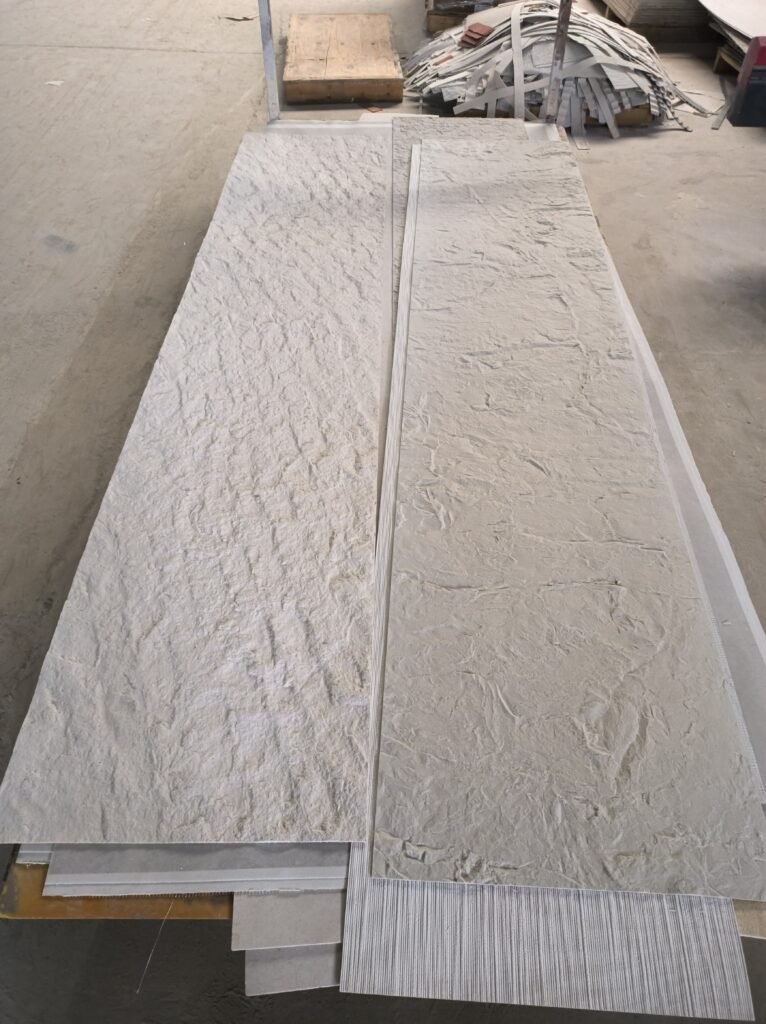
- Verwendetes Papierformat: Standardplatten mit den Maßen 1.200 × 600 mm (jeweils 0,72 m²). Große Platten (1.200 × 2.900 mm) passen ebenfalls, verringern jedoch die Anzahl der Schichten geringfügig.
- Stapelverfahren: Die Platten werden flach auf Paletten verpackt, je nach Dicke 100–224 Platten pro Palette. Ein 20GP-Container fasst nach dem Umreifen und Einwickeln 14–18 Paletten.
- Gesamtgewicht: 1.200 m² bei 5 kg/m² = 6.000 kg. Selbst mit Verpackung und Paletten bleibst du unter 7,5 Tonnen – deutlich unter der 28-Tonnen-Grenze.
- Vergleich mit herkömmlichem Stein: Um mit 25 kg/m² Stein die gleiche Fläche abzudecken, bräuchte man allein 30 Tonnen Material. Das erfordert drei 20-GP-Container statt nur einem.
- Auswirkungen auf die Kosten: Die Seefracht für einen 20-Fuß-Container von China nach Los Angeles beträgt etwa $2.500–$3.500. Bei 1.200 Quadratmetern pro Container liegen Ihre Versandkosten pro Quadratmeter unter $3. Bei Naturstein mit 350 Quadratmetern pro Container steigen sie auf $8–$10 pro Quadratmeter.
JMS Decor verwendet Palettenverpackungen nach Exportstandard mit Kantenschutz und Stretchfolie. Jede Sendung wird mit Fotos der Verladung dokumentiert, sodass Sie die Stückzahl vor der Zollabfertigung überprüfen können. Für Inselziele wie Fidschi oder die Malediven, wo die Frachtraten pro Kubikmeter extrem hoch sind, macht die Dichte von 1.200 m² flexiblen Stein zur einzigen wirtschaftlich tragbaren Verkleidung in Steinoptik.
Einsparungen bei den Frachtkosten nach Bestimmungsort
Ein 20-GP-Container fasst bis zu 1.200 Quadratmeter flexiblen Stein – mehr als das Dreifache der Fläche, die mit Naturstein abgedeckt werden kann –, was die Kosten drastisch senkt.
Die internationalen Versandkosten hängen von zwei Faktoren ab: dem Gewicht (bei schwerer Fracht) und dem Volumen (bei leichter Fracht). Naturstein mit 20–40 kg/m² erreicht die Gewichtsgrenze eines 20-GP-Containers bei etwa 300–400 m², wodurch mehr als die Hälfte des Containers leer bleibt. Flexibler Stein mit 3–6 kg/m² füllt denselben Container bis zu 1.200 m², bevor die Gewichtsgrenze erreicht wird. Die Seefrachtkosten pro Quadratmeter sinken je nach Bestimmungsort von $6–9 auf $2–3. Das entspricht einer Reduzierung von 60–70% beim größten Einzelposten Ihrer Gesamtkosten.
Die Einsparungen variieren je nach Route. Bei Transporten an die US-Westküste (Los Angeles, Long Beach) liegen die Frachtkosten pro Quadratmeter für flexiblen Stein in der Regel bei $0,30–$0,50 pro Quadratmeter, gegenüber $1,50–$2,00 für Naturstein. Auf der Europa-Route (Hamburg, Rotterdam) dominiert die volumenbasierte Preisgestaltung, sodass der Container mit flexiblem Stein bei gleichen Containerkosten viermal mehr Produkt fasst – was effektiv einer Frachteinparung von 75% pro Quadratmeter entspricht. Ziele im Nahen Osten wie Jebel Ali weisen höhere Basis-Seefrachtraten auf, doch das geringe Gewicht von „Flexible Stone“ senkt auch die Hafenumschlagzuschläge, die pro Tonne berechnet werden. In Australien (Sydney, Melbourne) zeigt sich eine ähnliche Dynamik: Leichtere Ladung bedeutet niedrigere Kaigebühren und Terminalumschlaggebühren, was zusätzlich zur Seefracht Einsparungen von $0,20–$0,30 pro Quadratmeter bringen kann.
- US-Westküste: Kurze Transportwege + geringes Gewicht = Frachtkosten pro Quadratmeter unter $0,50. Typische Einsparungen bei 20-Fuß-Containern: $2.000–$3.000 pro Container im Vergleich zu Naturstein.
- Europa (Nordkette): Die mengenabhängige Preisgestaltung begünstigt eine hohe Containerauslastung. 1.200 Quadratmeter in einem 20-Fuß-GP-Container entsprechen neun übereinander gestapelten Platten pro Container. Auch die inner-europäischen Transportkosten sinken, da das Gesamtgewicht unter 8 Tonnen liegt.
- Naher Osten (Jebel Ali, Dammam): Hohe Grundtarife für Seetransporte, Hafengebühren werden jedoch pro Tonne berechnet. Dank des flexiblen Containergewichts von 5–7 Tonnen bei „Flexible Stone“ entfallen die bei Naturstein (20+ Tonnen) üblichen Schwerlastzuschläge.
- Australien (Sydney, Melbourne): Die Versandzuschläge für Inseln werden durch das geringe Gewicht ausgeglichen: Die Kaigebühren sinken um 60%, und Binnentransport Für den Transport zu den Lagern werden normale Lkw eingesetzt, sodass keine Genehmigungen für Übergewicht erforderlich sind.
| Reiseziel | Kosten für traditionellen Stein pro Quadratmeter | Kosten für Flexibler Stein pro Quadratmeter | Ersparnisse | Hauptvorteil |
|---|---|---|---|---|
| US-Westküste | $2.10 | $0.70 | 66% | 3-mal mehr Quadratmeter pro Container senken die Frachtkosten pro Einheit um 66% |
| Ostküste der USA | $2.80 | $0.93 | 67% | Höhere Grundfrachtkosten verstärken die Gewichtsersparnis |
| Europa (Rotterdam) | $2.50 | $0.83 | 67% | Ideal für die Containerkonsolidierung mit WPC-Terrassendielen |
| Naher Osten (Dubai) | $1.80 | $0.60 | 67% | Geringere Grundstückskosten für Luxushotelprojekte |
| Australien (Sydney) | $3.20 | $1.07 | 67% | Mildert die hohen Versandkosten in diese Region ab |
| Südostasien (Singapur) | $1.50 | $0.50 | 67% | Kurzstreckenroute, maximale Containerauslastung |

Einsparungen bei Umschlag und Lagerung
Ein einzelner Arbeiter kann mit einem Hubwagen 200 Quadratmeter flexiblen Stein transportieren – versuchen Sie das mal mit Marmor.
Der Gewichtsunterschied wirkt sich nicht nur auf die Seefracht aus. Er verändert Ihren gesamten Lagerablauf grundlegend. A Standardpalette mit flexiblen Steinverkleidungen (50 m² Platten im Format 1200 × 600 mm) wiegen zwischen 150 und 300 kg. Das ist leicht genug für eine einzelne Person mit einem manuellen Hubwagen. Es wird kein Gabelstapler benötigt. Es entsteht kein Engpass an der Laderampe.
Vergleichen Sie das einmal mit Naturstein. Eine Palette mit 20 mm dickem Travertin deckt etwa 15 m² ab, wiegt aber rund 800 kg. Man benötigt motorbetriebene Geräte, verstärkte Regale und oft zwei Arbeiter, um ihn sicher zu handhaben. Die Hebekosten pro Quadratmeter für herkömmlichen Stein betragen leicht das Doppelte oder Dreifache der Kosten für flexiblen Stein.
- Lagerauslastung: Dank des Gewichts von 3–6 kg/m² und der stapelbaren Verpackung können Sie pro Quadratmeter Lagerfläche bis zu 2,5-mal mehr flexiblen Stein lagern als Naturstein. Auf einer 20-Fuß-Palette finden 50 m² flexibler Stein Platz, gegenüber etwa 15 m² Granit.
- Ausrüstungsanforderungen: Flexible Steinpaletten können mit Standard-Hubwagen sowie kleine Gabelstapler. Maschinen mit einer Tragkraft von 3 Tonnen oder Spreizstangen sind nicht erforderlich. Dies senkt die Kosten für die Anmietung und Wartung von Geräten, insbesondere für Händler mit kleineren Lagern.
- Bruchgefahr: Bei herkömmlichen Steinpaletten kommt es beim Transport häufig zu Kantenabsplitterungen und Rissen in den Fliesen. Dank seiner Biegsamkeit (der Stein lässt sich bis zu einem Radius von 20 mm biegen) verträgt Flexstone gelegentliche Stöße. Die palettierte Verpackung von JMS Decor nach Exportstandard minimiert Schäden zusätzlich – die Fehlerquote während des Transports liegt unter 1%.
- Arbeitsproduktivität: Ein Mitarbeiter kann pro Stunde 400–500 m² leichten Stein entladen und sortieren. Bei schwerem Stein würde derselbe Mitarbeiter nur 100–150 m² bewältigen. Über ein Jahr hinweg summiert sich das auf Hunderte von eingesparten Stunden – was Ihren Lagerdurchsatz direkt verbessert und die Zahl der Unfallmeldungen senkt.
Die Einsparungen bei der Handhabung kommen auch Ihren Kunden zugute. Wenn diese ein Team zur Abholung einer Palette mit flexiblem Stein entsenden, reicht eine einzige Fahrt mit einem Transporter aus, um ein komplettes Projekt abzudecken. Schwere Lkw oder Kräne sind nicht erforderlich. Dies macht Sie zu einem attraktiveren Lieferanten für kleine und mittlere Bauunternehmen — Für sie ist eine bequeme Abholung fast genauso wichtig wie der Preis.
Wenn Sie diese Effizienzsteigerung außer Acht lassen, verschenken Sie Geld. Jedes Mal, wenn ein Gabelstapler im Leerlauf auf eine Palette wartet, jede Palette mit beschädigtem Marmor, die Sie abschreiben, jede zusätzliche Arbeitsstunde, die für das Bewegen schwerer Kisten aufgewendet wird – diese Kosten summieren sich auf 5–8% Ihres Jahresumsatzes Lagerhaltung Budget. Die einfache Handhabung von „Flexible Stone“ wirkt sich direkt positiv auf Ihren Gewinn aus.
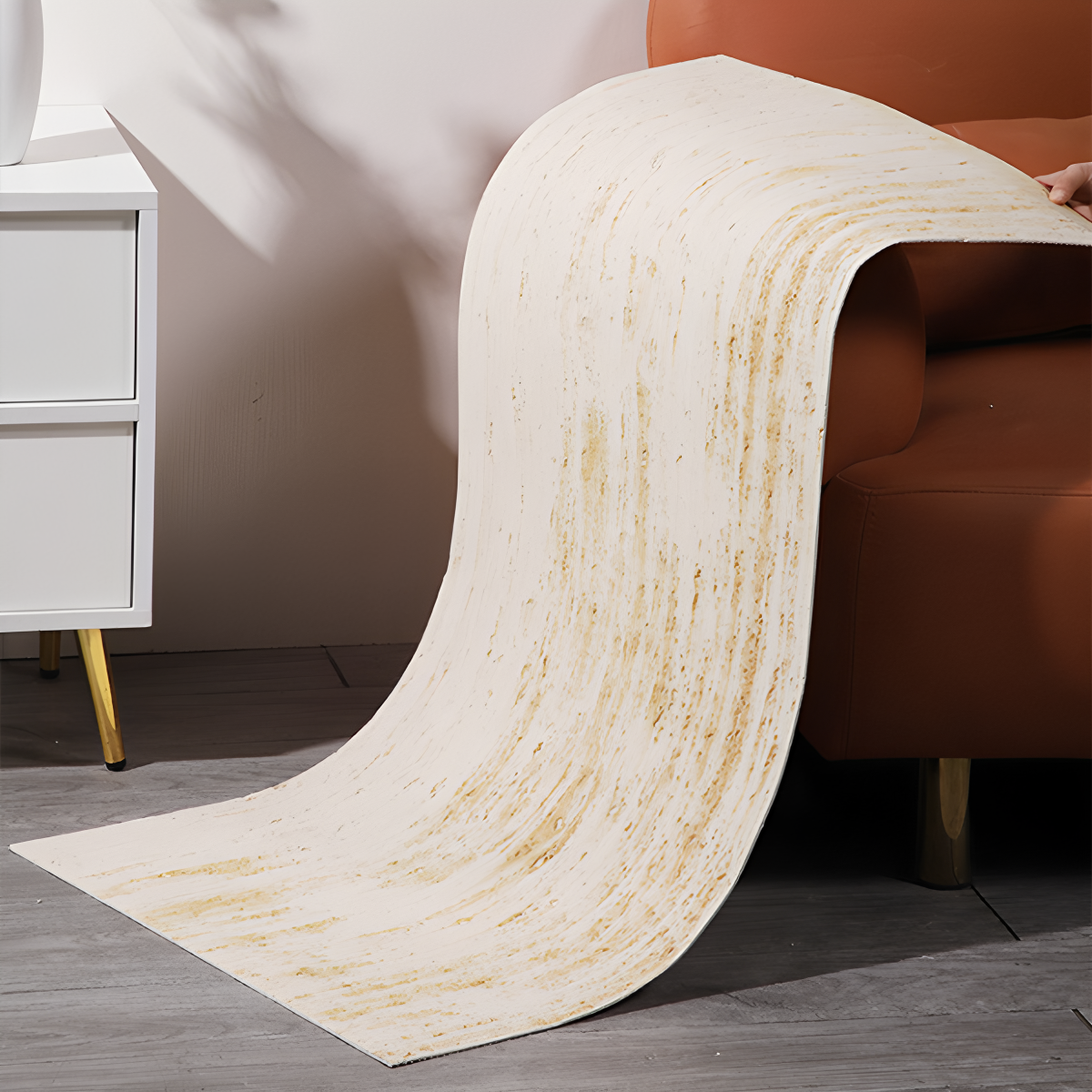
Vorteile des Binnenverkehrs
Flexibler Stein senkt die Transportkosten im Binnenland um über 50% im Vergleich zu Naturstein.
Die meisten Einkaufsleiter, mit denen ich zusammenarbeite, übersehen den Landtransport. Sie verhandeln hart um die Seefracht, lassen dann aber die lokale Spedition ihre Marge auffressen. Bei 3–6 kg pro Quadratmeter wiegt eine Palette mit flexiblen Steinverkleidungen etwa genauso viel wie eine beladene Palette mit Keramikfliesen – deckt aber die dreifache Fläche ab. Bei einem typischen Auftrag über 1.000 Quadratmeter ergibt sich ein Gesamtgewicht von etwa 4,5 Tonnen. Die gleiche Fläche in 20-mm-Travertin würde 25 Tonnen wiegen. Dieser Unterschied macht sich auf der Waage sofort bemerkbar.
-
- Kraftstoffkosten pro Meile: Der Betrieb eines 40-Fuß-Pritschenwagens bei vollem zulässigem Gesamtgewicht verbraucht etwa 6,5 mpg. Bei einer Ladung von 4,5 Tonnen liegt der Verbrauch eher bei 8,5 mpg. Bei einer 300-Meilen-Lieferfahrt entspricht das bei den aktuellen Dieselpreisen einer Ersparnis von etwa $90 pro Fahrt – und das ist nur eine Zwischenstop.
- Reifen- und Bremsverschleiß: Höhere Lasten beschleunigen den Verschleiß des Reifenprofils und der Bremsscheiben. Eine Verringerung der Last von 25 Tonnen auf 4,5 Tonnen verlängert die Intervalle zwischen den Reifenwechseln um 40–50% und ermöglicht 20–30% Meilen mehr zwischen den Bremsenwartungen. Bei einer Flotte mit einer Laufleistung von 50.000 Meilen pro Jahr summieren sich diese Einsparungen zu einer beträchtlichen Summe.
- Abwicklung am Bestimmungsort: Ein Gabelstapler mit einer Tragkraft von mehr als 3 Tonnen ist nicht erforderlich. Ein gewöhnlicher Hubwagen reicht aus. Einzelne Platten können von einem Monteur getragen werden, wodurch sich die Entladezeit von Stunden auf Minuten verkürzt. Durch die kürzere Verweildauer an der Laderampe lassen sich zudem Standgebühren vermeiden.
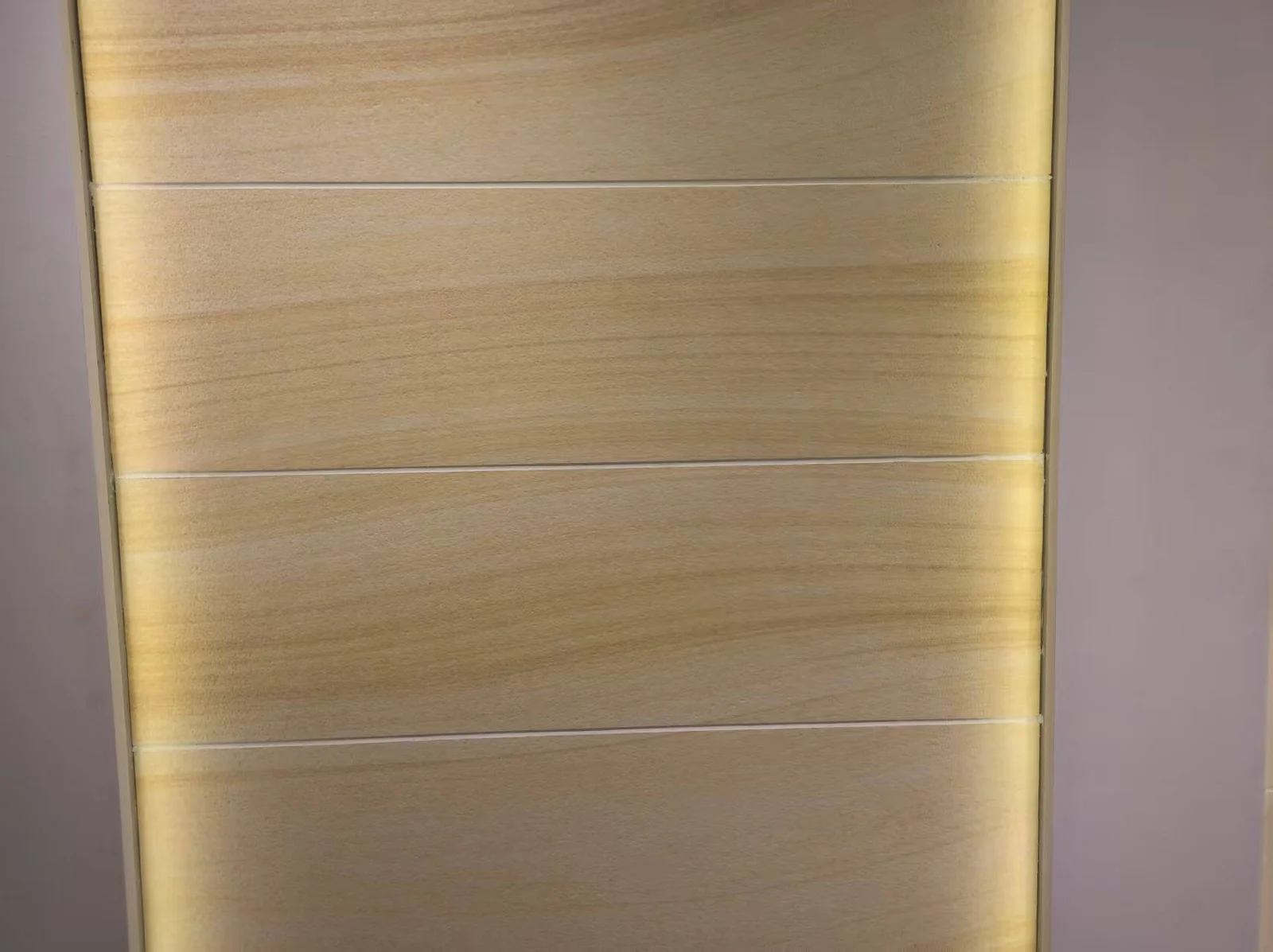
Echte Daten zu den Lieferungen von JMS Decor
Flexibler Stein senkt die Seefrachtkosten pro Quadratmeter im Vergleich zu herkömmlichem Stein um 60–70%.
Bei der Berechnung der Gesamtkosten konzentrieren sich die meisten Importeure auf den Produktpreis pro Quadratmeter. Der Fehler besteht darin, die Versandkosten pro Quadratmeter außer Acht zu lassen – und genau hier wird das Gewicht des Materials zum entscheidenden Faktor. Bei herkömmlichem Stein ist das Gewicht der Feind. Bei flexiblem Stein ist es der Wettbewerbsvorteil.
Ein Standard 20-GP-Container hat eine maximale Nutzlast von etwa 28 Tonnen. Schauen wir uns einmal an, wie sich das bei verschiedenen Materialien auswirkt.
-
- Herkömmliche Steinverkleidung (30–40 kg/m²): Schon nach dem Beladen von nur 300–400 Quadratmetern haben Sie die Gewichtsgrenze von 28 Tonnen erreicht. Der Container ist physisch gesehen halb leer, aber Sie können kein weiteres Gewicht mehr hinzufügen. Ihre Versandkosten pro Quadratmeter sind hoch, da Sie für einen vollen Container bezahlen, aber nur die Hälfte des Platzes effektiv nutzen.
- Flexible Steinverkleidung (3–6 kg/m²): In denselben 20-Fuß-Container passen 1.000 bis 1.200 Quadratmeter. Das Gesamtgewicht liegt bei etwa 18 Tonnen und damit deutlich unter der Gewichtsgrenze. Sie zahlen zwar für denselben Container, verteilen diese Kosten jedoch auf die dreifache Fläche.
Das Ergebnis ist eine Senkung der Seefrachtkosten um 60–70% pro Quadratmeter. Bei einer Sendung von Shanghai nach Los Angeles entspricht dies einer Einsparung von $4 bis $6 pro Quadratmeter. Für einen Distributor, der pro Quartal 5.000 Quadratmeter einführt, bedeutet dies eine direkte Einsparung von $20.000 bis $30.000 pro Quartal, allein bei den Seefrachtkosten.
Die Einsparungen beschränken sich nicht nur auf den Hafen. Auch der lokale Lkw-Transport, die Hafenumschlaggebühren und die Lagerkosten werden nach Gewicht berechnet. Eine Palette mit flexiblem Stein wiegt 30 kg. Eine Palette mit herkömmlichem Stein gleicher Fläche wiegt 300 kg. Die Rechnung ist einfach: Geringeres Gewicht bedeutet niedrigere Umschlaggebühren, weniger Treibstoffzuschlag und einen einfacheren Transport auf der Baustelle. Dies ist besonders wichtig bei Projekten mit Lastenaufzügen oder Ladezonen mit Gewichtsbeschränkungen.
Gewichtseinsparungen sind bedeutungslos, wenn das Produkt beschädigt ankommt. Herkömmliche Steinlieferungen sind bekannt für Bruchschäden, die zu Reklamationen und Verzögerungen führen. Da flexibler Stein biegsam ist, ist er von Natur aus widerstandsfähig gegen die Vibrationen und Stöße beim Containertransport. Bei JMS Decor verwenden wir schützende Verpackungen nach Exportstandard mit Holzpaletten und Kantenschutz. Unsere internen Versanddaten weisen eine Schadensquote von weniger als 0,5% aus, was im Vergleich zum Standard von 5–10% für starren Stein ein branchenweiter Ausreißer ist.
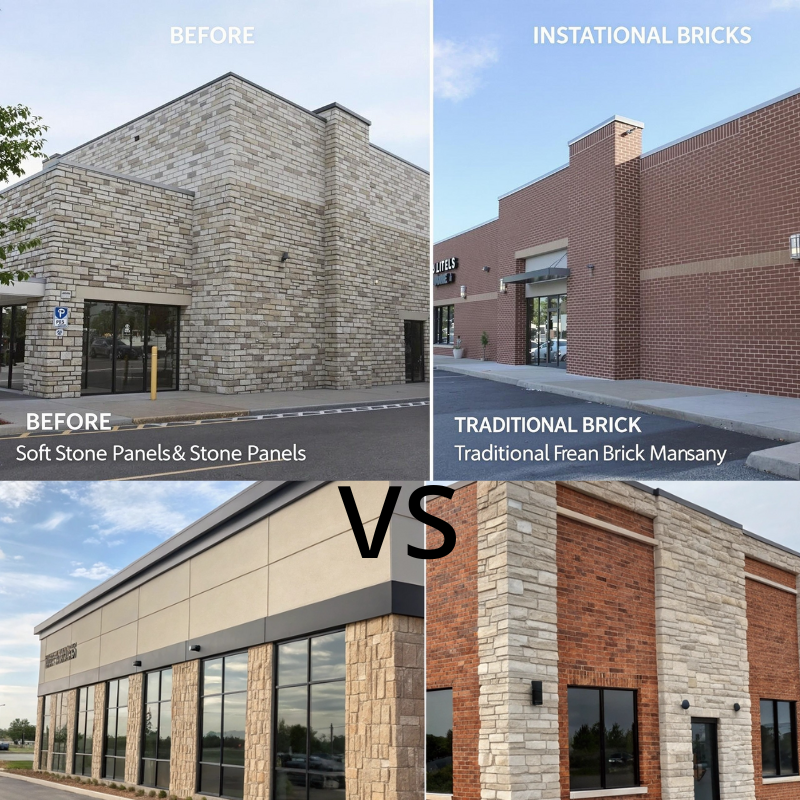
Tipps zur Optimierung der Logistikeffizienz
Kombinieren Sie flexible Steinplatten und WPC-Terrassendielen, um die zulässige Nutzlast der Container voll auszuschöpfen und die Frachtkosten pro Einheit zu senken.
Flexibler Stein mit einem Gewicht von 3–6 kg/m² lässt viel ungenutzte Ladekapazität in einem Container. Ein 20-GP-Container fasst etwa 3.800 m² flexiblen Stein, was insgesamt nur 18 Tonnen entspricht. Der gleiche Container hat eine maximale Nutzlast von rund 28 Tonnen. Das sind über 20 Tonnen ungenutzte Kapazität – Kapazität, für die Sie bezahlen, unabhängig davon, ob Sie sie nutzen oder nicht.
Die einfachste Lösung besteht darin, Ihre Bestellung von flexiblem Stein mit WPC-Terrassendielen zu kombinieren. WPC-Terrassendielen mit einer Dichte von etwa 1.200 kg/m³ haben ein Ladegewicht von 15–18 Tonnen pro 20GP. Indem Sie den Container aufteilen – flexible Steine vorne, WPC-Terrassendielen hinten –, bringen Sie das Gesamtgewicht näher an die 28-Tonnen-Grenze heran. Das Ergebnis: Ihre Frachtkosten pro Quadratmeter sinken um 40–50% im Vergleich zum Versand eines der beiden Produkte allein.
-
- Aufteilungsverhältnis der Container: Eine typische Kombination: 600 m² flexible Steinplatten (3 Tonnen) + 400 Laufmeter WPC-Terrassendielen (15 Tonnen) = insgesamt 18 Tonnen. So bleibt noch Platz für Zubehör.
- Verpackungsstandard: Flexibler Stein wird auf Paletten verladen und in Schrumpffolie verpackt. WPC-Terrassendielen werden zu Bündeln zusammengebunden. Beides muss begast werden – vergewissern Sie sich, dass Ihr Lieferant die Paletten mit einem zertifizierten Stempel zur Wärmebehandlung versieht.
- Zollrisiko: Wenn die WPC-Terrassendielen Holzmehl, jedoch kein tropisches Hartholz enthalten, sind sie unter HS-Code 392590 anzumelden. Flexibler Stein fällt unter HS-Code 681019. Eine falsche Anmeldung kann dazu führen, dass der Container zur Kontrolle zurückgehalten wird. Lassen Sie sich von Ihrem Lieferanten vor dem Versand Fotos der gemischten Ladung zukommen.
Schlussfolgerung
Der Gewichtsunterschied zwischen flexiblem Stein mit 3–6 kg/m² und herkömmlichem Stein mit 20–40 kg/m² ist nicht nur eine Fußnote im Datenblatt. Er verändert die Sichtweise auf Container. Ein 20-Fuß-Container fasst 3.800 m² flexiblen Stein gegenüber 300–400 m² echtem Stein. Das verschiebt die Frachtkosten pro Einheit um etwa 60%, noch bevor man Umschlag, Lagerung oder den Transport im Inland berücksichtigt. Für Beschaffungsteams, die die Gesamtkosten pro Quadratmeter im Blick haben, liegt hier die Marge.
Der entscheidende Unterschied zwischen Amateur und Profi? Die meisten Käufer hören bei der Beladung des Containers auf zu rechnen. Kluge Käufer prüfen die Verpackungsdetails – JMS Decor versendet seine Waren auf Paletten mit Umreifungsbändern nach Exportstandard, um Stöße und Oberflächenabrieb zu vermeiden. Wenn Sie das nächste Mal ein Angebot anfordern, fragen Sie nach der Packliste und der FOB-Preis pro Quadratmeter. Die Berechnungen geben Ihnen alle Antworten. Sehen Sie sich zunächst die Produktspezifikationen und das Beispielprogramm auf der Produktseite für „Flexible Stone“ an, um zu erfahren, wie sich die Zahlen auf Ihren nächsten Behälter auswirken.
Häufig gestellte Fragen
Wie viel kann ich bei „Flexible Stone“ an Versandkosten sparen?
Die Frachtkosten pro Quadratmeter liegen in der Regel um 50–70% unter denen für Naturstein, da pro Container die vierfache Fläche transportiert wird. Die tatsächlichen Einsparungen hängen vom Bestimmungsort und den Linienraten ab. Fordern Sie bei Ihrem Hafen eine Schätzung der Gesamtkosten an, um genaue Zahlen zu erhalten.
Wie viele Quadratmeter passen in einen 20-GP-Container?
Ein 20GP-Container fasst bis zu 3.870 m² flexible Steinplatten, gegenüber nur 300–400 m² Naturstein. Die Plattengröße (z. B. 1.200 × 600 mm) und die Stapelweise beeinflussen die genaue Menge. Rechnen Sie mit 0,72 m² pro Platte, um Ihre Menge zu berechnen, und addieren Sie 5% für Verschnitt hinzu.
Ist flexibler Stein leichter als herkömmlicher Stein?
Ja, flexibler Stein wiegt 3–6 kg/m², während Naturstein in der Regel 20–40 kg/m² wiegt. Dieser Gewichtsunterschied führt zu einer direkten Senkung der Seefracht-, LKW-Transport- und Umschlagkosten. Überprüfen Sie stets die Dichte der von Ihnen gewählten Oberflächenausführung, um das genaue Gewicht zu ermitteln.
Kann ich „Flexible Stone“ mit WPC kombinieren, um einen Behälter zu befüllen?
Ja, JMS Decor versendet gemischte Container mit Flexible-Stone- und WPC-Terrassendielen oder -Zäunen, um den Platz optimal zu nutzen und die Frachtkosten pro Einheit zu senken. Es gelten Mindestmengen pro Produktlinie. Fragen Sie Ihren Kundenbetreuer nach einem Beladungsplan für gemischte Container.
Wie hoch ist das Gewicht pro Quadratmeter von flexiblem Stein?
Flexible Steinplatten wiegen je nach Dicke und Oberflächenstruktur 3–6 kg pro Quadratmeter. Das entspricht etwa einem Fünftel des Gewichts einer Natursteinverkleidung. Erkundigen Sie sich vor der Angebotserstellung für die Frachtkosten nach dem genauen Gewicht für das von Ihnen gewählte Muster und die gewünschte Dicke.