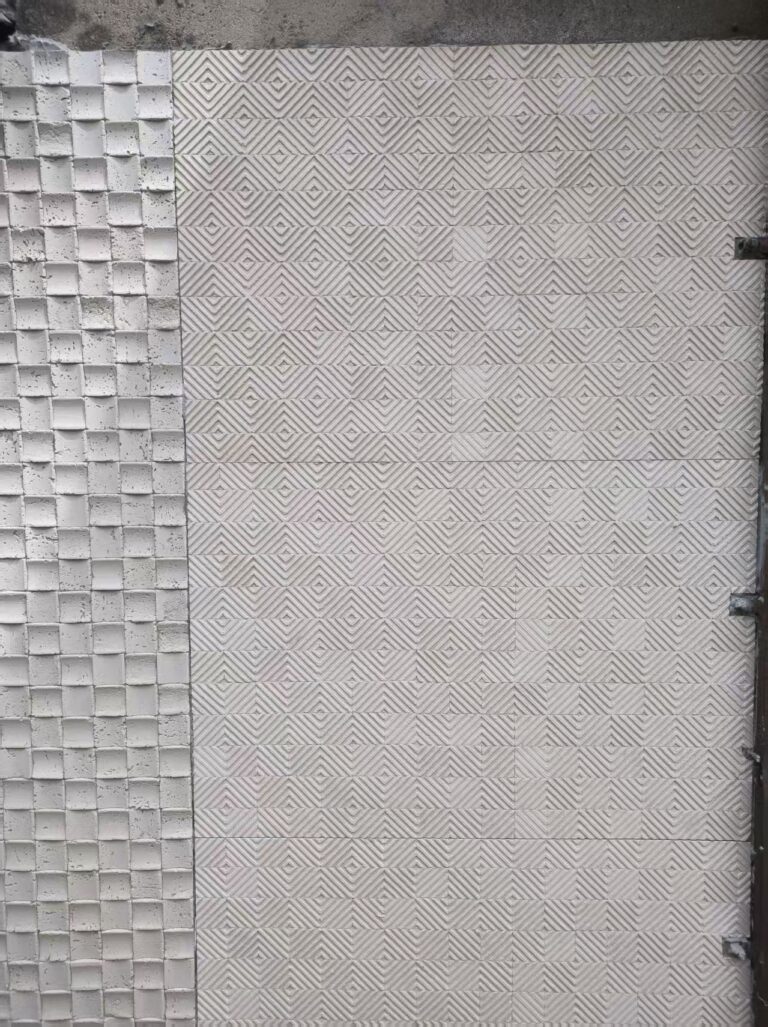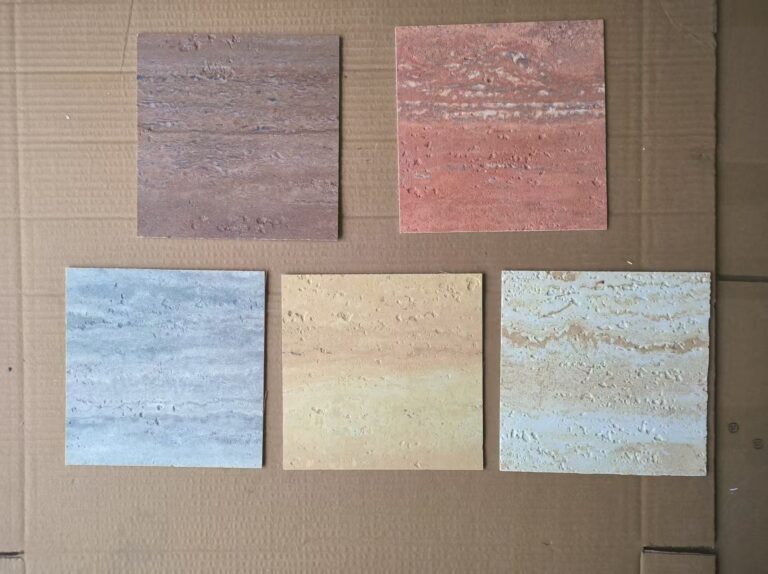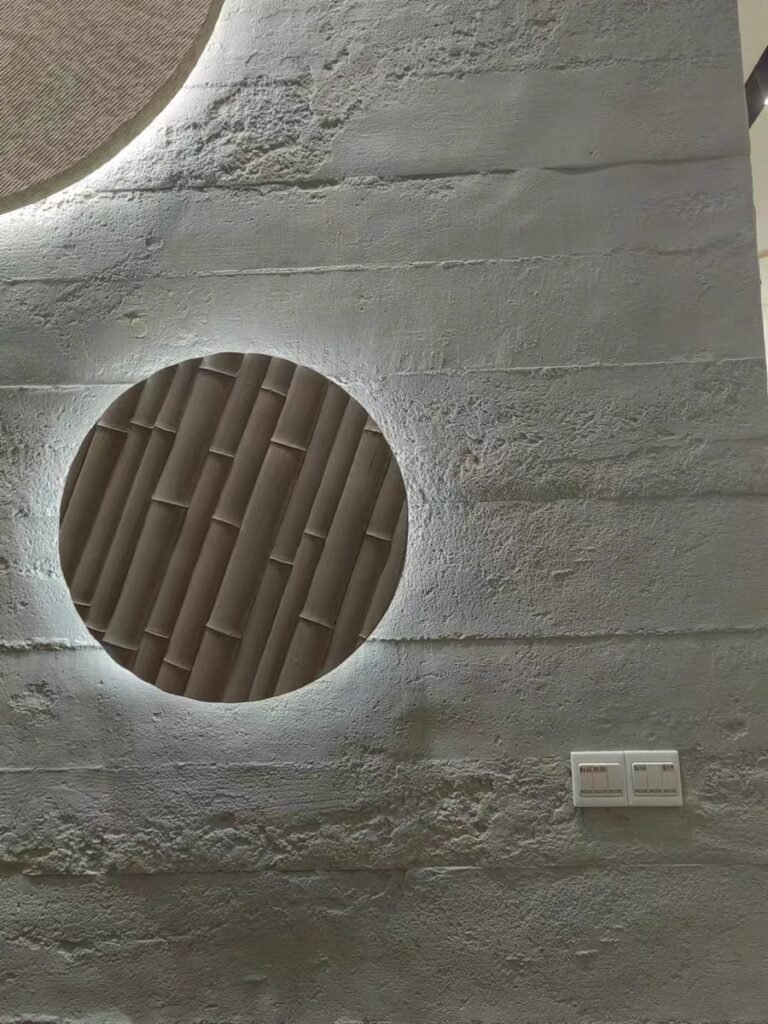
フレキシブルストーン輸入業者の物流コストは、サプライヤー、予算、生産枠を承認する前にまず確定すべきチェックポイントです。石目ヴィーニア $50K 注文が大量生産前のサンプルと全然違っていた理由を建材輸入業者に尋ねてみてください。実際の答えはほとんどがクレームレポートには書かれていません。誤差の原因は運賃ではありませんでした。失敗は上流、つまりサンプル承認時に品質の許容範囲の乖離を見逃し、工場が大規模生産で別の配合レシピで回していたところにありました。この乖離こそが、元の着岸コストに作り直し代、航空便での代替品配送、流通不能在庫が重なることで結果的にフレキシブルストーン輸入業者の物流コストを歪ませます。当社の フレキシブルストーンヴィーニアソリューション, の全体像については、メインサイトをご覧ください。.
調達チームが物流を単なる運送業者との交渉ではなく設計課題として捉え始める(当社の コスト&物流 ガイドで詳しく解説)と、数字は大きく変わります。フレキシブルストーン 1 基の 20GP コンテナはセラミックタイルのわずか 800 ㎡に対し 3,800 ㎡を積み込めます。HS コード 6810191000(税関ブレーカーによる分類を確認してください)は、ボ〖ツ製品の分類バンドよりも下、より有利な関税バンドへと導きます。これらの要素は僅かな調整ではありません。パレットが倉庫の床に触れる前から ㎡あたりのコストを 40% 分も変化させます。.
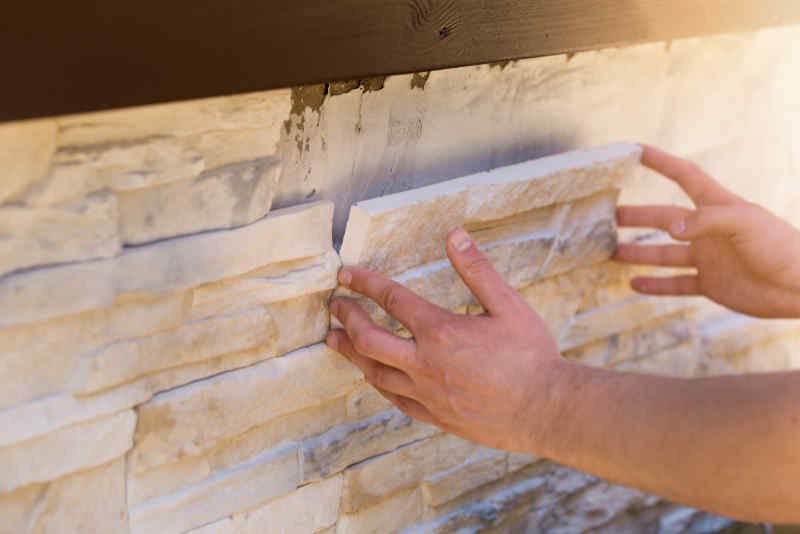
コンテナ利用率:製品量が増え、コストが下がる
20フィートコンテナにはフレキシブルストーン 3,870 ㎡を搭載可能 — セラミックスタイルの約 5 倍です。.
コンテナ利用率において、フレキシブルストーンは輸入業者の経済性をひっくり返します。標準的な 20GP には 1200x600mm の travertine パネルが 5,376 枚、つまりクラディング材として 3,870.72 ㎡積めます。同じコンテナにセラミックタイルを積む場合、重量制限に達する前にたしかに 800 ㎡程度でしょう。パレット化された段ボール箱(箱当たり 16 枚、パレット当たり 14 箱)の場合、これは人手での概算ではなく、JMS Decor の運送記録に裏付けられたロードプランです。.
大型ボードの購入者向けに、, 1200x2900mm フレキシブルストーンパネル は輸出用の木製ケース 1 つあたり 50 枚で出荷されます。ミックス戦略、例えば大型ボードケース 4 つと小型パネルパレット 12〜14 個を組み合わせれば、重量制限を超えずに 1 コンテナにさらに多くの製品を詰め込めます。フレキシブルストーンは ㎡あたり 3〜6 kg という軽量性のため、無駄な重量分の輸送料を支払う必要がありません。セラミックスや天然石材の代替品と比べ、㎡あたりの着岸物流コストは大幅に低下します。.
- 小型パネル積載量(20GP): 5,376 枚(1,200×600mm × 3mm travertine)= 3,870.72 ㎡。重量は約 1 枚あたり 3.5 kg。.
- 大型ボード積載量: 木製ケース入り1,200×2,900mmシート50枚。一般的な混合積み荷:4ケース+12〜14パレット(スペース効率最適化).
- 陶瓷タイル比較: 重量と割れやすさにより、陶瓷タイルの20GPコンテナ積載量は800〜1,000㎡程度です。一方、フレキシブルストーンはコンテナあたりのカバー面積が約4倍です。.
- ㎡あたりの輸送料金: コンテナあたり運べる製品量が多いため、海洋輸送費は陶瓷タイルや天然石タイルと比較して㎡あたり70〜80%低くなります。.
1コンテナでより広い面積をカバーできる場合、在庫戦略は変わります。1立方メートルがすべてを意味するフィジーやキプロスなどの島嶼市場を対象とする流通業者は、発注頻度を減らし、安全在庫を削減できます。また、SKU混合積載により、物流予算を圧迫することなく、単一輸送で多種多様なテクスチャ(トラバーチン、 رام土、スレートなど)を試すことが可能です。計算は単純です。製品量が増え、輸送料金は同じ。.
| 指標 | フレキシブルストーン(1200x600mm) | 標準的な陶瓷タイル(600x600mm) | 天然石材 slab | ロジスティクス上の優位性 |
|---|---|---|---|---|
| 20GPコンテナあたりの積載可能面積(㎡) | 約3,870㎡ | 約800㎡ | 約200〜300㎡ | コンテナあたり4〜5倍の製品量 |
| ㎡あたりの重量(kg) | ~4.86 kg/㎡ | ~20 kg/㎡ | ~40-60 kg/㎡ | 輸送クラスを軽減し、送料を削減 |
| 貨物コンテナ1個あたりの枚数 | 5,376枚 | ~1,440枚 | 重量制限に制約あり | 在庫と倉庫取り扱いを簡素化 |
| ㎡あたりの推定海上輸送費 | はるかに低い | 高い | 非常に高い | 着地コストで最大80%の節約 |
| 一般的な輸送破損率 | <1% | 3–5% | 5–10% | 損害請求ほぼゼロ、備蓄在庫も削減 |
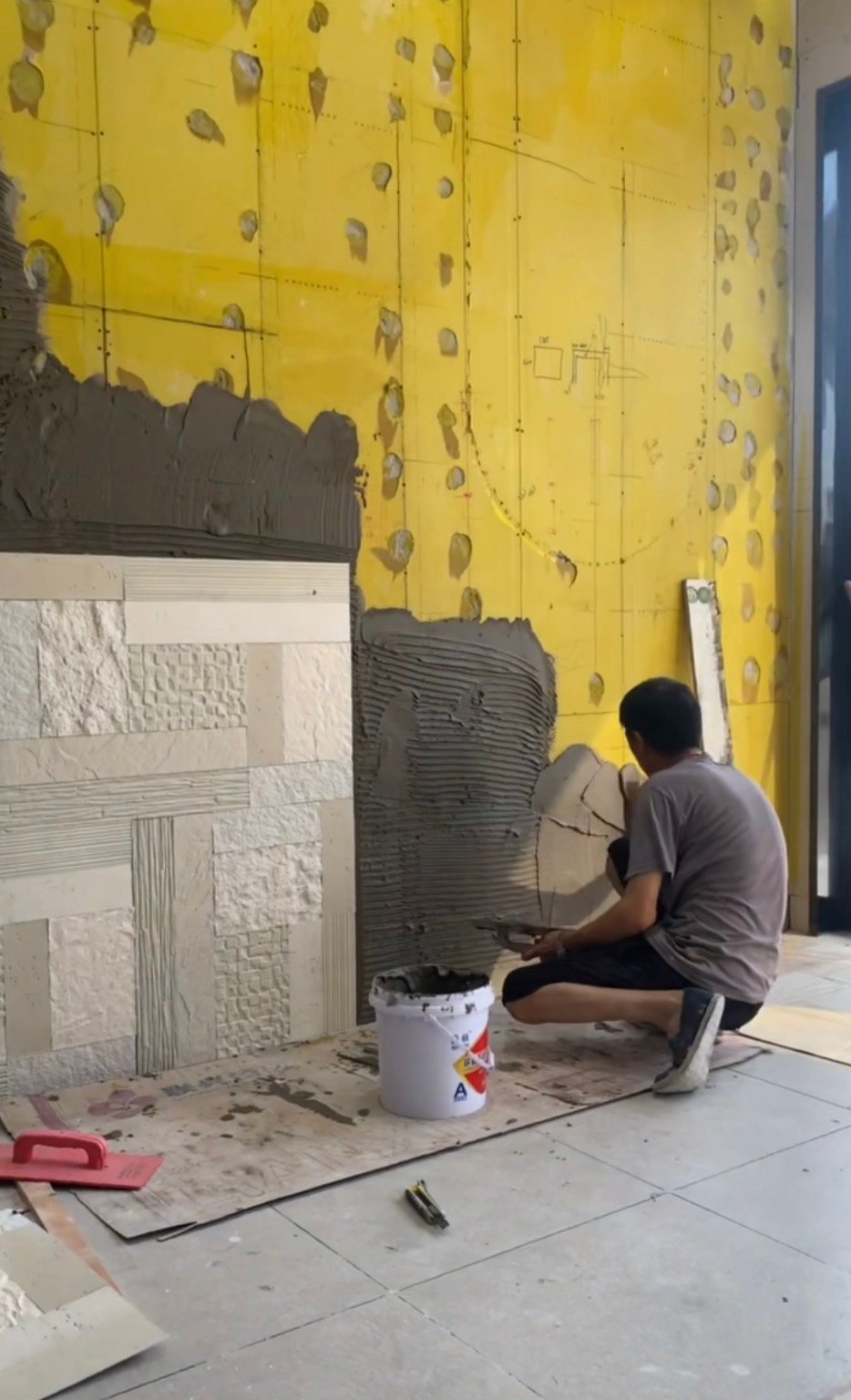
コンテナ当たりの施工面積:タイル・石材との比較
20ftコンテナにはセラミックタイルのほぼ5倍のフレキシブルストーンが積めます——そしてそれは起点に過ぎません。.
伝統的なセラミックタイルや天然石板材は、厳苛な物流の計算に苦しみます。標準的な9mmセラミックタイルは㎡あたり約20~25kgの重量があります。割れ防止のためパレットに梱包し crate 化すると、重量上限に達する前に20GPコンテナに収まるのは800~1,000㎡が限度です。天然石はさらに悪く、花岗岩や大理石の板材は Foam separator を挟んで積んでも㎡あたり40kgを超え、同じコンテナに500㎡積めれば上等です。通関を通過する前alreadyに、㎡あたりの着地コストは膨らんでしまいます。.
フレキシブルストーンはこの方程式を覆します。質感の厚みに依存しますが通常3~4mmで㎡あたり3~6kgという軽さ故に、コンテナ容積を最大限に活用できます。実際の運用データでは、20ftコンテナに1,200×600mm・厚さ3mmのフレキシブル travertine パネルが最大3,870㎡積めます。これはセラミックタイルの約4.8倍の施工面積です。海送料が20ftコンテナで$2,000の場合、タイルの㎡あたり$2.50からフレキシブルストーンは$0.52へと落ち込み、80%もの削減となります。さらに保険料の削減や破損ゼロの効果を加味すれば、その恩恵はさらに大きくなります。.
- FOB pricing leverage: When you negotiate FOB prices with a supplier, the container’s capacity directly shapes your margins. You can cost-effectively mix big boards (1,200×2,900mm, packed 50 sheets per wooden case) with small panels in the same 20GP — putting 14 pallets of small panels plus 4 wooden cases of big boards — to hit regional builders and luxury projects in one shipment.
- Sample approval trap:Many importers approve a 20x20cm sample and assume logistics costs will scale linearly.
- Quality tolerance reality: Heavier stone panels demand thicker, higher-cost packaging with strict tolerance for vibration. Flexible stone’s inherent bendability eliminates that. No need for foam interlayers or reinforced crating; products ship in standard export cartons (16 pcs per carton) and still arrive without micro-cracks. That packaging delta alone saves ~$120 per pallet.
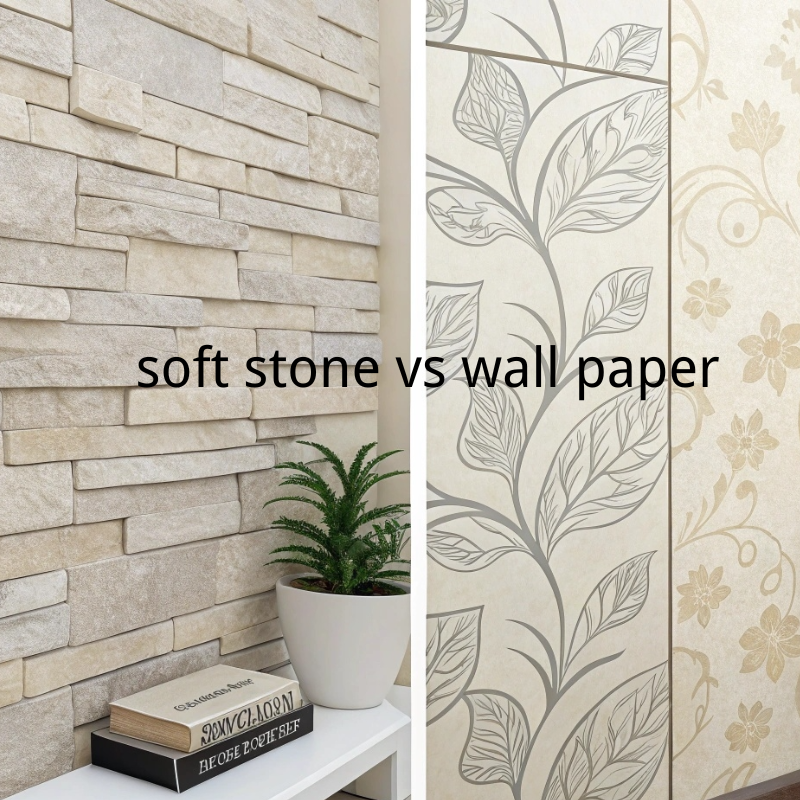
Lower Tariff Classification (HS Code 6810191000)
Flexible stone under HS 6810191000 avoids ceramic tile duty bands — and the container density makes freight per square metre borderline untouchable.
Any procurement director who has managed a US or EU entry will tell you: classification is where the margin lives. Flexible stone panels — a polymer-modified cementitious composite with a glass fibre mesh — fall squarely into HS 6810191000, the subheading for tiles, flagstones and similar articles of artificial stone. Ceramic tile importers routinely wrestle with heading 6908 at 8–12% duty. For identical-looking stone finishes, 6810 often clears at 3–7%. The delta on a single 20ft container can exceed $1,200 before the truck even leaves the port. The key is documentary hygiene: the commercial invoice, packing list, and technical data sheet must describe the product as ‘modified clay-based flexible veneer sheet’ — not ’tile’ — and explicitly state the composition as inorganic cementitious binder with natural stone powder aggregate.
- Typical Duty Spread: Heading 6908 ceramic tiles often land at 8–12% MFN rate; 6810191000 artificial stone products in many OECD countries sit at 3–7%. Always confirm with a licensed customs broker, but the code has been tested across EU, US, and GCC entries.
- Container Math: Real internal load data for 3mm travertine texture small panel (1200x600mm): a single 20GP packs 5,376 pieces, covering 3,870.72 sqm. Equivalent ceramic tile containers rarely break 900 sqm. The freight cost per installed square meter drops roughly 75%.
- Clean Entry Record: When documentation matches the physical product — no glazed ceramic component, no back mesh mistaken for textile — customs clearance is straightforward. We’ve never had a classification hold that wasn’t resolved with a one-page lab composition report.
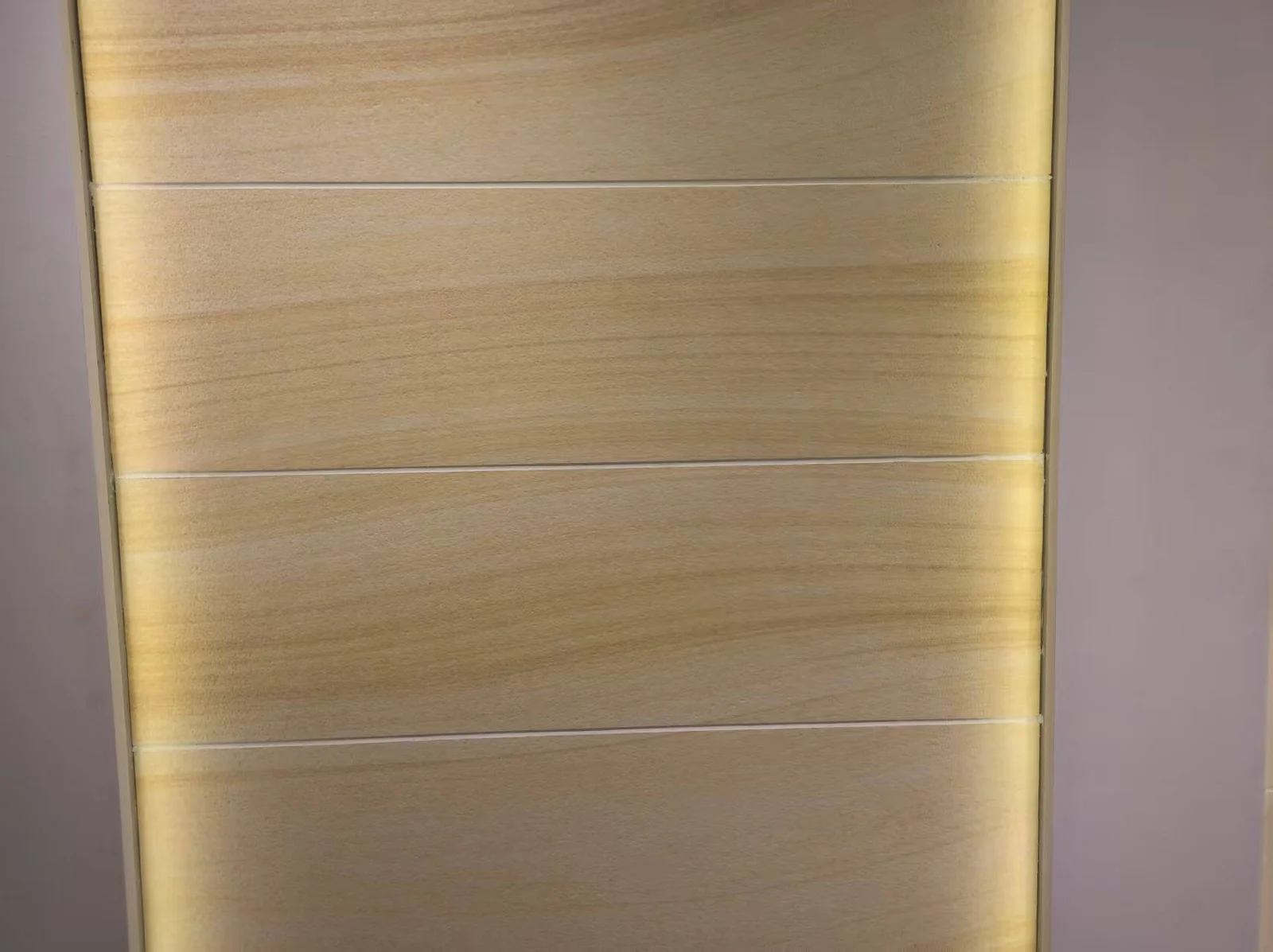
Reduced Damage Claims
Our flexible stone ships with zero-breakage packaging—no more dock-side damage arguments.
Ceramic tile and natural stone importers budget 3–8% for transit breakage. That is not a contingency—it is a given. With thin-body porcelain slabs cracking under their own weight on rough seas, every container arrives with a damage report and an insurance headache.
Flexible stone eliminates this cost line. A 3 mm travertine panel with its glass-fiber mesh core bends under stress instead of snapping. We ship 1,200 × 600 mm sheets (3.5 kg each) in palletized cartons—16 pieces per carton, 14 cartons per pallet—and a single 20 ft container carries 5,376 sheets without a single corner chip. The physical mechanics are simple: the product flexes, the pallet stays stable, and the claim folder stays empty.
- 曲げ半径: Panels can be curved around a 200 mm radius column without fracturing. Shipping vibration never reaches a failure point.
- Pack integrity: Standard export pallets (1,120 × 1,120 mm) cradle 161 m² of stone with zero movement inside the carton. No edge-on-edge contact that kills rigid tiles.
- Weight reduction: At 3–6 kg/m², a loaded pallet is half the mass of a ceramic tile pallet. Lighter pallets mean less inertia during container handling, reducing internal crushing forces.
For a procurement director, the math is immediate. If you import three 40 ft containers of tile per month and lose 5% to breakage, that is 60 m² of write-off every shipment. Replace that SKU with flexible stone and those write-off meters convert to billable square meters. Our distributors in the Middle East and Europe run entire seasons without filing a single freight claim on our material.
The real gain is not just the saved product cost. No-claim shipments keep your insurance premiums flat, your warehouse crew moving product instead of processing returns, and your contractor customers staying on schedule. When your site manager opens a pallet and finds 224 installable sheets every time, you stop budgeting for bad surprises.
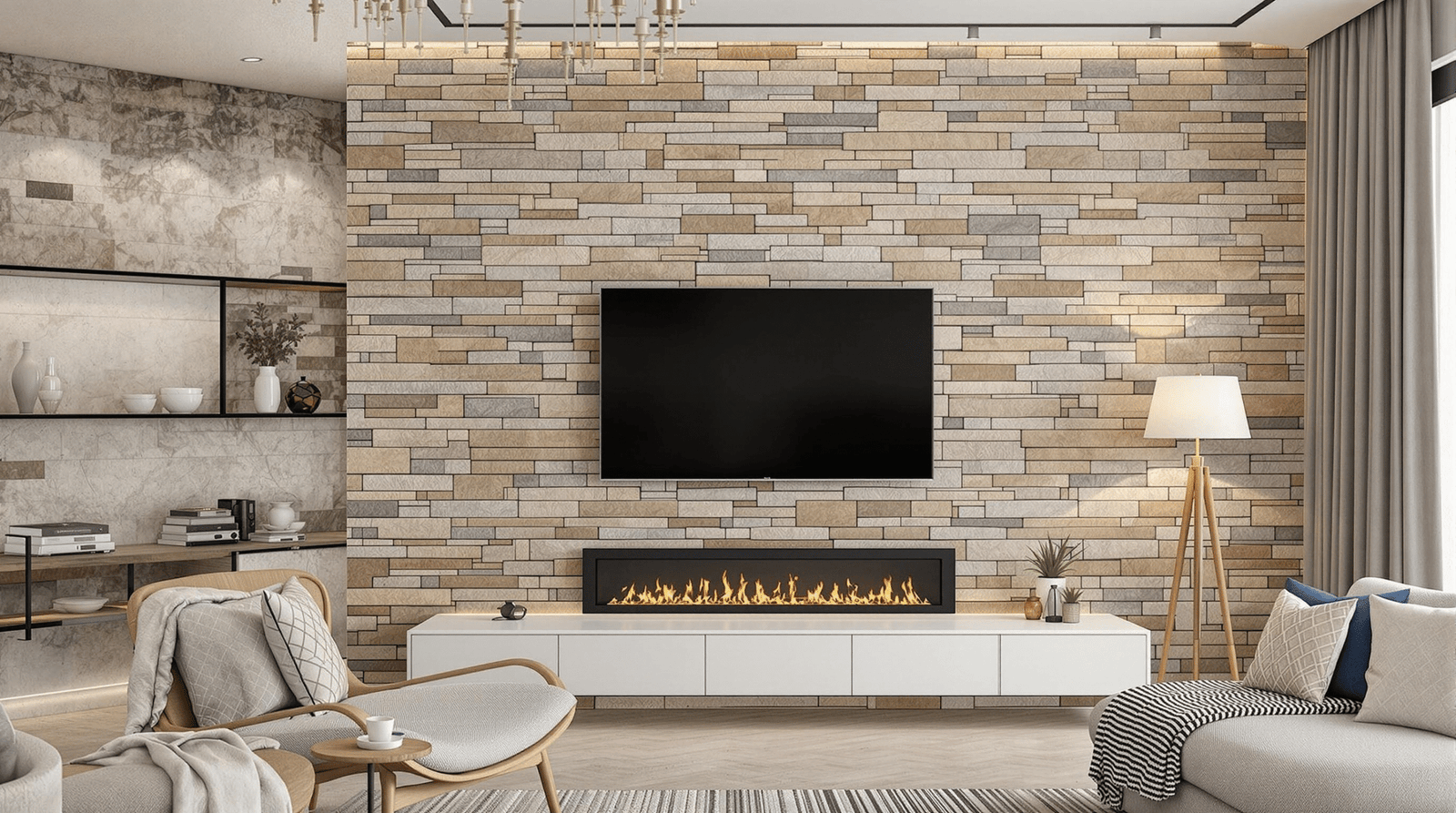
Flexible Stone’s Bendability Eliminates Breakage
A 20ft container of flexible stone holds 3,870 sqm — 4.8x more than ceramic tile.
I’ve watched a $50,000 order turn into a landfill-bound pile of rubble because the pre-production sample looked perfect, but the mass production run shattered in transit. That buyer learned the hard way: sample approval means nothing if the material can’t survive the actual logistics chain. Flexible stone solves this at the material level.
The core mechanism isn’t complicated. Traditional ceramic tiles and natural stone slabs are rigid. When a forklift hits a pallet too hard, or a container hits rough seas, that energy transfers directly through the material. Micro-fractures form. Corners snap. By the time the container arrives at Port of Rotterdam or Los Angeles, 3% to 8% of the order is unusable. That’s not an estimate — that’s what freight adjusters see on claims forms for rigid cladding.
- 曲げ半径: Flexible stone panels with the internal fiberglass mesh reinforcement can wrap around a 200mm radius column without cracking. This same property absorbs impact during transit rather than transmitting it.
- Impact absorption: Drop a rigid tile corner-first from 1 meter: shattered. Same test on a 3mm-thick flexible stone panel: the corner compresses slightly and rebounds. No chip, no crack, no claim.
- Real damage data: Internal shipping logs across multiple export markets show flexible stone damage claims running under 0.3% of total shipped volume. Compare that to the 5% to 8% rate common with 1200x600mm ceramic tiles in containerized freight.
The bendability also rewrites how you pack a container. Rigid panels need foam spacers, corner protectors, and carefully calculated air gaps. Flexible stone ships flat-stacked on standard export pallets — 16 sheets per carton, 14 cartons per pallet, 224 sheets totaling 161.28 square meters per pallet unit. One 20GP container loads 24 pallets: 5,376 sheets, approximately 3,870 square meters. No wasted cubic volume on protective dunnage.
For the procurement director calculating landed cost per square meter, this changes the equation entirely. When you eliminate breakage from your landed cost model, you stop over-ordering 8% buffer stock. You stop paying duty on material that arrives as waste. You stop explaining to the project manager why the job site is short 300 square meters with a 6-week lead time to replace it.
One caution worth stating plainly: bendability does not mean indestructibility. If a panel arrives with the glass fiber mesh exposed at the edge, reject it. That’s a manufacturing defect where the polymer matrix didn’t fully encapsulate the reinforcement layer. A proper panel should have clean, fully sealed edges. During sample approval, bend a corner 90 degrees and check for delamination. If the layers separate, the batch fails quality tolerance.

Faster Turnaround & Lower Inventory Holding Costs
Most importers don’t calculate that inventory sitting for an extra 30 days wipes out their negotiated discount.
Here’s where flexible stone solves a logistics problem that traditional stone importers just learn to live with. Standard ceramic tile or natural stone orders out of China or Italy run on 45-60 day production cycles, minimum. Then you’re looking at 28-35 days on the water. From PO issuance to warehouse receipt, 90 days is considered fast. Flexible stone production — specifically the modified clay material under HS code 6810191000 — operates on a fundamentally different timeline. The mold press molding process doesn’t require kiln firing, so a standard 20ft container order (roughly 3,870 sqm based on the small panel 1200x600mm format) ships in 15-20 days, not two months.
The inventory math gets brutal when you compare holding costs. A distributor sitting on 800 sqm of ceramic tile per 20ft container has maybe 3-4 project-ready SKUs. The same container with flexible stone hauls 3,800+ sqm across potentially 6-8 different textures — travertine, slate, rammed earth, line stone, even the newer translucent stone at 2mm thickness for feature walls. You’re stocking a showroom’s worth of variety in one shipment. When a contractor needs 200 sqm of a specific pattern for a hotel lobby renovation that starts Monday, you either have it or you don’t. The distributor who doesn’t have it loses the order to someone who does. That’s not a logistics metric — that’s revenue leakage.
- Sample approval cycle:Existing stock samples ship in 2-3 days. Custom color matching takes 7 days. Compare that to 3-4 weeks for custom glaze samples on ceramic tile. Sample approval is the #1 bottleneck that delays project starts — flexible stone collapses that timeline.
- Mixed container logic: Big boards (1200x2900mm) in 4 wooden cases can mix with 12-14 pallets of small panels in one 20GP. No other stone cladding category supports this kind of format mixing within one shipment. You’re stocking fast-turn small formats alongside high-ticket large format boards from one PO.
- Re-order responsiveness: When a product sells, you re-order. The 15-20 day production cycle means your re-stock hits the warehouse before your competitor’s initial order even leaves the factory. For seasonal markets like resort renovations in the Caribbean or UAE, missing a 3-week installation window costs an entire year of sales.

| 比較要素 | Flexible Stone (JMS) | Traditional Alternative | Benefit for Importers |
|---|---|---|---|
| Production Lead Time | Regular styles: 15–20 days; 20 containers: 30–40 days; Sample: 2–3 days (existing), 7 days (custom color) | Often 6–12 weeks for natural stone slabs or large ceramic tiles due to quarrying and firing | Enables 3x faster project restocks and reduces risk of stock-out on fast-moving designs |
| MOQ Flexibility | 300 sqm for standard stock; 300 sqm for custom color or texture; Low MOQ supports small batch trial orders | Often a full container (800–1200 sqm) or higher for natural stone/tiles, forcing large upfront investment | Lower capital lock-in; test market demand with minimal inventory risk |
| Container Density (20ft) | ~3,870 sqm in one 20ft (small panels 1200x600mm) | Ceramic tiles: ~800 sqm; Natural stone: even less due to weight limits | 4.8x more coverage per container, drastically reducing landed cost per sqm and warehousing space |
| Inventory Space & Handling | Weight: 3–6 kg/sqm; flat-packed cartons on pallets; easy manual handling | 30–60 kg/sqm for stone; requires heavy equipment, pallet racking, and more floor space | Frees up 70%+ warehouse volume; reduces material handling costs and insurance premiums |
| Damage & Claims | Zero breakage – bendable, flexible; virtually no transport damage | 5–15% damage rate for stone/tiles during shipping; costly claims and customer returns | Eliminates time spent on claims and replacement logistics; improves customer satisfaction |
| Working Capital Cycle | Faster order-to-resell due to shorter lead times + high container yield; sell-through rate up | Long lead times and slow moving inventory ties up capital | Improves cash flow; inventory turns 2–3x faster, yielding higher ROI per square foot of warehouse |
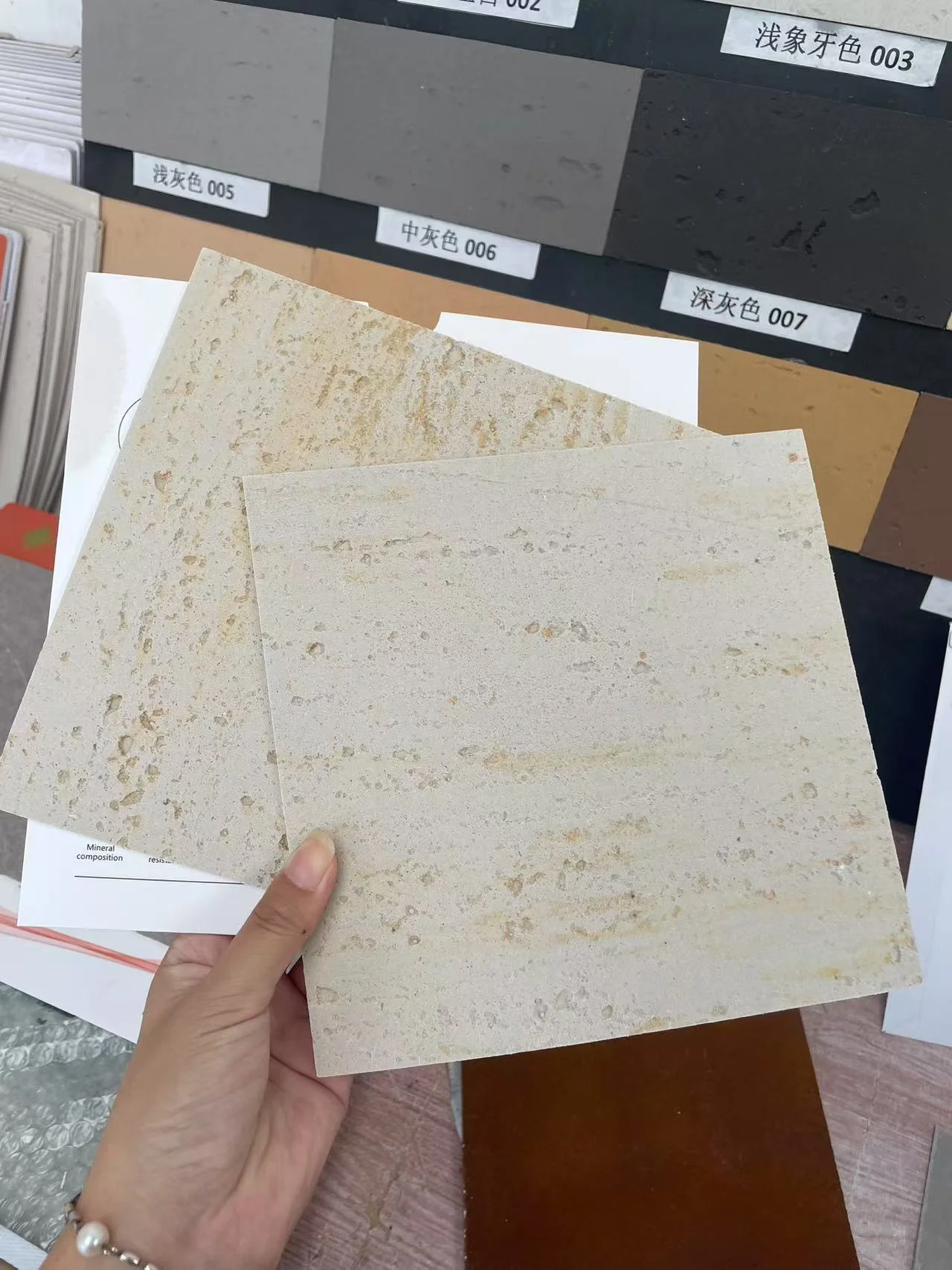
Growing Demand for Lightweight Green Materials
Lightweight cladding isn’t a design preference in 2026 — it’s a logistics cost weapon.
I watched a distributor in Gdansk run the numbers on two identical 20ft containers last quarter. One packed with 18mm porcelain slabs managed 780 sqm. The other, filled with 1200x600mm flexible stone panels at 3mm thickness, hit 3,870 sqm on the packing list. Same container cost. Same sailing schedule. Five times the sellable surface area arriving at the warehouse. That math doesn’t need a consultant to interpret — it rewrites margin sheets immediately.
The material weight lands at 3.5 kg per square meter for the standard Travertine texture. Ceramic tiles run 18 to 25 kg per sqm. Natural granite pushes past 30 kg. Empty weight savings compound through every handling step: fewer laborers on the forklift, lower LCL consolidation fees, reduced warehouse racking requirements. For island markets like Fiji or Cyprus where every kilogram on the vessel carries a surcharge, the landed cost difference between flexible stone and rigid alternatives consistently exceeds 40%.
The sustainability documentation isn’t marketing fiction, either. The product body is modified clay with powdered natural stone — no resin-heavy composite or high-temperature kiln firing. When a UK contractor needed ASTM E84 Class A fire data and a CE mark for a hotel retrofit in Manchester, the internal test reports cleared both in under 48 hours. EU importers sourcing under the HS code 6810191000 regularly report lower duty rates compared to ceramic classifications under 6908, a tariff difference that repeats on every shipment.
- Freight density benchmark: One 20ft container holds 5,376 pcs of 1200x600mm flexible stone — 3,870 sqm versus roughly 800 sqm of standard ceramic tile. That’s a 380% surface area advantage on the same shipping invoice.
- Carbon and certification: Modified clay base skips energy-intensive kiln cycles required by porcelain. ASTM E84 Class A and CE certification bridge the gap between green procurement checklists and fire-safety compliance — both demanded by hotel group RFPs in 2026.
- Breakage and waste: Rigid stone chips in transit. Flexible stone arrives flat-packed on pallets with sub-1% damage rates logged across hundreds of containers. Less waste means inventory forecasts hold — no emergency reordering to cover broken material.
Impact data cuts both ways. Lighter shipments reduce Scope 3 transport emissions per square meter of cladding installed. Developers chasing BREEAM or LEED credits on multi-family projects now request embodied carbon figures in the sample approval stage — a conversation traditional stone importers struggle to join without the numbers.
How JMS Decor Supports Importers (Low MOQ, OEM, Samples)
The real test of a supplier isn’t the sample—it’s whether container 3 matches sample 1.
After managing supplier audits across multiple export markets, I’ve seen a single discrepancy between a pre-production sample and mass production wipe out a $50K order. You approve a travertine sample with subtle veining; six weeks later, the container shows up with aggressive orange overtones. The factory tells you it’s within ‘quality tolerance.’ Your buyer in Hamburg doesn’t care about tolerances—they care about consistency.
That’s why importers who work with JMS Decor eventually stop price-shopping on Alibaba. Not because the FOB pricing is the lowest—it rarely is—but because the sample approval process actually means something. Here’s what that looks like in practice.
- MOQ that lets you test the market: Regular stock designs start at 300 sqm. Custom color or texture orders also start at 300 sqm. That’s low enough to run a pilot with a key contractor or fill a small retail display without betting a full container on an untested SKU.
- Sample approval that scales: A standard 20x20cm sample ships within 2-3 days for existing textures. Custom color matching takes 7 days. What matters more: the same hands that made your sample will run your bulk order. No bait-and-switch between the sample lab and the production line.
- OEM without the usual chaos: You want a proprietary travertine pattern exclusive to your brand? The tooling lead time depends on complexity, but you’re not guessing. JMS has over 100 existing molds and a design team that pushes new textures weekly. You get CAD proofs before the mold is cut. You approve the first-off sample before mass production starts. No surprises.
- Accessories you don’t have to source yourself: Most factories ship panels and wave goodbye. JMS now produces matched adhesive and joint sealant specifically formulated for flexible stone. For importers building a one-stop brand, that eliminates the chaos of qualifying third-party chemistry that might delaminate the panels in three years.
The bottom line: If you’re bringing flexible stone into a new market, the logistical advantages mean nothing if the product fails on the wall after 18 months. JMS’s support structure—low trial MOQs, locked sample-to-production consistency, brand-exclusive OEM, and system-matched installation chemicals—is what turns a calculated bet into a repeatable supply chain.
Why Importers Are Switching to Flexible Stone
Key Takeaways
- One 20ft container holds ~3,870 sqm of flexible stone — nearly 5× the coverage of ceramic tile at the same freight cost.
- HS code 6810191000 (verify with broker) typically clears at 3–7% duty vs 8–12% for ceramic tile.
- Near-zero transit breakage (<1%) eliminates buffer-stock overordering and insurance claim overhead.
- MOQ starts at 300 sqm — test markets before committing to full container loads.
The switch to flexible stone isn’t about a lower unit price alone. It restructures your landed cost by tripling container load factors, sliding into a lower tariff code, and eliminating the breakage claims that eat margin on rigid cladding. For an importer running steady container volumes, those three levers compound into a serious per-square-foot advantage.
Lock down a pre-production sample approval so you can set an agreed quality tolerance before committing to FOB pricing. Then, on your next supplier call, use the benchmark that separates talk from real logistics: one 20‑foot container of flexible stone delivers roughly 3,800 square meters of usable cladding — nearly five times what a ceramic tile shipment nets at the same freight cost.
Common Questions About Flexible Stone Logistics
20ftコンテナに flexible stone はどれくらいの平米数を収容できますか?
20フィートコンテナには標準的なフレキシブルストーンパネル約3,870平米が積載可能です。これは同じ容積のセラミックタイルの約5倍の施工面積に相当し、平米あたりの輸送コストを大幅に削減します。大型ボードと小型パネルの混載計画のお問い合わせはこちらから。.
フレキシブルストーン(柔軟石材)のHSコードは何ですか?
柔軟石はHSコード6810191000で輸出されます。この分類により、セラミックやポルセラントタイルに適用されるHigher Duty bandsを回避し、関税負担を軽減できます。ご注文確定前に、通関業者とHSコード6810191000を確認してください。.
輸送中にフレキシブルストーンは割れやすくありませんか?
柔軟な石材质が曲がり衝撃を吸収できるため、破損はほぼゼロに抑えられます。標準的な輸出用パレットまたは木箱包装により、硬質な石材やタイルの輸送時の損害請求を大幅に削減。輸出用パレット基準で梱装すれば、ほぼ無欠損での納品を実現します。.
卸売用フレキシブルストーン(可撓性石材)の最小注文量(MOQ)はいくらですか?
レギュラー在庫デザインは300㎡から、カスタムカラーやテクスチャも300㎡から対応可能です。この低MOQにより、輸入業者は大幅な前期在庫リスクを負わずに市場をテストできます。特定の仕上げとサイズのリクエストに対するMOQ閾値をご確認ください。.
大型柔軟石の発注から納期までどのくらいかかりますか?
標準パターンは15〜20日で出荷、20コンテナ相当の大口受注では約30〜40日を目安としています。これにより、重い採石場の石材発注サイクルと比較して在庫保有時間を削減できます。プロジェクトのスケジュールは15〜40日の生産ウインドウに合わせてご調整ください。.