
Flexible stone importer logistics cost is the first checkpoint buyers should lock before they approve a supplier, budget, or production slot. Ask any building materials importer why their $50K order of stone veneer looked nothing like the pre-production sample, and the real answer rarely surfaces in the claim report. The freight bill did not cause the mismatch. The failure sat upstream—where the sample approval glossed over a quality tolerance gap that let the factory run a different batch recipe for the mass production run. That gap, not the shipping quote, ends up distorting the flexible stone importer logistics cost because remakes, airfreight replacements, and dead inventory pile on top of the original landed figure. For a full overview of our flexible stone veneer solutions, explore the main site.
The numbers shift hard once a procurement team treats logistics as a design problem (see more in our Cost & Logistics guides), not just a carrier negotiation. A 20GP container of flexible stone can swallow 3,800 square meters against barely 800 of ceramic tiles, and the HS code 6810191000 (verify classification with your customs broker) pushes the duty bracket into a band that sits well below porcelain classifications. These are not marginal tweaks. They change the per-square-meter math by 40% before the pallet even touches the warehouse floor.
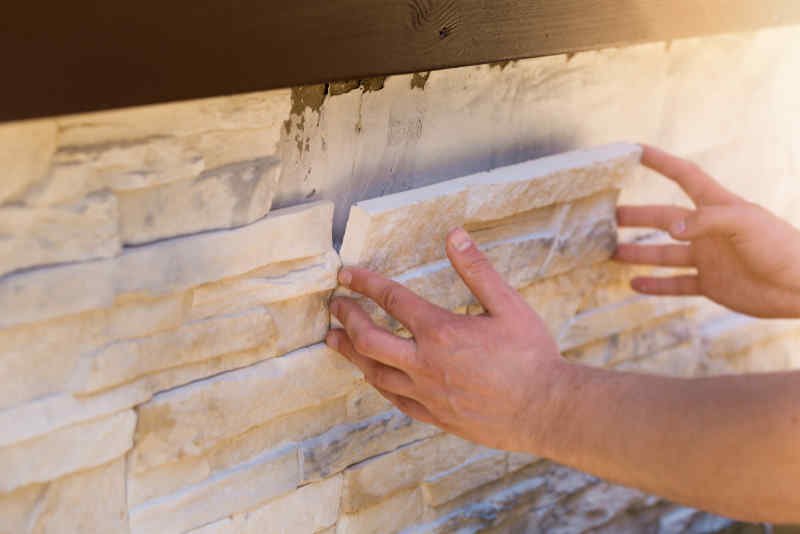
Container Utilization: More Product, Less Cost
A 20ft container holds 3,870 sqm of flexible stone — nearly 5x more than ceramic tile.
Container utilization is where flexible stone flips the economics for importers. A standard 20GP can pack 5,376 sheets of 1200x600mm travertine panels — that’s 3,870.72 sqm of cladding. The same container loaded with ceramic tiles might manage 800 sqm before hitting weight limits. With palletized cartons (16 pieces per box, 14 boxes per pallet), this isn’t a manual estimate — it’s a documented load plan from JMS Decor’s shipping logs.
For big board buyers, 1200x2900mm flexible stone panels ship 50 sheets per export wooden case. The mix strategy — say 4 cases of big boards plus 12-14 pallets of small panels — squeezes more product into one container without exceeding weight restrictions. Because flexible stone weighs 3-6 kg/sqm, you’re not paying freight on dead mass. The landed logistics cost per square meter drops substantially compared to ceramic or natural stone alternatives.
- Small Panel Load (20GP): 5,376 pcs (1,200×600mm × 3mm travertine) = 3,870.72 sqm. Weight approx. 3.5 kg per sheet.
- Big Board Load: 50 sheets of 1,200×2,900mm per wooden case. Typical mixed load: 4 cases + 12-14 pallets to optimize space.
- Ceramic Tile Comparison: Average 20GP load for ceramic tiles is 800-1,000 sqm due to weight and fragility. Flexible stone delivers almost 4x coverage per container.
- Freight Cost Per Sqm: Because you ship more product per container, the ocean freight cost per square meter can be 70-80% lower than with ceramic or stone tiles.
Inventory strategy changes when one container covers a larger project area. Distributors serving island markets like Fiji or Cyprus — where every cubic meter counts — can reduce order frequency and hold less safety stock. Mixed SKU loading also lets importers test different textures (travertine, rammed earth, slate) in a single shipment without busting the logistics budget. The math is simple: more product, same freight bill.
| Metric | Flexible Stone (1200x600mm) | Standard Ceramic Tiles (600x600mm) | Natural Stone Slabs | Logistics Advantage |
|---|---|---|---|---|
| Coverage per 20GP Container (sqm) | ~3,870 sqm | ~800 sqm | ~200-300 sqm | 4-5x more product per container |
| Weight per Square Meter (kg) | ~4.86 kg/sqm | ~20 kg/sqm | ~40-60 kg/sqm | Reduces freight class and shipping cost |
| Pieces per Full Container Load | 5,376 panels | ~1,440 tiles | Limited by weight limits | Simplifies inventory and warehouse handling |
| Estimated Ocean Freight Cost per sqm | Significantly lower | High | Very high | Up to 80% savings on landed cost |
| Typical Shipping Breakage Rate | <1% | 3–5% | 5–10% | Near zero damage claims, lower buffer stock |
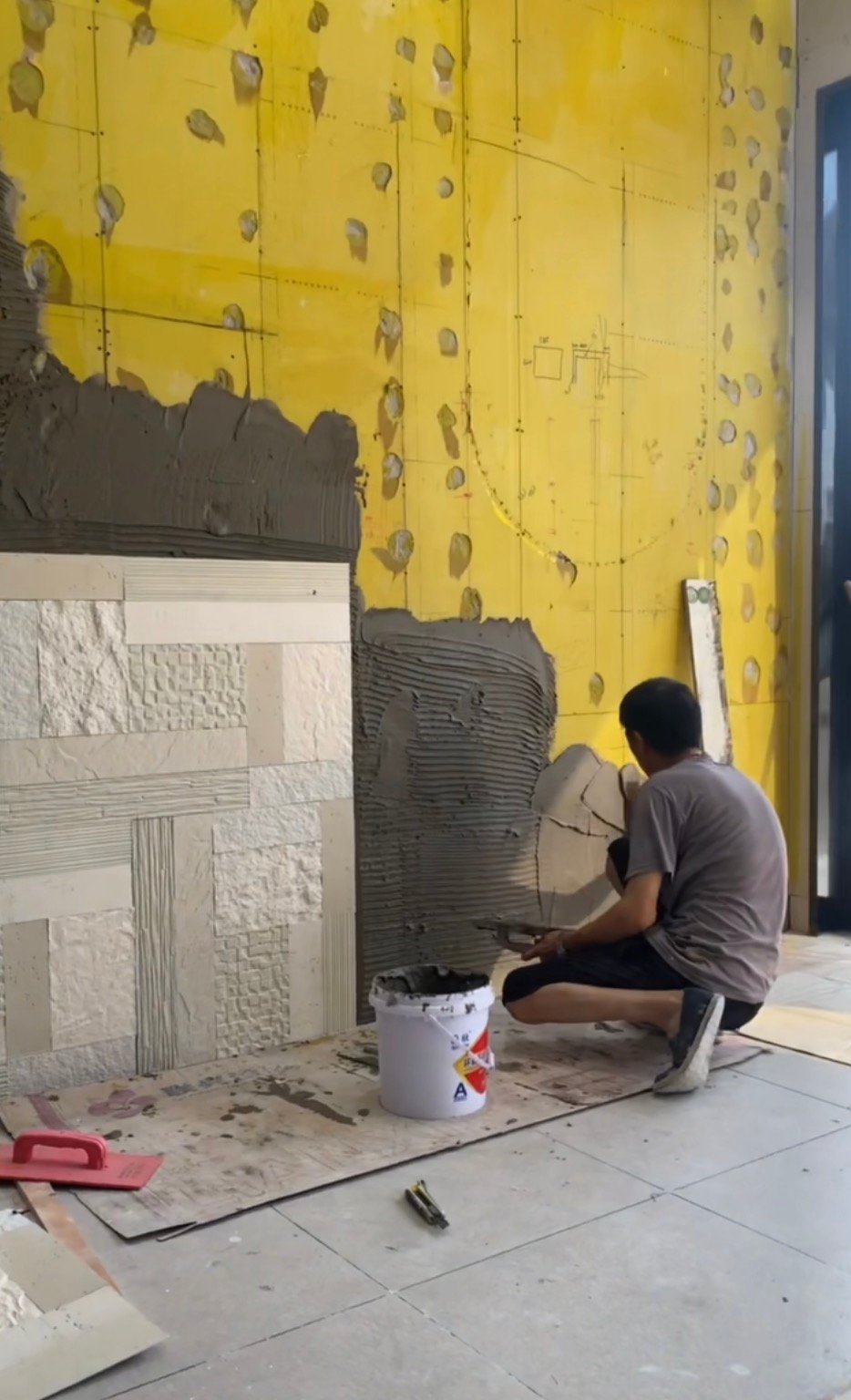
Coverage per Container vs Tile & Stone
A 20ft container swallows nearly 5x more flexible stone than ceramic tile — and that’s just the start.
Traditional ceramic tiles and natural stone slabs suffer from brutal logistics math. A standard 9mm ceramic tile weighs around 20–25 kg per square meter. Packed on pallets with crating to prevent breakage, you squeeze maybe 800–1,000 sqm into a 20GP container before hitting the weight ceiling. Natural stone is even worse — granite or marble slabs can weigh over 40 kg/sqm, loaded with foam separators, and you’re lucky to get 500 sqm in the same box. The landed cost per square meter inflates before the material even clears customs.
Flexible stone flips this equation. With a per-square-meter weight of just 3–6 kg (depending on texture thickness, typically 3–4 mm), you can fully utilize container volume. Real operational data shows a 20-foot container can hold up to 3,870 sqm of flexible travertine panels (1,200x600mm sheets, 3mm thickness). That’s roughly 4.8 times the coverage of ceramic tiles. For a $2,000 ocean freight bill, your freight cost drops from $2.50/sqm for tiles to $0.52/sqm for flexible stone — an 80% reduction. And that’s before factoring in lower insurance premiums and zero breakage.
- FOB pricing leverage: When you negotiate FOB prices with a supplier, the container’s capacity directly shapes your margins. You can cost-effectively mix big boards (1,200×2,900mm, packed 50 sheets per wooden case) with small panels in the same 20GP — putting 14 pallets of small panels plus 4 wooden cases of big boards — to hit regional builders and luxury projects in one shipment.
- Sample approval trap:Many importers approve a 20x20cm sample and assume logistics costs will scale linearly.
- Quality tolerance reality: Heavier stone panels demand thicker, higher-cost packaging with strict tolerance for vibration. Flexible stone’s inherent bendability eliminates that. No need for foam interlayers or reinforced crating; products ship in standard export cartons (16 pcs per carton) and still arrive without micro-cracks. That packaging delta alone saves ~$120 per pallet.
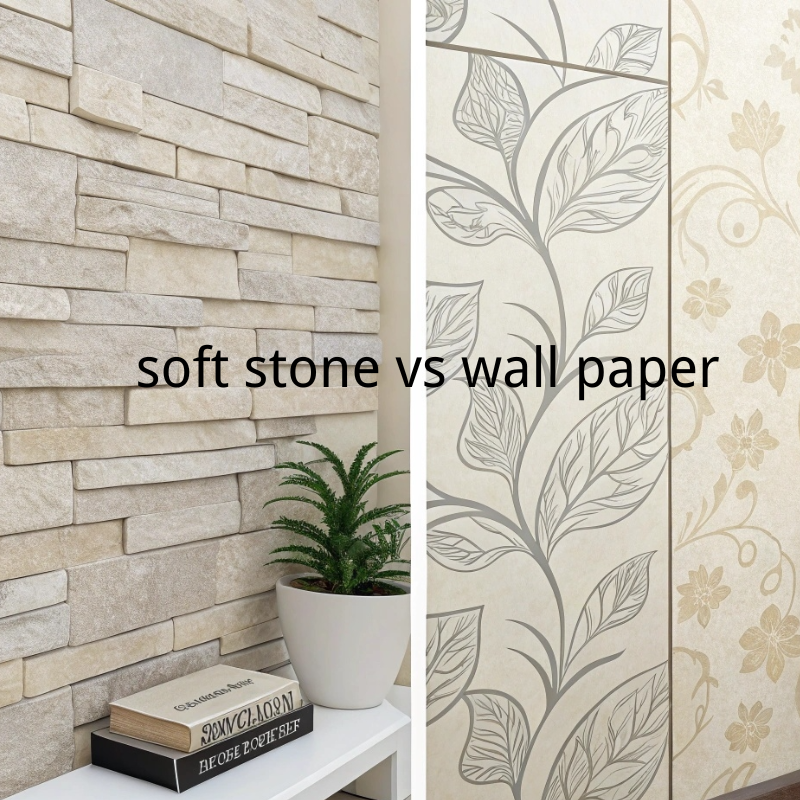
Lower Tariff Classification (HS Code 6810191000)
Flexible stone under HS 6810191000 avoids ceramic tile duty bands — and the container density makes freight per square metre borderline untouchable.
Any procurement director who has managed a US or EU entry will tell you: classification is where the margin lives. Flexible stone panels — a polymer-modified cementitious composite with a glass fibre mesh — fall squarely into HS 6810191000, the subheading for tiles, flagstones and similar articles of artificial stone. Ceramic tile importers routinely wrestle with heading 6908 at 8–12% duty. For identical-looking stone finishes, 6810 often clears at 3–7%. The delta on a single 20ft container can exceed $1,200 before the truck even leaves the port. The key is documentary hygiene: the commercial invoice, packing list, and technical data sheet must describe the product as ‘modified clay-based flexible veneer sheet’ — not ’tile’ — and explicitly state the composition as inorganic cementitious binder with natural stone powder aggregate.
- Typical Duty Spread: Heading 6908 ceramic tiles often land at 8–12% MFN rate; 6810191000 artificial stone products in many OECD countries sit at 3–7%. Always confirm with a licensed customs broker, but the code has been tested across EU, US, and GCC entries.
- Container Math: Real internal load data for 3mm travertine texture small panel (1200x600mm): a single 20GP packs 5,376 pieces, covering 3,870.72 sqm. Equivalent ceramic tile containers rarely break 900 sqm. The freight cost per installed square meter drops roughly 75%.
- Clean Entry Record: When documentation matches the physical product — no glazed ceramic component, no back mesh mistaken for textile — customs clearance is straightforward. We’ve never had a classification hold that wasn’t resolved with a one-page lab composition report.
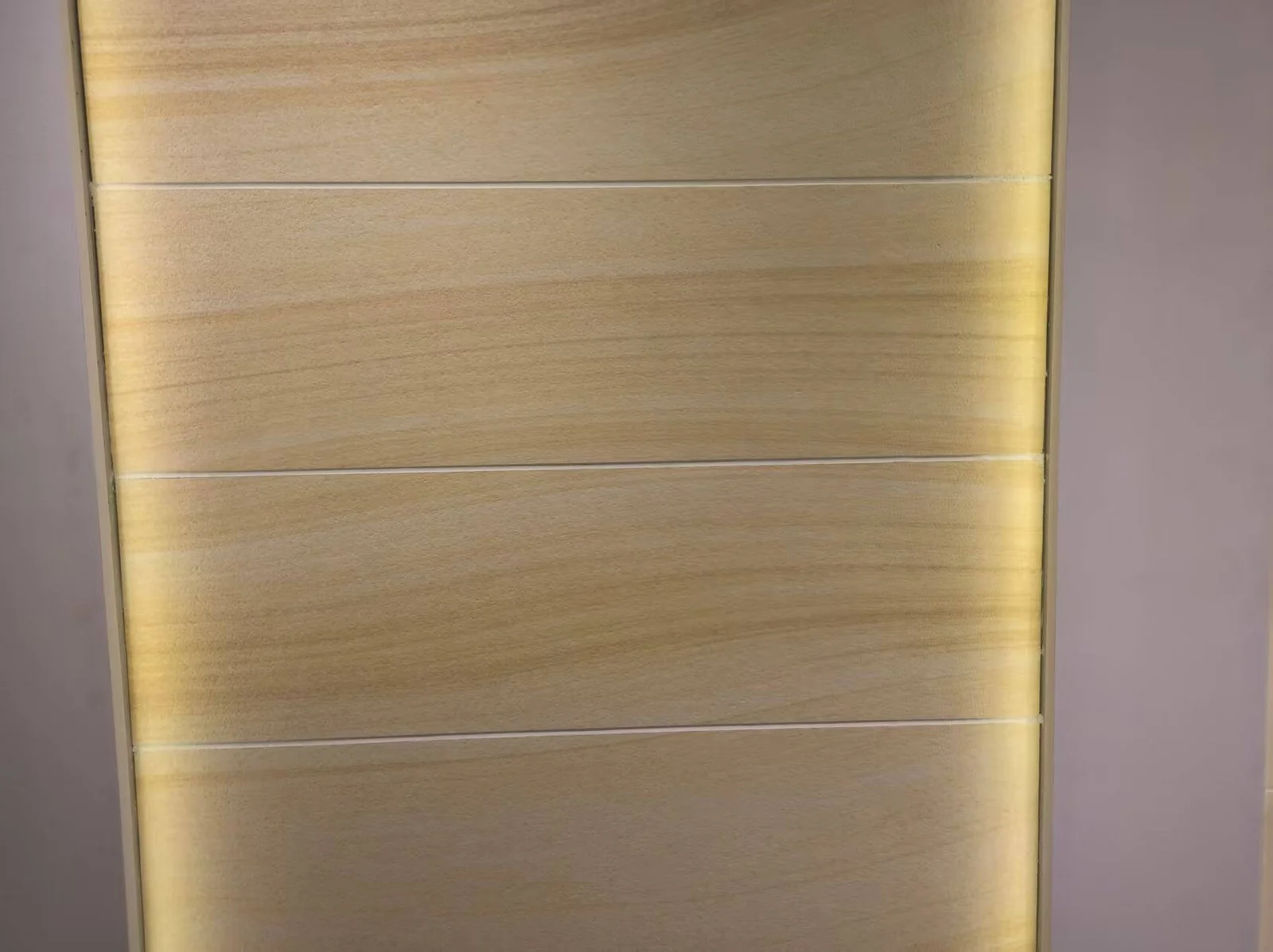
Reduced Damage Claims
Our flexible stone ships with zero-breakage packaging—no more dock-side damage arguments.
Ceramic tile and natural stone importers budget 3–8% for transit breakage. That is not a contingency—it is a given. With thin-body porcelain slabs cracking under their own weight on rough seas, every container arrives with a damage report and an insurance headache.
Flexible stone eliminates this cost line. A 3 mm travertine panel with its glass-fiber mesh core bends under stress instead of snapping. We ship 1,200 × 600 mm sheets (3.5 kg each) in palletized cartons—16 pieces per carton, 14 cartons per pallet—and a single 20 ft container carries 5,376 sheets without a single corner chip. The physical mechanics are simple: the product flexes, the pallet stays stable, and the claim folder stays empty.
- Bend radius: Panels can be curved around a 200 mm radius column without fracturing. Shipping vibration never reaches a failure point.
- Pack integrity: Standard export pallets (1,120 × 1,120 mm) cradle 161 m² of stone with zero movement inside the carton. No edge-on-edge contact that kills rigid tiles.
- Weight reduction: At 3–6 kg/m², a loaded pallet is half the mass of a ceramic tile pallet. Lighter pallets mean less inertia during container handling, reducing internal crushing forces.
For a procurement director, the math is immediate. If you import three 40 ft containers of tile per month and lose 5% to breakage, that is 60 m² of write-off every shipment. Replace that SKU with flexible stone and those write-off meters convert to billable square meters. Our distributors in the Middle East and Europe run entire seasons without filing a single freight claim on our material.
The real gain is not just the saved product cost. No-claim shipments keep your insurance premiums flat, your warehouse crew moving product instead of processing returns, and your contractor customers staying on schedule. When your site manager opens a pallet and finds 224 installable sheets every time, you stop budgeting for bad surprises.
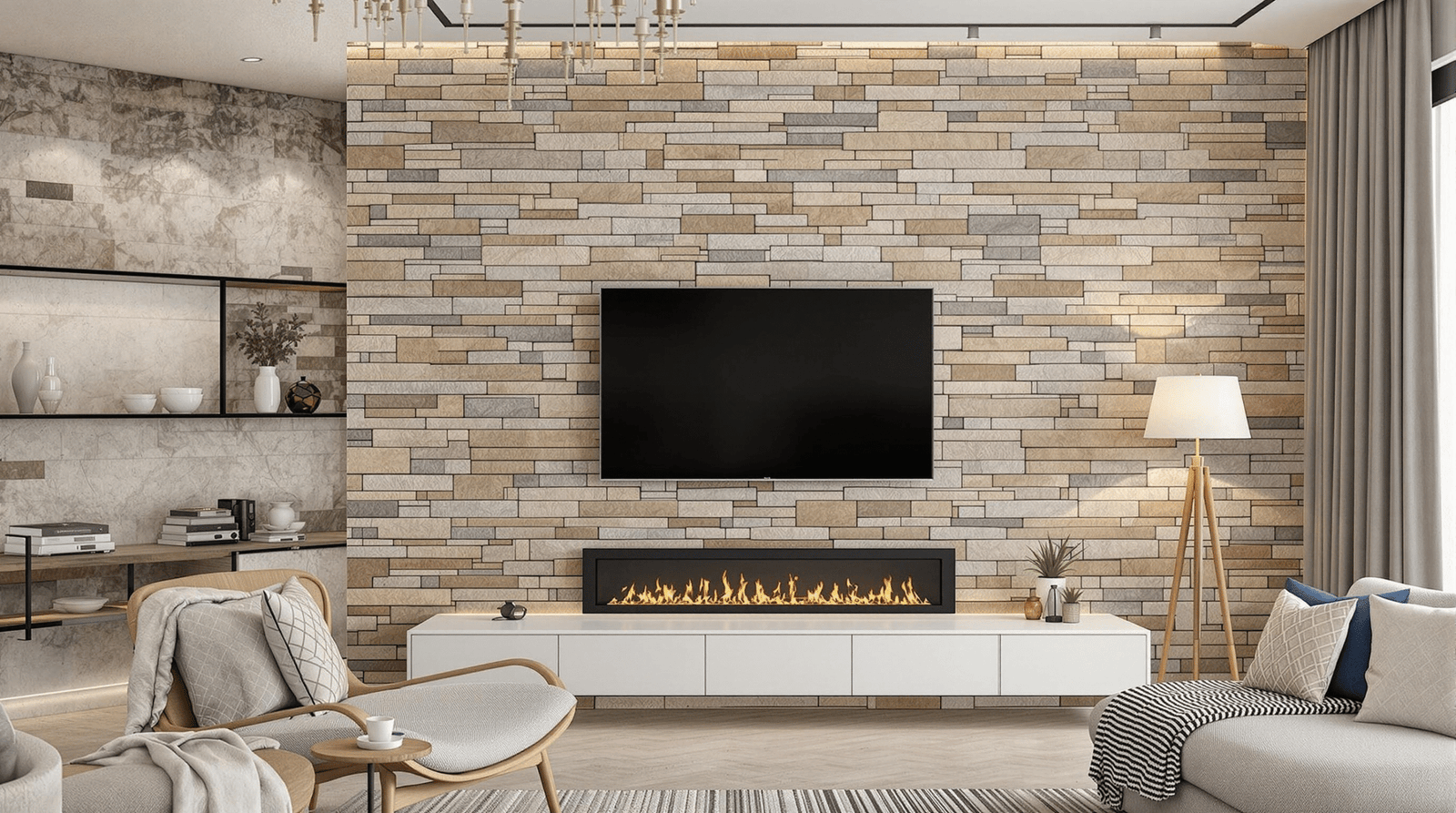
Flexible Stone’s Bendability Eliminates Breakage
A 20ft container of flexible stone holds 3,870 sqm — 4.8x more than ceramic tile.
I’ve watched a $50,000 order turn into a landfill-bound pile of rubble because the pre-production sample looked perfect, but the mass production run shattered in transit. That buyer learned the hard way: sample approval means nothing if the material can’t survive the actual logistics chain. Flexible stone solves this at the material level.
The core mechanism isn’t complicated. Traditional ceramic tiles and natural stone slabs are rigid. When a forklift hits a pallet too hard, or a container hits rough seas, that energy transfers directly through the material. Micro-fractures form. Corners snap. By the time the container arrives at Port of Rotterdam or Los Angeles, 3% to 8% of the order is unusable. That’s not an estimate — that’s what freight adjusters see on claims forms for rigid cladding.
- Bend radius: Flexible stone panels with the internal fiberglass mesh reinforcement can wrap around a 200mm radius column without cracking. This same property absorbs impact during transit rather than transmitting it.
- Impact absorption: Drop a rigid tile corner-first from 1 meter: shattered. Same test on a 3mm-thick flexible stone panel: the corner compresses slightly and rebounds. No chip, no crack, no claim.
- Real damage data: Internal shipping logs across multiple export markets show flexible stone damage claims running under 0.3% of total shipped volume. Compare that to the 5% to 8% rate common with 1200x600mm ceramic tiles in containerized freight.
The bendability also rewrites how you pack a container. Rigid panels need foam spacers, corner protectors, and carefully calculated air gaps. Flexible stone ships flat-stacked on standard export pallets — 16 sheets per carton, 14 cartons per pallet, 224 sheets totaling 161.28 square meters per pallet unit. One 20GP container loads 24 pallets: 5,376 sheets, approximately 3,870 square meters. No wasted cubic volume on protective dunnage.
For the procurement director calculating landed cost per square meter, this changes the equation entirely. When you eliminate breakage from your landed cost model, you stop over-ordering 8% buffer stock. You stop paying duty on material that arrives as waste. You stop explaining to the project manager why the job site is short 300 square meters with a 6-week lead time to replace it.
One caution worth stating plainly: bendability does not mean indestructibility. If a panel arrives with the glass fiber mesh exposed at the edge, reject it. That’s a manufacturing defect where the polymer matrix didn’t fully encapsulate the reinforcement layer. A proper panel should have clean, fully sealed edges. During sample approval, bend a corner 90 degrees and check for delamination. If the layers separate, the batch fails quality tolerance.

Faster Turnaround & Lower Inventory Holding Costs
Most importers don’t calculate that inventory sitting for an extra 30 days wipes out their negotiated discount.
Here’s where flexible stone solves a logistics problem that traditional stone importers just learn to live with. Standard ceramic tile or natural stone orders out of China or Italy run on 45-60 day production cycles, minimum. Then you’re looking at 28-35 days on the water. From PO issuance to warehouse receipt, 90 days is considered fast. Flexible stone production — specifically the modified clay material under HS code 6810191000 — operates on a fundamentally different timeline. The mold press molding process doesn’t require kiln firing, so a standard 20ft container order (roughly 3,870 sqm based on the small panel 1200x600mm format) ships in 15-20 days, not two months.
The inventory math gets brutal when you compare holding costs. A distributor sitting on 800 sqm of ceramic tile per 20ft container has maybe 3-4 project-ready SKUs. The same container with flexible stone hauls 3,800+ sqm across potentially 6-8 different textures — travertine, slate, rammed earth, line stone, even the newer translucent stone at 2mm thickness for feature walls. You’re stocking a showroom’s worth of variety in one shipment. When a contractor needs 200 sqm of a specific pattern for a hotel lobby renovation that starts Monday, you either have it or you don’t. The distributor who doesn’t have it loses the order to someone who does. That’s not a logistics metric — that’s revenue leakage.
- Sample approval cycle:Existing stock samples ship in 2-3 days. Custom color matching takes 7 days. Compare that to 3-4 weeks for custom glaze samples on ceramic tile. Sample approval is the #1 bottleneck that delays project starts — flexible stone collapses that timeline.
- Mixed container logic: Big boards (1200x2900mm) in 4 wooden cases can mix with 12-14 pallets of small panels in one 20GP. No other stone cladding category supports this kind of format mixing within one shipment. You’re stocking fast-turn small formats alongside high-ticket large format boards from one PO.
- Re-order responsiveness: When a product sells, you re-order. The 15-20 day production cycle means your re-stock hits the warehouse before your competitor’s initial order even leaves the factory. For seasonal markets like resort renovations in the Caribbean or UAE, missing a 3-week installation window costs an entire year of sales.

| Factor | Flexible Stone (JMS) | Traditional Alternative | Benefit for Importers |
|---|---|---|---|
| Production Lead Time | Regular styles: 15–20 days; 20 containers: 30–40 days; Sample: 2–3 days (existing), 7 days (custom color) | Often 6–12 weeks for natural stone slabs or large ceramic tiles due to quarrying and firing | Enables 3x faster project restocks and reduces risk of stock-out on fast-moving designs |
| MOQ Flexibility | 300 sqm for standard stock; 300 sqm for custom color or texture; Low MOQ supports small batch trial orders | Often a full container (800–1200 sqm) or higher for natural stone/tiles, forcing large upfront investment | Lower capital lock-in; test market demand with minimal inventory risk |
| Container Density (20ft) | ~3,870 sqm in one 20ft (small panels 1200x600mm) | Ceramic tiles: ~800 sqm; Natural stone: even less due to weight limits | 4.8x more coverage per container, drastically reducing landed cost per sqm and warehousing space |
| Inventory Space & Handling | Weight: 3–6 kg/sqm; flat-packed cartons on pallets; easy manual handling | 30–60 kg/sqm for stone; requires heavy equipment, pallet racking, and more floor space | Frees up 70%+ warehouse volume; reduces material handling costs and insurance premiums |
| Damage & Claims | Zero breakage – bendable, flexible; virtually no transport damage | 5–15% damage rate for stone/tiles during shipping; costly claims and customer returns | Eliminates time spent on claims and replacement logistics; improves customer satisfaction |
| Working Capital Cycle | Faster order-to-resell due to shorter lead times + high container yield; sell-through rate up | Long lead times and slow moving inventory ties up capital | Improves cash flow; inventory turns 2–3x faster, yielding higher ROI per square foot of warehouse |
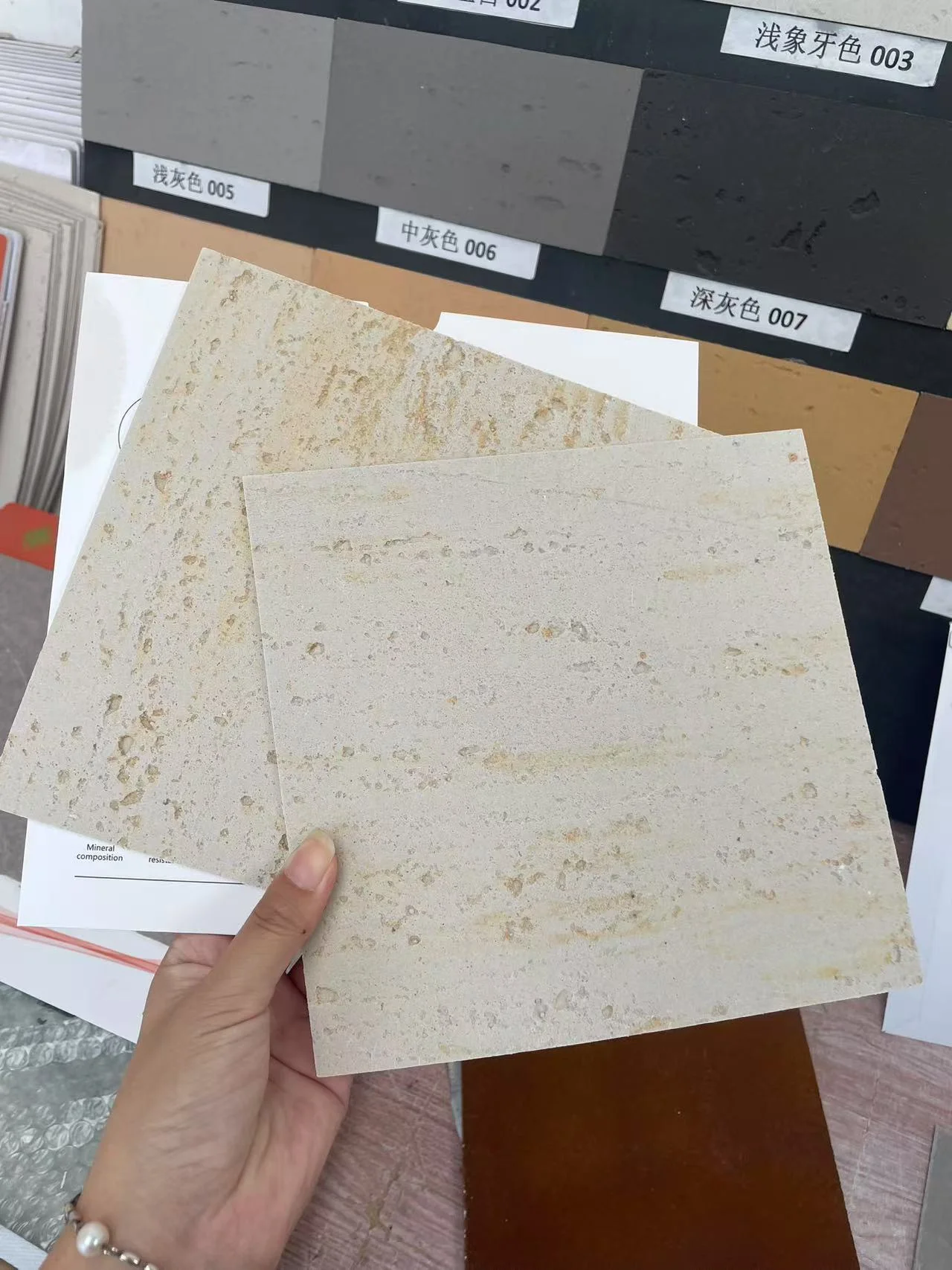
Growing Demand for Lightweight Green Materials
Lightweight cladding isn’t a design preference in 2026 — it’s a logistics cost weapon.
I watched a distributor in Gdansk run the numbers on two identical 20ft containers last quarter. One packed with 18mm porcelain slabs managed 780 sqm. The other, filled with 1200x600mm flexible stone panels at 3mm thickness, hit 3,870 sqm on the packing list. Same container cost. Same sailing schedule. Five times the sellable surface area arriving at the warehouse. That math doesn’t need a consultant to interpret — it rewrites margin sheets immediately.
The material weight lands at 3.5 kg per square meter for the standard Travertine texture. Ceramic tiles run 18 to 25 kg per sqm. Natural granite pushes past 30 kg. Empty weight savings compound through every handling step: fewer laborers on the forklift, lower LCL consolidation fees, reduced warehouse racking requirements. For island markets like Fiji or Cyprus where every kilogram on the vessel carries a surcharge, the landed cost difference between flexible stone and rigid alternatives consistently exceeds 40%.
The sustainability documentation isn’t marketing fiction, either. The product body is modified clay with powdered natural stone — no resin-heavy composite or high-temperature kiln firing. When a UK contractor needed ASTM E84 Class A fire data and a CE mark for a hotel retrofit in Manchester, the internal test reports cleared both in under 48 hours. EU importers sourcing under the HS code 6810191000 regularly report lower duty rates compared to ceramic classifications under 6908, a tariff difference that repeats on every shipment.
- Freight density benchmark: One 20ft container holds 5,376 pcs of 1200x600mm flexible stone — 3,870 sqm versus roughly 800 sqm of standard ceramic tile. That’s a 380% surface area advantage on the same shipping invoice.
- Carbon and certification: Modified clay base skips energy-intensive kiln cycles required by porcelain. ASTM E84 Class A and CE certification bridge the gap between green procurement checklists and fire-safety compliance — both demanded by hotel group RFPs in 2026.
- Breakage and waste: Rigid stone chips in transit. Flexible stone arrives flat-packed on pallets with sub-1% damage rates logged across hundreds of containers. Less waste means inventory forecasts hold — no emergency reordering to cover broken material.
Impact data cuts both ways. Lighter shipments reduce Scope 3 transport emissions per square meter of cladding installed. Developers chasing BREEAM or LEED credits on multi-family projects now request embodied carbon figures in the sample approval stage — a conversation traditional stone importers struggle to join without the numbers.
How JMS Decor Supports Importers (Low MOQ, OEM, Samples)
The real test of a supplier isn’t the sample—it’s whether container 3 matches sample 1.
After managing supplier audits across multiple export markets, I’ve seen a single discrepancy between a pre-production sample and mass production wipe out a $50K order. You approve a travertine sample with subtle veining; six weeks later, the container shows up with aggressive orange overtones. The factory tells you it’s within ‘quality tolerance.’ Your buyer in Hamburg doesn’t care about tolerances—they care about consistency.
That’s why importers who work with JMS Decor eventually stop price-shopping on Alibaba. Not because the FOB pricing is the lowest—it rarely is—but because the sample approval process actually means something. Here’s what that looks like in practice.
- MOQ that lets you test the market: Regular stock designs start at 300 sqm. Custom color or texture orders also start at 300 sqm. That’s low enough to run a pilot with a key contractor or fill a small retail display without betting a full container on an untested SKU. For the reasoning behind that 300 m² threshold — and the cases where we flex below it — see the flexible stone MOQ guide.
- Sample approval that scales: A standard 20x20cm sample ships within 2-3 days for existing textures. Custom color matching takes 7 days. What matters more: the same hands that made your sample will run your bulk order. No bait-and-switch between the sample lab and the production line.
- OEM without the usual chaos: You want a proprietary travertine pattern exclusive to your brand? The tooling lead time depends on complexity, but you’re not guessing. JMS has over 100 existing molds and a design team that pushes new textures weekly. You get CAD proofs before the mold is cut. You approve the first-off sample before mass production starts. No surprises.
- Accessories you don’t have to source yourself: Most factories ship panels and wave goodbye. JMS now produces matched adhesive and joint sealant specifically formulated for flexible stone. For importers building a one-stop brand, that eliminates the chaos of qualifying third-party chemistry that might delaminate the panels in three years.
The bottom line: If you’re bringing flexible stone into a new market, the logistical advantages mean nothing if the product fails on the wall after 18 months. JMS’s support structure—low trial MOQs, locked sample-to-production consistency, brand-exclusive OEM, and system-matched installation chemicals—is what turns a calculated bet into a repeatable supply chain.
Why Importers Are Switching to Flexible Stone
Key Takeaways
- One 20ft container holds ~3,870 sqm of flexible stone — nearly 5× the coverage of ceramic tile at the same freight cost.
- HS code 6810191000 (verify with broker) typically clears at 3–7% duty vs 8–12% for ceramic tile.
- Near-zero transit breakage (<1%) eliminates buffer-stock overordering and insurance claim overhead.
- MOQ starts at 300 sqm — test markets before committing to full container loads.
The switch to flexible stone isn’t about a lower unit price alone. It restructures your landed cost by tripling container load factors, sliding into a lower tariff code, and eliminating the breakage claims that eat margin on rigid cladding. For an importer running steady container volumes, those three levers compound into a serious per-square-foot advantage.
Lock down a pre-production sample approval so you can set an agreed quality tolerance before committing to FOB pricing. Then, on your next supplier call, use the benchmark that separates talk from real logistics: one 20‑foot container of flexible stone delivers roughly 3,800 square meters of usable cladding — nearly five times what a ceramic tile shipment nets at the same freight cost.
Common Questions About Flexible Stone Logistics
How many sqm of flexible stone fit in a 20ft container?
A 20ft container holds roughly 3,870 sqm of standard flexible stone panels. This is nearly 5 times the coverage of ceramic tile in the same footprint, drastically cutting per-sqm freight cost. Request loading plans for mixed big boards and small panels.
What HS code does flexible stone use?
Flexible stone ships under HS code 6810191000. That classification avoids the higher duty bands typically applied to ceramic or porcelain tile, lowering tariff liability. Verify HS 6810191000 with your customs broker before finalizing orders.
Does flexible stone break in transit?
Breakage is almost eliminated because flexible stone can bend and absorb shock. Standard export pallet or wooden case packaging keeps loss claims well below rigid stone or tile shipments. Expect near-zero breakage when packed per export pallet standard.
What is the MOQ for wholesale flexible stone?
Regular stock designs start at 300 sqm, and custom colors or textures are also available from 300 sqm. This low MOQ lets importers test markets without heavy upfront inventory risk. Confirm MOQ thresholds for your specific finish and size request.
What is the lead time for large flexible stone orders?
Standard patterns ship in 15–20 days; large bulk runs like 20 containers need around 30–40 days. This faster turnaround reduces inventory holding time compared to heavy quarry stone order cycles. Align project timelines with the 15–40 day production window.