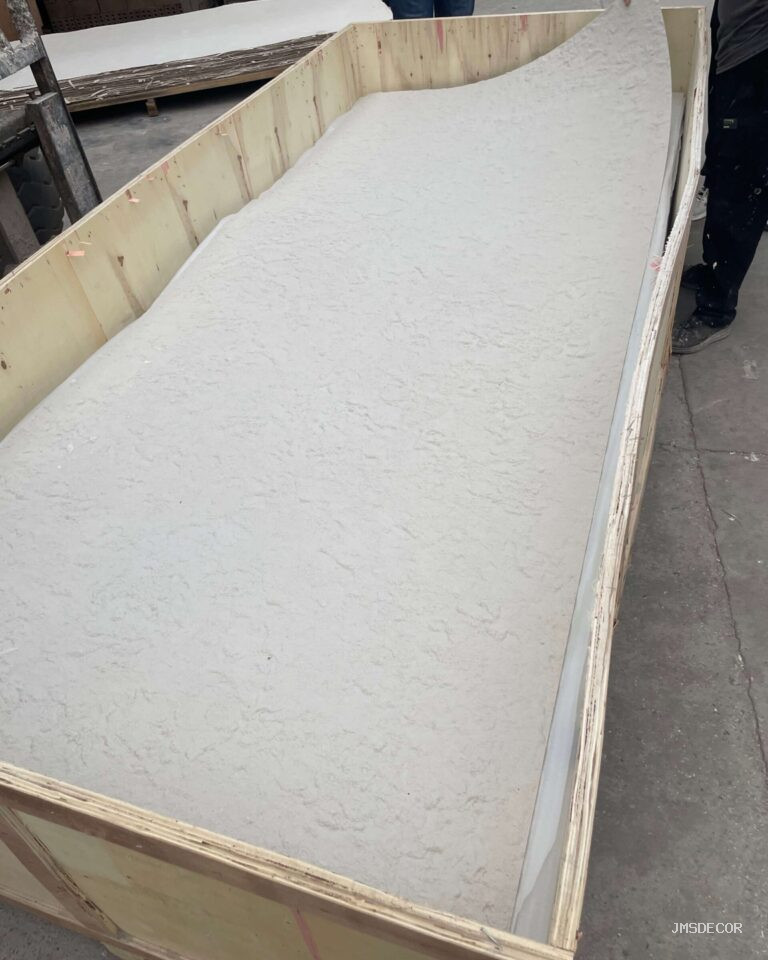
Hotel corridors age from the waist down: luggage wheels, shoe toes, housekeeping trolleys and vacuum bumpers all live in the same metre of wall, and every scuff lands where the eye goes next. Flexible stone handles the traffic better than paint and better than most tile — but it is not self-healing, and the corridor that stays premium is the one whose scuffs are removed correctly and early. This guide covers scuff removal as a maintenance discipline: what a scuff actually is on a printed mineral face, the removal ladder from softest to strongest, the products that are safe and the ones that are not, and the point at which a scuff stops being a cleaning job and becomes a panel swap.
What a scuff actually is — and why that decides the method
A scuff on flexible stone is material from the other object left on the surface — rubber, leather, paint, plastic — not damage to the stone itself. That distinction decides everything: a deposit sits on top of the printed face and comes off with the right solvent and a soft cloth, while true damage — an abrasion through the print into the body — is not a cleaning problem at all. The first step of every scuff job is therefore the fingernail test: if the mark catches and peels, it is a deposit and the ladder below applies; if it sits flush in the surface and reflects differently, it is damage, and the repair path from our repair guide takes over.
The second distinction is depth of staining. Rubber scuffs lift with mechanical action and a mild solvent. Dye transfer — the blue of a denim jacket, the pigment of a wet cardboard box — has soaked into the face’s microscopic texture and needs a different approach than a deposit. Confusing the two is how walls get scratched: someone attacks a dye stain with an abrasive pad, and the deposit comes off along with the print’s sheen.
The removal ladder — softest first, always
Scuff removal escalates through a fixed ladder, and each rung is tried before the next. Rung one: a dry microfibre cloth and pressure — a surprising share of fresh rubber scuffs lift with friction alone. Rung two: warm water with a drop of neutral-pH detergent on a damp microfibre cloth, worked in small circles, then dried. Rung three: isopropyl alcohol on a cloth — the workhorse solvent for rubber and plastic deposits — tested on a spare panel or hidden spot first, per the care rules in our maintenance guide. Rung four: 1. 専用で商業用デカル・粘着剤除去剤。パッチテスト済みで、壁に直接注ぐのではなく布に付けて使用します。 2. ステップ5: 3. メラミスポンジ。wet(湿らせた状態)で使い、優しく、汚れ部位のみに。唯一許可される研磨系ツールですが、光沢を曇らせる可能性があるため最後の手段としてのみ使用します。
4. どのステップでも表面に触れてはならないもの:アセトンや強力溶剤混合液、研磨クリームの類、スカーディングパッド、鋼タワシ、近接からのスチーム。これらすべてが表面ごと傷を除去し、治療が病気よりも悪化する結果となり、かつこの階段方式が設けられている理由です。
5. 傷が集中する箇所と、メンテナンス計画での対応
6. 傷の付き方は歩行量と飽きるほど信頼性良く対応しており、すべてのドア sw起地点のコーナームートル、ハウスキーピング台車の経路裏の壁面、エレベーターやゴミ収集室脇の腰高帯、カートが回転するサービスドア周りの2メートルです。ロビーで実行する廊下メンテナンスプラン—私たちのリズム—はこのゾーンの一度マップし、毎週の清掃は傷が実際に発生している場所に集中し、壁全体を均等に拭くことはありません。 ロビープランガイド 7. プレベンションは最も悪影響のあるゾーンでループを閉じます:台車が旋回する地点へのコーナーガードとバンパーレール。構造に取り付けられ、廊下のスタイルに合わせて仕立てられたものが、仕上げ面が受けるはずの衝撃を代わりに受け止める—これは私たちの施工例から適用した保護論理で、傷の高さに合わせられます。デザイン上可視ハードウェアが認められない箇所では、そのメートル単位の部分については除去ラダーのスケジュールにより頻繁に触れることを前提とし、元の注文時のバッチ一致スペアパネルが、ある日傷がダメージに変わる事態に対応できるようにします。
8. ハウスキーピング指示書に記載されている内容 top-edge guide 9. スタッフ入れ替わりにも残る指示書は、1ページ・ラミネート加工・具体的であるべきです。製品名付きの段階順のラダー。太字で強調された2つの絶対禁忌項目。ネイルテストと、そのテストで不合格なマークはより強い薬品ではなくエンジニアリング担当へ引き継ぐというルール。そしてエスカレーションパス:ハウスキーピングが除去できるもの、撮影・報告すべきもの、エンジニアリングが決定すべきもの。掃除と補修の違いは判断力一つであり、訓練のない判断が研磨材を石に使う結果につながります。スタッフローテーションのあるどこでも書面標準は口頭標準を上回る、と当社の crew向けにも同じポイントを示しています。
10. どの時点でスクラッチがパネル交換となるか
11. クリーニング手順を終了させる3つのトリガー。表面を切り込んだ摩耗(任意の角度で光の反射が違うくすみ軌道として見える)。ステップ4を通過しても薄まらない染料染み。そして繰り返し清掃によって局部的光沢が変化し、清潔でも1メートル単位で区別できるPatch状態となっているスクラッチゾーン。それぞれのトリガーがパネル交換の判断へ移譲します—半日で完了する同バッチ区間の交換で、引き渡し時には不可視。当社のバッチ管理論理こそが交換を可能にするものです。交換はメンテナンス失敗ではなく、メンテナンスプランが機能している証拠であり、壁の設計には恒久的損傷への回答が含まれており、研磨材 실험をするより遥かに安上がりです。 training guide makes the same point for crews: a written standard beats a verbal one everywhere staff rotate.
When does a scuff become a panel swap?
Three triggers end the cleaning path. An abrasion that has cut the face — visible as a dull track that catches light differently at any angle. A dye stain that survives rung four without lightening. And a scuff zone where repeated cleanings have locally changed the sheen, so the metre now reads as a patch even when clean. Each trigger hands the decision to the panel swap: a same-batch section replaced in a half-day, invisible at handover — the batch logic from our consistency guide is what makes the swap possible at all. The swap is not a failure of maintenance; it is the maintenance plan working — the wall’s design included the answer to permanent damage, and using it is cheaper than any experiment with abrasives.
How does scuff behaviour differ on textured faces?
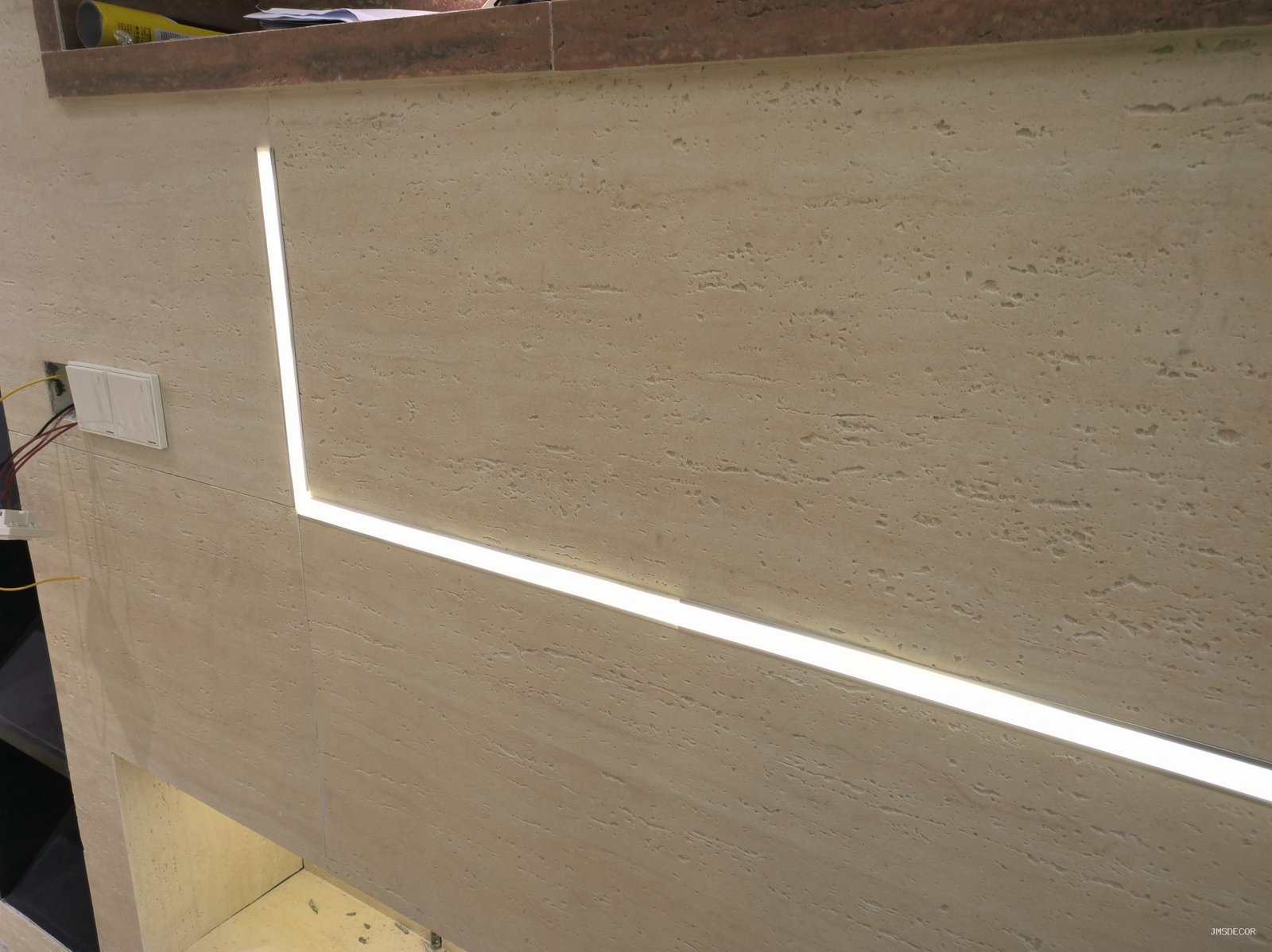
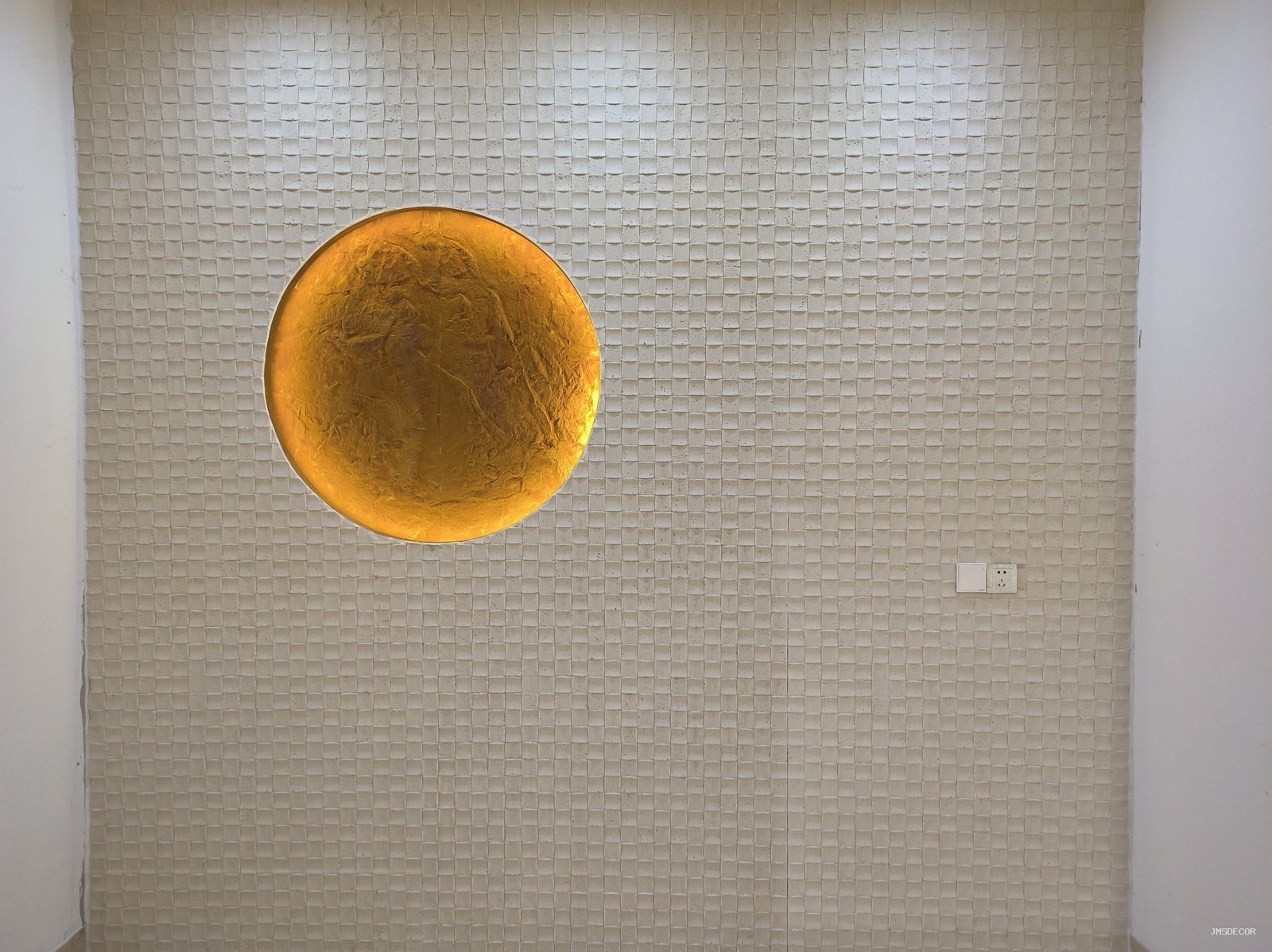
The ladder is the same; the surface changes the physics. On a fine travertine face, deposits sit on a near-flat plane and the cloth reaches all of them. On deep-textured faces — brick-look, coarse stratification — the deposit sits on the peaks and hides in the valleys, and a flat cloth pass removes half the mark while dragging the rest into the texture. The technique adjusts: a soft brush at rung two works the valleys, the solvent at rung three goes on the cloth and into the texture with the brush, and the judgment at rung five is stricter, because a melamine sponge on deep relief knocks the peaks off. Textured corridors also hide their own ageing — the scuff you cannot see is still there, and the quarterly photo walk from our maintenance plan guide is what finds it under raking light.
Pattern choice for high-scuff corridors follows from this: the fine-to-mid textures clean fastest and show least, which is why the pattern selection logic from our selection guide weights maintenance as well as looks — the corridor that cleans in rung two forever is the corridor that stays premium.
What the removal record looks like in a real hotel
The discipline that keeps a corridor premium is visible in its paperwork, and the scuff record is the smallest, most revealing page in it. Every removal beyond rung two gets a line: location, date, rung used, product, result. Two things emerge from that page over a season. The scuff map — which metres generate which marks from which traffic — that turns the prevention budget from a guess into a schedule. And the pattern — zones where rung three is becoming rung four — that flags either a traffic change (a trolley route moved, a door swing altered) or a face that is starting to age locally. The engineering file from our ロビープランガイド holds the page, and the quarterly review reads it like a trend chart.
The record also protects the housekeeping team. A wall whose scuff history is logged cannot be written up later as neglect, and a team whose ladder is followed cannot be blamed for a face that finally needed the panel swap the plan always said it would. Discipline is cheap; ambiguity is not.
FAQ
Will alcohol damage the printed face?
Isopropyl alcohol on a cloth, patch-tested first, is the standard rung-three solvent for deposits on this class of mineral face. What damages the face is undiluted aggressive chemistry left to dwell, or abrasion — the ladder exists to keep both off the wall.
Can I use a magic eraser on every scuff?
Only at rung five, wet, gently, and on the deposit. Used dry or with force, a melamine sponge is a fine abrasive and it will dull the sheen — the one tool on the ladder that can create the damage it is meant to remove.
How fast should a scuff be removed?
As soon as it is found. Fresh deposits lift at rung one or two; deposits that sit for weeks bond harder and stain deeper, so the weekly corridor clean’s scuff pass is what keeps the whole wall on the easy rungs.
What if the scuff is on a textured pattern?
The same ladder, with cloths worked into the relief — and the expectation that deep-textured faces hold deposits more stubbornly. The patch test matters more, and rung five is rarer, because texture hides what smooth faces show.
Remove scuffs by the ladder, map the zones, and let the panel swap be the plan’s answer to real damage. The care-supported range is on the flexible stone veneer page, and safe cleaning-chemical handling in hospitality is published by OSHA.