

flexible stone veneer installation cost is the first checkpoint buyers should lock before they approve a supplier, budget, or production slot. You’ve been handed the schedule for a 10,000 sq ft retail flagship. The general contractor wants the stone cladding done in five days. Your typical natural stone crew would need eight, plus curing time. That’s where the conversation about flexible stone veneer installation cost savings starts — not with material aesthetics, but with calendar math. For a shop fitter, the difference between hitting a deadline and eating penalty fees often comes down to one material choice.
The numbers are straightforward. A standard flexible stone veneer panel weighs 4 to 8 kg per square meter. Traditional stone runs 50 to 70 kg. That weight gap eliminates the need for structural reinforcement, heavy equipment, and specialized masons. A two-person crew with construction adhesive and a utility knife can finish a 1,000 sq ft wall in one to two days. No mortar mixing. No 24-hour curing delays. The labor cost drops to $3 to $8 per square foot, compared to $10 to $20 for traditional veneer. That 40 to 60 percent reduction in labor spend is where the real margin lives.
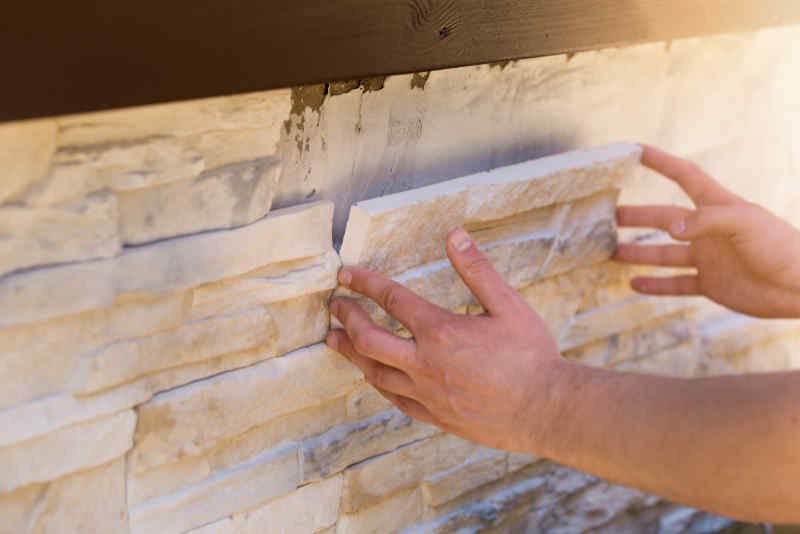
Why Most Shop Fitters Overpay for Stone Cladding
A 1,000 sq ft retail wall in traditional stone adds 3-4 days labor plus crane rental — costs competitors never quote.
Traditional stone veneer weighs 50-70 kg/m². For a standard 1,000 sq ft retail wall, that means your crew spends 3-4 extra days just handling material — mixing mortar, cutting with diamond blades, waiting for 24-48 hour curing between courses. Add crane or hoist rental because two men cannot lift a 60 kg slab safely. Add heavy waste disposal fees. Add the structural engineer’s assessment to confirm the wall can bear the load, and potentially reinforcement work that runs over $2,000 for that same area. Competitor articles compare only sticker price per square foot. They ignore this hidden ledger — which can add 40-60% to your total project cost.
-
- Labor cost per sq ft: Flexible stone: $3–$8. Traditional stone: $10–$20. That 40-60% labor reduction comes from adhesive bonding instead of mortar, and cutting with a utility knife instead of a wet saw.
- Installation speed: A 1,000 sq ft wall with flexible stone finishes in 1-2 days — zero curing time. Traditional stone takes 3-5 days plus 24-48 hours mortar set. For a retail fit-out on a penalty clause, those 2-3 lost days can cost more than the material itself.
- Structural reinforcement: At 4-8 kg/m², flexible stone needs no additional support. Traditional stone at 50-70 kg/m² often triggers a structural review and steel bracing — a $2,000+ line item competitors never mention in their cost breakdowns.
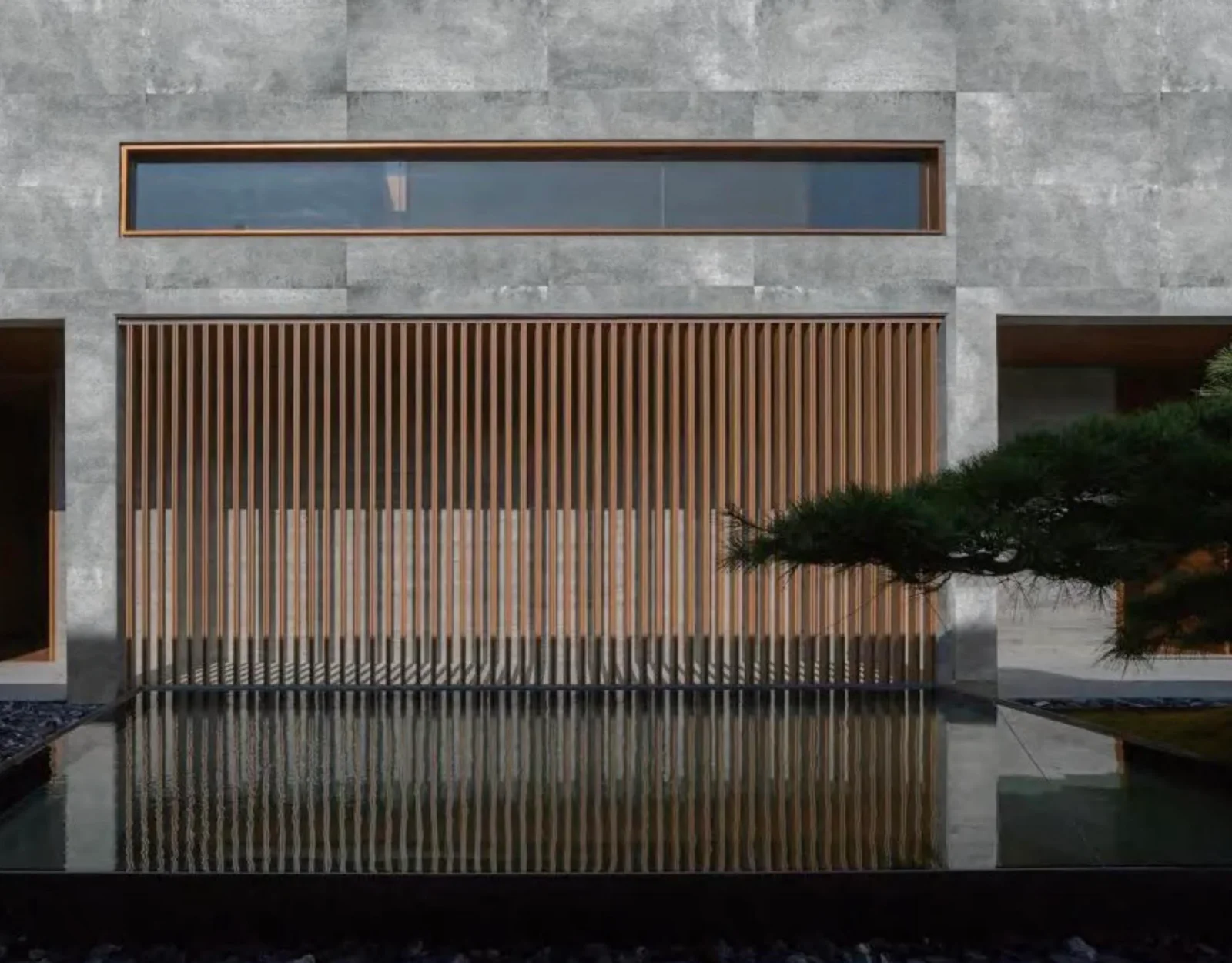
Real Installation Cost Breakdown of Flexible Stone Veneer
Flexible stone veneer cuts labor by 40-60% and eliminates 24-48 hour mortar curing delays.
For a shop fitter managing a 1,000 sq ft retail wall, the decision between flexible stone veneer and traditional natural stone comes down to two numbers: installation time and total labor cost. Traditional stone, at 50-70 kg/m², requires a specialized masonry crew, mortar mixing, and often structural reinforcement. That work takes 3-5 days plus a mandatory 24-48 hour curing period before any finishing touches. In a fast-paced retail fit-out, those two days of downtime can trigger penalty fees from the general contractor — a hidden cost that never appears in the material quote.
Flexible stone veneer, weighing 3.5-6.0 kg/m², changes the math entirely. A two-person crew can install it using construction adhesive and a utility knife. No mortar, no diamond blades, no scaffolding rental. A 200 sq ft feature wall can be finished in one shift instead of two. For the full 1,000 sq ft wall, completion drops to 1-2 days with zero curing time. The labor cost per sq ft falls from $10-$20 (traditional) to $3-$8 (flexible) — a 40-60% reduction. On a 1,000 sq ft project, that’s a labor savings of $7,000 to $12,000.
-
- Material cost per sq ft: Flexible stone: $6-$15. Natural stone: $15-$50. For a 100 sq ft feature wall, material alone saves $2,000 at the mid-range ($10 vs $30).
- Labor cost per sq ft: Flexible stone: $3-$8. Traditional stone: $10-$20. That’s a 40-60% reduction in labor spend — the single biggest line item in any fit-out bid.
- Installation timeline: Flexible stone: 1-2 days for 1,000 sq ft, no curing. Traditional stone: 3-5 days plus 24-48 hour mortar cure. The delay alone can cost $500-$2,000 per day in general contractor penalties.
- Weight and handling: Flexible stone: 3.5-6.0 kg/m². Traditional stone: 50-70 kg/m². No structural reinforcement needed — that saves $2,000+ per 100 sq ft wall area that competitors never mention.
- Shipping cost per container: Flexible stone packs up to 6x more sq meters per container vs natural stone. Per-unit freight cost drops significantly, improving your landed-cost margin.
The hidden trap most cost analyses miss: inconsistent side-edge matching between production batches. Competitors like Ryan Stone Creations quote $6-$15/sq ft for flexible veneer but don’t disclose that thickness variation forces installers to accept visible seams or pay for rework. JMS Decor’s ISO 9001-certified process holds sheet thickness tolerance within ±0.5mm, eliminating that hidden cost. When you’re bidding against three other fit-out firms, that seam-free finish is the difference between winning the contract and eating rework costs.
| Cost Category | Placage en pierre flexible | Placage de pierre traditionnel | Épargne |
|---|---|---|---|
| Coût des matériaux | $6 – $15 / sq ft | $15 – $50 / sq ft | Up to 70% on material alone |
| Labor Cost | $3 – $8 / sq ft | $10 – $20 / sq ft | 40-60% reduction in labor spend |
| Installation Time (1,000 sq ft) | 1-2 days (no curing) | 3-5 days + 24-48 hr curing | 60% faster project completion |
| Renforcement structurel | Not required (4-8 kg/m²) | Often required (50-70 kg/m²) | Eliminates $2,000+ in reinforcement costs |
| Shipping Cost (per container) | Up to 6x more sq meter per container | Standard container load | Significantly lower per-unit freight cost |
| Rework & Waste | <1% defect rate (ISO certified) | Higher breakage & seam rework costs | Eliminates hidden rework expenses |
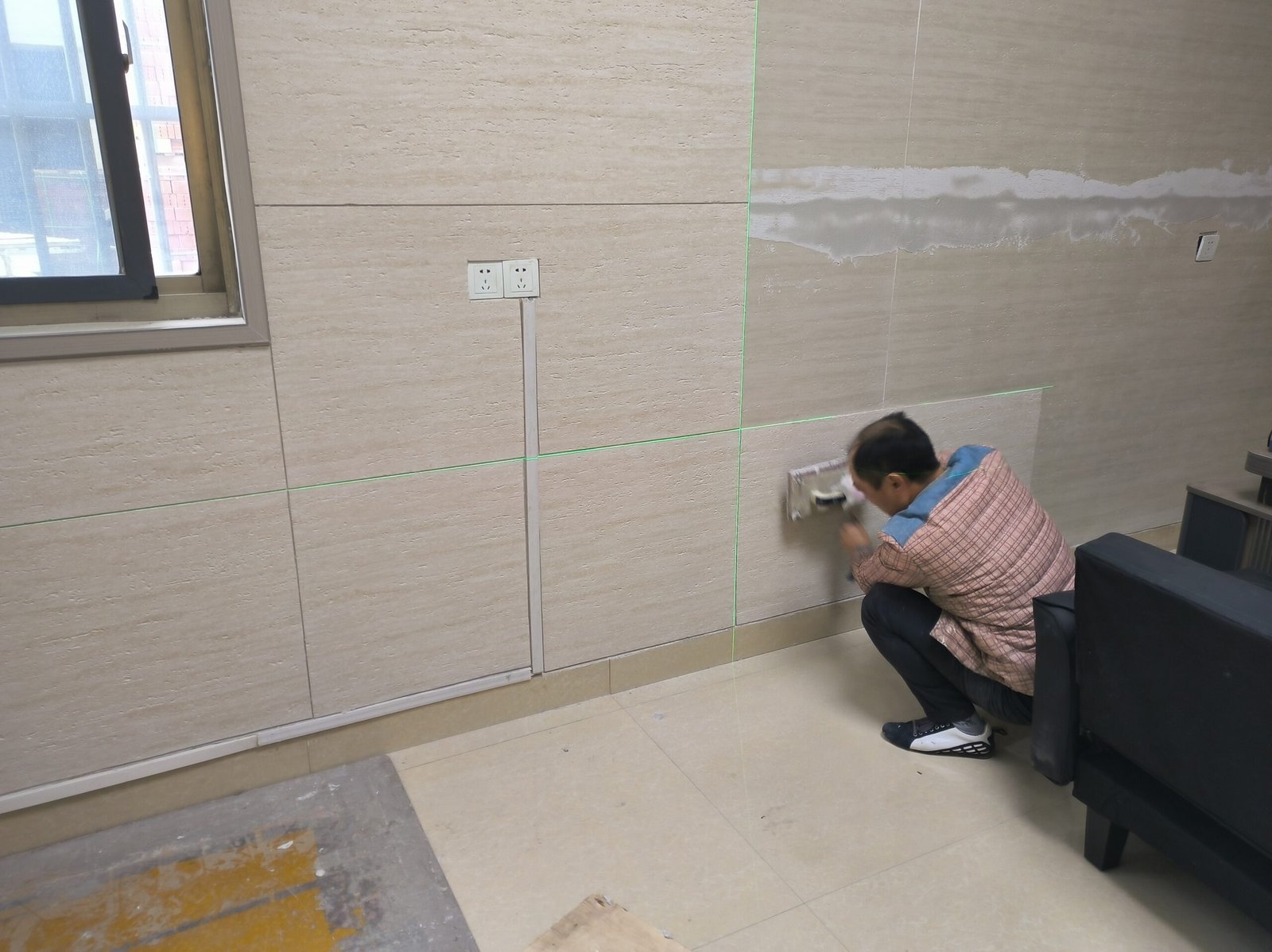
Flexible Stone vs Traditional Veneer: Which Cuts Time Better?
Flexible stone veneer cuts a 1,000 sq ft wall to 1-2 days, no curing delays.
You’re bidding a retail fit-out with a 14-day window. The general contractor has already flagged that any delay triggers a $500/day penalty. Traditional stone veneer, at 50-70 kg/m², requires a 3-person crew, mortar mixing, and a 24-48 hour curing period before grouting. That’s 5-7 days for a 1,000 sq ft wall — before you even start the next trade. Flexible stone veneer, weighing 3.5-6.0 kg/m², bonds with construction adhesive that sets in under 2 hours. Two workers can finish that same wall in 1-2 days. No crane, no mortar, no waiting.
The real cost isn’t just the material spread. It’s the schedule. If your bid assumes 5 days for stone cladding and the competition bids 2 days using flexible stone, you lose the job on timeline before price is even discussed. For a 10,000 sq ft retail rollout, that difference compounds to weeks of saved calendar time.
-
- Installation speed: Flexible stone: 1-2 days per 1,000 sq ft. Traditional stone: 3-5 days + 24-48 hour mortar cure. That’s a 60-70% reduction in wall-cladding time.
- On-site cutting: Flexible stone cuts with a utility knife — no diamond blade, no wet saw, no dust containment. For curved columns or signage backings, you trace and cut in minutes. Traditional stone requires a wet saw for every angle, adding hours per column.
- Schedule control: Mortar-based stone forces a 24-48 hour pause between installation and grouting. If rain hits an exterior job, that pause extends. Flexible stone’s adhesive cures in 2 hours. You control the calendar, not the weather.
- Hidden delay cost: Competitor cost breakdowns ignore curing time. For a fast-paced retail fit-out, a 2-day mortar cure can trigger penalty fees from the GC. Flexible stone eliminates that risk entirely.
This isn’t a theory. JMS Decor supplies flexible stone veneer to shop fitters who have cut their wall-cladding schedules by 40-60% on projects for global retail brands. The material itself is the tool for schedule compression.

How to Source Flexible Stone Veneer Without Hidden Costs
Inconsistent panel thickness is the #1 hidden cost in flexible stone sourcing.
The most common sourcing trap shop fitters fall into is treating flexible stone veneer like a commodity. You compare per-sq-ft material price, get a good number, place a container order, and then discover on site that panels from batch A don’t match batch B at the edges. The result: visible seams every 600mm, rework orders, and a conversation with the general contractor about who pays for the delay.
-
- The root cause: Thickness variation across production runs. Most flexible stone suppliers do not maintain ISO 9001 process controls, so panel thickness drifts ±1.5mm or more between batches. When you butt two panels together, that 1.5mm step creates a shadow line that no grout hides.
- The fix: Source from a supplier with ISO 9001/14001 certification (JMS Decor holds both). Our production line holds thickness tolerance to ±0.5mm. That means every panel, across every batch, matches the sample you approved. No surprises during installation.
- Your verification step: Before committing to a container, request a matched set of 5 sample panels from different production dates. Lay them edge-to-edge on a flat surface. If you can feel a lip with your fingernail, that supplier will cost you rework money.
JMS Decor offers a low MOQ of 10 pieces precisely so you can validate batch consistency before scaling. Order a test set, install a 50 sq ft mock-up, and confirm the seam quality matches your project standard. That 10-piece order is your insurance policy against a 500-piece headache.
Export-standard packaging is another hidden cost trap. Standard cardboard-and-stretch-wrap fails in container transit, especially on 40-day ocean routes. JMS Decor ships flexible stone veneer in wooden crates with foam interlayers and corner protectors. Internal customer feedback shows a breakage rate under 1% — not the 5-8% you see with budget packaging. Request packaging photos and a breakage guarantee in your contract.
| Hidden Cost Risk | How JMS Decor Eliminates It | Benefit to Your Project |
|---|---|---|
| Inconsistent Panel Thickness | ISO-certified production with ±0.5mm thickness tolerance | No visible seam gaps, zero rework cost, flawless finish |
| Mortar Curing Delays | Adhesive-based installation, no curing time needed | 1,000 sq ft wall completed in 1-2 days, no penalty fees |
| Structural Reinforcement Needs | Panel weight of 4-8 kg/m² vs. 50-70 kg/m² for natural stone | Eliminates $2,000+ in structural assessment and reinforcement costs |
| High Shipping Costs per Sq Ft | Lightweight panels allow up to 6x more sq meters per container | Significantly lower per-unit freight cost, better container utilization |
| Large Minimum Order Quantities | Wholesale orders start from just 10 pieces | Low-risk trial before committing to container orders |
Conclusion
The math on a retail fit-out is simple: a 30-50% cut in total installation cost and a 40-60% faster timeline means you either win the bid or protect your margin. Flexible stone veneer delivers that. But only if the panels fit tight, batch to batch, without forcing your crew to rework seams.
Review the product specs and weight data on the catalog page. Compare the thickness tolerance against what you are currently sourcing. Then request a free sample to verify the edge match yourself before the next project bid lands on your desk.
Questions fréquemment posées
What are the disadvantages of stone veneer?
Traditional stone veneer is heavy at 50-70 kg/m², requiring structural support and specialized masons, which drives up labor and logistics costs. Flexible stone veneer from JMS Decor solves this at 4-8 kg/m², but. Always test a sample panel before full order commitment.
What is the easiest stone veneer to install?
Flexible stone veneer is the easiest to install because it cuts with a utility knife and bonds directly to walls with adhesive, no mortar or heavy cutting tools needed. JMS Decor’s. Request a free sample to test installation speed on your project.
Does stone veneer increase house value?
Yes, stone veneer can increase resale value by improving curb appeal and perceived quality, especially in luxury residential markets. However, the ROI depends on local buyer preferences and whether the. Match the veneer style to your local market trends for best returns.
What is a good contract price per square foot for stone veneer?
For flexible stone veneer, a good contract price including materials and labor ranges from $3 to $8 per sq ft, compared to $12–$20 for traditional stone. JMS Decor’s lightweight panels cut. Get a custom quote for your project volume and design specs.
Can flexible stone veneer be installed over existing tile?
Yes, flexible stone veneer can be installed directly over existing tile if the surface is clean, dry, and structurally sound. JMS Decor’s panels bond with adhesive, eliminating the need for. Always test adhesion on a small area first to confirm bond strength.

 French
  English
  Spanish
  Arabic
  German