Un dosseret de cuisine mal choisi n'est pas seulement une erreur de conception, c'est aussi un problème d'entretien à long terme qui entraîne des interventions coûteuses et réduit la rentabilité du projet. Les carreaux traditionnels en céramique ou en pierre, reliés par des joints poreux, créent une surface nécessitant beaucoup d'entretien : elle retient la graisse, se tache facilement et nécessite des produits chimiques de nettoyage spécifiques ainsi qu'une main-d'œuvre spécialisée.
Pour les constructeurs, les concepteurs et les gestionnaires immobiliers, cela se traduit directement par des réclamations de la part des clients, des demandes de garantie et un frein opérationnel qui sape la valeur de l'installation initiale.
Ce guide va au-delà de la simple esthétique pour proposer une analyse technique des systèmes de carrelage souples sans joint. Nous détaillerons les avantages de la pose en lés de ce matériau, ses performances face à l’huile et aux taches grâce à la technologie de nano-vitrification, ainsi que les données essentielles relatives à la résistance à la chaleur pour les applications derrière la plaque de cuisson. Considérez ce guide comme votre procédure standard pour prescrire une solution de crédence durable et nécessitant peu d’entretien, qui réponde à la fois aux exigences de design et de performance.

Le cauchemar du nettoyage des joints
La nature poreuse du joint le rend particulièrement sensible aux taches, ce qui explique une tendance claire du secteur : on s'éloigne des nettoyages en profondeur réactifs pour se tourner vers l'entretien préventif et les matériaux sans joints.
Les défis liés au nettoyage traditionnel
Les méthodes traditionnelles de nettoyage des joints sont souvent agressives et posent problème. L'eau de Javel reste un choix courant pour venir à bout des taches tenaces, mais ses vapeurs âcres constituent un inconvénient majeur dans les cuisines fermées. Au-delà des questions de sécurité, l'eau de Javel présente un risque de décoloration des joints colorés, ce qui altère de manière irréversible l'esthétique souhaitée de la crédence et pousse les propriétaires à rechercher de meilleures solutions.
Le passage à des alternatives plus sûres
Le marché réagit aux inconvénients des produits chimiques agressifs en manifestant une nette préférence pour des solutions plus douces. Les nettoyants à base d’oxygène gagnent du terrain, offrant une élimination efficace des taches sans les émanations nauséabondes ni les effets secondaires de décoloration propres à l’eau de Javel. Des mélanges simples à réaliser soi-même, notamment ceux à base de peroxyde d’hydrogène et de bicarbonate de soude, sont également devenus une alternative populaire et accessible pour l’entretien quotidien.
L'essor des produits de jointoiement spécialisés
Le secteur a mis au point une gamme de produits spécialement formulés pour s'adapter à la porosité particulière du joint. Ces nettoyants spécialisés agissent de manière ciblée, éliminant efficacement la saleté incrustée et les taches alimentaires sans causer les dommages collatéraux liés à l'utilisation de produits chimiques polyvalents. Ils sont généralement conçus pour une utilisation en intérieur, en privilégiant un faible dégagement de vapeurs et la sécurité de l'utilisateur, ce qui les rend particulièrement pratiques pour une utilisation en cuisine.
L'accent sur l'étanchéité préventive
Les propriétaires et les entrepreneurs expérimentés privilégient désormais la prévention à long terme plutôt que les nettoyages en profondeur répétés. L'application d'un produit d'étanchéité pour joints de qualité est une étape cruciale après la pose. Cela permet de créer une barrière non poreuse qui repousse les liquides, les graisses et la saleté avant qu'ils ne puissent pénétrer dans les joints. Cette stratégie proactive réduit considérablement le travail de nettoyage à venir et constitue le moyen le plus efficace de préserver l'aspect d'origine de la crédence au fil du temps.
Carrelage souple : l'avantage de la “ feuille ”
Les systèmes de carrelage souples en rouleaux permettent d'éviter les difficultés liées à la main-d'œuvre et aux matériaux que présentent les installations traditionnelles, ce qui en fait un choix pratique pour les rénovations rapides et les projets où il est essentiel de réduire au minimum les temps d'arrêt.
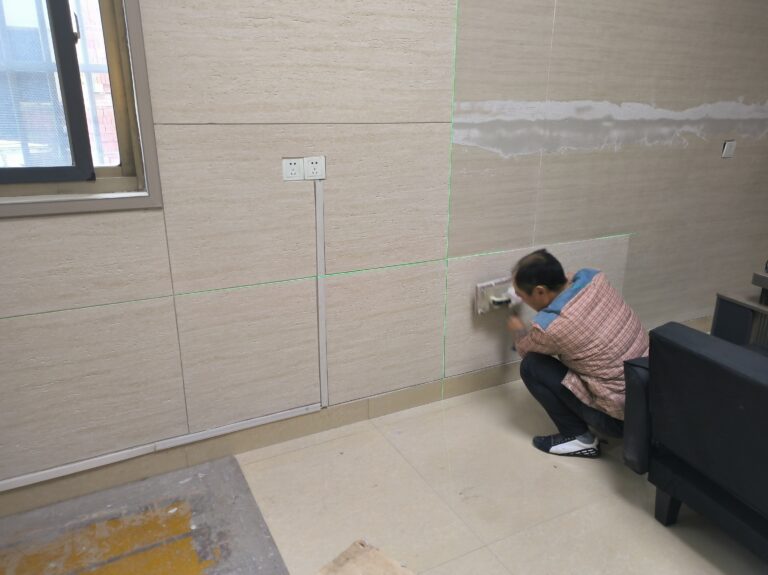
Le principal avantage des dalles de carrelage souples réside dans la simplification considérable du processus de pose. En éliminant le recours au joint et au mortier traditionnels, ces systèmes conviennent aussi bien aux professionnels soumis à des délais serrés qu’aux projets de bricolage. Les technologies adhésives modernes, telles que les supports autocollants ou les systèmes de mat double face, permettent une application directe sur un mur préparé, ce qui réduit considérablement le temps nécessaire à la pose de chaque carreau. Cela en fait une solution efficace pour les locataires ou les agenceurs de magasins qui ont besoin d'une rénovation esthétique à fort impact sans modifications permanentes ni fermeture prolongée de leur établissement.
Matériaux légers et modernes
Ces carreaux sont généralement fabriqués à partir d’un matériau argileux modifié (MCM) mélangé à de la poudre de pierre naturelle. Cette composition composite donne un produit dont le poids varie entre 3,5 et 6,0 kg/m², soit environ un sixième du poids des carreaux traditionnels en céramique ou en pierre. Ce poids réduit permet de diminuer les frais de transport et d'alléger considérablement la charge structurelle exercée sur les murs. Il facilite également la manipulation des panneaux par un seul poseur. C'est précisément cette composition qui confère au carrelage sa souplesse, lui permettant de s'adapter à des murs courbes ou d'envelopper des colonnes — des applications pour lesquelles un carrelage rigide serait inadapté.


Applications à faible coût
Pour de nombreux projets commerciaux et résidentiels, les systèmes à base de dalles offrent un avantage financier évident par rapport au carrelage traditionnel. Les économies réalisées proviennent de la suppression des dépenses liées au coulis, au mortier, aux outils de découpe spécialisés et à la main-d’œuvre qualifiée nécessaire à la pose traditionnelle de carrelage. Les dalles souples constituent donc une solution idéale pour les projets à budget limité, qu’il s’agisse de grands ensembles résidentiels ou de boutiques de détail, sans pour autant faire de compromis sur l’esthétique haut de gamme. Si le carrelage classique reste la norme pour les zones exposées à une chaleur directe et intense, les dalles souples sont conçues pour répondre aux exigences de la plupart des autres applications de crédences et de revêtements muraux.
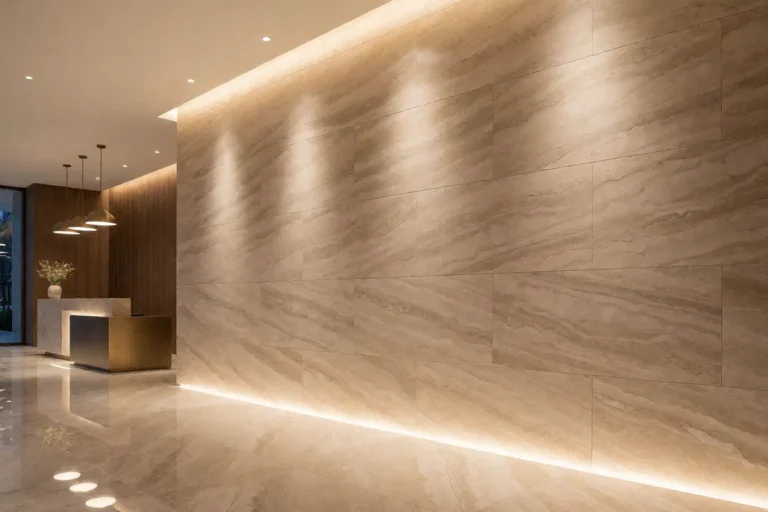
Panneaux en pierre « Source Premium », entièrement personnalisables
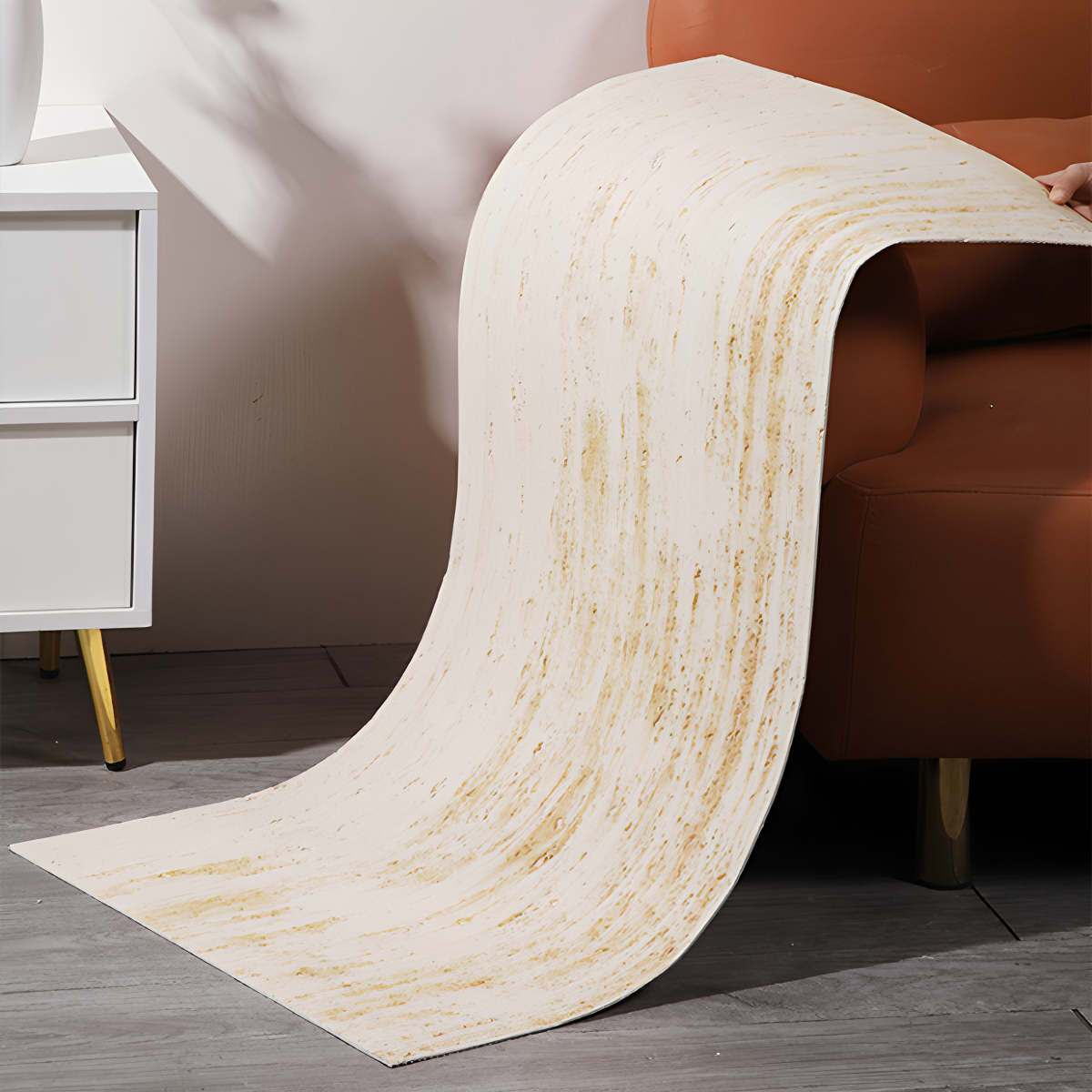
Résistance à l'huile et aux taches (Nano-Seal)
Les produits d'étanchéité de surface forment un film qui s'use rapidement. Les nano-produits d'étanchéité modernes imprègnent la pierre elle-même, créant ainsi une barrière durable et invisible contre la graisse et les taches de cuisine.
Une crédence doit résister aux salissures courantes de la cuisine, telles que l'huile de cuisson, le vin et le café. Les produits d'étanchéité classiques offrent une protection temporaire, mais leur efficacité s'estompe avec le temps et les nettoyages répétés. Nos panneaux en pierre souples intègrent une technologie avancée de nano-étanchéité qui garantit une résistance permanente et en profondeur.
Technologie Nano-Sealer à pénétration profonde
Nous utilisons un nano-scellant pénétrant qui imprègne la surface de la pierre jusqu'à une profondeur de 0,2 pouce. Contrairement aux revêtements de surface qui restent à la surface, ce système utilise des nanopolymères qui se lient à la structure même du matériau. Cela crée une barrière intégrale et durable qui ne s'écaille pas et ne s'use pas malgré l'utilisation quotidienne de la cuisine et les nettoyages réguliers.
- Les nanopolymères pénètrent dans la pierre pour assurer une protection en profondeur, au niveau moléculaire.
- La barrière intégrée repousse efficacement les éclaboussures d'huile et de graisse.
- Cette méthode offre une durabilité supérieure à celle des produits d'étanchéité traditionnels appliqués en surface, qui nécessitent d'être réappliqués fréquemment.
Une protection invisible pour un rendu naturel
L'objectif premier d'un produit d'imperméabilisation doit être d'assurer une protection sans nuire à l'esthétique. Notre procédé d'imperméabilisation à base de nanotechnologies est totalement invisible et préserve la couleur, la texture et la finition authentiques de la pierre naturelle. Il protège le matériau sans ajouter de film plastique ni de brillance artificielle, garantissant ainsi que l'intégrité esthétique du panneau reste intacte.
- Préserve la finition mate ou texturée d'origine sans ajouter de brillance.
- Permet au tissu de rester respirant, évitant ainsi l'accumulation d'humidité susceptible de provoquer l'apparition de moisissures.
- Offre une protection hautement efficace contre les taches tout en préservant l'aspect naturel de la pierre.
Formulations à faible teneur en COV pour la sécurité dans la cuisine
La sécurité des matériaux est une priorité absolue dans les zones de préparation alimentaire. Nous utilisons des produits d'étanchéité à faible teneur en COV (composés organiques volatils) et sans solvants pour toutes les applications intérieures. Cette approche est conforme aux normes de construction modernes et répond à la demande des entrepreneurs et des utilisateurs finaux en faveur d'environnements intérieurs plus sains.
- La formulation est certifiée sans danger pour une utilisation dans les cuisines résidentielles et professionnelles.
- Réduit au minimum les polluants atmosphériques intérieurs et élimine les odeurs chimiques désagréables pendant et après la pose.
- Cela reflète la tendance générale du secteur à privilégier des matériaux de construction plus sûrs et plus durables.
Résistance à la chaleur derrière les plaques de cuisson
La classe de résistance au feu certifiée d'un matériau est la principale caractéristique qui distingue un panneau décoratif d'une barrière de sécurité fonctionnelle dans les zones de cuisine soumises à des températures élevées.
La zone située directement derrière une plaque de cuisson nécessite des matériaux qui vont au-delà de l'esthétique et qui offrent des performances éprouvées face à une chaleur constante et à une exposition potentielle aux flammes. Si de nombreux matériaux présentent un aspect esthétique, seuls ceux conçus pour être incombustibles et dotés d'une stabilité thermique sont adaptés à cette application critique. Un choix judicieux permet de protéger la structure murale sous-jacente et de garantir la sécurité à long terme.

Classification de résistance au feu de classe A pour la sécurité
Les panneaux en pierre souples de JMS Decor sont conçus pour répondre à des normes strictes de sécurité incendie, ce qui en fait un matériau fiable pour les zones soumises à des températures élevées, comme derrière les plaques de cuisson. Leur nature incombustible offre une protection essentielle au mur. Ces panneaux sont classés A2 au regard de la résistance au feu, ce qui garantit qu’ils ne contribueront pas à la propagation des flammes dans un environnement de cuisine. Ce niveau de performance est validé par des essais conformes à la norme ASTM, une exigence clé pour les matériaux de construction sur les marchés nord-américains à l’horizon 2026. Le choix d’un matériau doté d’un classement certifié en matière de résistance au feu offre une tranquillité d’esprit avérée, tant pour les projets résidentiels que commerciaux.
| Comparaison des matériaux | Résistance au feu | Performances en cas de stress thermique |
|---|---|---|
| JMS Flexible Stone | Classe A2 (incombustible) | Conçu pour garantir une stabilité thermique ; ne se déforme pas et ne s'écaille pas. |
| Vinyle autocollant | Souvent non classé / Classe C | Risque élevé de fusion, de déformation, de défaillance de l'adhésif et de dégagement de fumées. |
| Carrelage en céramique standard | Excellent (incombustible) | Le carrelage est résistant, mais les joints sont susceptibles de se fissurer et de se tacher sous l'effet de la chaleur et de la graisse. |
Stabilité des matériaux sous contrainte thermique
Contrairement aux matériaux susceptibles de se déformer, de se décolorer ou de se détériorer en cas d'exposition prolongée à la chaleur, nos panneaux en pierre souples conservent leur forme et leur aspect. L'association de poudre de pierre naturelle et d'un support en fibre de verre leur confère une excellente stabilité thermique. Ces panneaux sont conçus pour résister aux variations de température courantes derrière une cuisinière sans se fissurer ni s'écailler. Cette durabilité garantit une crédence résistante et nécessitant peu d'entretien, qui conservera son bel aspect pendant de nombreuses années.
Une barrière protectrice contre la chaleur et les taches
Au-delà de leur résistance aux flammes directes, ces panneaux font office de bouclier thermique efficace, protégeant la structure murale sous-jacente contre les dommages thermiques à long terme. Ils isolent le mur de la chaleur rayonnante constante produite par les plaques de cuisson, empêchant ainsi toute détérioration des plaques de plâtre ou des montants. Lorsqu'elle est correctement scellée, leur surface non poreuse est facile à nettoyer et résiste à la pénétration des éclaboussures de cuisson. Cette double fonctionnalité en fait un choix pratique et sûr pour les cuisines modernes de 2026.
Guide de style : de Subway à Slate
Le design moderne des crédences ne se limite plus au simple choix des carreaux ; il met désormais l'accent sur des motifs dynamiques, des joints contrastés et des superpositions de matériaux afin de créer des points d'intérêt architecturaux dans la cuisine.
Motifs modernes de carrelage de type « Subway »
Les carreaux de métro sont un élément incontournable de la décoration des cuisines, mais leur utilisation a évolué. Au lieu des dispositions traditionnelles, les designs contemporains misent sur des motifs innovants pour créer du mouvement et un intérêt visuel. Les motifs en chevrons apportent un effet sophistiqué et dynamique, tandis que les dispositions verticales offrent un aspect épuré qui peut donner l'impression que la pièce est plus haute. Ces motifs dynamiques sont très polyvalents et s'accordent avec tout, du blanc classique aux teintes vives et chatoyantes.
Utilisation du coulis pour créer un contraste visuel
Le joint n'est plus seulement un matériau de remplissage fonctionnel ; c'est désormais un outil de conception à part entière permettant de créer des effets graphiques et architecturaux. L'association de joints foncés et de carrelages clairs produit un rendu saisissant et précis qui met en valeur la forme des carreaux et la complexité du motif. Cette technique est caractéristique des styles minimaliste, industriel et transitionnel en cuisine, où les lignes épurées et les contrastes sont mis en avant.
| Approche de conception | Caractéristique principale | Idéal pour |
|---|---|---|
| Motifs dynamiques (par exemple, le motif en chevrons) | Crée une impression de mouvement et de texture grâce à des carreaux uniformes. | Apporter de la dynamie aux espaces minimalistes ; donner l'impression que les murs sont plus hauts (disposition verticale). |
| Coulis à fort contraste | Utilise les joints comme élément graphique pour définir la forme des carreaux. | Cuisines de style industriel, moderne et transitionnel, pour un look architectural audacieux. |
| Matériaux mixtes (par exemple, céramique et pierre) | Superposez des surfaces lisses et texturées pour créer une impression de profondeur et de luxe. | Créer un élément décoratif haut de gamme derrière une plaque de cuisson ; allier les styles classique et organique. |
Mélange de matériaux avec des touches de pierre
Le design contemporain des cuisines repose souvent sur la superposition de différents matériaux pour créer de la texture et de la profondeur. Une stratégie courante consiste à associer la surface lisse et épurée des carreaux de métro en céramique à la texture naturelle et organique de touches de pierre, comme l’ardoise ou le marbre. Cette approche mêlant les matériaux permet de créer un point focal distinct, généralement derrière une plaque de cuisson ou un évier, et apporte une touche de luxe. Il en résulte une esthétique équilibrée qui allie des éléments classiques et organiques, s'adaptant ainsi à un large éventail de styles.
Conclusion
Choisir un crédence de cuisine ne signifie plus avoir à composer avec des joints tachés. Le carrelage souple offre une surface homogène et facile à nettoyer, qui résiste à la fois à la chaleur et aux taches, ce qui en fait une solution pratique pour habiller l'arrière de n'importe quelle plaque de cuisson. Son installation simple, que l'on peut réaliser soi-même, vous permet d'obtenir un résultat professionnel sans les inconvénients liés à la pose traditionnelle de carrelage.
En gardant ces idées à l'esprit, vous pourrez choisir en toute confiance un style qui s'harmonise avec le design de votre cuisine. La conception de votre nouvelle crédence sans joints est la première étape vers un espace de cuisine plus épuré et plus moderne.
Questions fréquemment posées
Une crédence de cuisine sans joints ?
Oui, il existe plusieurs excellentes options de crédences sans joints. Parmi les choix les plus populaires, on trouve les dalles monoblocs en quartz, en marbre ou en granit, qui offrent un aspect homogène et luxueux. Parmi les autres matériaux courants, on trouve le verre trempé peint au verso, les tôles en acier inoxydable et les panneaux en grès cérame grand format. Ces options éliminent le besoin d'entretien et de nettoyage des joints, tout en offrant une esthétique épurée et moderne, exceptionnellement facile à entretenir.
Du carrelage souple pour la cuisine ?
Le type de carrelage souple le plus courant pour les cuisines est le carrelage en vinyle ou en gel autocollant. Ces produits sont conçus pour une pose facile, à réaliser soi-même, directement sur des surfaces lisses existantes. Légers, ils peuvent être découpés à l'aide d'un cutter et sont très résistants à l'humidité et aux taches. Bien qu'ils constituent une solution de rénovation économique et rapide, ils présentent généralement une résistance à la chaleur inférieure à celle de la céramique ou de la pierre traditionnelles et ne sont pas recommandés pour une pose directe derrière une cuisinière à gaz.
Quels sont les matériaux faciles à nettoyer pour une crédence ?
Les matériaux de crédence les plus faciles à nettoyer sont ceux qui présentent des surfaces lisses et non poreuses, avec peu ou pas de joints. Parmi les meilleurs choix, on trouve le verre en plaque (notamment le verre peint au verso), les panneaux en acier inoxydable, les dalles de quartz et les panneaux en acrylique ultra-brillants. Les dalles de porcelaine grand format constituent également un bon choix, car elles réduisent considérablement le nombre de joints. Ces matériaux empêchent la graisse et les éclaboussures alimentaires de pénétrer dans la surface, ce qui permet de les nettoyer simplement à l'aide d'un chiffon et d'un détergent doux.
Des idées de crédences de cuisine à réaliser soi-même ?
Pour les amateurs de bricolage, il existe plusieurs options de crédences à la fois abordables et élégantes. Les carreaux autocollants sont les plus populaires ; ils sont disponibles en vinyle, en gel, en métal et en finition pierre naturelle, imitant ainsi le carrelage traditionnel. Une autre excellente idée consiste à utiliser des panneaux à rainures ou à chevauchement, qui peuvent être peints pour s'harmoniser avec n'importe quel décor de cuisine. Pour une solution très économique, vous pouvez utiliser une peinture de haute qualité résistante au frottement afin de créer une crédence peinte durable et facile à nettoyer, souvent agrémentée de pochoirs pour un design personnalisé.
Panneau mural résistant à la chaleur pour poêle ?
Pour la zone située juste derrière une cuisinière, il est indispensable, pour des raisons de sécurité, d’utiliser un panneau mural résistant à la chaleur et incombustible. Les meilleurs matériaux sont les tôles en acier inoxydable, couramment utilisées dans les cuisines professionnelles en raison de leur résistance supérieure à la chaleur et aux taches. D'autres excellentes options comprennent les panneaux en verre trempé, les carreaux en céramique ou en porcelaine, ainsi que les dalles massives en pierre naturelle comme le granit. Ces matériaux peuvent supporter les températures élevées générées par la cuisson sans brûler, fondre ni se fissurer, garantissant ainsi à la fois une grande durabilité et le respect des normes de sécurité.