A container of flexible stone veneer needs two document sets, and they serve different readers. Customs wants the commercial invoice, packing list, bill of lading, certificate of origin, and a correct classification; the general contractor wants the COA, test reports, first-article record, and installation documents that prove the material is what was approved. Missing one set delays clearance; missing the other delays acceptance on site. This guide gives both checklists, the fields that must match across both sets, and the common gaps that hold up a shipment at the port or on site.
Which documents does customs need?
The customs package starts with the commercial invoice. It should identify the seller, buyer, importer of record, and consignee; describe the goods specifically; state the quantity, unit value, total value, and currency; give the country of origin and the manufacturer; and state the Incoterm and the named place. If your broker needs an HS classification, include it or confirm it with them before the container sails.
The packing list is the second core document. It should identify the container and seal numbers, the pallet or package numbers, the contents of each package, the quantity, the net and gross weights, the dimensions, and the marks. For flexible stone, the quantity should be stated in square metres as well as pieces, because the material is sold by area and the freight is priced by weight and volume.
The bill of lading is issued by the carrier and proves the contract of carriage and the receipt of the cargo. A certificate of origin may be required for preferential duty treatment or by the destination country; an insurance certificate is needed when the Incoterm requires the seller to insure, such as CIF. Some destinations also require import permits, product declarations, or labelling. The exact list depends on the country and the product classification, so confirm it with your customs broker before the booking, not after the container arrives.
Which documents does the general contractor need?
The GC is not clearing customs; the GC is checking that the material matches the approved submittal. That package usually includes the batch-specific COA, the test reports for the product and thickness supplied, the management-system and factory certificates the project requires, the first-article record, the installation manual and video, the packing list with batch marks, and the approved mock-up or submittal record.
For fire performance, the report should identify the product and the thickness tested: ASTM E84 Class A for the US market, or EN 13501-1 Class A2 for Europe. A certificate that says “Class A” without the underlying report is not enough for a reviewer who has to check the scope. If the project requires an assembly test such as NFPA 285, the product report does not replace it; the assembly report is a separate document.
The GC also needs the installation documents, because the acceptance on site depends on whether the material was installed according to the manufacturer’s instructions. The manual should cover the substrate, adhesive, joints, corners, movement joints, and temperature limits, and it should match the product being delivered. The cost and logistics guides cover the freight side; the technical package is what the GC reads.
Where must the two sets agree?
The customs set and the GC set describe the same shipment, so the core fields have to match. A mismatch is the most common reason a document package fails, even when every individual document is valid.
| Field | Where it appears | Why it matters |
|---|---|---|
| Product name and pattern code | Invoice, packing list, COA, pallet label | Customs classification and GC approval both depend on the product identity |
| Batch or lot number | COA, packing list, pallet label | Traceability from the container back to the production record |
| Quantity | Invoice, packing list, B/L | Clearance and site acceptance both reconcile against the ordered quantity |
| Dimensions and thickness | Invoice description, packing list, COA | The GC checks the delivered format against the approved submittal |
| Gross and net weight | Packing list, B/L | Freight charges and carrier limits |
| Country of origin | Invoice, certificate of origin, pallet mark | Duty treatment and origin marking |
| Incoterm and named place | Invoice, B/L, insurance certificate | Risk transfer and who arranges freight and insurance |
The batch number is the field that ties the two packages together. If the COA says batch A and the pallet label says batch B, the GC cannot verify the material and the customs broker cannot connect the shipment to the production record. Check the three labels before the container is closed.
What should the packing list include for flexible stone?
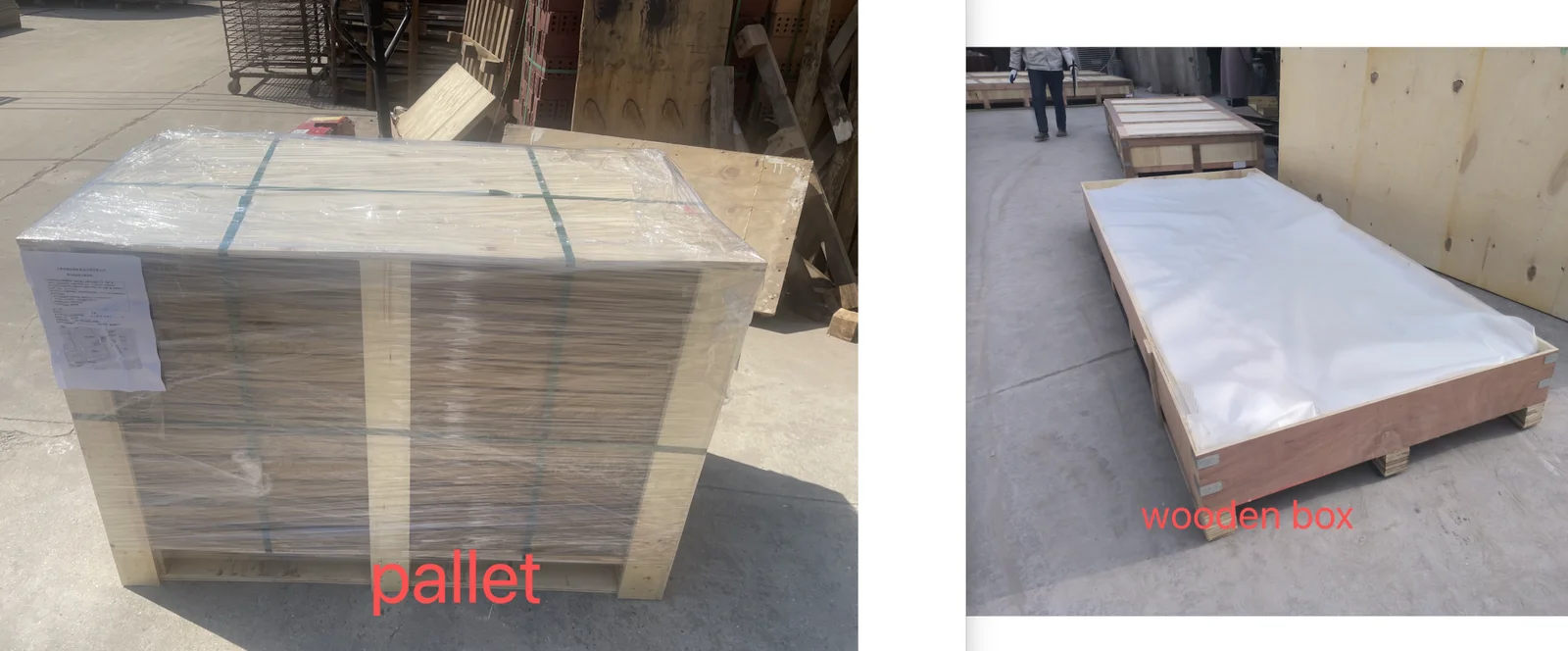
Flexible stone veneer is light for its area, so a packing list that only counts cartons hides the information the forwarder and the GC actually need. Include the container and seal numbers, the pallet or crate IDs, the number of pieces per pallet, the square metres per pallet, the net and gross weight, the packed dimensions, the batch or lot number, and the shipping marks.
The square-metre figure matters because the order is priced and specified by area, while the freight is priced by weight and volume. A discrepancy between the ordered area and the shipped area is easier to catch on the packing list than on the container floor. The weight figure matters because a light product can still be bulky; the forwarder needs the packed volume as well as the gross weight.
The packing list should also identify any mixed pallets: if one pallet contains two patterns or two batches, say so. A mixed pallet is not a problem if it is labelled; it becomes a problem when the GC opens the container and cannot tell which panel belongs to which batch.
How do I handle the certificate of origin and HS classification?
The certificate of origin proves where the goods were produced. It may be required by the destination country, by the buyer’s bank, or to claim a preferential duty rate under a trade agreement. Ask your broker whether the shipment needs one and which form is accepted; a certificate issued after the container sails can be difficult to use.
The HS classification determines the duty rate and any import restrictions. Do not assume that the natural-stone code applies: flexible stone veneer is a manufactured composite made from stone powder, an inorganic binder, and a fiberglass mesh, not a quarried slab. The correct classification depends on the composition and the destination’s tariff schedule, so confirm it with your broker and provide the product data and composition statement they need. The importer of record is responsible for the declared classification, even when the supplier prepares the invoice.
Our standard term is FOB Shanghai. Under FOB, the buyer arranges the ocean freight and insurance, and the import clearance is the buyer’s responsibility. That makes the classification and the certificate of origin buyer-side tasks, even though the supplier provides the product data. Agree in the purchase order who prepares each document, so the split is clear before the booking.
What are the most common missing documents?
The same gaps appear on shipment after shipment. They are easy to fix before loading and expensive to fix after arrival.
- COA without a batch number. The COA describes a production run, but if it does not name the batch, it cannot be tied to the pallets in the container.
- A test report for a different product or thickness. A report for a 3 mm panel does not cover an 8 mm panel, and a report for a different pattern is not a substitute. Check the product identity and the tested thickness.
- A packing list without batch marks. The GC cannot reconcile the delivered pallets with the approved batch, and the customs broker cannot connect the shipment to the COA.
- A vague invoice description. “Stone panels” is not a description. State the product, pattern, thickness, format, and quantity.
- A missing certificate of origin. The shipment clears, but the preferential duty treatment is lost, or the buyer’s bank rejects the document set.
- An insurance certificate that does not match the Incoterm. Under CIF the seller insures; under FOB the buyer does. A certificate for the wrong party or the wrong value is a claim problem.
- The installation manual missing from the GC package. Customs does not need it, but the site does, and a missing manual can hold acceptance even when the material is correct.
Most of these are not document-production problems; they are hand-off problems between the factory, the forwarder, and the buyer. A checklist that names the owner and the deadline for each document prevents most of them.
What should the document pouch contain?
Put a weatherproof document pouch inside the container with copies of the commercial invoice, packing list, bill of lading copy, COA, first-article record, test reports, certificates, and the installation manual. The pouch is for the site and the GC; customs may file electronically, but the site team needs paper copies when the container is opened.
Send electronic copies to the customs broker and the GC before the vessel arrives. The broker can pre-clear the shipment, and the GC can check the documents against the submittal before the material is unloaded. If a document is missing, there is still time to courier it or to issue a corrected version.
Name the document owner in the purchase order. The seller normally prepares the commercial invoice, packing list, COA, and certificates; the buyer or forwarder prepares the import clearance, the certificate of origin if required, and the insurance. The logistics cost guide and the freight savings guide explain how the freight and document costs interact. For the destination-side rules, the US Customs and Border Protection import guidance is a useful starting point.
PREGUNTAS FRECUENTES
Do I always need a certificate of origin?
No. It depends on the destination, the buyer’s bank, and whether you are claiming a preferential duty rate. Ask your broker before the booking; a certificate issued late is harder to use.
Can the COA replace a test report?
No. The COA is batch-specific and records what was measured on that run; the test report is the product-and-standard document that shows how the product performed. The GC usually needs both.
What HS code should I use for flexible stone veneer?
Confirm it with your customs broker. Flexible stone veneer is a manufactured composite, not a natural stone slab, so the natural-stone code may not apply. Provide the composition and product data to the broker.
Who prepares the documents?
The seller prepares the commercial invoice, packing list, COA, and certificates; the buyer or forwarder prepares the import clearance and the certificate of origin if required. Write the split into the purchase order.
What if the documents arrive after the container?
Clearance can be delayed, and storage or demurrage charges may follow. Send electronic copies before arrival and keep the paper pouch in the container; a missing document is cheaper to fix before the vessel arrives.