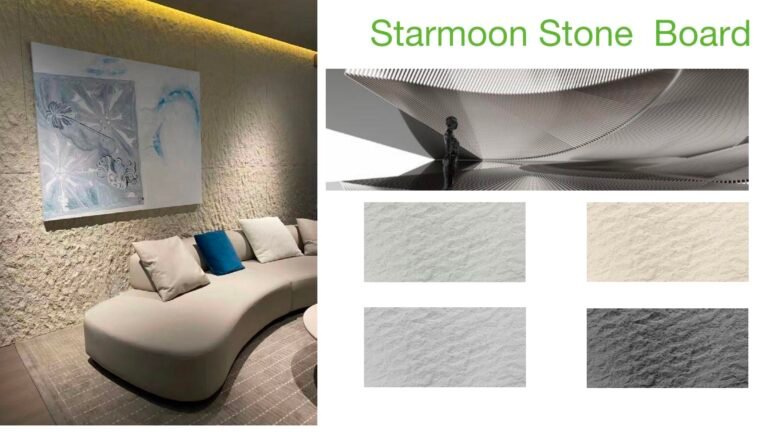
Die Wahl eines flexible Steinverblendung Zulieferer ist die eine Entscheidung, die Ihre Marge, Ihre Lieferzeiten und die Häufigkeit von Reklamationen bestimmt. In einer Broschüre sieht die Paneel gleich aus, egal welche Fabrik sie herstellt. Der Unterschied liegt darin, ob der Zulieferer die Produktionslinie besitzt, wie er mit Farbabweichungen umgeht und was er tut, wenn ein Container mit einem Problem ankommt.
Die meisten Käufer beginnen mit dem Preis und rechnen von hinten heraus. Diese Reihenfolge verwandelt ein faires Angebot in eine schlechte Bestellung, denn der niedrigste Preis geht meist mit den wenigsten Garantien einher. Dieser Leitfaden stellt die Reihenfolge um. Er zeigt die Prüfpunkte, die wirklich zählen, und die Fragen, die einen schwachen Zulieferer entlarven. Außerdem werden die kommerziellen Konditionen beschrieben, die man erwarten kann, sowie die Warnsignale, die einen Dialog beenden sollten, bevor eine Anzahlung fließt.
Der Markt macht dies schwieriger als nötig. Ein großer Teil der Unternehmen, die sich als Hersteller präsentieren, sind Handelsfirmen, die die Ausgabe einer anderen Fabrik weiterverkaufen, eine Marge aufschlagen und aus der technischen Diskussion aussteigen. Die beiden voneinander zu unterscheiden ist keine akademische Übung. Es entscheidet darüber, wer ans Telefon geht, wenn die Spezifikation geändert werden muss.
Das richtige Unternehmen ist das, das auch im achtzehnten Monat noch ans Telefon geht, wenn die Oberfläche erneut angepasst werden muss.
Was ein Zulieferer für flexible Steinverkleidungen tatsächlich kontrolliert

Woraus die Paneelen bestehen
Ein flexibles Steinpaneel besteht aus Natursteinpulver, einem anorganischen Gel und einer Glasfasernetzschicht. Auf dieser Basis werden Farbe, Muster, Dicke und Größe festgelegt. Wer die Basis und die Drucklinie besitzt, beherrscht alles, was darüber entscheidet, ob das Produkt mit dem übereinstimmt, was Sie an Ihren Markt verkauft haben.
Fünf Dinge gehen im Moment der Bestellung vollständig in die Hände des Zulieferers über: die Farbanpassung, die Dicke, den Biegeradius, die Feuerleistung und das Lieferdatum. Ein Zulieferer mit eigener Linie kann alle fünf Punkte aktiv steuern. Ein Wiederverkäufer kann die Anfrage nur an die nachgelagerte Kette weiterleiten und hoffen, dass sie so zurückkommt, wie sie geschickt wurde.
Die fünf Hebel hinter jeder Bestellung
Die Farbe ist der erste Hebel, weil eine am Bildschirm genehmigte Oberfläche und eine am Paneel genehmigte Oberfläche zwei verschiedene Produkte sind. Die Dicke reicht von 2 mm bis 8 mm, je nach Muster. Ein dünnes Travertin-Muster mit ca. 2,5 bis 3 mm verhält sich auf einer Kurve anders als eine schwere dekorative Fläche. Der Biegeradius entscheidet darüber, welche Designs überhaupt möglich sind – in der Regel um die 200 mm und bei komplexeren, dünneren Mustern wie Starmoon Stone eher Richtung 300 mm. Die Feuerungsklasse entscheidet, ob die Spezifikation den Inspektor besteht, und das Lieferdatum entscheidet, ob das Projekt termingerecht eröffnet werden kann.
Warum die eigene Produktion an erster Stelle steht
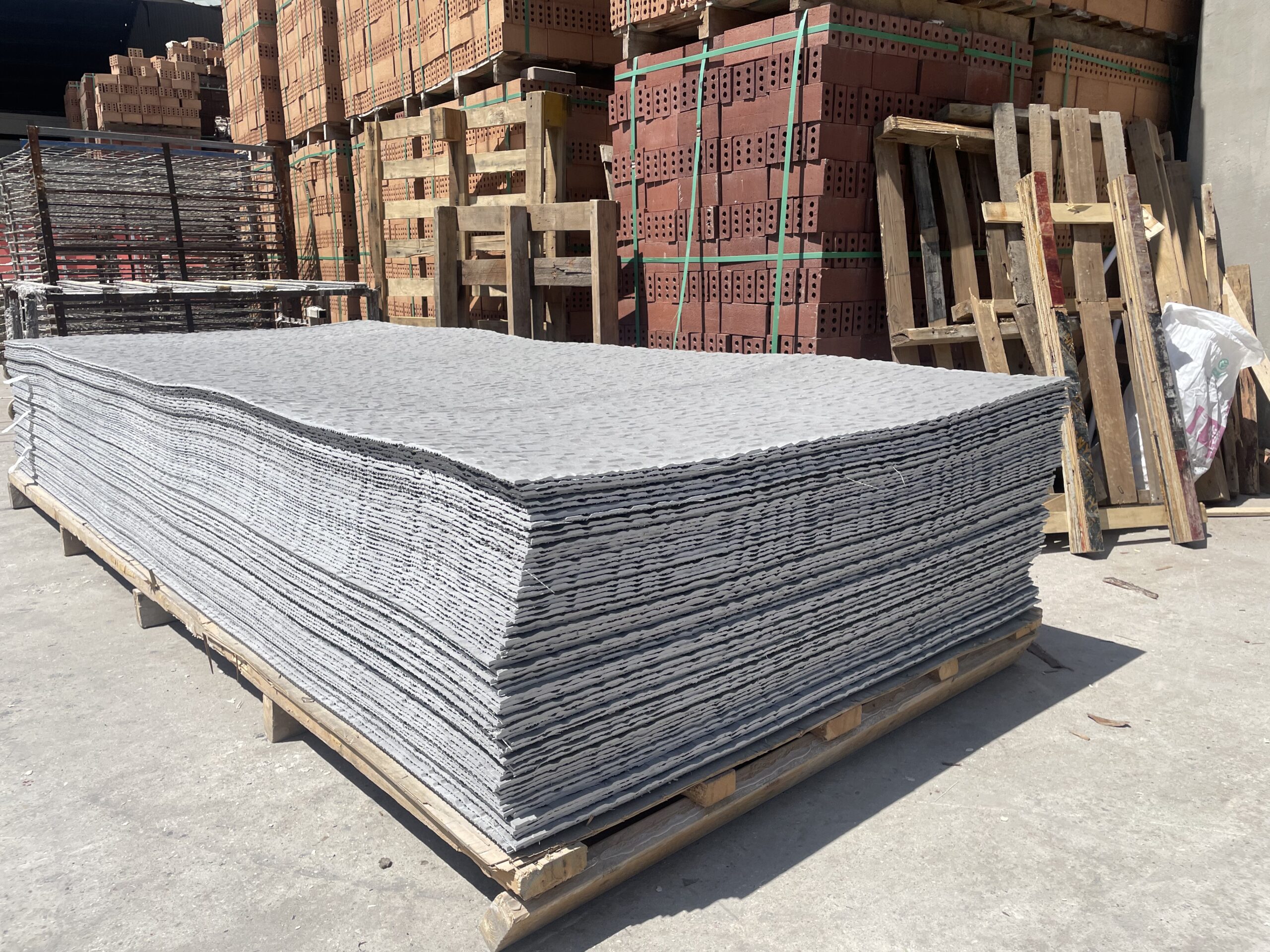
In-house production is the difference between a flexible stone veneer supplier that can answer a technical question and one that has to forward it. JMS Decor has operated since 2015 and its team brings 15+ years of wall panel experience, running five lines inside an 8,000 m² factory in Dingshu Town, Yixing, Jiangsu. The 3D inkjet equipment prints more than 700 m² a day, and the plant holds over a hundred in-house moulds. When a colour or a size has to change, that setup is what makes the change possible.
A trading company can sell you the same panel, and for a commodity repeat order that is fine. The difficulty arrives later, when your market asks for a finish the catalogue does not carry, or when a defect has to be traced to a cause. Without a line to inspect, the answer is always a promise rather than a process. If you are comparing the two models directly, our guide on the Hersteller von flexiblen Steinverkleidungen explains what the production base behind those promises looks like.
How to Tell a Factory From a Trading Company
The fastest test is a question, not a document. Ask what equipment runs the printing, and how much it produces in a day. A factory will name the machine and the daily number it produces. That level of specificity is hard to fake. If you want a structured version of that test, work through the Supplier Verification Checklist before any deposit is discussed.
What Real Capacity Looks Like in Numbers
Capacity is only useful if it translates into your order. Five lines and a 700 m²-plus daily output mean a first bulk run of 15 to 20 working days. A repeat takes 10 to 15 days, because the mould and the colour formula are already in place. A supplier without that base quotes a lead time it cannot control.
Questions That Expose a Weak Supplier

A short set of questions does most of the work. The point is not to catch anyone out. It is to see whether the answers stay specific and steady, and whether the same figure comes back twice. Specific answers tend to arrive as a number, a name or a document, and they hold when the question is asked again.
| Question | What a strong answer sounds like |
|---|---|
| Do you own the printing line? | Eine benannte Maschine und eine tägliche Ausgabenziffer, keine Liste von Partnern |
| Wie hoch ist Ihre gemessene Fehlerrate? | Ein Wert unter 1 Prozent mit kurzer Erläuterung der Messmethode |
| Kann ich eine Live-Inspektion verfolgen? | Ein Videocall oder ein vor Ort während einer echten Prüfung aufgenommenes Video |
| Wer lagert meine Formen danach? | Eine benannte Aufbewahrungsfrist und die Kosten für das Werkzeug bei einer Wiederholungsbestellung |
| Welcher Bericht bezeugt die Feuerwiderstandsklasse? | Eine Zertifikatsnummer und der eigentliche Prüfbericht, kein Screenshot eines Abzeichens |
Testen Sie die Probe, nicht die Broschüre
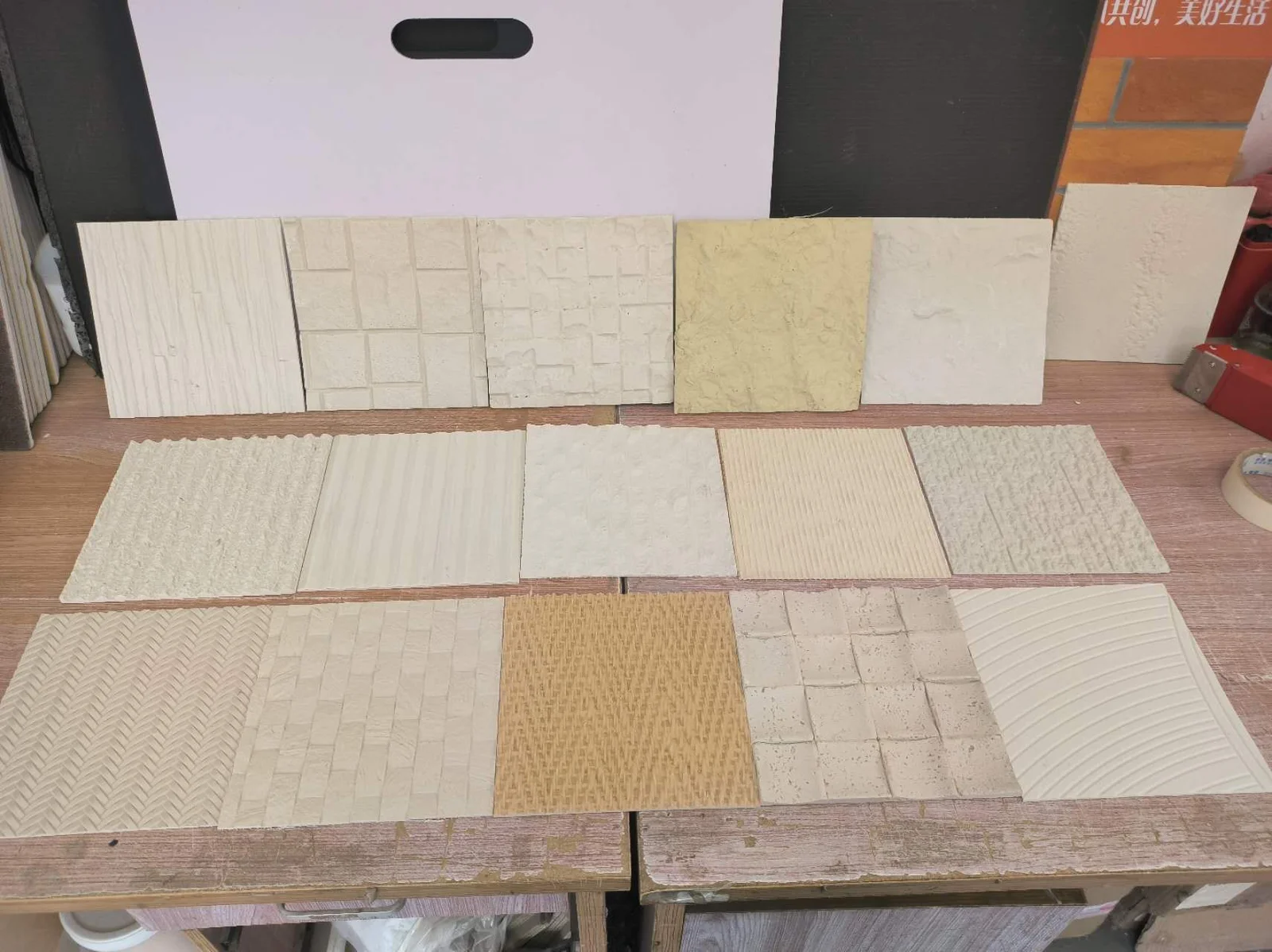
Jede fehlerhafte Bestellung hat eine Musterphase, in der sich ein schwacher Lieferant von flexiblem Steinverblendarufft. Proben von Standardmustern werden innerhalb von zwei bis drei Tagen versandt. Eine Farbcustomisierung dauert etwa sieben Tage, da die Farb- bzw. Druckmischung erst hergestellt und ausgehärtet werden muss, bevor sie beurteilt werden kann. Ein Lieferant, der diesen Schritt hetzt, gibt Ihnen bereits heute ein Zeichen für die Beschaffenheit der nachfolgenden Serienproduktion.
Warum das Muster zum Vertrag wird
Treat the sample as the contract for everything after it. Judge the colour under your own lighting rather than the factory’s. Bend the panel to the radius your project needs, and confirm the thickness with a gauge instead of an eye. If the finish will be backlit, ask for the 2 mm translucent version at this stage, because that option changes how light reads through the stone.
Was am Muster zu prüfen ist
Drei Dinge sollten jedes Mal überprüft werden: Die Farbe prüfen Sie am besten unter Ihrem eigenen Licht, die Dicke gegen die Spezifikation und das Biegeverhalten am Radius, den Sie tatsächlich verwenden werden. Eine Probe, die einem dieser Punkte nicht standhält, hat kein Farbproblem – sie hat ein Lieferantenproblem. Das jetzt herauszufinden, ist weitaus günstiger, als es erst zu entdecken, nachdem der Container den Zoll passiert hat.
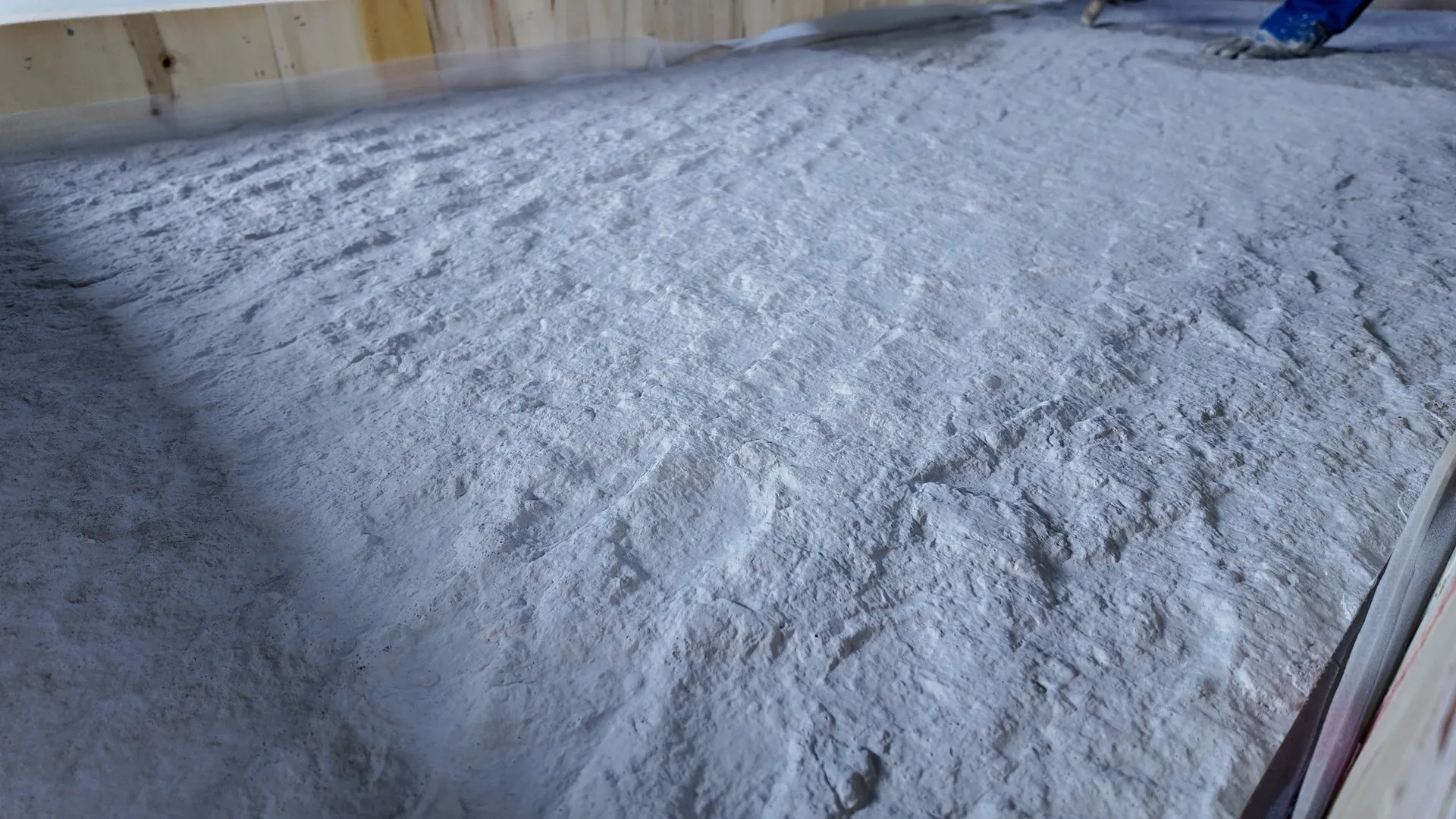
Zertifikate und Unterlagen verbindlich schriftlich anfordern

Certificates are where a supplier’s claims become transferable. A serious distributor should ask for a baseline set. That means ISO 9001 and ISO 14000 for quality and environmental management, BSCI for social compliance, and CE for the European market. Those documents belong on your own website once you resell, so they should be requested at the quoting stage rather than after the order.
Fire performance is the claim most likely to be tested by a buyer or an inspector. In the United States the relevant test is ASTM E84, where Class A means a flame spread index of 25 or lower. In Europe the rating is EN 13501-1 Class A2. Ask for the certificate number and the test report behind the rating, not a screenshot. Check that the report carries the same product name as the panel you are buying.
One number matters more than the rest to a distributor: the defect rate. Production here runs under 1 percent, and the supplier should be able to explain how that figure is measured and what it covers. A rate that low is the difference between a range that sells on reputation and one that spends its margin on replacements.
Commercial Terms That Reveal How a Supplier Operates
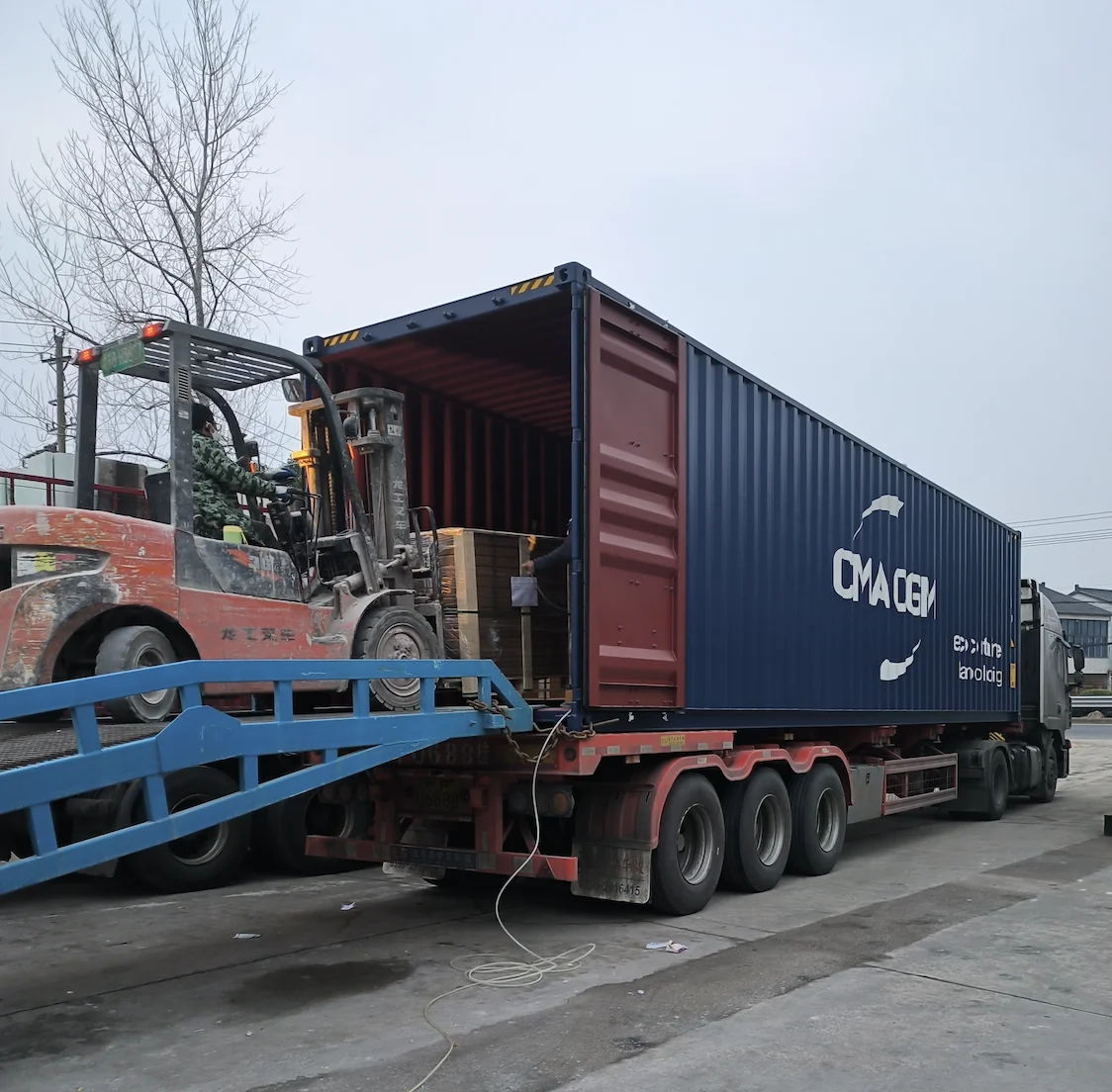
Commercial terms are the second test of a flexible stone veneer supplier, because a company that controls its own line can offer flexibility a reseller cannot. A standard minimum order quantity of 300 m² keeps packaging and freight efficient for both sides, but it stays negotiable for a justified trial. This factory has already produced a 150 m² order shipped by air to an Australian ice-cream shop fit-out. A small first order is a question of will, not of possibility. The flexible Stein-MOQ explainer covers how that arrangement is made in practice.
Payment and freight terms should be familiar and boring. The structure here is a 40 percent deposit with the 60 percent balance cleared against the shipping documents, on FOB Shanghai, with the buyer keeping control of its own forwarder. Sea freight to the United States runs 15 to 35 days, to Europe 25 to 45 days, and air freight 5 to 7 days. Clear terms, explained early, are a sign the supplier is as organised as its paperwork suggests. If the terms are vague, read our guide to China supplier payment terms before you commit.
| Artikel | Standardterm |
|---|---|
| Mindestbestellmenge | 300 m², kleinere Mengen bei nachvollziehbarer Begründung verhandelbar |
| Musterverzögerung | 2 bis 3 Tage Standard, ca. 7 Tage für individuelle Farbanpassung |
| Serienproduktion | 15 bis 20 Werktage beim Erst订单, 10 bis 15 bei Wiederbestellung |
| Zahlung | T/T 40% Anzahlung mit 60% Restzahlung |
| Handelsbedingungen | FOB Shanghai, andere Häfen auf Anfrage |
| Formensicherung | Form und Farbrezeptur werden fünf Jahre kostenfrei aufbewahrt |
Red Flags That End a Conversation
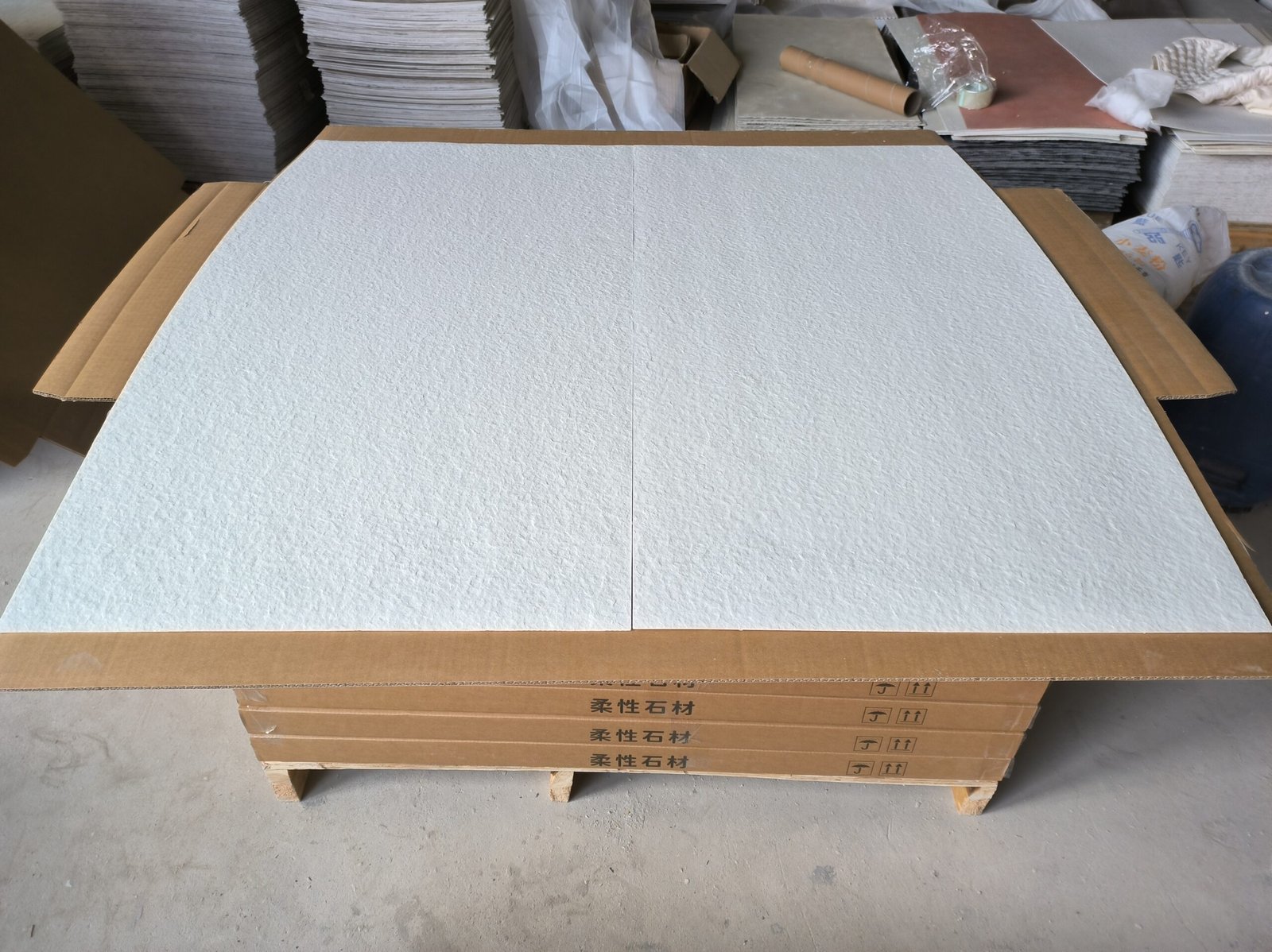
Some signals are worth acting on immediately, because they tend to repeat at scale. A flexible stone veneer supplier that cannot give a measured defect rate is guessing about quality. Refusing a live inspection usually protects something other than your interests. Offering no certificate number for a fire rating asks you to trust a badge instead of a report.
Two more should slow you down. A quote far below the rest of the market usually means a substitute substrate, a thinner panel or an unrealised cost that appears later. And any pressure to pay outside the standard deposit-and-balance terms, or to a personal account, is a request to give up the protection those terms exist to provide. Each of these red flags is easier to check before the order than to resolve after it.
Frequently Asked Questions About Choosing a Supplier
What is the first thing to ask a flexible stone veneer supplier?
Ask whether they own the printing line and what it produces in a day. That single question separates a factory from a trading company. A manufacturer can name the machine and the output, while a reseller usually answers with a partner network instead of a number it can verify.
How do I tell a factory from a trading company?
Compare equipment, capacity and process answers across two or three suppliers. A factory gives consistent numbers, can film a live inspection and shows you the line. A trader speaks in adjectives, avoids specifics and forwards every technical question to an unseen third party.
What defect rate should I expect from a good supplier?
A strong supplier measures and states it rather than describing quality in general terms. Production here runs under 1 percent, and the supplier should explain how that figure is measured and what it covers. A vague answer about defects is itself a warning sign, because it usually means no one is tracking the number.
Which certifications should a supplier provide?
At minimum ISO 9001, ISO 14000, BSCI and CE, with the fire rating documented as ASTM E84 Class A in the United States and EN 13501-1 Class A2 in Europe. Ask for the certificate number and the test report, not a screenshot. A supplier that provides these without delay usually answers technical questions directly.
What commercial terms should a good supplier offer?
The terms are a MOQ of 300 m² that stays negotiable, samples in 2 to 3 days, and first bulk production in 15 to 20 working days. Payment is a T/T 40 percent deposit with the balance on shipping documents, on FOB Shanghai, with moulds stored free for five years. Clear terms are a sign of an organised partner.

Choosing well comes down to a short process: confirm the line, test the sample, and demand the paperwork. Read the terms as a measure of how the supplier runs its business. For the wider sourcing context around these decisions, browse our Buyer Guides section, which covers the questions buyers raise before committing to a first container.