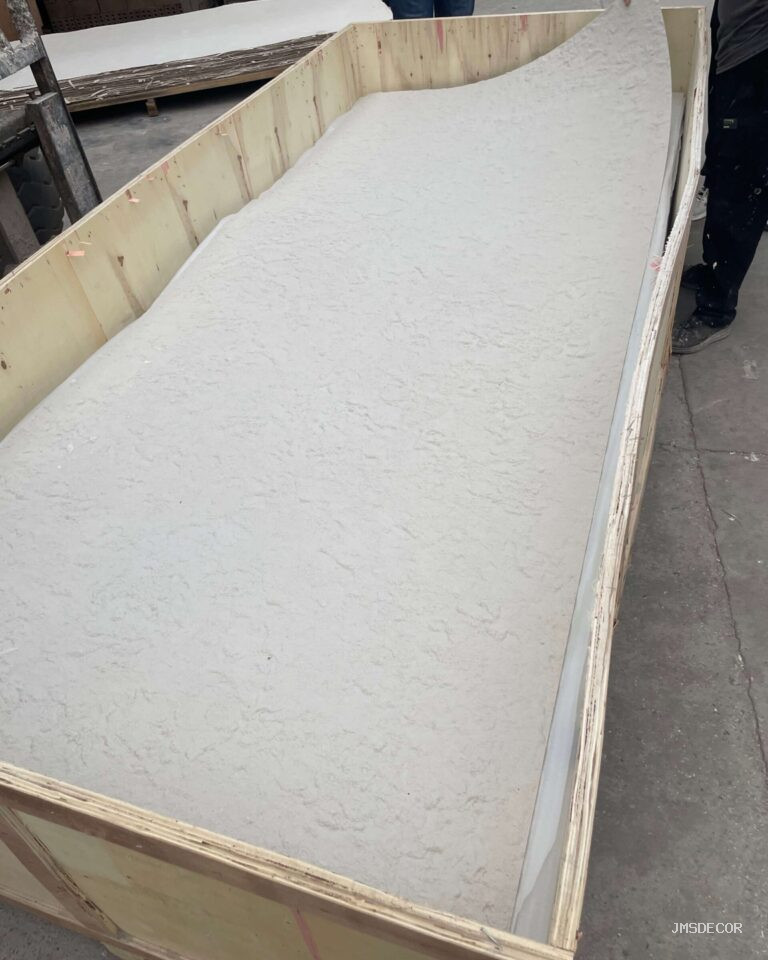
Jedes Projekt mit verklebten Natursteinplatten hinterlässt dieselbe „Ausgrabungsschicht“: Klebebandmarken von den Schutzfolien, Klebstoffverschmutzungen durch die Pistole, Kleberückstände von Aufklebern und Bändern, ein Staubfilm, der in die Struktur eingedrungen ist, und hin und wieder eine Pressmasse, die aus den Fugen gedrückt wurde. Wenn man diese Reste falsch entfernt, bekommt die Premiumwand ihre ersten bleibenden Schäden — ein Schaber, ein aggressiver Lösungsmittel oder ein Melamin-Schwamm mit zu viel Enthusiasmus. Richtig entfernen dauert etwa eine Stunde für eine ganze Wand. Dieser Leitfaden behandelt die Rückstandsentsorgung als Teil der übergabereifen Finalreinigung: Welche Arten von Rückständen es gibt, die jeweilige Entfernungsmethode, welche Lösungsmittel geeignet sind und welche nicht, sowie die Schlussinspektion, die entscheidet, ob die Wand wirklich sauber ist oder nur so wirkt.
Warum die Übergabereinigung eine eigene Kompetenz ist
Bau-Rückstände unterscheiden sich vom Alltags Schmutz in drei Punkten, und jeder Punkt verändert die Methode. Sie sind alt — eine Klebebandmarke von vor sechs Wochen hat sich härter verklebt als eine von gestern. Sie sind gemischt — eine Ecke kann Klebebandkleber, Staub in der Struktur und eine Silikonverschmutzung tragen, wofür jeweils eine andere Vorgehensweise nötig ist. Und sie liegen auf einer bedruckten Mineraloberfläche , die Lösungsmittel gut verträgt, aber Schleifbeanspruchung schlecht — genau das Gegenteil dessen, was der instinktive Schabreiz nahelegt. Die Übergabereinigung ist daher ein geplanter Reinigungsdurchgang mit einer Methode pro Rückstandsart, keine generelle Grobreinigung mit dem stärksten Mittel aus dem Schrank.
Der Aufwand ist gerechtfertigt: Der finale Rückstandsdurchgang ist der letzte Kontakt des Installations teams mit der Wand, und jede zurückbleibende Markierung wird zum ersten Eindruck des Kunden. Die dafür notwendige Stunde ist die günstigste Reputationssicherung auf dem Projekt.
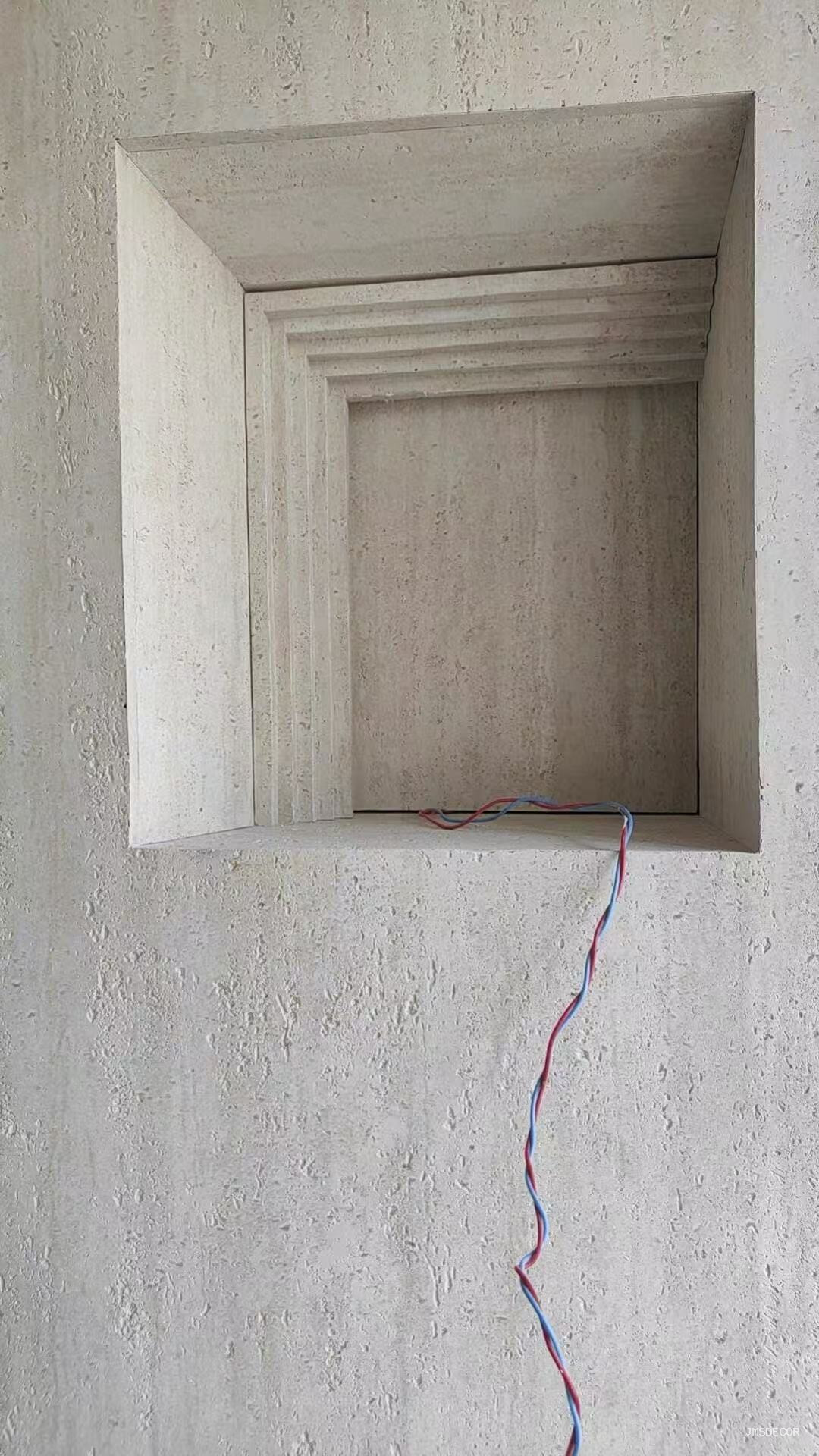
Rückstandsart eins: Band- und Folienmarken
Schutzband und -folie hinterlassen zwei Dinge: die Klebstoffrückstände und bei länger lagernden Bändern eine Geisterlinie, an der sich die Oberfläche unter der Folie anders gealtert hat. Die Reihenfolge: Folie und Band langsam und flach abziehen — beim schnellen Abziehen reißt der Kleber auf der Oberfläche auf; dann den Kleberückstand mit Isopropylalkohol auf einem Mikrofasertuch entfernen und kleine Kreise vom Außenrand zum Mittelpunkt der Marke ziehen. Die Geisterlinie lässt sich meist mit demselben Alkoholdurchgang und etwas Zeit entfernen; eine hartnäckige Geisterlinie nach einer Woche bedeutet, dass sich der Glanz unter der Folie geändert hat, und sie wird bei der Schlussinspektion bewertet, nicht aggressiv bekämpft — Glanzunterschiede legen sich im Lauf von Wochen normaler Reinigung, und der Angriff mit Schleifmitteln verwandelt die Geisterlinie in eine Narbe.
Die vorbeugende Maßnahme, die diesen Abschnitt kurz hält: Schutzfolien so bald wie möglich nach Abschluss der Arbeiten entfernen, nicht erst bei der Übergabe, gemäß den zeitlichen Regeln in unserem protection guide. Folien, die innerhalb von Wochen entfernt werden, hinterlassen Marken der ersten Stufe; Folien, die erst bei der Übergabe entfernt werden, hinterlassen die „Archäologie“ der dritten Stufe.
Residue type two: adhesive smears and blobs
Squeezed adhesive from panel joints and smeared beads from the sealant gun are the handover clean’s hardest residents, because they cure to the face. Fresh squeeze-out is cut and tooled off during installation, per the joint discipline in our sealant guide; the handover pass deals with what escaped. Cured adhesive blobs are softened, not scraped: the recommended remover is applied to a cloth and taped over the blob to dwell, then the softened mass peels and the ghost film lifts with an alcohol pass. Smears respond to the same dwell-and-wipe. What never touches cured adhesive: razor blades and scrapers — they remove the blob along with the printed surface’s sheen, and the scar reads worse than the blob ever did.
The prevention is the installer’s habit: tool joints immediately, wipe the gun’s path as you go, and mask edges before any bead. The handover clean then has nothing harder than tape marks to face.
Residue type three: dust bonded into texture
Construction dust does not sit on textured faces; it bonds into the valleys with moisture and time. Dry brushing lifts the loose fraction; the bonded fraction needs a wash — neutral detergent, warm water, a soft brush worked into the relief, rinsed and dried — the texture-cleaning method our Wartungsleitfaden describes for routine care, scaled up for the one-time handover pass. What the wash must never include: acid or alkaline builders’ cleaners, which etch the face’s binder and dull the sheen in one application. The rinse matters as much as the wash — detergent left in the texture reappears as a grey film within weeks.
The final inspection: clean or just looks it?
- The raking-light pass. A torch held low across the whole field shows residue, ghosts and sheen changes that room light forgives — the same inspection the handover photos from our submittal guide should include.
- The touch pass. A clean hand reads adhesive residue that eyes miss — grit and tack announce themselves.
- The cloth test. A white cloth wiped across the field after cleaning; colour on the cloth means the wash left detergent or dust in the texture.
- The sheen comparison. Cleaned sections compared against untouched areas — any local sheen change is recorded and left to relax, not attacked.
- The photograph set. The cleaned wall photographed as handed over — the baseline the maintenance file starts from.
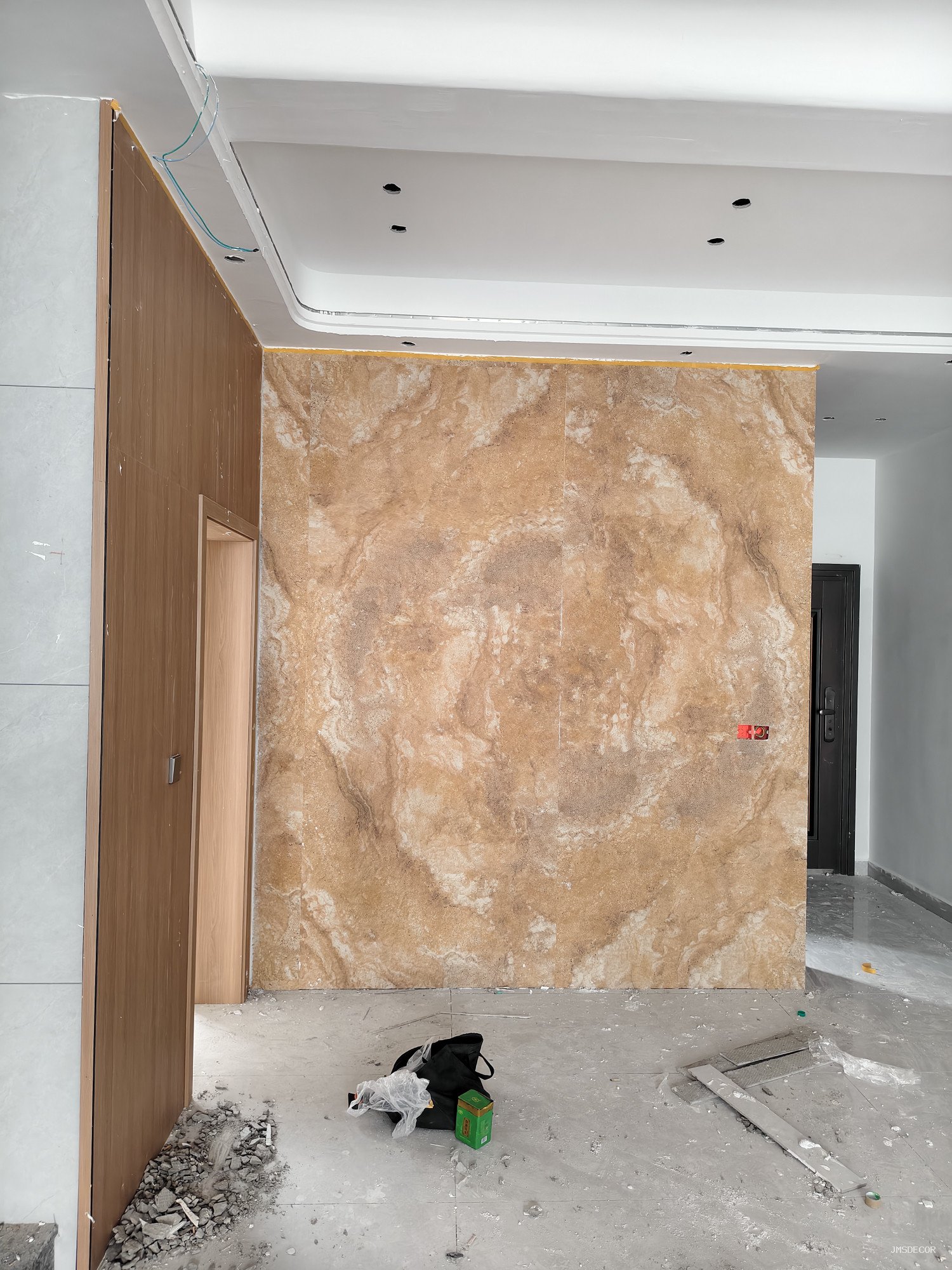
Residue type four: the smears you cannot see until the light moves
Some residues are invisible at handover and appear at the client’s first evening — the adhesive ghost that room lighting forgives and the wall washer exposes, the finger marks in the texture’s valleys, the cleaning product’s own film dried into the relief. The handover clean therefore ends with the raking-light pass described above, and where a ghost is found, the response is the measured one: alcohol pass for adhesive ghosts, a clean-water rinse for detergent films, and the sheen record for anything that persists. What the pass is not is a reason to escalate chemistry — most evening-visible ghosts are one more alcohol pass away from gone, and the impatient ones become the sheen scars our repair guide cannot fix.
Scheduling the pass at dusk, with the room’s actual lighting on, finds these residues when they can still be fixed. A handover clean performed in bright daylight inspects in the most forgiving light the wall will ever have, which is why the last hour of the job is scheduled against the sun rather than against the clock.
What the handover clean kit contains
The pass is quick because the kit is small and specific: isopropyl alcohol and the system’s approved adhesive remover for dwell work; neutral detergent and soft brushes for the wash; microfibre cloths in quantity — one per residue type, because a cloth that lifted adhesive smears it on the next panel; masking tape for protecting adjacent finishes during solvent work; the torch for the raking pass; and a white test cloth. What the kit never includes: blades, abrasive pads, acetone, and the confidence that comes from having cleaned other surfaces successfully — the printed mineral face is forgiving of solvents and unforgiving of friction, which is the one fact every person doing the pass needs to hold.
The kit lives in the same box as the spare-panel register and the care instruction — the handover file from our maintenance plan guide — because the residue pass is the first page of the wall’s maintenance life, and the tools that did it should be the tools that maintain it.
Why the handover clean belongs in the contract, not in goodwill
The residue pass is work — hours of it on a large project — and its absence from the contract is why it gets skipped, rushed, or argued about. The drafting fix is one line in the installation scope: the handover clean, specified as the residue-type pass with the raking-light inspection and the photographed baseline, per the clause logic in our contract guide. What that line buys both sides is the handover standard: the client walks the wall with the photographs as the reference, and “clean” is what the pictures show, not what the mood says.
The same line protects the finisher from the trades that follow. A wall cleaned and photographed at handover is a wall whose later marks have a birth date — the scuffs and residues that appear after the photographs belong to whoever came after, and the baseline is what proves it. Protection schedules and handover photos are the same argument, made once and reused for the life of the wall.
FAQ
Can I use a heat gun to soften old adhesive?
No — concentrated heat on a thin bonded sheet risks the adhesive bed beneath the finish, not just the residue on it. Chemical dwell is slower and safe; heat is neither.
What removes construction dust from deep relief best?
The warm neutral wash with a soft brush, section by section, rinsed as you go. Compressed air pushes dust deeper into the texture; dry wiping drags it across the peaks.
How long do ghost lines from film take to relax?
Sheen differences under film relax with weeks of normal cleaning — the exact interval varies with the room. The rule is to record the ghost at final inspection and resist the abrasive temptation; time and the care regimen are the fix.
Who signs off the handover clean?
The installing crew, against the raking-light and cloth tests — with the photographs filed as the handover baseline. The client walks the wall with those photos as the reference, which is how “clean” becomes a documented standard instead of an opinion.
Plan the residue pass like a work stage, use the method per residue type, and inspect under raking light before you call it done. The care documentation for the range is on the flexible Steinverblendung page, and cleaning-chemical safety on site is published by OSHA.