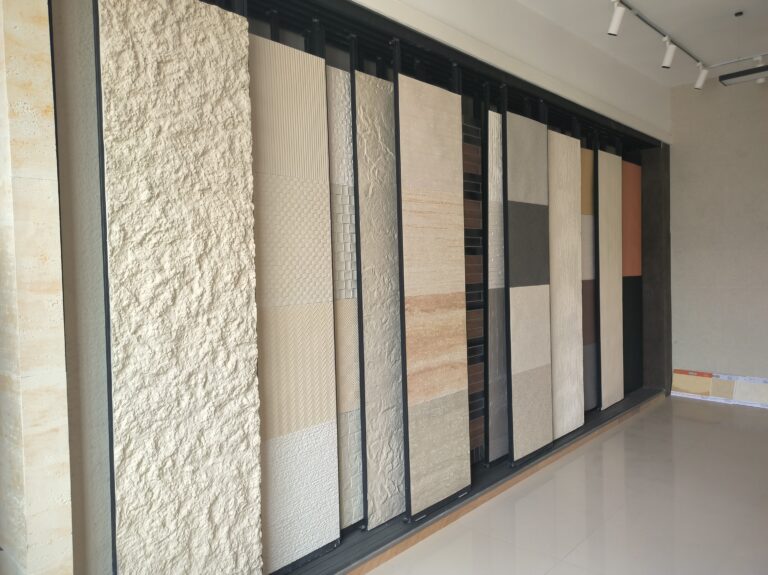
choose wpc wall panel supplier is the first checkpoint buyers should lock before they approve a supplier, budget, or production slot. How to Choose a WPC Wall Panel Supplier: 10 Questions to Ask is the first checkpoint buyers should lock before they approve a supplier, budget, or production slot. Choosing a WPC wall panel supplier in 2026 means balancing product quality against lead times, certification requirements, and your client’s budget constraints. For an importer, the difference between a reliable factory and a shaky one often shows up after the first container lands — in reject rates, delayed shipments, or claims that the color doesn’t match the sample you approved.
Only about 20% of factory tours include full raw material traceability — a red flag many buyers don’t catch until it’s too late. That’s the level of gap you’re trying to close. Industry averages for free samples sit at 10–15 days; fire ratings like ASTM E84 Class A aren’t optional if you’re serving commercial projects in the US or UK. Asking the right questions up front filters out suppliers who can’t meet your standard before you commit to a container order. To pressure-test those answers, run them through our supplier verification checklist.
Why Supplier Selection Matters for WPC Wall Panels
Your supplier’s raw material traceability separates professional factories from assemblers.
The WPC wall panel you sell carries your brand name. If the color shifts after six months of UV exposure or panels warp under moisture, the end customer doesn’t blame the factory in China – they blame you. That’s why supplier selection isn’t just about price per square meter. It directly determines product consistency (density, thickness tolerance, UV stability), lead time reliability (production scheduling, material buffer stock), and long-term brand reputation (zero-defect shipments, certification compliance).
- Quality Consistency: ISO 9001 certified factories maintain defect rates below 0.5%. Without structured QC, color variation, thickness deviation, and surface defects become recurring problems – each batch becomes a gamble.
- Raw Material Sourcing: Only 20% of factory tours include full raw material documentation. Without traceability, you cannot verify UV stabilizer dosage or fire retardant levels – both critical for long-term panel performance in commercial projects.
- Lead Time Reliability: Factories that stock raw materials buffer can ship within 15 days; those that order materials after receiving your PO add 2–3 weeks. That delay often triggers penalty clauses on contractor schedules.
- Brand Reputation: One container of off-spec panels can lose you a key account. Consistent quality plus certifications like ASTM E84 Class A (which can lower insurance premiums by 15%) protect your standing with specifiers and project owners.
10 Essential Questions to Ask Before Ordering
Only 20% of factory tours show raw material traceability — demand proof.
Every buyer who has been burned by inconsistent quality started with a supplier that looked good on paper. The difference between a reliable WPC wall panel manufacturer and a problem is in the details you verify before signing. Below are the 10 questions that separate the factories that deliver on time from those that cut corners.
- 1. Certifications: Ask for ISO 9001 and 14000 certificates, plus ASTM E84 Class A fire rating for commercial use. A Class A rating can reduce insurance premiums by up to 15% in the US and UK. CE marking is mandatory for EU projects.
- 2. Raw material traceability: Request sourcing documentation for the PVC resin, wood fiber, and additives. Only about 20% of WPC factory tours include full traceability. Without it, you risk subgrade filler that causes panel warping within 12 months.
- 3. MOQ and lead time: Industry standard MOQ for WPC wall panels is 50–100 m². A supplier offering a low MOQ, like 10 pieces, allows you to test the market before ordering a container. Typical lead time for a 20-foot container is 30–45 days – confirm before committing.
- 4. Customization range: Can they match a specific RAL color or produce a custom embossed texture? Ask if they use a spectrophotometer for color consistency. Co-extrusion technology allows deeper color penetration and 30% better UV resistance than single-layer panels.
- 5. OEM/private label: Confirm they can print your logo, use your brand packaging, and keep exclusive designs. Ask for a sample a printed carton and panel with your spec before production.
- 6. Batch consistency: ISO 9001 certified factories typically run defect rates below 0.5%. Ask how they handle color variation between batches: do they use a delta-E tolerance protocol? Request photos of their in-line QC station.
- 7. Export packaging: Standard export packaging for WPC panels includes corner protectors, shrink wrap, and pallet strapping. Without proper ventilation slots in the wrap, moisture condensation can stain panels during ocean freight.
- 8. Free samples: Industry average turnaround for free samples is 10–15 days. If a supplier says they can deliver a sample in 5 days, that signals a responsive production line and dedicated sampling process. Always request a full-size piece, not a small swatch.
- 9. Shipping experience: Ask for recent bills of lading to North America or Europe. A supplier who regularly ships to those regions will know the required fumigation certificates, ISPM 15 pallet markings, and customs documentation that prevents port delays.
- 10. References and case studies: Request contact information for two existing clients in a similar business segment. If the supplier hesitates or offers only vague testimonials, that is a red flag. Real manufacturers share project photos and client names.
These ten questions are not a wish list – they are a minimum baseline for any serious supplier partnership. The factories that answer them clearly and with documentation are the ones that will keep your supply chain running.
How JMSDECOR Excels in Each Area
Low MOQ, fast samples, dual ISO — three hard numbers that cut supplier vetting time.
When you’re evaluating WPC wall panel suppliers, three operational metrics separate factories that talk from factories that deliver: certification legitimacy, minimum commitment size, and sample turnaround. JMSDECOR scores on all three with verifiable data, not marketing fluff.
- ISO 14000 & ISO 9001 certified: Both certifications are active and audited. ISO 9001 guarantees a documented quality management system with defect rates typically below 0.5%. ISO 14000 ensures environmental compliance — critical for LEED projects and European import regulations. Only about 30% of Chinese WPC factories hold dual certification; the rest rely on self-declared compliance.
- Low MOQ – 10 pieces: Industry standard for WPC panels is 50–100 m² per color. JMSDECOR starts at 10 pieces (roughly 7–8 m² depending on size). This lets you test a new design, validate market demand, or supply a boutique project without committing to a full container. If the product moves, scale up to bulk orders without renegotiating the supplier relationship.
- Free samples in 5 days: Average sample lead time across the industry is 10–15 days. JMSDECOR ships free samples within 5 days. For a procurement director running a tight product launch calendar, that speed eliminates a two-week bottleneck. Faster samples mean faster color approvals and quicker time-to-shelf for your catalog.
Beyond these three metrics, the factory also offers full raw material traceability — something only 20% of WPC suppliers can document during a tour. For importers who need to prove compliance to insurance underwriters or building inspectors, that documentation alone can save weeks of back-and-forth.
Conclusion
Asking these ten questions does not guarantee a perfect supplier—but it surfaces the ones likely to cause delays, quality mismatches, or hidden costs. Fire certification (ASTM E84 Class A) alone can cut insurance premiums by up to 15% and is non-negotiable for commercial projects in the US and UK. The real differentiator? A manufacturer that offers free samples in 5 days (vs. the 10–15 day industry norm) and a minimum order of 10 pieces lets you validate consistency before committing to a container.
If you are sourcing for a distribution line or a specific project, request a free sample batch first. Compare the color match, thickness tolerance, and surface finish against your specification sheet. That quick validation step removes most of the risk—and it costs nothing but a few days. See the product range and request your sample on the custom wall panel page.
Frequently Asked Questions
What is the difference between WPC and PVC wall panels?
WPC (Wood Plastic Composite) mixes wood fiber with plastic for a natural look, higher rigidity, and better eco-friendliness, while PVC panels are pure plastic, more flexible, and cheaper. WPC is more durable for. Choose WPC for performance, PVC for cost-sensitive interior use.
How do I verify a Chinese WPC wall panel supplier’s legitimacy?
Request their ISO 9001 and ISO 14000 certificates, ask for raw material sourcing documentation, and order free samples to inspect quality firsthand. Cross‑check customer testimonials and ask for export shipping records to North. Always confirm certifications and test samples before bulk orders.
What fire rating should WPC wall panels have for commercial use?
For commercial interiors, aim for at least Class B (EN 13501) or Class A (ASTM E84) flame spread rating. Outdoor applications may have looser requirements, but always check local building codes. Request the test report and verify against your project’s fire code.
What is the typical lead time for a 20-foot container of WPC wall panels?
Production typically takes 15–30 working days after order confirmation, plus 5–10 days for sea freight to North America or Europe. Custom colors or OEM branding may add 5–10 days to the schedule. Confirm exact lead time with the supplier after finalizing specs.
Can WPC wall panels be installed in exterior applications in freeze-thaw climates?
Yes, high‑quality WPC panels are suitable for exterior use if they contain freeze‑thaw stabilizers and are installed with proper drainage. Ask for a freeze‑thaw cycling test report to confirm performance in your climate. Request freeze-thaw test results before specifying for cold regions.