남향 유리창은 장식벽을 열기관으로 바꿉니다: 아침과 오후 사이 태양열이 석재 표면을 수십 도까지 가열했다가 저녁에는 다시 식힙니다. 모든接着 마감재는 이러한 온도 사이클 안에서 작동하며, 유리섬유 메시에 광물질 시트를 결합한 유연석은 세라믹이나 천연 슬래브와는 다른 방식으로 이에 대응합니다. 재질 자체가 위험이 되는 것은 아닙니다. 문제가 되는 것은 결합부입니다. 시트가 바닥재와 함께 자유롭게 변위할 수 있는 구간에서는 계절의 변화도 눈에 띄지 않지만, 움직이지 않는 물체에 고정될 경우 응력은 가장 약한선을 따라 집중되어 균열을 야기합니다. 이 가이드는 유연석 벽에서 온도가 실제로 어떻게 행동하는지, 어느 디테일이 변위를 수용하는지, 그리고 대면적 유리를 갖춘 방을 설계할 때 벽이 안전하게 노화될 수 있는 방법을 설명합니다.
박리接着 시트에서 열변위가 의미하는 것
시트 자체는 비교적 단순합니다. 얇은 광물질 복합재는 팽창과 수축을 일으키지만, 1.2미터 패널과 현실적인 실내 온도 차이를 고려할 때 그량은 1mm 미만의 극소량으로, 적절히接着된 기재는 이를 문제없이 흡수합니다. 응력이 집중되는 곳은 움직임이 제한되는 지점입니다. 두 시트의 이음을 단단히接着하거나, 벽과 이동 방향이 다른 객체가 만나는 모서리, 또는 금속 박스나 배관처럼 시트를 고정시키는 관통부 주변이 바로 그곳입니다. 이것이 열응력 파손의 흔적이 항상 이음선 주변 균열이나 관통부 옆 가장자리 들뜸으로 나타나는 이유이며, 첫 달보다 첫 겨울철에 더 자주 발생했던 이유입니다.
색상도 중요한 역할을 합니다. 짙은 색상의 표면은 직사광선 아래에서 실내 공기 온도보다 훨씬 높은 표면 온도에 도달하며, 햇볕에 데워진 오후와 서늘한 밤 사이의 온도 차이는 接着 마감재가 겪는 가장 혹독한 사이클 중 하나입니다. 당사의 pattern selection guide 는디자인 선택으로서 색조를 다룹니다. 햇빛이 많이 들어오는 방에서는 이것이 열적 선택이기도 하며, 짙은 패턴의 경우 옅은 패턴보다 더 꼼꼼한 변위 디테일이 필요합니다.
변위를 수용하는 요소: 희망이 아닌 이음새
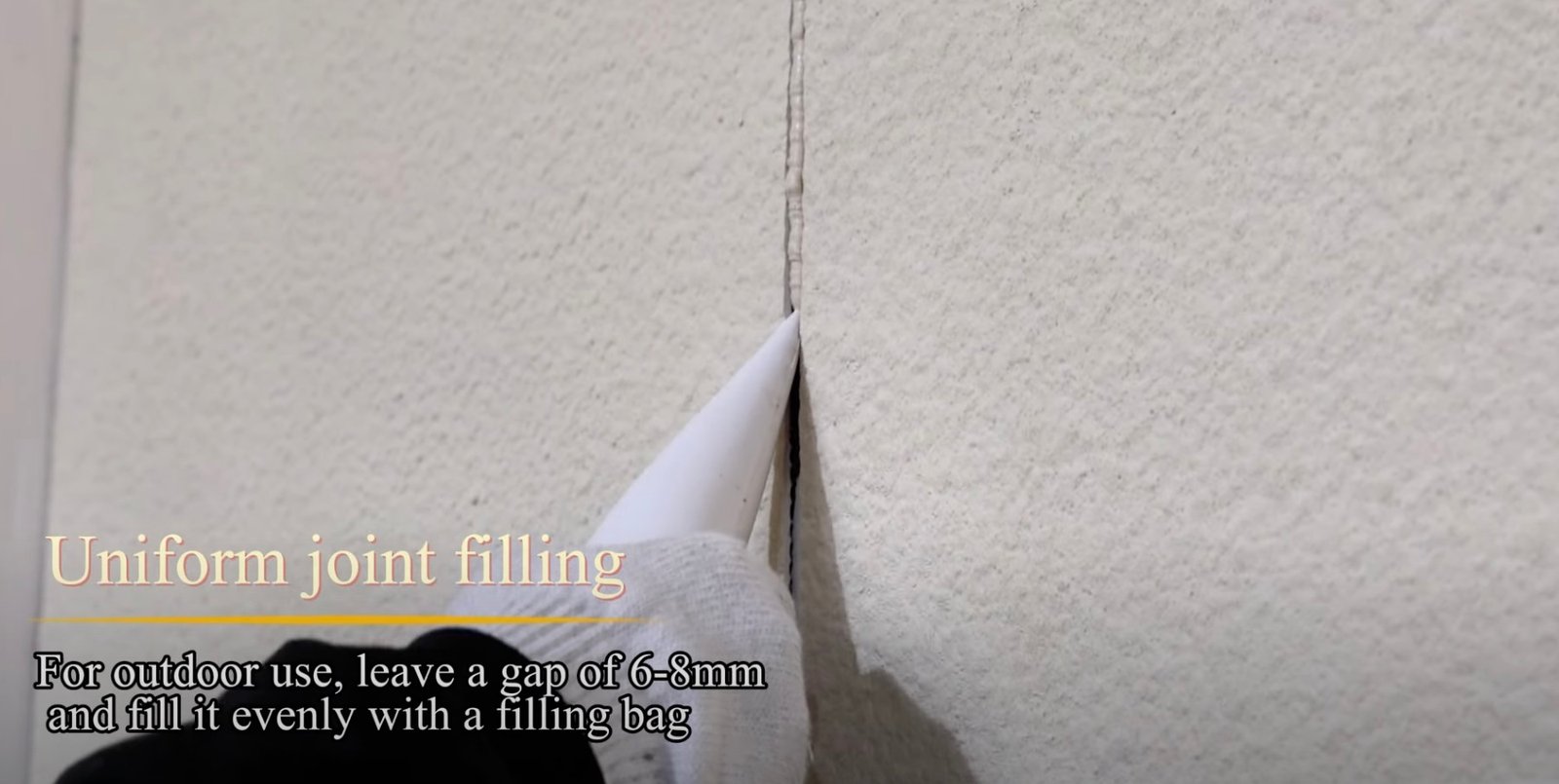
벽의 변위 전략은 곧 이음새 전략이며, 그 규칙은 당사의 movement joint guide 에서 비롯됩니다. 햇빛이 많이 들어오는 방에서는 이 규칙들이 선택사항이 아니라 필수라는 점을 기억하시기 바랍니다. 필드 내 이음선은 시스템이 요구하는 위치에 설치하며, 단단한 충전재 대신 유연한 실런트로 채우고接着제로 얼룩지게 하지 않습니다. 주변 이음새 — 석재 필드가 천장, 바닥, 창호 reveals, 또는 인접 재질과 만나는 곳 — 는 설계 단계부터 변위 이음으로 계획하며, 개구부 너비는 설치자의 임의가 아닌 시스템 전체의 변위를 기준으로 결정됩니다.
햇빛이 많이 들어오는 방은 이 두 가지 규칙의 실패 비용을 높입니다. 첫째, 단단한 충전재는 다른 어떤 하중보다 열충격 사이클에서 더 빨리 파열되므로 “무조건 갈로 채워라”는 조언은 반드시 A/S를 부르는 지침입니다. 둘째, 중간에 차단되는 이음새 — 지나갔다接着 patches에 의해 가로막힌 뒤 다시 이어지는 경우 — 는 그 접합부에서 제 역할을 멈춥니다. 남향 햇빛을 견디는 벽은 설계도부터 현장까지 이음새가 연속적으로 유지되는 벽입니다.
How do big windows change the details?
Glass changes the room in three ways, and each one lands on the wall detail. Direct sun adds the daily heating cycle described above, with the harshest exposure on walls opposite or adjacent to large south and west glazing. The glass line itself is a movement interface — the frame expands and contracts at its own rate — so the junction where stone meets the window reveal must not pin the two together; the stop-line discipline from our glass junction guide carries the thermal argument as well as the drainage one. And the light that makes the room pleasant makes every wall irregularity visible: raking sun across a stone field shows telegraphed substrate faults that even light would forgive, which is why the substrate flatness standard from our backing board guide matters most exactly where the sun hits hardest.
Behind-the-wall effects complete the picture. A wall on an exterior building line carries the outside temperature through its substrate; an interior partition between a heated room and a stairwell or garage sees its own gradient. Neither stresses the sheet — both stress rigid bridges across the gradient, which is the same argument the movement strategy makes: let every layer move, and nothing cracks.
What does the adhesive system contribute?
The adhesive bed is the sheet’s thermal suspension, and its specification is doing more work than buyers assume. A product approved for the exposure class — interior, wet, exterior — has been tested to hold the sheet through the temperature range that class implies; an interior-grade adhesive on a sun-heated wall is a specification error that shows up as edge lift in its first summer. The open-time and temperature-window rules in the system’s manual are not paperwork: applying adhesive outside its stated range is how a bond that passes every other check fails the one season that matters.
Verification follows the same evidence logic as everywhere else on this site: the transfer check from our coverage guide on the first sheets, and a season-end walk of the sun-exposed elevations — edges, joints, penetrations — while any early movement is still a small repair rather than a re-clad.
Which rooms deserve the sun-exposed detailing?
- Rooms with large south or west glazing — the direct-cycle case, where tone choice and joint detailing both matter most.
- Conservatories, sunrooms and garden rooms — the widest swings in the building, where the assembly is designed around movement from the start.
- Walls behind glass walls and storefronts — the frame interface plus the direct sun, two stress sources in one line.
- Exterior-adjacent interiors — stairwells, entry halls and garages whose walls carry the outside gradient through the substrate.
- Dark-pattern feature walls in any of the above — the highest surface temperatures in the building, deserving the fullest movement detailing in the specification.
None of these disqualify flexible stone; they simply promote the movement strategy from good practice to mandatory. The material has handled these environments across its product classes — the failure cases are almost always a detail that pinned what should have moved.
How do seasons test the wall after handover?
The thermal story has a calendar, and the wall reads it out loud. The first summer is the shake-down: joints flex through their widest cycles, edges see their highest temperatures, and any detail that was going to misbehave introduces itself. The first winter then runs the reverse cycle — and a wall that passed summer and winter has met the full range the room can produce, which is why the season-end walk described above is scheduled for both, not just the sunny one.
Between inspections, the wall itself tells the story if anyone looks. A sealant joint that has begun to pull away on one side is reporting that the two faces it joins move at different rates — expected at a glass line, unexpected mid-field. A hairline at a corner is reporting a rigid bridge that has started to fight. Neither is a material complaint; both are detail complaints, and both are cheapest to correct while they are still lines rather than losses. This is the same assignability argument our liability guide makes: the wall keeps records in its joints for whoever learned to read them.
What does correct installation look like in a sunroom, step by step?
A conservatory or garden-room wall concentrates every thermal rule in one small project, so it is worth running the sequence end to end. The substrate is specified and accepted flat, with its joints treated and cured — the raking sun will expose anything the straightedge missed. The movement joints are drawn with the panel grid: perimeter gaps at floor, ceiling and every reveal, field joints at the locations the system requires, all sized for the assembly and all destined for flexible sealant. The adhesive is the exposure-class product the system approves, applied within its stated temperature window — which in a sunroom means working the shaded side first and letting the morning sun do the curing, not fighting an afternoon wall that is already hot to the touch.
The sheets go up with the coverage discipline — full bed, ridges collapsed, transfer verified by lift-and-read on the first panel — and the penetrations, which in a sunroom are usually plentiful, are templated and cut so nothing pins the sheet around a box or a pipe. The terminations at the glass line follow the stop-line rule, and the whole field is left with its joints open to the sealant stage, never bridged. Photographed at each step, the project hands over with the evidence chain our 제출 문서 가이드 keeps — and the first season-end walk then reads a wall that was built to move.
자주 묻는 질문
Will the wall crack because of temperature changes?
The sheet will not crack from its own expansion — the movement across a panel is fractions of a millimetre. Cracks appear where movement is prevented: rigid-filled joints, bonded bridges to other materials, pinning around penetrations. Design the joints to move and the wall ages calmly.
Do dark patterns need different detailing?
They reach higher surface temperatures in direct sun, so the harshest cycles land on them. The same movement strategy applies to every wall; in sun-exposed rooms with dark faces, none of it is optional and the season-end inspection is worth scheduling from handover.
Is the adhesive different for sun-exposed rooms?
The exposure class is what matters — the adhesive approved for the wall’s environment has been tested across the temperature range that class implies. Using an interior-grade product on a sun-heated wall, or applying outside the stated temperature window, voids the logic the approval was built on.
What should I check after the first summer?
Walk the sun-exposed elevations and read the lines: joints continuous and sealed, edges tight, penetrations unpinning the sheet, no shine where stone rubs a frame. Anything found in the first season is a small repair; the same fault after three seasons is a re-clad.
Design the wall to move with the seasons and the sun becomes a lighting asset instead of a stress test. Format and thickness data for the assembly are on the flexible stone veneer page, and thermal-movement practice for adhered finishes is published by the ASTM International standards behind the product’s own test reports.