
On paper, flexible stone is a finish trade with a delivery date and a fixing date. On site, it is a sequence problem: the panels arrive when the container arrives, they can only go onto a wall that is flat, dry and services-complete, and every trade after them will lean on the finished surface if given the chance. The walls that come out well are not the ones with the best installer — they are the ones whose programme put the stone where it belongs in the sequence and protected it after it was there. This guide covers how to schedule flexible stone delivery and installation around the other trades on a fit-out: the position it needs in the sequence, the interfaces that must be agreed in advance, and the holding points that keep the programme honest.
Where does flexible stone sit in the trade sequence?
The short answer: late, but not last. The stone needs a completed substrate — flat, dry, board joints treated — which puts it after framing, boarding and the first fix of every service that lands on its walls: sockets, spurs, duct terminations, backing for screens. It needs to be before the trades that would find it easier to work against a finished stone wall than against a boarded one: joinery surrounds, slat arrays, signage, glazing trims. And it must be protected through paint, floor finishing and final clean, the three trades most likely to damage it.
The failure signature of a wrong sequence is easy to recognise. Stone going on before services are first-fixed means panels cut open afterwards for boxes — every reopening is a visible patch. Stone going on before the substrate is signed off means the substrate’s sins become the finish’s defects. Stone going on last of all, squeezed into the final week, means corners cut at exactly the moment quality matters most. The slot is narrow and it is worth defending in the programme meeting, not discovering in the site hut.
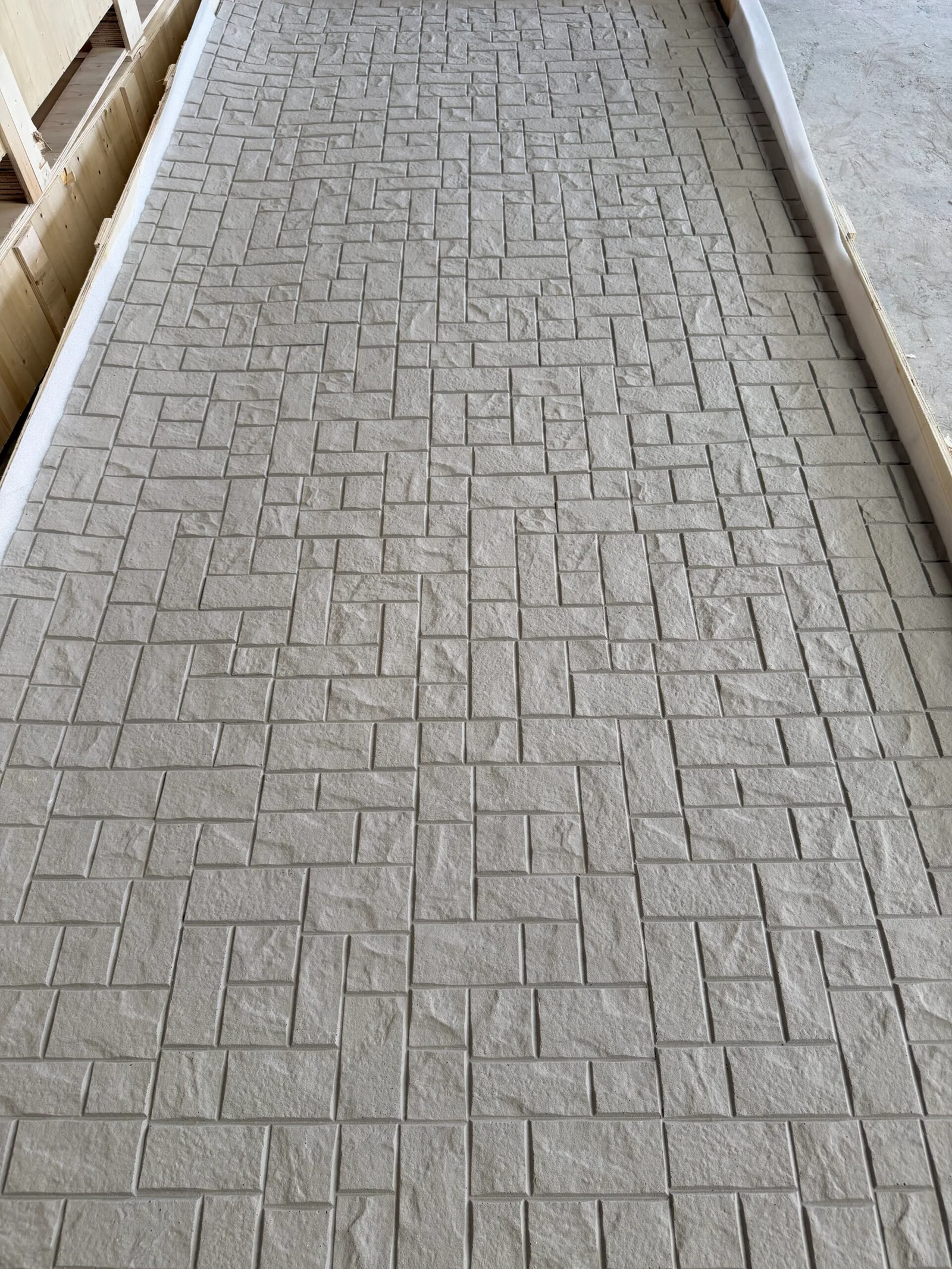
What has to be agreed with each neighbouring trade?
- Electrical and mechanical. Every box, spur and duct termination on a stone wall is first-fixed, tested and set to finished depth before cladding starts — the division of responsibilities our socket finishing guide draws at the box. Their sign-off is the stone trade’s green light.
- Boarding and framing. The substrate arrives flat and sound, with joints treated per the backing-board logic in our substrate guide, and its acceptance is recorded — photograph, straightedge pass — so the handoff is provable later.
- Joinery and slat arrays. Agreed datum and sequence: stone first, timber second, with the junction detailed as our stone-to-timber guide sets out. Joinery datum comes off the finished stone face, agreed before either trade starts.
- Glazing and storefront. The stop-line zones from the curtain-wall drawings decide where stone may run — the coordination exercise covered in our transition guide.
- Painting and floor finishing. Both work after the stone, so their protection duty is contractual: sheeting, tapes tested on a spare panel, no solvents stored against the wall.
Each of those agreements is a line in the programme with a name against it — not a relationship, a line. The walls that survive a fit-out are the ones where “who owns this interface” was answered in a meeting room.
How should delivery be scheduled against installation?
The container date and the fixing date have to be planned as one decision, not two. Panels arriving months before the wall is ready sit in storage — and storage is not free of risk: the material needs to stay flat, dry and temperature-stable, per the handling rules in our protection guide. Panels arriving after the wall is ready put the finish trade into programme compression, which is when open times get stretched and coverage gets thin. The lead-time maths that links order date, production window and fixing window is laid out in our lead time and scheduling guide; the point here is that the fixing date drives the order date, not the other way round.
Two holding points keep the delivery honest. First, the pre-shipment inspection: the batch is checked and photographed before it loads, so a tone or relief problem is found while it is still the supplier’s, per the inspection and COA logic. 2つ目は到着時の検品です。パッケージ、バッチの表示、荷役時の湿気チェック——我々の 湿気包装ガイド で説明している通り、これにより材料は届いた時点で品質が保証され、予定の議論は日付に集中できます。
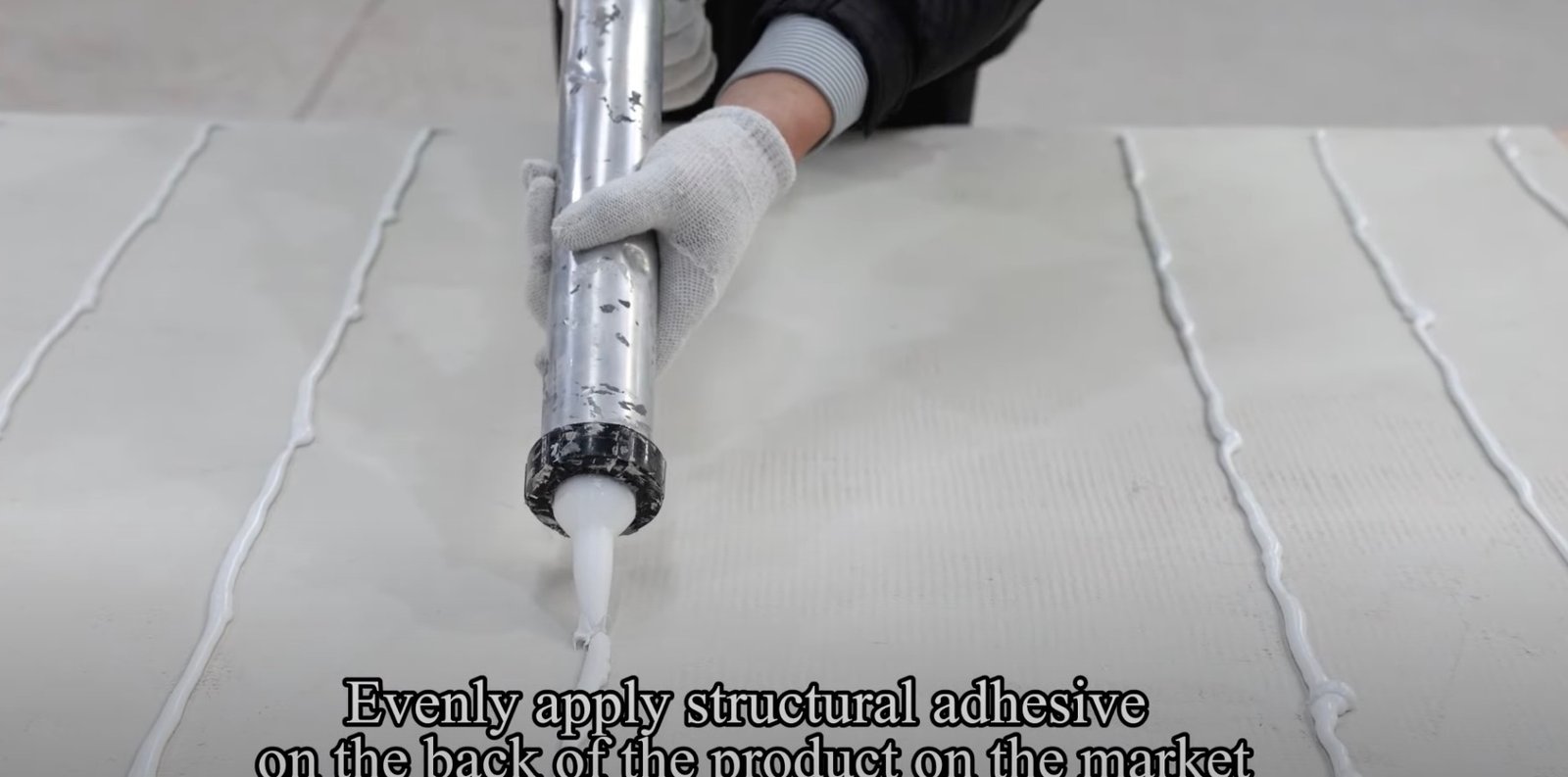
設置ウィンドウそのものに必要なものは何か?
3つの条件が固定ウィンドウを品質ウィンドウに変えます。 アクセスと照明: 壁全体が完全に確保され、足場が中間で撤去されず、前には資材が置かれていないこと——さらにトーンや継手を識別できるだけの十分な照明があること。それは壁が最終的に評価される光でもあります。 接着システムの指定範囲内温度 : フィットアウトでは恒久暖房を通常より早く入れる必要がある場合も多く、10月中に議論しておく価値のあるポイントです。 中断のない日程: 同一クルーが継続作業できるほど現場は速く、品質良く進みます。分断された壁は常に継手の整列コストを支払うことになります。
壁自体の内部スケジュール: 出図の確認とマーキング、モックアップの承認、その後、歩行経路を終了パネル上に残さない順序で区域を完了します。日々のルーチン——1枚目のリフトテスト、終業時の空洞スキャン——は我々の インストーラー研修ガイド.
に沿って同じリズムに乗ります。
完成した壁は残り期間中、どのように保護されますか?
One more schedule line matters: the completion scan. Before handover, the wall gets its tap-test, joint check and photography — the acceptance routine from the submittal discipline — while there is still time to fix what it finds. A programme that leaves that scan out has not finished the stone package; it has only stopped working on it.
How does the sequence change on a phased or occupied fit-out?
Occupied and phased jobs break the tidy “late but not last” rule, because there is no “last”. The adaptation that works is the zone package: each phase gets its own mini-sequence — substrate sign-off, services first fix, stone, protection, handover of that zone — and the boundaries between phases get detailed like any other junction. A stone field crossing a live phase line is a wall that gets worked on from both sides; better to stop it at a designed joint, cover the boundary with its own termination, and let the next phase pick up from a drawn line rather than a negotiated one.
Phased work also multiplies the delivery problem. Split shipments sound like the answer and often are, but each shipment is its own batch logic: the panels for phase two are matched to the approved sample at their own pre-shipment check, and the boundary between phases is where a tone step would live if it were going to. The batch discipline from our batch consistency guide is the tool — applied per phase, not once per project.
工程の最終段階における保護策は、作業員よりもoccupants(利用者)を守るためのものです。稼働中のホテルや商業フロアでは、日々の人的・物的交通が劣化の主な原因となります。したがって、廊下には台車レベルの衝撃保護を設け、各区画の完成検査は工事終了時ではなく、各区画の手渡しの時点で実施します。証拠の鮮度は保たれなければならず、壁面の記録も塗膜と同様に常に最新でなければなりません。
FAQ
天井仕上げ前にフレキシブルストーンを設置できますか?
一般的に可能です。ストーンと天井の接合部は、石張りの後に天井格間またはプラスターの止端を設定した方が、確実にきれいに仕上げることができます。設置できないのは、自室のサービス配管や、適合判定済みの下地が整っていない場合です。
納期がどの程度遅延しても計画に影響が出ませんか?
取り付け可能な時間的窓(フィクシングウィンドウ)の直前が最適です。開始後では遅すぎます。パネルなしでパネル取付準備が整った壁面は労働力の浪費になり、壁なしで現場に届いたパネルは保管リスクとなります。発注日は、サプライヤーの生産期間を間に受け、取り付け可能期間から逆算して決定します。
残りの建装工程における保護策の点検は誰が行いますか?
プログラムで指定された者です。一般的には、施工業者または総合請負業者の仕上げ監督者が担当します。点検は週次で行い、実際に実施し、書面に残します。誰も確認しない保護シートの存在だけでは、それは保護とは言えません。
パネル到着後にスケジュールが遅れた場合はどうすればよいですか?
取り扱い規定に従って保管場所を再調整し、接着剤および下地の状態が変化する前に取り付け可能期間を再確認してください。遅れを取り戻そうと施工を強行しないでください。そのような圧力は、被覆不良や継目 failures(不具合)を生み出し、私たちが 失敗時の責任に関するガイド で解説している賠償責任の問題を引き起こします。
故意にシーケンスを組み、すべての接合部を事前に合意し、取り付け可能期間に必要な条件を整えてください。スケジュール用のフォーマットおよび取り扱いデータは、 flexible stone veneer 当該ページに記載されています。また、建装工事における trade-sequencing(工程組み立て)の実践は、 Associated General Contractors of America などの団体によって刊行されています.