 Skip to content
Creating modern Store Fixtures with seamless, curved designs is a constant challenge. Traditional materials like quartz or Corian often crack when bent, forcing ugly seams and costly rework that cuts directly into a shopfitter’s project margin.
This guide provides the technical data for specifying lightweight stone. We focus on key performance metrics, including its 200mm minimum bending diameter for crack-free curves and its impact-absorbing core of Modified Clay, which eliminates the chipping common with traditional surfaces.
The “POS Island” as a Centerpiece
A POS Island is a central retail fixture combining checkout with a 360-degree display. It functions as both an operational hub and a visual centerpiece to drive sales.
Dual-Function Design for Engagement and Sales
A Point-of-Sale island isn’t just a checkout counter; it’s a strategic asset that merges operations with merchandising. By placing it centrally, you create a natural anchor that guides how customers move through the space. Its primary roles are clear and direct.
- It integrates billing stations with multi-sided display surfaces, turning a customer’s wait time into an opportunity for impulse buys.
- The design creates a 360-degree focal point accessible from multiple angles, breaking up rigid aisles and drawing attention to key products.
- It serves as both an operational hub for transactions and a promotional anchor for new arrivals or high-margin items.
Creating an “Instagrammable” Focal Point with Flexible Stone
The material you choose for the island determines if it’s merely functional or a true brand statement. Using a flexible stone veneer with a striking texture like Travertine or Concrete transforms a simple counter into a powerful visual element. This is especially true for businesses that rely on atmosphere, like salons, boutiques, and trendy restaurants.
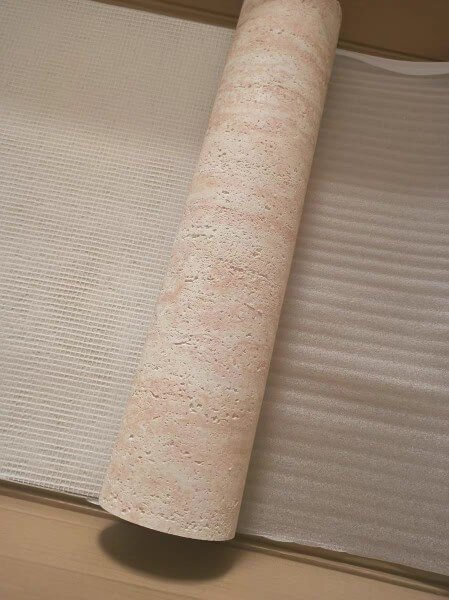
Because the material is bendable, it can clad curved or unconventional island shapes without cracking, creating a seamless, high-end look that’s difficult to achieve with traditional materials. This visual impact provides a compelling backdrop for customer interactions and photos, encouraging social media sharing that serves as free marketing for the business.
Wrapping Tight Radii on Counters
Wrapping tight radii with quartz or thick stone requires seams. Our flexible stone panels solve this by bending to a 200mm diameter, creating a smooth, continuous surface on curved counters without cracks.
The Problem with Bending Rigid Materials
When you try to force thick, rigid materials like stone slabs, quartz, or even some laminates around a tight curve, they often crack or chip. The standard workaround is to cut multiple straight pieces to approximate the curve. This approach always results in visible seams that interrupt the clean, monolithic look that designers want.
Flexible Stone’s Bending Capability
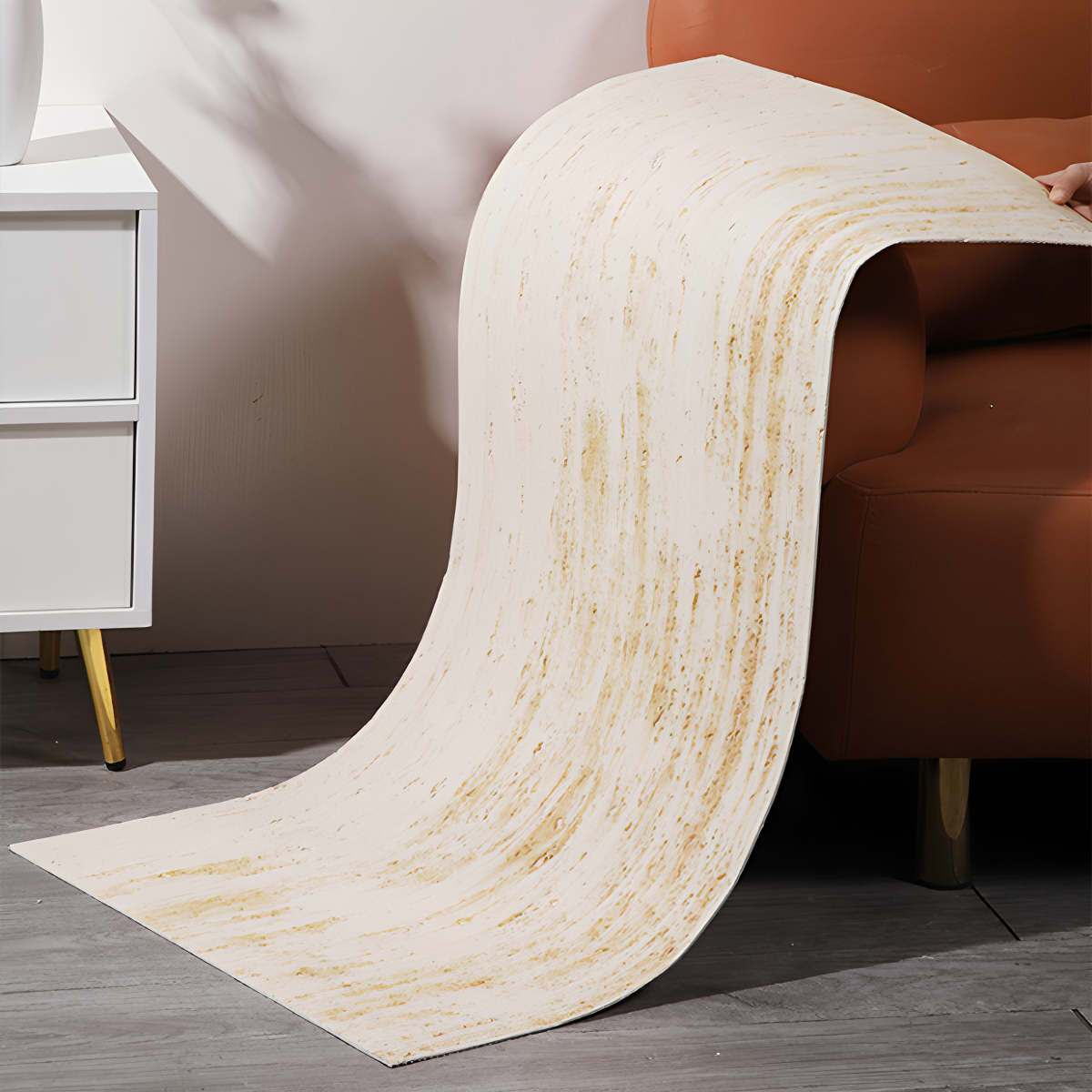
Our material is engineered for flexibility. It can wrap around a minimum diameter of approximately 200mm without any risk of cracking. This capability lets you create seamless, ‘Crack-Free Curves’ on fixtures that are typically difficult to finish, such as circular columns, reception desks, and rounded countertop edges.
Elevate Your Designs with Flexible Stone
Impact Resistance for Shopping Carts/Bags
Our flexible stone panels are built for high-traffic commercial spaces. The core of Modified Clay and stone powder absorbs impact from carts, preventing the chipping and cracking common with tile.
Defining Durability in Commercial Environments
Walls in retail environments don’t just stand there; they take a constant beating. Real durability isn’t about surviving one big hit, but withstanding thousands of small, repetitive impacts that degrade surfaces over time. This daily wear comes from a few key sources.
- Constant exposure to collisions from shopping carts and service trolleys.
- Frequent scuffs and abrasions from customer bags, strollers, and cleaning equipment.
- The need for materials that resist dents, chips, and cracks to maintain a clean, professional aesthetic.
Resilience Through Material Composition
Traditional materials like ceramic tile or drywall fail because they are rigid and brittle. Our panels are engineered to be resilient, and that toughness comes directly from their composition.
- Shock-Absorbing Core: The panel’s body combines Modified Clay Material (MCM) with natural stone powder. This composite flexes slightly to absorb shock instead of shattering or cracking on impact.
- Reinforced Backing: A fiber mesh backing provides structural integrity and helps distribute impact forces across the entire panel, preventing localized damage from sharp hits.
- Certified Toughness: The panels are officially rated as Scratch-Resistant, protecting the surface finish from the daily wear that quickly damages paint or laminate.
Joint Placement for a “Monolithic” Look
A monolithic look requires minimal visible seams. Use our 1200 x 2900 mm floor-to-ceiling panels to eliminate horizontal joints, and hide vertical ones with careful alignment.
The goal is to create a surface that appears carved from a single piece of stone. This isn’t about fancy techniques, it’s about smart panel selection and clean installation. Getting the joints right is everything.
Core Strategies for Concealing Seams
Making joints disappear is a game of details. The entire illusion of a seamless wall depends on these three factors:
- Precise Alignment: Panels must be aligned perfectly to create clean, tight seams that don’t draw the eye.
- Color-Matched Grout: Use grout or fillers that are color-matched to the stone texture. The seam should blend in, not stand out.
- Consistent Finishes: Ensure surface finishes are identical across all panels. Any variation in gloss or texture will create a visual break.
Using Large Format Panels to Minimize Joints
The simplest way to hide joints is to design them out of the project from the start. This is why we produce oversized panels specifically for this purpose.
Notre Large Format 2400 x 600 mm panels cover wide walls with far fewer vertical seams than standard-sized materials. For height, the Floor-to-Ceiling 1200 x 2900 mm dimension is designed to eliminate horizontal joints entirely in rooms with standard ceiling heights. One panel covers the whole wall, from top to bottom.


Cost vs. Corian or Quartz
Quartz is 30-50% more expensive than Corian for materials alone. Flexible stone systems offer lower total project costs by cutting expenses in logistics and demolition.
Upfront Costs: Material and Installation
Looking at materials alone, Corian generally costs between $26 to $80 per square foot. Quartz starts higher, from $40 to over $200 per square foot. The price difference reflects the manufacturing process and higher natural mineral content in quartz.
Installation costs bring the total prices closer. A standard project installation averages around $3,950 for Corian and $4,500 for Quartz. Your final cost for either material will depend on the specific color, design complexity, and local availability.
| Facteur | Corian | Quartz |
|---|---|---|
| Durabilité | More susceptible to scratches and heat damage. | Highly durable; resistant to scratches and stains. |
| Repairability | Easily repaired through sanding and polishing. | Difficult to repair if damaged. |
| Maintenance | May require periodic polishing. | Virtually maintenance-free. |
Total Project Cost and Long-Term Value
The sticker price for traditional materials doesn’t tell the whole story. Heavy surfaces like quartz and Corian carry hidden costs that lightweight flexible stone systems are designed to avoid.
- Logistics Friendly: Flexible stone weighs only 1/6th of traditional stone, at about 3.5 to 6.0 kg per square meter. This drastically cuts shipping and inland transportation fees from the total project budget.
- Zero-Demolition Renovation: The ability to directly overlay flexible stone on existing walls eliminates high costs tied to demolition labor and waste disposal. This is a huge advantage for renovating occupied spaces.
- Structural Load Reduction: Using a lightweight material avoids the need for structural reinforcements, a common requirement in older buildings. This saves on hidden engineering and construction costs.
Questions fréquemment posées
What exactly is MCM Flexible Stone made of? Is it a type of plastic or vinyl?
It is not plastic or vinyl. Our flexible stone is an innovative composite made from natural stone powder and modified clay (MCM), fused with specialized polymers for flexibility. It’s backed with a fiber mesh for strength. The material looks and feels like authentic stone because it is reconstructed from natural components.
Can this material be installed on curved surfaces or over existing tiles?
Yes, its flexibility is a key advantage. It easily wraps around curved walls, columns, and arches with a bending diameter of about 200mm without cracking. It’s also perfect for renovations because you can apply it directly over existing surfaces like old ceramic tiles, concrete, or drywall. This saves significant time and money by eliminating demolition.
How durable is it for exterior use in extreme weather conditions?
It is engineered for extreme climates. The material is rated for Class A2 fire resistance, is highly UV resistant for hot climates like the Middle East, and has passed freeze-thaw tests at -40°C for cold regions like Russia and Canada. Its low water absorption rate prevents damage from moisture or frost.
What is the ordering process for a B2B client and what is the minimum quantity?
The standard minimum order quantity (MOQ) is 200 m². For custom OEM projects, the MOQ is 500 m². We also offer flexibility for full container orders (FCL), letting you mix different styles with a minimum of just one pallet per style. The process starts with sampling, followed by a quotation, production which takes 15-25 days, and logistics support.
How are the panels cut and installed? Do we need special tools?
No special tools are needed, which makes installation very efficient. The panels can be cut to size with a simple utility knife, meaning no dust, no noise, and no heavy machinery. They are installed using a direct adhesion method with standard structural adhesive or tile glue, a process similar to installing tiles but much faster.
Conclusion
Standard materials might save money upfront, but they risk chipped corners and visible seams that damage your client’s brand image. Our impact-resistant panels deliver a monolithic look, safeguarding your reputation on high-traffic commercial projects.
The next step is to verify the material’s performance in person. Request our architectural sample kit to test the flexibility and finish firsthand, and let our team provide a project-level quotation based on your MOQ.

 French
  English
  Spanish
  Arabic
  German