Le placage de pierre flexible pour les projets commerciaux est la principale protection contre le dépassement des limites de charge structurelle et le dérapage des budgets des projets. Les architectes et les constructeurs optent souvent pour des pierres lourdes, extraites de carrières, en sous-estimant les répercussions sur l'ingénierie structurelle, les coûts de main-d'œuvre et les délais.
Le simple poids exige des fondations renforcées et des systèmes d'ancrage complexes, ce qui introduit des risques susceptibles de bloquer les inspections et d'entraîner des travaux de reprise coûteux. Une seule erreur de calcul de la capacité portante peut compromettre l'intégrité et la viabilité financière d'une façade.
Ce guide fournit les données techniques nécessaires pour spécifier le placage léger en toute confiance. Nous analysons les économies de poids du matériau par rapport à la pierre traditionnelle, examinons ses indices de résistance au feu par rapport aux normes de sécurité essentielles et analysons son rapport coût-efficacité pour les façades commerciales à grande échelle. Cette analyse sert de cadre clair pour évaluer si le matériau répond aux exigences structurelles, de sécurité et budgétaires de votre projet.
Qu'est-ce qu'un placage en pierre flexible ?
Le placage de pierre flexible est un composite technique qui lie une couche de pierre de carrière très fine à un support flexible en polymère ou en fibre de verre, ce qui résout les problèmes de poids et de rigidité des dalles de pierre traditionnelles.
Composition du matériau
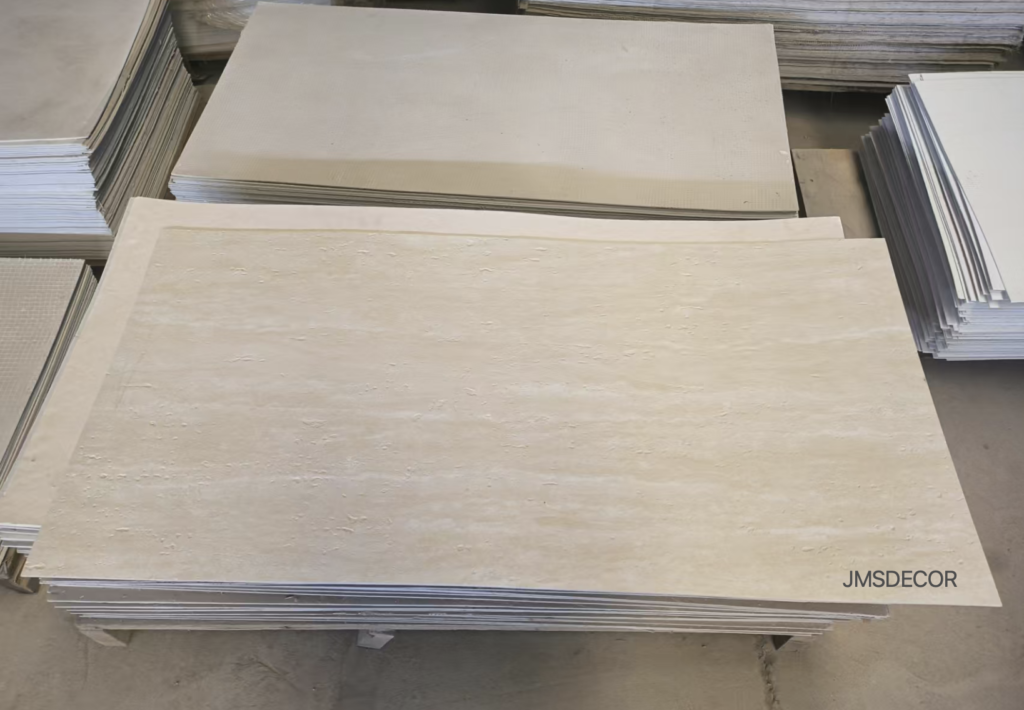
Le placage de pierre flexible est un matériau composite fabriqué en collant une très fine couche de pierre naturelle, telle que l'ardoise ou le marbre, sur un support léger mais durable. Ce support, généralement de la fibre de verre ou un substrat polymère tel que le matériau argileux modifié (MCM), confère aux panneaux leur flexibilité caractéristique. Le résultat est un produit qui conserve l'aspect et le toucher authentiques de la pierre de carrière, mais qui se comporte comme un panneau d'ingénierie moderne.
La surface est en pierre véritable, préservant sa texture, sa couleur et son attrait visuel authentiques.
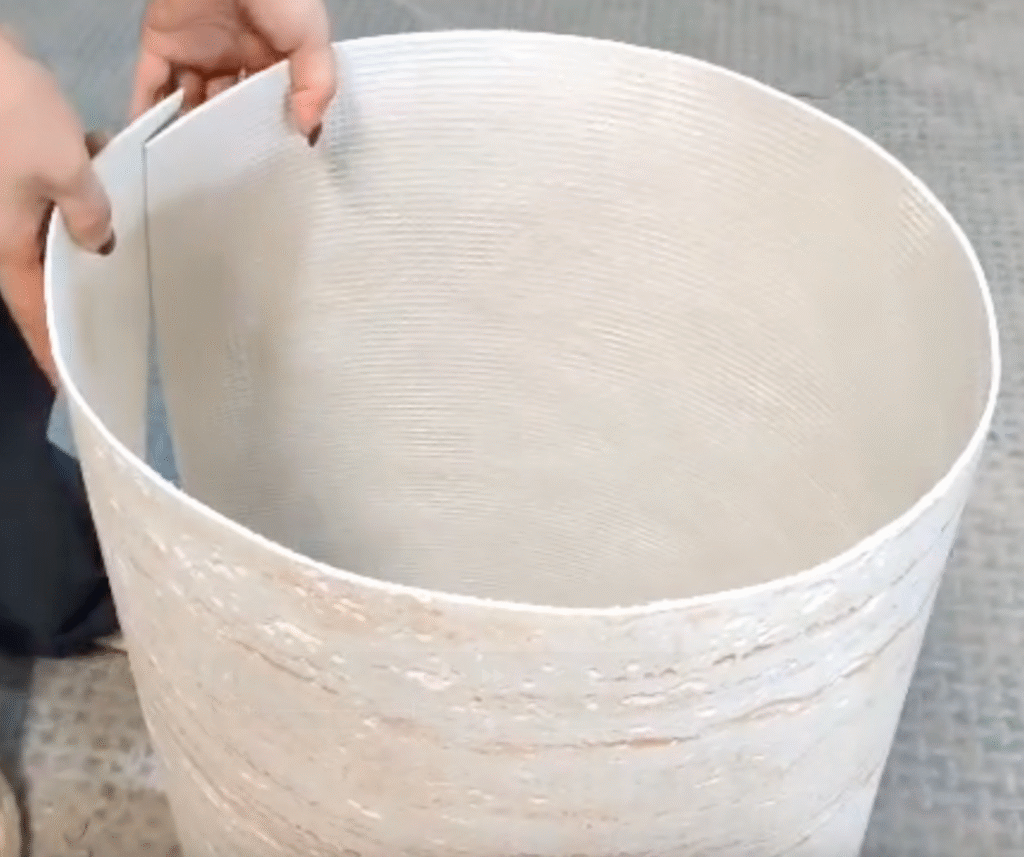
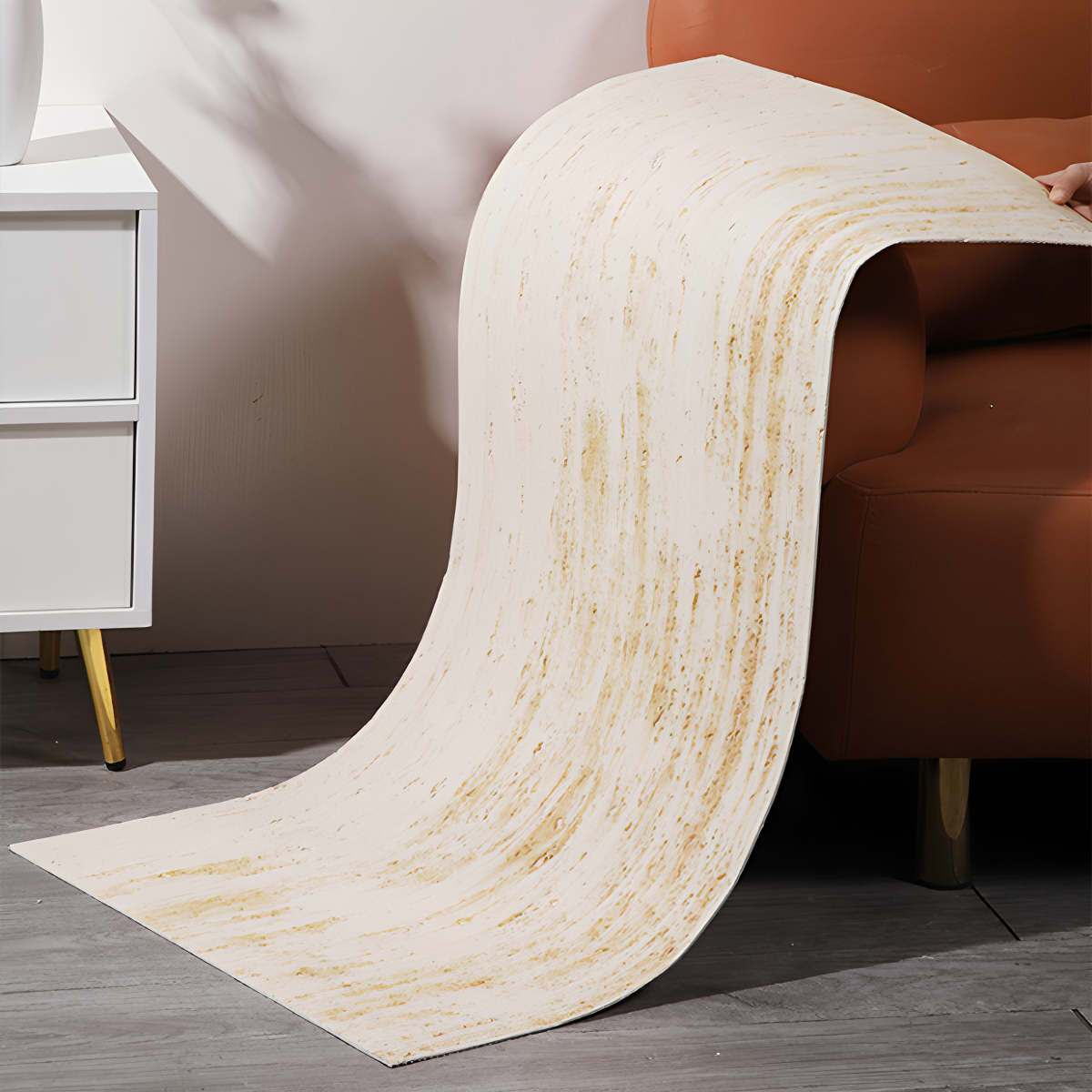
Le support assure l'intégrité structurelle et permet à la feuille de s'adapter aux surfaces courbes ou irrégulières sans se fissurer.
Le produit final est conçu pour être fin et maniable, ce qui en fait une alternative pratique aux dalles de pierre massive pour un large éventail de projets.
Avantages principaux par rapport à la pierre traditionnelle
Ce matériau a été développé pour surmonter les principales limites de la pierre traditionnelle, notamment son poids énorme, son coût élevé et sa complexité d'installation. Ses avantages sont centrés sur l'efficacité et la praticité du projet, qui ont un impact sur tous les aspects, de la logistique à la main-d'œuvre.
Son poids léger - souvent un sixième de celui de la pierre massive - réduit considérablement les coûts de transport et élimine la nécessité d'un support structurel lourd.
L'installation est plus rapide et plus simple, réduisant souvent le temps d'installation jusqu'à 70% et nécessitant moins d'outils spécialisés ou de compétences en matière de main-d'œuvre.
Le matériau est généralement plus rentable, offrant l'aspect authentique de la pierre naturelle pour un budget total inférieur.
Applications courantes
La combinaison unique d'une finition en pierre authentique et de la flexibilité de l'ingénierie ouvre un large éventail d'utilisations dans les projets commerciaux et résidentiels. Elle élargit les possibilités de conception bien au-delà de ce qui est réalisable avec la maçonnerie traditionnelle, en particulier dans les rénovations et les aménagements commerciaux rapides.
Utilisé pour le revêtement des murs intérieurs et extérieurs, les façades de bâtiments et les murs décoratifs dans les hôtels, les espaces commerciaux et les bureaux.
Idéal pour envelopper les surfaces courbes telles que les colonnes, les bureaux de réception et les arcs où la pierre massive n'est pas pratique.
Appliqué dans les meubles haut de gamme, les armoires et autres éléments de décoration intérieure pour créer une esthétique “Instagrammable” dans les espaces commerciaux tels que les salons et les restaurants.
Principaux avantages pour les projets commerciaux
Le placage de pierre flexible offre des avantages financiers, structurels et conceptuels directs qui permettent de relever les principaux défis de la construction et de la rénovation commerciales.
Efficacité de l'installation et réduction des coûts
Les panneaux de pierre flexibles s'attaquent directement aux délais des projets et aux budgets de main-d'œuvre. Leur poids extrêmement faible permet une installation rapide sans machinerie lourde ni renforts structurels, qui représentent des dépenses importantes avec la pierre traditionnelle. Pour les installateurs de magasins, les rénovateurs d'hôtels et les promoteurs, cela signifie une réalisation plus rapide des projets et une meilleure rentabilité.
Réduit le temps d'installation jusqu'à 70% par rapport à la maçonnerie traditionnelle en pierre.
Il pèse environ 80% de moins, ce qui élimine le besoin de modifications structurelles coûteuses ou d'un support de charge.
Réduit les frais de main-d'œuvre, un facteur essentiel pour maintenir le contrôle du budget dans les constructions commerciales à grande échelle.
Avantages en termes de structure et de sécurité
La réduction significative du poids offre des avantages structurels essentiels, en particulier dans les constructions de grande hauteur et les rénovations de bâtiments. Elle permet de réaliser des finitions en pierre sur des surfaces qui ne peuvent pas supporter l'immense charge de la pierre conventionnelle. La réduction de la masse améliore également les performances des bâtiments en cas d'événements sismiques, car la structure et les systèmes de montage sont moins sollicités.
Permet l'installation aux étages supérieurs et sur les murs non porteurs où les matériaux lourds sont interdits.
Améliore la sécurité dans les régions sujettes aux tremblements de terre grâce à sa masse réduite.
Peut contribuer à réduire les primes d'assurance pour les bâtiments situés dans des zones sismiques actives.
Applications polyvalentes
Contrairement aux dalles de pierre rigides, le placage flexible s'adapte aux murs courbes, aux colonnes rondes et à d'autres formes architecturales complexes sans se fissurer. Cette capacité donne aux architectes et aux concepteurs une plus grande liberté, en particulier dans les rénovations commerciales où les structures existantes ont des dimensions non conventionnelles. Il permet d'obtenir un aspect pierre haut de gamme et sans jointure, sans avoir à dépenser pour une fabrication sur mesure.
S'enroule autour des surfaces courbes et des colonnes pour donner un aspect monolithique à la pierre.
Idéal pour la rénovation d'espaces présentant des éléments structurels uniques ou difficiles.
Peut être appliqué sur les murs intérieurs, les façades extérieures et même sur les meubles et accessoires personnalisés.
Durabilité et entretien minimal
Conçus pour les environnements commerciaux très fréquentés, les panneaux de pierre flexibles sont construits pour durer. Ils résistent efficacement aux dommages causés par les intempéries, l'humidité et les rayons UV, ce qui garantit la stabilité des couleurs et l'intégrité structurelle à long terme. Cette grande durabilité signifie qu'un entretien minimal est nécessaire, ce qui réduit les coûts d'exploitation du bâtiment tout au long de sa durée de vie.
Convient aux applications intérieures et extérieures exigeantes, des halls d'entrée aux façades.
Résistant à la décoloration, à la fissuration et à l'intrusion de l'humidité.
Les faibles exigences en matière de maintenance se traduisent directement par une réduction des dépenses opérationnelles à long terme.
Placage de pierre Source Premium, entièrement personnalisable
Nos panneaux de pierre tendre, légers et respectueux de l'environnement, offrent des performances durables pour tout projet de luxe. Grâce à une production certifiée ISO et à des quantités minimales, nous assurons un approvisionnement constant et fiable pour répondre à la vision unique de votre marque.
La réduction significative du poids du placage de pierre flexible - souvent moins d'un sixième de la pierre traditionnelle - élimine directement les besoins de renforcement structurel et réduit les coûts du projet, du transport à l'installation.
Le principal facteur de différenciation entre le placage de pierre flexible et la pierre traditionnelle est la masse. Pour les architectes, les entrepreneurs et les promoteurs, cette différence n'est pas qu'un détail mineur ; elle détermine des décisions fondamentales en matière d'ingénierie structurelle, de logistique et de main-d'œuvre. La compréhension de ces paramètres liés au poids est essentielle à la précision du dimensionnement et de la budgétisation d'un projet.
Réduction significative du poids
Le placage de pierre flexible offre un avantage considérable en termes de poids, puisqu'il pèse généralement entre 3 et 15 livres par pied carré. C'est une fraction des 40 à 60 livres par pied carré que pèse la pierre traditionnelle. La réduction de la masse se traduit directement par des avantages pratiques sur site qui rationalisent l'ensemble du processus de construction.
Métrique
Placage en pierre flexible
Lit complet traditionnel en pierre
Poids par pied carré
3 à 15 livres
40 à 60 livres
Renforcement structurel
Généralement inutile ; permet de réduire la charge sur le bâtiment.
Nécessite souvent des semelles, des lisses ou des tirants muraux.
Logistique et transport
Réduction de la consommation de carburant et des coûts d'exploitation.
Des coûts élevés dus à des envois lourds et volumineux.
Résistance et durabilité
Les techniques de fabrication modernes garantissent que cette réduction de poids ne compromet pas les performances. Grâce au collage d'une fine couche de pierre naturelle sur un support composite ou renforcé de fibres, le placage conserve une durabilité impressionnante. Ces systèmes offrent une résistance à la compression élevée, dépassant souvent les 4 000 psi, ainsi qu'une excellente résistance à la flexion, supérieure à 1 000 psi.
Ce matériau est conçu pour résister aux chocs, à l'humidité et aux agressions environnementales, offrant des performances comparables à celles de la pierre traditionnelle dans la plupart des applications architecturales, tout en conservant l'esthétique authentique de la pierre.
Incidence sur les coûts du projet
La légèreté du parement en pierre souple génère des économies cumulées tout au long du cycle de vie d’un projet. Ces économies commencent dès la phase logistique, car les matériaux plus légers sont moins coûteux à transporter et plus faciles à manipuler sur chantier. L’impact le plus significatif concerne la main-d’œuvre et l’ingénierie structurelle. La pose nécessite des équipes plus réduites et prend moins de temps, et la possibilité de l’appliquer directement sur des supports existants dans le cadre de projets de rénovation — une approche “ zéro démolition ” — élimine les frais coûteux liés à la démolition et à l’élimination des déchets. En supprimant le besoin de structures porteuses supplémentaires, les projets peuvent avancer plus rapidement et avec un budget réduit, ce qui fait du parement léger un choix financièrement judicieux pour les travaux commerciaux à grande échelle.
Classification au feu et normes de sécurité
La classe de résistance au feu d'un matériau est une exigence incontournable pour tout projet commercial, car elle a un impact direct sur la sécurité des occupants, la conformité aux normes et l'éligibilité à l'assurance. Nos panneaux en pierre flexible répondent aux normes internationales les plus strictes en matière de matériaux incombustibles.
Essais et certifications internationaux
Nos panneaux en pierre souples sont conformes aux normes internationales de sécurité incendie, garantissant ainsi la conformité des projets commerciaux et résidentiels. Ces certifications attestent de la résistance du matériau à la propagation des flammes et au dégagement de fumée dans des conditions d'essai contrôlées, ce qui en fait un choix fiable pour les architectes et les entrepreneurs du monde entier.
Les panneaux JMS Decor sont classés dans la catégorie A2 de résistance au feu, conformément à la norme américaine ASTM E84.
Ces panneaux sont également conformes aux protocoles d'essai européens EN 13501-1 et britanniques BS 476.
Ces classifications sont indispensables pour les bâtiments publics, les espaces commerciaux et les immeubles collectifs, où s'appliquent des normes anti-incendie strictes.
Standard
Région
Exigence clé
ASTM E84
Amérique du Nord
La classe A exige un indice de propagation des flammes inférieur à 25 et un indice de dégagement de fumée inférieur à 450.
EN 13501-1
L'Europe
La classification A2-s1, d0 désigne un matériau incombustible produisant très peu de fumée et ne générant pas de gouttelettes enflammées.
BS 476
Royaume-Uni
Évalue la propagation du feu et l'extension de la flamme en surface afin de garantir le confinement du matériau.
Comportement au feu de classe A
La classe A de résistance au feu correspond au plus haut niveau de résistance au feu pour les matériaux de construction. Elle est déterminée en mesurant la vitesse à laquelle les flammes se propagent sur une surface et la quantité de fumée générée lorsque le matériau est exposé au feu. Cette classification n'est pas une recommandation ; il s'agit d'une exigence pour de nombreux projets commerciaux.
Pour obtenir la classification de classe A, les matériaux doivent présenter un indice de propagation des flammes inférieur à 25.
Cette faible inflammabilité contribue à ralentir la propagation du feu, ce qui laisse un temps précieux pour l'évacuation.
La faible production de fumée améliore la visibilité et la sécurité en cas d'urgence.
Propriétés des matériaux incombustibles
La composition de notre placage en pierre souple, caractérisé par une couche de poudre de pierre naturelle liée à un support en fibre de verre, en fait un produit fondamentalement incombustible. Cette propriété intrinsèque constitue un atout majeur pour les applications où la sécurité est primordiale, car le matériau lui-même ne contribue pas à alimenter un incendie.
Les matériaux incombustibles n'alimentent pas le feu, ce qui est essentiel pour en limiter la propagation.
Ces panneaux sont donc adaptés à une utilisation dans des zones à haut risque telles que les couloirs, les cuisines et les revêtements extérieurs des immeubles de grande hauteur.
L'utilisation de matériaux incombustibles peut également permettre aux projets d'obtenir des certifications de construction durable telles que LEED.
Applications extérieures vs applications intérieures
Le matériau de base est identique, mais c’est l’application qui détermine la priorité : flexibilité esthétique dans les espaces intérieurs contrôlés ou résistance aux intempéries pour les façades extérieures exposées.
Le placage de pierre souple s'avère très efficace aussi bien en intérieur qu'en extérieur, mais les exigences liées à ces deux environnements diffèrent considérablement. À l'intérieur, l'accent est mis sur la polyvalence du design et la rapidité de pose. À l'extérieur, le matériau doit faire preuve de résistance aux intempéries, aux rayons UV et aux températures extrêmes. Il est essentiel de bien comprendre ces différences pour définir correctement les spécifications et garantir des performances à long terme.
Cas d'utilisation en intérieur
En intérieur, le placage en pierre souple est un outil esthétique permettant de réaliser rapidement des transformations spectaculaires dans les espaces commerciaux. Sa légèreté (environ 3,5 à 6,0 kg/m²) et sa capacité à épouser les surfaces courbes offrent aux architectes et aux designers une grande liberté créative sans nécessiter de renforts structurels coûteux. Cela en fait un choix de prédilection pour les agenceurs de magasins et les rénovateurs d’hôtels qui ont besoin d’installations rapides et peu perturbantes, permettant de créer des murs d’accent visuellement saisissants et “ instagrammables ”.
Utilisations courantes : Murs d'accent dans les halls d'hôtel, toiles de fond pour magasins, crédences de cuisine, revêtements de mobilier sur mesure et comptoirs d'accueil.
Flexibilité de conception : Ce matériau s'adapte facilement aux colonnes courbes, aux plafonds voûtés et à d'autres éléments architecturaux non linéaires, ce qui est difficile, voire impossible, avec la pierre traditionnelle.
Avantage lié à l'installation : Le support structurel requis est minime, et les panneaux peuvent souvent être posés directement sur des surfaces existantes, telles que de vieux carrelages ou des plaques de plâtre, ce qui permet d'accélérer les délais de rénovation.
Cas d'utilisation en extérieur
Pour les projets extérieurs, l’accent n’est plus mis sur l’esthétique, mais sur la performance pure. Les panneaux doivent résister à des contraintes environnementales constantes, notamment aux rayons UV, aux cycles de gel-dégel et à l’humidité. Lorsqu’il est correctement scellé, ce matériau constitue une solution de revêtement durable et légère pour les façades de bâtiments, les entrées et les éléments architecturaux extérieurs. Les pierres naturelles telles que l'ardoise et certains marbres s'avèrent particulièrement efficaces en raison de leur résistance inhérente.
Enveloppes des bâtiments : Utilisé pour le revêtement complet des bâtiments, la protection des fondations et la rénovation des façades d'immeubles de grande hauteur vieillissants, sans ajouter de charge structurelle significative.
Résistance aux intempéries : Conçu pour résister à des conditions climatiques extrêmes, de la chaleur intense et de l'exposition aux rayons UV du Moyen-Orient au froid intense (-40 °C) du Canada et de la Russie.
Caractéristiques architecturales : Idéal pour habiller les colonnes extérieures, mettre en valeur les entrées et recouvrir les cuisines d'extérieur ou les murs de soutènement.
Avantages communs en matière de performances
Qu'il soit utilisé à l'intérieur ou à l'extérieur, le parement en pierre souple offre des avantages essentiels qui simplifient la construction et réduisent le coût total du projet par rapport à la pierre traditionnelle. La réduction considérable du poids permet de diminuer les frais de transport des matériaux et de limiter le recours à des équipes de pose spécialisées ou à des engins de chantier lourds. Cela offre une plus grande liberté de conception, tant pour les constructions neuves que pour les projets de rénovation où les contraintes structurelles constituent un enjeu majeur.
Rentabilité : Ces deux applications permettent de bénéficier de frais d'expédition moins élevés et d'une réduction du temps de main-d'œuvre nécessaire à l'installation.
Conformité aux normes de sécurité : Ce matériau est intrinsèquement résistant à l'humidité et présente généralement un classement au feu de classe A2, ce qui en fait un choix sûr pour pratiquement tous les environnements commerciaux.
Liberté structurelle : Comme il ne supporte pas de charge, les architectes peuvent opter pour une finition en pierre naturelle sur des structures qui ne pourraient jamais supporter le poids d'une maçonnerie traditionnelle.
Analyse de la rentabilité
Le parement en pierre souple permet de réaliser des économies sur les projets, non seulement au niveau du coût des matériaux, mais aussi tout au long de la chaîne de valeur, de la logistique à la main-d'œuvre, en passant par l'entretien opérationnel à long terme.
Économies sur la main-d'œuvre et l'installation
Le parement en pierre flexible réduit directement les coûts des projets en accélérant la pose et en diminuant les besoins en main-d'œuvre. Les entrepreneurs mènent à bien les projets plus rapidement avec une main-d'œuvre moins spécialisée que pour la pose de pierres lourdes traditionnelles. La pose peut être jusqu'à 70% plus rapide qu'avec des matériaux conventionnels, ce qui raccourcit les délais des projets et améliore la disponibilité des équipes. La simplicité du processus élargit également le vivier d’installateurs qualifiés au-delà des maçons spécialisés, offrant ainsi davantage de flexibilité aux chefs de projet.
Indicateur de coût
Placage en pierre flexible
Pierre massive traditionnelle
Coût moyen de la main-d'œuvre
$4 – $6 par pied carré.
$12 – $15 par pied carré.
Poids du matériau
3 à 15 livres par pied carré.
40 à 60 livres par pied carré.
Renforcement structurel
Généralement non requis
Souvent exigé
Effectifs nécessaires
Entrepreneurs généraux ; carreleurs
Maçons spécialisés
Réduction des coûts liés aux matériaux et au transport
La légèreté des panneaux de placage souples permet de réaliser des économies immédiates en matière de logistique, de manutention et de préparation structurelle. Le poids réduit du produit diminue les frais d'expédition et de transport, ce qui constitue un facteur déterminant pour les commandes B2B de grande envergure et les projets internationaux.
Sur chantier, ces panneaux ne nécessitent qu’un renforcement minimal du support, ce qui permet de réaliser des économies sur les matériaux et la main-d’œuvre nécessaire à leur pose. Leur manipulation plus aisée réduit également le risque de dommages et de gaspillage, ce qui permet de mieux maîtriser les budgets consacrés aux matériaux, de l’usine jusqu’au mur fini.
Valeur totale sur le cycle de vie
Les avantages financiers vont bien au-delà du prix d'achat initial. Le marché privilégie désormais le coût total du cycle de vie, où la valeur à long terme est primordiale. Les panneaux JMS Decor sont conçus pour résister aux intempéries, aux rayons UV et à l’humidité, ce qui réduit au minimum les besoins futurs en réparations ou en remplacements. Cette durabilité se traduit par des budgets d’entretien réduits et un coût de possession prévisible tout au long de la durée de vie du bâtiment.
Pour nos partenaires B2B — architectes, entrepreneurs et grossistes —, ces économies cumulées permettent de proposer des offres plus compétitives et d'enregistrer des marges bénéficiaires plus importantes.
Approvisionnement auprès des fabricants
Travailler directement avec un fabricant est le moyen le plus efficace de maîtriser les coûts d'un projet, de garantir la qualité des matériaux et d'avoir accès aux innovations techniques avant leur mise sur le marché grand public.
Principaux avantages en matière d'approvisionnement
L'approvisionnement en placages de pierre souples directement depuis l'usine offre des avantages financiers et logistiques évidents. La légèreté inhérente à ce matériau — qui ne pèse souvent qu'un sixième du poids de la pierre traditionnelle — réduit considérablement les frais de transport, en particulier pour les conteneurs complets. Cette réduction de poids simplifie également la manutention sur chantier.
De plus, la simplicité de la mise en œuvre, qui permet souvent une pose directe sur les surfaces existantes, peut réduire considérablement les coûts de main-d'œuvre, ce qui en fait un choix pragmatique tant pour les grands chantiers commerciaux que pour les programmes immobiliers résidentiels.
Réduction des coûts de transport des matériaux et des frais de fret par rapport aux dalles en pierre naturelle, lourdes et fragiles.
Réduction des coûts de main-d'œuvre sur site grâce à des méthodes d'installation plus rapides et moins spécialisées.
Simplification des achats, puisqu'un seul produit polyvalent peut être choisi aussi bien pour des applications intérieures qu'extérieures.
Évaluation des capacités des fournisseurs
Lors du choix d'un partenaire de fabrication, il convient de privilégier sa capacité à répondre aux exigences spécifiques du projet. Les fournisseurs de premier plan se distinguent par leurs performances techniques éprouvées et leur fiabilité logistique. Privilégiez les fabricants disposant de systèmes de gestion de la qualité reconnus, tels que la norme ISO 9001, et de certifications de produits vérifiables.
Leur capacité à assurer un prototypage rapide et des délais de production constants est essentielle pour les acheteurs professionnels, notamment les architectes, les entrepreneurs et les grossistes, qui doivent gérer des calendriers de projet serrés et des rotations de stocks.
De nombreuses options de personnalisation en matière de couleurs et de textures pour répondre aux spécifications architecturales.
Durabilité et résistance aux intempéries des matériaux vérifiées, indispensables pour garantir des performances à long terme.
Avantage concurrentiel découlant de délais de livraison prévisibles et rapides pour les commandes en gros volumes.
Fabrication et innovations en matière de produits
Le marché des parements en pierre souples est en constante évolution, grâce à des innovations qui permettent d’obtenir des panneaux plus fins, plus résistants et plus adaptables. La technologie de base repose souvent sur un matériau argileux modifié (MCM) mélangé à de la poudre de pierre naturelle, créant ainsi un composite qui allie esthétique et performance. La R&D actuelle se concentre sur les profilés ultra-minces et les matériaux de support avancés, élargissant ainsi le champ d'application à des projets architecturaux complexes où le poids et la flexibilité constituent des contraintes majeures.
Développement de panneaux ultra-minces, dont certains profilés ne mesurent que 1 à 2 mm d'épaisseur.
Intégration d'un renfort en composite fibre de verre-polymère afin d'augmenter la résistance à la traction et la résistance aux chocs.
Des fonctionnalités de personnalisation avancées, permettant d'obtenir des finitions et des textures spécifiques à chaque projet, au-delà de ce que proposent les catalogues standard.
Conclusion
Le parement en pierre flexible répond aux principaux défis de la construction commerciale en alliant l'esthétique de la pierre naturelle à des avantages significatifs en termes de performances. Sa légèreté réduit les charges structurelles et simplifie la logistique, tandis que son classement au feu de classe A2 répond à des normes de sécurité rigoureuses. Ces facteurs en font une solution de parement pratique et économique, tant pour les nouvelles façades que pour les projets de rénovation à grande échelle.
Pour vous aider à déterminer si ce matériau convient à votre projet, notre équipe peut vous fournir des fiches techniques et vous proposer un échantillonnage rapide afin de faciliter votre processus de spécification. Contactez-nous pour discuter des exigences de votre projet ou pour demander un kit d'échantillons.
Questions fréquemment posées
Quels sont les avantages du parement en pierre fine ?
Parmi les principaux avantages du parement en pierre fine, on peut citer son poids considérablement réduit, ce qui permet une pose plus rapide et une réduction des coûts globaux du projet par rapport à la maçonnerie traditionnelle. Sa flexibilité technique permet des applications variées dans le cadre de projets commerciaux et résidentiels, notamment pour le revêtement mural, les éléments architecturaux et même le mobilier haut de gamme.
Le parement en pierre augmente-t-il la valeur d'une maison ?
Oui, le parement en pierre augmente considérablement la valeur d'une maison en améliorant son attrait extérieur, ce qui constitue un facteur déterminant dans l'évaluation immobilière. Il offre l'esthétique haut de gamme de la pierre naturelle à un prix plus abordable, garantissant ainsi aux propriétaires un excellent retour sur investissement et rendant le bien plus attractif aux yeux des acheteurs potentiels.
Est-ce adapté aux façades d'immeubles de grande hauteur ?
Tout à fait. Le placage de pierre fine est un matériau idéal pour les façades des immeubles de grande hauteur. Son principal avantage réside dans sa légèreté, qui réduit considérablement la charge structurelle exercée sur l’ossature du bâtiment par rapport à la pierre posée en couche pleine. Cela simplifie les contraintes techniques et rend la pose plus sûre et plus efficace sur les structures à plusieurs étages.
Quelle est la résistance au feu ?
Comme il est fabriqué à partir de pierre naturelle, le placage lui-même est incombustible. Lorsqu’il est posé dans le cadre d’un ensemble mural complet, avec les adhésifs appropriés et un support adapté tel qu’un panneau de ciment, le système atteint généralement la classe A de résistance au feu. Il s’agit de la classification la plus élevée en matière de résistance au feu et de propagation minimale des flammes.
Combien de temps ça dure ?
Lorsqu'il est posé de manière adéquate et professionnelle, le placage en pierre fine est exceptionnellement résistant et offre une longue durée de vie, pouvant souvent atteindre 50 ans ou plus avec un entretien minimal. Sa longévité est comparable à celle d'autres matériaux de revêtement de haute qualité, tels que la brique et le stuc, ce qui en fait une solution architecturale fiable et durable.
Est-ce respectueux de l'environnement ?
Oui, ce matériau est considéré comme durable. Il nécessite nettement moins d'extraction de pierre brute pour couvrir la même surface que la pierre traditionnelle de dimensions standard. De plus, sa légèreté permet de réduire la consommation de carburant et les émissions de carbone liées au transport entre la carrière et le chantier.
Partager :
Lily
Bonjour, je suis l'auteur de cet article et je travaille dans ce domaine depuis plus de 6 ans.
Si vous souhaitez acheter en gros des pierres flexibles, des panneaux wpc et d'autres matériaux de construction décoratifs ou des produits de décoration intérieure, n'hésitez pas à me poser des questions.



 French
  English
  Spanish
  Arabic
  German