Achieving significant labor savings is the critical factor that determines whether you win a project bid or lose it to a leaner competitor. With the chronic shortage of skilled masons, the traditional installation workflow for stone and tile has become a major operational bottleneck.
The need for specialized wet saw setups, time-consuming mortar mixing, and extensive cleanup doesn’t just slow down a project; it directly shrinks your profit margin and limits the number of jobs you can handle.
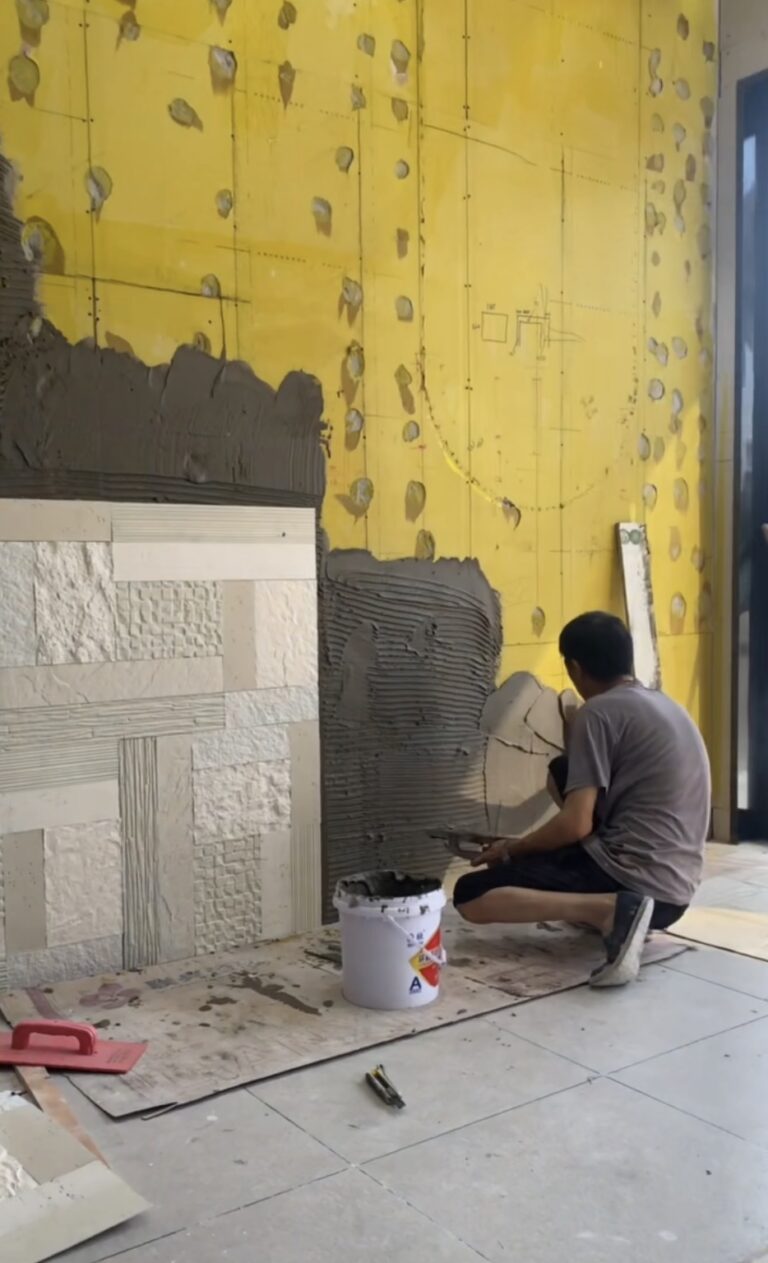
This guide moves past marketing claims and provides a technical breakdown of the installation process. We will compare the setup time for a utility knife versus a wet saw station and analyze the efficiency of using pre-mixed adhesives over site-mixed mortar. We will also quantify the realistic daily output per person and examine the often-underestimated costs tied to site cleanup and material waste, giving you a clear picture of the workflow from start to finish.
Analyzing Market Trends: What Architects Want
By 2026, architects are specifying building systems that solve the labor crisis, not just design challenges. They prioritize speed, factory-controlled quality, and integrated performance to create predictable and profitable project outcomes.
Demand for Labor-Efficient Panelized Systems

Architects are actively seeking solutions to the chronic workforce shortage and rising construction costs. They specify panelized systems, like flexible stone panels, to reduce dependency on specialized onsite labor. These systems offer greater quality control from the factory and help create more predictable project timelines, bypassing the bottlenecks associated with traditional trades.
The shift is clear: a material that requires fewer installers, less complex equipment, and generates minimal site waste holds a significant competitive advantage. This approach directly addresses the financial and logistical pressures facing modern construction projects.
- Prioritizing materials that minimize complex trade coordination on the job site.
- Valuing systems that can be installed quickly with smaller, less specialized crews.
- Focusing on achieving repeatable, high-quality finishes through pre-fabricated components.
Shift Toward Offsite and Modular Construction
The industry’s move toward offsite manufacturing is accelerating. Architects now favor building components fabricated in controlled factory environments and delivered to the site ready for assembly. This method reduces field variability, minimizes waste, and significantly shortens construction schedules by decoupling the build process from site conditions and weather.
Lightweight cladding is a critical enabler of this trend. Transporting heavy pre-fabricated modules is often cost-prohibitive. A durable, aesthetic finish that adds minimal weight to the module simplifies logistics and makes modular construction viable for a wider range of projects, including high-rise buildings.

- Integrating panelized wall solutions directly into modular construction designs.
- Reducing onsite build times and avoiding weather-related delays.
- Improving overall project safety and simplifying material management.
Focus on Integrated, High-Performance Building Envelopes
Architects are specifying integrated envelope systems that serve multiple functions. They want solutions that combine the structural layer, insulation, and final aesthetic finish into a single, efficient product. This streamlines the entire construction process from design and documentation through to installation and commissioning.
A single material that provides a Class A2 fire rating, waterproofing, and excellent UV resistance eliminates the need to coordinate multiple layers and trades. This simplified approach reduces potential points of failure, protects project margins by minimizing rework, and delivers a more robust and resilient final building.
- Seeking materials that contribute to better thermal performance and energy efficiency.
- Using digital tools and data-driven documentation to reduce rework and protect margins.
- Valuing systems that simplify the building envelope, reducing potential points of failure.
Effortless Luxury with Fully Customizable Stone

Conclusion
The installation process highlights a clear advantage for flexible stone systems. By eliminating wet saws, on-site mortar mixing, and extensive cleanup, crews can install significantly more square meters per day. This increase in efficiency directly reduces labor costs and shortens project timelines.
To see how these time savings can impact your next bid, request a project-specific sample and quote. Our team can provide the technical data needed to help you build more competitively and increase your profit margins.
Questions fréquemment posées
Fastest wall cladding to install?
The fastest wall cladding systems to install are large-format, panelized solutions. These include Architectural Insulated Metal Panels (IMPs), precast concrete panels, and other prefabricated modular systems. These systems are favored because they integrate multiple functions (structure, insulation, weather barrier) into a single component, significantly reducing onsite labor, trade coordination, and installation time compared to traditional, piece-by-piece methods.
Labor cost stone veneer vs tile?
Labor costs for traditional, individual stone veneer are typically higher than for exterior tile installation. Stone veneer requires specialized masonry skills and is a slower, more meticulous process involving mortar beds and individual stone placement. While tile also requires skilled labor, the process can be faster, especially with larger format tiles. To reduce stone veneer labor costs, contractors often use panelized systems where multiple stones are affixed to a single panel for rapid installation.
Reducing construction labor costs?
Construction labor costs are primarily reduced by adopting labor-efficient systems and digital tools. Key strategies include using offsite construction, such as panelized walls and modular components, which shift labor to a controlled factory setting.
Onsite, specifying integrated systems—like high-performance panels that combine structure, insulation, and sheathing—minimizes trade coordination and simplifies installation. Additionally, leveraging data-driven documentation and digital project management tools is crucial for reducing costly rework and improving overall schedule efficiency.
Easy install commercial cladding?
The easiest commercial cladding systems to install are panelized and modular solutions that minimize onsite complexity. Top choices include Architectural Insulated Metal Panels (IMPs), which offer a single-component, interlocking installation, and large-format fiber cement or metal rainscreen systems.
These products are designed for rapid attachment to a structural frame, reducing the need for multiple trades, complex sequencing, and weather-related delays, which aligns with the industry’s shift toward labor-efficient design.
Contractor profit margin stone?
A specialty contractor’s gross profit margin on stone installation typically ranges from 25% to 40%. This margin covers both overhead and net profit. The final percentage depends heavily on project complexity, the type of material (e.g., natural stone vs. manufactured veneer), and labor costs.
Margins on the material itself are lower, while the primary profit driver is the skilled labor required for the installation. High-end, custom projects with intricate designs command margins at the higher end of this range.