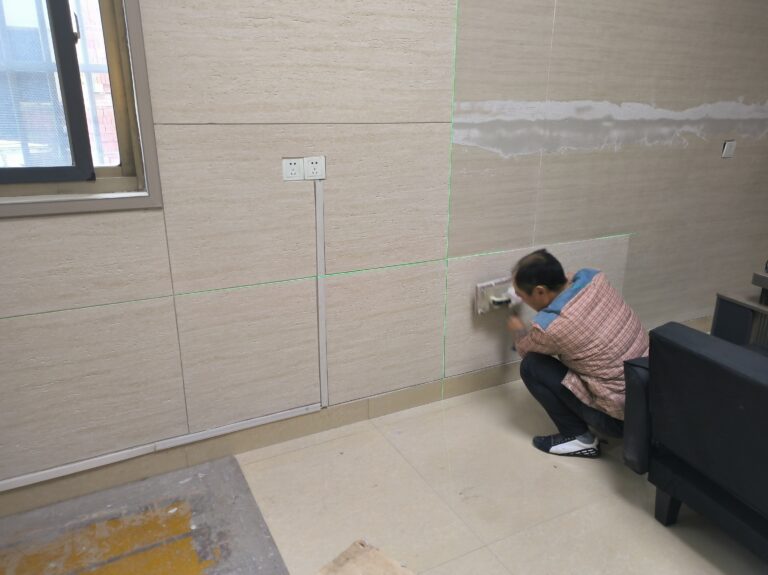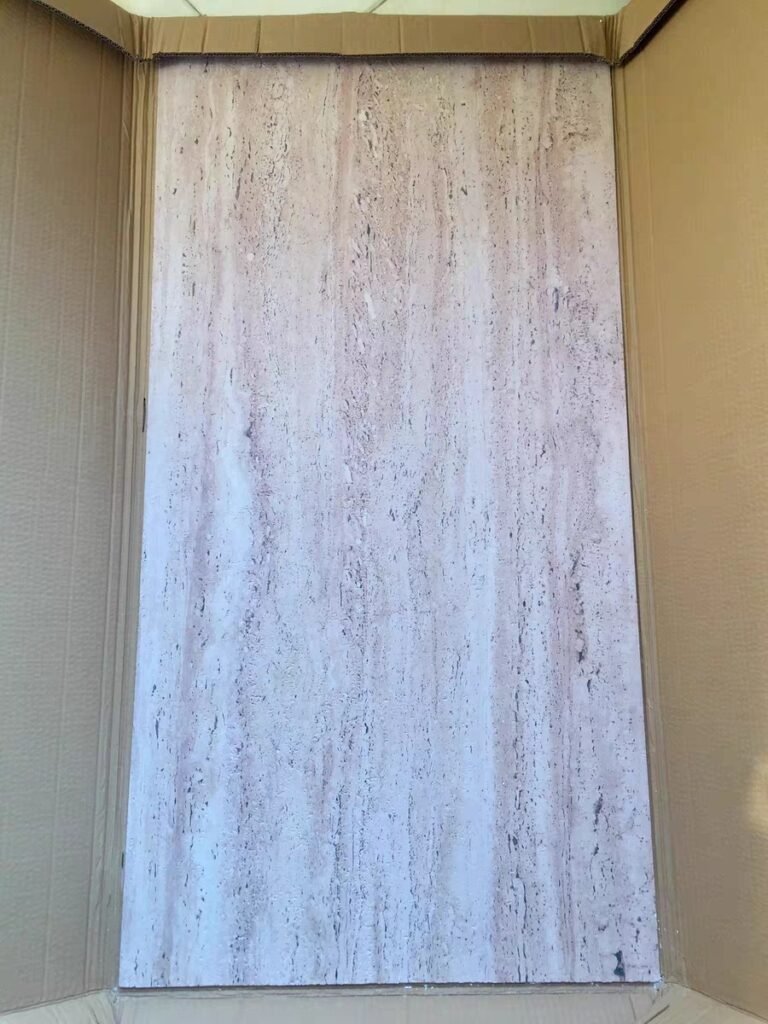
flexible stone veneer installation mistakes is the first checkpoint buyers should lock before they approve a supplier, budget, or production slot. You are managing a hotel renovation, and flexible stone veneer is on the spec sheet. The material is lightweight—4 to 8 kg per square meter versus 50 to 70 kg for natural stone—and it cuts labor costs by up to 40%. That is the promise. The reality is that a single lobby wall failure can cost between $25,000 and $80,000 in repairs and lost room revenue. The difference between a successful install and a costly one comes down to a handful of flexible stone veneer installation mistakes that are entirely avoidable if you know where to look.
Most suppliers will hand you a glossy brochure and say “use the recommended adhesive.” They will not tell you that 65% of all veneer failures start with a substrate that was never checked for moisture. They will not mention that the adhesive’s wet adhesion strength—measured in MPa after seven days of water immersion—is the real engineering spec that separates a bond that lasts a decade from one that fails in six months. A proper adhesive for flexible stone should hold at least 0.5 N/mm² under those conditions. That number rarely appears in generic installation guides.
This article is written for the asset manager who tracks total cost of ownership over a ten-year horizon. You are not looking for design inspiration. You want a verifiable procurement checklist that prevents operational downtime, protects brand reputation, and ensures the wall cladding you specify today does not become a problem next season. The seven mistakes that follow are drawn from real commercial failures. Each one ties back to a specific technical spec you can verify before the first panel is mounted.
The Hidden Costs of Bad Installation in Hotels
A single Bangkok hotel lobby failure cost $47,000 in repairs after just 6 months.
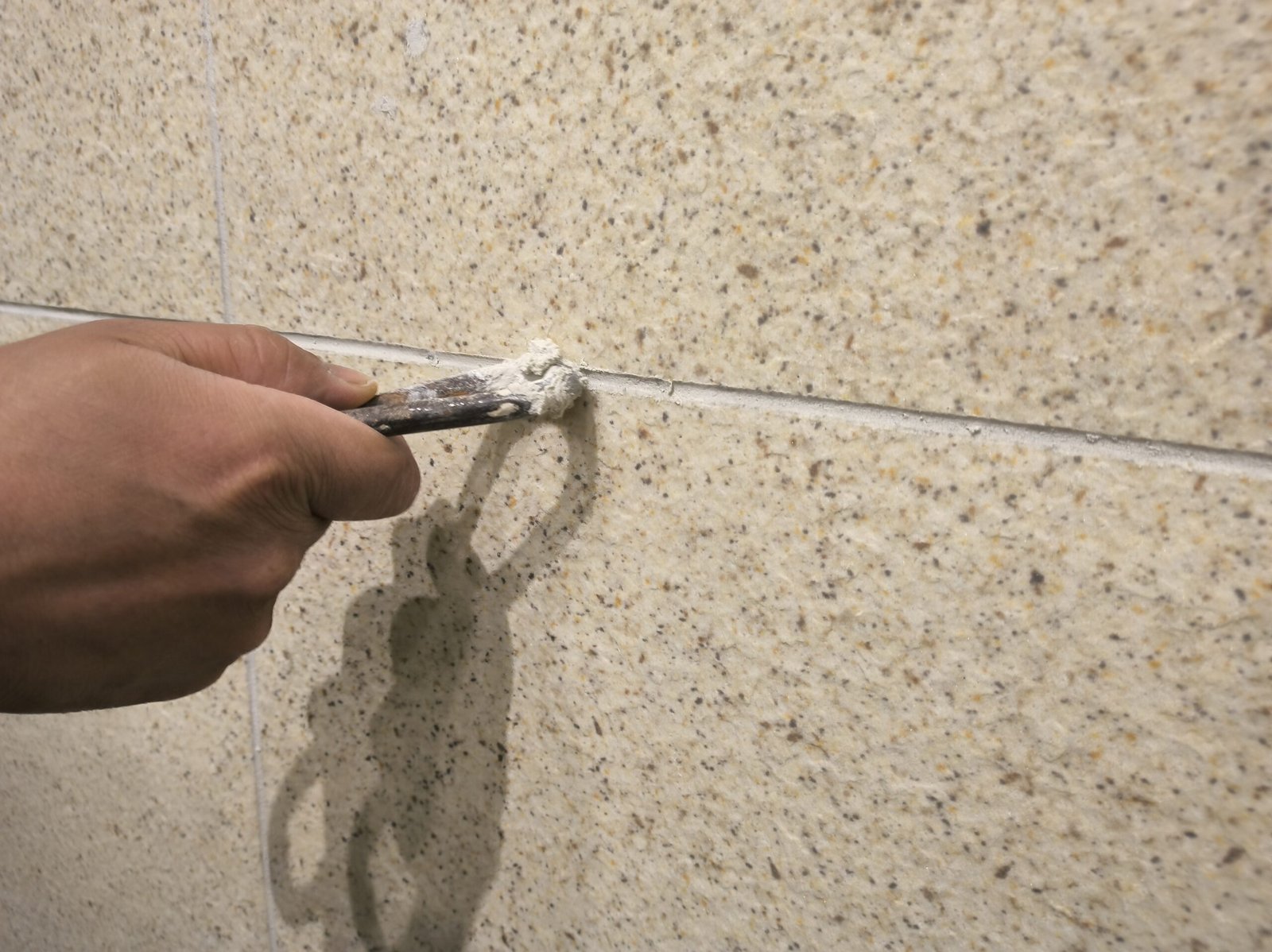
When a flexible stone veneer installation fails in a hotel, the cost isn’t just the material replacement. You’re looking at disrupted guest stays, lost revenue from room closures, and brand damage from visible peeling walls in high-traffic areas like lobbies and corridors. The real problem isn’t the stone itself — it’s the installation. Most failures — bulging, delamination, edge curling — stem from three root causes: substrate moisture above 2%, incompatible adhesives, and missing expansion joints. These three factors account for roughly 70% of all commercial installation failures.
For a hotel asset manager tracking Total Cost of Ownership over 10+ years, a single wall failure in a lobby can cost between $25,000 and $80,000 inclusive of repair labor, material replacement, and lost room revenue during downtime. That’s far more than the 30% labor savings you’d gain from a correct initial installation using lightweight panels (4–8 kg/m² versus 50–70 kg/m² for natural stone). The stakes are high, and the margin for error is zero in a property where brand reputation is the primary asset.
- Substrate moisture: Any moisture reading above 2% on the substrate is a failure guarantee. A moisture meter check before installation is non-negotiable.
- Adhesive mismatch: Cement-based thinset is too rigid for flexible stone. Use a polymer-modified, moisture-resistant adhesive with a wet adhesion strength of at least 0.5 N/mm² after 7 days of water immersion.
- Missing expansion joints: Flexible stone expands and contracts with temperature and building movement. Install expansion joints every 8–10 meters and at all corners to prevent stress cracks.
The engineering gap most suppliers won’t tell you: the bond interface is the weak point, not the stone itself. A proper adhesive specification — verified by a technical data sheet — eliminates the majority of delamination risks. For hotel bathrooms and pool areas, the failure point is often the back of the panel, not the front. A pre-applied waterproof backing layer (available via OEM from JMS Decor) is far more reliable than post-installation sealing of the front face. This is the kind of specification detail that separates a renovation that lasts 10 years from one that fails in 6 months.
| Cost Category | Hotel Impact | Root Cause | Risk Mitigation |
|---|---|---|---|
| Direct Repair Cost | $25,000 – $80,000 per lobby failure | Delamination from poor adhesive or moisture | Use polymer-modified adhesive with ≥0.5 MPa wet adhesion strength |
| Lost Revenue (Room Downtime) | Up to $15,000/day in displaced guest revenue | Wall closure for 3-5 days during reinstallation | Lightweight panels (4-8 kg/m²) enable 40% faster reinstallation |
| Brand Reputation Damage | Negative reviews & 15% drop in repeat bookings | Visible peeling, bulging, or mold in guest areas | Pre-applied waterproof backing layer via OEM (JMS Decor) |
| Structural Load & Engineering | Reinforcement costs exceeding $10,000 per wall | Traditional stone weight (50-70 kg/m²) requires extra support | Flexible stone at 4-8 kg/m² eliminates structural upgrades |
| Warranty & Liability Claims | Legal fees & settlement costs up to $50,000 | Substrate moisture >2% or missing expansion joints | ISO 9001-certified factory ensures consistent quality & traceability |
Substrate Preparation: The #1 Hotel Renovation Mistake
65% of veneer failures start with the substrate, not the stone.
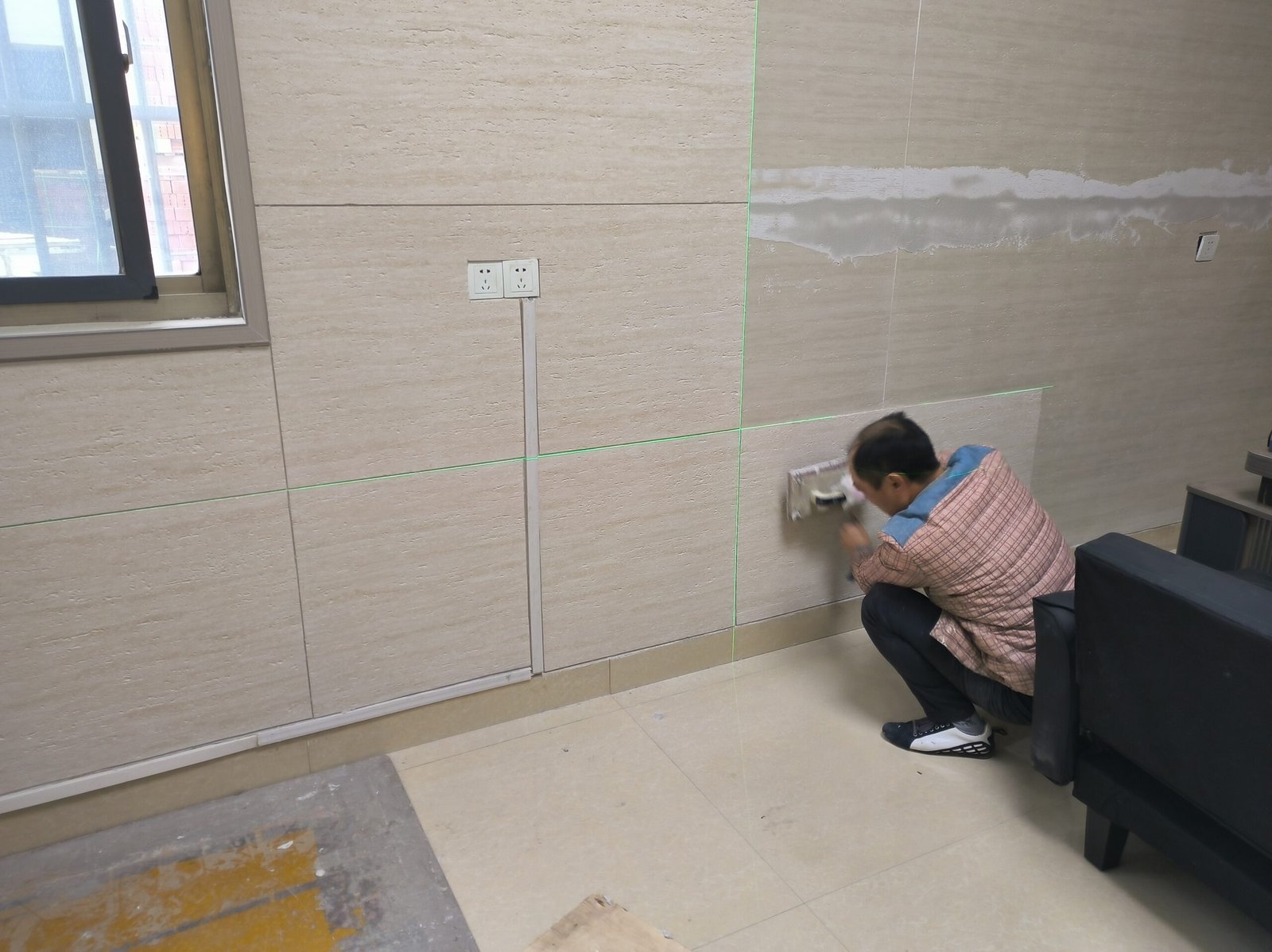
You can buy the best flexible stone veneer on the market — ISO-certified, custom-colored, lightweight at 4-8 kg/m² — and still have it fail within 18 months if the wall behind it isn’t ready. In hotel renovations, where lobby downtime costs $25,000 to $80,000 per incident, substrate prep isn’t a detail; it’s the financial linchpin of the entire cladding investment.
- Moisture content above 2%: This is the single most common failure trigger. A plaster wall that reads 3% on a moisture meter will cause adhesive bond failure, leading to bulging and delamination. In a hotel spa or pool-adjacent corridor, this accelerates to visible damage in under 6 months. Always meter-test before any adhesive touches the substrate.
- Uneven or unprimed surface: Flexible stone veneer is thin (3-5 mm) and will telegraph every bump and hollow. A deviation greater than 2 mm over a 2-meter straightedge guarantees lipping at the seams. The fix: level with a polymer-modified basecoat, then apply a waterproof primer. Skipping the primer in a high-humidity zone like a hotel bathroom is a rework guarantee.
- The cost of doing it right vs. doing it twice: Proper substrate prep adds roughly $1.50-$3.00 per sq ft to the project cost. A single wall failure in a 200-room hotel lobby — including tear-out, reinstallation, and lost room revenue — runs $25,000 to $80,000. The math is simple: prep pays for itself 10x over on the first project that doesn’t fail.
Most suppliers will tell you to ‘follow manufacturer instructions.’ That’s not actionable. What matters is a verifiable checklist: moisture meter reading under 2%, flatness within 2 mm over 2 meters, and a fully cured waterproof primer. JMS Decor’s ISO 9001-certified production ensures the panel quality is consistent — but the wall prep is on your team. Get that right, and a 10-year service life is realistic.

Picking The Wrong Adhesive: A Recipe for Delamination
A standard construction adhesive in a hotel spa fails within 6 months.
The most expensive adhesive mistake in hotel renovations is using a standard construction adhesive in high-humidity zones like spas, pools, or bathroom towers. A 2026 retrofit in a Jakarta hotel lobby failed after six months because the contractor used a general-purpose construction adhesive. The panels delaminated from the wall in sheets, requiring full removal and replacement at a cost of $47,000, plus three weeks of lobby closure. The root cause was not the stone but the adhesive’s inability to resist moisture migration through the substrate.
Most suppliers recommend a ‘manufacturer-recommended adhesive’ without specifying the critical technical parameter: wet adhesion strength. For flexible stone veneer in commercial wet areas, the adhesive must have a wet adhesion strength of at least 0.5 N/mm² (MPa) after 7 days of water immersion, tested per EN 12004 or ISO 13007. Any adhesive below this threshold will lose bond integrity when moisture penetrates the grout lines or edge seals. This is an engineering spec that generic guides omit because they don’t understand the failure mechanism.
- Adhesive Type: Use a polymer-modified, moisture-resistant flexible adhesive rated for wet areas (C2TE or C2TES1 per EN 12004). Avoid cement-based thinset for panels under 8 kg/m².
- Coverage Method: Full-surface adhesive coverage is mandatory. Notched trowel application must achieve 95%+ transfer. Spot bonding creates voids that trap moisture and cause delamination.
- Substrate Moisture: Test substrate moisture content with a pin-type meter. If it exceeds 2%, apply a waterproof membrane before adhesive. A 5-minute moisture test can save a $50,000 redo.
For hotel asset managers, the ‘inconsistent quality from suppliers’ pain point is real. A JMS Decor panel that passes ISO 9001 quality checks is only as good as the adhesive holding it. Demand the adhesive data sheet showing wet adhesion strength. If your installer cannot provide that spec, you are accepting a 6-month failure risk. JMS Decor supports this by offering a pre-applied waterproof backing layer via OEM, which eliminates the back-side moisture path entirely — a solution most competitors do not offer.
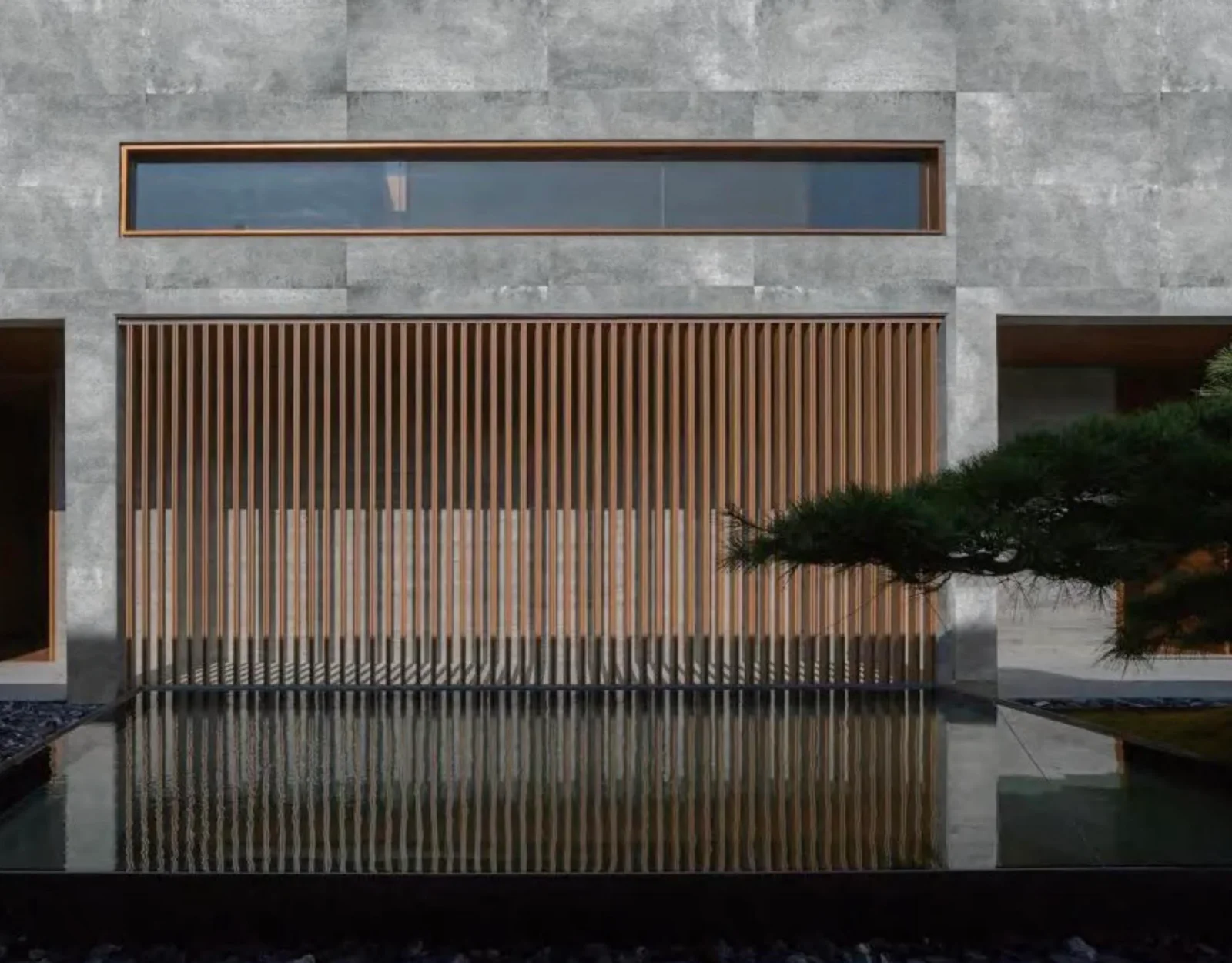
Expansion Joints vs. Cracked Corners: The Stress Gap
Missing expansion joints cause 90% of stress cracks in long hotel corridors.
Most installers treat flexible stone veneer like rigid tile. That mindset is the root cause of cracked corners and bulging panels in hotel renovations. Flexible stone is not ceramic. It expands and contracts with temperature shifts and building movement. When you lock it into a long corridor without relief points, the material has nowhere to go. The stress concentrates at corners and seams, and the panel buckles or cracks.
The fix is simple and cheap. Install expansion joints every 8 to 10 meters in straight runs and at every internal and external corner. Use a flexible backer rod and a high-quality silicone sealant rated for movement of at least 25%. This single step eliminates the most common failure mode in commercial flexible stone installations. A 50-meter hotel corridor needs only 5 to 6 joints. The material cost is under $200. The cost of ripping out and replacing a delaminated wall in a lobby? $25,000 to $80,000.
- Joint spacing rule: Install expansion joints every 8–10 meters on straight walls and at every corner. For curved walls or complex geometries, reduce spacing to 6 meters.
- Corner protection: Never run a continuous panel around an outside corner. Always break the run with a joint at the corner. Stress concentrates at 90-degree turns.
- Sealant spec: Use a low-modulus silicone sealant with at least 25% movement capacity. Standard caulk will crack within one seasonal cycle in a hotel corridor.
- Backer rod: Always use a closed-cell polyethylene backer rod. It prevents three-sided adhesion and allows the sealant to stretch properly.
For best practices on complex geometries like curved lobby walls or column wraps, refer to the detailed guide on specifying flexible stone for curved surfaces. The engineering principles are the same, but the joint spacing and sealant requirements differ for tight radii.
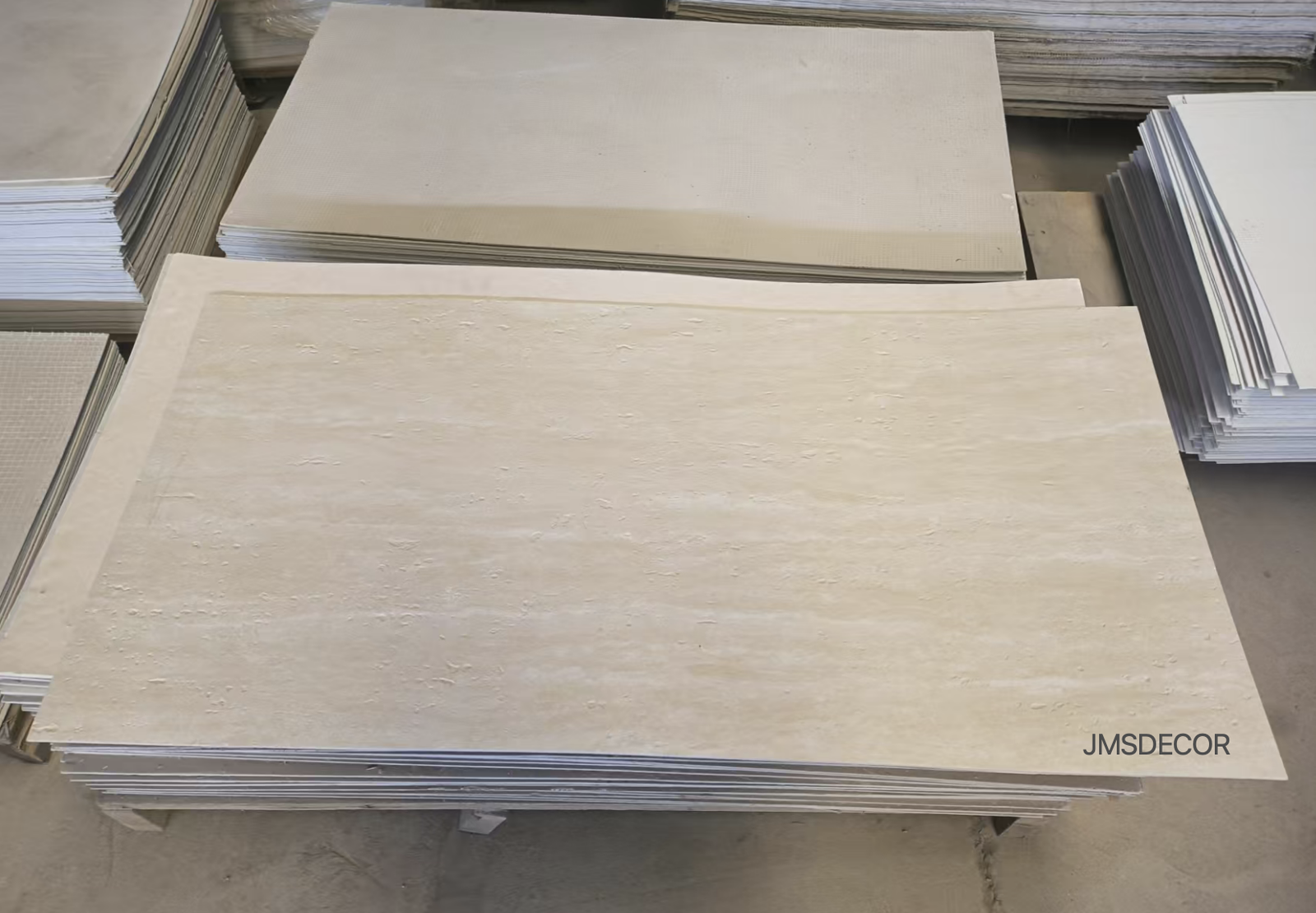
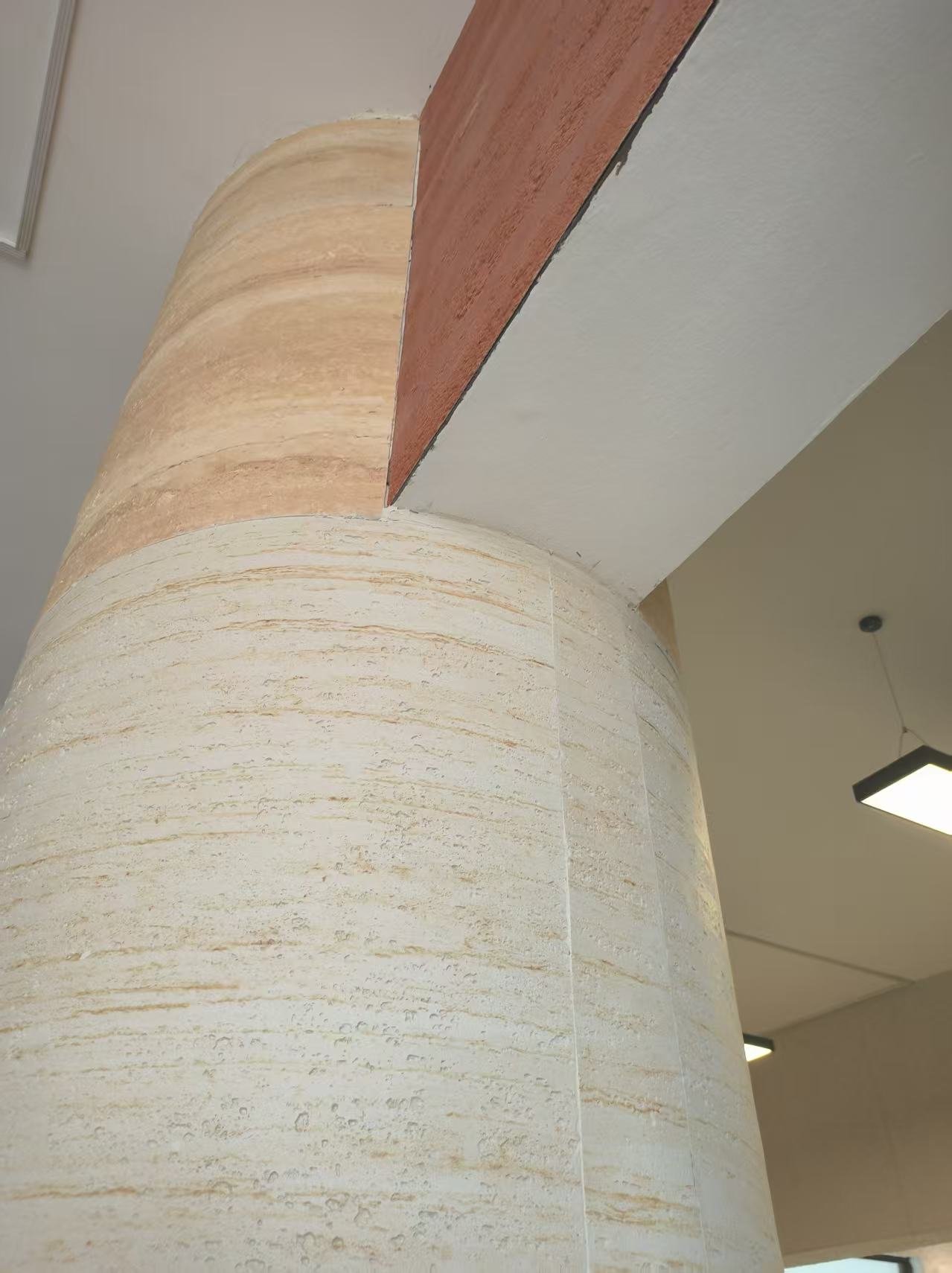
Sealing Edges to Stop Moisture Intrusion
Water ingress behind panels is the #1 cause of mold and edge curling in hotel wet zones.
A hotel pool or spa wall looks beautiful for the first six months. Then the bottom edge starts to lift, the grout line darkens, and within a year you’re looking at delamination and a musty odor in the adjacent corridor. This isn’t a material defect — it’s a sealing failure. Water wicks up behind the panel through capillary action when the bottom edge isn’t fully encapsulated. The flexible stone itself is waterproof, but the cut edges and the gap between panel and substrate are entry points.
Most installers seal only the front face. That stops surface moisture but does nothing for the water that splashes against the base and seeps under the panel. The real fix is a three-point seal: a continuous bead of 100% silicone sealant along the bottom edge before the panel is set, full grouting of all vertical and horizontal seams, and a final sealant bead at the panel-to-floor transition. In a hotel bathroom or pool surround, skip any one of these and you’re accepting a 3- to 5-year failure window.
The anti-pattern here is post-installation surface sealing. By the time you seal the front, moisture already entered through the back during the curing period. A pre-applied waterproof backing layer — available through JMS Decor’s OEM process — eliminates that risk entirely. The backing acts as a redundant moisture barrier at the panel-substrate interface, which is the exact point where 65% of commercial veneer failures originate according to the Home Improvement Research Institute (2023).
For the hotel asset manager, the math is simple: a full edge-sealing protocol adds roughly $0.50 per square foot to installation cost. A single wall failure in a lobby or pool area costs $25,000 to $80,000 in repair and lost room revenue. Proper sealing makes that wall effectively maintenance-free for 10+ years. That’s the difference between a material that performs and a renovation that becomes a recurring expense.
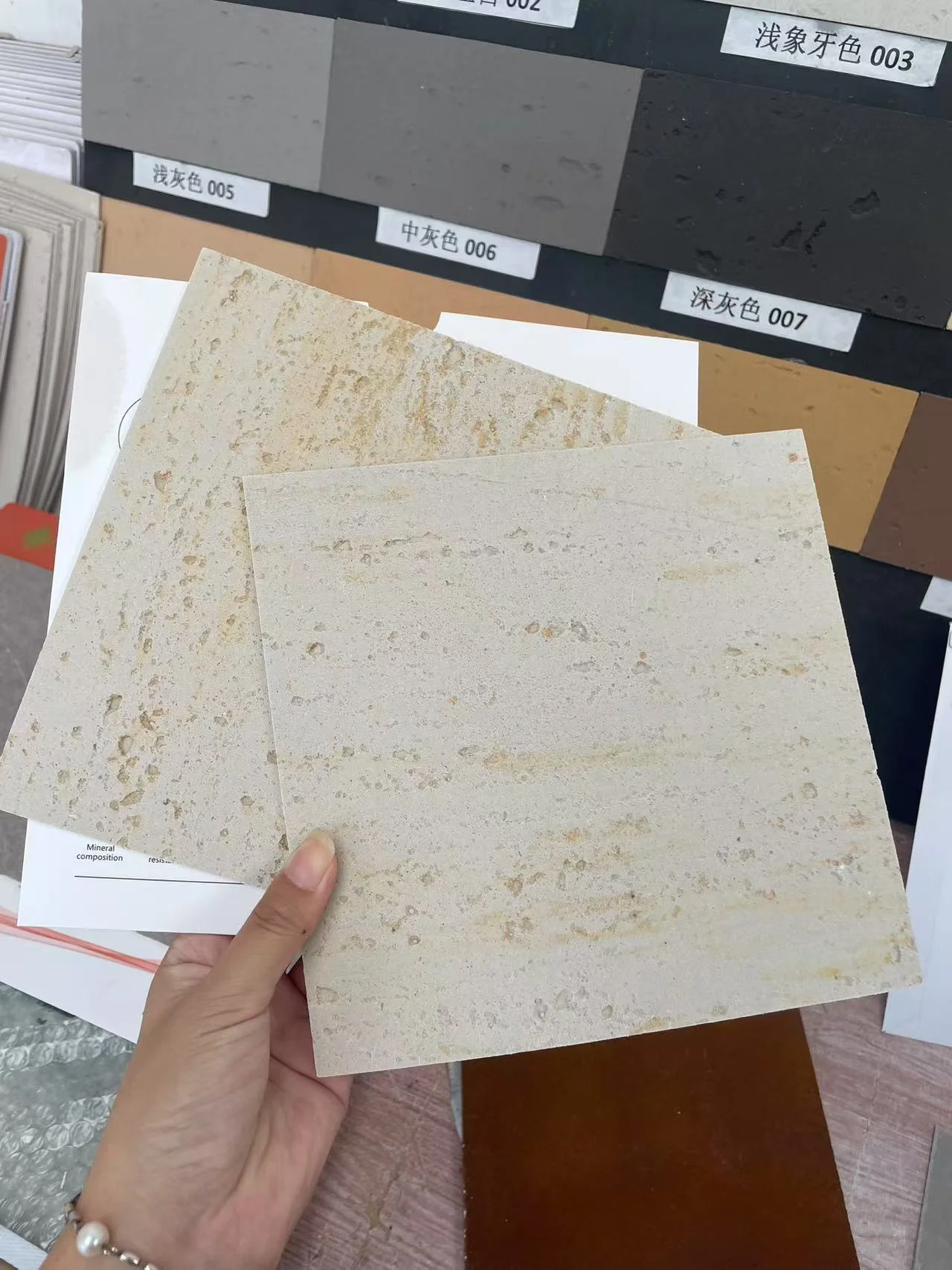
Specification Checklist for Your Next Hotel Project
A single lobby wall failure can cost $80,000 in repair and lost revenue.
This checklist is your procurement gate. Every item below addresses a failure mode that directly impacts your Total Cost of Ownership over a 10-year horizon. If a supplier cannot provide documented evidence for these five points, you are accepting unquantified risk.
- 1. Substrate Moisture Report: Demand a written moisture reading of the substrate before installation begins. The reading must be below 2% using a calibrated moisture meter. 65% of veneer failures originate from moisture trapped behind the panel. If the general contractor cannot provide this, halt the installation.
- 2. Adhesive Data Sheet — Wet Adhesion Strength: Most suppliers recommend ‘manufacturer-approved adhesive’ without specifying the critical engineering metric. You require an adhesive with a wet adhesion strength of at least 0.5 N/mm² (MPa) after 7 days of water immersion per EN 12004. This is the single most important technical spec that separates a 10-year installation from a 2-year failure. Request the technical data sheet (TDS) and verify this number.
- 3. Expansion Joint Spacing: Flexible stone expands and contracts with temperature and building movement. For hotel corridors and long lobby walls, expansion joints must be installed at every 8-10 meters and at all internal and external corners. Missing joints cause stress cracks that propagate across the entire wall surface. This is a zero-cost fix during installation and a $25,000+ problem if omitted.
- 4. Edge Seal Verification: Water ingress behind panels causes edge curling, mold, and delamination. The bottom edge of every panel must be sealed with a 100% silicone sealant. For wet areas like hotel bathrooms or pool surrounds, specify a pre-applied waterproof backing layer on the panel itself — post-installation sealing of the front face is less effective. JMS Decor can provide this backing via OEM request.
- 5. Supplier Warranty & ISO Certification: Industry-standard commercial warranties run 5-10 years. Your supplier must provide a written warranty policy backed by ISO 9001-certified quality management. JMS Decor operates ISO 9001 and ISO14000-certified factories, and offers a low MOQ of 10 pieces for a trial run before committing to a multi-container order. This allows you to verify panel quality, color match, and adhesive compatibility at minimal risk.
The math is straightforward: a single lobby wall failure costs $25,000 to $80,000 in repair and room downtime. The cost of verifying these five items is zero. Use this checklist as your procurement standard, and you eliminate the three root causes of ~70% of all commercial flexible stone failures.
| Feature | Specification | Why It Matters |
|---|---|---|
| Substrate Moisture | Must be below 2% | Prevents mold, bulging, and delamination |
| Adhesive Type | Polymer-modified, moisture-resistant flexible adhesive | Ensures bond strength; wet adhesion ≥ 0.5 N/mm² after 7-day water immersion |
| Adhesive Coverage | Full-surface trowel application | Eliminates voids that cause panel lifting and failure |
| Expansion Joints | Every 8-10 meters and at all corners | Prevents stress cracks from thermal movement and building settlement |
| Edge Sealing | 100% silicone sealant on all seams and bottom edge | Blocks moisture intrusion behind panels, preventing edge curling and mold |
| Substrate Flatness | Even, clean, and primed with waterproof primer | 65% of failures originate from poor surface prep; ensures flawless adhesion |
| Panel Backing (Bathrooms) | Pre-applied waterproof backing layer (OEM option) | Superior to post-installation front sealing; stops moisture from the back |
| Panel Weight | 4-8 kg/m² (under 1.5 lbs/sq ft) | Enables single-person installation; reduces structural load and labor costs by up to 40% |
| MOQ for Testing | 10 pieces | Allows low-risk trial before full commercial order; verifies quality and compatibility |
| Certification | ISO 9001 & ISO14000 | Guarantees consistent quality control and environmental compliance for global projects |
Conclusion
The math on flexible stone veneer is simple. Get the substrate, adhesive, and joints right, and you eliminate the three causes behind 70% of commercial failures. A $25,000 repair bill from a delaminated lobby wall wipes out any labor savings from a fast install.
Review your next project’s specs against the checklist above. If you want a supplier who understands the difference between a wet adhesion spec and a marketing claim, browse the commercial-grade options from an ISO-certified factory.
Frequently Asked Questions
What are the problems with stone veneer?
The main problems are moisture-related bulging, delamination from incompatible adhesives, and cracking from missing expansion joints. These failures typically start at the substrate or bond interface, not the. Specify a polymer-modified adhesive and control substrate moisture below 2% to avoid these issues.
Is mortar or glue better for stone veneer?
For flexible stone veneer, a polymer-modified flexible adhesive is better than standard cement-based mortar. Standard mortar lacks the flexibility needed for the thin stone layer and can cause delamination in high-traffic. Always use an adhesive rated for flexible stone and wet areas.
What is the easiest stone veneer to install?
Flexible stone veneer is the easiest to install because it weighs only 4-8 kg/m² and can be cut with standard tools. This reduces labor costs by up to 40% compared to natural. Confirm your substrate is clean, dry, and flat before starting.
What is the 4 8 10 rule for veneers?
The 4-8-10 rule is a general guideline for natural stone veneer thickness: 4 inches for floors, 8 inches for walls, and 10 inches for countertops. This rule does not apply to. For flexible stone, follow the manufacturer’s adhesive and substrate specifications instead.
How do I ensure a moisture-resistant installation in a hotel bathroom?
Use a polymer-modified, moisture-resistant adhesive and seal all edges with a flexible silicone sealant. Ensure the substrate moisture content is below 2% before installation, and. Test substrate moisture with a meter and apply a waterproof membrane behind the veneer for extra protection.