A poorly executed furniture application with stone veneer directly leads to material waste and project delays, cutting into the profit margins of any millwork or joinery shop. Architects and designers are specifying natural stone for high-end desks, cabinets, and reception counters, but the weight and fabrication complexity of solid slabs make them impractical. This forces shops to either reject lucrative bids or risk failed installations with materials that delaminate, chip, or simply don’t meet the client’s original vision.
This guide serves as a standard operating procedure for fabricating with stone veneer in a furniture context. We cover the core technical requirements, from selecting the correct substrate like MDF or plywood to thermoforming panels for tight corners. You’ll learn the proper methods for edge banding and how to apply the right sealant for high-touch surfaces, ensuring your finished piece is both durable and impressive.
Beyond the Wall: Stone in Joinery
Stone is no longer just for countertops; it’s now a primary material in furniture and cabinetry, driven by lightweight composite panels that make ambitious designs practical.
Integrating Stone into Furniture Design
Natural stone has moved from being a surface-level finish to a core aesthetic and structural component in modern furniture. This shift meets a growing commercial and residential demand for interiors that project permanence and durability. Stone provides a distinct visual signature that mass-produced materials cannot replicate, adding both functional value and a sense of grounding to a space.
Minimalist and deeply textured stone finishes are the go-to choice for contemporary furniture pieces where tactility is part of the design.
Vibrant or uniquely veined stone is frequently used to create focal points, turning items like tables or consoles into statement pieces.
The material provides functional resilience against wear and tear in high-traffic areas, a key requirement for commercial and hospitality projects.
Lightweight Panels in Modern Joinery
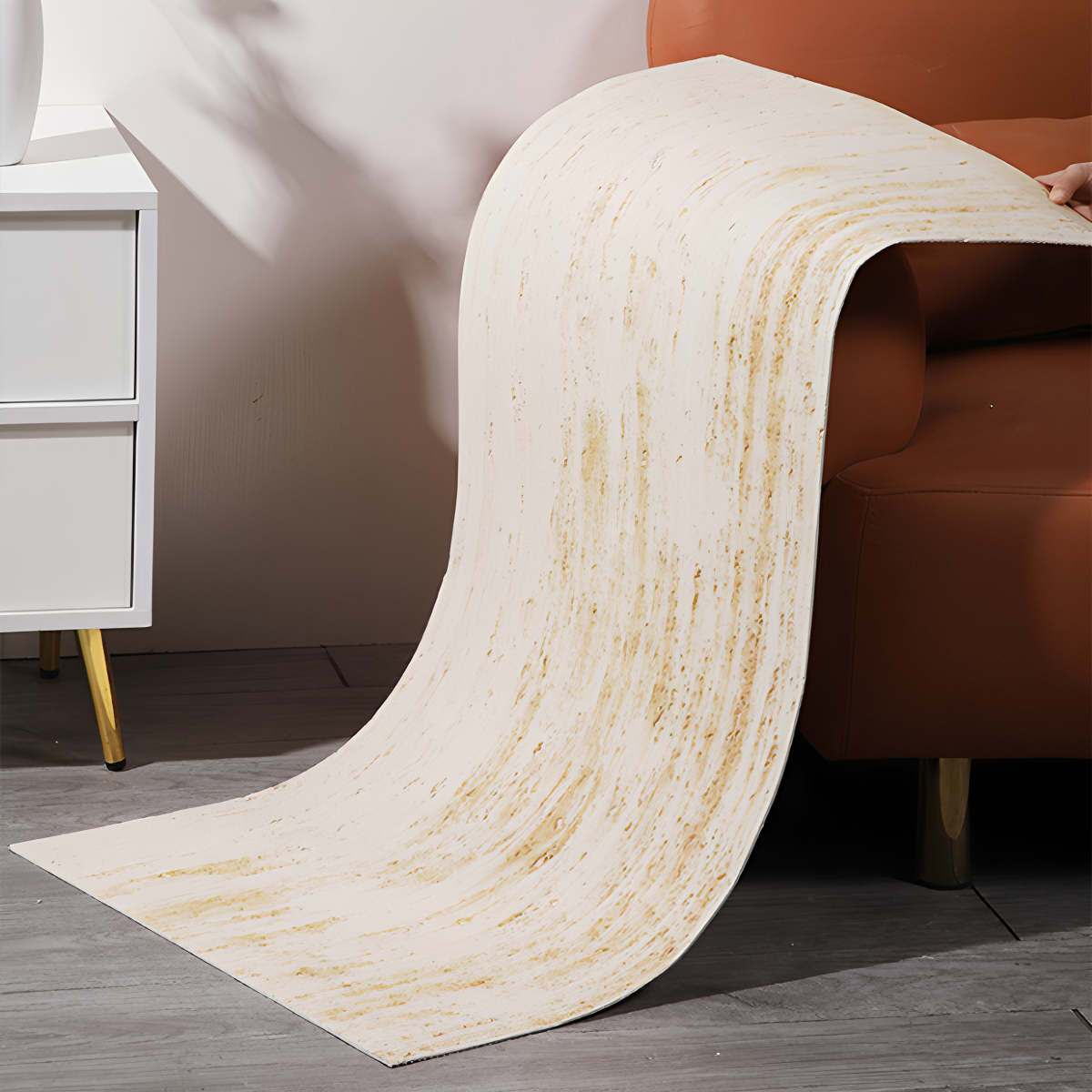
The primary enabler for using stone in joinery is the development of lightweight composite panels. Traditional solid stone is too heavy and brittle for most furniture applications, but flexible stone veneers, weighing only 3.5 to 6.0 kg/m², eliminate these structural constraints. This opens up design possibilities that were previously impractical or prohibitively expensive.
Flexible stone panels deliver the authentic appearance and texture of quarried stone at a fraction of the weight, putting minimal stress on cabinet carcasses or furniture frames.
Common applications include cabinet doors, drawer fronts, integrated shelving units, and feature wall paneling built into furniture.
The reduced weight simplifies logistics and handling on-site, directly lowering labor costs and speeding up installation timelines for contractors and shopfitters.
New Applications Beyond Countertops
Designers are now moving beyond flat surfaces to create fully integrated, multifunctional furniture. Stone is used to wrap large structural elements, creating a seamless, monolithic appearance that feels substantial and high-end. This approach is particularly effective in commercial spaces where first impressions and durability are critical.
Stone is increasingly incorporated into built-in storage units and media consoles, blending joinery with architectural finishes.
Wrapping kitchen islands, reception desks, and retail counters in a single stone finish creates a powerful visual anchor in a room.
These applications provide an exceptionally durable and easy-to-clean finish for high-touch surfaces, ensuring longevity in busy environments.
Substrates: MDF, Plywood, and HDF
Selecting the right substrate is a trade-off between surface finish, structural integrity, and cost. Each material serves a distinct functional purpose in modern joinery.
The performance of any stone veneer finish is directly tied to the stability of the substrate beneath it. In joinery and furniture making, the choice between MDF, Plywood, and HDF dictates the final product’s durability, appearance, and suitability for its intended environment. Understanding these core materials is fundamental to specifying a successful project.
Medium-Density Fiberboard (MDF)
By 2026, MDF remains the default substrate for joinery where a perfect surface finish is the primary goal. Its smooth, dense composition lacks any wood grain, making it an ideal base for paint, lacquer, and flexible stone veneers. We see it used most often for non-structural components like cabinet doors, interior trim, and decorative panels where achieving a flawless aesthetic at a reasonable cost is critical.
Provides a flawless surface for painting and detailed shaping.
Cost-effective for achieving a premium look without the expense of solid wood.
Moisture-resistant (MR-MDF) variants are increasingly used in kitchens and bathrooms.
Often reinforced with solid wood or metal frames to enhance its load-bearing capacity.
Plywood is the go-to material for structural integrity. Its cross-grained layered construction provides superior stability and moisture resistance compared to MDF, making it the preferred substrate for furniture frames, load-bearing shelves, and cabinet carcasses, especially in environments with humidity fluctuations. Flexible stone veneer adheres well to plywood, making it a viable option for creating durable, stone-clad structural elements.
Offers excellent durability for load-bearing furniture components.
Performs well in environments with fluctuating humidity.
Resists warping and shrinking, ensuring long-term stability.
High-Density Fiberboard (HDF)
High-Density Fiberboard is engineered specifically for durability in high-impact environments. With a density often exceeding 800 kg/m³, it offers a significant upgrade in hardness over standard MDF. Its primary application is in commercial settings—think retail fixtures, reception desks, and as a stable core for laminate flooring where wear and tear is a constant.
Delivers superior hardness and impact resistance for demanding environments.
Serves as a robust core material for laminate products.
Functions as a strong alternative where MDF lacks sufficient durability.
Elevate Your Designs with Customizable Stone Veneer
Our lightweight, durable soft stone panels are crafted from premium, eco-friendly materials for long-lasting performance in any luxury project. With low MOQs and a consistent supply from our ISO-certified factories, we ensure your project needs are met reliably and efficiently.
Stone veneer edge banding is a niche but growing category that creates a seamless, monolithic look on joinery, directly answering the market’s demand for authentic industrial textures.
While traditional wood and PVC still dominate the edge banding market, stone and concrete textures are gaining significant traction. This shift reflects a broader architectural preference for authentic material mimicry and durable, low-maintenance finishes in both commercial and residential spaces. By 2026, the demand is clearly driven by designers specifying materials for high-impact, modern aesthetics that require minimal upkeep.
Market Trends and Drivers
The adoption of stone veneer for edge banding is a direct response to the rising popularity of industrial and minimalist design. Designers and fabricators seek materials that offer an authentic feel without the installation complexities of solid stone. This trend provides a practical way to incorporate natural textures into furniture and cabinetry at a competitive price point.
Fulfills the rising demand for industrial-style furniture and cabinetry.
Offers a durable and low-maintenance alternative to traditional wood or PVC edges.
Reflects evolving architectural tastes for authentic material textures.
Key Applications in Modern Design
Stone veneer edge banding is specified for high-visibility joinery where a clean, seamless look is critical. Its primary use is in specialized applications that serve as focal points within a space, such as large kitchen islands or corporate reception desks. The material provides a premium finish that elevates the perceived value of the final piece.
Ideal for creating cohesive looks on kitchen islands and countertops.
Used in commercial settings for reception desks and office furniture.
Enhances modern entertainment centers and custom cabinetry with a premium finish.
Material Pairing and Aesthetics
The primary aesthetic advantage of stone edge banding is its ability to create a monolithic appearance. When paired with matching stone-look composite panels, it eliminates visual breaks at the edges. This technique creates the illusion of a solid block of stone, achieving a high-end look without the associated weight, cost, or fabrication challenges.
Designed to be paired with matching stone-look composite panels for a seamless look.
Creates a high-end, solid-stone aesthetic without the weight or cost.
Allows for greater design differentiation in a competitive market.
Thermoforming: Using Heat for Tight Corners
Successful thermoforming for sharp corners isn’t about raw heat; it’s about achieving absolute temperature uniformity across the material sheet. Thermal gradients are the primary cause of inconsistent wall thickness and flawed edge details.
Wrapping a flexible material around a tight corner without compromising its integrity requires precise thermal management. The goal is to make the material pliable enough to form perfectly but not so hot that it thins out or loses structural strength at the bend. This process depends entirely on maintaining consistent, even heat distribution from the moment the material enters the oven until it meets the mold.
Achieving Temperature Uniformity
Precise control over the heating process prevents material failure. Modern systems use zoned infrared heaters to apply energy exactly where it’s needed, avoiding overheating flat surfaces while ensuring corners get sufficient heat. This is often paired with high-velocity air convection ovens to eliminate cool spots that create inconsistencies. Heated clamping systems are also critical; they stop heat from escaping at the material’s edges, preventing the thermal gradients that lead to poor corner quality and weak points.
Parameter
Legacy Approach
Best Practice (2026)
Heat Management
Basic convection ovens, inconsistent heating
Zoned infrared heating and heated clamps
Corner Geometry
Reactive adjustments, trial-and-error
Draft angles (≥5°) & Fillet radii (≥½ material thickness)
Material Control
Simple vacuum forming
Plug-assist and billow-drape methods
Designing for Sharp Corners: Angles and Radii
The physical design of the mold is just as important as the heating process. To prevent material from thinning as it stretches around a tight corner, joinery designers incorporate specific geometric rules. A draft angle of at least five degrees helps the material release smoothly from the mold without sticking or tearing. Fillet radii, the small curves at the interior corners, should have a minimum radius of at least half the material’s thickness. This small adjustment distributes stress evenly and prevents the material from becoming too thin at the bend, maintaining both structural strength and a clean aesthetic.
Advanced Methods for Material Consistency
For complex furniture or architectural components with deep cavities, standard thermoforming isn’t enough to guarantee uniform wall thickness. Advanced methods are needed to mechanically guide the material. A plug-assist process uses a mechanical plug to pre-stretch the heated sheet into a deep cavity before the vacuum is applied, ensuring even material distribution. For large or complex surfaces, billow-drape methods pre-stretch the material with air pressure before it contacts the mold. These techniques deliver the tight tolerances and consistent quality required in high-end joinery and commercial installations.
Sealing for High-Touch Surfaces (Desks)
The industry standard for sealing high-use furniture has shifted from post-application coatings to integrated, component-level sealing during fabrication, which boosts durability and reduces long-term failure points.
Integrated Sealing in Manufacturing
By 2026, the process of sealing furniture has fundamentally changed. Instead of applying sealants after assembly, fabrication now incorporates sealing as a core part of the component itself. Advanced techniques like multi-component molding embed elastomeric materials directly into desk surfaces and edges. This approach creates a superior bond, reduces assembly complexity, and eliminates the seams and gaps that often become points of failure in traditional post-assembly sealing.
Material Selection for Durability
Protecting high-touch surfaces requires careful material selection. The focus is on materials that withstand constant contact, harsh cleaning agents, and environmental exposure without degrading. We primarily specify materials like industrial-grade silicone foam and polyurethane for their optimal balance of durability and cost-efficiency. Key performance indicators for these materials include high UV resistance to prevent yellowing or cracking and low outgassing to maintain surface integrity and air quality. The final material choice is always optimized for the specific performance demands of the furniture’s intended use, from a corporate office to a high-traffic retail counter.
Atributo
Traditional Sealing (Post-Assembly)
Integrated Sealing (2026 Standard)
Método de aplicación
Topical coating or adhesive bead applied after assembly.
Embedded directly into the component during multi-component molding.
Bond Strength
Surface-level bond, prone to delamination and peeling over time.
Molecular-level bond, offering superior long-term adhesion.
Durability & Weakness
Susceptible to wear, moisture ingress at seams, and failure from abrasion.
High compression set resistance; maintains integrity across a wide temperature range.
Performance Criteria for Long-Term Integrity
The true measure of a sealant’s effectiveness on a desk is its ability to maintain its protective properties over the product’s entire lifecycle. We evaluate materials based on their compression set resistance, which ensures the seal remains effective even after thousands of pressure cycles from leaning arms or placed objects. The sealant must also perform reliably across a wide range of operating temperatures and environmental variables without becoming brittle or soft. This focus on sustained integrity guarantees the surface remains protected and functional for years of use.
Project Ideas: Kitchen Islands & Receptions
By 2026, kitchen islands and reception desks have evolved from functional furniture into architectural statements, where lightweight stone veneer provides the monolithic aesthetic of solid stone without the structural and cost limitations.
Waterfall-Edge Islands for a Premium Finish
The waterfall-edge island is a dominant feature in modern kitchen design, creating a continuous stone look that wraps from the countertop down the sides. Flexible stone panels are engineered for this application. They allow designers to achieve a seamless, monolithic appearance that avoids the extreme weight, complex logistics, and high cost of installing solid stone slabs. This approach simplifies fabrication and places less strain on the underlying cabinet structure.
Achieve a seamless stone appearance on islands with custom shapes and sharp angles.
The lightweight panels simplify installation onto standard cabinet structures without requiring extra reinforcement.
Combine the stone finish with contrasting materials like natural wood or metal for a contemporary aesthetic.
Multifunctional Islands with Integrated Seating
Kitchens now operate as primary social hubs, and islands must support seating, storage, and food preparation. Flexible stone panels can be applied directly to integrated banquette seating, cabinet fronts, and storage units to create a durable and visually cohesive design. The material’s thin profile is a key advantage, maximizing valuable interior storage space by not adding unnecessary bulk to the joinery.
Apply panels to cabinet fronts and seating bases for a completely unified look.
The material’s thin profile helps maximize usable interior storage volume.
The sealed surface is durable enough for high-use areas around seating and counters.
High-Impact Reception Counters
In commercial spaces like hotels, salons, or corporate offices, the reception desk sets the first impression. Flexible stone is highly effective here because it can be thermoformed to create curved, modern counters that are difficult to achieve with traditional materials. Its ability to be customized also allows for precise integration with a company’s brand identity, creating a memorable “Instagrammable” feature wall or desk front that encourages social sharing.
Excellent for wrapping curved desk fronts and other complex joinery shapes.
Customizable patterns and colors can be specified to align with corporate branding guidelines.
Provides the appearance of luxury stone in commercial lobbies without the associated cost and weight.
Conclusión
Flexible stone veneer brings the look of natural stone to custom furniture and millwork without the typical weight or fabrication challenges. Mastering techniques like substrate selection, thermoforming for clean corners, and sealing for durability allows you to craft professional-grade desks, cabinets, and reception counters. The result is a high-end finish that is both practical and visually striking.
If you are planning a joinery project, our team can provide technical guidance and material specifications. Contact us to discuss your design or request a sample kit to see the textures firsthand.
Preguntas frecuentes
Stone veneer for cabinets?
Yes, using stone veneer on cabinets is a leading trend in modern joinery. Lightweight stone panels and flexible stone veneers are specifically engineered for these applications, allowing for the high-end aesthetic of natural stone without the structural burden of solid slabs. This approach is ideal for creating durable, textured finishes on cabinet doors, drawer fronts, and side panels, transforming them into distinctive design elements.
Can I use stone veneer on furniture?
Absolutely. The use of stone veneer on furniture is a growing practice to create multifunctional and visually striking pieces. Its flexibility and light weight make it suitable for application on tabletops, credenza doors, headboards, and shelving units.
This integration allows designers to introduce the timeless appeal and resilience of natural stone into custom furniture without the weight and fabrication challenges of solid stone.
Covering reception desk with stone?
Covering a reception desk with stone veneer is an excellent way to create a high-impact focal point in a commercial space. Lightweight and composite stone panels are ideal for this purpose, offering design flexibility for curved or complex desk fronts. Using vibrant or uniquely textured stone surfaces can establish a powerful brand aesthetic while providing a durable, resilient, and easy-to-maintain finish for a high-traffic area.
How to cut stone veneer for joinery?
For precise joinery, thin stone veneer is best cut using a wet tile saw or an angle grinder fitted with a high-quality diamond blade. This method minimizes dust and prevents chipping, ensuring clean edges for seamless integration.
For straight cuts on flexible slate or mica veneers, a track saw with a diamond blade also yields excellent results. Always wear appropriate personal protective equipment (PPE), including safety glasses and a dust mask, when cutting stone products.
Flexible stone on plywood?
Yes, plywood is a suitable and commonly used substrate for flexible stone veneers in joinery. For best results, use a high-grade, void-free plywood or MDF core to ensure a perfectly flat and stable surface. The substrate must be clean, dry, and primed before application. A strong, flexible adhesive, such as a polyurethane-based construction adhesive or a specialized polymer-modified adhesive, is required to create a permanent, reliable bond between the veneer and the plywood.
Comparte:
Lily
Hola, soy el autor de este post, y llevo en este campo más de 6 años.
Si usted quiere a la piedra flexible al por mayor, al panel del wpc y al material de construcción decorativo relacionado o al producto casero de la decoración, sienta libre de preguntarme cualquier pregunta.




 Spanish
  English
  French
  Arabic
  German