 Ir al contenido
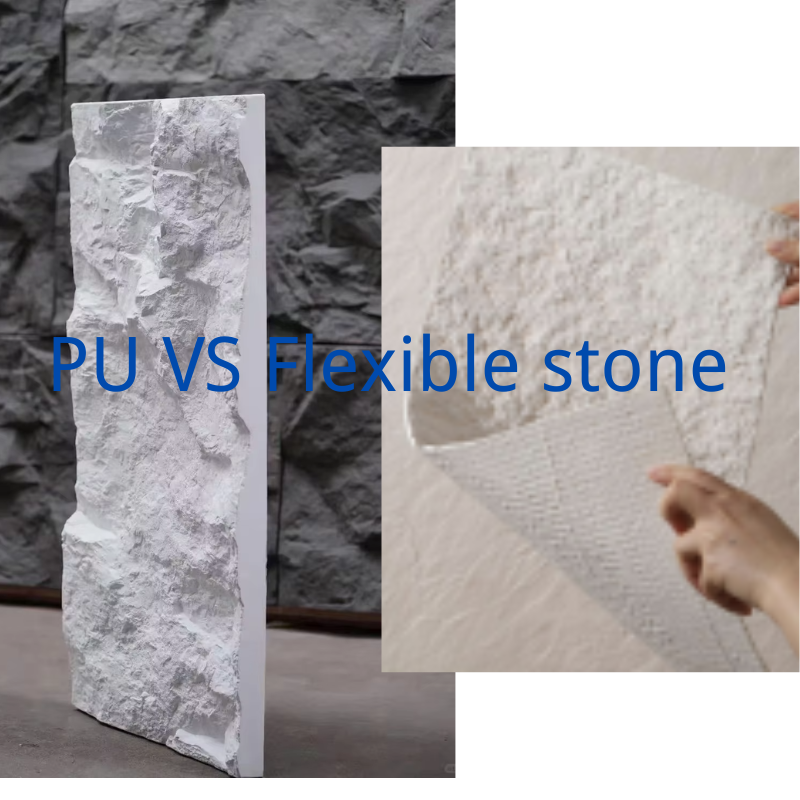
Comparing PU stone (faux) vs MCM flexible stone is a critical decision that directly impacts fire safety compliance and long-term operational costs. Many project specifications overlook the fundamental material difference between a plastic foam core and a stone powder base. This choice can mean the difference between a durable, fire-resistant facade and a surface that melts under heat or shatters from minor impacts in high-traffic zones, creating liability risks and expensive replacement cycles.
This guide provides a direct technical breakdown of these two materials. We analyze how each product’s core composition dictates its fire rating, impact durability in public spaces, and UV stability against yellowing. By examining the price-versus-lifespan ratio, we break down the total cost of ownership to help you specify the correct material for demanding commercial environments.
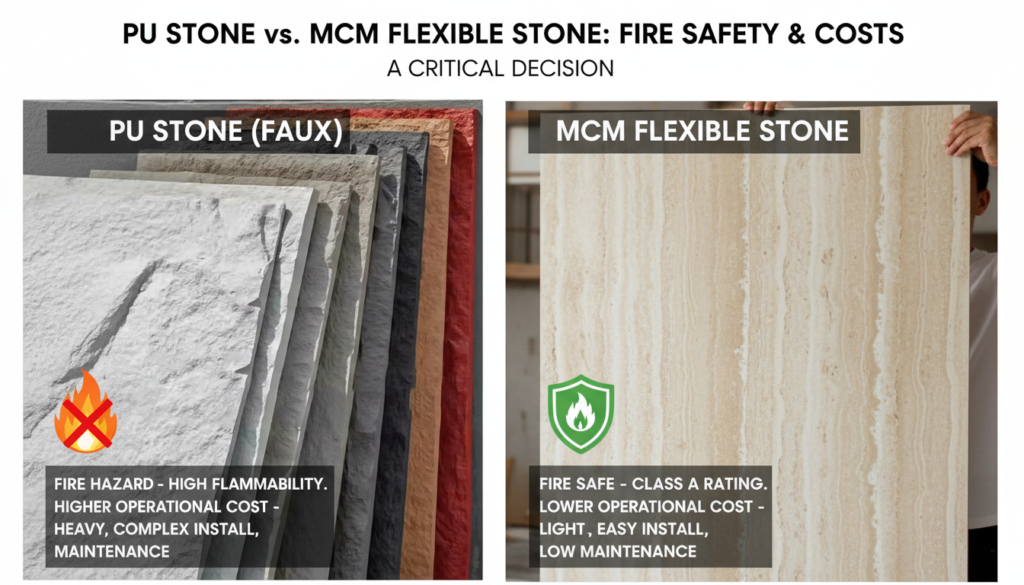
Composition: Plastic Foam vs. Stone Powder
The fundamental difference comes down to the base ingredient: petroleum-based polymers for plastic foam panels versus natural stone powder for mineral composites. This single factor dictates everything from surface hardness and thermal stability to the final tactile feel.
Core Material Base
The primary distinction lies in the foundational material. Plastic foam panels, like those made from polyurethane (PU), are petroleum-based polymers. In contrast, flexible stone panels from JMS Decor use a high concentration of natural stone powder bonded with specialized polymers, making them a mineral-based composite. We describe our material as reconstructed natural stone, not a plastic or vinyl product. This material base directly influences density, texture, and performance.
- Plastic Foam: A synthetic polymer base, often with mineral fillers added to imitate stone texture.
- Stone Powder Composite: Primarily composed of natural stone minerals, offering authentic texture and greater material density.
Structural Integrity and Feel
While both materials are lightweight, their structural properties differ significantly. The high mineral content in flexible stone panels leads to a hard, durable surface resistant to scratches and impacts. It feels cool and solid, similar to real stone. Plastic foam is inherently softer and can feel hollow or compressible, making it more susceptible to dents. The foam’s lightness comes from its cellular structure, which can compromise its ability to withstand direct impacts in high-traffic commercial environments.
Thermal and Dimensional Stability
Materials behave differently under temperature changes. Stone powder composites offer excellent dimensional stability, resisting expansion and contraction across a wide temperature range. For example, JMS Decor’s panels are tested to withstand extreme cold (down to -40°C) without damage or delamination. Some plastic foams can warp or deform under direct, intense heat, a risk not present with mineral-based panels. This lower tolerance for thermal cycling in polymer foams can affect long-term fit and finish, especially in exterior applications or areas with direct sun exposure.
Fire Rating: The “Melting” Risk of PU
Polyurethane (PU) foam panels rely on chemical flame retardants to meet minimum fire codes, but their core material still melts and releases toxic gases like hydrogen cyanide under heat—a risk not present in mineral-based alternatives.
Inherent Flammability of Polyurethane Foam
Polyurethane (PU) foam is inherently flammable, a characteristic rooted in its chemical makeup. With a low limiting oxygen index (LOI) around 18%, it ignites and burns easily without significant chemical treatment. Even when manufacturers add flame retardants to meet basic fire classifications, the material’s tendency for thermal degradation remains a primary concern. For this reason, building codes often require the installation of protective barriers, such as drywall or concrete, to contain the fire risk when PU foam panels are used in construction.
Toxic Smoke and Gas Emission
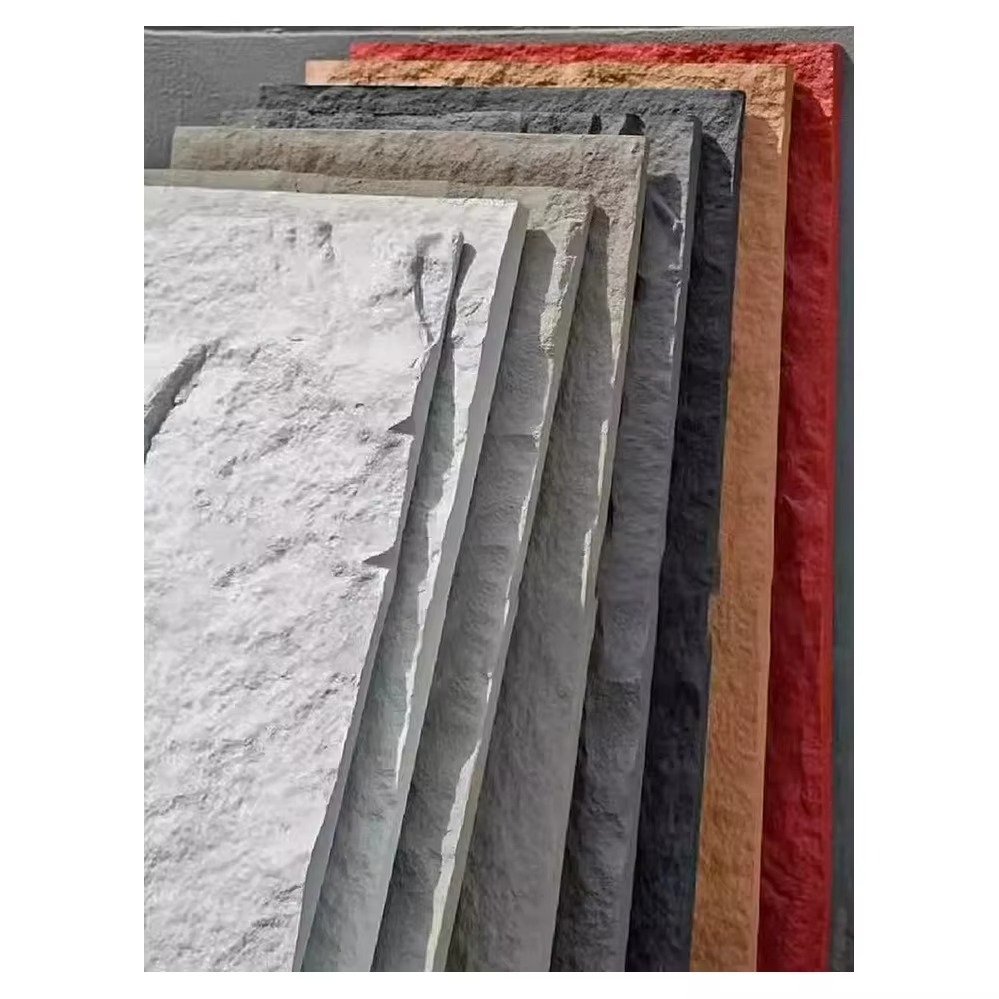
Beyond flame spread, the combustion of PU foam creates a secondary, and often more lethal, hazard: toxic smoke. When exposed to high heat, the material decomposes and can release dangerous gases, including carbon monoxide (CO) and hydrogen cyanide (HCN). This emission poses a severe threat to building occupants and first responders, complicating evacuation and firefighting efforts. Any fire safety strategy involving PU materials must account for both flame spread and the life-threatening toxicity of its smoke.
| Fire Safety Attribute | Polyurethane (PU) Foam Panels | JMS Decor Flexible Stone |
|---|---|---|
| Fire Rating | Class B or Class A (with additives) | Class A2 (Non-combustible) |
| Behavior in Fire | Melts, drips, and undergoes thermal degradation | Does not melt or contribute to flame spread |
| Toxic Smoke Emission | Produces Carbon Monoxide (CO) and Hydrogen Cyanide (HCN) | No toxic fume production |
| Core Composition | Plastic-based foam (Polyurethane) | Natural Stone Powder & Modified Clay |
JMS Decor’s Class A2 Fire-Rated Stone Panels
JMS Decor’s flexible stone panels offer a fundamentally safer alternative built on a non-combustible core. Certified with a Class A2 fire rating, our panels are engineered primarily from natural stone powder and modified clay.

Unlike plastic-based foams, this mineral composition does not melt, drip, or contribute to flame spread when exposed to fire. It also does not produce toxic fumes, eliminating the secondary hazard associated with PU combustion. This makes our panels the definitive choice for commercial projects, public spaces, and any application where fire safety is a non-negotiable specification.
- Our flexible stone panels are certified with a Class A2 fire rating, indicating high resistance to combustion.
- The core material is natural stone powder, which does not melt, drip, or contribute to flame spread like plastic-based foams.
- This makes our panels a suitable choice for projects where fire safety is a primary specification, especially in public and commercial spaces.
Transform Spaces with Customizable Flexible Stone
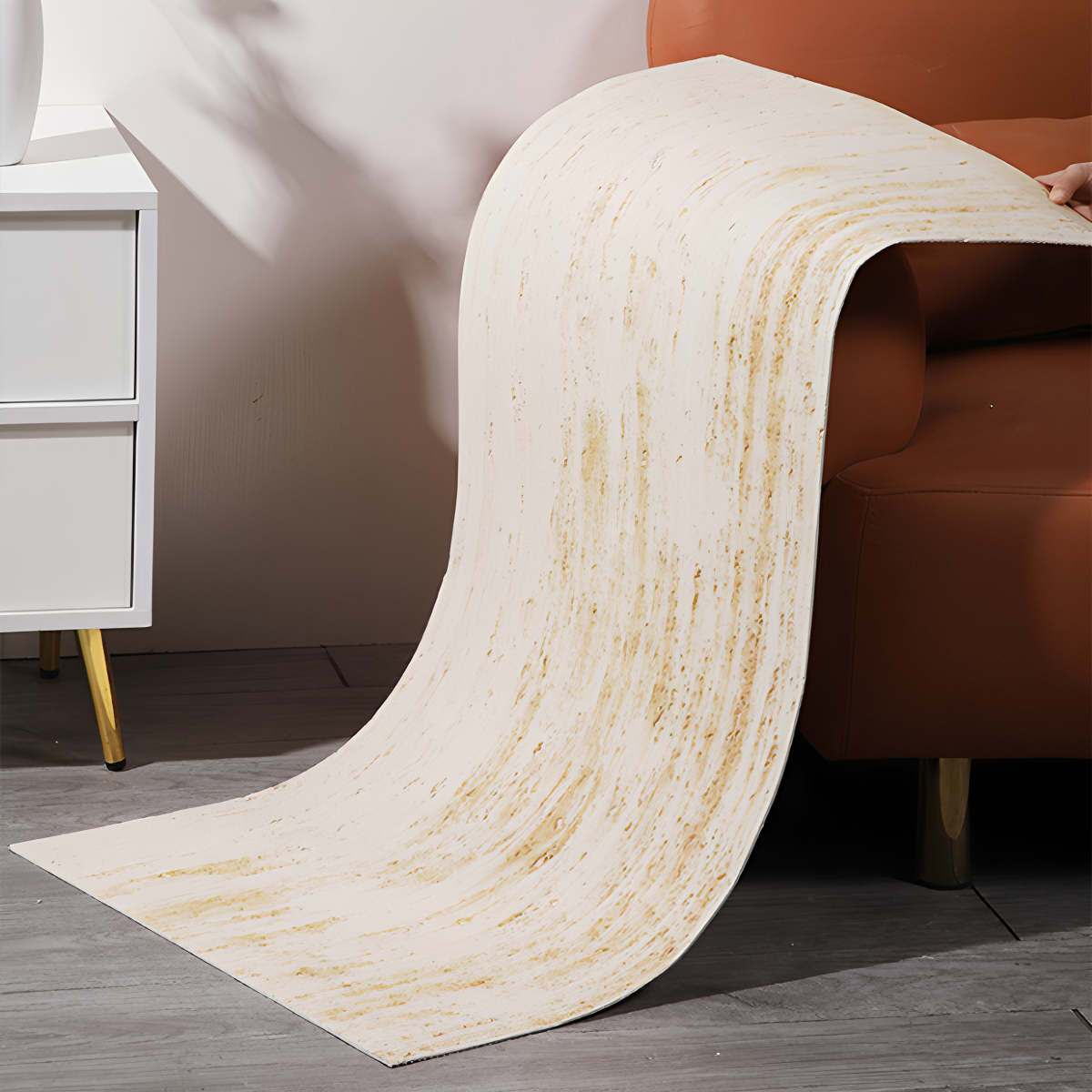
Impact Durability in Public Spaces
In high-traffic commercial zones, specifying materials based on total lifecycle cost—not just initial price—is standard practice, as engineered composites now deliver validated, long-term impact resistance that softer foam-based panels cannot match.
Engineered Materials for High-Traffic Zones
The materials sector for public spaces has pivoted toward engineered solutions built for real-world abuse. Advanced panels, often with nano-ceramic or specialized polymer coatings, offer superior impact and abrasion performance over older alternatives. Their lightweight composition reduces structural load and simplifies installation, while recyclable formulations help projects meet the sustainability standards now expected in 2026. The industry is focused on closing the gap between lab-tested specs and actual performance in busy environments.
| Característica | PU Foam Panels | MCM Flexible Stone |
|---|---|---|
| Core Composition | Polyurethane foam with a thin decorative surface layer. | Reconstructed natural stone powder fused with specialized polymers. |
| Impact Resistance | Susceptible to dents, punctures, and abrasion from sharp objects due to its foam core. | High-density mineral composition resists scratches, gouges, and direct impacts. |
| Application Suitability | Best for low-traffic decorative walls where direct physical contact is minimal. | Engineered for high-traffic commercial environments like retail, hospitality, and transit zones. |
Long-Term Performance and Maintenance
Facility managers and asset owners now prioritize the total lifecycle cost of building materials. Modern wall and flooring solutions are engineered for extended operational life, with typical asset lifespans ranging from 18 to 28 years with minimal required upkeep. This durability directly translates to lower long-term costs and greater maintenance efficiency. Field-validated testing protocols are becoming the norm, giving specifiers confidence that the materials will perform as expected in demanding, real-world conditions.
Safety and Specialized Applications
Material selection in public areas must address safety and hygiene. New engineered panels often incorporate features that meet strict commercial safety standards. Enhanced slip resistance is a critical attribute for reducing liability in busy facilities, while integrated antimicrobial properties make these materials suitable for hygiene-sensitive sectors like healthcare and food service. These built-in functionalities expand the use of engineered solutions into more demanding and regulated commercial projects.
UV Stability and Yellowing
Long-term color stability in exterior panels isn’t just about the surface coat; it’s engineered from the core chemistry up, using advanced aliphatic polymers and protective topcoats to prevent UV degradation.
Aliphatic vs. Aromatic Formulations
To combat UV-induced yellowing, modern building materials are based on aliphatic formulations. Unlike older aromatic compounds that degrade and turn yellow under sunlight, this advanced chemistry ensures long-term color stability and material integrity. Aromatic-based polymers are fundamentally prone to breaking down with UV exposure, a known point of failure in less durable products. Aliphatic chemistry provides inherent resistance to sunlight, maintaining the panel’s original appearance, which is a critical factor for projects in high-exposure environments like the Middle East or coastal regions.
The Role of Protective Topcoats
A high-performance topcoat serves as a crucial first line of defense against UV radiation. These advanced polyaspartic and polyurethane coatings act as a primary shield, absorbing or reflecting harmful rays before they can reach the panel’s core material. This protective layer can extend the aesthetic life of a panel by two to three times compared to untreated materials. It also adds a functional layer of protection against general weathering, moisture ingress, and abrasion.
Advanced Polymer Stabilization
The durability of our panels is engineered at the molecular level. We build the core material to resist degradation from prolonged sun exposure through enhanced polymer chain stabilization and cross-linking. Stable, tightly-linked polymer chains are simply less likely to be broken down by UV radiation. This internal structural strength contributes directly to the product’s extended lifespan, ensuring consistent performance and durability from the inside out.
Price vs. Lifespan Ratio
The price-to-lifespan ratio is the primary metric for evaluating modern cladding materials, where engineered stone offers the durability of natural alternatives at a fraction of the initial investment.
Initial Investment vs. Long-Term Value
Faux stone options like PU veneers and modified clay panels provide a significant cost advantage over natural stone. This lower upfront investment makes them a practical choice for budget-driven projects without a major compromise on expected lifespan. Most quality engineered panels deliver a service life of 20 to 50 years, comparable to some traditional veneers. This balance of initial affordability and long-term durability establishes faux stone as a sound financial decision for optimizing project budgets while achieving a high-end aesthetic.
| Cladding Material | Typical Installed Cost / m² | Primary Advantage |
|---|---|---|
| Faux Stone Panel (PU) | $110 – $270 | Lowest upfront cost for a stone look; lightweight and fast to install. |
| MCM Flexible Stone | $130 – $300 | Class A2 Fire Rating, extreme climate resistance, installs over existing surfaces. |
| Chapa de piedra natural | $400 – $800+ | Authentic material with highest perceived value; requires skilled labor. |
Durability and Maintenance Factors
A material’s true cost extends beyond the purchase price to include decades of upkeep. Faux stone panels are specifically engineered for longevity with minimal intervention. Modern formulations integrate robust UV-resistant coatings that protect against color degradation and material breakdown from sun exposure. This low-maintenance profile contrasts sharply with certain natural materials that may require periodic sealing or specialized cleaning to prevent staining and weathering. The combination of high durability and low upkeep reinforces a strong price-to-lifespan ratio, reducing long-term operational costs for property owners.
Market Trends in Cost-Performance Balance
The construction market shows a clear shift toward materials that balance performance with affordability. Architects and contractors increasingly seek mid-tier solutions that outperform basic options like vinyl siding but remain more accessible than premium natural stone. Engineered stone fits this niche perfectly. It offers superior durability, impact resistance, and aesthetic quality compared to low-cost siding, but maintains a significant cost advantage over quarried stone. This positions it as the go-to material for projects demanding both visual appeal and a predictable, long-term return on investment.
Conclusión
Choosing the right faux stone directly impacts project safety, durability, and long-term value. MCM flexible stone offers a non-combustible Class A2 fire rating and superior impact resistance, making it a reliable material for high-traffic commercial spaces. While PU foam panels may present a lower initial price, their performance limitations in fire safety and UV stability can increase lifecycle costs.
To evaluate how MCM flexible stone can meet your project’s specific demands, request a sample kit or view our complete technical data sheets.
Preguntas frecuentes
PU stone vs flexible stone?
The primary difference lies in their composition and form. PU stone is a rigid, high-density polyurethane foam panel, often enhanced with mineral powders for authentic texture and strength. It excels at creating deep, 3D profiles that replicate stacked stone. Flexible stone, in contrast, is a thin veneer of real stone (like slate or quartzite) bonded to a flexible fiberglass or fabric backing. Its main advantage is its ability to conform to curved surfaces, offering an authentic stone surface where rigidity is not an option.
Is PU stone fire rated?
Yes, high-quality polyurethane stone panels are manufactured with fire-retardant additives to meet stringent building codes. The industry standard for interior finishes is a Class A (or Class 1) fire rating, determined by the ASTM E-84 test for flame spread and smoke development. Always verify the specific fire rating and certification of any panel with the manufacturer before purchase, especially for commercial projects or multi-family residences where code compliance is critical.
Polyurethane stone panel durability?
Polyurethane stone panels are exceptionally durable. Their high-density, closed-cell structure makes them waterproof and impervious to moisture, preventing issues like rot, mildew, and cracking. They offer excellent impact resistance, holding up against daily wear and tear better than materials like drywall or plaster. For exterior use, panels are finished with multi-layer, automotive-grade coatings containing UV inhibitors, ensuring long-term color stability and resistance to fading or degradation from sun exposure.
Faux stone wall panel cost?
As of 2026, the material cost for high-quality faux stone wall panels typically ranges from $18 to $35 per square foot. The price is influenced by factors such as the panel’s thickness, the realism of the texture, brand reputation, and whether it carries a premium Class A fire rating. While the initial material cost may be higher than some finishes, significant savings are realized in labor, as these lightweight panels do not require masonry specialists or structural reinforcement for installation.
Best faux stone for exterior?
High-density polyurethane (PU) stone panels are widely considered the best choice for exterior applications. Their closed-cell composition makes them completely waterproof, so they will not absorb moisture or crack during freeze-thaw cycles. Reputable exterior-grade panels are coated with advanced UV-stable finishes that prevent color fading and material breakdown from sun exposure. Their lightweight nature also reduces the structural load on exterior walls and simplifies the installation process compared to heavier, cement-based manufactured stone veneer.

 Spanish
  English
  French
  Arabic
  German