 Zum Inhalt springen
The walls in a luxury boutique are more than a backdrop; they are a critical sales tool. Pairing delicate fabrics against a textured stone wall creates a visual contrast that elevates the perceived quality of your apparel. But getting the execution right is key—the wrong material or lighting can overwhelm the merchandise and cheapen the store’s atmosphere.
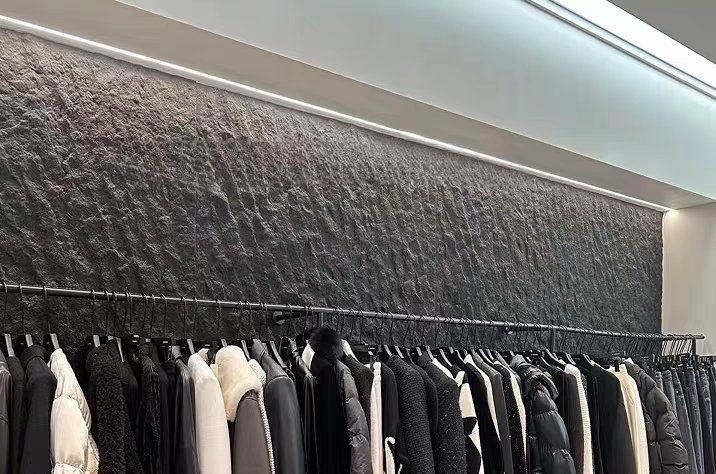
This guide covers the technical details for implementing stone features in fashion retail design. We’ll explore the specific lighting required to make garments 3-5 times brighter than the wall and analyze the design benchmarks for fitting rooms, where allocating 20% of your floor space can turn a try-on moment into a confirmed sale. From material selection to renovation logistics, we’ll provide the data you need to build a more compelling retail environment.
The “Background Effect”: Selling High-Ticket Items
The ‘Background Effect’ is a retail strategy where premium backdrops, such as flexible stone panels, and specific lighting increase the perceived value of clothing. This visual appeal must be supported by rigorous manufacturing standards—detailed in tech packs with precise measurements (POMs), materials (BOM), and stitching requirements (SPI)—to ensure the product’s quality justifies its luxury price.
| Spezifikation | Definition | Example |
|---|---|---|
| Points of Measure (POMs) | Defines exact garment measurements with strict tolerances for a consistent fit. | Chest: 52cm (+/- 1cm tolerance) |
| Bill of Materials (BOM) | Lists every physical component required for the final product. | Main Fabric, Lining, #5 Zippers, Thread |
| Stitches Per Inch (SPI) | Mandates stitch density to ensure seam strength and fine finishing. | 10-12 SPI for lockstitch seams |
Visual Merchandising for Perceived Value
To elevate a garment’s appeal, retailers create a premium atmosphere using specific visual cues. Earthy tones and textured backgrounds, like stone or brick, establish a sophisticated environment. Strategic lighting against these surfaces generates depth and shadows, which signals luxury without distracting from the clothing itself. This approach aligns the product’s presentation with the high expectations of customers shopping for premium women’s wear, making the item feel more valuable before it is even touched.
Technical Specifications That Justify the Price
While visual merchandising creates the perception of value, detailed manufacturing specifications ensure the product’s tangible quality. Technical packs contain the blueprint for construction. Points of Measure (POMs) define exact dimensions with strict tolerances to guarantee a consistent, high-end fit. A Bill of Materials (BOM) lists every component, from the primary fabric down to the specific thread color and #5 zippers. Finally, construction notes mandate details like Stitches Per Inch (SPI) and reinforcements like bartacks at stress points, ensuring the garment’s durability matches its luxury price tag.
Texture Matching: Silk Clothes vs. Rough Stone
Pairing delicate silk garments against rough, durable stone walls creates a powerful visual and tactile contrast. This design strategy uses the stone’s perceived permanence and texture to highlight the fabric’s softness and quality, making high-ticket items appear more luxurious and desirable to customers in a retail setting.
The Principle of Tactile Contrast
Using rough stone finishes like sawn or flamed-thermal creates a strong visual anchor for delicate fabrics like silk. This high-contrast pairing highlights the quality and drape of the clothing, making the material appear softer and more luxurious by comparison. The design establishes a sensory experience where the rugged, permanent background elevates the featured product, framing it as a premium item.
Material Properties Driving the Effect
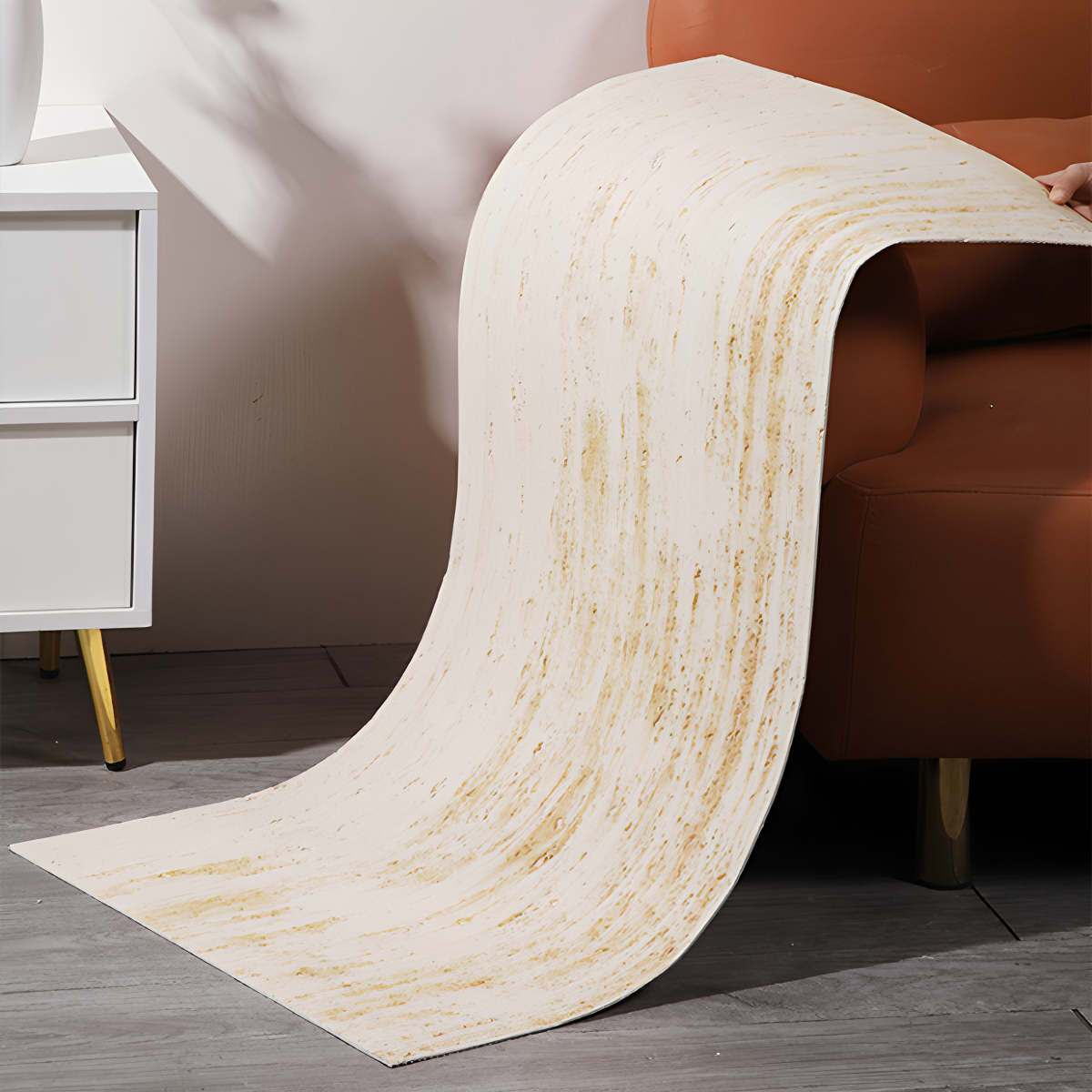
Stone provides a sense of durability and permanence, supported by high abrasion resistance (up to 38 Ha for Quartzite-Sandstone) and a modulus of rupture that can reach 13.9 MPa (Quartzite). These physical properties make the stone an ideal unyielding backdrop. Even thin, flexible stone panels just 3-5 mm thick can achieve this look on curved surfaces, contrasting the material’s visual weight with silk’s lightweight flow of around 7.5 oz/lyd.
Specific finishes are critical for protecting the clothing. A ‘fine rubbed’ finish, as defined in BS 8298, offers a smooth, non-glossy texture. This surface avoids snagging delicate fabrics while still providing the necessary visual roughness to create a powerful contrast in a retail display.
Lighting Clothes Against Stone Walls
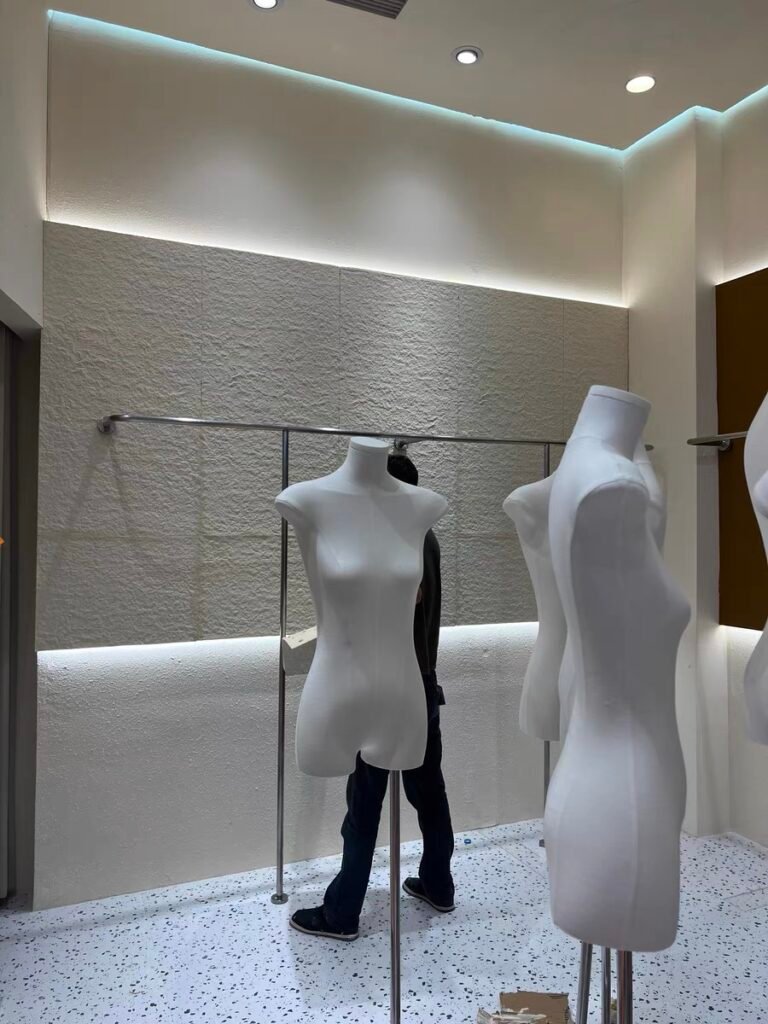
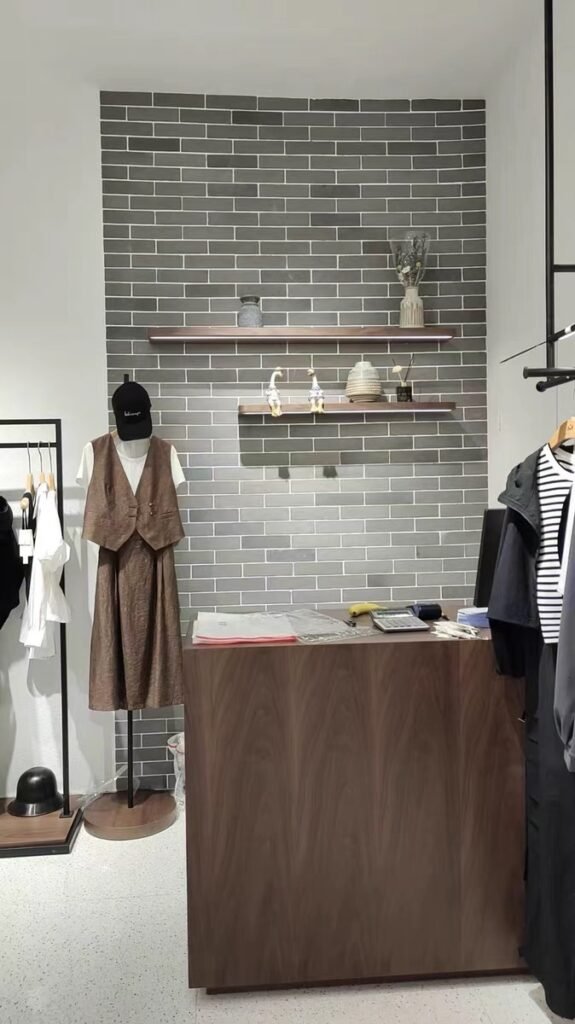
To light clothes against stone, use high-contrast lighting. Aim narrow-beam spotlights (1,000–2,000 lux) directly on the garments, making them 3-5 times brighter than the stone wall, which should be softly lit (50–200 lux) to show texture without competing for attention.
Creating Visual Separation with Contrast
The main objective is to make the garment significantly brighter than the stone background, pulling the product forward visually. This requires a high accent-to-ambient contrast ratio, which is typically between 3:1 and 5:1 for premium apparel and can reach 10:1 in some luxury applications. The base illuminance on the vertical stone surface should remain low, within a 50–200 lux range, so its texture is visible but does not compete with the merchandise for attention.
Technical Lighting and Fixture Specifications
Use narrow-beam LED spotlights (10–20°) to target clothing precisely, delivering 1,000–2,000 lux onto the apparel. It is critical to select fixtures with a high Color Rendering Index (CRI ≥90) and a warm-to-neutral color temperature (3,000–3,500 K) to render fabric colors accurately. Proper glare control is also necessary for a comfortable shopping environment, so target a Unified Glare Rating (UGR) between 16 and 19.
Your Vision, Realized in Flexible Stone.
Fitting Room Luxury: The Decision Zone[CORE]
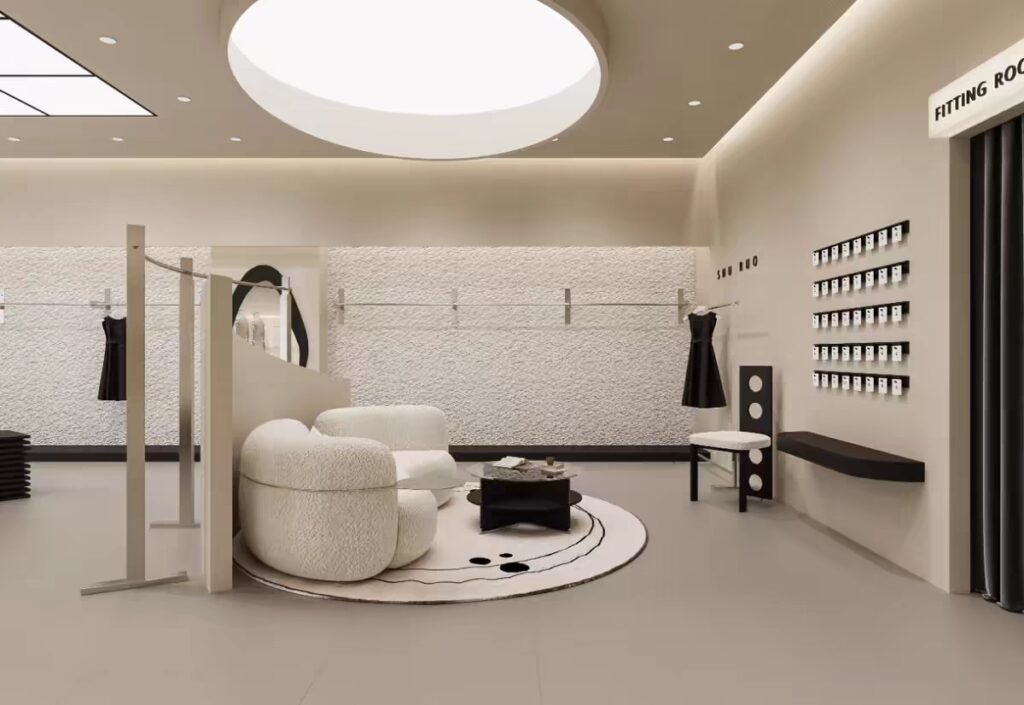
A luxury fitting room is a key decision-making zone designed with specific benchmarks, such as allocating 20% of retail space for comfort and using 3500K-4000K lighting with a CRI of 90+ to ensure accurate color perception. It blends ADA-compliant accessibility with technology to create a seamless try-on experience.
| Kategorie | Parameter | Benchmark |
|---|---|---|
| Spatial Design | Room Density | 3 rooms per 1,000 sq ft |
| Spatial Design | Area Allocation | ~20% of total retail square footage |
| Accessibility (ADA) | Door & Turning Space | 32-inch clear width; 60-inch interior turning circle |
| Lighting | Color Rendering | 3500 K–4000 K temperature; CRI of 90+ |
| Digital Technology | 3D Model Complexity | Under 50,000 polygons |
| Digital Technology | Image Resolution | 2K minimum |
Layout and Comfort Benchmarks
The physical environment of a fitting room directly influences a customer’s purchasing decision. Allocating approximately 20% of the total retail floor to this area provides ample space for movement and reduces feelings of being cramped. The industry benchmark of three fitting rooms per 1,000 square feet of selling space helps manage customer flow and minimize wait times. Accessibility is integrated through ADA compliance, which mandates a 32-inch clear door width for entry and a 60-inch interior turning circle to accommodate mobility aids. For practicality, clothing hooks must be placed between 15 and 48 inches from the floor, making them usable for all customers.
Lighting and Technology Specifications
Technical specifications are central to creating an accurate and enhanced try-on experience. Lighting systems should have a color temperature between 3500 K and 4000 K and a Color Rendering Index (CRI) of 90 or higher. This combination mimics natural daylight, ensuring garments and skin tones appear true to color. When integrating technology like smart mirrors or virtual try-on systems, performance is key. 3D models of apparel must remain under 50,000 polygons to ensure load times are fast and the experience is fluid. Digital imagery used for augmented reality overlays needs a minimum resolution of 2K to maintain sharpness and detail, providing a clear and realistic view for the customer.
Fast Renovation for Season Changes
Fast renovations for seasonal changes use a phased approach, scheduling heavy work like demolition and wiring during night shifts to keep the store open. This strategy minimizes revenue loss but extends project timelines by 15-25%, requiring careful coordination between engineers for code compliance and contractors for execution and safety.
Phased Construction to Minimize Downtime
To update a store for a new season without closing, retailers use a phased construction strategy that keeps the doors open. The process begins with a two to three-day preparation phase where materials are organized in back-of-house areas, away from the sales floor. Disruptive work, such as demolition, wiring, and other loud installations, is scheduled for night or early-morning shifts to avoid disturbing customers. This method preserves daily revenue by maintaining normal business hours, but it extends the total project timeline by an estimated 15-25% compared to a complete shutdown.
Execution: Key Roles and Safety Measures
Successful execution requires clear roles and strict safety protocols. Engineers are responsible for verifying structural integrity, fire resistance, and overall building code compliance. The general contractor manages permits, materials, and subcontractors. To protect customers and staff in an active environment, crews use plastic barriers for dust containment and place metal plates over any cuts in the floor. The safety plan also includes daily safety walks and prominent signage to guide shoppers safely around active work zones.
Case Study: Women’s Boutique
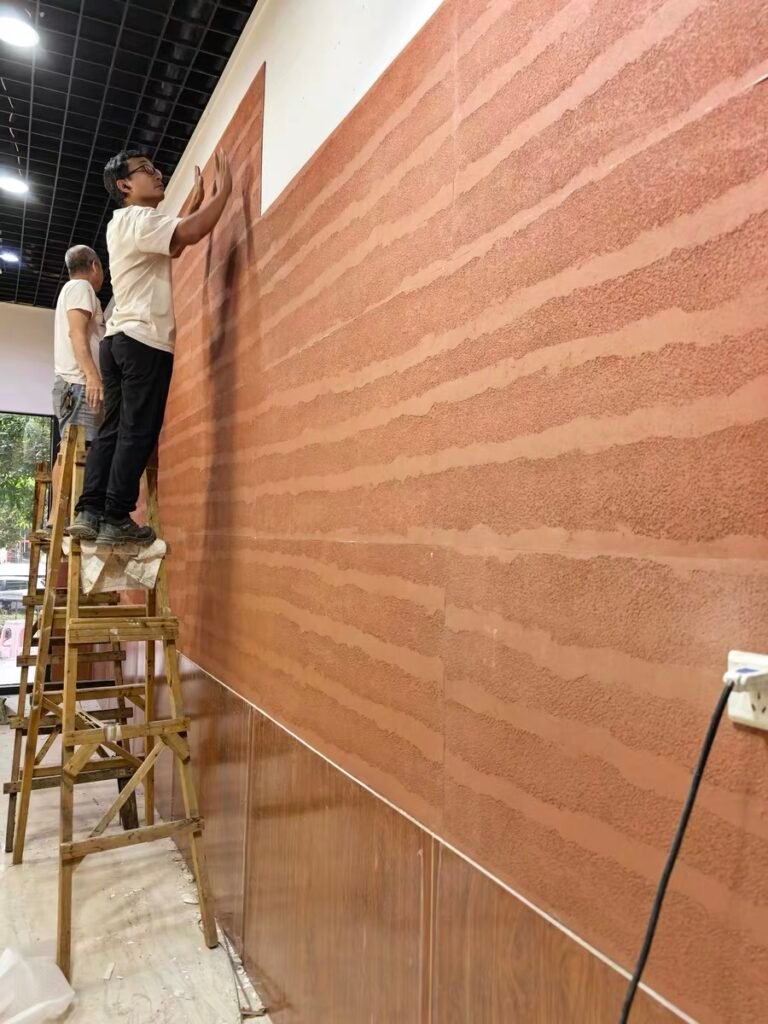
An analysis of a women’s boutique shows that key environmental factors like lighting, color, and overall style directly impact customer satisfaction and buying behavior. Creating a unique atmosphere with carefully selected materials, such as textured stone walls, can enhance product presentation and increase sales.
Key Environmental Factors for Customer Engagement
Research identifies four design elements that directly impact sales in an upscale boutique: lighting, color scheme, atmospheric conditions, and overall style. The store’s environment is closely tied to customer satisfaction, emotional responses, and purchasing behavior. A carefully crafted atmosphere reinforces the boutique’s identity, which centers on unique products and excellent service.
Material Selection and Its Effect on Sales
The materials chosen for walls, flooring, and fixtures are fundamental to establishing the store’s intended style. Studies show that a favorable backdrop improves customer perception of contemporary clothing. Informed design choices in retail spaces targeted at women have been shown to increase store revenues and strengthen customer loyalty.
Abschließende Gedanken
Using stone walls in a fashion boutique is more than a style choice; it’s a calculated strategy to elevate the merchandise. The rough texture of the stone creates a powerful contrast with delicate fabrics, making clothing look and feel more luxurious. This effect is amplified by precise lighting that spotlights the garments while keeping the background subtly textured. The entire experience, from the sales floor to the fitting room, relies on specific technical details to create an environment that encourages purchasing decisions.
Every detail, from the stone’s finish to the fitting room’s layout, shapes the customer’s perception of value. A thoughtfully designed boutique uses these elements to build a cohesive brand story, justifying premium price points and fostering customer loyalty. Even major updates like installing a new feature wall can be managed around business hours, allowing retailers to adapt their space to new collections without losing sales. The physical environment becomes an essential part of the sales process, guiding the customer from initial interest to a confident purchase.
Häufig gestellte Fragen
What are some key interior design ideas for a women’s fashion boutique?
A successful women’s boutique design includes clear circulation aisles of 900–1,200 mm, a 1.5–4.5 meter decompression zone at the entrance, and merchandise displayed at eye level (1,200–1,600 mm). Lighting should be 500–1,000 lux with a warm color temperature around 2700–3500 K to best present apparel.
What is the best wall color for a clothing store?
The industry standard is a primary wall color of soft white or light gray. This allows the clothing to be the main focus. An accent wall in a bold color like navy blue, emerald green, or vibrant coral can add personality and help guide customer flow.
Are there standard dimensions for a luxury retail store design?
Luxury retail design does not follow strict numeric specifications. Instead, it focuses on qualitative principles like spacious open layouts, grand entrances, and premium materials such as Carrara marble or polished metals. The goal is to create a feeling of exclusivity with selective product displays.
What materials are typically used for fitting room walls?
Standard fitting rooms often use 0.75″ thick melamine-laminated panels with aluminum edge caps. Modular systems that use keyslot-connected panels are also a common choice.
How strong do display walls for fashion need to be?
Fashion display walls typically use vertical standards spaced 24″–48″ apart. A full wall bay, when anchored correctly, can support up to 300 lb. Individual hanging rails are usually rated for 22–88 lb.
 German
  English
  Spanish
  French
  Arabic