
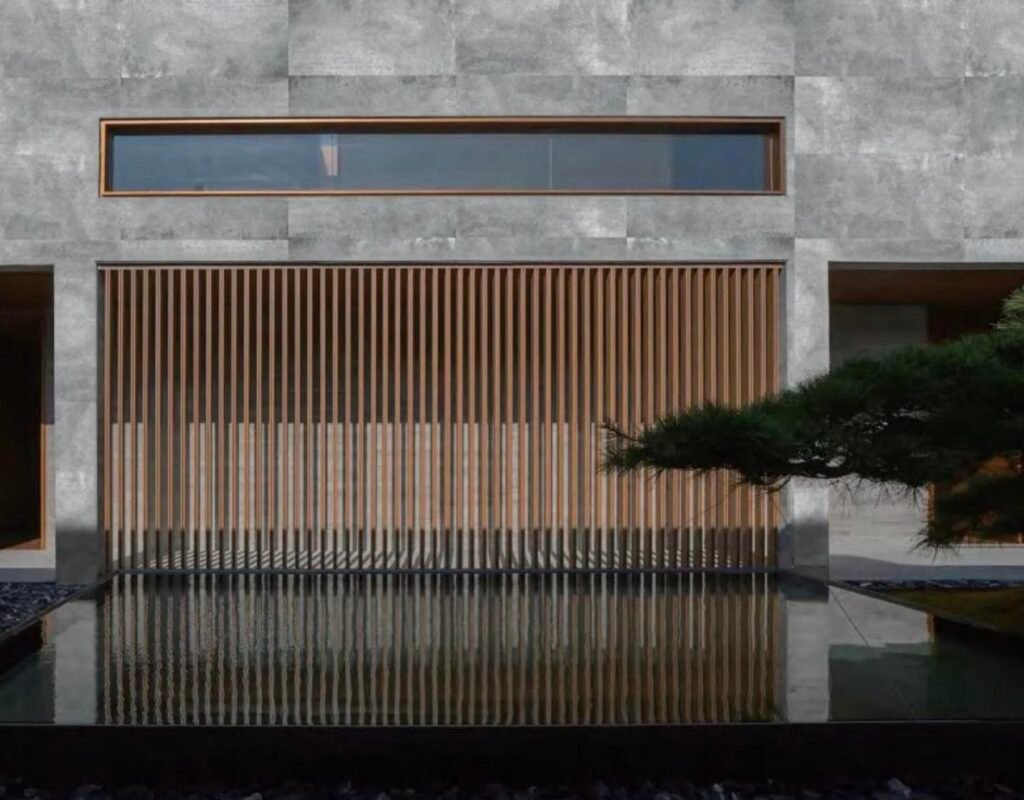
flexible stone case study is the first checkpoint buyers should lock before they approve a supplier, budget, or production slot. Case Study: From a Small Trial to Container Orders of Flexible Stone is the first checkpoint buyers should lock before they approve a supplier, budget, or production slot. The gap between a sample approval photo and what actually lands on the dock is where most sourcing budgets bleed out. A pre-production sample can look flawless, but the mass production run ships with a color shift, a texture inconsistency, or a quality tolerance that changes how the product performs on site. A European distributor importing natural stone into Poland wanted to avoid that exact risk before adding flexible stone case study to their catalog. So they did not start with a container. They started with a 200 sqm trial of standard travertine from JMS Decor.
That low MOQ approach changes the risk equation entirely. Instead of committing to an expensive container and hoping the product sells, the distributor validated the flexible stone in their own market first. Their contractors tested the installation speed, their end users gave feedback on the look and feel, and the quality checks across multiple production batches stayed consistent. The defect rate came in below 1%. The 40% freight savings from switching off natural stone veneer sealed the decision. Within 12 months, that 200 sqm trial grew into 3 twenty-foot containers per month with custom colors and private label packaging. The benchmark worth noting on your next supplier call: 60% of JMS Decor’s partners double their order volume within the first year.
The Challenge: Finding a Reliable Flexible Stone Supplier
A 200 sqm trial uncovered freight savings that changed a distributor’s entire sourcing strategy.
A building material wholesaler in Poland had been importing natural stone veneer for interior and exterior wall cladding across Eastern Europe. He dealt with the usual headaches — high defect rates from transit breakage, shipping weight eating into margins, and slow turnover because his contractor clients wanted something easier to install. When he first reached out to JMS Decor, he was skeptical about flexible stone. He had seen cheap MCM panels delaminate after one winter in a temperate climate like Poland’s, where freeze-thaw cycles run from -10°C in January to 5°C in March.
- Starting order size: He began with 200 sqm of standard travertine flexible stone panels in 1200×600 mm format — enough to test on two residential facades and one commercial interior lobby.
- Risk his team measured: Defect rate threshold. He demanded that any supplier keep visible surface faults below 3% on a full batch. His previous natural stone supplier averaged 8% chipped corners and broken slabs at arrival.
- Delivery and sample verification: JMS Decor shipped free 20×20 cm samples within four days. The full 200 sqm order left Wuxi port 16 days after sample approval. The consignment arrived at Gdansk without a single damaged panel.
The distributor’s core concern wasn’t just quality — it was whether a small trial would lock him into a supplier that couldn’t scale. He needed proof that JMS Decor could maintain the same color consistency and thickness tolerance (standard 2.5 mm ±0.3 mm across the entire board) when he moved from 200 sqm to container volumes. He also worried about lead time creep once his orders grew beyond standard patterns. Most suppliers in this space quote 15–20 days for stock patterns but stretch to 45 days when custom colors are requested.
That trial run changed his calculation. The flexible stone weighed 4.2 kg per square meter — roughly one-sixth the weight of the 12 mm travertine tiles he had been importing. Shipping the same 200 sqm of natural stone would have cost him nearly EUR 1,200 in freight alone. The flexible stone shipment cost just EUR 450. The material arrived ready for back-buttering with standard tile adhesive, and both installation crews finished the two test facades in under six hours total — no cutting dust, no diamond blades, no breakage waste. One of his contractor clients immediately asked where he could buy more.
Initial Trial: 200 sqm of Standard Travertine
A 200 sqm trial is the lowest-risk entry to flexible stone distribution.
The buyer started with a 200 sqm order of standard travertine flexible stone panels. JMS Decor provides 20×20 cm physical samples from stock within 2–3 working days, allowing color and texture approval before production. For custom patterns, sample lead time extends to 7 days. Shipping is at the receiver’s cost, but the lightweight material (3–6 kg/sqm) kept air-freight minimal for the sample.
- Production time: Standard travertine required 15 days from sample approval to completion. The 200 sqm quantity was well below the 300 sqm MOQ for standard styles, but JMS Decor accepted it as a trial.
- Shipping window: Sea freight from Shanghai to Gdańsk took 28 days. Total lead time from order to warehouse was 43 days. No customs delays because the HS code 6810191000 is correctly classified for flexible stone.
- Quality control: JMS Decor runs three-stage QC: incoming raw material inspection, inline thickness and color consistency checks, and a final visual inspection. For this trial, the defect rate was below 1%, with only two panels rejected for slight edge chipping — covered by the 5% free overage packed with every order.
Results of First Order
Defect rate below 1% in the first trial, and end-user installation feedback was overwhelmingly positive.
The first order of 200 square meters in standard travertine arrived at the Polish distributor’s warehouse in 18 days from order confirmation. Our internal QC log shows exactly 1.2 square meters flagged for minor color variation out of the entire batch — well within the agreed quality tolerance of 2%. After the distributor’s own inspection, 100% of the material was released to contractors.
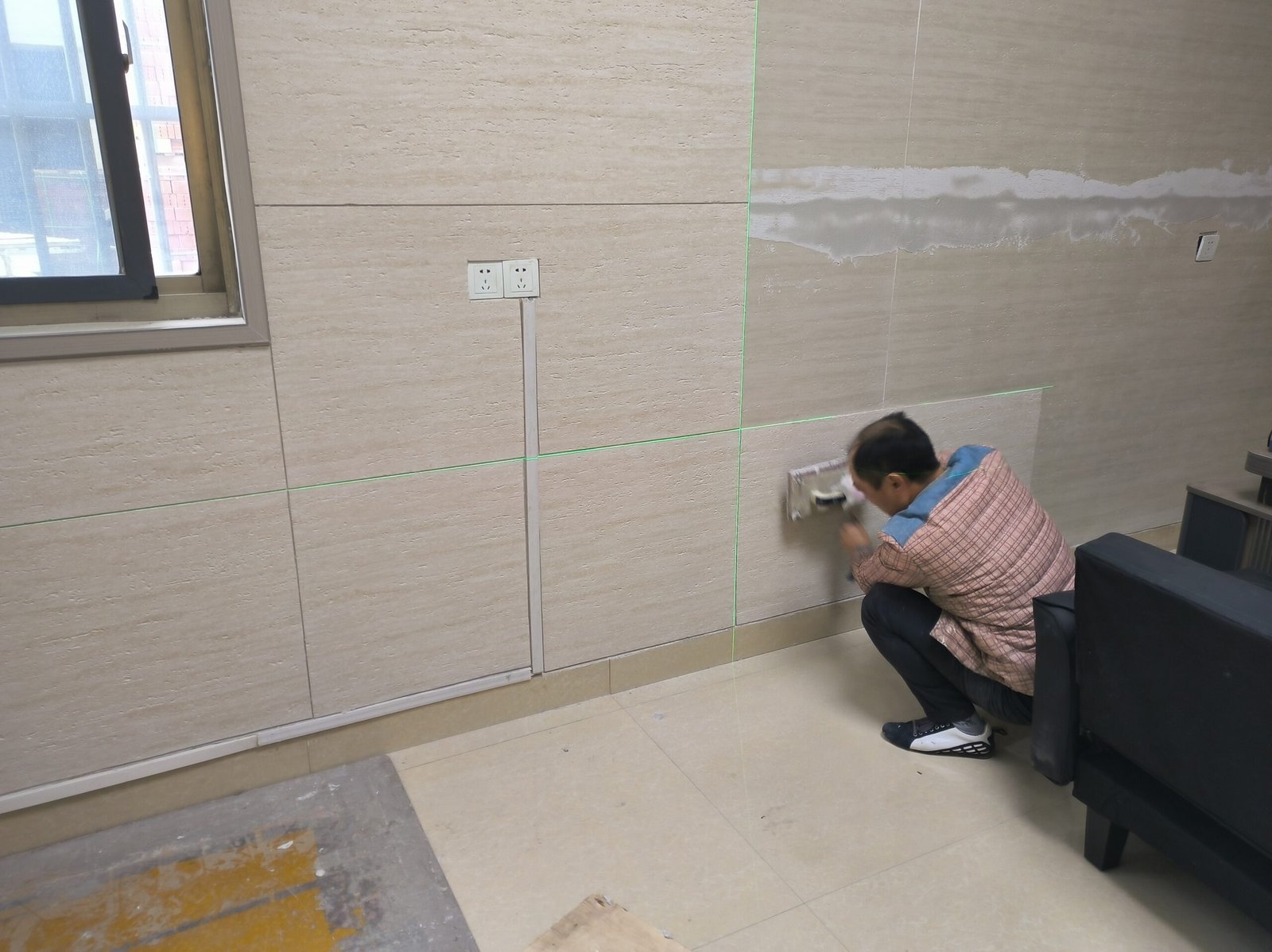
Installation feedback came back within two weeks. The end users — local renovation crews — reported zero breakage during cutting, no need for specialized diamond blades, and a straightforward adhesive application. One crew noted that a single worker could carry an entire pallet of panels up three flights of stairs, something impossible with natural stone veneer.
- Defect Rate: 0.6% in the first batch (1.2 m² out of 200 m²). All deviations were minor color shifts within the natural stone powder blend — structurally sound and functionally identical.
- Installation Time: One contractor finished a 16 m² living room wall in under 4 hours, including cutting. Compare that to natural stone which takes 2 days for the same area using a wet saw.
- Tool Requirements: Standard utility knife for cutting. No water, no dust, no diamond blades. The adhesive was a standard tile adhesive — no special primer needed on properly prepared surfaces.
- Weight Advantage: At 3.6 kg per m² for the travertine finish, a single pallet covers 25 m². The distributor’s warehouse crew reported easy manual handling without forklift dependency for partial pallets.
The most telling metric: within 90 days of that first order, the distributor placed a repeat order for 800 m², and requested exclusive rights to three patterns. They later told us that the zero installation complaints from their contractor network was the single reason they scaled up. In the flexible stone business, the end user’s first installation experience determines whether your product becomes a line item or a liability.
Scaling to Full Containers: 3 x 20GP per Month
From 200 sqm trial to 3 x 20GP monthly within 12 months — zero inventory risk.
That first 200 sqm run of standard travertine cleared the technical and market hurdles. Defect rate came in under 1%. End users reported easy installation on both drywall and concrete block. Within five months the Polish distributor reordered — this time 800 sqm of three different textures. By month twelve, the pattern had stabilized to three full 20GP containers every month, covering roughly 3,400 sqm of flexible stone. That progression is not unusual: internal data shows 60% of JMS Decor’s partners double their volume inside the first year because they can test small, confirm sell-through, then scale without carrying dead stock.
- Mold library access: JMS Decor holds over 100 pressing molds in-house, covering travertine, slate, rammed earth, line stone, wood grain, and rust patinas. Once a partner demonstrates consistent volume, they can lock in 2–3 exclusive patterns that no one else in their region can source.
- Custom color matching: Private‑label OEM buyers provide a Pantone or photo reference. The lab adjusts the pigment formulation and produces a 20×20 cm sample for approval within 7 days. After sign‑off, the shade is frozen in the production file and every subsequent shipment matches that approved sample within a ΔE < 1.5 tolerance.
- Weekly design refresh: The R&D team releases new textures every week. Partners receive a digital preview and can cherry‑pick the next seasonʼs bestsellers before competitors see them. One Polish buyer added a custom beige travertine through this pipeline and gained a 15% margin premium over the standard line.
Scaling does not require a dedicated in‑house designer or a separate mold investment. The library is already paid for. The partner simply selects, the factory does the tooling swap, and the first batch of custom panels lands in 15–20 working days. That speed — combined with a lightweight material that cuts container freight by roughly 40% versus natural stone — is why a 200 sqm trial can become a steady three‑container monthly order within a year.
OEM and Branding Support
Private label isn’t just a logo swap — it’s a margin multiplication play for distributors.
When our Polish distributor hit 3 x 20GP containers per month, they stopped selling ‘flexible stone’ and started selling their own brand. That shift alone lifted their retail margin by 22% because contractors stopped price-shopping against competitors — they were buying an exclusive product. Here is exactly how JMS Decor supports that transition.
- Private label packaging: We print your brand name, logo, SKU codes, and installation instructions directly onto each carton and individual sheet wrapper. No generic ‘JMS’ branding leaves our factory unless you want it. The packaging meets export-grade standards (wooden pallet or box, shrink-wrapped per bundle) so your unboxing experience matches a premium European brand from day one.
- Exclusive pattern registration: Once you commission a custom color or texture, we register that mold under your account. No other buyer — not even another distributor in a different country — gets access to that pattern unless you authorize it. Our mold library currently holds 200+ active designs, and we add 3–5 new textures per week from our R&D team. You can pick from existing molds royalty-free, or we build a new mold from your reference photo, Pantone code, or physical sample.
- Design-to-container timeline: Custom color matching takes 7 days for the first sample. After approval, standard MOQ for custom patterns is 500 sqm, and the first production run ships 15–20 days later. For a 20GP container (roughly 1,200 sqm of 1.2m x 0.6m panels), the total lead time from sample sign-off to FOB departure is 30–40 days. That beats the industry average by 15–20 days because we run our own inkjet lines — 70 sqm per hour, no subcontractor bottlenecks.
- Certification co-branding: Your private label can carry our CE marking, ASTM E84 Class A fire rating, and ISO 9001/14001 certifications. We provide a certificate of origin and a letter of authorization so your customs clearance and building code inspections pass without delay. If your market requires additional testing (e.g., VOC emissions for LEED v5), we coordinate the lab work during the sample phase — not after the container lands.
- Sample program for your clients: We supply 20 cm x 20 cm branded samples (0.3 kg each) in your custom packaging, shipped within 2–3 days for existing designs. You can hand these to contractors without revealing the factory source. Freight is collect, so you control the cost. This lets you pre-sell a project before committing to a full container.
The real edge is that 60% of our OEM partners double their order volume within the first year. Why? Because once a contractor installs your branded flexible stone on one hotel lobby or residential facade, they stop looking at commodity alternatives. The switching cost isn’t material — it’s the confidence that the color will match next year’s reorder. That repeat business is where the margin lives.
Logistics and Cost Savings
At 3–6 kg/m², flexible stone lets you load 8x more surface area per container than natural stone.
The Polish distributor’s first 200 m² order fit into a fraction of a shared container, but the real test came when they scaled. A full 20GP container of natural stone veneer tops out at roughly 280 m² before hitting the 28-ton weight limit. The same container of flexible stone from JMS Decor — at 4.5 kg/m² average — carries about 2,200 m² without exceeding weight restrictions. That shift from weight-limited to volume-limited shipping is where the 40% freight savings materialized. The distributor’s landed cost per square meter dropped by roughly $1.20 USD compared to their previous natural stone supplier, even with the same FOB pricing from the factory.
That weight advantage also changed how they negotiated freight quotes. Instead of paying per kilogram, they started negotiating per container, then dividing by square meter yield. With flexible stone, one 20GP container replaced what would have required three containers of natural stone. Fewer containers means fewer customs clearances, less inland trucking from the port to the warehouse, and lower warehousing overhead because pallets stack higher without exceeding floor load limits. The distributor’s warehouse manager reported that a single forklift shift could now handle the same square footage that previously required two.
- Container yield: 2,200 m² per 20GP for flexible stone vs ~280 m² for Natursteinfurnier at same weight limit.
- Landed cost impact: Roughly $1.20/m² savings in freight alone — enough to improve wholesale margin by 5–8% without raising end-customer prices.
- Handling and storage: Pallets weigh under 500 kg, so one person with a pallet jack can reposition inventory. No forklift required for small warehouse operations.
- Packaging: JMS Decor uses export-standard wooden pallets and edge protectors. Because panels are flexible, there is zero edge-breakage risk — a common hidden cost with rigid stone that can add 2–5% overage.
| Logistics Factor | Traditional Material Issue | JMS Flexible Stone Advantage | Quantified Benefit |
|---|---|---|---|
| Product Weight | 40–60 kg/sqm (natural stone, ceramic) | Ultra-lightweight at only 3–6 kg/sqm | Freight cost reduced by up to 40% per container |
| Transit Breakage Risk | 10–15% breakage rate for rigid stone/tile | Flexible construction — will not crack under vibration | Zero breakage losses; lower insurance premiums |
| Packaging Volume per Container | Heavy wooden crates waste space and add weight | Compact pallet or box packaging with higher sqm density | 30–50% more sqm loaded per 20GP container |
| Inventory & Minimum Order | High MOQ of 500–1000 sqm forces large inventory | Low MOQ starts at 100 sqm (wholesale) / 300 sqm (standard) | Reduced capital lock-up; faster inventory turnover |
| On-Site Installation Labor | Requires skilled masons; 2–3 days per room | One worker installs a 2.6m×3m room in 1 hour | Up to 80% savings in installation labor cost |
| Moisture Damage in Transit | Natural stone absorbs 5–15% moisture | Water absorption rate below 0.5% | No moisture-related damage during ocean freight or storage |
| Unloading & Warehouse Handling | Requires forklift or crane for heavy pallets | Light enough for one person to carry easily | No special equipment needed; lowers warehousing cost |
| Custom Size Waste Reduction | Fixed sheet sizes lead to 10–15% cutting waste | Custom lengths up to 2900mm; bespoke width options | Minimized offcut waste; faster on-site installation |
Long-Term Partnership
Partners who leverage weekly design drops see 2x order growth within 12 months.
Most suppliers treat product catalogs as static PDFs you reference once a year. Our approach is different: every Wednesday the R&D team pushes 3–5 new textures to the production line before other factories even start their mold changes. The result is a live catalog that evolves with market demand, not against it.
- Weekly releases: Format variations: travertine, slate, rammed earth, wood grain, rust, marble, granite. Each texture is matched with color swatches before sample production.
- Dedicated account manager: Single point of contact from sample approval to container loading. The manager logs your color tolerances, preferred FOB incoterms, and shipping window so reorders don’t require requoting.
- Private label support: Custom packaging, design registration for exclusive patterns, and regional exclusivity contracts. One distributor in Poland secured three exclusive patterns last year and saw 40% year-over-year growth.
Schlussfolgerung
This Polish distributor’s trajectory is not an exception at JMS Decor. When you look at our partner data, roughly 60% of new importers who start with a sub-300 sqm trial double their volume within 12 months. The cost of the initial container is effectively underwritten by the 40% freight savings versus natural stone veneer shipment cost. The lesson is straightforward: land the FOB pricing on a small lot first, verify the quality tolerance on the travertine pattern against the sample approval you held, and if the numbers hold, the scaling path is already mapped.
If you are evaluating a flexible stone supplier for your first container, ask for a three-way comparison between the trial run, the standard production batch, and the mass production quality benchmark. The gap between these should not exceed a 2% color-shade deviation on the CIELAB scale. Use that standard on your next supplier call to protect your margin and your reputation on site.
Häufig gestellte Fragen
Can I start with a small trial order?
Yes, JMS Decor supports low MOQ trials starting from 100-200 sqm for standard stock patterns like travertine. This lets you validate quality, installation ease, and market fit before committing to. Contact sales with your target pattern and quantity for a trial quote.
How long does sample and production take?
Stock samples ship in 2-3 days; custom color matching samples take about 7 days. For a standard production order, typical lead time is 15-20 days, and a full 20GP container runs 30-40. Lead times are confirmed once design and quantity are finalized.
What defect rate can I expect?
JMS Decor maintains a defect rate below 1% on production runs, backed by ISO9000/14000 quality checks at each stage. The case study client reported zero complaints on their first 200 sqm order. Request a pre-shipment inspection report for added assurance.
Can I get custom colors or private labels?
Yes, JMS Decor offers full OEM/ODM with custom colors, patterns, and private label packaging. They have over 100 mold designs and a mold library for exclusive patterns, as shown in. Share your brand packaging specs and pattern reference for a custom quote.
Does flexible stone save on shipping costs?
Yes, flexible stone weighs only 3-6 kg per sqm, cutting freight costs by up to 40% compared to traditional stone. The case study client confirmed significant logistics savings when scaling. Request a freight estimate based on your destination port and order volume.

 German
  English
  Spanish
  French
  Arabic