The backing board is the least photographed part of a flexible stone installation and the one that decides whether the finish survives. Flexible stone is a 2–8 mm sheet: it has almost no spanning stiffness, so it does not bridge a substrate, it copies one. Every dip, joint, screw head and soft patch behind the sheet telegraphs through to the face — not immediately, but as a shadow, a hollow sound or a crack along a board joint after the first season of movement. This guide covers how to choose and prepare the backing: which board families work, how flatness and joints are handled, and where the choice changes for wet areas, exteriors and fire-rated walls.
Why the backing board carries the whole performance
A flexible sheet is bonded, not mechanically fixed, and it is thin enough that the wall behind it is effectively the finished surface’s shape. That produces three demands on any backing. It must be flat within a tolerance the sheet can hide — and a thin sheet hides very little. It must be dimensionally stable, because a board that swells or shrinks after cladding will crack the stone along its joints. And it must hold the adhesive reliably, which means sound, clean and compatible with the approved product.
The failure signature is distinctive. Board joints show as straight cracks in the stone face, because the stone cannot move where the board does not. Screw heads show as faint circles under raking light. A soft or crumbly patch shows as a hollow that never bonds. All three are installed defects, but all three are substrate defects by origin.

Which backing board families are used?
Three families cover most flexible stone work, and the choice follows exposure and substrate.
- Cement-based boards. Dimensionally stable, moisture tolerant and familiar to anyone who tiles. The default for wet rooms and exteriors where the system approves them. Heavier to handle and blunt on blades, but they do not soften when damp.
- Gypsum boards. Fast and flat, appropriate for dry interior walls on studwork, and often the cheapest route. They are not for wet zones or exteriors unless the specific board is rated for it, and they are vulnerable to a slow leak behind the stone.
- Rigid composite and fibre-reinforced panels. Thin, very flat and dimensionally stable — useful where build-up depth is tight or where the wall must move as a unit, such as a modular unit or a lift car. They need the adhesive approval confirmed for that specific face.
The governing rule is not the family in the abstract; it is the system’s approval. A board that the adhesive manufacturer has not approved nullifies the reasoning behind the product choice, however good the board is in its own category.
How flat does it have to be, and how are joints handled?
The honest answer is: flatter than you think, and the specification belongs to the cladding system rather than to a rule of thumb. What can be said without numbers is the principle — the sheet will show any local deviation as a change in sheen under raking light, so the check is a straightedge in several directions plus a hand pass for screw heads and proud joints.
Joints are the critical detail. Board joints should not coincide with stone joints if it can be avoided, because two movements then line up and crack along the same line. Where they must cross, tape and fill as the board system requires and let the filler cure fully before cladding. On timber studwork, fix boards with the specified pattern and set every head below the surface — a proud screw head is a stone defect waiting to happen.
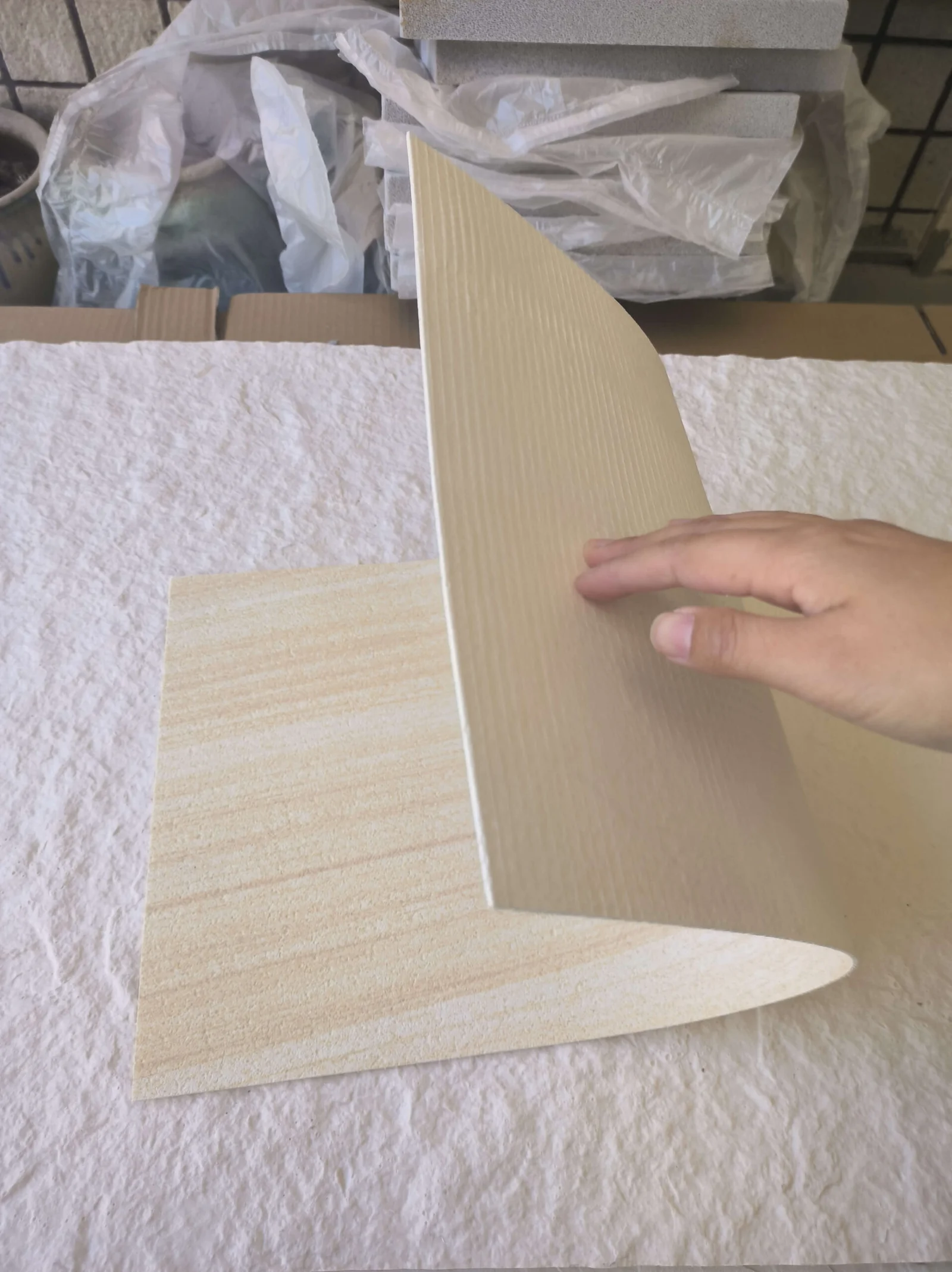
What changes in a wet room or on an exterior?
In a wet room the backing is part of the tanked assembly, and the sequence reverses: the waterproofing goes on the board, the stone goes on the waterproofing, and the board’s job is to be stable enough that the membrane is not stressed. A board that softens or delaminates under a slow leak turns a small failure into a wall failure, which is why cement-based boards dominate in these zones.
Exterior work adds thermal and moisture cycling, and it usually requires a drained and ventilated approach rather than a direct bond to a sheathed wall. The board becomes one layer in a build-up with a cavity, and the detailing follows the same logic as our guide to cladding over EIFS and render. What does not change is the flatness demand and the need for the adhesive to be approved for the exposure.
What about fire-rated walls?
The backing board is part of the compartment line, so its fire performance is not optional. A fire-rated wall needs a board with the appropriate classification and a build-up that has been assessed as a system; substituting a non-rated board to save depth or cost breaks the rating regardless of how well the stone performs. Flexible stone itself is tested to ASTM E84 Class A and EN 13501-1 Class A2, but that is a product classification, not a wall assembly rating — the same distinction that applies at any junction with timber or other combustible elements.
How is the backing inspected before cladding?
- Flatness check with a straightedge in both directions across the field and across every board joint.
- Fixings check by hand for proud screw heads and loose boards; a rattle means a fixing has missed.
- Joint treatment confirmed: taped, filled, cured, and sanded flush with no ridges.
- Cleanliness — dust, plaster droppings and paint splashes all reduce bond; the surface must be as the adhesive approval requires.
- Moisture and exposure confirmed for the board type, especially at the base of wet-area walls.
- Services and penetrations first-fixed and tested, since every later cut reopens the board.
Record the checks with photographs before the first sheet goes on. If a hollow or a crack appears later, the substrate record is what distinguishes a board failure from an installation failure — the same evidence logic our inspection and COA guide applies to material claims.
What happens on a curved or non-standard wall?
A curved wall moves the problem rather than removing it. The backing has to be formed to the radius, and flexible stone will follow it — the sheet bends to roughly a 200 mm radius on typical patterns, closer to 300 mm on thick or complex faces — but the board behind it has to be built to the same curve without facets. Two layers of thin flexible board over a curved frame usually give a smoother arc than one thick board bent on site, and the stone will copy whichever surface it is offered.
The same applies to a wall that is not a standard height or that steps. Every change of plane in the backing is a change the stone will follow, so the board layout should be drawn alongside the stone layout. Where the board has to step out — around a column, a duct or a structural upstand — the step should be a clean return rather than a built-up patch, because a patch is a hollow waiting for a knock.
On curved work the flatness check changes form: a straightedge is replaced by a template or a radius gauge cut to the frame, run across the board in several positions. It is a slower check, and it is the only one that catches a facet before the stone turns it into a visible band.
Who should supply the backing board?
هذا سؤال متعلق بالشراء له عواقب تقنية. يعتمد اعتماد نظام التغليف على اللوحات والغراء اللذين تم اختبارهما معاً كوحدة واحدة؛ فإذا جاء اللوح من تاجر وجاء الغراء من آخر، لم يتم التحقق من زوجهما كنظام متكامل. تدور معظم المنازعات بعد الفشل حول هذه الثغرة بالتحديد — حيث يُشير كل مورد إلى الآخر.
الحل الأنظف هو أن تُحدّد لوحة المزوّد الحجري اللوحات والغراء وسدادة الإحكام، أو على الأقل تؤكد خطياً مواصفاتها، بحيث يغطي اعتماد واحد التجميع بأكمله. لا يعني هذا بالضرورة شراء العناصر الثلاثة من شركة واحدة، بل يعني توثيق سلسلة المسؤولية قبل لصق اللوحة الأولى، بدلاً من إعادة بنائها لاحقاً بعد الحادث.
بصرف النظر عن مورد اللوح، يحتاج إلى نفس درجة الانضباط في المستندات المطلوبة للحجر: نوع المنتج، والسُمك، والدفعة، ونمط التثبيت، وزمن معالجة المفاصل. هذه هي المعطيات التي تتيح تشخيص سبب الفشل بدلاً من الجدال حوله.
الأسئلة الشائعة
هل يمكن لصق الحجر المرن مباشرة على ألواح الجبس؟
غالباً نعم، على الجدران الداخلية الجافة، شريطة أن يوافق نظام اللاصق على ذلك النوع من الألواح وأن تكون السطح متيناً ونظيفاً. يجب أن يكون اللوح مستوياً، والمفاصل معالَجة، والتثبيتات غائرة تحت السطح.
هل يمكن لصقه فوق البلاط أو الجص الموجود؟
فقط إذا كانت السطحية الأساسية متماسكة، ومستوية، ومثبتة جيداً، ومعتمدة من نظام اللاصق. يجب إزالة التشطيبات المفككة أو المجوفة — فالورقة الرقيقة لا تعزز الأساس الضعيف، بل تتبعه مباشرة.
هل تحتاج فواصل اللوحات إلى لاصقة (شريط تقوية)؟
اتبع نظام مصنع اللوحات. الفواصل غير المعالجة تتحرك وتظهر كشق مستقيم عبر سطح الحجر، وهو عيب لا يمكن إصلاحه إلا بإزالة الألواح.
ما هو الخطأ الأكثر شيوعاً في التحضير الأساسي؟
تغطية سطح بلوحة مستوية بالقدر الكافي للطلاء لكنها غير مستوية بما يكفي لوجه حجري رقيق، أو التغطية قبل جفاف الفواصل. كلا الأمرين رخيص الإصلاح قبل وضع الورقة الأولى، ومكلف بعدها.
اختر السطح الأساسي حسب التعرض والعوامل التي يعتمدها نظام اللاصق، ثم افحصه كعنصر نهائي بحد ذاته. تصاميم الصفائح مدرجة في قشرة حجرية مرنة الصفحة، وطرق المرجعية للواجهات الأساسية تحت finishes الملصوقة منشورة من قبل Gypsum Association.