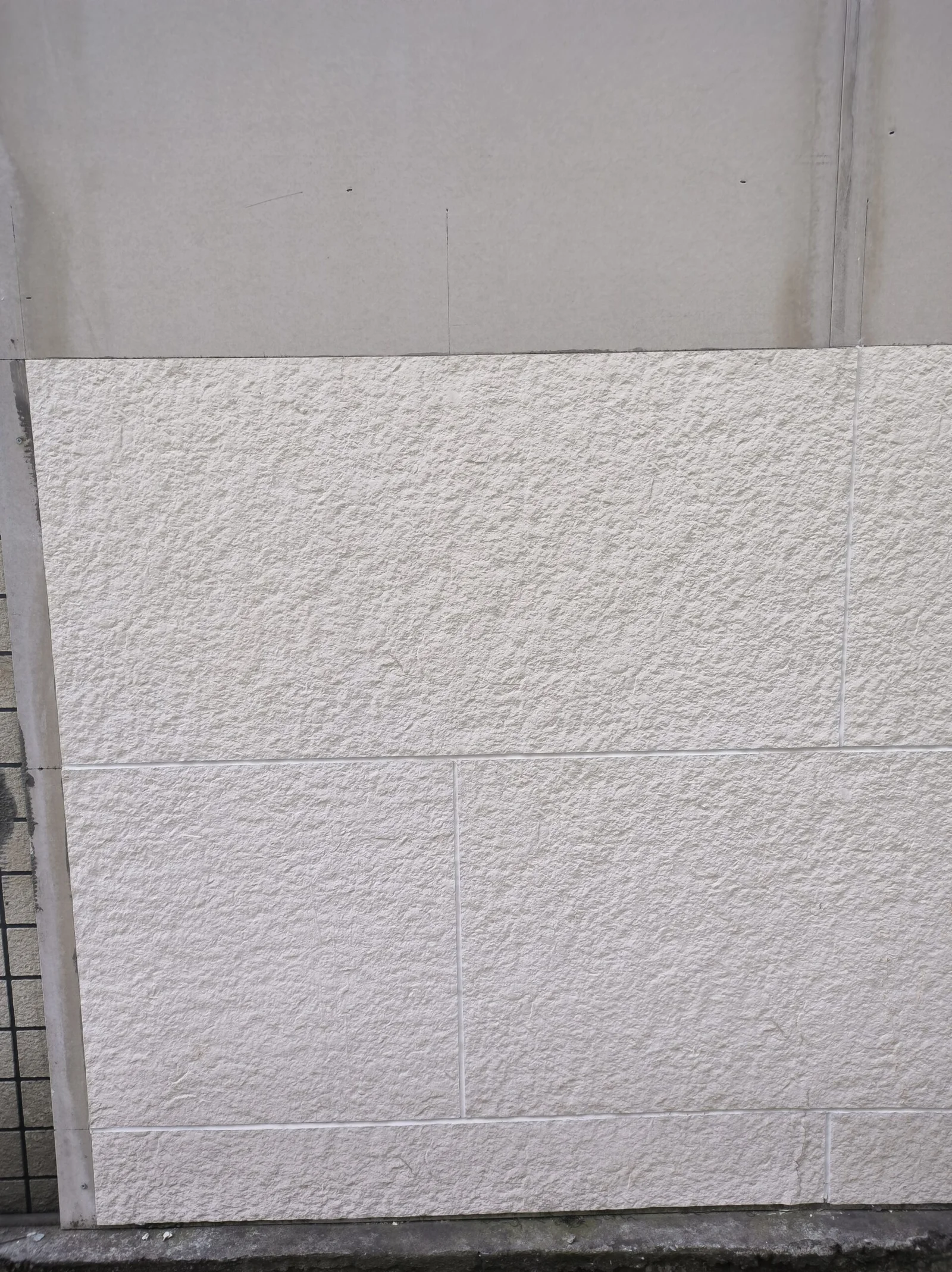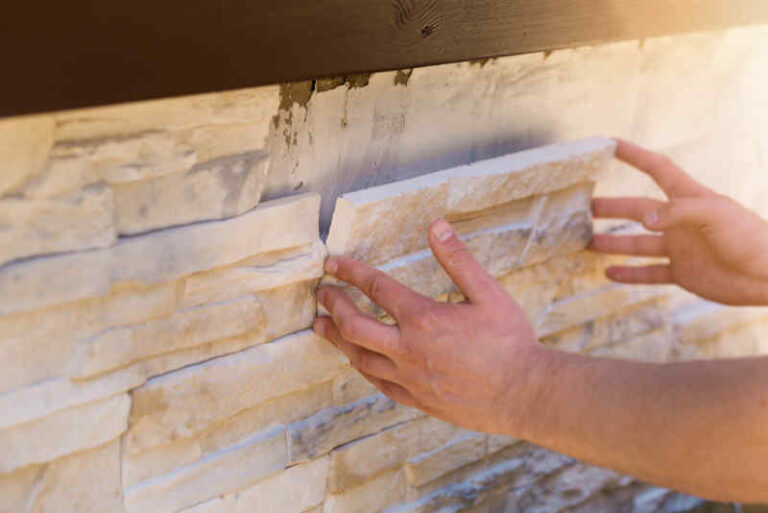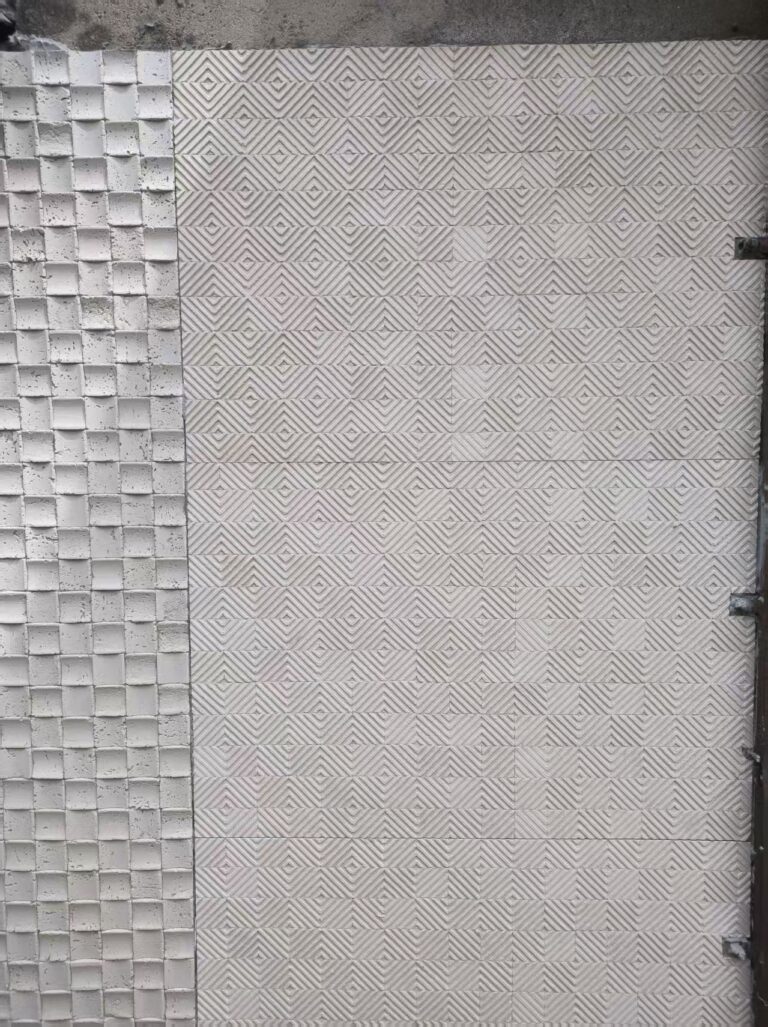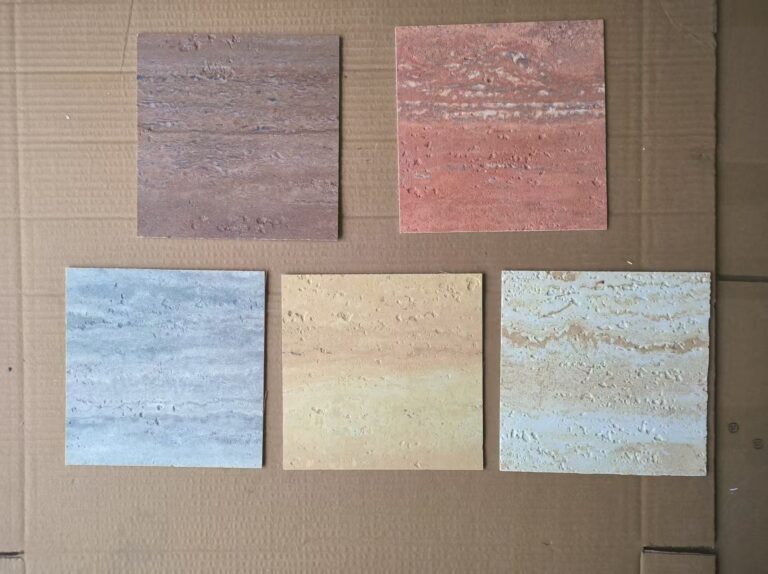
For any DIY/Small Contractor, a single miscalculated bid on a traditional stone job can completely erase the profit from the next three projects. The high overhead of wet saws, mixers, and heavy materials makes estimating a constant risk. You are often forced to choose between winning the bid and actually making a decent margin, leaving no room for error or unexpected delays.

This guide provides a practical cost framework for using flexible stone to sidestep those challenges. We will break down how to estimate and bid these jobs to win, highlighting the specific overhead you can cut immediately. We’ll also cover how to upsell clients on a premium look for a lower cost and explain how faster installation speeds let you fit more profitable work into every month.

The “Bid to Win” Strategy
In 2026, winning bids isn’t about submitting the most proposals; it’s about selectively targeting projects where your data proves you have a distinct competitive advantage.
Focus on Quality Over Quantity
The construction market has moved past the old strategy of bidding on every available project. Smart contractors now focus their resources on jobs that fit their specific expertise. This selective, data-driven approach means you stop wasting time on low-probability bids and start concentrating on the most profitable project types. This directly improves your win rate and how you allocate your team’s effort.
- Prioritize bids that align with your company’s core capabilities and expertise.
- Use data-driven insights to identify the most profitable project types.
- Adopt a selective approach to improve your win rate and resource allocation.
Leverage Pre-Bid Research
Submitting a bid without deep research is a recipe for failure. You need to understand the client’s priorities, which often go beyond just the lowest price. Analyze their project history and see what they value. At the same time, size up your competition to position your offer effectively. Getting your key subcontractors involved early in the process also gives you a significant pricing and planning advantage.
- Research the project owner’s history and preferences.
- Analyze the competitive landscape to position your bid effectively.
- Engage with subcontractors early to gain a competitive edge.
Price for Value, Not Just Cost

The lowest bid doesn’t always win, especially when you can clearly articulate the value you deliver. Modern bidding is about showing how you solve the client’s problem better, not just cheaper. This means highlighting premium, efficient materials like flexible stone panels that reduce installation time or showcasing long-term durability. Develop a clear “win theme” for each bid that explains why your solution provides a better long-term return on investment, justifying your price point.
- Develop clear win themes that articulate your unique value proposition.
- Move away from pure cost-minimization toward value-based pricing.
- Showcase how your solution delivers better long-term results for the client.
Use Accurate Estimating Platforms
Your bid is only as strong as your estimate. Relying on manual calculations or outdated spreadsheets introduces risk and erodes profit margins. Modern, integrated estimating platforms are now standard practice. They ensure you accurately account for every variable—from material waste and labor efficiency to hidden overhead costs. A precise, transparent estimate not only protects your bottom line but also builds critical trust with the client from day one.
- Adopt modern estimating software to improve accuracy.
- Factor in all variables, including material waste, labor efficiency, and overhead.
- A precise estimate builds client confidence and forms the foundation of a winning bid.

Estimating Flex Stone Jobs
A profitable bid goes beyond simple square footage; it requires pricing for complexity—curves, substrate prep, and site logistics—to protect your margins from day one.
Key Factors for an Accurate Bid
A successful bid starts with a rigorous on-site assessment. You must measure the total installation area, but pay special attention to complex shapes like columns, arches, or curved walls, as these increase labor and material waste. Evaluate the substrate’s condition; a wall that needs cleaning, patching, or leveling adds direct labor costs that can’t be ignored. Your estimate must also account for the specific flexible stone panel, adhesive, and sealant required. Different textures or exterior applications demand different materials. Finally, factor in site logistics. Poor accessibility or the need for scaffolding can significantly impact labor hours and overall project cost.
Calculating Material, Labor, and Waste
Protecting your profit margin depends on accurately covering all direct costs. Start by calculating the total number of flexible stone panels required for the job, then add a 5-10% waste factor. This buffer is critical to account for off-cuts, mistakes, and transport damage. Next, estimate the amount of adhesive and sealant needed by following the manufacturer’s specified coverage rates. Project the total labor hours by breaking the job into phases: prep, installation, and cleanup. Your projection should be based on your team’s experience and the job’s measured complexity. Bundling these costs into an itemized list creates a transparent and defensible quote for your client.
| مكون التكلفة | Calculation Basis (Sample 20 m² Project) | الملاحظات |
|---|---|---|
| الألواح الحجرية المرنة | 20 m² ÷ 0.72 m²/panel = 28 panels + 10% waste (3 panels) = 31 total panels. | Always round up and add a waste buffer. |
| Adhesive & Sealant | Based on manufacturer’s coverage rate (e.g., 5 m² per tub). 20 m² requires 4 tubs of adhesive. | Exterior or wet-area jobs may require a sealant topcoat. |
| Labor | Estimated 0.5 hours/m² for a simple wall. 20 m² x 0.5 hr/m² = 10 hours. | Increase hours for complex cuts, prep work, or difficult access. |
| Overhead & Profit | (Total Material + Labor Cost) x Margin % (e.g., 25%). | Target a gross margin of 18-30% for specialty cladding work. |
Using Software for Faster Estimates
In 2026, manual estimating is a competitive disadvantage. Cloud-based digital takeoff software automates measurements from project plans, generating precise material lists in a fraction of the time. Market data shows these tools can reduce estimation time by over 50%, letting you bid on more jobs with higher accuracy. Modern platforms can generate professional, branded proposals that integrate with your accounting or project management systems. This streamlines the entire workflow from bid to final invoice. The ability to create and adjust bids on a mobile device directly from the job site gives you a critical speed advantage.
مصدر القشرة الحجرية الممتازة والقابلة للتخصيص بالكامل
Lowering Your Overhead (No Wet Saw/Mixer)
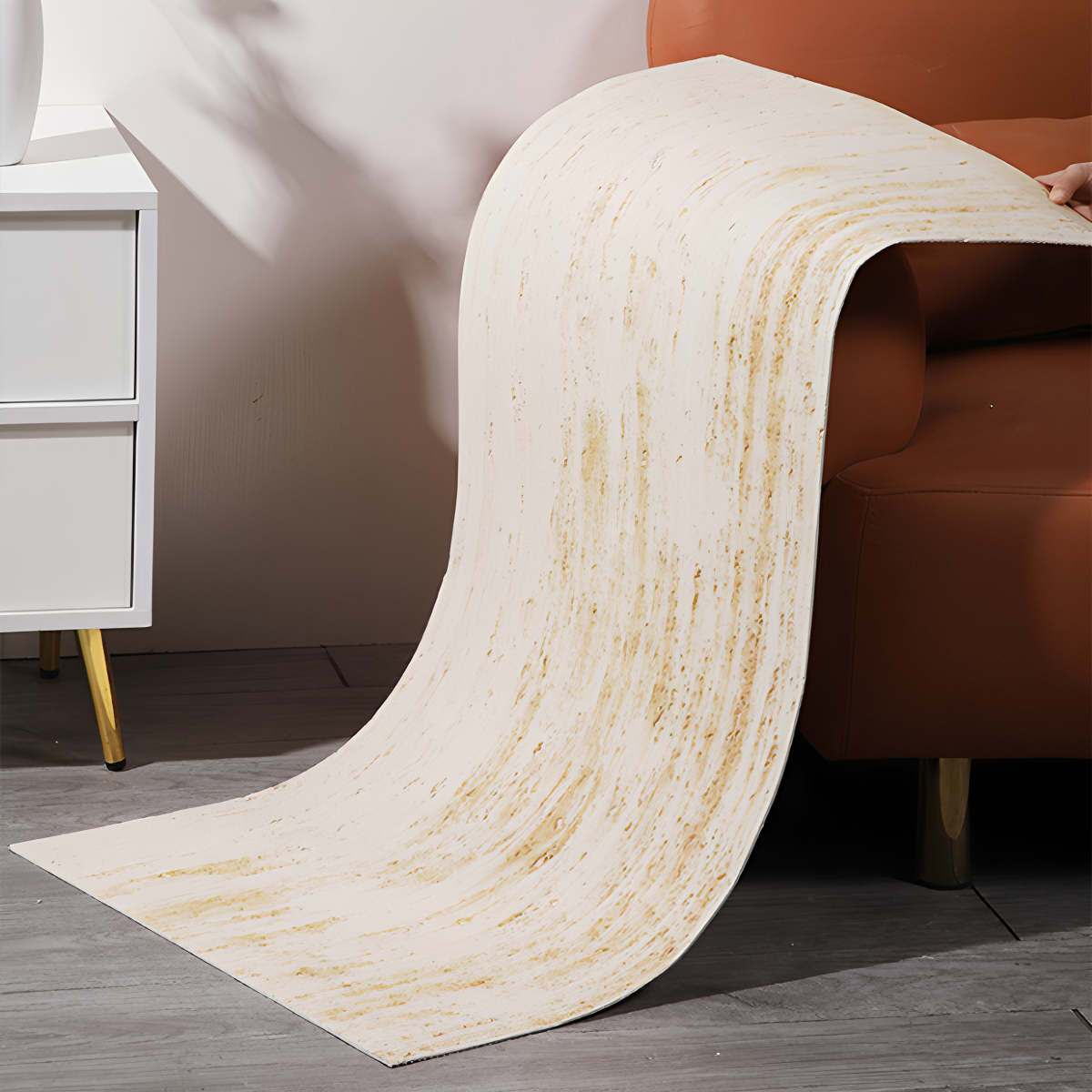
Eliminating wet saws and mortar mixers isn’t just about saving on initial equipment costs; it’s a strategic move to reduce setup time, minimize cleanup labor, and operate quietly in occupied spaces, directly boosting job-site efficiency.
For small contractors, the biggest drain on profit isn’t always material cost—it’s equipment overhead and wasted labor. Traditional stone and tile work requires a significant investment in heavy, messy, and loud machinery. A flexible stone system bypasses these requirements entirely. By designing an installation process around simple, manual tools, you can run a leaner operation, reduce non-billable setup and cleanup time, and take on jobs in environments where noise and dust are unacceptable.
Manual Cutters for Simple, Straight Cuts
Manual tile cutters are a cost-effective alternative for making clean, straight cuts without electricity or water. Since flexible stone veneer can be scored and snapped or cut with a utility knife, a heavy-duty wet saw becomes redundant for most cuts. This approach is well-suited for contractors working in areas with limited power or a need for quiet operation.
- Significantly reduces initial equipment investment compared to powered saws.
- Operates without loud noise, ideal for work in occupied homes or offices.
- Generates minimal dust, which simplifies job site cleanup and containment.
Cordless Grinders for Curves and Details
A cordless angle grinder offers the portability and precision needed for custom shapes, outlet boxes, and detailed cutouts. This versatile tool handles the complex jobs that a simple manual cutter cannot, without needing a large, stationary machine. It’s the perfect complement for adapting flexible stone panels to real-world job site conditions, like fitting material around pipes or creating unique architectural features.
- Allows for freehand cutting of arcs and unique patterns.
- Battery operation provides complete portability for any job site condition.
- Adapts to different materials by using specialized blades.
Benefits of a Water-Free Installation
By avoiding water-dependent equipment, you streamline the entire installation process. A “dry-cut” approach reduces setup time, minimizes mess, and removes the need for water management on site. This operational advantage means less time spent on non-productive tasks and more time on value-added work, directly impacting your ability to complete jobs faster and more profitably.
- Faster job setup and teardown without managing water lines or slurry.
- Saves on labor costs by reducing the time needed for cleanup.
- Enables installation work in locations that lack easy access to a water source.

Upselling Clients: “Premium Look, Lower Cost”
The most effective upsell shifts the conversation from price to value, positioning flexible stone not as an alternative, but as a smarter, more capable material that delivers a premium aesthetic with a lower total project cost.
Demonstrating the Value Proposition: Traditional Stone vs. Flex Stone
Frame the discussion around a direct cost-benefit analysis. Show clients how flexible stone panels provide the authentic, high-end look of traditional slab stone without the associated material and logistics costs. This presents the upgrade as a value-engineered investment rather than an added expense. The key is to prove they aren’t compromising on quality, just on inefficiency.
- Present a side-by-side cost comparison for the project’s total square footage. Factor in the material cost, shipping, and labor to highlight the total savings.
- Explain that the panels are made from natural stone powder fused with polymers. They are not plastic or vinyl, so the look and feel are authentic.
- Highlight the dramatic reduction in shipping costs. At just 3.5-6.0 kg/m², the material is roughly 1/6th the weight of traditional stone, which significantly cuts freight expenses.
Highlighting Faster Installation and Lower Labor Costs
The most significant savings for the client often come from reduced labor. Because flexible stone is lightweight and easy to handle, installation is substantially faster and requires a smaller, less specialized crew. This translates directly into fewer billable hours and less disruption to the client’s home or business, which is a powerful selling point.
- Mention that installation requires no heavy machinery, wet saws, or dedicated masonry teams. Panels can be cut on-site with a simple utility knife, resulting in a dust-free, low-noise process.
- Point out that panels can be applied directly over existing surfaces like old tiles or drywall. This “zero-demolition renovation” eliminates the high cost and mess of demolition and surface preparation.
- Frame the installation speed as a key benefit. A faster job completion means the client gets to use their new space sooner, a tangible advantage for both residential and commercial projects.
Offering Unique Designs on Curved or Complex Surfaces

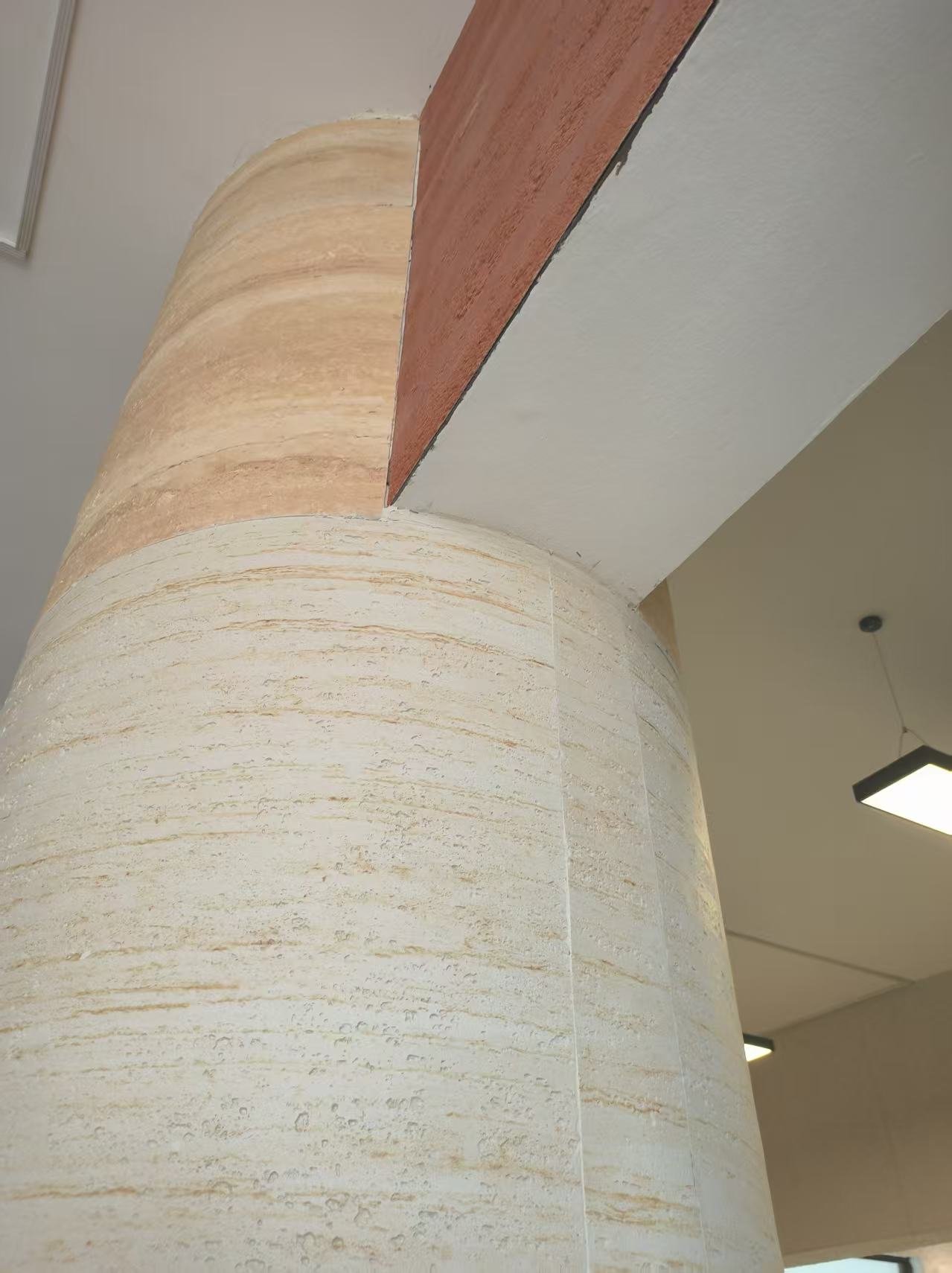
Use the product’s unique flexibility as an exclusive design advantage that traditional materials cannot match. Propose applications that are either impossible or prohibitively expensive with rigid stone, such as wrapping columns, creating seamless curved feature walls, or cladding complex archways. This shifts the focus from cost comparison to achieving a custom, high-end look that was previously out of reach.
- Use portfolio photos or create digital mockups to help the client visualize the panels on curved architectural elements in their own space.
- Explain that this achieves a bespoke, premium look without the extreme costs and long lead times associated with custom-milled stone blocks.
- For high-value clients, offer project-level customization using 3D printing technology to rapidly prototype and match specific patterns or colors for a truly unique finish.

Speed = More Jobs Per Month
The construction industry’s productivity has barely grown in two decades because up to 70% of on-site time is lost to non-building tasks; adopting faster materials directly converts this wasted time into billable jobs.
Minimize Wasted Time on Site
A significant portion of any construction project is spent on non-productive work like material transport, rework, and navigating miscommunications. Materials that are engineered for efficiency systematically eliminate these time sinks. By choosing lightweight panels that are simple to install, a crew spends more of its day doing the actual installation work and less time on logistical hurdles.
- JMS Decor panels are lightweight, which drastically cuts down labor and time spent moving and positioning materials around the job site.
- The simple adhesive-based installation process reduces the chance of miscommunication or sequence errors between team members.
- Crews complete projects faster, which frees them up to start the next job and increases the total number of projects completed each month.
Reduce Project Rework

Rework is a primary source of financial loss and project delays. Flexible stone panels are far more forgiving than traditional rigid materials, which minimizes the errors that lead to costly do-overs. The ability to conform to surfaces and the consistency of the product reduce common installation mistakes.
- The panels can be applied to curved or imperfect surfaces with minimal cutting, reducing the risk of measurement and cutting mistakes.
- Manufactured panels offer consistent quality, eliminating the unpredictable defects often found in natural stone slabs.
- Straightforward installation guides ensure the crew performs the job correctly the first time, preventing callbacks.
Adopt Faster Building Technology
![我的网站my website:“https://jmsdecor.com”,网站负责作者about author:Lily我的产品关键字keywords:“soft stone panel, soft stone wall panels, flexible stone veneer, flexible stone wall panels, flexible stone veneer sheets, piedra flexible, wpc panel,wpc fence, wpc deck”长尾关键词:Flexible Stone Indoor Outdoor Wall Panel Soft Stone 3d Texture Board mcm Decorative Background Board Printed TravertineNew Line Stone Factory's Flexible Exterior Veneer Sheet Modified Clay Soft Tiles for Interior Decorative Wall Artificial Stone
Luxury Flexible Waterproof Artificial Stone High Simulation For Villa Interior & Exterior For Wall Decorate
3D Travertine Soft Cladding Stone Panel White Ceramic Tile Stone Veneer Flexible** for Exterior and Interior Wall DecorativeBrick Alternative MCM Material Soft Porcelain for Outdoor Wall Soft Tiles Fireproof Waterproof Flexible Porcelain Tiles# 我的公司:www. jmsdecor.com 主要是以B2B,wholesale 出口。JMS Decor:创新墙板解决方案简报## 主要产品和解决方案JMS Decor专注于提供多样化、高品质的墙板解决方案,主要包括:1. 柔性石材板(Flexible Stone Panels):以合成树脂乳液、无机凝胶材料为粘接剂,以天然砂、石材粉碎颗粒为骨料,中间铺设玻璃纤维网格布作增强层,通过制坯、成型、喷涂、切割、陈华等工序制成的片状柔性饰面板,主要用于建筑物外墙外保温饰面工程及各种新旧建筑物外墙装饰装修工程。可以贴在各种墙面,比如水泥板 ,木基层,石膏墙板 ,适合室内外使用- Modified Clay Material, known as MCM stone or FLEXIBLE STONE, pure soft stoneRaw material :natural stone power , Process : Mold press mouldingcolor: optionalHave stone style panel , and brick styleStone panel standard size: normal size 1200*600mm, big board 1200*2900(3000) mmBrick size like 60*225MMTexture: popular style is travertine, have Rammed earth , line stone , natural stone like slate stone , art style, like wooden texture, rust ,marble , granite different pattern , accept customized 现在还有新款 translucent stone 透光石板,厚度2mm ,非常适合作为特色墙面,柜面 About sample:样品尺寸20*20cm, 基础款式的有现货可以直接寄样,运费到付。重量:0.3About products:产品长度一般是1米2, 最长2米9,如果长度有特殊,可以定制!宽度因为机器只能是最大1米2可以是小板 engineering small plate,也可以是大板big boards如何计算一个房间面积要使用多少数量的贴面比如8平方,计算公式:单个sheet : 1.2*0.6=0.72 m²8/ 0.72=11.11 个。加上损耗, 至少12片。Flexible stone 海关数据 HS code : 6810191000- **特点与优势**:- **轻量化**:易于搬运,降低运输成本,每平方米重量约为5-10公斤。- **可弯曲性**:理想适用于弧形表面、室内墙壁和外部覆层,尤其适合独特的建筑设计。- **耐用性**:经适当密封后,可用于室内外,耐候性强,能承受紫外线、雨水和温度变化。- **定制性**:可定制颜色和图案。- **成本效益**:与传统石材相比更具成本优势。Function: Waterproof, Wear-Resistant, Nonslip, Anti-Static,
advantage:
Lightweight,Flexible,Eco-Friendly
Water Absorption: < 0.5%Weight: 3-6 Kg/Sqm
surface finish: 3D/Matt/PolishedInstallation Method:
Directly Onto The Walltransport package : Wooden Pallet or Wooden BoxUsage: Commercial, Kitchen, School,hotel, shop, General Building. Interior and Exterior Architectural Finishes, solutions for luxury residential and commercial projects ,renovation projects, home renovation,residential remodeling产品安装方式推荐:The construction plan
Base Leveling treatment
Sealing primer
Row brick, partition, elastic line
The adhesive on the back of the product is fully coated or scraped into a comb
straighten and atten
using special hooking agent caulking
metope to clean up
glazing paint工厂生产能力
其中喷墨设备,3D打印,每小时出多少片
每小时70平方,一台喷墨打印机器一天至少700平方。
#样品
打样周期,现有的款式小样一般2-3天可以,私人订制,颜色调制7天。
我们开发部门每周更新花纹,款式,会定期给我们的客户提供新款推荐。
#大货周期 一般款式,15-20天,比如 20个20GP柜子大约一般是30-40天。产品在中国市场销售,在通过了中国的检测认证,包括材料成分,防火,以及耐久性,透水性测试前提下,得到各大建筑院,设计院的认可和推荐,供应给医院,学校,商业区店面装修,住宅,商场等。
产品在国际市场上能通过 美国ASTM E84 测试 class A
产品也能通过欧洲 CE 认证公司有自己的模具,上百种花纹颜色,常规款都有库存,长期供应给合作的批发商,
支持OEM, ODM, 可以提供图纸开模具私人定制
会根据客户所在区域的环境,潮湿,炎热,寒冷等进行调节匹配,也可根据客户要求对产品厚度进行调整,花纹,颜色,款式,尺寸,厚度都可以定制。MOQ, 支持小批量起订,常规款300平方,定制款500平方。
支持分销代理,但是需要先稳定合作一年。服务方面:给新客户 提供安装视频指导,样品支持,另外,我们现在已经开始生产特制的适合我们的flexible stone 的粘贴剂,和美封剂,更好的做到一条龙服务配合客户在工程中使用。
我们可以帮助客户采购需要的其他产品,为一些新进入市场的客户,帮助完成供应链的组合,施工技术参数,关注影响造价的信息
安装时间:一个房间 多少平方,需要工人,时间
2米6,高度 3米,1个小时安装1个小时,2米6,高度 3米,1个小时3d 打印比如想要大理石花纹的是喷墨,3d喷墨,抗uv,可用于户外墙面2. **木塑复合板(WPC Panels)**:wpc
木塑墙板。HS code : 3925900000Mainly supply for outdoor living space. Example : Decking, wall cladding , Fence, railing ,door WPC deck sheet size : 2900*138*23 MOQ 500 sheets have accessories middle clips for decking use.WPC Ceiling 2900*174*21mm MOQ 500 sheets , have L shape end cover for ceiling useWPC Panel standard size for outdoor wall cladding 2900*219*26 ,MOQ 200 sheetsHave different wood texture and color can choose, OEM support- **特点与优势**:- **环保**:采用环保材料。- **耐用且低维护**:适用于商业和住宅空间。- **卓越的隔热和风格**。- **安装简便**:使用标准粘合剂或紧固件即可安装,可节省人工成本。3. **定制墙面解决方案(Custom Wall Solutions)**:- **深度定制**:通过先进的3D打印技术,提供定制颜色、图案和尺寸的面板,以匹配品牌或项目需求。- **OEM专业能力**:可根据品牌愿景定制颜色、图案和样式。“客户通过品牌面板实现了高达30%的销售增长。”## 市场定位与地理覆盖JMS Decor的解决方案旨在满足全球不同市场的特定需求,包括当地建筑标准、气候需求和设计偏好:- **北美**:符合UL/ASTM标准,注重成本效益和耐用性(美国、加拿大、墨西哥)。- **欧洲**:CE认证,使用环保材料,注重可持续性(西班牙、丹麦、波兰等)。- **中东**:耐热、奢华设计,适用于高端项目(阿联酋、沙特阿拉伯、科威特)。- **亚太地区**:高性价比、可定制解决方案,适应多样气候(马来西亚、泰国、新加坡、印度尼西亚)。- **澳大利亚**:防潮、防紫外线涂层,适用于沿海环境。- **非洲**:耐用、经济实惠的材料,适用于极端气候(摩洛哥、毛里求斯等)。## JMS Decor的商业优势JMS Decor强调其在B2B合作中的核心竞争力:1. **优质材料**:“采购的材料以耐用性、美观性和可持续性为考量,缺陷率低于1%。”2. **OEM专业能力**:提供定制化服务,支持客户品牌愿景。3. **低起订量(Low MOQ)**:“柔性石材板的起订量仅为100平方米,并提供批量订单的阶梯折扣。” 强调60%的合作伙伴在一年内订单量翻倍。4. **严格的质量控制**:通过BSCI、ISO9000和ISO14000认证,拥有三名专业的质检人员确保高标准。## 运营与服务- **15年以上经验支持**。- **快速交付**和**低起订量(MOQ)**。- **免费样品7天内交付**。- **报价流程**:通过在线表格或电子邮件联系,24小时内提供个性化报价。- **客户支持**:提供详细的安装指南和产品目录。## 行业洞察与趋势JMS Decor的博客内容展示了其对行业趋势和可持续发展的关注,文章主题包括:- 环保防火石材面板。- 石材面板的环境认证(LEED与可持续性)。- 回收材料的益处。- 环保石材面板的成本效益。- 室外软石面板的耐用性、安装与设计指南。- 如何将环保石材面板应用于可持续家居设计。## 总结JMS Decor定位于一家经验丰富的墙板制造商,为全球建筑师、承包商和批发商提供定制化、高品质的柔性石材板和WPC面板解决方案。其核心优势在于优质材料、灵活的定制服务、严格的质量控制和对可持续发展的承诺,旨在帮助客户在不同市场中取得成功。我的公司简介About my company:“**JMS Decor 墙板制造商分析**一家名为 JMS Decor 的中国墙板制造商,该公司专注于提供定制化的软石(Soft Stone)和 WPC(木塑复合材料)墙板解决方案,面向豪华内饰、商业空间和住宅项目。其核心竞争力在于OEM专业性、高质量原材料、严格的质量控制和定制化能力。**关键信息与要点:**- **产品范围:** 主要产品是软石墙板(flexible stone veneer)和WPC墙板。软石墙板可定制颜色、图案和纹理,轻便易于安装,适用于室内外;WPC墙板则强调其耐用性、环保性和高性能。- **核心竞争力****:**- **OEM****专业性:** 提供颜色、图案和风格的定制服务,满足品牌的需求。“Tailor colors, patterns, and styles to match your brand’s vision.”- **低起订量(Low** **MOQ****):** 批发软石瓷砖的起订量仅为100m2。“If you want to wholesale flexible stone tile , only start from 100m2.”- **可靠的生产能力:** 工厂通过ISO14000和ISO9000认证,保证稳定的供应。“ISO1400 & ISO9000-certified factories ensuring consistent supply.”- **高质量原材料*:** 采用优质原材料,确保墙板的耐用性、质感和美观。“We source **premium-grade** **raw materials** to ensure the durability, texture, and aesthetic appeal of our **soft stone** and **WPC panels**.”- **严格的质量控制:** 每个环节都经过严格的质量检查,保证工艺、耐久性和符合国际标准。“Every panel undergoes **rigorous quality checks** at each stage of production…ensuring **flawless craftsmanship, durability, and compliance with international standards**.”- **安全专业的包装:** 采用出口标准的保护性包装,确保产品在运输过程中的安全。“We use **protective, export-standard packaging** to safeguard our products during transit.”- **目标市场:** 面向北美、欧洲、英国和亚洲的国际品牌,为其提供高品质的装饰材料解决方案。- **应用场景:** 产品广泛应用于室内墙壁、特色面板、豪华零售空间和住宅装饰。“Our products are widely used in **interior walls, feature panels, luxury retail spaces, and residential decor**.”- **客户评价:** 客户评价积极,强调JMS Decor的创新性、定制化能力、对细节的关注和对国际标准的遵守。- **行业洞察与趋势:** 提供博客,分享设计灵感、材料创新和市场洞察,如零售空间改造案例、环保材料在室内设计中的应用以及2024家居装饰趋势。- **联系方式:** factory address: Wuxi city, Jiangsu province , China. WhatsApp: +86 15857432993, email :hello@jmsdecor.com**关键引言:**- “Transform Spaces with Custom Wall Panels – Your Trusted Wall Panel Manufacturer”(用定制墙板改变空间 - 您值得信赖的墙板制造商)- “Elevate Your Brand with Premium Decorative Solutions Today!”(今天就用优质装饰解决方案提升您的品牌!)- “[JMS Decor is] a trusted partner for international brands across North America, Europe, the UK, and Asia.”([JMS Decor是]北美、欧洲、英国和亚洲国际品牌值得信赖的合作伙伴。)**结论:**JMS Decor是一家专注于定制化墙板解决方案的中国制造商,通过提供OEM服务、高质量产品和严格的质量控制,致力于服务国际市场。其产品应用于多种场景,并受到客户好评。该公司积极关注行业趋势,并通过博客等方式分享洞察,展现了其在装饰材料领域的专业性和前瞻性。 该公司似乎着重强调产品的环保型和定制型。”我的目标市场基本是全球,北美,欧洲,澳洲,南美,中东,亚洲都有市场,🇦🇺 澳大利亚🇳🇿 新西兰🇸🇬 新加坡🇮🇪 爱尔兰🇬🇧 英国🇺🇸 美国🇨🇦 加拿大🇦🇪 阿联酋🇸🇦 沙特🇶🇦 卡塔尔🇵🇭 菲律宾🇲🇾 马来西亚🇻🇳 越南🇹🇭 泰国🇮🇩 印尼🇩🇪 德国🇫🇷 法国🇮🇹 意大利🇪🇸 西班牙🇨🇾 塞浦路斯🇱🇻 拉脱维亚🇱🇹 立陶宛🇵🇱 波兰🇪🇬 埃及🇿🇦 南非🇲🇽 墨西哥🇨🇴 哥伦比亚🇨🇱 智利🇵🇪 秘鲁🇷🇺 俄罗斯🇧🇾 白俄罗斯还有还会收到格鲁吉亚,匈牙利。西班牙,斯洛文尼亚,黎巴嫩,埃及,斐济等海岛国家。#我的目标客户,用户对象##Flexible stone 的1. Target Customer Profile: Large-Scale Construction and Real Estate Developers • Industry: Real Estate Development, Commercial and Residential Construction. • Company Size: Large-scale developers and construction firms with projects spanning multiple residential complexes, commercial buildings (e.g., hotels, shopping malls, office buildings), and public infrastructure. • Geographical Location: Major metropolitan areas and regions experiencing rapid construction growth in the US, Europe (e.g., Germany, UK, France), Middle East (e.g., UAE, Saudi Arabia), Australia, and Southeast Asia. • Annual Revenue: Companies with annual revenue exceeding $50 million, indicating the financial capacity for large-volume procurement. • Buying Behavior: These firms are typically involved in large, multi-year projects and require consistent, high-volume supply. They prioritize cost-effectiveness, durability, and ease of installation to meet project deadlines and budget constraints. • Supply Chain Complexity: They have complex supply chains managed by dedicated procurement teams. They are looking for reliable suppliers who can handle bulk logistics and provide consistent product quality over long periods. • Sustainability and Quality Focus: Developers are increasingly focused on green building certifications (e.g., LEED, BREEAM) and are interested in materials that are lightweight, use less energy in production, and have a lower carbon footprint. Your flexible stone products, being lighter than traditional stone, fit this profile. • Decision-Making Process: The primary decision-makers are procurement managers, project managers, and lead architects. Their criteria are based on a balance of cost per square meter, delivery timelines, product durability, and aesthetic appeal.2. Target Customer Profile: Architectural and Interior Design Firms • Industry: Architecture, Interior Design, and Landscape Architecture. • Company Size: Medium to large-sized firms that handle projects for high-end residential, hospitality, retail, and corporate clients. • Geographical Location: Global, but with a strong focus on design hubs like New York, London, Paris, Dubai, Milan, and Tokyo. • Annual Revenue: Varies, but they work on projects with budgets that allow for premium or specialized materials. • Buying Behavior: They are not the end-buyer but are the key influencers and specifiers of materials. They are looking for innovative, aesthetically pleasing, and versatile materials that can bring their design visions to life. They will place orders through contractors or directly with suppliers for their clients' projects. • Supply Chain Complexity: Their procurement is project-based. They need suppliers who can provide samples, technical specifications, and support for their design and material selection process. • Sustainability and Quality Focus: Architects are highly concerned with material quality, certifications, and aesthetic versatility. Your flexible stone products, with their natural look and lightweight properties, are highly appealing for both interior and exterior applications. • Decision-Making Process: Lead architects, senior designers, and principals are the key decision-makers. Their criteria are design flexibility, unique textures and colors, technical performance (e.g., fire ratings, water resistance), and cost-effectiveness for the client.3. Target Customer Profile: Building Material Wholesalers and Distributors • Industry: Building Materials Distribution, Home Improvement Supply, and Specialty Cladding Wholesaling. • Company Size: Mid-sized to large wholesale and distribution companies with extensive networks of retail stores, contractors, and builders. • Geographical Location: Regions with high construction activity. This is a global market, with key players in North America, Europe, and Australia, as well as emerging markets in Latin America and Africa. • Annual Revenue: Annual revenue upwards of $10 million, with established logistics and storage capabilities. • Buying Behavior: They purchase in large bulk quantities to maintain inventory for their customer base. They are looking for products that have a strong market demand, high-profit margins, and reliable supply. • Supply Chain Complexity: They have sophisticated logistics systems and require suppliers who can handle container-based shipments, provide consistent quality, and offer competitive pricing. They are the gateway to thousands of smaller contractors and homeowners. • Sustainability and Quality Focus: They need products that meet regional building codes and quality standards (e.g., ASTM standards in the US, CE marking in Europe). They are interested in products that are easy to store and transport. • Decision-Making Process: Product managers, purchasing agents, and senior executives are the key decision-makers. Their criteria are profit margins, market demand, product certifications, reliability of the supplier, and the ability to offer a complete range of colors and textures.4. Target Customer Profile: Home Improvement Retail Chains • Industry: DIY (Do-It-Yourself) and Home Improvement Retail. • Company Size: Large, multinational retail chains (e.g., Home Depot, Lowe's, B&Q, Obi). • Geographical Location: Countries with a strong culture of home renovation and a large DIY market, primarily in North America and Europe. • Annual Revenue: Billions of dollars. They are the largest buyers of consumer building products. • Buying Behavior: They purchase in massive volumes for distribution across hundreds or thousands of stores. They are looking for products that are easy for consumers to install, have attractive packaging, and a strong brand story. • Supply Chain Complexity: Their supply chains are extremely complex and require suppliers to meet stringent quality control, packaging, and delivery schedule requirements. They often work with third-party logistics providers. • Sustainability and Quality Focus: They are interested in products that have a competitive price point, are safe for consumer use, and have good marketing materials. Your flexible stone products are ideal for DIY projects due to their lightweight nature and ease of cutting. • Decision-Making Process: Category managers and buyers are the key decision-makers. Their criteria are price point, sell-through rate, packaging design, marketing support from the supplier, and brand recognition.5. Target Customer Profile: Modular and Prefabricated Building Manufacturers • Industry: Prefabricated and Modular Construction. • Company Size: Companies specializing in factory-built homes, commercial units, and modular components. • Geographical Location: Global, with a strong presence in the US, Canada, Australia, and European countries like Sweden and Germany. • Annual Revenue: Varies widely, from a few million to hundreds of millions, depending on the scale of their operations. • Buying Behavior: They require a steady supply of lightweight, durable, and easily installable materials for their factory production lines. They value products that reduce on-site construction time and labor costs. • Supply Chain Complexity: They have a just-in-time (JIT) or scheduled delivery model. They need suppliers who can guarantee consistent supply and quality to avoid production line shutdowns. • Sustainability and Quality Focus: Prefabrication is inherently a more sustainable method of construction, and they are interested in materials that complement this ethos. The lightweight nature of your product reduces transportation costs and carbon emissions. • Decision-Making Process: Procurement and production managers are the key decision-makers. Their criteria are material cost, ease of integration into their manufacturing process, durability, and weight.TARGET CUSTOMER PROFILES1. Importers & Distributors of Building Materials • Industry: Building materials, construction supply • Company Size: Medium to large (10–500 employees) • Annual Revenue: $5M–$100M • Geographic Markets: North America, Europe, Middle East, Southeast Asia, Australia • Buying Behavior: Purchase in container quantities, look for innovative or lightweight wall cladding solutions, prefer direct-from-factory sourcing • Key Indicators: ◦ Import licenses and logistics capability ◦ Strong warehouse and supply network ◦ Participation in building trade shows (e.g., Big 5 Dubai, IBS USA) • Decision-Makers: Product manager, purchasing director, general manager2. Wholesalers of Wall Panels, Tiles, and Surface Materials • Industry: Wholesale construction materials, hardware • Company Size: Medium to large • Annual Revenue: $2M–$50M • Geography: USA, Canada, Germany, UAE, Vietnam, UK, Poland • Buying Behavior: Look for high-margin decorative alternatives to stone, tiles; prefer lighter materials for easier shipping/installation • Key Indicators: ◦ Carry a wide catalog of panels and cladding ◦ Supply local retailers and contractors • Decision-Makers: Category buyer, operations manager, procurement lead3. Retail Brands (Private Label / OEM Buyers) • Industry: Home improvement, DIY, building materials • Examples: B&Q, Leroy Merlin, Mr. DIY, Menards, Wickes • Company Size: Large, retail chains or mid-size eCommerce platforms • Revenue: $10M–$1B+ • Geography: EU, UK, USA, Australia • Buying Behavior: ◦ Seek OEM/customization ◦ Require certifications (e.g. fire rating, environmental compliance) ◦ Prefer sustainable or lightweight building solutions • Key Indicators: ◦ White-label product lines ◦ Strict QC and delivery timelines • Decision-Makers: Product development manager, OEM buyer, sourcing manager4. Interior & Exterior Design Companies / Architectural Firms • Industry: Architecture, interior design, renovation • Company Size: Small to mid-size studios (5–100 staff) • Annual Revenue: $1M–$20M • Geography: USA, Canada, UAE, Saudi Arabia, UK, Germany, Singapore • Buying Behavior: ◦ Specify materials for commercial/residential projects ◦ Value design variety (e.g., travertine, marble, bamboo patterns) ◦ Order moderate volumes per project • Key Indicators: ◦ Frequent sourcing of surface materials ◦ Serve hospitality, commercial, luxury residential projects • Decision-Makers: Senior designer, procurement manager, project manager5. Construction Contractors / Project Developers • Industry: Real estate development, general construction • Company Size: Medium to large • Annual Revenue: $5M–$500M • Geography: Middle East, Southeast Asia, Latin America, Africa • Buying Behavior: ◦ Purchase in large volume for housing projects, malls, hotels ◦ Favor easy-to-install and cost-effective cladding options • Key Indicators: ◦ Ongoing commercial and residential developments ◦ Work with international suppliers • Decision-Makers: Procurement director, construction manager, project engineer6. E-Commerce B2B Platforms & Online Building Material Sellers • Industry: Online trade and wholesale • Examples: Alibaba buyers, ManoMano, BuildDirect, Global Sources • Company Size: Small to medium (startups to platform-based sellers) • Geography: Global • Buying Behavior: ◦ Source trendy, lightweight, low-shipping-cost materials ◦ Need high-resolution photos, SEO product content • Key Indicators: ◦ Sell to SMEs and individuals online ◦ Use dropshipping or warehouse models • Decision-Makers: Online merchandiser, platform managerAdditional Criteria & TrendsIndicatorRelevanceSustainability FocusFlexible stone is often lighter and more eco-friendly – ideal for markets with green building regulations (EU, US, UK, AU)CertificationsLook for buyers requiring ISO, CE, SGS, fire resistance, VOC reportsDesign FlexibilityIdeal for customers needing custom colors, patterns, and brandingSupply Chain ComplexityLarger distributors or OEM clients with international sourcing teamsMarket TrendsDemand rising for lightweight, easy-to-install, stone-look panels in remodeling & prefab construction Buyer Persona Examples 1 Michael (USA) – Procurement Director, Decorative Panels Distributor ◦ Orders 3–5 containers monthly ◦ Prioritizes cost, design trend, and delivery reliability 2 Fatima (UAE) – Head of Sourcing, Fit-Out Company for Hotels & Malls ◦ Uses soft stone in large-scale commercial projects ◦ Needs custom pattern matching and fire-rated certification 3 Tomáš (Czech Republic) – Brand Owner, Boutique Wall Panel Brand ◦ Small batches but frequent orders ◦ Needs full OEM and exclusive design patterns画像名称核心特征 (Who)购买痛点/钩子 (The Hook)1. 店铺装修商(Shopfitter)专门给商场、奢侈品店、连锁店做装修的公司。“省人工 + 夜间施工”商场只准晚上干活,软瓷无噪音、无粉尘,贴完第二天能开业。2. A-Pro 设计师(Design & Build)带采购权的高端设计公司。不光画图,还负责落地实施。“落地性 + 特色墙”寻找能实现曲线、包柱、独特纹理的材料,且自己能掌控采购。3. 酒店资产管理方(Hotel Asset Owner)拥有并运营多家品牌酒店的集团,手握翻新预算 (CAPEX)。“不停业翻新” (Zero Downtime)极其厌恶噪音和关门装修。需要一天装完一间房。4. 涂料/微水泥商(Coating/Render)卖艺术漆、微水泥、外墙涂料的专业经销商。“不开裂的微水泥”微水泥施工难、易开裂。软瓷是完美的成品替代方案(特洛伊木马策略)。画像名称核心特征 (Who)购买痛点/钩子 (The Hook)5. 社区开发商(Community Developer)开发封闭式社区 (Gated Community)、联排别墅的中型开发商。“每户成本 + 卖相”不关心单价,关心每套房子加多少钱能看起来更高档(好卖)。6. 综合建材分销商(One-Stop Distributor)当地的建材超市或大型贸易商,服务底层 Builder。“物流优势 + 扩充品类”岛国运费贵,软瓷轻便;且作为新品补充现有产品线。7. 模块化/预制建筑(Modular/Prefab)在工厂造好房子运到现场的建筑商。“运输防裂 + 轻量化”传统石头运输震动会裂,软瓷有柔性,怎么运都不裂。画像名称适用地区购买痛点/钩子 (The Hook)8. 海岛/度假村建设(Coastal/Island)马尔代夫、加勒比、塞浦路斯、东南亚海岛。“抗盐雾腐蚀 + 易上岛”金属会锈,真石太重。软瓷是海边最佳方案。9. 极寒/冻融区建筑(Freeze-Thaw)俄罗斯、加拿大、北欧。“抗冻融 (No Cracking)”解决硬质材料在 -40°C 崩裂的问题。10. 旧楼外墙翻新(Facade Retrofit)英国、西欧(老红砖房)。“直接覆盖 (Overlay)”不需要敲掉旧砖,直接在上面贴,配合 EWI 保温系统。11. 细木工/家具厂(Joinery)全球(主要在高端定制市场)。“家具贴皮 (Skinning)”把木柜子做出石材的质感,但重量还是木头。画像名称核心特征 (Who)购买痛点/钩子 (The Hook)12. 传统石材/瓷砖进口商(Stone/Tile Importer)只做大理石大板、岩板、瓷砖的专业进口商/批发商。“解决大板痛点”真石材/岩板运输破碎率高、搬运难、上楼难。软瓷是**“不碎的岩板”**。13. PVC/WPC 墙板商(PVC/Vinyl Distributor)卖塑木、PVC扣板、墙纸的中低端材料商。“去塑料感 (Premium Upgrade)”PVC 看起来廉价(塑料感强)。软瓷能给他们提供**“真石材的质感”**,帮他们做高端溢价。店铺装修商 (Shopfitter)店铺装修商 (Shopfitter)T1 子类: 酒店资产管理与翻新商 (Hotel Asset Managers & Renovation)](https://jmsdecor.com/wp-content/uploads/2025/01/未命名的设计-13.png)
With construction productivity growing at less than 1% annually for the last 20 years, technology adoption is the most reliable way for a contractor to gain a competitive edge. Modern materials like flexible stone directly address this stagnation by accelerating the building process, allowing contractors to scale their operations without scaling their headcount.
- Finishing a wall with flexible stone is substantially faster than building it out with traditional stone masonry and mortar.
- A quicker turnaround on each project directly translates to a higher number of completed, profitable jobs every month.
- Less time spent on each installation lowers your labor cost per project and improves overall profit margins.

Where to Buy Small Quantities
Sourcing materials for smaller jobs has evolved beyond big-box retail; contractors now leverage specialized suppliers and direct-from-manufacturer channels for better pricing, faster access, and higher-quality niche products.
Online Marketplaces and Platforms
For convenience and broad selection, online platforms are a primary source for sourcing home improvement supplies in smaller amounts. These channels give contractors access to materials that might not be stocked locally. Major retailers like Amazon and Wayfair list a wide range of materials, while used marketplaces can be a good source for finding unique or discontinued items at a lower cost, though quality control can be a variable.
Local Specialty and Trade Suppliers
Specialized local stores and builder supply cooperatives are positioned to serve contractors who need specific materials quickly. They compete by offering tailored inventory and personalized service that large online retailers can’t match. A significant advantage here is the option for same-day pickup, which is critical for time-sensitive projects where waiting for shipping isn’t feasible. Their stock is typically selected to meet the needs of local trade professionals, ensuring the products are relevant and reliable.
Direct from Manufacturers and Outlets
Purchasing directly from a manufacturer like JMS Decor or through factory outlets often provides the best quality-to-price ratio. This approach is ideal for accessing specialized products with low minimum order requirements. For instance, JMS Decor supports smaller professional jobs with a low MOQ of just 200 square meters for flexible stone panels. Buying direct eliminates the retail markup common with other channels and ensures you are getting authentic, high-quality materials straight from the source.
| Sourcing Channel | الأفضل لـ | الميزة الرئيسية |
|---|---|---|
| الأسواق عبر الإنترنت | One-off projects or finding niche decor items | Broad selection and convenience |
| Local Trade Suppliers | Time-sensitive jobs requiring immediate materials | Same-day pickup and expert service |
| Direct from Manufacturer | Projects needing guaranteed quality and price efficiency | Eliminates retail markup; direct quality control |
الخاتمة
Flexible stone veneer gives small contractors a direct path to higher profit margins. By lowering overhead on specialized tools and shortening installation timelines, you can take on more jobs each month. The material also presents a clear upselling opportunity, letting you offer a premium stone aesthetic without traditional labor costs.
To see how these textures can work for your next client bid, request a sample kit to evaluate the material firsthand. Our full catalog is also available to help you find the right finish for any project.
الأسئلة المتداولة
How to bid stone veneer jobs?
A winning bid for stone veneer in 2026 combines strategic project selection with precise cost estimation.
First, conduct a thorough site evaluation to measure square footage, linear footage for corners, and identify complexities like arches or high walls. Calculate material costs including the veneer, lath, mortar, and a 10-15% waste factor. Estimate labor by calculating man-hours based on your crew’s speed (e.g., 100-150 sq. ft. per day) and applying a fully-loaded labor rate.
Finally, add your overhead and profit margin (typically 30-50% combined) plus a 5-10% contingency for unforeseen issues. Present this in a detailed proposal that clearly outlines the scope, materials, and timeline to justify your value-based price.
Profit margin on stone cladding?
The gross profit margin for stone cladding and veneer installation typically ranges from 30% to 50%. This margin must cover all company overhead (tools, insurance, vehicles, marketing) and your net profit. For example, a 40% gross margin might break down into 20% for overhead and 20% for net profit. Factors influencing the margin include project complexity, regional labor costs, the type of stone (manufactured vs. natural), and the contractor’s reputation and efficiency. Premium or highly complex jobs can command margins at the higher end of this range.
Making money with flexible stone?
Profitability with flexible stone veneer comes from leveraging its unique advantages.
First, as a specialized, high-end product, it commands higher profit margins than common materials.
Second, its lightweight nature and simple application process drastically reduce labor hours, especially on complex surfaces like columns, curves, or interior accent walls, which increases profit per job.
Third, it opens up new revenue streams that are impossible for traditional stone, such as fireplace surrounds, backsplashes, cabinet fronts, and furniture wrapping. By marketing these unique applications and highlighting the material’s premium quality, contractors can secure high-margin work with less competition.
Easy install siding for contractors?
For contractors focused on efficiency and reduced labor costs, the easiest-to-install siding options are panelized systems.
The top choices are:
1. **Mortarless Stone Veneer Panels:** These systems use an integrated fastening flange or clip system, eliminating the need for mortar, lath, or scratch coats. This dramatically speeds up installation and reduces the required skill level.
2. **Large-Format Fiber Cement or Composite Panels:** These cover large areas quickly and often feature interlocking or clip-based designs that ensure proper spacing and secure attachment, minimizing errors.
3. **Modern Insulated Vinyl Siding:** Enhanced rigidity and advanced locking mechanisms make newer vinyl panels faster to install and more forgiving than older, more flexible versions.