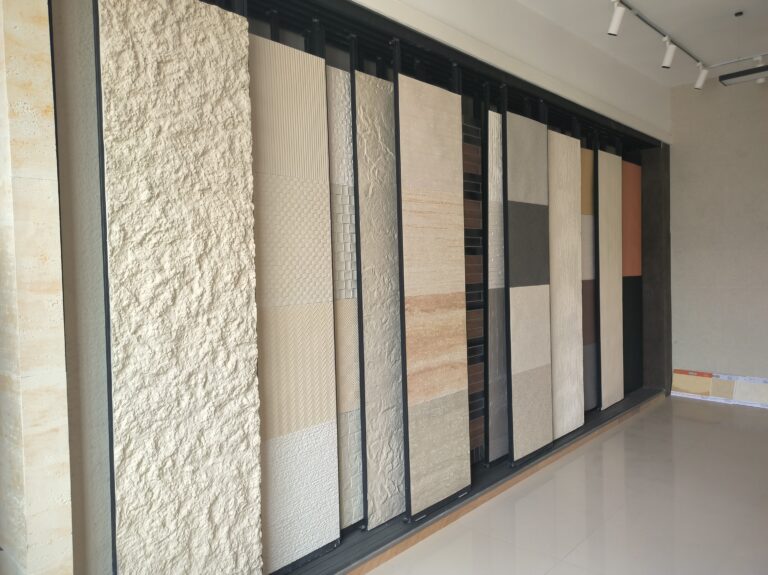
flexible stone import mistakes is the first checkpoint buyers should lock before they approve a supplier, budget, or production slot. The spec sheet says one thing. The container arrives with something else. That gap — between what the factory promised and what actually lands at your warehouse — is where most flexible stone import mistakes live.
Spending enough time in Chinese factories, running audits on modified clay production lines, demonstrates that a $50K order can go sideways fast because the pre-production sample passed quality tolerance standards but the mass production run did not. The buyer in that case had approved the sample under production conditions that the factory could not replicate at volume. That shipment is still sitting in a bonded warehouse near Long Beach.
The frustrating part is that most of these errors are preventable. They are not about bad faith or shoddy materials — they are about gaps in communication around specifications that the procurement team assumed were standard. Wholesalers importing flexible stone from China for the first time tend to focus on FOB pricing and delivery dates, which makes sense. But the real risk comes from what they did not ask for: the correct HS code classification, region-specific environmental performance data, and adhesive compatibility tests.
Skip those, and the landed cost calculation becomes meaningless. The common mistakes importing flexible stone from China almost always trace back to three things that a structured checklist can catch before the order is placed: code compliance, environmental fit, and installation math.
Here is a three-point decision framework to run past your supplier before you sign the purchase order. First, does your factory provide a material composition report that matches the HS code 6810191000 classification for customs clearance? Second, has the product been tested for freeze-thaw or UV resistance specific to your project climate zone — not just the general manufacturer data sheet? Third, do you have a confirmed adhesive recommendation that works with both the stone backing and your local substrate temperature range? If the answer to any of these is no, stop the PO. Fix it now, not after the container leaves Shanghai.

Mistake 1: Wrong HS Code Classification
HS code 68109900 instead of 6810191000?
Flexible stone panels — modified clay with natural stone aggregate and fiberglass mesh — classify under HS code 6810191000. That code covers tiles and similar articles of stone. Many importers mistakenly use 68109900, the catch-all for other stone products. Customs in the US, EU, and Australia treat that code as vague, triggering higher duty rates and mandatory manual inspections. The material composition and construction method determine the correct code; a supplier who cannot provide a manufacturer’s declaration with the exact raw material breakdown is a red flag.
-
- Duty rate difference: 6810191000 attracts 0–3% MFN duty for most origins. 68109900 jumps to 5–8% or higher depending on destination. On a 20-foot container valued at $50,000, that is a $2,500–$4,000 hit to margin.
- Customs delay cost: Port authorities flag 68109900 for document verification. Holds run 7–21 days, with storage fees of $150–$300 per day. One German importer reported a 17-day delay and $4,200 in demurrage.
- Required documentation: To clear under 6810191000, customs expects a detailed product description (modified clay + natural stone powder + glass fiber mesh) and a composition certificate. Without these, reclassification and penalties apply.
A factory that routinely exports flexible stone — like JMS Decor — lists 6810191000 on every invoice and provides the supporting documents automatically. For importers who already shipped under the wrong code, fixing it requires a formal amendment with the customs broker and often a retroactive duty payment. The only clean solution is to lock in the correct classification before the purchase order is signed. Request the HS code in writing from your supplier and ask for a copy of the customs clearance record from their previous shipments to the same market. For the full pre-order sequence behind those tests, see our supplier verification checklist.
Mistake 2: Ignoring Regional Climate Requirements
One climate-proof formula doesn’t exist.
The mistake is assuming all flexible stone can handle any climate. Coastal salt spray corrodes the resin binder; freeze-thaw cycles shatter panels if water absorption exceeds 1%. Importers often buy standard indoor-grade sheets for exterior installations and see delamination or cracking within months.
-
- Coastal / Island Areas (Salt Spray): Chloride attack degrades the glass fiber mesh and resin structure. Without a salt-resistant formulation, panels develop efflorescence and lose adhesion after 6 months. The critical spec is water absorption below 0.5% and a dense, sealed surface. JMS Decor adjusts the binder ratio and adds a UV-resistant topcoat for marine environments.
- Freeze-Thaw Regions (Cold): Trapped moisture is the enemy. Panels with >0.5% water absorption crack after 10–15 cycles at −20°C. Flexible stone with ≤0.5% absorption passes 100 freeze-thaw cycles in ASTM C666 lab tests. Insist on a freeze-thaw test report from your supplier before committing to a container.
JMS Decor routinely reformulates for specific climates. For a hotel project in Norway we increased resin content and added a hydrophobic coating; for a resort in the Maldives we used a salt-fog resistant version that passed 500 hours of ASTM B117 testing. Always request a climate-matched sample and validate it under local conditions before mass production.
Mistake 3: Not Testing Adhesive Compatibility
Using the wrong adhesive voids warranties and causes delamination within months.
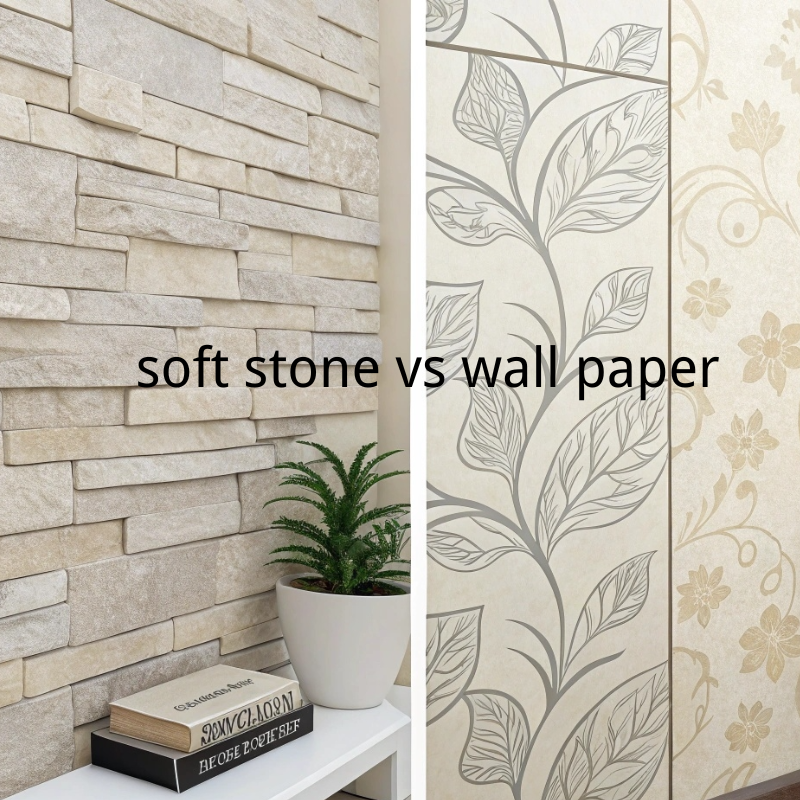
Most importers assume any general-purpose tile adhesive will work with flexible stone. That assumption fails because flexible stone panels have a water absorption rate below 0.5% — nearly impervious. Standard cement-based adhesives cannot bond effectively to a surface that dense. Worse, rigid adhesives crack under the panel’s natural thermal expansion, leading to edge lifting and full delamination within one heating season. A 2000-sqm hotel facade in Poland lost 30% of its panels in the first winter because the contractor used standard wall tile mortar.
-
- Why JMS Decor’s Adhesive: We formulated a dedicated polymer-modified adhesive that matches the flexibility and low-absorption characteristics of our stone. The adhesive cures with enough elongation to accommodate substrate movement without cracking. This is not repackaged tile glue — it’s a specific compound tested on our own panels at 70°C and -20°C cycles. We also produce a matched sealant for grouting and edge finishing, so the entire assembly remains a unified system.
- Risk of Ignoring Compatibility: Without a compatibility test, you risk complete project failure. Panels may look secure during installation but lose adhesion after 6–12 months as moisture cycles weaken the bond. Replacing delaminated panels on a finished wall costs 3–4× the original installation. A simple 24-hour peel test on a sample board before full order can save you from that rebuild.
Requesting an adhesive compatibility test from your supplier should be a non-negotiable step. Ask for the ISO or ASTM shear strength data specific to their panel and the recommended adhesive. At JMS Decor, we provide test reports and even send a trial kit with 200g of our matching adhesive so you can run your own pull-test before placing the container order.

Mistake 4: Overlooking Fire Rating Certifications
A flexible stone without the right fire rating can kill a commercial project before it starts.
Most buyers assume flexible stone panels behave the same in a fire because they’re all made from natural stone powder and clay. That assumption is wrong, and it’s why shipments are rejected at the warehouse in Dubai and New York. The two dominant standards you need to verify are the US ASTM E84 and the European EN 13501-1 (part of CE marking). They test different things and suppliers don’t always hold both.
-
- ASTM E84 (North America): Measures flame spread and smoke developed. For most commercial interiors and exits, Class A is required (flame spread index ≤ 25). JMS Decor’s flexible stone passes at Class A. Without a valid test report from a recognized lab, your product cannot be specified for hotels, offices, or retail chains.
- CE / EN 13501-1 (Europe & Middle East): European reaction-to-fire classification uses classes A1, A2, B, C, D, E, F. A2 or B is common for wall cladding in corridors and escape routes. CE marking also requires a Declaration of Performance (DoP). If your supplier only provides a Chinese test report, local building control may reject it.
- The hidden risk: Some factories copy test reports from other materials. Always ask for the original PDF with the lab’s accreditation number (e.g., UL, Intertek, or EOTA). Cross-check the report’s date and product name. A supplier who stammers when you ask for the specific test standard is a supplier to avoid.
Mistake 5: Underestimating MOQ and Lead Time
Standard runs ship in 15-20 days; custom orders require 30-40 days — plan your procurement calendar.
The most common timeline blunder is a buyer expecting a full container to roll out of the factory in 10 days. That works if you’re picking a stock color from a distributor’s warehouse. But direct from the production line, even standard flexible stone — existing molds, 1200×600 mm sheets — runs 15 to 20 working days. The moment you ask for a custom color, a different thickness, or a private-label pattern, that window widens to 30–40 days. There are 100+ molds and weekly new patterns, but each custom run requires mold prep, color mixing, and a full quality hold. The buyer who ignores this buffer ends up paying airfreight or telling their contractor the shipment is late.
-
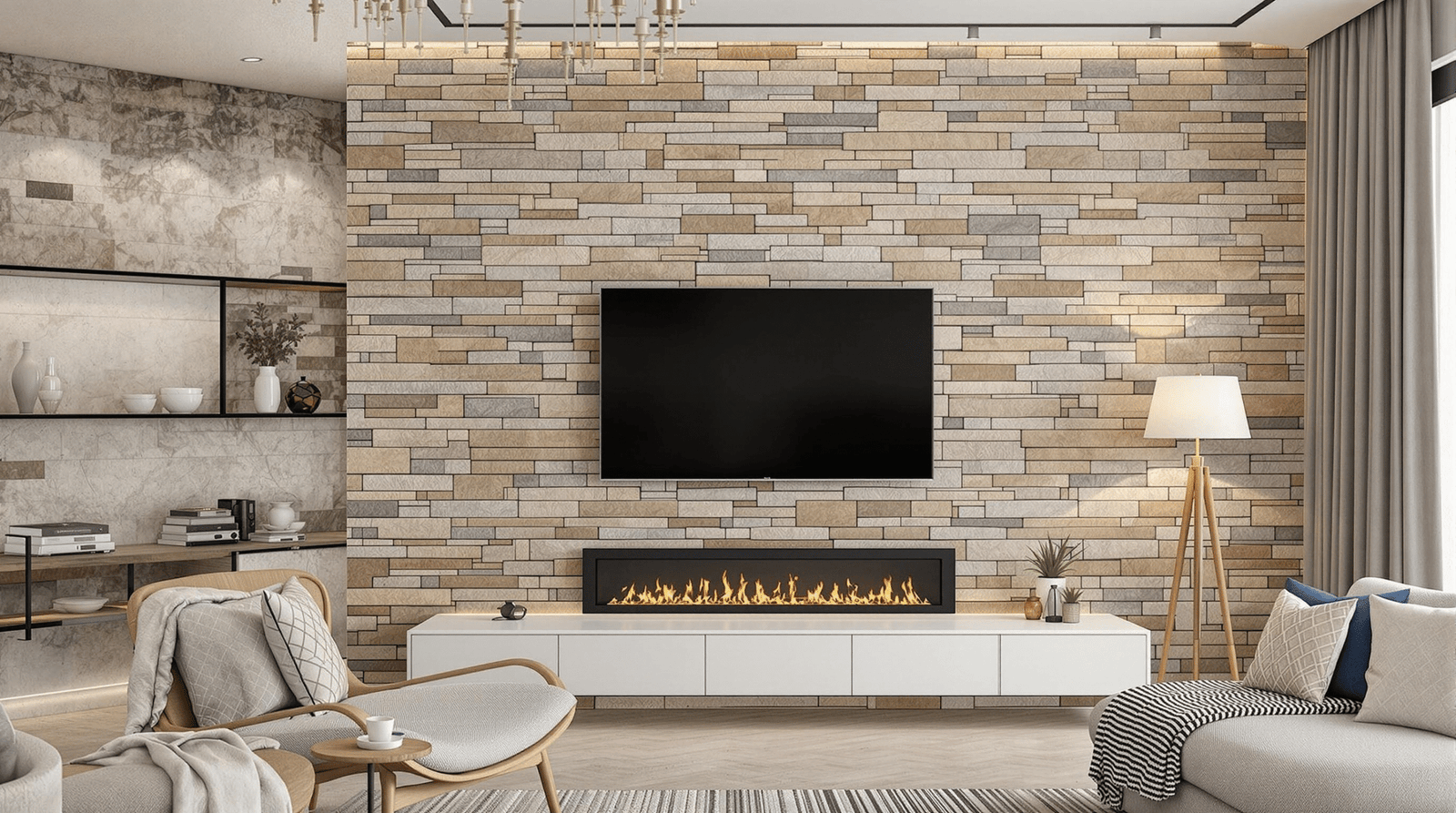
- Standard MOQ & lead time: 300 sqm per item, 15–20 working days. Colors and textures from our existing catalog (travertine, slate, rammed earth, etc.) ship fastest.
- Custom MOQ & lead time: 500 sqm minimum. Includes OEM/ODM, custom color matching, dimensional changes (max width 1200 mm, length up to 2900 mm), and mold development. Allow 30–40 days.
- Sample cycle: Stock samples (20×20 cm) ship in 2–3 days. Custom color samples require 7 days for color formulation and curing.
- Production capacity reality: One inkjet/3D printer outputs 70 sqm per hour, about 700 sqm per shift. A 20-GP container (roughly 1200–1500 sqm of flexible stone) needs 2–3 days of continuous printing alone, plus drying, cutting, and packing.
A real example: a Melbourne distributor placed an order for 2000 sqm of custom-colored travertine and assumed 20 days. Around day 18, they called wanting a bill of lading. The stone was still in the curing oven because the color batch needed 72-hour stabilization. We ended up splitting the shipment — 900 sqm of stock pattern flew out on time, the custom remainder left 10 days later. The lesson: if your project has a hard opening date, lock in the lead time before you send the deposit, not after the container is due. How much of that order you pay up front is the next thing to settle — we compare the choices in our payment terms guide for China suppliers.
How to Avoid Each Mistake
One wrong checkbox can delay your shipment by weeks.
- HS Code Confirmation: Use 6810191000 for flexible stone panels. Your supplier must provide a full packing list, invoice, and product photos matching this code. Ask for a customs clearance reference from previous shipments to the same country.
- Climate-Specific Product Matching: Request a written spec for outdoor UV resistance if panels face direct sun. For coastal areas, confirm salt spray test data (48 hours minimum). For freeze-thaw zones (Russia, Canada, Nordic), demand a -20°C cycle test report. JMS Decor adjusts thickness and formula per region.
- Adhesive Compatibility Test: Before placing a bulk order, order a 20x20cm sample and test it with the adhesive you plan to use on-site. The bond must hold after 24 hours. JMS Decor now supplies matched adhesive and caulking – one less variable to debug.
- Fire Rating Certification Verification: For EU projects, require CE marking with reaction-to-fire class. For the US and Canada, ask for a test report per ASTM E84 Class A. A generic certificate from the factory won’t pass your local building inspector; ask for the specific laboratory report (e.g., SGS, TÜV).
- MOQ & Lead Time Planning: Standard stock designs: MOQ 300 sqm, lead time 15–20 days. Custom colors or patterns: MOQ 500 sqm, lead time 30–40 days. For a 20GP container (approx. 500–600 sqm of 1200x600mm panels), lock the schedule 45 days before your port deadline. Ask for weekly production photos – any gap means trouble.
Run through this checklist before signing a PO. If your supplier can’t produce a single document from this list – the HS code reference, a climate-appropriate test report, or a matched adhesive spec – walk away. That $50K order isn’t worth a 3-week customs hold or a wall that delaminates after one winter. Knowing whether you are buying from a factory or a middleman is the first line of defence, and our manufacturer vs trading company guide sets out the signs.
JMS Decor’s Support for First-Time Importers
First-time importers get hands-on support from sample to installation.
Most first-time buyers of flexible stone from China worry about two things: will the product match the sample, and how do I install it. Our response is straightforward. We send a 20x20cm sample kit within 2-3 days for standard styles — the same material that goes into your production run. No deviation in color, texture, or thickness. That sample approval step eliminates the #1 cause of shipment rejection.
- Installation videos: Full-length walkthroughs covering substrate prep, adhesive application, and grouting. A 2.6m x 3m wall takes one trained worker one hour — we show you exactly how to achieve that speed.
- Supply chain bundling: We now produce our own matching adhesive and sealant, so you get a single-source system. We also help source complementary products for new market entrants, reducing your supplier onboarding time by 40–60 days.
Conclusion
The five mistakes covered here—HS code classification, climate-specific material specs, adhesive compatibility, fire rating certification, and MOQ/lead time planning—are the most common reasons flexible stone shipments get flagged at customs or fail on-site. Nail each one before you place the order, and you save weeks of delays and thousands in rework.
Run this three-question checklist with any potential supplier before signing a contract: 1. Can you provide the correct HS code (6810191000) and all supporting documentation to avoid flexible stone customs delays? 2. Does this material carry a valid ASTM E84 Class A fire rating (or equivalent CE marking) that matches my region’s building code? 3. What is the confirmed MOQ from your China factory, and what lead time should I expect for standard vs. custom orders? If the answer to any of these is unclear, you haven’t finished your due diligence. For a second opinion on your next flexible stone import, request a spec sheet and sample set from JMS Decor to compare against your checklist.
Frequently Asked Questions
What HS code should I use?
Use HS code 6810191000 for flexible stone panels. Misclassifying as 68109900 can cause customs delays and higher duties. Always verify with your customs broker before shipping.
Do I need fire rating certifications?
Yes, ask for ASTM E84 Class A for the US and CE marking for Europe. Without these, your shipments may be rejected or face project compliance issues. Request test reports before placing your order.
How long does production take?
Standard orders take 15–20 days, while custom colors or thicker sheets can take 30–40 days for a full container. Lead time depends on order size and customization level. Confirm lead time when you finalize the QC spec.
What adhesive should I use?
Use a matched adhesive specifically designed for flexible stone to prevent delamination. JMS Decor offers its own matched adhesive and sealant for reliable bonding. Always test the adhesive on a sample board first.