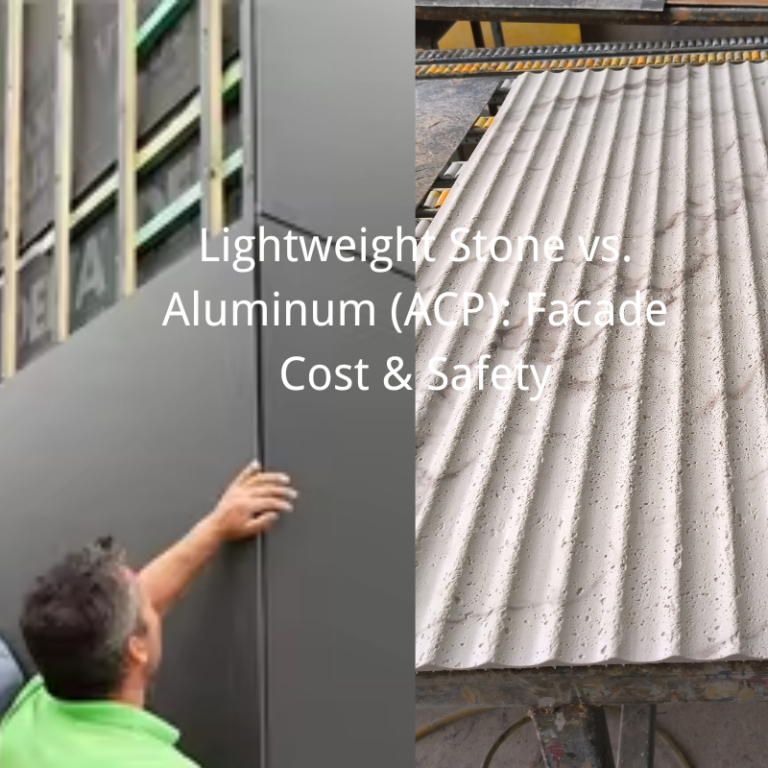
flexible stone veneer vs natural is the first checkpoint buyers should lock before they approve a supplier, budget, or production slot. You’re a stone and tile importer. You know the natural stone business inside out — the margins on granite, the shipping headaches, the call from a contractor complaining about a cracked slab. Then a buyer asks about a lightweight stone alternative for a hotel chain, and you realize you don’t have a product to offer. That’s where the flexible stone veneer vs natural stone decision starts to matter.
The cost gap is real. Flexible stone veneer runs $8 to $25 per square meter FOB, while comparable natural stone starts at $30 and hits $200 for marble. But the real difference isn’t just the price tag. It’s the weight — 4 to 8 kg per square meter versus 50 to 70 kg. That 85% reduction changes everything about how you ship, store, and sell the product.
Here’s what most importers overlook. A 20-foot container holds about 2,500 to 3,000 square meters of flexible stone. The same container maxes out at 50 to 100 square meters of natural stone before hitting the 25-ton weight limit. Do the math on freight cost per square meter, and you’re looking at $3 for flexible stone versus $8 for natural stone on a China-to-US West Coast route. On a five-container annual order, that’s $25,000 to $40,000 in direct savings.
But this isn’t about replacing natural stone. It’s about adding a category that opens projects where stone was never specified — quick-service restaurants, retail fit-outs, mid-tier hotel chains. The importer’s real question is: can the product be tested without getting stuck with inventory that cannot be moved? That’s where the low MOQ of 10 pieces changes the risk calculation.
Why Natural Stone Fails Importers: Hidden Costs
Natural stone’s weight penalty alone can wipe out your margin before the first sheet is installed.
Most importers calculate cost per square meter at the quarry gate. That’s a rookie mistake. The real number that hits your P&L is landed cost — and natural stone carries a freight multiplier that most buyers only discover after their first container arrives. A standard 20ft container maxes out at 25 tons. With granite slabs averaging 50-70 kg/m², you’re looking at roughly 50-100 m² per container. For flexible stone veneer at 4-8 kg/m², the same container ships 2,500-3,000 m². That’s a 25x to 30x difference in area per freight dollar.
Run the math for a European importer sourcing from India or China. Landed cost for Indian natural stone — granite, marble, travertine — lands at €45-€65 per m² after freight, customs, and handling. Chinese flexible stone veneer with fiberglass backing lands at €15-€25 per m². The gap isn’t small; it’s 60-70% lower. For a US distributor like Michael ordering 3-5 containers monthly, switching even one container per month from natural stone to flexible stone saves $25,000-$40,000 annually in direct freight costs alone. That’s not a marginal improvement — that’s a line-item that funds a full digital campaign or a warehouse expansion.
- Container utilization: Natural stone: 50-100 m² per 20ft container. Flexible stone: 2,500-3,000 m² per 20ft container. Ratio: 25-30x more area per container for flexible stone.
- Landed cost comparison (EU): Indian natural stone: €45-€65/m². Chinese flexible stone veneer (fiberglass backed): €15-€25/m². Savings: 60-70% on landed cost.
- Annual freight savings (US distributor): Replacing one container/month of natural stone with flexible stone saves $25,000-$40,000/year in freight alone. Enough to fund a marketing campaign or warehouse expansion.
- Hidden cost: breakage: Natural stone tiles crack during transit at 3-8% rates. Flexible stone veneer breakage rate: under 0.5% due to flexibility and lighter weight. Unplanned replacement orders eat margin and delay projects.
Here’s what competitors don’t tell you: the weight problem isn’t just freight. It’s also structural. Natural stone cladding requires reinforced substrate, additional steel framing, and sometimes engineering sign-off. That adds $15-$30/m² in sub-contractor costs before a single tile is installed. Flexible stone veneer installs directly onto drywall with standard construction adhesives — no structural reinforcement needed. For a 500 m² commercial lobby, that’s $7,500-$15,000 in hidden substrate costs that simply disappear.
| Hidden Cost | Natural Stone | Flexible Stone Veneer (JMS Decor) |
|---|---|---|
| Material Cost (FOB/m²) | $30 – $200+ | $8 – $25 |
| Weight (kg/m²) | 50 – 70 | 4 – 8 |
| Container Capacity (20ft) | 50 – 100 m² | 2,500 – 3,000 m² |
| Freight Cost per m² (est.) | $8 – $12 | $2 – $4 |
| Minimum Order Quantity | 50 – 100 m² | 10 pieces (~7.2 m²) |
| Installation Labor Cost | $60 – $120/hr (specialist) | $0 (general contractor) |
| Installation Time (500 m²) | 2 – 3 weeks | 3 – 5 days |
| Breakage Rate in Transit | 5% – 10% | < 1% |
| Annual Sealing Required | Yes | No |
| Color Consistency (batch) | ±10% – 20% | ±3% |
| Warranty Period | 1 – 2 years | 5 years (ISO certified) |
Flexible Stone vs Natural Stone: Price Breakdown
Natural stone costs 3-5x more per m² landed.
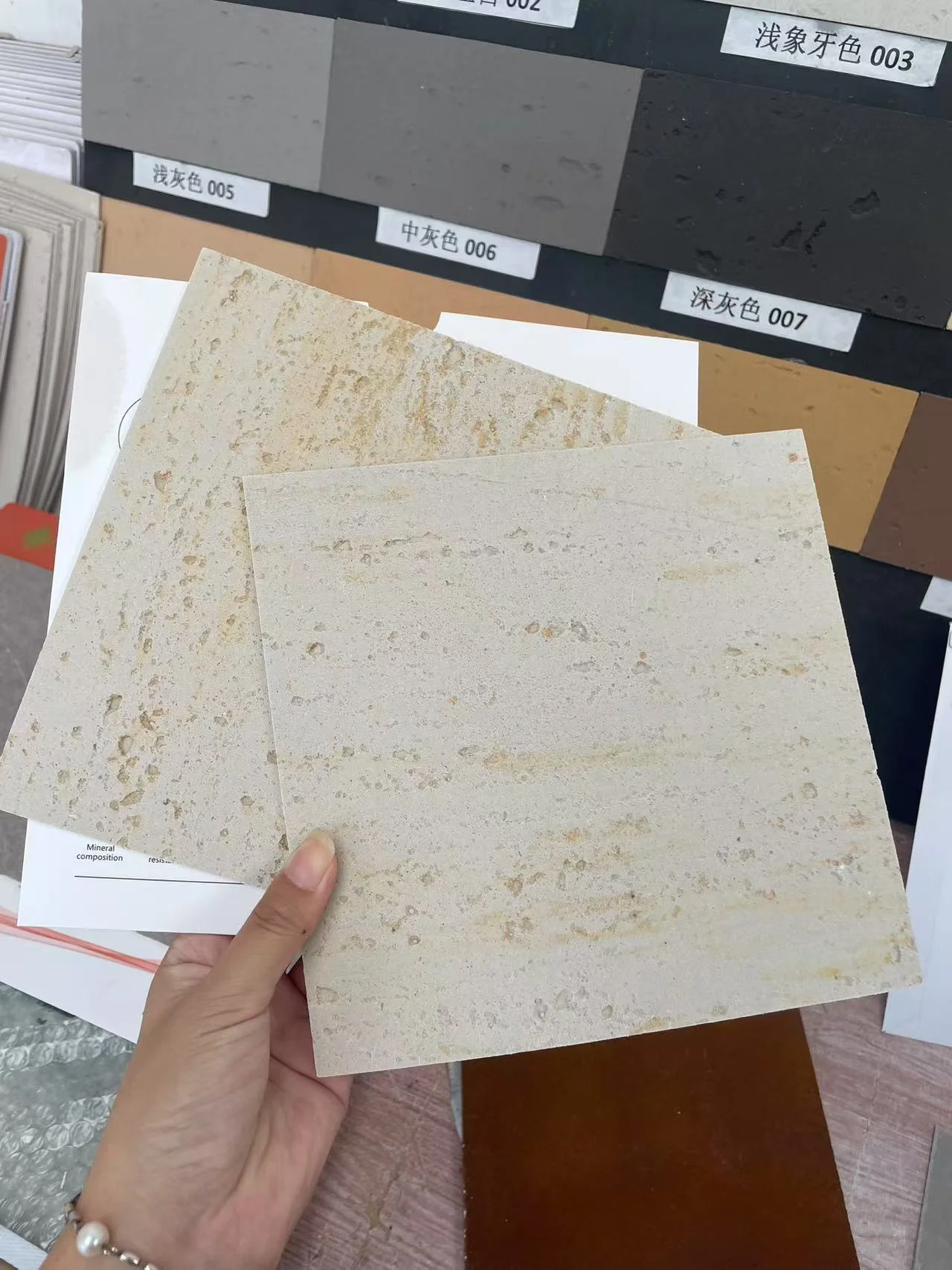
Most importers look at FOB prices and stop there. That’s a mistake. Natural stone pricing at origin runs $30-$80/m² for granite, $50-$200/m² for marble, and $25-$60/m² for travertine (FOB China or India). Flexible stone veneer from JMS Decor lands at $8-$15/m² for slate, $10-$20/m² for travertine, and $15-$25/m² for marble-look finishes. That’s a 60-70% material cost reduction before you even factor in freight.
The real margin killer is the MOQ gap. Natural stone suppliers typically require 50-100 m² per color per order. That locks you into $1,500-$20,000 minimum commitment per SKU before you know if it sells. JMS Decor’s flexible stone starts at 10 pieces — roughly 7.2 m². For a novice importer testing a new category, that’s a 66% lower entry risk. You validate demand with $60-$180 instead of $1,500+.
- Granite (FOB China/India): $30-$80/m² natural vs $8-$15/m² flexible slate — 73-81% material savings.
- Marble (FOB China/India): $50-$200/m² natural vs $15-$25/m² flexible marble-look — 70-88% savings.
- Travertine (FOB China/India): $25-$60/m² natural vs $10-$20/m² flexible — 60-67% savings.
- MOQ comparison: Natural stone: 50-100 m² per color. Flexible stone: 10 pieces (~7.2 m²) from JMS Decor.
Here’s what competitors don’t tell you: the low MOQ isn’t just about cash flow — it’s about inventory risk. If a natural stone container arrives with 10% breakage (common with granite), you eat the loss on $3,000-$8,000 of material. With flexible stone at 4-8 kg/m², breakage in transit drops below 1%. And because you’re only holding 7.2 m² per SKU, a slow mover costs you $60, not $1,500. That’s the math that matters when you’re presenting to your procurement committee.
| Cost Factor | Flexible Stone Veneer | Natural Stone | Savings with Flexible Stone |
|---|---|---|---|
| Material Cost (FOB/m²) | $8 – $25 | $30 – $200 | 60-70% lower material cost |
| Weight (kg/m²) | 4 – 8 kg | 50 – 70 kg | 85-90% weight reduction |
| Shipping per 20ft Container | 2,500 – 3,000 m² | 50 – 100 m² | 10-20x more area per container |
| Freight Cost per m² (China to US) | ~$3 | ~$8 | 60% lower freight cost |
| Installation Labor Cost (per 500 m²) | $12,000 – $18,000 | $25,000 – $35,000 | 40% labor savings |
| Minimum Order Quantity (MOQ) | 10 pieces (~7.2 m²) | 50 – 100 m² | 66% lower entry risk |
| Installation Skill Required | General contractor (adhesive + utility knife) | Certified stone mason (wet saw + structural support) | No specialist needed |
| Landed Cost (EU Importer, per m²) | €15 – €25 | €45 – €65 | 50-60% lower landed cost |
Weight & Shipping: Why Importers Switch
Container freight drops 60%: $3/m² for flexible stone vs $8/m² for natural stone.
A 20ft container maxes out at 25 tons for natural stone, limiting coverage to 50–100 m². The same container holds 2,500–3,000 m² of flexible stone veneer at 4–8 kg/m². That’s a 30–50x area advantage per container.
- Freight cost per m²: Natural stone: ~$8/m² (China to US West Coast). Flexible stone: ~$3/m². Savings of 62.5% per square meter.
- Annual savings: Over a 5-container annual order, direct freight savings reach $25,000–$40,000. That covers a digital marketing campaign or warehouse expansion for the new line.
Most importers overlook this: the weight limit, not volume, is the bottleneck for natural stone. Flexible stone eliminates that constraint entirely. Run your own landed cost calculation using your port and container rates — the gap widens further for inland destinations where trucking is charged per ton.
Installation Cost: 40% Labor Savings
A 500 m² lobby costs $12,000–$18,000 to install with flexible stone, not $25,000–$35,000.
Natural stone installation demands certified stone masons billing $60–$120 per hour. They need wet saws, diamond blades, and structural substrate reinforcement. A 500 m² commercial lobby typically runs 8–12 workers for 3–4 weeks. That labor line alone lands at $25,000–$35,000 before materials.
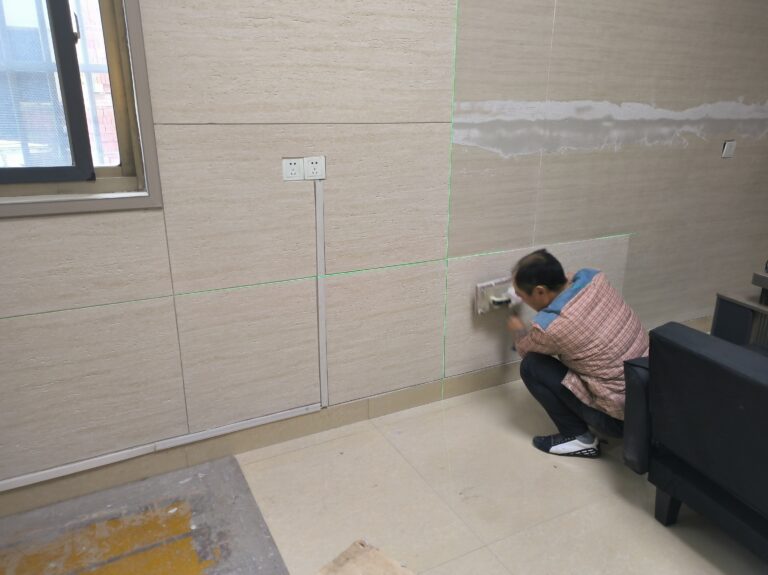
Flexible stone veneer changes the math entirely. It weighs 4–8 kg/m², so no structural reinforcement is required. Any general contractor can cut it with a utility knife and bond it with standard construction adhesive. For the same 500 m² lobby, labor drops to $12,000–$18,000 — a 40% reduction.
- Skill requirement: Natural stone: certified stone mason ($60–$120/hr). Flexible stone: any general contractor ($35–$65/hr).
- Tools needed: Natural stone: wet saw, diamond blades, angle grinder. Flexible stone: utility knife, notched trowel, adhesive.
- Substrate prep: Natural stone: requires plywood backer or metal lath + mortar bed. Flexible stone: bonds directly to drywall, cement board, or existing tile.
- Project timeline: Natural stone: 3–4 weeks for 500 m². Flexible stone: 1–2 weeks for the same area.
Here’s what competitors don’t tell you: that 40% labor savings compounds on every project. A hotel chain doing 20 lobbies per year saves $260,000–$340,000 annually in installation labor alone. For importers selling to commercial contractors, this single data point closes more deals than any price-per-square-foot comparison.
| Feature | Flexible Stone Veneer | Natural Stone | Savings |
|---|---|---|---|
| Labor Cost per m² | |||
| Skilled Labor Required | General Contractor ($40-$80/hr) | Certified Stone Mason ($60-$120/hr) | Up to 50% lower hourly rate |
| Installation Tools | Standard adhesives & utility knife | Wet saw, diamond blades, grinder | No specialized equipment needed |
| Substrate Preparation | Directly on drywall or plywood | Requires structural reinforcement | Eliminates extra framing costs |
| Installation Speed (500 m²) | 3-5 days (2-person crew) | 10-14 days (3-person crew) | 60% faster project completion |
| Total Labor Cost (500 m²) | $12,000 – $18,000 | $25,000 – $35,000 | 40%+ reduction in labor spend |
Warranty & Durability: The Real 10-Year Test
Fiberglass backing is the line between 18-month failure and 25-year performance.
Natural stone will outlast any building it’s installed on — 50+ years is standard. But that longevity comes with a maintenance contract: annual sealing, stain risk from oils and acids, and cracking under point loads. For a hotel chain or retail landlord, that’s not durability, that’s a recurring liability.
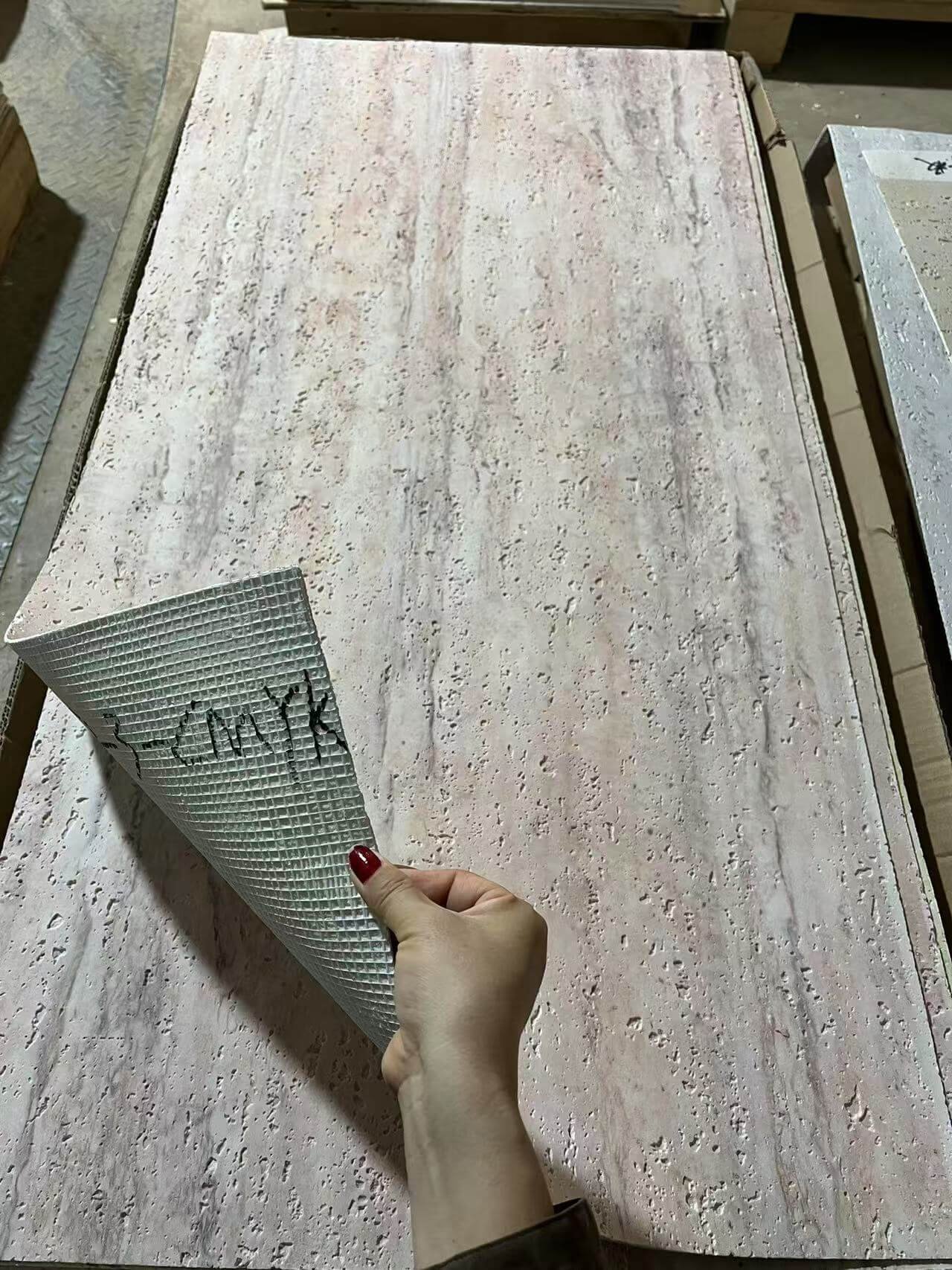
Flexible stone veneer with fiberglass backing delivers 15-25 years in commercial use with zero sealing. The failure point isn’t the stone layer — it’s the backing material. Polyester resin backings cost 15% less to manufacture but yellow visibly within 18 months of UV exposure. Fiberglass doesn’t. That’s the single most important spec to verify before signing an OEM agreement.
- ISO 9001 certification: Mandatory for any factory you source from. It audits production consistency, not just final product. JMS Decor holds both ISO 9001 and ISO 14001 — the latter covers environmental compliance, increasingly required for EU and UK commercial projects.
- 5-year structural warranty: Industry baseline for commercial-grade flexible stone. If a supplier offers less than 5 years, they’re either using polyester backing or sub-1mm stone layers. Demand the warranty in writing before sample shipment.
- Class A fire rating (ASTM E84): Non-negotiable for any commercial interior application — hotels, lobbies, retail fit-outs. Standard flexible stone with fiberglass backing achieves Class A (flame spread index ≤ 25). Verify the test report matches your project’s jurisdiction; European projects may require EN 13501-1 instead.
- UV resistance test report: Most importers skip this. Request a 500-hour QUV accelerated weathering test report (ASTM G154). It simulates 5 years of outdoor exposure. If the supplier can’t provide one, assume the product will discolor within 24 months on any south-facing facade.
For importers like Michael (3-5 containers monthly) or Tomáš (boutique brand owner), the warranty conversation isn’t about the product — it’s about your reputation. A single batch failure on a 500 m² hotel lobby means replacement costs, installation labor, and a burned relationship with the contractor. The 15% premium for fiberglass backing over polyester is the cheapest insurance you’ll ever buy.
Conclusion
The math is simple. Flexible stone veneer delivers a 30-50% lower material cost, an 85% weight reduction, and up to 60% savings on freight. For importers like Michael and Tomáš, this isn’t about replacing natural stone — it’s about opening a new category for projects where stone was never an option.
Review the product specs and request a free sample from the JMS Decor lightweight solution page. That’s the fastest way to validate the margin potential for your next container order.
Frequently Asked Questions
What is flexible stone veneer?
Flexible stone veneer is a thin layer of real stone (slate, marble, quartzite) bonded to a flexible backing, weighing only 4-8 kg/m². It bends around curves and cuts with a utility knife, making. Request a free sample to test flexibility and texture.
Is veneer stone cheaper than real stone?
Yes, flexible stone veneer costs 30-50% less than natural stone at the wholesale level, with FOB prices ranging from $8-$25/m² versus $30-$200/m² for natural stone. The savings increase further when you. Calculate your landed cost per m² to see the full margin.
What are the disadvantages of stone veneer?
Low-cost flexible stone veneer using polyester resin instead of fiberglass backing can yellow within 18 months of UV exposure. It also lacks the through-body color and impact resistance of solid natural stone, so. Always request a UV resistance test report before ordering.
Does stone veneer increase house value?
Stone veneer can increase resale value when installed as an accent wall or exterior cladding, but the return depends on local market preferences and installation quality. Real estate appraisers typically value it. Check with a local appraiser before specifying for resale projects.
What is the difference between veneer stone and natural stone?
Veneer stone is a 2-4 mm slice of real stone on a flexible backing, while natural stone is solid, 20-30 mm thick, and weighs 50-70 kg/m². Veneer installs with adhesive and. Choose veneer for lightweight cladding and natural stone for structural applications.